Tag: Impact Investing

Make Every Dollar Count: Is Your Cash Sleeping with the Right Partners?
By Annie McShiras, Investment Associate, Self-Help Credit Union

Impact investing has emerged as a major force in philanthropy. Last year the Global Impact Investing Network conducted a survey showing that the estimated value of the impact investing sector doubled between 2017 and 2018, increasing from $114 billion to $228 billion in assets under management.[1] The rise of impact investing signals a shift from a “do-no-harm” approach to a demand for investments that actively produce measurable positive social and environmental outcomes.

With the growing commitment to impact investing, investors are beginning to set a higher standard for all of their funds—including cash. Socially-conscious investors want every dollar to align with their mission and values. Who or what are their funds supporting when they aren’t directly deployed for projects or grants? What is the impact of their entire portfolio?

These aren’t easy questions. For individual investors, “looking under the hood” of investment vehicles can be confusing and time-consuming. Even for foundations and institutional investors, the challenge is daunting. Under federal law, foundations must distribute at least five percent of their endowments each year. For most, the bulk of their funds are “sleeping,” typically in Wall Street investments, bank accounts and other funds. That means, for example, that foundations could be directing their grant dollars toward fighting climate change while the majority of endowment funds — including their cash — are funneled to the worst polluters.

Move your Money!

The Dakota Access Pipeline is an example of a fossil fuel project that spurred people to think not just about where they invested but also where they banked. Opponents of the pipeline were very concerned about its environmental and human impact. When many realized they were keeping their money in banks that supported the pipeline developers, they were galvanized to launch a divestment campaign. That campaign resulted in divestment from banks estimated at $4.4 billion.[2]

The FB Heron Foundation, a private foundation that fights poverty, faced this kind of scenario head-on. A few years ago, Heron’s board members were dismayed when they discovered that, unknowingly, their investments were supporting a large corporation that runs private prisons — an industry notorious for abuses, and certainly not aligned with Heron’s mission.[3]

Heron responded by conducting a meticulous screening of their entire portfolio to assess every dollar for mission alignment. As a result, they now have moved over $150 million of their funds to impact-screened investment products.[4]

Another example is the McKnight Foundation, one of the country’s largest private foundations with $2.3 billion in assets. Driven by their commitment to address climate change, McKnight is also examining its entire portfolio, and they report that one-third of all their funds has verifiable mission alignment. According to The Chronicle of Philanthropy, no other foundation of its size can make that claim.[5]

Making More Impact with Mission-Aligned Partners

A significant part of screening for impact is taking a hard look at where your liquid cash spends the night — and more often than not, it is sleeping at a bank. Traditional banks do make essential loans for individuals across the country, but their obligation to outside shareholders means that community impact typically plays little or no role in their lending decisions.

The same is not true for community development financial institutions (CDFIs), which include banks, credit unions and nonprofit loan funds specifically certified by the U.S. Department of Treasury to focus on serving low-income and historically underserved communities. We represent the Self-Help family of credit unions, which is a Community Development Credit Union — one type of CDFI.

Nationwide, there are approximately 1,130 community development financial institutions of all kinds. Although Community Development Credit Unions (CDCUs) represent only 27 percent of that group, they hold the largest share of assets at 52%.[6]

Like all credit unions, CDCUs are not-for-profit cooperatives owned by their members. And like banks, they provide a wide range of services and offer federal insurance on deposit accounts up to $250,000. CDCUs are distinguished by their mission focus; namely:

  • Affordably priced loans, including to members with imperfect, limited or no credit history;
  • A focus on lending to strengthen all members, especially communities of color;
  • Financial education and counseling for members; and,
  • Products, services and support that can help members free themselves from high-cost and predatory debt, and achieve economic mobility.

When investors make deposits at CDCUs, they can be confident that they are helping to fund projects for the community good. Deposits translate directly into impacts like affordable home loans for first-time buyers; small business loans; loans to underserved markets including people of color, women and immigrants; and loans that support clean energy and projects that promote sustainability. Beneficial State Bank, based in Oakland, and the national Clean Energy Credit Union are two examples of mission-aligned banks and credit unions that have a particular focus on environmental justice.
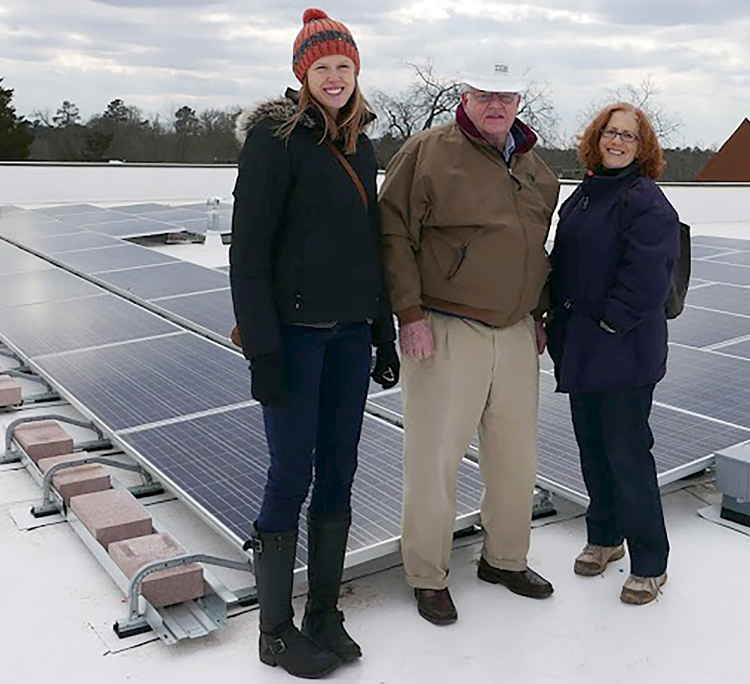
Solar panels installed at Kent Corner, a Durham project funded by Self-Help, generated over 131,000 kilowatt hours of power since April 2016. Left to right: Brika Eklund (Self-Help’s Director of Real Estate); Chuck Wilson (CT Wilson, general contractor); and Melissa Malkin-Weber (Self-Help’s Director of Sustainability.)

For us at Self-Help, both philanthropic investments and individual deposits have been crucial to our work. In 1998, we were able to expand our impact significantly when the Ford Foundation backed our program to provide affordable mortgages nationwide. Leveraging their grant funds as a primary source of support, we have been able to work with partners to create home ownership for over 50,000 low-and middle-income families.[7]

Since then, we’ve broadened our work with foundations to accept Program Related Investments (PRIs) and Mission Related Investments (MRIs), so that our philanthropic partners can draw from their 95 percent endowment for both mission alignment and financial return. For example, we remain grateful for the Central Valley Community Foundation, which deposited $2.6 million in our small Fresno, California branch office. For our members, that deposit directly translates into 20 mortgages or 175 car loans.[8]
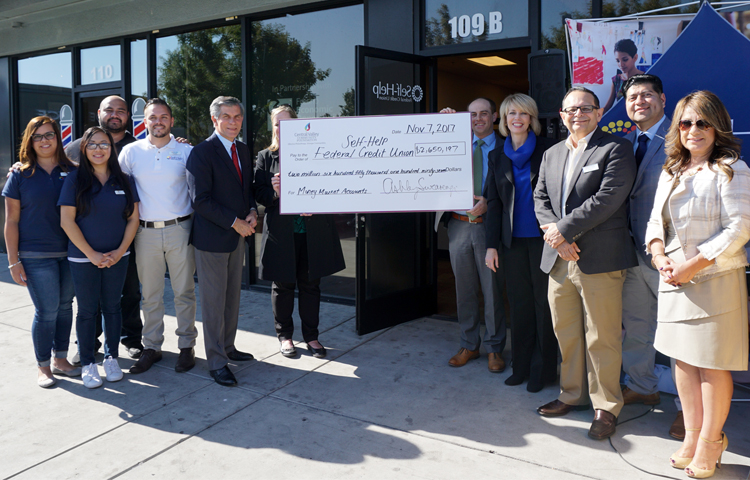
In October 2017, Fresno-based Central Valley Community Foundation announced a $2.6-million deposit into Self-Help Federal Credit Union’s Fresno branch, making this community foundation the branch’s largest single depositor.

Day-to-day, we depend on deposits at our 50 branches from a growing group of 150,000 individual and institutional members. In addition to affordable checking and savings accounts, we offer term certificates (CDs) to support loans aimed at helping women and children, place-based lending programs, and green initiatives: solar farms, land trusts, and businesses focused on sustainable foods, recycling, and ecotourism.

We are proud of our work, but very aware that we are not working alone. There are approximately 300 CDCUs across the nation, all focused on expanding economic opportunity for more families, and all offering a great place to put “sleeping” funds to work.[9]

Practical Ways to Take Action with Your Cash

Know your values, and then move your sleeping money in-line with your values!

Individual investors: If you have cash or fixed-income investments, find out where those funds are spending the night and research options that align with your values.

Financial advisors:  Give your clients the cash investment and savings options that are aligned with their sustainability goals.

Foundations and Institutional Investors:  Look at your liquid assets and consider moving a portion of those cash investments into a local community bank or credit union that advances your social or environmental mission with zero risk.


Article by Annie McShiras, investment associate at Self-Help Federal Credit Union, one of the fastest growing community development credit unions in the country with 150,000 member-owners nation-wide. For 39 years, Self-Help and its affiliates have provided $8.5 billion in financing to help over 158,000 low-wealth borrowers buy homes, start and build businesses, and strengthen community resources. Passionate about creating the change we seek, Annie has been promoting movements and cultivating resources for economic justice, the solidarity economy, and systems change for the past decade. Annie has worked in organizations on issues ranging from worker cooperative development to homelessness prevention to impact investing. Prior to joining the Self-Help team, Annie served as Director of Development and Strategic Growth at The Working World and as Development Director at the Responsible Endowments Coalition. 

Article Notes

[1] Global Impact Investing Network https://thegiin.org/research/publication/annualsurvey2018

[2] Reference: DeSmog https://www.desmogblog.com/2018/12/03/dakota-access-pipeline-concerns-cost-energy-transfer-investors-billions

[3] Yes! Magazine, “Foundations Have a Not-so-Charitable Secret,” by Chris Winters (Nov. 27, 2018) https://www.yesmagazine.org/issues/good-money/your-favorite-charity-has-most-of-its-money-in-wall-street-20181127

[4] https://www.heron.org/enterprise

[5] Chronicle of Philanthropy, “Climate Change Spurs McKnight to Go Big on Impact Investing,” by Marc Gunther (January 8, 2019) https://www.philanthropy.com/specialreport/good-returns/191

[6] https://www.newyorkfed.org/medialibrary/media/outreach-and-education/2017/CDFIs-Impact-Investing.pdf

[7] “Affordable Home Loan Secondary Market”

www.self-help.org/what-we-do/we-learn-and-innovate/secondary-mortgage-market

[8] Next City, “Moving Community Foundation Dollars from Wall Street to Main Street,” by Oscar Perry Abello (June 25, 2018) https://nextcity.org/features/view/moving-community-foundation-dollars-from-wall-street-to-main-street

[9] To find a community development credit union in your area, check out the national Community Development Credit Union trade organization, Inclusiv – https://www.inclusiv.org

Energy & Climate, Featured Articles, Food & Farming, Impact Investing, Sustainable Business

The Capacities Foundations Need to Embark on Place-Based Impact Investing

By Teri Lovelace, President, LOCUS Impact Investing

Place-based impact investing is a burgeoning strategy to spark community development projects, create more just, equitable local economies, and build prosperous, vibrant communities. Place-focused foundations, like community foundations, family foundations and healthcare conversion foundations, are exploring ways to complement their traditional grant making with local investments that can catalyze positive community change. The LOCUS Impact Investing team has partnered with nearly 30 place-focused foundations – large and small – as they explore their role in community economic development, unlock more of their assets, and deploy dollars to amplify their impact and catalyze economic development in their communities. In many ways, their journey has become our journey, and we are learning along the way.

Through this work, we’ve observed a pattern to this place-based impact investing journey that we have incorporated into our fundamentals for designing and implementing an effective place-based impact investment strategy. These fundamentals include exploring a foundation’s place, opportunities and capacities for local impact investing; unlocking a foundation’s assets for this type of investing, ensuring the right ecosystem partners are aligned and the internal policies and processes are in place; and smartly deploying investment dollars to enhance mission while also mitigating risk. While this seems like a linear path, it is really an iterative journey.

Foundations step into local impact investing for many different reasons – a leadership change, an opportunistic investment, a donor push, encouragement from peers, or an endowment assessment. Whatever the genesis, exploring local impact investing requires education and learning with board, staff and community partners. Often that includes learning what others have done and connecting with like-minded foundations through peer learnings like the BALLE Local Economy Foundation Circleor through Mission Investors Exchange bootcamps. Regional area grantmakers may be a resource; both the Council of Michigan Foundations and the Minnesota Council on Foundations have internal resources dedicated to impact investing that are available to members. Place-focused foundations can also learn from the experiences of private foundations like the Surdna Foundation, Russell Family Foundation and the KL Felicitas Foundation, many of whom have documented their journeys and lessons learned.

An important step in this exploration phase is to understand the local impact investing ecosystem and build relationships with community investment partners, like community development financial institutions CDFIs, affordable housing organizations and developers, Community Development Corporations CDCs, microlenders, accelerators and incubators. LOCUS has helped several foundations and regional funders explore local impact investing, including the Greenville Partnership for Philanthropy, to broaden awareness of the area’s investment landscape and possibilities. We are also partnering with The Aspen Institute Community Strategies Group, with support from the Kansas Health Foundation, to facilitate a statewide peer learning cohort of Kansas community foundations to explore together how they can strengthen their role in economic development, including use of place-based impact investing.

A few years ago, the predominant question foundations asked about place-based impact investing was “why?” Today, the question is how?” Once a foundation asks this question, there’s both internal and external work needed to unlock more of their assets. Internally, investment policies and processes need to be crafted, resources need to be allocated, and internal capacities built. Often, a foundation will engage an impact investment advisor, as Surdna did, to help them look introspectively and answer some tough questions:

  • What community impact are we seeking?
  • What are our expectations about investment type (debt, equity, guarantee), risk, liquidity and return?
  • From where will these investment funds come?
  • What will we do if the investment goes bad?
  • How will we communicate about this new direction with partners, donors, and the community?

While this internal work is critical, relationships with capital providers and other intermediaries must be strengthened. As noted by the Urban Institute and the Center for Community Investment, foundations must understand their investment ecosystem – the partners, capital flows and capital gaps. Willing and able community partners help to create a pipeline of mission-aligned investment opportunities. Foundations also need to scan the landscape for possible co-investors, such as other foundations, anchor institutions, donors, community banks and credit unions.

As foundations seek to unlock their capital in this new way, more community development finance and investment skills (e.g., underwriting, portfolio management) are often necessary. Working with a trusted impact investment advisor, foundations can access these capabilities while also building internal capacity for this emerging work. For example, LOCUS is working with a large community foundation to build staff capacity for sourcing and pipeline development of mission-aligned investment opportunities.

Once a foundation has identified their strategy and a potential pipeline of investments, it’s time to get the money out the door. Often foundations again turn to outside help from professional advisors to deploy and minimize risk. Unlike traditional investing, impact investment transactions are evaluated for both community impact and financial return, with the clear intention of earning both a social return and the repayment of principal plus some financial return. A foundation’s investment may be a small but critical piece of a larger capital stack in a community revitalization project. Regardless of the size of investment, community development finance or other investment skills are needed to conduct due diligence and structure the transaction in ways that mitigate risk and amplify desired social impact. A foundation may choose to build those skills internally or turn to an outside advisor or community partner. For example, LOCUS has helped foundations evaluate solar energy companies, health care start-ups, alternatives to payday lenders and intermediaries like CDFIs – all in support of philanthropic investments that address capital gaps and enable community development projects to move forward.

Once the dollars have been deployed, foundation staff, typically the finance team, needs to consider the ongoing servicing, monitoring and reporting for these investments (e.g., financial and social impact review, loan covenant tracking and annual portfolio assessments.) Proper portfolio administration helps mitigate a foundation’s risk and better safeguard community impact. In 2015, The Kresge Foundation committed to deploy by 2020 a $350 million pool of social investments (loans, guarantees and equity) to strengthen opportunities for low-income people in America’s cities. A social investment portfolio of this size had significant implications on the foundation’s back office operations. In a recent blog, Kresge’s CFO shares four key take-aways about how they manage operations when it comes to impact. Kresge partnered with LOCUS to provide outsourced servicing, monitoring and reporting for this social investment portfolio.

Conclusion

Experience suggests that local mission-aligned investing can be transformational for communities by enabling foundations to use more of their tools to catalyze positive community change. While creating an opportunity for greater impact, the journey toward community investing requires new skills and capacities. Fortunately, foundations don’t have to go it alone. They can learn from their peers and tap the expertise of partners to help build internal capacity to explore, unlock and deploy assets for these critical community investments. Later this year, LOCUS is launching a tool to help foundations assess their starting point on this journey and identify possible capacity gaps and ideas for addressing them. Yes, place-based impact investing is a new and different way of using philanthropic assets. Yes, it requires different skills not traditionally found at foundations. And yes, in the long run, setting out on this journey provides an opportunity for greater, more equitable impact in your communities.


Article by Teri Lovelace, President of LOCUS Impact Investing, a social enterprise empowering place-focused institutions to invest their assets locally to build vibrant and prosperous communities. LOCUS is a nonprofit consulting firm and a registered investment advisory firm helping clients engage in local impact investing. Teri has over 27 years in the philanthropic, mission investing and the nonprofit sector. She served as Chief Impact Officer for Virginia Community Capital (VCC), the parent company of LOCUS. At LOCUS, Teri is responsible for all aspects of mission impact consulting and capital deployment. Prior to joining VCC and LOCUS, Teri served in senior leadership role at the Community Foundation serving a greater Richmond working with high net worth donors on their complex charitable giving portfolios.

Teri has a law degree from the University of Richmond, her undergraduate degree from the University of Virginia and an MBA from Virginia Commonwealth University. She is also a member of the Virginia State Bar and holds her Series 65 license.

Featured Articles, Impact Investing, Sustainable Business
Aligning Resources for Good: Incorporating SRI into a Philanthropic Framework

By Melissa Berman, CEO, Rockefeller Philanthropy Advisors

Philanthropy is rapidly transforming to incorporate advocacy and investing, presenting exciting opportunities to create change. Among a field of new players, vehicles and approaches, one strategy gaining significant traction is Sustainable Responsible Impact (SRI) investing. Yet, as many philanthropies broaden their activities from traditional grantmaking to incorporate SRI investing, they need to change how their organizations assess and allocate financial as well as non-financial resources.
Social investors are seeking new models not only for funding strategies, but also for impact measures, organizational design and management systems in order to guide these changes. Leaders are asking how philanthropies achieve impact as institutions, not just as sources of funding. In response to this surge of interest, Rockefeller Philanthropy Advisors launched a multi-year program of collaborative research called the “Theory of the Foundation”, co-developed and supported by more than 50 funders to date. The initiative was inspired by iconic management expert Peter Drucker’s seminal article “The Theory of Business,”[1] which called on business leaders to assess their fundamental assumptions in response to changing conditions. Drucker’s challenge is highly pertinent to philanthropy, and is particularly urgent in this era of innovation and reevaluation.

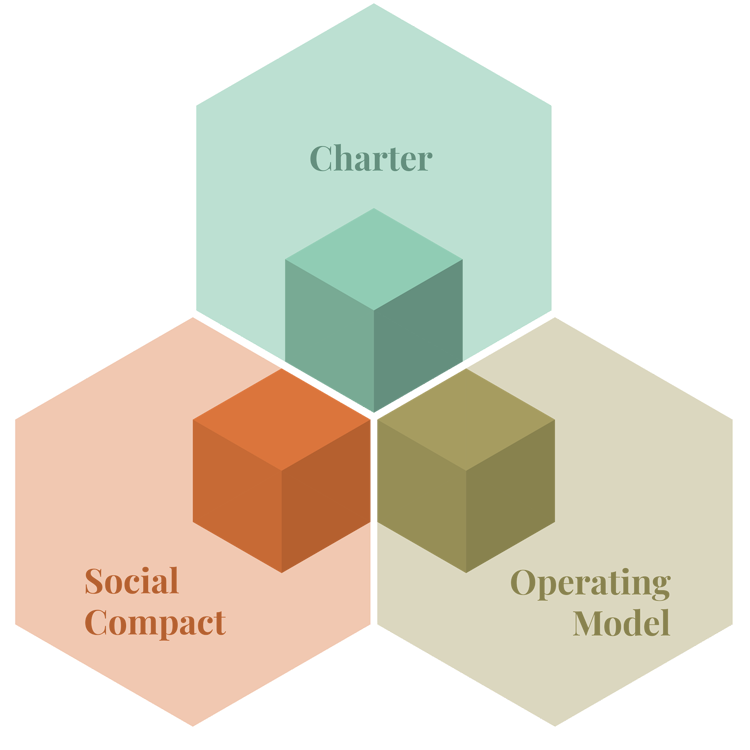
Based on the Theory of the Foundation initiative’s extensive research in the U.S., Europe, Asia, and Latin America, we developed the Philanthropy Framework, a tool to give emerging or established philanthropies, including those looking to grow their SRI practices, a structure to align resources for maximum impact. The Framework is comprised of three core elements:

Charter – the organization’s scope, form of governance, and decision-making protocol;

Social Compact – its implicit or explicit agreement with society about the value it will create; and

Operating Model – the approach to the resources, structures and systems needed to implement strategy.

Foundations in the U.S. and Europe have begun using this framework successfully as a practical, concrete tool for analysis, planning and decision-making.

As interest in SRI investing continues to grow in the philanthropic sector, we’ve given much thought to how a foundation can apply the Framework to strategies that use all of its capital in order to create positive impact. Each of the three Framework elements can help define an SRI investing strategy.

An organization’s charter tells its origin story and defines its intended scope, form of governance, and procedural guidelines. The charter encompasses an organization’s history, governance, decision-making processes, intrinsic risk tolerance, culture and values. Organizations considering incorporating an SRI investing strategy should consider these factors: Are there constraints within your organization — whether regulatory or cultural — that might be barriers to SRI investing? Or, does your history and values encourage the use of new approaches in order to achieve mission? Reflecting on your organization’s charter will help you decide if SRI investing is right for your organization and how to incorporate it thoughtfully and effectively.

A social compact is an organization’s agreement with key stakeholders about the specific value it will create in society. It covers accountability, legitimacy, transparency, direction of influence on society, independence/interdependence and approach to risk. Some philanthropies we’ve interviewed feel that their role in society obligates them to put all of their capital towards creating good, rather than simply parking it somewhere dormant. Others see it as their duty to provide risk capital or to make “big bets” on innovative approaches to amplifying impact. Conversely, an organization may feel duty-bound to safeguard its capital to ensure its ability to support mission-driven programs in perpetuity. When an organization shifts its investment approach, it may need to reassess and adjust its social compact.

The third component of the Philanthropy Framework is the operating model: the combination of resources, structures and systems that enable a philanthropy to deliver on its mission, strategy, and goals. An organization’s chosen operating model plays a significant role in a decision to implement an SRI investing strategy. Do you have the necessary staff expertise and operational systems? Some organizations choose to build deep internal expertise in-house, while others prefer to augment their capabilities with outsourced philanthropic or investment advisors. Do your finance and program departments operate in silos? If so, merging traditionally separate teams can be challenging. But it also presents an exciting opportunity to break down those silos and to think about your organization’s ability to maximize its impact as an institution.

An example of an organization that has thoughtfully incorporated SRI investing is the Nathan Cummings Foundation, which announced in 2018 that it would move its entire endowment, nearly half a billion dollars, into investments aiming to further its mission. The decision was made after a reflection of the causes the foundation cared deeply about (combating climate change and social inequality) and the tools the foundation had at its disposal to move the needle on those issues. Crucially, there was alignment and enthusiasm among the foundation’s board, particularly its fourth-generation family members, towards the strategic shift. A sense of urgency also enabled the foundation to take risks and use market-based solutions in addition to philanthropy — both to tackle these issues and to demonstrate to other philanthropies that such a pledge was possible. The Nathan Cummings Foundation has been testing its strategy and growing its expertise for several years, while continuing to build the necessary internal capacity. These charter, social compact and operating model considerations allowed for a successful strategic shift towards SRI investing.

Many of the organizations we’re working with — whether as part of the Theory of the Foundation initiative or through our advisory work — are either already engaging in SRI investing or actively thinking about whether they should develop a strategy. For both new and experienced impact investors, it’s important to think about how SRI investing fits in with their organization’s charter, social compact and operating model. A thoughtful assessment and reflection of the financial and non-financial assets at your disposal will allow your organization to align all of its resources towards creating positive change.


Article by Melissa Berman, the founding President and CEO of Rockefeller Philanthropy Advisors, Inc., an innovative nonprofit philanthropy service launched by the Rockefeller family in 2002. Rockefeller Philanthropy Advisors’ mission is to help donors create thoughtful, effective philanthropy throughout the world. Rockefeller Philanthropy Advisors develops strategic plans, conducts research, manages foundations and trusts, structures major gifts, coordinates donor collaboratives, and provides regranting and fiscal sponsorship services.

Rockefeller Philanthropy Advisors also publishes, convenes and speaks about innovations in thoughtful, effective philanthropy. Rockefeller Philanthropy Advisors annually manages or facilitates over $250 million in giving to more than 25 countries. It has offices in New York, San Francisco, Chicago and London. Melissa has led Rockefeller Philanthropy Advisors since its inception, building it into one of the world’s leading philanthropic advisory, grant making, research and project management services. Under her leadership, RPA developed and published the “Philanthropy Roadmap” series of donor guides with support from the Gates Foundation. She developed and leads Rockefeller Philanthropy Advisors’ research initiative, “The Theory of the Foundation,” and is the author of multiple reports in that initiative. A frequent speaker, Melissa has been a guest lecturer at universities across the U.S., Europe and Asia including Harvard, Yale, Stanford, Duke, IMD (Lausanne), Oxford, Sun-Yat Sen, and Beijing Normal universities.

As a widely-recognized expert in philanthropy, Melissa has been profiled in The New York Times and the Stanford Social Innovation Review. Recent articles she has authored appeared in the Foundation Review and in the International Family Offices Journal. Her ideas and views are featured in The Economist, Wall Street Journal, New York Times, Financial Times, and The Chronicle of Philanthropy. She has been interviewed on the Today Show, NBC Nightly News, NPR, BBC Radio, CNBC-TV, and Bloomberg TV. An adjunct Professor at Columbia University’s Business School, Melissa is also a director/trustee of Rockefeller Philanthropy Advisors, the Adrian Brinkerhoff Foundation and the Foundation Center. She serves on the Advisory Boards of the Marshall Center for Philanthropy and Social Entrepreneurship at the London School of Economics and the Tamer Center for Social Enterprise at Columbia University. Melissa holds a B.A. from Harvard University and a Ph.D. from Stanford University. She’s proud to have majored in Folklore and Mythology.

Article Note

[1] Drucker, Peter F. “The Theory of the Business.” Harvard Business Review, 17 Oct. 2016, https://hbr.org/1994/09/the-theory-of-the-business

Featured Articles, Impact Investing, Sustainable Business

Philanthropic Investors Tap “Catalytic Capital” to Seed Innovation & Scale Progress

By Debra Schwartz, Managing Director, MacArthur Foundation

MacArthur FoundationOften, the most compelling impact investments are made, not found.
I have used that phrase over the years to describe how foundations and other impact-focused investors use “catalytic capital” to support social and environmental progress. These patient, flexible, “catalytic” investments are able to take on more risk and/or accept a lower return than commercial capital in order to finance gains that would not otherwise be possible.

Lessons learned have led to new solutions that fill capital gaps, while also strengthening the overall ecosystem for impact investing.

The timing is particularly valuable at this point in the evolution of impact investing. Today, there is a sense of great excitement about this work, spurred in part by the entrance of mainstream investment firms and asset managers into the arena. But there are concerns as well. Rapid growth might reinforce a binary view of this work as either purely commercial or purely philanthropic, when many impact investments actually fall somewhere in between.

In fact, market surveys consistently point to a lack of appropriate capital across the risk-return spectrum as one of the top challenges facing the impact investing field. Even the entry of the world’s largest financial firms into impact investing will not be enough to fill that gap. The market also needs more catalytic capital — also known as concessionary or sub-commercial capital — to seed innovation, scale up promising enterprises, and sustain organizations that serve impoverished people and places.

The good news is that this increasing realization is leading to deeper conversations about risk, return, and impact — and not just among foundations. The recent series Beyond Trade-Offs, from Omidyar Network, includes insights from influential organizations like the Ford Foundation, the Bill and Melinda Gates Foundation, Goldman Sachs, Big Society Capital and Access—The Foundation for Social Investment, Lok Capital, Elevar Equity and The Rise Fund. The series highlights strategies that are moving some investors beyond their traditional commercial or philanthropic roles.

One contributor, Prudential explains how it segments its impact investing portfolio so that 80 percent of its assets target market-rate or better returns, while 20 percent are catalytic (supporting promising but higher risk enterprises) or philanthropic (supporting nonprofits). And Blue Haven Initiative, a single-family office, discusses why it expanded its market-rate approach so it could operate across a continuum of returns, recognizing that family offices are able to be more flexible in pursuing impact than are many institutional investors.

At MacArthur, we have likewise leveraged our capacity to be innovative and take on risk. Since the mid-1980’s, we have invested $517 million in catalytic capital to directly support enterprise-level progress, as well as drive large-scale initiatives and build collaborations that unlock new investments — all aimed at financing impact that would not otherwise be possible.

Often, that means we anchor blended funds in order to mitigate risk or provide a lower-cost layer of capital; that, in turn helps attract a diverse pool of other investors. We also play a priming role, investing in promising but unproven organizations or markets, and giving them the chance to build financial capacity and proof points so that they may become commercially investable in the future.

In all of this, we have seen the “but-for” additionality of catalytic capital prove its worth many times over. Thirty years ago, MacArthur supported pioneers in microcredit and the once-fledgling field of U.S. Community Development Financial Institutions. We were among early impact investors — including faith-based organizations and other nonprofits — that took a chance on the hopeful power of mission-driven capital. Our early bets helped build strong enterprises and intermediaries that now marshal billions of dollars for the benefit of low-wealth, under-served people.

To preserve and improve the too-scarce supply of U.S. affordable housing, MacArthur devoted over $200 million to the Window of Opportunity initiative. In addition to de-risking blended funds and investing directly in 22 leading nonprofit affordable housing organizations, we used catalytic capital to seed and launch innovations like the groundbreaking Energy Savers program, the largest unsubsidized multifamily retrofit effort in the U.S., created by Community Investment Corporation and Elevate Energy.

More recently, our $100 million Benefit Chicago collaboration with The Chicago Community Trust and Calvert Impact Capital, demonstrates multiple strategies in action. MacArthur provided $50 million in long-term, low-cost capital to help launch the fund and coordinated with partners to raise an additional $50 million from individuals, corporations, institutions and donor-advised funds interested in investing locally. Today, the fund is financing community-focused businesses that create jobs for hard-to-employ populations like ex-offenders and which would not, on their own, be commercially investable.

The diversity of investors speaks to the power of these collaborations. Praxis Mutual Fund, for instance, was among Benefit Chicago’s first supporters, providing $1 million as part of an effort to invest 1 percent of its assets in community development. , which is part of the faith-based financial firm Everence, focuses on socially responsible investing with products that sit at various points along the risk-return continuum, offering its clients the chance to balance their interests in impact and financial returns in various ways.

Going forward, how much catalytic capital will be needed to fuel innovative efforts like these and bridge global capital gaps? There is no widely accepted number; a handful of foundations like MacArthur are making grants that support market research to better quantify the need.

What is clear, though, is that today’s impact investment market cannot reach its full potential by focusing solely on commercial forms of investment. Catalytic capital must be part of the mix, and MacArthur will soon launch new strategies to inspire and inform its expanded use. By cultivating innovation, scale, and impact, catalytic capital can be a powerful force that improves the lives of millions of people and protects the planet for generations to come.


Article by Debra Schwartz, who is the Managing Director of Impact Investments and serves on the Executive Leadership Team of the John D. and Catherine T. MacArthur Foundation – a private, global philanthropy with approximately $6 billion in assets and annual grant making of roughly $250 million. A pioneer in impact investing, MacArthur has dedicated $500 million of its assets to this purpose. Debra’s group serves as a Foundation-wide resource and engages deeply with selected program teams to devise impact investments that advance key goals. Her group also makes investments and grants that advance innovation, knowledge and connection throughout the impact investment ecosystem, with a focus on fostering the use of catalytic capital.

Debra joined MacArthur in 1995, having previously worked as an investment banker at John Nuveen & Co., and as CFO for a nonprofit child welfare agency. A frequent speaker and guest lecturer, Debra was a presidential appointee to the United States Treasury Department Community Development Advisory Board and a founder of the Mission Investors Exchange. She holds a Master’s degree from the Kellogg School of Management at Northwestern University and a Bachelor’s degree from Yale College, summa cum laude.

Featured Articles, Impact Investing, Sustainable Business

Global 100: The World’s Most Sustainable Companies

Sustainable companies don’t just make the world a better place, they offer higher returns and longer lifespans.

This year’s Global 100 ranking of the world’s most sustainable companies suggests that performing well on sustainability issues not only makes you more money, it helps you live longer, too—a rosier take on the cliché that nice guys finish last.

Analysis by Corporate Knights with Thomson Reuters Datastream shows that the average age of a Global 100 company is 87 years, while the average age of companies in the MSCI All Country World Index (ACWI) is 63 years.

And the Global 100 index, which is equally-weighted and mirrors the industry composition of the MSCI ACWI on a percentage basis, outperforms the benchmark, says Corporate Knights CEO and editor-in-chief Toby Heaps. “From inception (February 1, 2005) to December 31, 2018, the Global 100 made a net investment return of 127.35%, compared to 118.27% for the MSCI ACWI,” he points out.

The Global 100 companies have better governance than their peers – they have a lower CEO-to-average-worker pay ratio than the ACWI (76:1 compared to 140:1), an important measure in an age of increasing income inequality and growing concern about it. They also pay more taxes, on average 18% of EBITDA compared to 16%. Companies perceived to be avoiding paying their fair share of taxes through financial engineering are coming under growing pressure from consumers, policymakers and regulators.

The Global 100 firms are greener, too – they have double the carbon productivity (weighted average of $238k in revenue per tonne of CO2e vs. $157k for the MSCI ACWI ETF); and derive much more of their revenues from clean (positive green or social impact) goods and services (26% of total revenues vs. 9%).

They also have more women on their boards (average 27% vs. 19% for the MSCI ACWI ETF); and are more likely, by some distance, to have a link between sustainability measures and executive pay (58% have a link against 19% for the ACWI).

A fifth of the list (20) are IT companies, with the financial sector the second biggest (17 companies), followed by consumer discretionary, health care and industrials. Collectively, these five sectors account for almost three quarters of the Global 100.

While the U.S. is the largest single country represented, with 22 companies, Europe accounts for just over half of the list (52). There are no companies from China or India.

The Global 100 methodology has seen further refinements this year, with all companies ranked against Corporate Knights Industry Group peers based on a modified FactSet taxonomy rather than, as previously, against GICS Industry peers, to allow for better “apples to apples” comparisons.

And this year, half of every company’s score is determined by its clean revenues. Last year, only a few sectors were ranked in this way – energy, utilities and financials – but a fleshed out taxonomy and more complete data now enables all sectors to be evaluated on this basis.

Winner Chr. Hansen, is profiled in a separate article on Corporate Knights website, and other stand-out companies include Banco do Brasil (#8), whose US$50 billion green loan book accounts for almost one third of its total loan book – far and away the highest percentage for any bank.

Mining group Teck Resources (#37), traditionally seen as a steel-making coal company, is reinvesting its profits to build up its copper and zinc units, both elements being crucial to the low carbon economy.

Neste (#3), an oil and gas refiner from Finland (one of seven Finnish companies in the index) now earns 25% of its annual US$11.7 billion in revenues from refining biofuels and aims to lift that to 50% by 2020. The company’s five-year return of 328% to September 2018 compares to 7.25% for the S&P Global Oil Index.

Click here to go to the 2019 Global 100 landing page to see the full list as well as additional articles.


Article by Mike Scott, Corporate Knights – The magazine for Clean Capitalism

Additional Articles, Energy & Climate, Food & Farming, Impact Investing, Sustainable Business

Foundations Moving to Greater Mission Alignment

The list of foundations beginning to move their endowment assets to align to their values and mission keeps expanding. As the universe of investable impact investing product grows and diversifies across asset classes, it is a natural progression for the asset allocation of foundations’ endowment to reflect their core values. This congruence of the investment allocation with the programmatic focus areas is an interesting trend to watch out for and the early findings will bolster the “no trade-off for impact” school of thought.

Edward Mother Earth Foundation (EMEF) is a $35 million family foundation dedicated to climate change disruption, whose endowment previously held traditional investments in fossil fuels, which inherently conflicted with EMEF’s core mission. In 2014, they applied rigorous ESG screens and divested from fossil-fuel investments, ultimately reducing their portfolio’s carbon emissions. The publicly traded portion of EMEF’s portfolio has delivered 5% annualized returns, falling in line with constituent benchmarks. More information here.

The Russell Family Foundation (TRFF) began strategically leveraging their endowment to pilot mission-aligned investments in 2004. With over a decade of experience, TRFF developed a spectrum of impact approaches for asset allocation ranging from negative screens (Level 1) to catalytic ESG investments (Level 5). As of June 2018, TRFF has dedicated over $100 million or around 74% of their endowment to mission-aligned investments and has out performed their blended benchmark by 2.7% on an annualized basis.

Recently, The Nathan Cummings Foundation (NCF) made headlines when it announced that it will be moving its nearly half a billion dollar endowment to 100% mission-aligned investing. NCF has been a prominent voice in the impact investing sector. It was one of the first to engage in shareholder advocacy and was a founding signatory of The United Nations Principles for Responsible Investing. NCF has developed a pipeline of mission-aligned investment strategies and will detail how their endowment will be leveraged to achieve impact at the end of the year. More information here.

This comes in the wake up of commitments from larger foundations like Ford Foundation which famously moved $1 billion to mission-related investments, and Heron Foundation that concluded its transition to 100% mission-aligned ahead of schedule in 2017.

The Impact Investing world hopes that many more foundations are paying attention.

Article from the Good Capital Project, Total Impact (November 2018 newsletter).

Additional Articles, Impact Investing, Sustainable Business

Want to Change the World? Here are Five Steps to Take

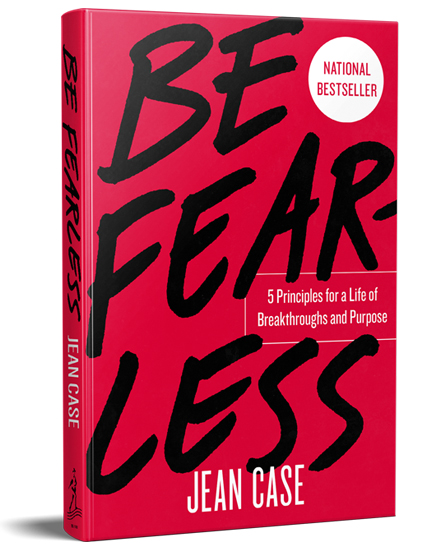
Case Foundation CEO Jean Case’s new book, Be Fearless, profiles leaders who have used their desire to solve a problem to drown out their fear of risk or failure.

After Hurricane Maria struck Puerto Rico in September 2017, chef José Andrés activated a network of chefs through two groups he’d founded–World Central Kitchen and Chefs for Puerto Rico–to set up mobile kitchens capable of feeding hundreds of thousands of survivors. (He’s continued that work for other disasters, including those impacted by Hurricane Florence in North Carolina.)
But in order to be in a position to do that, Andrés has also continuously bet big, and learned from failures. The chef moved to the U.S. from Spain in his 20s and worked his way up to food-world icon status. After the Haiti earthquake in 2010, he joined response groups and saw that there was a need for a new kind of philanthropic effort, so he punted: World Central Kitchen’s broader efforts include building chef networks in impoverished countries to train workers, fund social services, and push for other life-improving changes. For instance, in Haiti, they’ve ensured school kitchens use cleaner fuels in their stoves.

Andrés is just one example of someone who has acted fearlessly to dramatically change the world. At its most broad, that umbrella could also include Corrie ten Boom, the first female watchmaker in the Netherlands, who put her ingenuity to use by building a hideaway for Jews seeking refuge during the Holocaust. It also envelops the very different antics of Airbnb founders Brian Chesky and Joe Gebbia, who launched a company that’s democratized the lodging industry and earned many more people a new source of revenue out of a moment of self-preservation: They initially offered up their own place because rent was due.

These examples and the universal themes they gesture toward form the thesis of a book entitled Be Fearless: Five Principles for a Life of Breakthroughs and Purpose by Jean Case, the CEO of the Case Foundation. The private nonprofit, which was formed by Case and her husband, former AOL CEO and chairman Steve Case, is not endowed but funded annually by the couple. Since 1997, it has made more than $100 million in donations to groups that primarily inspire entrepreneurial and innovative ways to make social change. As Case puts it: “We like to say we invest in people and ideas that can change the world.”

Which ultimately raised a pretty obvious question: Regardless of circumstance, “Some [people] move forward and accomplish extraordinary things while others may not,” Case says. “What’s the difference?”

Be Fearless, which was released in January 2019, is built on several years of Case Foundation research to find the answer. Overall, Case believes most “transformational breakthroughs” have five key elements in common, which she explores in different book chapters whose titles work like personal mantras: Make a Big Bet; Be Bold, Take Risks; Make Failure Matter; Reach Beyond Your Bubble; Let Urgency Conquer Fear.

“Fearlessness is not the lack of fear, but rather the courage and the strength to overcome it,” says Case.

Read the full Fast Company article by Ben Paynter.


Additional Articles, Impact Investing, Sustainable Business

Triskeles Foundation Launches Impact Coffee

Sourced in Peru and roasted locally by Stolen Sun Craft Brewing & Roasting Co., Impact Coffee supports the empowerment and promotion of women-grown coffee.

Impact Coffee Triskeles FoundationTriskeles Foundation, the leader in values-aligned donor advised funds and mission-based investment strategies, announced in January 2019 the launch of Impact Coffee. Sourced from Cooperative Agraria “Frontera San Ignacio” Ltda (COOPAFSI) in Peru and roasted locally in Exton, Pa. by Stolen Sun Craft Brewing & Roasting Co., each batch sold helps to make a positive difference by supporting gender equality and the empowerment of women and girls, and ensuring sustainable consumption and production patterns.

“At Triskeles, we are consistently working to build a positive future, engage individuals and enhance communities – and one of those ways is by aligning our work with the United Nations Sustainable Development Goals (UNSDGs), which are the blueprint to achieve a better and more sustainable future for all,” said Triskeles Foundation Founder Clemens Pietzner. “When we work together for the betterment of our communities – both locally and globally – we can make a positive, lasting impact on our world. As we source, roast and, ultimately, sell each batch of Impact Coffee, we are creating measurable impact specific to UNSDG goal five, gender equality, and goal 12, responsible consumption and production.”

To make Impact Coffee, unroasted coffee beans are shipped from COOPAFSI and delivered to Stolen Sun where they are roasted on site exclusively for Triskeles Foundation by master roaster and licensed Q Arabica grader Jonathan Zangwill. Zangwill travels the world sourcing the finest ingredients in an effort to both deliver a superior product, and learn about the impact to local economies, culture and responsible production practices. A portion of the proceeds from the sales of Impact Coffee will be donated back to Triskeles Foundation to help support its mission.

COOPAFSI was officially established in June 1969 and promotes women-grown coffee. Gender equality was an important factor when the land was purchased and divided among producers, and the women who work at this cooperative continually manage new projects and develop new ways to improve the lives of their families. They contribute to the physical and sensory quality of the coffee as they focus their efforts on improving quality and delivering consistent coffee to different markets. Further, in 2016, a committee of women was created by the cooperative that is responsible for distributing loans to enable producers to improve their land, while also taking part in new developments for their kitchens, crafts and livestock. They also created a computer lab that allows all members to experience and engage with modern technology.


About Triskeles Foundation

Triskeles Foundation is an independent, public 501(c)(3) charity that helps individuals, families and organizations effectively reach their philanthropic goals in a simple manner. As a national provider of donor advised and nonprofit funds focused on values-aligned impact and sustainability, Triskeles Foundation seeks to build a positive future, engage individuals and enhance communities, align philanthropic investments with deeper intentions and build a thoughtful stewardship of resources. For more information, visit-www.triskeles.org

Additional Articles, Food & Farming, Impact Investing, Sustainable Business

Native American Credit Unions: Building Financial Access and Capability

The structure and mission of credit unions uniquely positions them to effectively provide a range of basic financial services critical to Native communities.

Abstract: Among the most unbanked and underbanked in the United States, Native Americans have much less access to affordable, good-quality financial services. Native credit unions fill important credit and capital needs of the underbanked consumers throughout Indian Country. They also provide a unique business profile different from two other mainstream Native financial institutions, Native-owned banks and Native Community Development Financial Institution (NCDFI) loan funds. Native credit unions’ social mission, cooperative ownership structure, and focus on financial education align closely with the needs of most Native communities. Increased visibility, sponsor support, and industry resources signal the potential for the growth and expansion of Native credit unions to create even greater opportunities for financial access and capability in Native communities.

Executive Summary: Building access to capital and affordable financial services are among the most critical needs of Native communities throughout the nation. Native Americans are more likely to be unbanked or underbanked than other minority groups in the United States. In 2013, 16.9% of Native Americans were unbanked, having neither a checking nor a savings account at an insured institution. An additional 25.5% were underbanked, using alternative financial services outside of the banking system. With lower levels of usage of checking and savings accounts, Native Americans have fewer options for obtaining affordable credit for both emergencies and for life’s major purchases, such as purchasing a vehicle.

Native Americans who lack checking and savings accounts have fewer options for obtaining affordable credit for both emergencies and for major purchases such as a motor vehicle.

Moreover, without access to mainstream financial services, they face challenges in establishing credit histories and acquiring financial capability. Financial capability includes financial literacy (knowledge) and the opportunity to act (products and services). Some studies indicate that financial education alone is not enough to improve an individual’s financial well-being. Increasing access to affordable financial products—checking and savings accounts at a minimum—has great potential for improving financial outcomes for Native Americans. Matt Fellowes, former research fellow at the Brookings Institution emphasizes this relationship.

“Bank accounts are essentially an on-ramp to economic mobility and wealth in this country.”

Native American-focused mainstream financial institutions—banks, community development loan funds, and credit unions—thus have an important role in meeting the financial needs of Native communities. They can bridge the banking and credit gaps in critical ways, each with distinct characteristics. First Nations Development Institute, a national Native non-profit focused on strengthening Native economies, described the comparative advantage of Native institutions versus non-Native institutions as stemming from their being “…a locally controlled, community responsive resource for credit and other financial services to support asset-based development in Native communities.”

Native financial institutions are increasingly providing more financial services to Native communities across the country, albeit in different ways. Among the three mainstream options, Native credit unions fill a financial services niche between Native-serving community development loan funds and Native-owned banks. Unlike community development loan funds, credit unions (like banks) conform to the federal regulations required to offer checking and savings accounts, a core mainstream financial service important for addressing financial access needs. Unlike banks, whose responsibilities to profit-seeking shareholders implicitly put a high priority on attracting and serving affluent customers, credit unions are owned and governed by their membership and operate under a service mission that includes low-income and under-served consumers. In addition, credit unions require fewer resources to establish and operate than banks, though more than loan funds. These characteristics position Native credit unions as the middle path for addressing the financial access needs of Native communities, between the more limited Native-serving loan funds and the more resource-intensive and profit-oriented Native-owned banks. However, to expand their capacity and services in Native communities, Native credit unions also require long-term investment and development support. Sponsorship and capacity building for existing and new Native credit unions come from a variety of sources: tribes, federal agencies, philanthropic organizations, and social investors. Both the public and the private sector are showing signs of becoming more responsive to the needs of community-centered financial institutions, like Native credit unions, with the goal of increasing access to financial services for the individuals and communities they serve.


Article by Nikki Pieratos (Bois Forte Chippewa), Center for Indian Country Development, Federal Reserve Bank of Minneapolis. Nikki Pieratos is the former CEO of Northern Eagle Federal Credit Union, chartered in 2013 to serve the Bois Forte Chippewa community in northern Minnesota. The author thanks present and former Native credit union leadership and financial services industry experts for sharing their insight during interviews from March 2018 through December 2018.

The views expressed herein are those of the author and do not necessarily represent the views of the Federal Reserve Bank of Minneapolis or the Federal Reserve System.

Additional Articles, Energy & Climate, Food & Farming, Impact Investing, Sustainable Business

The State of Green Business 2019 from GreenBiz

By Joel Makower, Chairman and Executive Editor, GreenBiz

The following is adapted from the 12th annual edition of State of Green Business report that looks at key trends and dozens of metrics assessing how, and how much, companies are moving the needle on the world’s most pressing environmental challenges. The report is produced in partnership with Trucost, part of S&P Global. In addition to the 10 trends sustainability professionals should be tracking, the report offers more than 30 metrics for nearly 2,000 companies, assessing the progress, or the lack thereof, on a wide range of topics, including supply-chain impacts, natural capital impacts, greenhouse gas emissions and investment in greener products and business models.

Download the Full Report Here

“We find ourselves in uncharted waters.”

That was part of our assessment 10 years ago, in 2009, when we published our second annual State of Green Business report. It was a time of both bright hope and dark uncertainty: On the one hand, there was regime change in America, a new presidential administration promising green jobs and renewed action on climate and other issues. There was a race by the global automotive industry to transition to electric vehicles — and growing action by companies to reduce the toxic components of their products and manufacturing processes.

“So many emerging technologies and business trends of 2009 are still unfolding a decade hence, slowly but surely striving to find mass markets.”

On the other hand, there was a global “great” recession, roiling companies in all sectors and pushing environmental issues to the back burner for some, and little progress on addressing climate change and its impacts, as greenhouse emissions continued to ratchet up.

As we wrote back then:

This year’s update is a mixed bag of encouraging and discouraging news. But on balance, despite a growing chorus of corporate commitments and actions, we’re less optimistic that these activities, in aggregate, are addressing planetary problems at sufficient scale and speed.

Suffice to say, it’s déjà vu all over again. So many concerns of 2009 are concerns again today, albeit with a heightened sense of urgency. So many emerging technologies and business trends of 2009 are still unfolding a decade hence, slowly but surely striving to find mass markets. So much progress we saw back then is still giving us hope.

But the headlines aren’t doing much to shore up our optimism.

Let’s start with climate change, because pretty much everything else hinges on that. As 2018 wound down, we saw a raft of headlines that were, at best, distressing:

• Rising heat from climate change threatens crop yields
• Climate may force millions to move
• Climate cost: Overheated employees too miserable to work
• Climate change could lead to threefold increase in powerful storms
• Climate change will make roads even worse
• Climate change will shrink economy and kill thousands
• Banks fear climate change will render homes uninsurable
• World hunger rose for three years — climate change is a cause
• Climate change already a health emergency, say experts
• Climate-heating greenhouse gases at record levels

And that was over just two weeks in November.

The year saw wildfires in Greece and the United States, floods in Japan and Nigeria, a heat wave in Pakistan and mudslides in India—and enough human carnage from all these to provide a sobering preview of what might await us in the decades ahead.

The news in 2018 wasn’t all bad. Renewable energy procurement continued on the impressive growth curve we’ve been watching for a decade. Electric vehicle purchases, while still a relatively small slice of the market, continued to grow as automakers around the world promised dozens of new EV models in the next few years, including electric buses and trucks. Eliminating plastic waste became a global cause, with efforts both symbolic (banning plastic straws in restaurants) and significant (corporate commitments to eliminate all single-use plastics). Ideas that not long ago seemed fringe—regenerative agriculture, a circular economy—were becoming commonplace, including within some of the world’s largest companies.

In the end, it’s another mixed bag, with many of the same challenges we’ve seen for years. “History doesn’t repeat itself, but it often rhymes,” Mark Twain is reputed to have said. The history of sustainable business may be a verse-case scenario.

So, which will win out—the good news or the bad? The answer depends in part on the headlines of the day—more cataclysmic signs of a planet under siege or the hopeful signals of a world taking action?

As we concluded back in 2009:

At the end of the day, the questions remain: Are we moving far enough, fast enough? Does the ever-growing green activity in the business world represent a true transformation, one capable of adequately addressing pressing issues like climate change, air quality, the loss of species and the looming water crisis? Or is it merely nibbling at the edges of the problems? Reasonable minds can justifiably argue both sides.

Plus ça change—the more things change, the more they stay the same.


Article by Joel Makower, Chairman and Executive Editor, GreenBiz. Joel is an award-winning writer and strategist on corporate sustainability practices and clean technology who, over 25 years, has helped a wide range of companies align sustainability goals with business strategy. He is the bestselling author or co-author of more than a dozen books, including The New Grand Strategy: Restoring America’s Prosperity, Security and Sustainability in the 21st Century, and a sought-after speaker to companies and business groups around the world.

Additional Articles, Energy & Climate, Food & Farming, Impact Investing, Sustainable Business

X