Tag: Impact Investing

10 Years of Green Bonds: From Evolution to Revolution

Issued in November 2008, the World Bank’s first green bond created the blueprint for sustainable investing in the capital markets. Today, the green bond model is being applied to bonds that are raising financing for all 17 Sustainable Development Goals.

The phone call to the World Bank Treasury came out of the blue: a group of Swedish pension funds wanted to invest in projects that help the climate, but they did not know how to find these projects. But they knew where to turn and called on the World Bank to help. Less than a year later, the World Bank issued the first green bond—and with it, created a new way to connect financing from investors to climate projects.

Bonds are essentially an agreement where issuers borrow funds from investors and must repay investors at an agreed rate after a specified amount of time. Governments, companies and many others issue bonds to borrow money for projects. Issuing a bond was nothing new for the World Bank—it is how the institution finances its lending for development projects since 1947. But the concept of a bond that is dedicated to a certain kind of project had not been tested before. It turned out to be a history-making event that fundamentally changed the way investors, development experts, policymakers, and scientists worked together.

A Stark Warning

In 2007, the Intergovernmental Panel for Climate Change—a United Nations agency that provides scientific data on climate change and its political and economic impacts—published a report that undeniably linked human action to global warming. The finding, along with increasing occurrences of natural disasters, prompted a group of Swedish pension funds to think about how they could use the savings they were stewarding toward a solution. They called on their bank, SEB (Sandinaviska Enskilda Banken AB) to see what could be done. And SEB connected the dots between the financing that was seeking to reduce risks for the investors and make a positive impact, and the World Bank with its deep knowledge on investing in environment projects around the world.

Thinking Outside the Box

In hindsight, the solution seems straightforward. Investors wanted a safe place to put their money and know that they were making a difference. The World Bank had environment projects to finance, a track record as a high-quality bond issuer, and the ability to report on the impact of its projects. But there was a missing link: how could investors be truly certain that the projects they were supporting addressed climate concerns?

This triggered another phone call, this time to CICERO, the Centre for International Climate and Environmental Research — an interdisciplinary research center for climate research in Oslo. CICERO scientists were leading experts on climate issues. They could provide a credible view on whether a project was going to make a positive impact on the environment.

What followed were many more conversations among the pension funds, SEB, CICERO, and the World Bank Treasury. The conversations were often difficult—especially since more often than not, the different organizations spoke different languages, and it was challenging to bridge the gap between finance, development and science.

“Green bonds help investors address the environmental, social or governance risks that can have a material effect on returns.” – Heike Reichelt, Head of Investor Relations and New Products, The World Bank Treasury

A Joint Commitment to Finding a Solution

Success ultimately came in November 2008, when the World Bank issued the green bond. The bond created the blueprint for today’s green bond market. It defined the criteria for projects eligible for green bond support, included CICERO as a second opinion provider, and added impact reporting as an integral part of the process. It also piloted a new model of collaboration among investors, banks, development agencies and scientists. Ultimately, it was the result of their commitment, perseverance, and drive to find a solution.

The World Bank green bond raised awareness for the challenges of climate change and demonstrated the potential for investors to support climate solutions through safe investments without giving up financial returns. It formed the basis for the Green Bond Principles[1] coordinated by ICMA, the International Capital Markets Association. It highlighted the social value that bonds could create and the need for a sharper focus on transparency.

Since then, the World Bank has raised US$13 billion through more than 150 green bonds in 20 currencies for institutional and retail investors all over the globe. Other green bond issuers now include companies and banks of all sizes and several countries. All issuers are measuring, tracking and reporting on the social and environmental impact of their investments. Fannie Mae is the largest issuer of green bonds by volume in a single year. Fiji last year issued the first emerging market sovereign green bond. Every bank active in the international capital markets has staff dedicated to green or sustainable bond financing. Green lending criteria are being incorporated in loans. There is an industry of second opinion providers and verifiers, including rating firms and others providing information to investors and supporting issuers.

A Sustainability Revolution

Fast forward ten years. Capital markets have evolved from a market where investors knew and cared little about what their investments were supporting, to one where purpose matters more than ever. The basic green bond premise—with its model for project selection, second party opinion, and impact reporting—is being applied to other areas. As a result, there are now social bonds, blue bonds, and other bonds that raise financing dedicated to a specific development purpose. All follow the green bond model with its focus on impact reporting. More than US$500 billion in these kinds of labeled bonds have been issued since 2008.
Investors’ interest in the social and environmental purpose of their investments reflects a fundamental shift in the bond market. Investors understand their power to support initiatives their stakeholders care about, that they do not have to give up returns. They also want data that shows how they are addressing environmental, social and governance factors — particularly as they and they increasingly understand that in addition to creating social value, they are mitigating risk to their own investments. An issuer with good sustainability practices will generally be a better investment. Issuers are responding. Issuers are engaging with investors to show how their bonds present opportunities to achieve both financial and social returns.

Investors are looking beyond the narrow market of labeled bonds to understand how issuers use their investments. That market is much larger – the World Bank alone issues US$50 billion every year in Sustainable Development Bonds for its development lending.[2]

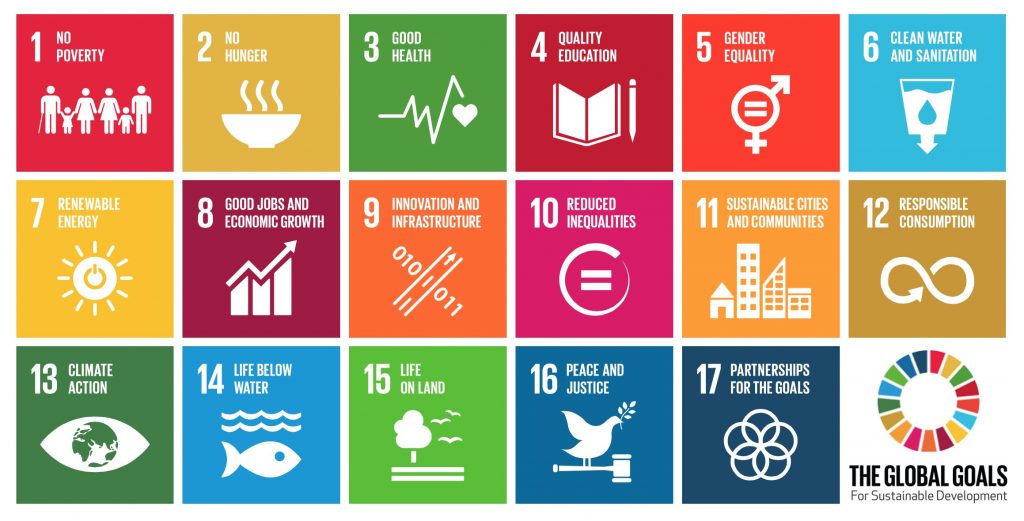
This revolution was sparked by green bonds. The challenge now is to build on the momentum. The Sustainable Development Goals (SDGs) are a collection of 17 global goals agreed by 193 countries in 2015 that range from education to health and sustainable cities. The SDGs are a helpful framework for investors and issuers to focus on areas beyond climate. The World Bank has started to engage investors around specific SDGs through a series of bonds to raise awareness for specific development challenges through its sustainable development bonds. Others are following.

For more information and to read the The World Bank Green Bond Impact Report 2018 visit – http://treasury.worldbank.org/en/about/unit/treasury/ibrd/ibrd-green-bonds


Article Notes

[1] https://www.icmagroup.org/green-social-and-sustainability-bonds/green-bond-principles-gbp

[2] http://treasury.worldbank.org/en/about/unit/treasury/ibrd/ibrd-sustainable-development-bonds

Additional Articles, Energy & Climate, Impact Investing, Sustainable Business
Climate Finance: More Money Than Ever Invested in Climate Action, but is It Enough?

Climate finance is a central issue in how the global community proposes to follow through with implementation of the Paris Agreement. A new study, however, shows that while investment in climate action has been steadily increasing, it falls short in key areas.

Climate Policy Initiative, which has tracked climate finance since 2011 in the Global Landscape of Climate Finance, shows that global climate finance flows for 2015 amounted to $472 billion and $455 billion for 2016. Taking account annual fluctuations, average investment across 2015/2016 was 27% higher than during 2013/2014, although this is partially due to the availability of new data.

Find the full study here.

There is also evidence this overall increase will continue. CPI’s preliminary estimates for global climate finance flows in 2017 range from approximately $510 billion to $530 billion based on early data showing steady renewable energy investment, rising electric vehicle investment, and rising investment from development banks. This range represents a 12-16% increase from 2016.

Overall, though, CPI notes these figures represent a small share of the overall economic transition required to address climate change. The last Intergovernmental Panel on Climate Change report showed a $1.6-3.8 trillion energy system annual investment requirement from 2016-2050 to keep global warming within a 1.5 degree scenario and avoid the most harmful effects of climate change.

In terms of specific sectors, CPI’s report shows that renewable energy investment, traditionally the largest sector in the climate finance landscape, fell by 16% from 2015 to 2016. Falling renewable energy technology costs mean these investments continue to get more deployment for each dollar, but in 2016, the drop was equally due to fewer projects financed. Preliminary estimates for 2017 show renewable energy investment holding steady. Sustainable transport, on the other hand, may be a bright spot.

Investment in electric vehicles shows a year-on-year growth rate of 54% on a compound basis since 2012.

When looking at investment in activities to increase resilience to climate change, the picture is darker. CPI estimates total adaptation finance – all from public sources – at $22 billion per year with significant challenges to comparability over the years due to variations in reporting. While the report points out that private investment, which is difficult to track, could be much higher than this initial total suggests, adaptation finance is still extremely low compared to the need, which UNEP estimates at between $56 billion and $73 billion per year, globally, with even higher costs possible under higher emissions scenarios (UNEP, 2016).

“Given the scale of the challenge, it is good news to see overall investment in climate action rising,” said Dr. Barbara Buchner, Executive Director, Climate Finance of Climate Policy Initiative. “Unfortunately, we still have far to go. Leaders need to urgently continue and ramp up the progress toward the economy-wide transition needed to address climate change.”

As leaders gathered for the 24th Conference of the Parties to the UNFCCC in December 2018, the report points to a few clues for scaling up investment further.

First, it shows the importance of domestic policy frameworks to attract investment. Eighty one percent of climate finance was raised and spent within the same country in 2015/2016. National Development Finance Institutions (DFIs) reported almost double climate finance commitments in 2015/2016 over the 2013/2014 period, mostly spent domestically.

Second, it shows the role of the private sector. At 54% annually for 2015/2016, private finance actors such as project developers, corporations and commercial banks account for most climate finance flows despite challenges in tracking private finance for many sectors.

And finally, it gives an indication that East Asia and the Pacific may be a bright spot from which to learn. Developing countries were the dominant destination for climate investment. Taking both domestic and international sources of finance, 58% of total climate finance, or $270 billion, was invested in developing countries. In terms of regions, much of this was in the East Asia and Pacific region (non-OECD countries) which received 39% of flows over 2015/2016, followed by Western Europe at 23% and Americas (OECD countries only) at 12%.

Visit the interactive version here.


About the Climate Policy Initiative

Climate Policy Initiative (https://climatepolicyinitiative.org) works to improve the most important energy and land use policies around the world, with a particular focus on finance. An independent analytical and advisory organization, CPI has offices and programs in Brazil, China, Europe, India, Indonesia, and the United States.

Contact:  Caroline Dreyer, Communications Associate

caroline.dreyer@cpiclimatefinance.org

T: +44 (0) 208 017 1341

Additional Articles, Energy & Climate, Impact Investing, Sustainable Business

CSE Research Links Financial and Corporate Sustainability (ESG) Performance

CSE’s 3rd annual report finds AI and Blockchain growing nearly as quickly as UN SDGs in Sustainability Reporting


The Centre for Sustainability and Excellence (CSE) announces its third annual report on Sustainability (ESG) Reporting Trends: North America 2018. This research provides a useful and convenient representation of the current state of Sustainability Reporting. It focuses on companies and organizations based in the U.S. and Canada. For the first time, the research examines how artificial intelligence (AI) and Blockchain are applied to Corporate Sustainability.

Download the report here.

Finance and Sustainability Inform RoS Framework

Based on 642 North American sustainability reports for the 2017 reporting period, CSE created a unique analysis framework. It identifies correlations between Sustainability (ESG) performance and Financial results. The 50 companies with the highest ESG scores (CSRHub Ranking as of July 2018) indicate a strong correlation between financial performance and sustainability performance. Similar findings were identified in last year’s CSE research. Evidence suggests a strong correlation between comprehensive sustainability strategies, Sustainability Reporting and a culture of transparency that have a positive impact on revenues.

CSE created the new Return on Sustainability™ (RoS) framework to support businesses. It helps assess the impact of their Sustainability Strategies and Reporting on their bottom line. Any company can complete the CSE Sustainability and Financial Performance Questionnaire as a first step. Responses identify if they have the enablers and tools needed to integrate sustainability into their research strategy and maximize RoS.

Effect of AI and Blockchain

New data focuses on AI and Blockchain. Increased application of AI indicates that it will play an intrinsic role enabling and scaling sustainability solutions. CSE predicts that Sustainability and CSR practices and reporting will be radically transformed. Likewise, Blockchain is set to change the way business transactions take place. The visibility provided by Blockchain will increase efficient transactions, promoting food safety, efficient recalls, the elimination of counterfeits, and the assurance of ethical trading partners.

Top Trends in Sustainability (ESG) and Non-Financial Reporting

The report elaborates on trends identified over the past three years. Sectors with the highest reporting presence in the research sample include: Financial Services, Energy and Energy Utilities, Food & Beverage, Healthcare Products and Mining. Of companies topping their sector based on revenue, the majority have both Sustainability Reporting and comprehensive sustainability strategies. Once again, the GRI leads as the reporting standard of choice. And, the adoption of the United Nations Sustainability Goals (SDGs) in 2017 doubled with respect to previous research (13.9% from 6.2%).


About the Centre for Sustainability and Excellence

CSE specializes in global sustainability consulting, coaching and training. Clients include organizations such as NASA and World Bank, and Fortune 500 companies such as Walmart, Lloyds Banking, Coca Cola, Oracle and Shell. Services and web tools track evolving standards such as the UN Global Compact, Global Reporting Initiative (GRI), CDP Worldwide, Green House Gas Protocol, Dow Jones Sustainability Index and others. They include Materiality Assessment, Sustainability Strategy, External Verification and Assurance, SROI and Stakeholder Engagement, Carbon Reduction and Life Cycle Analysis, Green Buildings and Events. CSE is accredited by CMI and is a GRI organizational stakeholder. CSE has trained over 5,000 Sustainability Professionals from the Americas, Europe, Asia and the Middle East through on-site, online and group training. For more information on CSE research go to – https://cse-net.org

Additional Articles, Energy & Climate, Impact Investing, Sustainable Business

The Nature Conservancy’s CEO on How to Scale Up Investments in Nature

On November 26, 2018, Mark R. Tercek, CEO of The Nature Conservancy, delivered the following speech at the UN Environment Finance Initiative’s biennial Global Roundtable in Paris, France.


Good afternoon. I’ve been asked to identify what we need to do to scale up investments in nature.
It’s a question I think about a lot. I spent 24 years working as an investment banker and the last 10 years as the CEO of The Nature Conservancy. This is what I think about. And this is what I want you to start thinking about more.

Let’s start by looking at the state of nature and how we view the challenges facing it today.

I am going to assume that you are familiar with the headlines from two recent reports — the IPCC report on 1.5 degrees and WWF’s Living Planet Report. These rigorously analyzed reports plainly state the risks: if we maintain a business-as-usual approach, the world is on a self-defeating trajectory.

We are using up natural resources faster than nature can replenish itself. But you all know that.

So let me look ahead for a moment. The Nature Conservancy, partnering with the University of Minnesota and several other academic organizations, looked ahead to 2050 and analyzed two different futures for the world: one business-as-usual scenario, and the other, a sustainability scenario.

The good news is that a sustainable world in 2050 is possible. What’s more, we can achieve it with existing technologies and without major tradeoffs between environmental health, economic growth, and human development.

Yes, we need to make some big changes, starting with our energy and food systems, but we can have a more prosperous and sustainable world in 2050—a world that sustainably produces 50% more food and 50% more energy than today to meet the needs of around 10 billion people.

The key message from TNC’s analysis is that people and nature can thrive together—but neither will thrive unless the other does too.

Closing the Conservation Finance Gap

Now, let me turn to the question of finance. I want to talk about one of conservation’s biggest challenges: how to pay for protecting nature at scale to ensure we reach that sustainable world in 2050.

Let me start by identifying the five essential things I think we need to do to close the conservation funding gap:

• First, we need to be far more effective at influencing government policy. We need policy and programs that support investments in nature.

• Second, we need to better harness science to produce the data and evidence that will convince key decision makers to invest in nature.

• Third, whenever possible, we need to organize our projects and initiatives in ways that generate cash flow.

• Fourth, we need to be much more active and creative in financial engineering.

• And fifth, we need even more collaboration across sectors.

In sum, we all need to become—excuse the parlance—Investment Bankers for Nature.

A Closer Look: Government Policy

I don’t have time to go into each of these in detail, so I am just going to focus on two very important ones.

Number one — by far the most important tool we have is government policy. I know some people don’t like to hear that right now. Every day, it seems the news tells us that some of our governments are somewhat dysfunctional.

But look past the headlines, and you’ll find many examples of the policies we need. I’ll highlight four very encouraging examples of effective government policy.

The first is putting a price on carbon. For example, in the U.S., although we are lagging in many respects on the regulatory front, California has emerged as a great leader. Their cap and trade program is up and running. Carbon emission are down sharply. And the economy is growing strongly. But more importantly for the purposes of my argument today, their cap and trade program allows for forest offsets. And this has resulted in about $650 million of funding for forest conservation and other natural climate solutions.

Second, let’s make sure every country enacts policies to require the use of the mitigation hierarchy: avoiding, minimizing, then mitigating impacts to ensure that infrastructure investment is sustainable. It’s not as well-known as it should be, but it’s a fact that infrastructure can indeed be done the right way. Better business outcomes and better environmental outcomes are possible, so long as the necessary upfront planning takes place.

Third, let’s make sure governments are incentivizing climate-smart agricultural intensification.

And finally, we need policies that recognize—and even incentivize—the use of natural infrastructure, such as expanded urban greening for stormwater management or reef and wetland restoration to reduce coastal risks from extreme storms.

Let me emphasize again: effective policy is the most important tool we have to make sure capital flows in sustainable ways. And for the financial institutions in the audience today, please focus on making investments in nature happen—and also pushing for the government policy that supports such investment flows.

A Closer Look: Harnessing Science for Data

The second area I want to focus on is the need for better science, evidence, and data to convince governments and businesses to invest in nature.

The better and more precise we are about what nature can do, can’t do, and what exactly it will cost, the more likely we are to drive significant investment flows.

This is an area where we’re making very good progress, and I want to emphasize now just how important data and evidence are to unlocking new sources of capital.

Read Mr. Tercek’s full speech here.


Mark Tercek is Chief Executive Officer of The Nature Conservancy (https://www.nature.org), the global conservation organization known for its intense focus on collaboration and getting things done for the benefit of people and nature. He is the author of the Washington Post and Publisher’s Weekly bestselling book Nature’s Fortune: How Business and Society Thrive by Investing in Nature.

Follow Mark Tercek on Twitter @MarkTercek

Additional Articles, Energy & Climate, Impact Investing, Sustainable Business

UK Leads Europe in Sustainable and Responsible Investment

New Eurosif Study Highlights:

• UKSIF welcomes rapid growth in key sustainable investing strategies

• Integrating environmental, social and governance factors into investment decisions has grown by 76% in the UK compared with 60% in Europe overall.

• €2.2 trillion of UK assets exclude harmful industries such as tobacco and arms second only to Switzerland (€2.3trn)

• The largest single style/country combination is engagement and voting in the UK which is practiced in respect of €2.84trn

The UK is the frontrunner in Europe for sustainable and responsible investment (‘SRI’) according to data published in November 2018 by Eurosif, Europe’s sustainable and responsible investment membership organization.

Eurosif found that across Europe more investors are considering environmental, social and governance factors (‘ESG’) when taking investment decisions, and that this practice is particularly well developed in the UK. For instance, ‘ESG integration’, the policy of actively considering the impact of environmental, social and governance factors in investment decisions has grown by 76% in the UK compared with 60% in Europe overall.

Simon Howard, CEO of the UK Sustainable Investment and Finance Association said: “This data will come as no surprise to those who know UK sustainable finance. The drive and innovative flair of the UK’s experts in this area is clear.”

“The study confirms the irresistible logic of sustainable investment: that money should be managed considering risks such as climate change, and exploiting positive trends such as recycling.”

“UKSIF and its members have pushed this issue up the political agenda, and Government and regulators are now pursuing a policy environment that pushes investment to areas where, as this report shows, the UK has outstanding skills.”

The news comes as the UK’s Government and regulators step up efforts to manage ESG risks and promote sustainable finance. Recently UK Government changed pension regulations to require schemes to consider ESG factors. The UK’s Prudential Regulation Authority is consulting on requiring banks and insurers to identify a senior executive to take charge of managing climate change risks, and the Financial Conduct Authority is consulting on measures to boost green finance products and improve the management of climate-related financial risks.

About the Research

The study is Eurosif’s eighth biennial look at the state of European sustainable and responsible investment (“SRI”). The data suggests the UK is the leading European market:

• ‘ESG integration’, the practice of actively considering the impact of environmental, social and governance factors in investing decisions, is the fastest growing style of SRI in the UK and Europe. Between 2015 and 2017 UK growth was 76%, compared with 60% in Europe. The UK manages €2.0 trillion of assets in this way, more than twice the quantum in the second country, Germany

• €2.84 trillion of UK managed assets are voted at annual general meetings on sustainability grounds. This is the largest sum practicing a single strategy in any single country in the study. From an already high base in 2015, the practice grew in the UK by 11% to 2017

• The UK manages €2.2 trillion of assets using exclusions, the practice of excluding selected types of business (e.g. alcohol or tobacco) from investment portfolios. This total is second only to Switzerland (€2.3 trn)

• Whilst country totals for assets can’t be produced for methodological reasons, the size of the UK’s position in ESG integration, voting and exclusions makes it almost certain that the UK is Europe’s largest market for SRI by some margin

For More Information

About the changes to pension regulations, see – http://uksif.org/wp-content/uploads/2018/09/DWP-Investor-Duty-FINAL2.pdf

The Prudential Regulation Authority’s consultation ‘Enhancing banks’ and insurers’ approaches to managing the financial risks from climate change’ is available here

The Financial Conduct Authority’s discussion paper Climate Change and Green Finance’ is available here.


About Eurosif

Eurosif is the leading pan-European sustainable and responsible investment (SRI) membership organization. Eurosif works as a partnership of Sustainable Investment Forums (SIFs) from the UK, France, Germany, Holland, Italy and Spain. SIF members include institutional investors, asset managers, financial services, index providers and ESG research and analysis firms. For more information about Eurosif, please visit – http://www.eurosif.org

About UKSIF

We are a membership organization for those in the finance industry committed to growing sustainable and responsible finance in the UK.

Our vision is a fair, inclusive and sustainable financial system that works for the benefit of society and the environment. UKSIF was created in 1991 and has 240+ members and affiliates include financial advisers, institutional and retail fund managers, pension funds, banks, research providers, consultants and NGOs. For more information about UKSIF, please visit – http://uksif.org

Contact:  Simon Howard, Chief Executive, 020 7749 9950, info@uksif.org

Additional Articles, Energy & Climate, Impact Investing, Sustainable Business

SRI Trends Report 2018: Executive Summary

Sustainable, responsible and impact (SRI) investing in the United States continues to expand at a healthy pace. The total US-domiciled assets under management using SRI strategies grew from $8.7 trillion at the start of 2016 to $12.0 trillion at the start of 2018, an increase of 38 percent. This represents 26 percent—or 1 in 4 dollars—of the $46.6 trillion in total US assets under professional management.

Overview

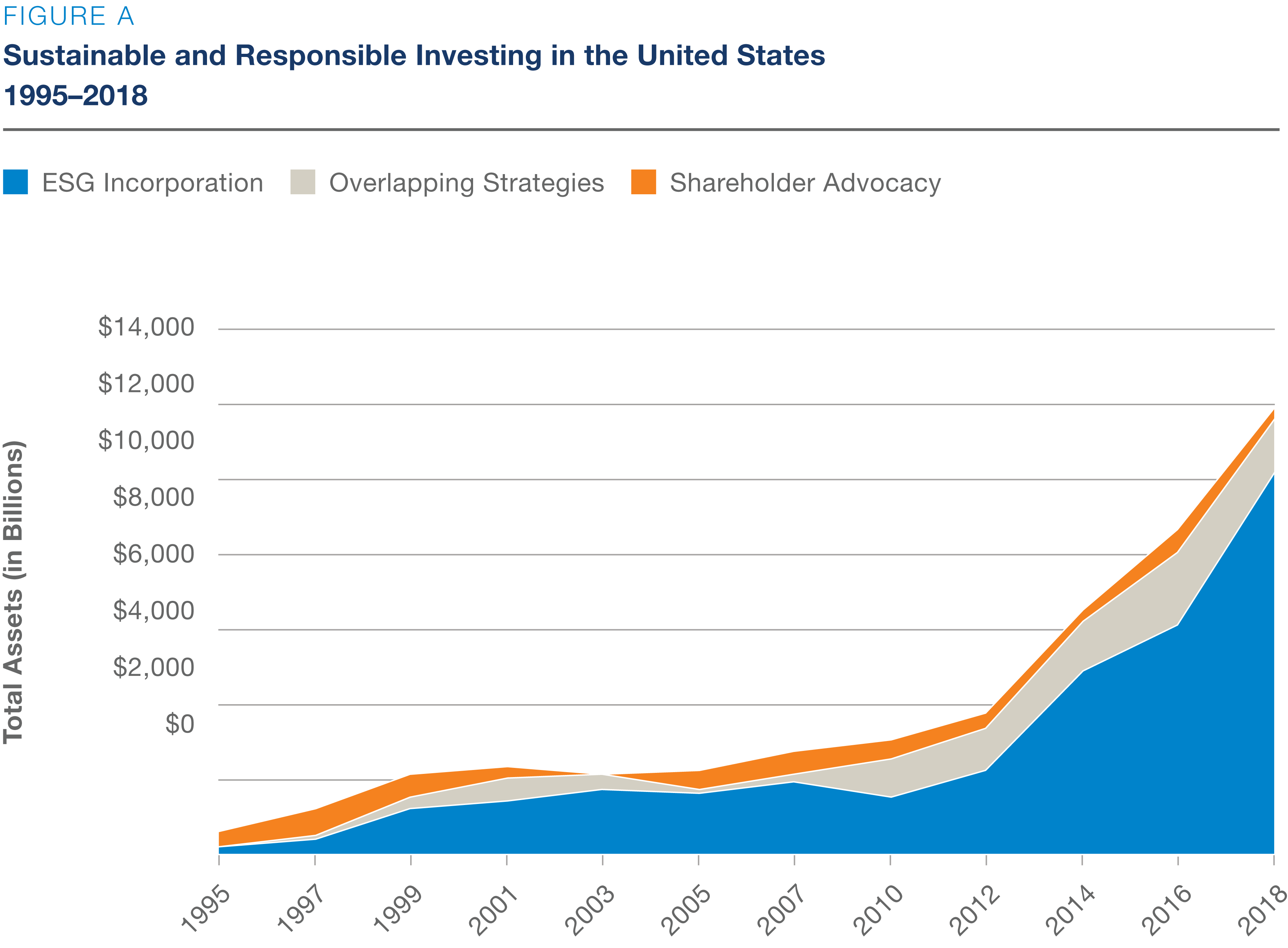
Since 1995, when the US SIF Foundation first measured the size of the US sustainable and responsible investment universe at $639 billion, these assets have increased more than 18-fold, a compound annual growth rate of 13.6 percent. (See Figure A)

US SIF Foundation

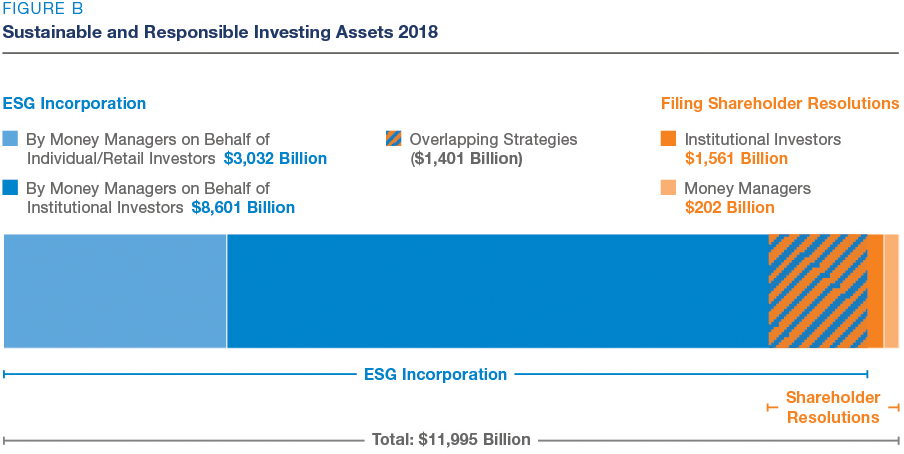
Through surveying and research undertaken in 2018, the US SIF Foundation identified, as shown in Figure B:

• $11.6 trillion in US-domiciled assets at the beginning of 2018 whose managers apply various environmental, social and governance (ESG) criteria in their investment analysis and portfolio selection, and

• $1.8 trillion in US-domiciled assets at the beginning of 2018 held by institutional investors or money managers that filed or co-filed shareholder resolutions on ESG issues at publicly traded companies from 2016 through 2018.

After eliminating double counting for assets involved in both strategies, the net total of SRI assets at the beginning of 2018 was $12.0 trillion.

US SIF Foundation

ESG Incorporation by Money Managers

The US SIF Foundation identified 365 money managers and 1,145 community investing institutions in 2018 incorporating ESG criteria into their investment analysis and decision-making processes. The $11.6 trillion in assets under management they represent is a 44 percent increase over the $8.1 trillion in ESG incorporation assets identified among money managers and community investing institutions in 2016. Of this 2018 total:

• $8.6 trillion were managed on behalf of institutional investors and $3.0 trillion were managed on behalf of individual investors, as shown in Figure B,

US SIF Foundation

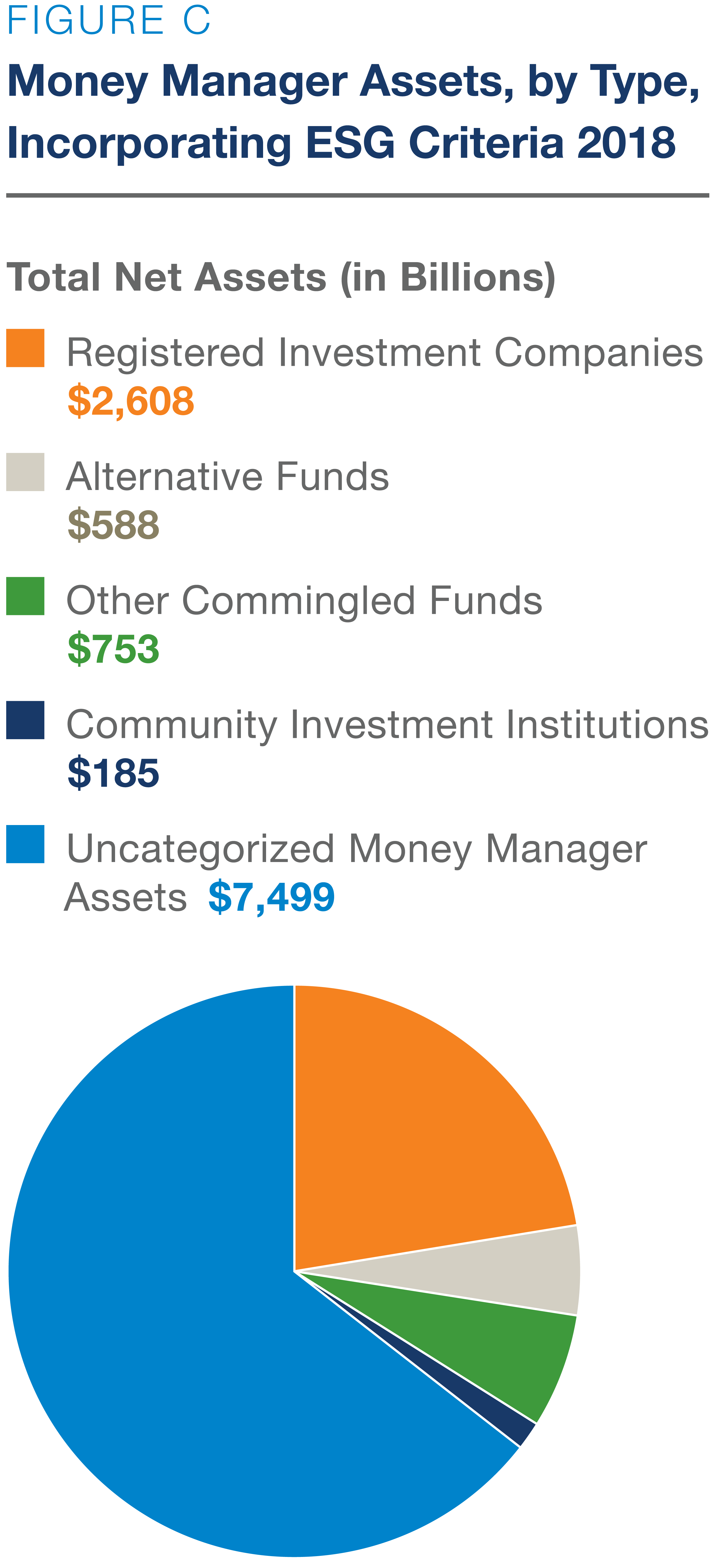
• $2.6 trillion—or 22 percent—were managed through registered investment companies such as mutual funds, exchange traded funds, variable annuities and closed-end funds, as shown in Figure C,

• $588 billion—or 5 percent—were managed through alternative investment vehicles, such as private equity and venture capital funds, hedge funds and property funds,

• $753 billion were managed through other commingled funds,

• $185 billion were managed by community investing institutions, and

• the majority—$7.5 trillion, or 64 percent—were managed through undisclosed investment vehicles, described here as “Uncategorized Money Manager Assets,” highlighting the limited nature of voluntary disclosures by money managers incorporating ESG criteria.

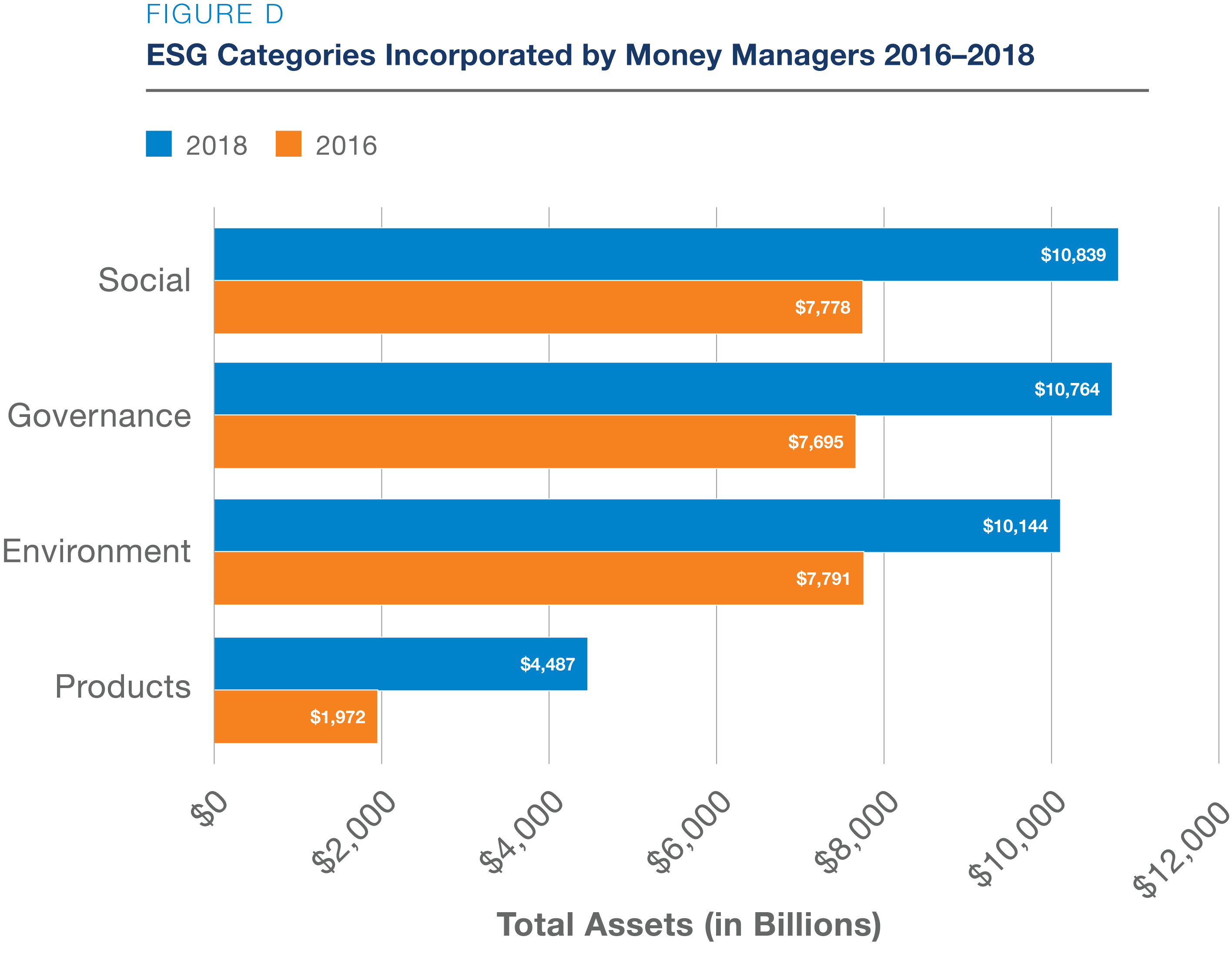
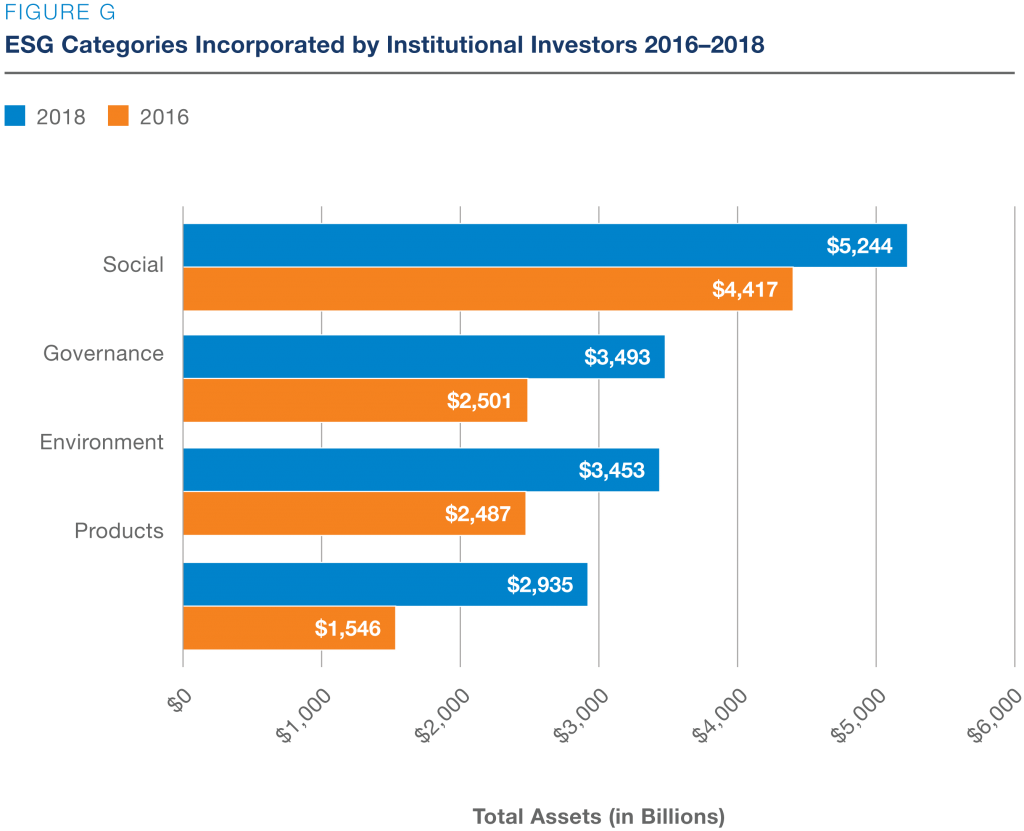
In terms of assets, money managers as a whole incorporated ESG factors fairly evenly across environmental, social and governance categories, as shown in Figure D.

• Overall, in terms of the assets affected, money managers incorporated social factors slightly more than environmental and governance criteria. Social criteria incorporation by money managers increased 39 percent from 2016 to $10.8 trillion.

US SIF Foundation

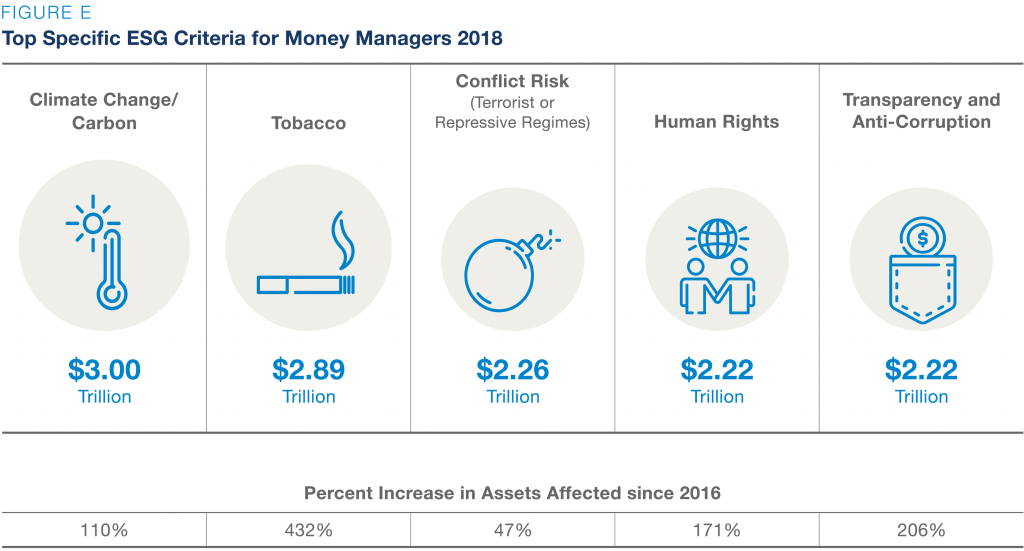
• The largest growth over the past two years was in the product-specific category, at over 125 percent, from $2.0 trillion to nearly $4.5 trillion. Tobacco-related restrictions saw the greatest growth of any ESG criteria, increasing 432 percent from 2016 to $2.9 trillion.

• However, climate change was the most important specific ESG issue considered by money managers in asset-weighted terms; the assets to which this criterion applies more than doubled from 2016 to 2018 to $3.0 trillion, as shown in Figure E.

US SIF Foundation

• Conflict risk was the leading social criterion at $2.3 trillion assets under management, but assets managed with human rights criteria were next at $2.2 trillion and experienced much larger growth from 2016.

• Transparency and anti-corruption, also affecting $2.2 trillion in money manager assets, was the top specific governance criterion, with growth over 200 percent from 2016.

• Although not shown in Figure E, concern among money managers and their clients about civilian firearms was reflected in the fact that $1.9 trillion in assets were subject to restrictions on investments in weapons, a nearly five-fold increase from 2016.


ESG Incorporation by Institutional Investors

In addition to money managers, the US SIF Foundation also conducted research on 496 institutional investors with $5.6 trillion in ESG assets. Because money managers do not disclose information about their institutional clients, the data received from these institutional asset owners shows how and why they incorporate environmental, social and governance criteria into their investment analysis and portfolio selection. The group included institutional asset owners and plan sponsors such as public funds, insurance companies, educational institutions, philanthropic foundations, labor funds, hospitals and healthcare plans, faith-based institutions, other nonprofits, and family offices. Of this $5.6 trillion in institutional ESG assets:

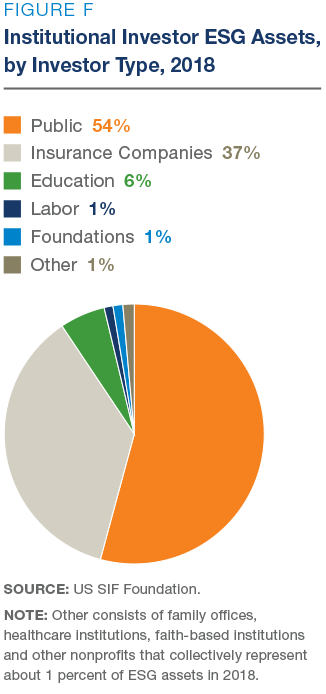
• Public funds represented the largest share (more than $3.0 trillion), as shown in Figure F.

• Social criteria were applied to $5.2 trillion (more than 93 percent), a 19 percent increase since 2016, as shown in Figure G.

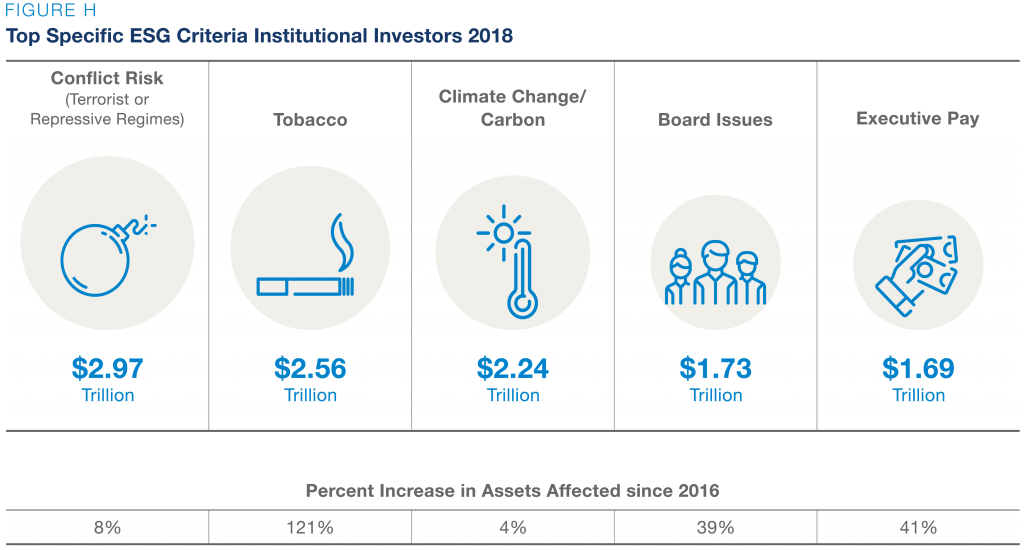
• Investment policies related to conflict risk affected $3.0 trillion, as shown in Figure H, making it the single most prominent ESG criterion, in asset-weighted terms.

• Similar to trends among money managers, tobacco saw some of the largest growth as a single ESG factor, at over 120 percent.

• Continuing a trend that began in 2012, criteria related to climate change and carbon emissions remained the most important environmental issue for these institutions, affecting $2.2 trillion.

• Although not shown in Figure H, the most prominent social issue after conflict risk was equal employment opportunity and diversity, addressed in $1.6 trillion of institutional assets, a 128 percent increase from 2016.

• Investment restrictions related to weapons now affect just over $1.5 trillion in assets, a 78 percent increase since 2016.

US SIF Foundation
US SIF Foundation

Investor Advocacy

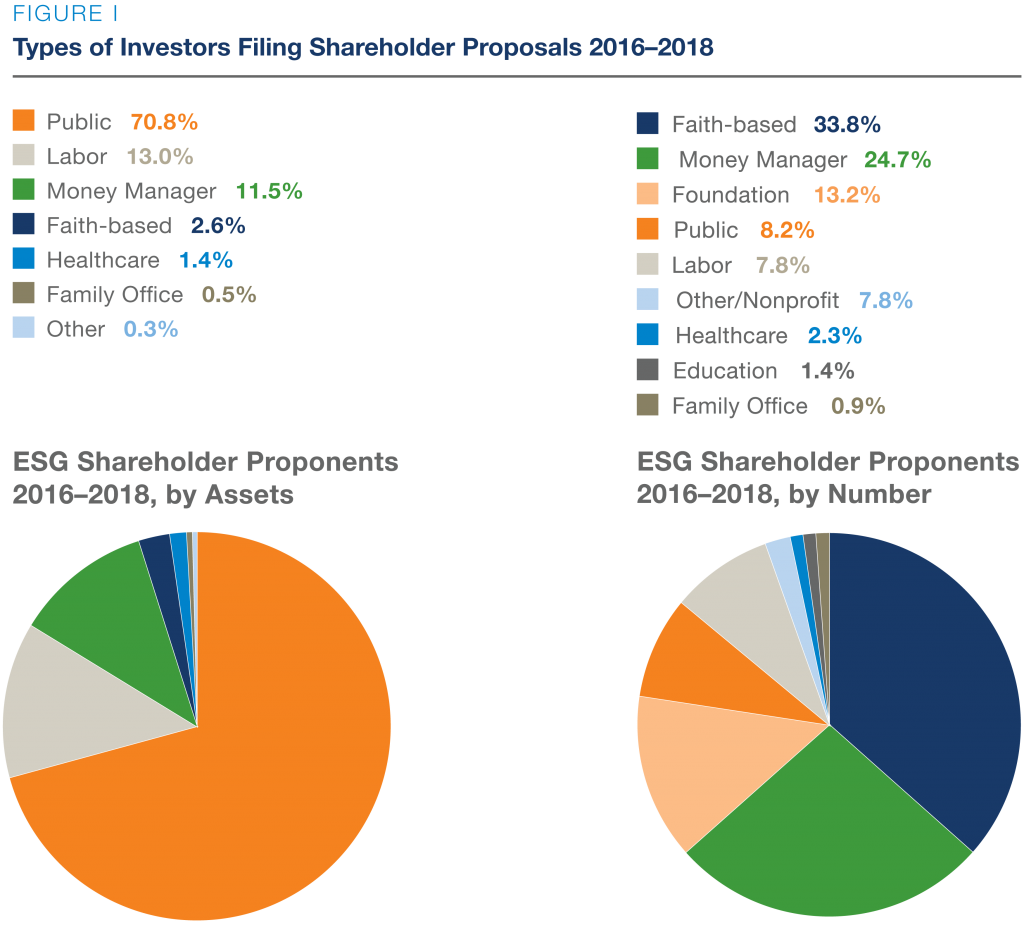
From 2016 through the first half of 2018, 165 institutional investors and 54 investment managers collectively controlling nearly $1.8 trillion in assets at the start of 2018 filed or co-filed shareholder resolutions on ESG issues. (See Figure B.)

As shown in Figure I, the faith-based institutions and money managers constituted the majority of these shareholder proponents, while public funds represented the largest share of assets involved.

US SIF Foundation

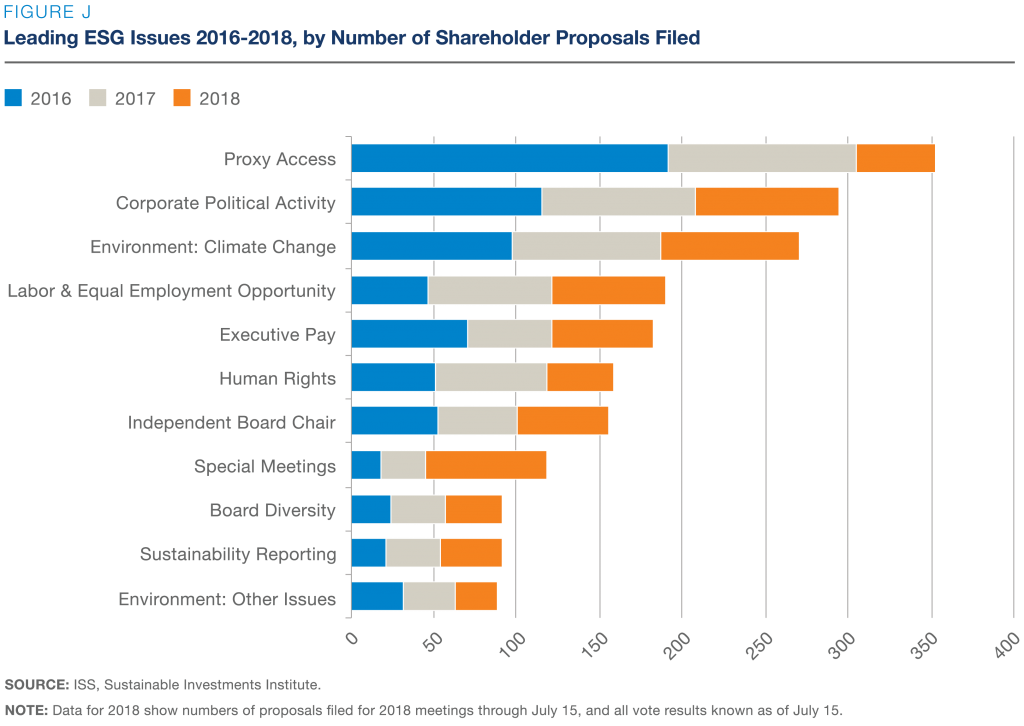
• As shown in (Figure J below), the leading issue raised in shareholder proposals from 2016 through 2018, based on the number of proposals filed, was “proxy access.” Investors filed 353 proposals at US companies during this period to facilitate shareholders’ ability to nominate directors to corporate boards. As a result of the strong investor support for these proposals, the share of S&P 500 companies with proxy access policies grew from 1 percent in 2013 to 65 percent in 2017.

• Disclosure and management of corporate political spending and lobbying were also top concerns. Shareholders filed 295 proposals on this subject from 2016 through 2018. Many of the targets were companies that have supported lobbying organizations that oppose regulations to curb greenhouse gas emissions.

• A surge in shareholder proposals on climate change that began in 2014, when investors wrestled with the prospects of “stranded” carbon assets and US and global efforts to curb greenhouse gas emissions, has continued: 271 proposals were filed from 2016 through 2018.

• The proportion of shareholder proposals on social and environmental issues that receive high levels of support has been trending upward. During the proxy seasons of 2012-2015, only three shareholder proposals on environmental and social issues that were opposed by management received majority support, while 18 such proposals received majority support in 2016 through 2018.

• Investors are increasingly engaging in ways other than filing shareholder resolutions. A subset of survey respondents, including 49 institutional asset owners with more than $1 trillion in total assets and 88 money managers with $9.1 trillion in assets under management, reported that they engaged in dialogue with companies on ESG issues. The extent of engagement reported by money managers has increased notably since 2016, when only 61 managers with $6.9 trillion in assets reported that they engaged companies on ESG issues.

US SIF Foundation


Order the full 130 page Report on US Sustainable, Responsible and Impact Investing Trends 2018 here.

Energy & Climate, Featured Articles, Impact Investing, Sustainable Business

SRI Trends Report 2018: Community Investing

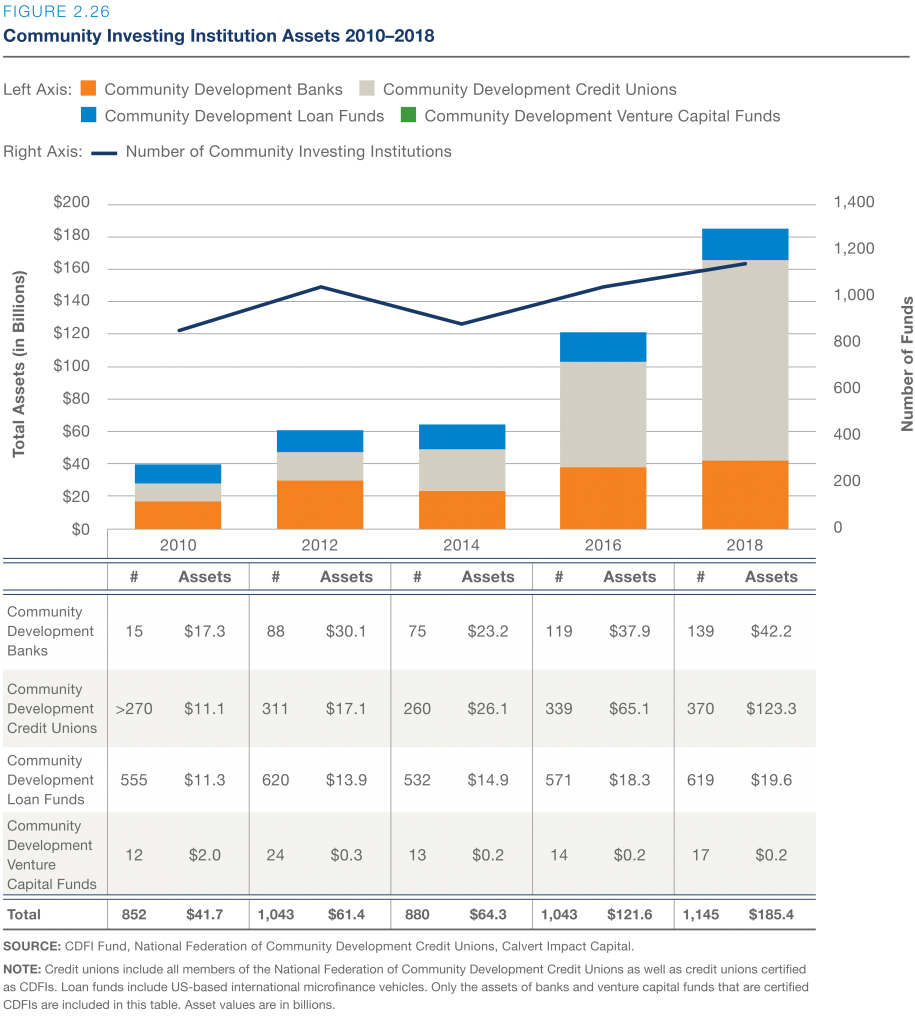
Community Investing is a vital form of sustainable and impact investing that the US SIF Foundation has tracked for more than two decades. The community investing sector has experienced rapid growth over the last decade, nearly doubling in assets between 2014 and 2016, and growing more than 50 percent from 2016 to 2018.


Community Investing Institutions

In the United States, community investing institutions direct capital to communities and individuals underserved by conventional financial services. They typically provide capital for small businesses, affordable housing units, charter schools, grocery stores and other community amenities. They also provide responsible lending products and related programs to help consumers avoid the predatory lenders that are often found in low-income areas.

Their numbers include banks, credit unions, loan funds and venture capital funds that are certified and overseen as community development financial institutions (CDFIs) by the CDFI Fund, a division of the US Department of the Treasury. In addition, the community investing institutions tracked by the US SIF Foundation include numerous credit unions not certified as CDFIs but with a longstanding mission of serving lower income communities in the United States.

The US SIF Foundation has also tracked US-based loan funds that provide microfinance lending and other forms of capital to entrepreneurs and small businesses in poorer communities outside the United States.

US SIF Foundation

Figure 2.26 shows that the community investing sector has experienced rapid growth over the last decade, nearly doubling in assets between 2014 and 2016, and growing more than 50 percent from 2016 to 2018. The largest growth in community investing assets has been among community development credit unions, whose assets have nearly doubled since 2016, thanks to an on-going wave of mergers and acquisitions within the sector, as high-performing community development credit unions take over the assets of other depository institutions that were impaired during the financial crisis a decade ago.

It should be noted that growth rates between 2014 and 2016 may have been abnormally high due to changes in the certification process that caused many CDFIs to lose certification by the start of 2014, which they subsequently regained later in the year. Controlling for this anomaly, overall growth rates in the community investor sector have been fairly steady since 2010.

Community Development Banks are regulated banking institutions that operate much like their conventional counterparts, but focus their lending and banking services in lower-income communities. They typically offer services available at conventional banks to both individual and business customers, including federally insured savings, checking, money market and individual retirement accounts and certificates of deposit.

According to the CDFI Fund, 139 CDFI-certified community development banks held $42.2 billion in assets by the start of 2018, as shown in Figure 2.26.

Community Development Credit Unions (CDCUs) are regulated depository institutions that are member-owned and cooperatively controlled. CDCUs offer federally insured accounts and other financial services offered by conventional credit unions but are mission-driven to responsibly serve low-income and other underserved communities.

According to the National Federation of Community Development Credit Unions, there were 370 CDCUs with $123 billion in combined assets at the outset of 2018.

Community Development Loan Funds (CDLFs) pool investments from individuals and institutions to further community development, often in specific geographic regions. Unlike depository institutions like banks and credit unions, CDLFs do not have federally insured deposits but they take many other steps to safeguard investor money, including using collateralized loans, setting aside loan loss reserves, and pledging the institution’s or fund’s net worth to protect against investor losses. International loan funds, which represent a subset of CDLFs for the purposes of this report, focus their lending and equity investments overseas, typically providing or guaranteeing small or microfinance loans to entrepreneurs and small businesses.

At the outset of 2018, $19.6 billion was invested in 619 community development loan funds based in the United States. Of this sum, $14.6 billion was invested in domestic loan funds certified as CDFIs. The balance of $5.0 billion, according to data provided by Calvert Impact Capital, represents the assets of loan funds managed by US-based international microfinance organizations.

Community Development Venture Capital (CDVC) is a form of private equity investment targeted at financially underserved low- and moderate-income communities that seeks to generate good jobs, wealth and entrepreneurial capacity. As a form of private equity, community development venture capital funds are also analyzed as part of the alternative investment vehicles discussed previously (but before aggregation, the assets of these funds are controlled for any potential effects of double counting). Within this category, 17 CDVC funds with $239 million in assets under management were certified as CDFIs by the start of 2018.

Other Forms of Community-Related Investment

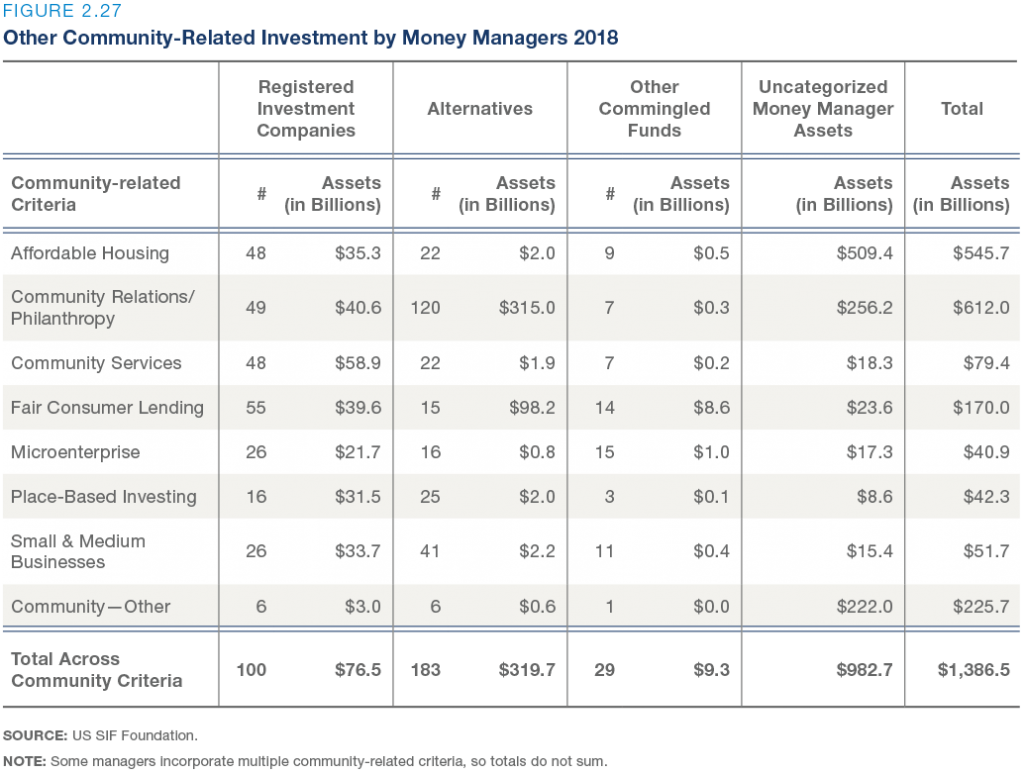
In addition to the four types of community investing institutions previously described, community-related investing criteria and themes are considered across numerous investment vehicles and asset classes. As Figure 2.27 shows, investment vehicles with $1.39 trillion in total assets say they incorporate some form of community-related criteria. Most of these assets—$983 billion—were in uncategorized vehicles. The most significant community-related criterion for these uncategorized vehicles was affordable housing, affecting more than $500 billion in assets. Alternative funds accounted for the second largest pool of assets—$320 billion—considering community criteria, and registered investment companies applied community-related criteria across $77 billion in assets.

Order the full 130 page Report on US Sustainable, Responsible and Impact Investing Trends 2018 here.

US SIF Foundation

Featured Articles, Impact Investing

ESG Outlook for 2019

By Katherine Collins, Head of Sustainable Investing, Putnam Investments

Amidst all of the important improvements in ESG data, all of the thoughtful research reports, and all innovative new investment options, another, deeper trend has taken root. As we turn towards 2019, we see increasing evidence that systems thinking is becoming more prevalent and influential throughout corporations and the investment community. This subtle, under-the-surface development is one of the most vital requirements for effective long-term investing.

Why is this wonky-sounding idea important? Systems thinking is a deceptively simple concept, a holistic approach to analysis that focuses on how parts of a broader system connect and relate to one another. You know that old saying, the whole is greater than the sum of the parts? Systems thinking aims to understand the whole, in addition to the individual parts. (For a great overview of systems thinking, I recommend Donella Meadows’ classic Thinking in Systems or Leverage Points: Places to Intervene in a System).

Systems thinking is a close cousin to common sense, but it stands in contrast to the arc of development of our analytical and educational tools. Over time, these tools have focused on more and more narrow lines of inquiry, examining more and more specialized questions. This expertise is needed, of course, but it is even more powerful when our specialized knowledge is combined with an understanding of the greater context. For example, when we recognize environmental, social, and governance issues as deeply intertwined with all other business issues, and when we recognize business issues as deeply intertwined with the broader health of our planet and our communities, we have the chance to develop more complete views, and to make better investment decisions. Without the reconnection that systems thinking brings, all of the metrics in the world will not lead us to better outcomes, no matter how thoughtful, needed, and accurate they may be.

Evidence of the rise of systems thinking is all around us, though it is not usually labeled as such. When Silicon Valley leaders talk about having “growth mindsets,” that’s systems thinking. When companies link their operations to the United Nations Sustainable Development Goals, that’s systems thinking.

When investors call for an examination of purpose that goes beyond a simple business plan, that’s systems thinking. When a research report that used to contain only short-term financial information has new sections talking about rights of Indigenous communities, and policy changes, and customer demographics, and shifts in weather patterns, that’s systems thinking. When one potential new hire after another tells you about their multidisciplinary senior thesis, that’s systems thinking.

As these deeper reconnections between issues and disciplines and data sets take root, there are three powerful benefits that can arise for investors. First, we have the chance to extend our time horizons. Much has been written about the dangers of short-term-ism, both in business and in life, but we often lack processes that can serve as counterweights to the ever-faster pace of shallow data flows like stock prices. Diving into analysis of purpose and impact naturally stretches our time horizon out, so that our units of analysis more closely match the scale of real results, the ones that compound across many quarters and many years. Interestingly enough, extending our time horizon allows us to focus on the most urgent issues of our time, from climate risk to workplace equity to the ethics of emerging technologies.

Second, a systems mindset allows us to ask better questions. In addition to pursuing straightforward answers to our tactical questions, we can pursue more open-ended inquiry that goes beyond a checklist mentality. For example, instead of asking only for a list of supply chain policies, necessary though that is, we can begin to ask about how actual practices have changed over time, and about what challenges still do not have satisfactory solutions. These questions don’t always have easy answers – and in fact they sometimes don’t have answers at all – but they get us closer to a truer, more complete understanding of the links between an income statement and the actual world.

Finally, this reconnection allows us to begin to assess impact in a more complete and nuanced way. Impact metrics are quickly advancing, and companies are taking this analysis seriously, in part because it allows them to begin to answer the most essential question of all: is what we’re doing truly valuable? This is a different question than whether revenues are growing, or whether returns on financial capital are adequate. We have never before had enough information to match the intuitive, qualitative answers to these questions with empirical, quantitative answers. As these two streams of analysis meet, we will surely confirm that some investments have tremendous positive impacts that ripple out into the world, whereas others are ultimately destructive. Just as surely, there will be some surprises in each group, with important implications for investors.

So what does this more complete, more complex view of the world get us? It helps us to move from a mechanistic view, where even the most nuanced questions are reduced to a box to be checked, to one that is a little messier but more complete, where some questions are still evolving. Along the way, this shift inherently encourages collaboration and connection between individuals and institutions, since it requires contributions from different points of view and different types of expertise.

Systems thinking allows us to extend our time horizons, ask better questions, and assess true impact. It’s a lot more work, to be sure, and it may not lead to conclusions that have the crispness (and narrowness) of a quarterly earnings estimate. But it’s a worthy endeavor, and when combined with all that has already been learned, this approach can steer our investment decisions towards true profit, and true benefit.


Article by Katherine Collins, CFA, MTS   Ms. Collins is Head of Sustainable Investing and portfolio manager for Putnam’s sustainable investing equity strategies. She is responsible for leading Putnam’s investment research and thought leadership on ESG issues and serves as portfolio manager for approximately $5 billion in public equity assets through the Putnam Sustainable Leaders and Putnam Sustainable Future strategies. More details – https://www.putnam.com/individual/how-we-invest/sustainable-investing

A recognized thought leader, Ms. Collins is the author of The Nature of Investing: Resilient Investment Strategies through Biomimicry. Prior to joining Putnam in 2017, Katherine founded and led Honeybee Capital, an independent investment research firm focused on sustainable investment themes.

Earlier in her career, Ms. Collins served as Head of Equity Research, Portfolio Manager, and Equity Research Analyst at Fidelity Investments, where she was employed from 1990 to 2008. She also spent two years as philanthropic program officer at the Fidelity Foundations.

Ms. Collins serves on numerous boards, including Last Mile Health, Santa Fe Institute, Omega Institute, and Harvard Divinity School Dean’s Council. She earned a Master of Theological Studies from Harvard Divinity School and a B.A. from Wellesley College.

Featured Articles, Impact Investing, Sustainable Business

Three ESG Trends in Asia to Watch in 2019

By Vivek Tanneeru, Portfolio Manager, Matthews Asia

For investors interested in environmental, social and governance (ESG) strategies, a regionally diversified approach can help capture global growth. In the coming year, Asia offers a prime opportunity to invest in profitable companies addressing critical ESG challenges through robust and sustainable business models. ESG innovation in Asia is evident across many sectors, including health care and pharmaceuticals, technology, finance and alternative energy. To fully capture the growth and profits of the world’s most innovative ESG companies, it is worth considering Asia. Here, we identify three ESG trends in Asia to watch in 2019.
Trend #1: Environmental Solutions That Generate Clean Air—and Profits

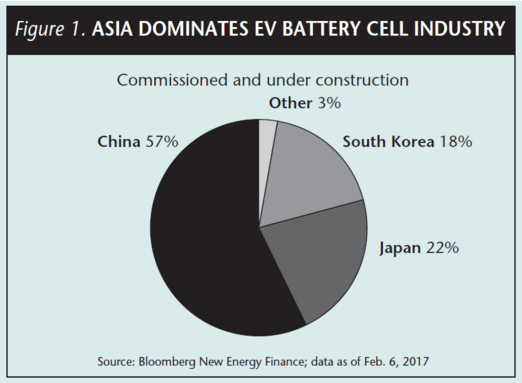
While electric car maker Tesla garners headlines for its stylish design ethos and lengthy waiting lists, Asia has quietly dominated the global battery cell market with its innovative and reliable lithium-ion batteries and other critical components. (See Figure 1.) Global leadership in battery cells belongs almost entirely to companies headquartered in South Korea, Japan and China. Why is this so? Partly it is because Asia has historically dominated manufacturing of consumer electronics that required rechargeable battery technology development and partly because Asia accounts for a significant portion of new electric vehicle sales. China is currently the world’s largest market for electric vehicles, with the U.S. coming in a close second. Of the 2 million electric cars on the road in 2016, 32 percent were driven in China, while 28 percent were driven in the U.S. Japan and France each represent approximately 7 percent of the electric vehicles on the road[1].

Battery cells are just a small part of the innovative sectors helping to power a cleaner energy future, including solar and wind power, energy efficiency, high-speed trains and factory automation. Solar panels are another area in which Asia in general, and China in particular, is taking a clean-tech industries leadership role. China makes 70 percent of the world’s solar panels and installs more than half of them[2].

Trend #2: Small Loans—With the Potential for Big Returns

Among critical social issues facing communities in Asia, inclusion is a key focus area. Social progress requires bringing more people into the middle class globally, along with ensuring greater access to health care, more women in the workforce and more opportunities for people to advance through education and training. Moving hundreds of millions of people out of poverty has been the foundation for social advancement. It has also presented a prime opportunity for global investors who wish to support this progress by investing in companies championing inclusion in Asia’s fast-growing economies. As a starting point, living a middle-class life requires becoming part of the “formal” financial system, often by opening a bank account. Millions of people across Asia lack basic banking services. Credit, even in small amounts, can make a huge difference to families living in poverty. Microlenders are leveraging digital platforms to massively scale up lending without the need to build large brick-and-mortar infrastructure.

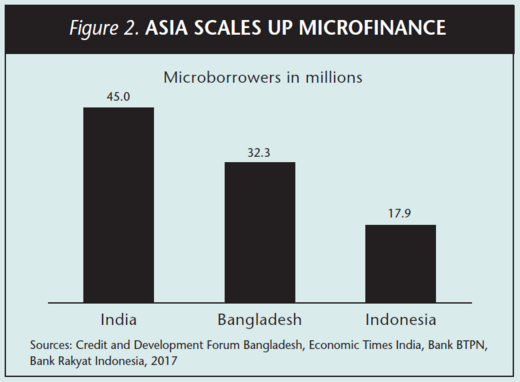
As Asia looks to add 2 billion more people to its middle class by 2030[3], financial inclusion will be a key enabler for this transformation by creating and supporting livelihoods. Profitable companies servicing this need provide microlending, micropayments and insurance. In 2017, India had 45 million microborrowers, demonstrating the size and scale of this growing marketplace. (See Figure 2.) Most jobs in emerging Asia are found in micro and small enterprises. Access to capital through financing makes a big difference in the ability of these firms to grow and create more jobs. Therefore, micro and small enterprise lending is an underappreciated social opportunity. Bangladesh and Indonesia are fast-growing markets for micro and small enterprise lending.

Trend #3: Access to More Affordable Health Care

Asia ESG investing offers a big opportunity to make a global impact simply because of the sheer number of lives affected. South Asia has over 1.5 billion people who spend less than US$100 per year on health care on average[4].

Given the population’s lack of spending power, providing access to affordable health care is a critical social issue. South Asia has millions of people with Hepatitis C, for instance, but few, if any, have been able to afford Gilead Science’s highly effective drug Sovaldi. The drug was priced at US$1,000 per pill in the U.S. and the treatment lasts 12 weeks, adding up to US$84,000. To make this drug available to people across the developing world, Gilead licensed it to several generic drug manufacturers that make the 12-week treatment available for well under US$1,000. With its high quality, globally competitive pharmaceutical and biotech businesses that have low cost structures, Asia has begun to address the problem of affordable access profitably.

Building a Diversified ESG Portfolio

Many global investors tend to be in underweight emerging markets (EM) in general and Asia in particular. A dedicated allocation to Asia ESG can fit within an overall EM allocation, while also providing differentiated exposure to countries, industries and individual securities that may be missing in an existing portfolio.


Article by Vivek Tanneeru, the lead Portfolio Manager of the Asia ESG Strategy at Matthews Asia. To hear more from Vivek, please view his recent video on our website, https://matthewsasia.com/perspectives-on-asia/video-detail.fs?artID=1334. Prior to joining Matthews Asia in 2011, Vivek was an Investment Manager on the Global Emerging Markets team of Pictet Asset Management in London. While at Pictet, he also worked on the firm’s Global Equities team, managing Japan and Asia ex-Japan markets. Before earning his M.B.A. from the London Business School in 2006, Vivek was a Business Systems Officer at The World Bank and served as a Consultant at Arthur Andersen Business Consulting and Citicorp Infotech Industries. He interned at Generation Investment Management while studying for his M.B.A. Vivek received his Master’s in Finance from the Birla Institute of Technology & Science in India. He is fluent in Hindi and Telugu.

US Disclosures – The views and information discussed in this report are as of the date of publication, subject to change and may not reflect current views. The views expressed represent an assessment of market conditions at a specific point in time, are opinions only and should not be relied upon as investment advice regarding a particular investment or markets in general. Such information does not constitute a recommendation to buy or sell specific securities or investment vehicles. Investment involves risk. Investing in international and emerging markets may involve additional risks, such as social and political instability, market illiquidity, exchange-rate fluctuations, a high level of volatility and limited regulation. Past performance is no guarantee of future results. The information contained herein has been derived from sources believed to be reliable and accurate at the time of compilation, but no representation or warranty (express or implied) is made as to the accuracy or completeness of any of this information. Matthews Asia and its affiliates do not accept any liability for losses either direct or consequential caused by the use of this information. Matthews Asia portfolios do not hold positions in Tesla or Gilead Sciences. © Matthews International Capital Management, LLC

Article Notes:

[1] Sources: International Energy Agency analysis based on Electric Vehicle Initiative country submissions, complemented by European Alternative Fuels Observatory; data as of 2016

[2] Source: The Diplomat. “China’s Solar Power Dominance and Trump’s Trade Tariffs” February 2018

[3] Source: Brookings, Global Economy and Development Working Paper, February 2017, “The Unprecedented Expansion of the Global Middle Class”

[4] 2016 Global Health Care Outlook: Regional & Country Perspectives, Deloitte, 2016

Energy & Climate, Featured Articles, Impact Investing, Sustainable Business

It’s Time to Invest in Her

By Joe Keefe, President and CEO, Pax World Funds

(Joe is pictured with Sallie Krawcheck, Chair, Pax Ellevate Mgmt. and Ellevate Network)

We are in a moment. The moment of Time’s Up and #MeToo. The moment of women’s marches. The moment of Harvey Weinstein and Justice Kavanaugh. The moment when more women than ever before have been elected to public office. It’s also the moment when investors have an historic opportunity to become a powerful force for advancing gender equality across the globe.

We need to build on the tumult of the last 12 months and make 2019 the year when corporations and financial markets turn decisively against gender discrimination and inequality, declaring quite simply that it is no longer acceptable. We need to make 2019 the year of investing in women.

I’m convinced that we can persuade corporations and financial markets to take this leap. First, because the data is overwhelming: Where women are better represented in corporate leadership, businesses simply perform better[1]. Gender diverse teams deliver better results than homogeneous ones. Case closed. Full stop.

Also, there is powerful evidence that women, millennials and others want to invest in companies with gender-diverse leadership[2]. When it comes to unequal pay, or non-diverse leadership teams, or discrimination and violence against women, growing numbers of investors want their money to be part of the solution rather than part of the problem.

There is also a strong risk argument for gender lens investing (GLI). First, there is research suggesting that women sometimes approach risk differently than men and that gender diverse leadership teams can help companies lower risk[3]. But just as importantly, there is Investing 101 and the core principle that investment portfolios must be diversified — that overweighting certain asset classes or other factors (equities vs. fixed income, domestic vs. foreign stocks, developed vs. emerging markets, large cap vs. small cap, one region/sector vs. others, etc.) creates greater risk. If so, and given overwhelming evidence of the performance advantages associated with gender-diverse leadership teams, why would anyone want to overweight their investment portfolio toward men?

It’s time to put the diversity in diversification. Gender lens investing is simply smart investing.

It’s also time to recognize that gender inequality — where half the human race is subjected to systematic discrimination, oppression and violence — is the great human rights issue of our time. We are not simply talking about women being underrepresented on boards or earning roughly 20 percent less than men. We are talking about honor killings and genital mutilation and trafficking in young girls. We are talking about legal and de facto discrimination, about gender-based violence, about human rights abuses in supply chains. We are talking about our daughters, our partners, our mothers, our sisters.

Corporations and financial markets are supposed to work for them, too. It is time they did.

As engaged investors, we need to persuade the companies in our investment portfolios to say loudly and clearly: We will no longer tolerate gender inequality — on our boards, in our executive suites, in our workplaces or in our supply chains. Case closed. Full stop.

This is the task before us — for 2019 and beyond. Our industry cannot even begin to talk about investing in the transition to a more sustainable global economy unless gender equality is a core component of that transition.

Not incidentally, eradicating gender inequality could help unleash perhaps the greatest period of economic growth in the history of the planet. Research suggests that if women participated in the economy to the same degree as men, it would add $28 trillion to global gross domestic product by 2025 — equaling the combined output of the United States and China, the two largest economies in the world, every single year[4].

The smartest companies understand this. They understand that gender diversity is key to other critical business challenges: talent acquisition, workplace culture, the need for innovation. Moreover, companies with more gender diverse leadership teams are more likely to enjoy collateral or derivative benefits in connection with the same: pay equity[5], parental leave[6] and other improved benefits[7], plus lower levels of discrimination[8].

The sustainable investing/ESG industry is where gender lens investing was invented, and we at Impax Asset Management (formerly Pax World Management) have done what we can to spur that effort. Linda Pei and Leslie Christian launched the very first mutual fund in the category, the Women’s Equity Fund, in 1993, which we purchased and began offering in 2006, and which eventually became the Pax Ellevate Global Women’s Leadership Fund in 2014. Like many other sustainable investment firms, we have been voting proxies against all-male board slates for decades, and we’ve engaged in dialogues and filed shareholder resolutions with companies, calling on them to embrace gender diversity on their boards as well as pay equity among male and female employees. In 2010, I made an early attempt to make the business case for gender lens investing in a piece I wrote, “Gender Equality as an Investment Concept,” which was later published in the Huffington Post[9]. A recent piece by my colleague Julie Gorte, “The Investment Case for Gender Equality,” is among the latest thought leadership on the topic[10]. And in 2014, we launched the Pax Global Women’s Leadership Index, the first index consisting of the highest-rated companies in the world for advancing women’s leadership. Sallie Krawcheck and I, on behalf of Pax Ellevate, have also petitioned the Securities and Exchange Commission to require companies to report annually on their gender pay ratios, to help close the wage gap.

We have been in the thick of this fight, but many others have made significant contributions as well, from the Thirty Percent Coalition’s work on board diversity to the Criterion Institute’s 2015 roadmap for the future direction of GLI[11], to those who have come out with new investment strategies, the number of which has quadrupled over the past four years[12]. Veris Wealth Partners, another leader in the space, notes that during the 12-month period ending June 30, 2018, investors “poured $2.4 billion into 35 GLI vehicles holding publicly traded securities … a 23-fold increase from $100 million just four years ago.” Already there is evidence of impact: The same Veris report notes that “Gender lens investors are changing corporate priorities and how capital markets value women and girls.”

We have made progress, but the pace of change remains too slow. It’s time to accelerate.

The sustainable investing industry’s focus on climate change has led to the groundbreaking work of CERES, the Carbon Disclosure Project, 350.org, the Task Force on Climate-related Financial Disclosures (TCFD), along with a host of low carbon indices, investment vehicles and related initiatives. With government largely on the sidelines (at least in the U.S.), our industry has helped assure that climate change solutions will emerge from the private sector — from corporations and financial markets — instead.

It is time to bring the same energy and sense of urgency to gender equality that we have brought to the climate crisis. Just as we have focused on our carbon footprint, so must we focus on our gender footprint. Just as we have advanced fossil fuel free investment strategies, so should we advance discrimination-free and gender-based violence-free strategies. Just as we have made the business and economic case for solving the climate crisis, so must we make the business and economic case for ending gender inequality. All investment advisors, all asset managers, should develop strategies for integrating a gender lens into their work. If we do this, companies and capital markets will eventually respond, and change will come. Now is the time. In fact, Time’s Up.


Article by Joe Keefe, President and CEO of Pax World Funds (https://paxworld.com) and President of its investment adviser, Impax Asset Management LLC, formerly Pax World Management LLC, as well as CEO of its majority-owned subsidiary, Pax Ellevate Management LLC. An advocate for investing in women, Joe has written and spoken widely on the critical role that gender diversity plays in long-term business success. Under Joe’s leadership, Pax Ellevate Management launched the Pax Ellevate Global Women’s Leadership Fund, the first mutual fund to invest in companies that invest in women.

He co-founded the Thirty Percent Coalition and was the first chair of its institutional investor committee, whose work has led to women joining more than 100 previously non-diverse boards. He is Co-Chair of the Leadership Group for the Women’s Empowerment Principles, and in 2014 he received the Women’s Empowerment Principles Leadership Award at the United Nations. Joe is a former board chair of the Women Thrive Alliance, a global organization that worked to achieve gender equality. Financial Times named him one of its 10 “top feminist men” in 2015 for helping women succeed in business. In 2018, Barron’s named Joe one of the “20 Most Influential People in Sustainable Investing” for his work to advance gender equality.

Article Notes

[1] Joseph Keefe and Sallie Krawcheck, Impax Asset Management, “Investing in Women Is Smart Investing,” Oct. 2018.

[2] Sylvia Ann Hewlett and Andrea Turner Moffitt with Melinda Marshall, Center for Talent and Innovation, “Harnessing the Power of the Purse: Female Investors and Global Opportunities for Growth,” 2014

[3] Catalyst, “Why Diversity and Inclusion Matter,” Aug. 2018 – https://www.catalyst.org/knowledge/why-diversity-and-inclusion-matter

[4] McKinsey & Company, “The Power of Parity: How Advancing Women’s Equality Can Add $12 Trillion to Global Growth,” Sept. 2015

[5] CNBC, “Companies with More Female Executives Make More Money—Here’s Why,” March 2018 – https://www.cnbc.com/2018/03/02/why-companies-with-female-managers-make-more-money.html

[6] The Peterson Institute, “Is Gender Diversity Profitable? Evidence from a Global Survey,” Feb. 2016 – https://piie.com/system/files/documents/wp16-3.pdf

[7] Select International, “7 Reasons To Hire Women Leaders,” 2018 – http://www.selectinternational.com/blog/7-reasons-to-hire-women-leaders

[8] The Peterson Institute, “Is Gender Diversity Profitable? Evidence from a Global Survey,” Feb. 2016 – https://piie.com/system/files/documents/wp16-3.pdf

[9] https://www.huffingtonpost.com/joe-keefe/gender-equality-as-an-inv_b_5700228.html

[10] https://paxworld.com/the-investment-case-for-gender-equality-new

[11] Criterion Institute, “The State of the Field of Gender Lens Investing,” Oct. 2015

[12] Veris Wealth Partners, “Gender Lens Investing: Bending the Arc of Finance for Women & Girls,” Oct. 2018 – https://www.veriswp.com/research/gli-bending-arc-of-finance-women

Featured Articles, Impact Investing, Sustainable Business

Signup to receive GreenMoney's monthly eJournal

Privacy Policy
Copyright © GreenMoney Journal 2025

Website design & development by BrandNature

Global Events Calendar

View All Events

april

21aprAll Day232026 Sustainable Packaging Coalition: SPC Impact – Nashville

27aprAll Day30Women Deliver 2026 Conference (WD2026) – Melbourne

X