Tag: Impact Investing

How Calvert Impact Capital Strengthens Communities Through Impact Investments
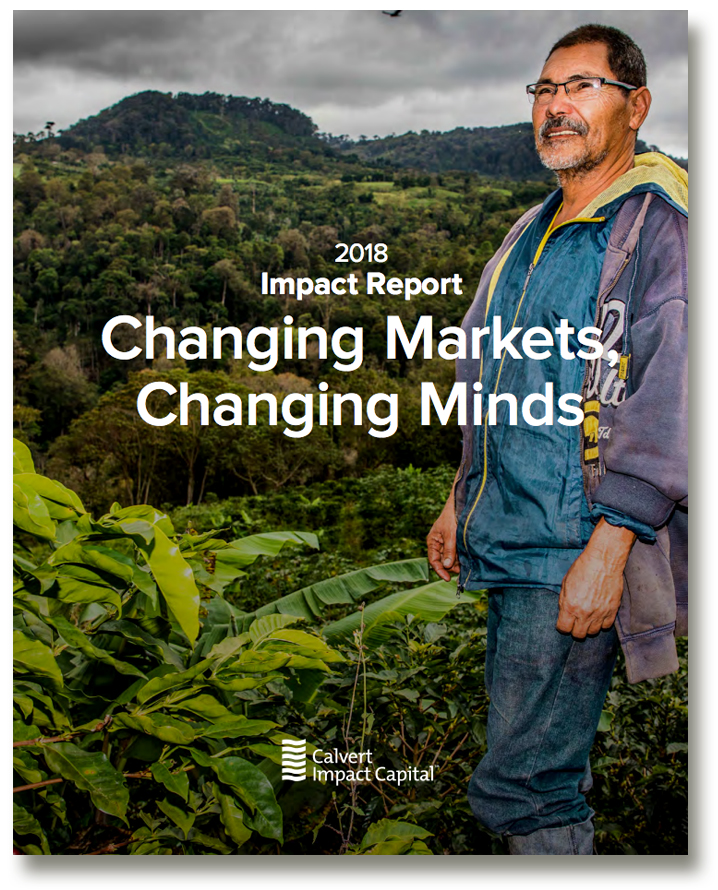
The impact investing sector has been growing at a rapid pace. Investors increasingly seek opportunities to make a social and environmental difference through their investment portfolios. With $228 billion invested towards impact activities in 2017, the industry has come a long way.

Calvert Impact Capital (CIC) said it is working to build a more equitable financial system through investments in its portfolio and by sharing its expertise with investors and borrowers. The company’s 2018 Impact Report shows how CIC is striving to strengthen communities and helping improve global sustainability through its business. Access the full report.

Community Development

In 2017, Calvert Impact Capital provided flexible financing to support the development of 1,488 community facilities serving more than 8.5 million community members across the country. These facilities span 3.5 million sq. ft. and are worth $1.12 billion.

Affordable Housing

The borrowers using CIC’s capital helped create or preserve 32,669 affordable homes across the U.S. in 2017. The borrowers also counseled 30,669 clients on housing, preparing them for home ownership and creating more empowered and informed homeowners.

Education

Calvert claimed that it had a role in helping to finance 3,327 affordable, quality schools that enrolled 2,248,871 children in 2017. The schools operational in 2017 employed 78,283 teachers and financed a total of 15,227 new student seats.

Health

In 2017, CIC took part in financing 308 medical facilities that addressed the needs of over 5 million patients across the US and other parts of the world. These healthcare facilities provide affordable care, while at the same time, create job opportunities for trained healthcare professionals.

Microfinance

Calvert Impact Capital is investing in microfinance networks and institutions that offer innovative insurance, credit, savings, and other financial products, apart from financial education and payment platforms. CIC’s borrowers in 2017 disbursed microloans of $1,735 on average to 12 million individuals, 76 percent of which reached low-income individuals.

Small Business

CIC lends to financial intermediaries involved in financing small business owners to help them grow their businesses. The results, according to the company, help create new jobs in local communities and generate economic opportunity. The company’s capital in 2017 helped to finance nearly 6,000 small businesses, and supported the creation or retention of over a 100,000 jobs globally.

Environmental Sustainability

According to the company’s report, during 2017, Calvert’s borrowers recycled over 91,000 tons of waste. This helped to reduce more than 260,000 metric tons of carbon dioxide. The company’s capital also helped reduce more than six million tons of CO2 or CO2 equivalent through the deployment of renewable energy. Renewable energy products sold by the company’s borrowers will generate clean energy that is enough to power 4,475 homes for one year.

Sustainable Agriculture

Calvert Impact Capital invested in projects in 2017 that the company said had a role in connecting farmers to better economic opportunities. The company’s borrowers supported 721,864 smallholder farmers and 45 agricultural groups worldwide.

“Our industry often focuses on the outputs of impact investments as the sole indicators of success. But they are not the full picture,” said Jenn Pryce, President and CEO. “In order to achieve those outputs, and importantly, to scale them, we need a functioning market between interested investors and mission-driven asset managers,” she said.


Article by Vikas Vij, Triple Pundit. Vikas is an MBA with 25 years of managerial and entrepreneurial experience. He is the author of “The Power of Money” (Scholars, 2003), a book that presents a revolutionary monetary economic theory on poverty alleviation in the developing world. Vikas runs a digital content development company, and personally loves to write on global sustainability issues. For more articles from Triple Pundit go to – https://www.triplepundit.com
Additional Articles, Impact Investing, Sustainable Business

Veris Wealth Partners Reports Gender Lens Investing (GLI) Assets Rise 85% and Exceed $2.4 Billion

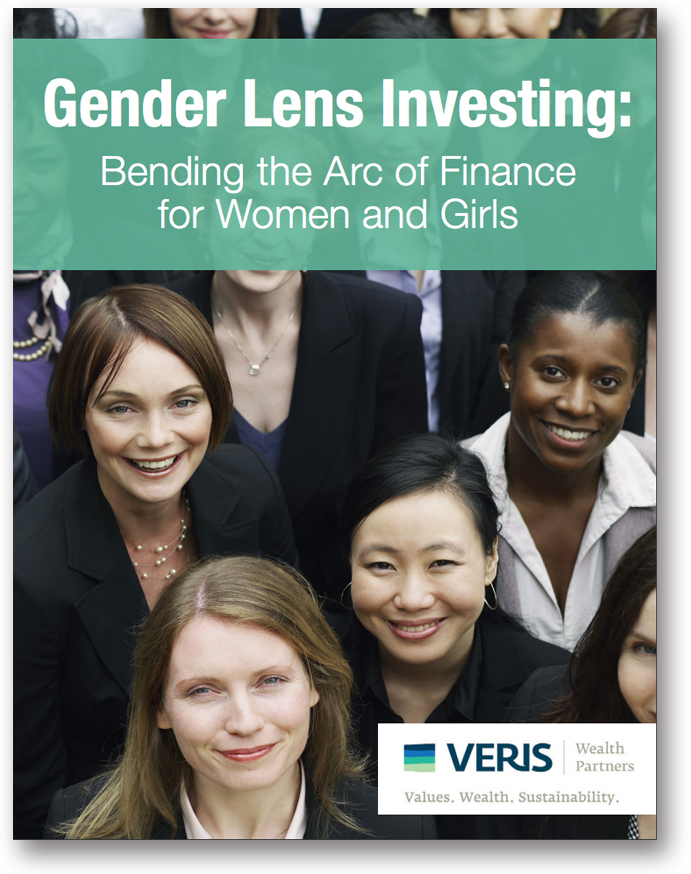
Gender Lens Investing (GLI) continued to grow strongly in the 12 months ended June 30, 2018, rising 85% to a record $2.4 billion, according to new analysis by Veris Wealth Partners, an impact wealth management firm.
The number of explicitly gender lens strategies holding publicly traded securities also continued to increase. In 2014, Veris identified eight investing vehicles. In the new report, Gender Lens Investing: Bending the Arc of Finance for Women and Girls, as of mid-year 2018, the number had more than quadrupled to 35.

“The growth of Gender Lens Investing is one of the most positive developments in a year overshadowed by the gender pay gap, lack of women on boards and sexual harassment scandals,” said Patricia Farrar-Rivas, CEO of Veris Wealth Partners. “GLI is one of the best opportunities to mobilize capital and remedy social issues we need to put behind us.”

Among the key findings in the new 20-page report:

• The growth of GLI mutual funds and ETFs is democratizing access to impact and gender lens investing. GLI mutual funds, exchange traded funds, exchange traded notes and CDs attracted $1.2 billion in capital – 50% of the total $2.4 billion invested as of June 30, 2018. Ten new funds were launched between January 2017 and August 2018.

• Investors are moving from single products to fully diversified GLI portfolios. Investors are constructing complete GLI portfolios to address gender-based violence, women’s chronic under-representation in leadership, spur innovation in women’s health care, among other issues.

• Gender Lens investors are changing corporate priorities. Companies and asset managers increasingly view gender equity and balance as competitive advantages. They are changing their policies to attract and retain talent and to implement good corporate governance.

• The GLI ecosystem is expanding rapidly. Institutional support for GLI is growing as foundations, pension funds, academics, governments, NGOs and research organizations embrace the category.

Click here to download the full analysis.


About Veris Wealth Partners
Veris Wealth Partners, LLC is impact wealth management firm. Our team believes that superior investment performance and positive impact are complementary parts of a holistic investment strategy. Based in San Francisco, Veris has offices in New York, Portsmouth, and Boulder. For information, call 415.815.0580, or visit https://www.veriswp.com

Additional Articles, Impact Investing, Sustainable Business

New Gender Lens Investing Tool Helps Drive Capital to Mutual Funds Supporting Gender Equality

As You Sow released its fifth Invest Your Values screening tool, Gender Equality Funds, in mid-November 2018. Gender Equality Funds is a free, online tool that enables individual and institutional investors to apply a gender lens to mutual fund and ETF investments. More at- https://genderequalityfunds.org

Gender Equality Funds screens the specific holdings of about 5,000 of the most commonly-held U.S. mutual funds—including financial giants like Vanguard, BlackRock, and State Street—against a database detailing individual company performance on 12 key gender equality performance indicators. These 12 indicators measure policies that demonstrate a commitment to gender diversity and gender balance in the overall leadership, management, and workforce of companies, combining into an overall gender equality portfolio score for each mutual fund.

This transparency gives investors, for the first time, the ability to apply a gender lens in evaluating mutual funds. It encourages fund managers to construct and offer investment vehicles that are sympathetic to gender parity, ultimately exerting market pressure on companies to improve their performance on gender issues.

“This tool could not be coming out at a better time,” Andrew Behar, CEO of As You Sow, said. “Women comprise 47 percent of the workforce, but only 4.8 percent[1] of S&P 500 companies have female CEOs[2]. The new tool empowers investors to see what is hidden within the mutual funds that comprise the bulk of their retirement savings and 401(k) plans. The first step is to know what you own — then you can use the power of your capital to invest in companies that have policies and practices that promote gender equality. We expect this tool to unleash a tsunami of change in the way women are treated in the workforce.”

Gender Equality Funds enables investors to align their investment with their values. It reveals which mutual funds are investing in the companies that lead the field in terms of gender balance and equality. Investors can easily search the Gender Equality Funds database to see how specific funds are scored, find responsible options that track leading companies in terms of gender equality, and compare financial returns[3].

“I am thrilled to see As You Sow launching this gender lens tool,” Kristin Hull, founder and CEO of Nia Impact Capital, said. “We at Nia know the benefit to companies and investors of being gender smart. My hope is that advisors and investors across the country will utilize this new way to assess mutual funds.”

Gender Equality Funds sources mutual fund holdings data from Morningstar (https://www.morningstar.com) and company-specific gender data from Equileap, the leading organization providing data and insights on gender equality in the corporate sector. With Gender Equality Funds, you’ll see at a glance whether mutual funds are investing in companies that are prioritizing gender equality.

“Impact investing should not be limited to private deals or customized public portfolios,” Ruth Shaber, founder and president of Tara Health Foundation, said. “The bulk of the wealth in this country is invested in mutual funds. If we want to democratize access to impact investing, we need to create tools for everyone, from individuals with 401(k)s to institutional investors with billions of dollars under management. The Gender Equality Funds tool allows anyone to apply a gender lens to their investments.”

Gender Equality Funds is As You Sow’s fifth Invest Your Values online tool, joining Fossil Free Funds, Deforestation Free Funds, Tobacco Free Funds, and Weapon Free Funds. More on all of these at- https://www.asyousow.org/invest-your-values


About As You Sow
As You Sow is a nonprofit organization that promotes environmental and social corporate responsibility through shareholder advocacy, coalition building, and innovative legal strategies.

Article Notes

[1] https://www.catalyst.org/knowledge/women-ceos-sp-500

[2] https://www.cnbc.com/2018/08/06/these-are-the-only-women-ceos-left-among-sp-500-companies.html

[3] https://www.tiaa.org/public/pdf/ri_delivering_competitive_performance.pdf

Source: As You Sow

Additional Articles, Impact Investing, Sustainable Business

Thornburg Better World International Fund Celebrates Three-Year Anniversary and Receives Five-Star Morningstar Rating

Thornburg Investment Management (“Thornburg”) is pleased to announce the three-year anniversary of Thornburg Better World International Fund (“Fund”). As of September 30, 2018, the institutional share class of the Fund (Ticker: TBWIX) received an overall five-star Morningstar rating and its three-year performance ranks in the sixth percentile based on its risk-adjusted return among 655 peers in Morningstar’s foreign large blend category. This makes it one of the best-performing international environmental, social, and governance (“ESG”) strategies available to investors.

Thornburg Better World International Fund (TBWIX) now three years old; receives 5 stars from Morningstar – one of best performing ESG funds based on risk-adjusted return

“Incorporating ESG factors into an investment strategy has shown to decrease volatility and improve risk-adjusted returns over the long term,” said Managing Director and Portfolio Manager Di Zhou.

“We are excited to offer investors an actively-managed, completely integrated ESG strategy with a three-year track record and favorable rating from Morningstar,” said Managing Director and Portfolio Manager Jim Gassman.

The Fund offers a distinct approach to ESG investing by applying Thornburg’s experience and global research capabilities as well as collaborative structure to look for attractively priced stocks of quality companies with sustainable business models, compelling growth prospects, and improving environmental sensitivity, social responsibility, and corporate governance standards. Thornburg’s research focuses on companies with proof points that demonstrate their power to last and grow over time. The strategy is available to U.S. retail and institutional investors.

“Thornburg Better World International strategy is a natural extension of our corporate culture of integrity, sustainability, and embracing diversity,” said Thornburg President and CEO Jason Brady. “Led by founder and chairman Garrett Thornburg and bolstered by our global team, Thornburg’s commitment to the principles underlying ESG is seen through our community involvement, employee volunteerism, and even in our LEED gold certified headquarters in Santa Fe, New Mexico — an example of energy- and water-efficient design.”

For more information about the Fund, please visit https://thornburg.com/products-performance/mutual-funds/overview.aspx?id=FBWI

To learn more about Thornburg’s investment strategies, please visit https://thornburg.com/products-performance/


About Thornburg

Thornburg Investment Management is a privately owned global investment firm that offers a range of solutions for institutions and financial advisors. Founded in 1982 and headquartered in Santa Fe, New Mexico, the firm oversees $46 billion as of September 30, 2018, across mutual funds, institutional accounts, separate accounts for high-net-worth investors, and UCITS funds for non-U.S. investors.

At Thornburg, we believe unconstrained investing leads to better outcomes for our clients. Our culture is collaborative and our investment solutions are highly active, high conviction, and benchmark agnostic. When it comes to finding value for our clients, it’s more than what we do, it’s how we do it: how we think, how we invest, and how we’re structured.

For more information, visit https://www.thornburg.com or call (877) 215-1330.

For the one-year period as of 9/30/18, the fund’s class I shares ranked in the top 5th percentile among 783 Foreign Large Blend funds. Morningstar performance rankings are based on total returns without sales charge.

The fund’s five-star Overall Morningstar Rating™ for class I shares, among 655 Foreign Large Blend funds, is based on risk-adjusted returns, using fund’s three-year rating, as of 9/30/18. To determine a fund’s Morningstar Rating, funds and other managed products with at least a three-year history are ranked in their categories by their Morningstar Risk-Adjusted Return scores. The top 10% receive 5 stars; the next 22.5%, 4 stars; the middle 35%, 3 stars; the next 22.5%, 2 stars; and the bottom 10% receive 1 star. The Risk-Adjusted Return accounts for variation in a managed product’s monthly excess performance (excluding sales charges), placing more emphasis on downward variations and rewarding consistent performance. Other share classes may have different performance characteristics.

©2018 Morningstar, Inc. All Rights Reserved. The information contained herein: (1) is proprietary to Morningstar and/or its content providers; (2) may not be copied or distributed; and (3) is not warranted to be accurate, complete or timely. Neither Morningstar nor its content providers are responsible for any damages or losses arising from any use of this information.

Past performance is no guarantee of future results.

Investments carry risks, including possible loss of principal. Additional risks may be associated with investments outside the United States, especially in emerging markets, including currency fluctuations, illiquidity, volatility, and political and economic risks. Investments in small- and mid-capitalization companies may increase the risk of greater price fluctuations. Investments in the Fund are not FDIC insured, nor are they bank deposits or guaranteed by a bank or any other entity.

Before investing, carefully consider the Fund’s investment goals, risks, charges, and expenses. For a prospectus or summary prospectus containing this and other information, contact your financial advisor or visit https://www.thornburg.com. Read them carefully before investing.

Thornburg mutual funds are distributed by Thornburg Securities Corporation.

Source: Thornburg

Additional Articles, Impact Investing, Sustainable Business

Water Risk: Single Largest Risk Threatening People, Planet and Profit

Let me begin by asserting that SRI and ESG will escalate to the forefront of global thinking, speaking, doing and capital. Both represent the sole solution to save people, planet and profit. And if you do not know Richard L. Sandor yet, I encourage you to look him up: “Sandor is known for asserting that the next financial revolution will be in the convergence of the financial markets and the environment.” He is often credited for founding the field of environmental Finance. His first book, Good Derivatives: A Story of Financial and Environmental Innovation, was published by John Wiley & Sons in April 2012. My own particular dedication is to water security, a sector that I am immersed in. Once I discovered the gravity of water risk it became a calling that burgeoned into a passion.

Water Risk

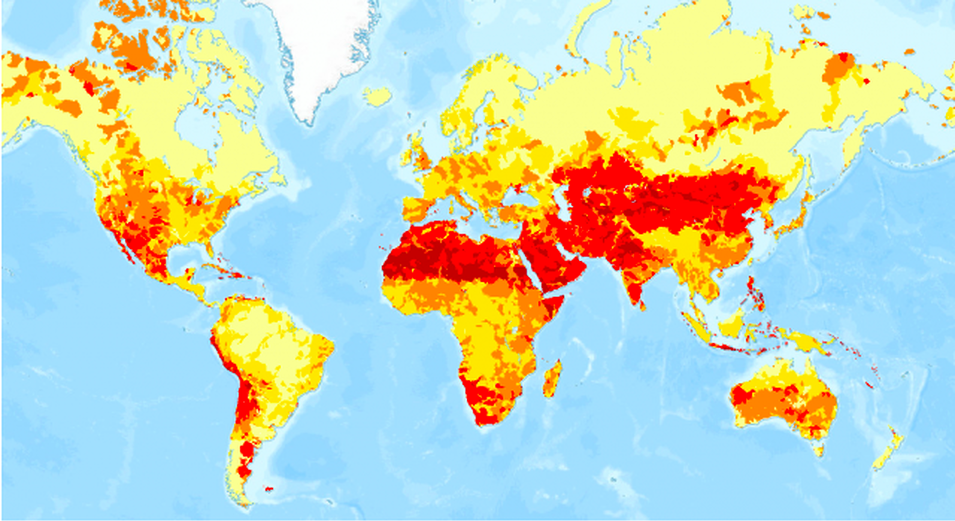
Physical and financial water risks are the greatest threats to people, planet and profit. By 2025, $145 Trillion in assets under management are either directly or indirectly exposed to financial water risk. Financial water risks are increasingly material. Climate change and other drivers are turning water into a scarce commodity, increasing competition for available resources and making protection of water quality more vital than ever. These risks have to become an integral part of investor research and risk management processes and daily financial decisions. Otherwise, investors will be blind to a risk that is only continuing to grow. Asset managers require transparency to make decisions. Typically, water risk transparency is based on share pricing, curated corporate financial accounting and voluntary disclosures of environmental risk attributes. Indexing water risk allows the asset manager to extract a probabilistic financial indicator of corporate and portfolio risk to facilitate allocation decisions. Corporate water risk assessments influence or modify financial projections or their weighted average cost of capital assumptions. Scenario analysis modeling determines how much the market cap of companies would be impacted if they had to absorb more of the costs of treating their wastewater discharges, especially as drought intensifies and communities and regulators become less tolerant of water use and pollution. Hence a deeper understanding of the probability of large financial losses due to strategic risks related to water, such as not being able to grow revenue, access new markets, or develop new facilities is imperative.

Source: Aqueduct Water Risk Atlas from World Resources Institute,  https://www.wri.org/resources/maps/aqueduct-water-risk-atlas

Water Security

Water security is the single largest investment opportunity. It is the foundation for healthy people, planet and profit. Water security investments ensure social and environmental returns, and financial outperformance. In a water-secure world: Investors, companies and cities understand that water is an essential and fundamental factor in practically all economic activities. They recognize its crucial role in mitigating and adapting to climate change and take transformative steps to increase its security. There is equitable access to safe and affordable drinking water, hygiene and sanitation for all, in line with the objectives of Sustainable Development Goal (SDG) number 6. This requires significant and sustained investment in water infrastructure to secure future water supply.

Water Risk Index

LIMEYARD TSC Water Risk Index is a new benchmark index designed to inform asset owners and investment managers of the water risk to equities in their financial portfolios. Rather than forcing asset managers to make their own interpretations of operational reports and resource management scenarios, the index translates the key metrics of water risk into financial measures that can be accurately and effectively incorporated into financial models. Professor Peter Adriaens of Equarius Risk Analytics LLC, Ann Arbor, Michigan invented the underlying algorithm and waterBeta. Equarius Risk Analytics is a data solutions provider focused on financial risk management in portfolios with assets exposed to water, with virtually every company and security being directly or indirectly affected by financial water risk. LIMEYARD, Zurich is a proprietary and non-proprietary benchmark provider, delivering rule-based, compliant traditional and smart-beta investable solutions to institutions on the sell and buy sides. First TSC Water Risk Index US50 publishes November 2018 followed by US500, EURO 600 and an APAC index version. The LIMEYARD TSC Water Risk Index family will eventually cover the financial water risk performance of large- and mid-cap stocks across 23 developed markets with more than 1,600 constituents and approximately 85 percent of the free float-adjusted market capitalization in each country.

Water Security Fund

TSC Water Security Fund is a global fund family venture to advance a water-secure world while capturing sustainable alpha and social and environmental returns. First UCITS ETF and UCITS vehicles launch 1/2019 ex London and Luxembourg, the latter representing the leading global hub for sustainable finance. TSC Water Security Fund UCITS ETF lists on London, Milan, Frankfurt and Amsterdam stock exchanges. Europe has historically embraced SRI, ESG and sustainable finance with the Nordic countries and their large pension funds being leaders of sustainable and responsible investing.

A Water Secure Future

Thomas Schumann Capital (TSC) is the sponsor of both index and fund family. TSC’s mission is to serve 7 billion humans and $145 Trillion in global assets under management by 2025 by advancing a water-secure world. Today’s investors aren’t just focused on profit, they want to know about impact also. Ultimately, we want to capture and protect alpha, reduce volatility, create long-term capital appreciation, and social and environmental returns. Our planet is facing a colossal problem; we hope to help turn the tide.


Article by Thomas Schumann, founder of Thomas Schumann Capital, which provides financial products and services to public, private and philanthropic capital to advance a water-secure world. TSC embraces social and environmental impact and responsibility, and financial outperformance. A thought leader and expert in the water space, Thomas is a truly global seasoned business/finance executive with an extensive global network of water investment and water industry experts, possessing information capital in the global finance/investment sector specifically relating to water risk/water security.

Thomas loves trail running in the Santa Monica Mountains, travel, meaningful connections with people, and acting as an agent of positive, global change. Thomas values “Spirit, People, Planet and Profit”, in exactly that priority.

Additional Articles, Energy & Climate, Impact Investing, Sustainable Business

The Year Wall Street Got Sustainable Investing

By Amy Domini, Domini Impact Investments

(Reader Favorite from December 2018)

On October 23, 2018 the Financial Times published an article stating that Larry Fink, CEO of the world’s largest asset manager, BlackRock, had announced that “sustainable investing will be a core component for how everyone invests in the future.” He further explained that sustainable investing did not lead to lower returns and that in his own opinion such a strategy will lead to higher returns.

The news story was of particular interest to me for two reasons. First, there was the fact that my field, so long considered a tiny outlier in the field of finance, had survived to become the declared future of financial asset management by someone whose efforts to build my field were not notable a decade ago. Second, was the use of “Sustainable Investing” rather than “Environmental, Social and Governance (ESG),” which most big banks and asset managers are more comfortable using.

In my opinion, Mr. Fink’s statement means that we early advocates have convinced the world of the need for adding ‘people and the planet’ into our way of investing, and it means that the world’s most conventional asset manager doesn’t need an academic catch phrase to hide behind. Larry Fink is okay with saying the word sustainability. Simply acknowledging that making money at the cost of losing our planet is unsustainable is an extraordinary step forward for the masters of Wall Street.

He isn’t alone. My local CFA Society in Boston just invited me to register for the Sustainable Investing Seminar. It is being led by Jeremy Grantham, the co-founder of Grantham Mayo Van Oterloo, only one of the largest asset managers in the world. He is quoted on my invitation as saying, “We are racing to protect more than our portfolios from stranded assets and other climate change impact…But for those portfolio managers who happen to be human, we have a much more important job. We are racing to protect not just our portfolios, not just our grandchildren, but our species. So get to it.”

These men are the sort of advisors who used to say to me, “Look, I agree with you about all that important stuff, it’s just that I have to keep blinders on and look only for profit or I am letting my clients down.” It was an easy out, and it got dangerous. In October 2008 the Department of Labor (DOL) altered the language guiding fiduciaries. I underline the new words they used. “The named fiduciary must carry out this responsibility solely in the participants’ and beneficiaries’ interest in the economic value of the plan assets…” In other words, it is okay to kill off the beneficiaries if you protect the plan assets. Late in 2016 the DOL reverted to the prior language after eight years of efforts by my industry to keep people in the standards that fiduciaries consider.

The above example demonstrates what a small tweak in language can lead to – it can change the entire mission from protecting people to protecting money. It also demonstrates the importance of conventional investment managers shouldering responsibility for people. I say this because only when my industry was joined by many conventional asset managers – complaining that they were being locked out of tremendous clients demand for green venture capital – did the DOL reverse the language.

2018 is beginning to look as though it may be the year in which not just we, but the world, starts to appreciate the remarkable impact from the very existence of our field.

To be sure, the outcomes have been there all along, but now they are more clearly the direct result of our existence and of nothing else. In Domini Impact Investment’s Impact Report we name a few. We point out that in 2016 the sustainable Stock Exchanges Initiative found that 58 stock exchanges, representing over 70 percent of listed equity markets have made a public commitment to advancing sustainability. Would that have happened without investors asking for information about social and environmental impacts? We note that in 2017 the United Nations program, Principles for Responsible Investment, published a model tax policy that aligns the company’s business and sustainability strategies. Would the United Nations have noticed this intersection without our efforts to bring it forward? To download our full impact report, with many more examples, visit – https://www.domini.com/2017impact

The large accounting firm, KPMG, in their survey of 2017 corporate responsibility reporting The Road Ahead evaluated sustainability reporting from 4,900 companies in 49 countries and regions. It is inconceivable that this type of reporting would have come into ordinary practice were it not for small investors, seeking to align their own values with the way they invest, who gathered together into a handful of mutual funds and managers that carried and championed the message.

Amy Domini - Looking Forward - GreenMoney Journal

KPMG found some major emerging trends within corporate responsibility reporting. They found that companies now agree that climate constructs a financial risk and are reporting on it. Even those that do not admit the risk increasingly report on carbon reduction targets. Companies report on progress towards meeting the United Nations’ Sustainable Development Goals. Companies report on their efforts regarding human rights. KPMG also notes that 78 percent of the largest companies now integrate financial and non-financial data into annual financial reports, suggesting that they view the information as relevant to the investment decision-making process.

This all matters because we know that data creates knowledge and that knowledge creates solutions. If we did not know that seatbelts save lives, we would not have legislated seatbelts into our automobiles. If we did not know that chewing on lead lowers a child’s IQ, we would still be making toy soldiers out of lead. Investors who care about universal human dignity and ecological sustainability understand that in order to construct a frame within which capitalism works with us, we must first have good data. There are other stakeholders who want good data, but only those who own the companies have demonstrated the clout to demand it. We demand it when we ask non-traditional questions of management and when we compile our results and display them to management, helping each company see in which areas they are stars and in which areas they are laggards.

The field has come of age. The question before us now is whether, in light of the many major investment firms embracing our message, we stay vigilant in the field’s purpose: using finance to save people and the planet. Our voice is needed, for without it, investing in people and the planet will become jargon, without impact.


Article by Amy Domini, Founder and Chair of Domini Impact Investments. She is widely recognized as the leading voice for socially responsible investing. In 2005, Time magazine named her to the Time 100 list of the world’s most influential people. In 2006, she was awarded an honorary Doctor of Business Administration degree from Northeastern University College of Law. Yale University’s Berkeley Divinity School presented Ms. Domini with an honorary doctorate in 2007. In 2008, Ms. Domini was named to Directorship magazine’s Directorship 100, the magazine’s listing of the most influential people on corporate governance and in the boardroom.

Ms. Domini is a past board member of the Church Pension Fund of the Episcopal Church in America; the National Association of Community Development Loan Funds, an organization whose members work to create funds for grassroots economic development loans; and the Interfaith Center on Corporate Responsibility, the major sponsor of shareholder actions. She is a member of the Boston Security Analysts Society. She has been a frequent guest commentator on CNBC’s Talking Stocks and various other radio and television shows.

Ms. Domini holds a B.A. in international and comparative studies from Boston University, and holds the Chartered Financial Analyst designation.

Publications: Ms. Domini is the author of Socially Responsible Investing: Making a Difference and Making Money (Dearborn Trade, 2001) and The Challenges of Wealth (Dow Jones Irwin, 1988), and a coauthor of Investing for Good (Harper Collins, 1993), The Social Investment Almanac (Henry Holt, 1992), and Ethical Investing (Addison-Wesley, 1984).

Featured Articles, Impact Investing, Sustainable Business

God Calls His Followers to Honor Him with Their Finances

By Robert Knight, Communications Adviser, Timothy Partners

The ethics of Biblically Responsible Investing (BRI) are not new. In fact, they can be traced not only to specific Bible verses but also to Jewish interpretive writing in the Talmud stretching back before Christ.
For example, the great Middle Ages Rabbi Maimonides (1135-1204 A.D.) forbade “the sale of weapons to people who may use them for violence or robbery (Mishnah Torah, Laws of Murder 12:12, 14).” And Rabbi Dr. Asher Meier of the Business Ethics Center of Jerusalem confirms that Jewish tradition requires an ethical approach to investing: “Any economic activity that has special social value can be considered a preferred investment,” he wrote.

Christians also had guidance hundreds of years ago in how to handle the resources with which God had blessed them. In 1524, Christian reformer Martin Luther excoriated businesspeople who left out ethics: “I shall sell my wares as dear as I can … But it means making room for greed and opening the door and window of hell … so long as I have my profit and satisfy my greed, of what concern is it to me if it injures my neighbor in ten ways at once? So you see how this motto goes so straight and shamelessly against not only Christian love but also natural law as well.”

John Wesley, the founder of the Methodist movement, “urged his followers to shun profiting at the expense of their neighbors. Consequently, they avoided partnering or investing with those who earned their money through alcohol, tobacco, weapons or gambling—essentially establishing social investment screens,” wrote William Donovan in The Balance.com.

Ratcheting forward to 1928, Philip Carret launched the Fidelity Mutual Trust, which became the Pioneer Fund, one of the first-ever mutual funds. Designed initially to serve church investors, the Fund had a policy of “screening investments on ethical grounds,” rejecting companies that traded in alcohol or tobacco. With Carret’s guidance, the Fund survived the 1929 Stock Market Crash and the Great Depression and went on to become one of the largest mutual funds.

In January 1994, MMA Praxis Intermediate fund, was launched designed with Mennonite beliefs, sought companies that support positive values such as the respect for human dignity, responsible management and environmental stewardship, while avoiding industries and activities like gambling, alcohol and tobacco production and military contracting.

With the rising number of “responsible” funds, however, there wasn’t really an option for Christian conservatives or pastors to invest without compromising their beliefs, including the sanctity of life and wholesome family values. In March 1994, under Art Ally’s leadership, the Timothy Plan unveiled its fund aimed at evangelical Christians.

Secular investment firms weren’t thrilled by the arrival of Timothy Plan’s Biblically Responsible Investments. In fact, mutual fund analyst Michael Lipper told Bloomberg News for a 1994 article titled “New Fund Seeks Christians:” “This fund may have gone too far. It sounds like someone trying to preach to the converted and then setting up a big collection.”

Time has proven Mr. Ally right. The Timothy Plan is one of over a dozen successful BRI-based mutual funds now available. Currently, Timothy Plan has over $1 billion of assets under management.

The basis of each of these funds is the Bible, which clearly states that all things belong to God, including each of us and everything we own. Genesis 1 through 3 tells us that God created all things for His own glory and that human beings have the honor of being at the very top of his creative order.

Since the beginning, God has given humanity the great gift of dominance over all living things, but also a responsibility to be good stewards of His creation. Therefore, we owe it to our Maker to use our money wisely. We should do nothing to hinder His Kingdom and instead advance it. We should not invest in ventures that promote or traffic in sin and thus are destructive to people.

Answering this charge, hundreds of thousands of Christians work to ensure that their finances honor God. For those committed to Biblically Responsible Investing (BRI), it is of upmost importance to honor God by aligning their investments with their values.

But does this mean sacrificing their return on investment? Possibly not. In fact, a considerable body of research indicates that investors do not have to compromise their bottom lines while engaging in BRI and may even reap higher returns in some cases.

A 2016 study called “Great Expectations: Mission Preservation and Financial Performance in Impact Investing” from the University of Pennsylvania’s Wharton School of Business found that screened investments performed favorably against unscreened investment funds: “Impact funds in the sample that seek market-rate-returns demonstrate that they can achieve results comparable to market indices, while still reporting mission preservation in the vast majority of their exited investments.”

However, an Oxford University 18-year study of screened funds comprising 180 U.S. companies for “sustainability” and other factors, such as excluding firms that employed child labor, showed better returns, including lower cost of capital and “stock price performance.” The authors compiled evidence “that High Sustainability companies significantly outperform their counterparts over the long term, both in terms of stock market as well as accounting.”

In 2015, a Christian Investment Forum study noted that previous studies had established that Socially Responsible Investing (SRI), of which BRI is a subcategory, performed as well or better than unscreened funds.

In an effort to determine whether the smaller universe of BRI funds matched the overall SRI finding, the authors concluded that, “Based on the analysis of historical performance data from the funds managed by members of the Christian Investment Forum [of which Timothy Plan is a participant], the results did corroborate the expectation that return performance was not reduced due to incorporating BRI, and in fact, there was a general outperformance compared to the industry averages,” the study found. “Over the last five years, a composite of the returns from all of the equity mutual funds within the Christian Investment Forum outperformed the industry average by 77 basis points on an annualized basis.”

The author cautioned that “the results of this analysis are not meant to suggest that BRI funds will result in outperformance. The most important reason to incorporate BRI funds into an overall investment portfolio is to better align investments with an investor’s values.” But investors and advisors can have peace of mind that “considering funds that can align with their Christian faith need not be a choice between values and performance.”

In short, investors who want to honor God with their God-given resources should not fear the unknown when it comes to comparable returns. After all, as the Bible tells God’s followers in I Samuel 2:30, “Those who honor me I will honor, but those who despise me will be disdained” (NIV).


Article by Robert Knight, an author and the Communications Adviser for Timothy Partners, Ltd., distributor of Timothy Plan funds (https://timothyplan.com). Since 1994, Timothy Plan has been a beacon for Godly stewardship in the financial community. The first of its kind, Timothy Plan is a family of mutual funds that screens Funds to ensure that no money is invested in companies that are supportive of ideals that are contrary to their biblical, moral imperative.

Mutual funds are available through a prospectus by contacting the fund or your financial professional. If you are considering a mutual fund you should always carefully read the prospectus before investing to analyze the investment objectives, risks, charges and expenses.

Featured Articles, Impact Investing, Sustainable Business

Inspired Stewardship – A Woman of Faith

By Teresa Romano Roybal, Minister, The River Santa Fe

(Reader Favorite from November 2018)

Earth’s paradisiacal garden housed a perfect creation described as bringing pleasure to its maker. Yet even this paled in comparison to the magnificent and complex handiwork that was yet to be. “Let us make man in our image, after our likeness…” and so it was. (Genesis 1:26) The legendary custodians, Adam and Eve were fashioned for this explicit purpose. “…be fruitful and multiply, fill the earth and subdue it, have dominion over the fish of the sea, over the birds of the air, and over every living thing that moves on the earth.” (Genesis 1:28)

Dominion; defined as sovereignty and/or control. One cannot be assigned dominion without the implied constraint of responsibility and one cannot exhibit responsibility if one lacks knowledge, integrity, transparency and accountability. It is interesting to note the four-point directive to man in this ancient book of origins: be fruitful, multiply, fill and subdue. Four points distilled to two fundamental edicts; grow and govern, the essence of man’s charge.

Adam, himself a master of creativity, touched, felt and named each animal in the garden as they came under his loving care. Authority was given him over this vast and vibrant orb of new life. As time passed each eco-system of perpetuity ushered in new seed of issue and reverently released the former, each seed intended to fulfill its cycle: to live, to die, to live again and bring forth much fruit, nature’s gospel story. But not all met their destiny as their appointed seasons came to an end; “from dust you were created and to dust you will return.” (Genesis 3:19)

A sense of divine expectation rested upon this couple as God displayed his greatest expression of trust: that of stewardship. Stewardship is the authority given to an entity or person(s) carrying with it an implied fiduciary commitment to serve the needs of the governed party over that of its agents. One need not look far to see the stewardship of Adam and Eve fell bitterly short of their creator’s intent.

From that day until now the commission of man has not changed. At its core it is simply to leave something better than we found it: to protect its vibrant health, to promote its growth and ensure its sustainability. To enhance the breath, length, and depth of its well-being and diminish its weaknesses. But does this command imply an even greater charge? The answer is found in the Biblical book of Mathew, the 25th chapter.

It is here one cannot mistake the God perspective. “For it will be like a man going on a journey, who called his servants and entrusted to them his property. To one he gave five talents, to another two, to another one, to each according to his ability. Then he went away.”

The story goes on to detail the diverse handling of the master’s money by his servants. Two provide a profitable return and one provides none. The startling harshness by which Jesus expressed his displeasure must have taken many of His listeners by surprise.

“You wicked and slothful servant! You knew that I reap where I have not sown and gather where I scattered no seed. Then you ought to have invested my money with the bankers, and at my coming I should have received what was my own with interest. So take the talent from him and give it to him who has the ten talents. For to everyone who has will more be given, and he will have an abundance. But from the one who has not, even what he has will be taken away.” A startling response for a most tender and compassionate Rabbi.

The parable communicates an obligation of the steward according to heaven’s mandate. A mandate that not only requires growth and governing but implies something more. An expectation many could deem entirely unreasonable. For how can one reap where He has not sown, or gather where He scattered no seed?” Yet the directive was clearly fulfilled by the first two servants who delivered a more than profitable return despite what many would deem an unrealistic expectation.

I will call this Inspired Stewardship. When the mandate of faith and obedience is followed entirely one can yield more than optimal results. To not simply grow the investment but take it to an entirely new level. We see a demonstration of this taking place in the hands of Jesus’ disciples as the multiplication of 12 baskets of bread and fish miraculously fed thousands.

The teacher from Galilee often spoke of seeds; plantings and harvests and their ratio of success and/or failure. In such he identified the condition of both the seed, the ground and the elements that support, nurture or threaten each. One could not expect a great harvest if any of these essential components were compromised. So how can planting our financial seed in a compromised field yield us a great reward? If corporate entities prize swift monetary reward over long term value and sustainability, if they focus on price rather than intrinsic worth, our loss is assured.

Our founding fathers did not trust in systems or in markets, but in the people responsible for them. They understood corporations were only the fascia of the people that undergirded them. Their allegiance and commitment to the Judeo – Christian precepts upon which our nation was built became a solid foundation for success.

Our country was built upon individuals who believed they were morally responsible for their decisions whether or not they were legally liable for them. IN GOD WE TRUST still reads boldly on our currency. The basis of our entire global banking system was established on a principal communicated in one word; CREDIT. That word is derived from the Latin word Credo which means I Believe; the first word of the Apostles creed. It means to trust or to entrust.

When a climate of faith and confidence shifts to a culture of uncertainty, economic return is diminished. We see this routinely in the Stock Market when the mere perception of corporate stability shifts from firm to ambiguous its stock price responds. A lack of faith, or the mere questioning of faith, quickly erodes value.

Each financial seed we plant in each and every field we choose is only destined for success if all the criteria in the divine mandate has been met. Good seed in good soil and people of integrity managing the process. Unethical practices, policies or products erode human dignity and moral enterprise. Placing little value on honesty and ethics creates a morally hazardous field and a harvest of unsustainability. Is faith and trust a commodity to be traded? Our founding fathers didn’t think so, and neither do I.

To answer the call of good stewardship we must return to the undergirding of its foundation; knowledge, integrity, transparency and accountability. Eyes wide open, knowing where our investment dollars go and making responsible choices as to what we will and will not endorse. Inspired stewardship; the essence of the God-given charge given to each one of us. I endeavor to live up to it.


Article by Teresa Romano Roybal  Born and raised in New York, Teresa has spent the last 22 years building three multi-million-dollar companies but now she says she’s finally “come home”. “I’ve always known I was born to minister the Gospel of Christ and finally this is my life.”

Ordained in 2014, Teresa J. Roybal ministries has opened THE RIVER SANTA FE a non-traditional Christian outreach in the Santa Fe community.

Singer/Songwriter/Worshiper/Preacher she started in New York’s mega churches as a featured Worship leader before embracing New York’s highly competitive diamond business. In 1999 she moved to Santa Fe New Mexico and married Gabriel Roybal an esteemed aesthetic dentist.

Working hard together they have built several medical/dental practices. Now they labor together in ministry impacting the local community with the good news of the gospel and the miraculous love and power of God. Visit theriversantafe.com for more information.

Additional Articles, Impact Investing, Sustainable Business

What Would the Good Samaritan Do?

By Mark Regier, Vice President, Praxis Mutual Funds

Finding a Shared Vision for Values-Driven Investors

The phrase “What would Jesus do?” or “WWJD” emerged in American consciousness during the 1990s as motto for many Christians seeking to regularly reflect on how the moral teachings of Jesus could be reflected in their daily lives. As is the way of our modern culture, the reflective purpose of this cue soon became obscured by our collective passion for marketing and merchandise in all its many forms.

Whether one participates in organized religion or not, the idea of finding a mechanism that calls us to step outside of our personal situation to view things from a different, morally-grounded perspective can have many benefits. This was the original intention of WWJD.

This also appears to be the intention of many of the parables shared by Jesus throughout the New Testament. He is frequently presented responding to critical—even tricky—questions with stories that cause reflection, rather than answers that reflect or refine the religio-political rules of the day, as most expected. These parables were all the more disruptive by their inclusion of persons—women, children, tax collectors, slaves, etc.—in roles and situations that challenged the status quo and current thinking on what was “good” and “right.” The parables seemed designed to pull listeners out of their presuppositions and self-assuredness.

So what does all of this have to do with how we, as people of faith or good will, approach investing? And more importantly, how do we do this when we may not all agree on how it is to be done?

Both less and more than you might think!

Less, because the Parables and many similar religious teachings are not necessarily about “how to do” something, but more often about “how to be” in a situation. These stories challenge certainty about rules, righteous action, and our place in the world with a focus on right relationships–between people, classes, ethnic/racial groups, genders and with Creation itself. And it is this centrality of relationships that makes such teachings more relevant to the increasingly contentious and conflicted environment in which many values-based investors find themselves.

One parable that seems particularly relevant to the current SRI investment arena is that of the Good Samaritan. What is both ironic and even more timely is that this parable was offered in response to a question posed to Jesus asking, “And who is my neighbor”? It is a question of inclusion and value that echoes with importance through the centuries to America’s reality today.

Found in Luke 10:25-37 [1], this story—at least in its simplest form—has practically become baked into American culture. In short, the Samaritan (from an ethnic group often looked down upon by the dominant culture Jesus was a part of) stopped to help a man wounded by robbers while two religious leaders (a priest and a Levite) passed him by, presumably not stopping because touching the wounded man would have made them unclean according to the religious rules of the day.

When Jesus flipped the question to questioner, asking “Which of these three…was a neighbor to the man who fell into the hands of the robbers?”, the answer was “The one who showed him mercy.” One can easily replace any of these characters with modern stand-ins (and people have!) and get a similar reflective opportunity. The point is to step out of what we think we know and ask how our “answers” fit in a broader, moral frame—particularly when that challenges our current world view and objectives.

What then might we learn, applying reflection from the story of the Good Samaritan, to our collective work in faith-based, SRI/ESG investing? Here are my takeaways:

Relationships matter—For me, this is the overarching message of this Parable (and many others). Understanding the human component, motivations, objectives and needs in any situation—especially one of conflict—is critical. How can we first see what we share, not where contrast? No strategy, marketing opportunity, or clever taking of the intellectual high-ground is worth sacrificing community and collaboration in your wake. Being “right” (often a less certain thing than we think at the time anyway) should not preclude being in right relationships with those around us—even those we think are in opposition to us.

Remember the shared goal—One reason why relationships should and do matter, is that we often have shared goals, whether we choose to focus on them or not. It is unlikely the religious leaders thought the wounded man should die. Rather they chose to place their own rules and priorities above the shared goal—mandated by religious teachings–of caring for those in need. In the end, we all need to decide if it is the path or the goal that is more important.

The work is often messy—The issue of “purity” or remaining “clean” runs deep in the Good Samaritan Parable. This theme seems to echo within both the faith-based and SRI investment world as well today. While an important—and potentially valid–point of values reflection, avoidance rarely brings the solutions we want and need. Getting to our shared goal demands the ability to engage, understand, challenge, and compromise (practically a four-letter word in our current culture) with those of a different perspective. Whether corporation, investor or activist (or combinations thereof), achieving justice and sustainability has nearly always been messy.

There may be a cost—The Samaritan invested his own time and resources in caring for the wounded man, in both the short and long term. The Holy Grail of SRI—and particularly ESG—has been to prove that one can do demonstrable good for the world and deliver competition-topping performance. Incredible strides have been made, materiality demonstrated, and successful claims put forward. Yet in many cases there remain a number of asterisks, requiring a fuller look at the details to understand the complete picture. Perhaps the more important point to consider—whether approaching the investment task on behalf of the environment or a set of faith-driven values—is how much cost is too much and is the cost worth it in the end.

Being “wise” (or smart or clever or right) doesn’t trump mercy—In a culture and communication environment dominated by selective information, passion-driven marketing campaigns, and the need to find enemies/opponents, the question our community (really any community) increasingly faces is whether or not to engage in the popular “wisdom” of the marketplace or stick to the values that unite us. It is a hard choice to make with friends and competitors alike chanting “fight fire with fire.” And it is one we must all choose for ourselves.

In the end, the value of a moral reflective cue—like “What would the Good Samaritan do?”—is to cause us to stop and think about how our situation and related actions look from a different perspective, or in the context of diverse values that we claim to support. It wouldn’t surprise me if no two people respond to my own reflections in exactly the same way. I think that’s the point of parables anyway. All I can do is repeat Jesus’ suggestion—“Go and do likewise.”


Article by Mark A. Regier, Vice President of Stewardship Investing for Praxis Mutual Funds and Everence Financial (https://www.praxismutualfunds.com), a leading provider of faith-based financial products in the United States and a ministry of Mennonite Church USA. Mark has been involved in the field of ethical and socially responsible investing at Everence for more than 20 years. He oversees the company’s work in socially responsible investing (including investment screening, ESG integration, proxy voting, corporate engagement and community investing). In addition, Mark works with products and programs throughout Everence to strengthen their creative integration of faith and finances. In 2015, Mark assumed leadership of the sales and marketing efforts for the Praxis Mutual Funds.

Mark has served as a member of the Board of Directors for the US Social Investment Forum, the Interfaith Center on Corporate Responsibility, Partners for the Common Good, the International Working Group (USSIF), The Isaiah Fund for Disaster Recovery Investing, and the Highland-Good Steward SRI hedge fund. In 2006, Mark received the SRI Service Award, the US social investment industry’s highest honor.

With over 25 years of service to the church and a background in ethics and theological studies, Mark is often a resource to national and international media and organizations on faith-based and community investing issues.

[1] Luke 10:25-37

https://www.biblegateway.com/passage/?search=Luke+10%3A25-37&version=NRSV

Featured Articles, Impact Investing, Sustainable Business

Billion Dollar Energy Fund Expands its Portfolio of Startups Fighting Climate Change

By Akshat Rathi, Quartz

It’s not often that the world’s richest people get together, agree on a goal that’s for the public good, and then set about finding ways to achieve it. But that’s what Bill Gates has achieved with Breakthrough Energy Ventures (BEV), which aims to invest $1 billion into radical energy startups capable of drastically cutting global emissions. The fund draws on the resources of billionaires like India’s Mukesh Ambani, Amazon’s Jeff Bezos, former New York City mayor Michael Bloomberg, Virgin’s Richard Branson, Alibaba’s Jack Ma, and SoftBank’s Masayoshi Son.

In June, Quartz broke the story of BEV’s first two investments: Form Energy, which is developing two new types of battery chemistries capable of storing weeks and months worth of energy, respectively, and Quidnet Energy, which is developing a technology to replicate the benefits of hydropower by pumping water into subsurface shale formations.

We can now report, for the first time, a full list of the other companies that BEV is funding and will publicly acknowledge. (Some companies in its portfolio prefer not to be named, says Carmichael Roberts, BEV’s head of investing, while BEV plans to announce others at a later stage.)

QuantumScape: A startup building an all-solid-state battery, which many experts believe is key to the future of electric cars.

Commonwealth Fusion Systems: A firm working on a nuclear-fusion reactor that uses high-temperature superconductors and aims to be the first fusion system to produce net-positive energy.

Pivot Bio: A biotech company developing a microbial solution that can replace nitrogen fertilizers, reduce nitrogen runoff, and eliminate the related production of nitrous oxide—a greenhouse gas 300 times as powerful as carbon dioxide.

CarbonCure: A firm that is injecting recycled carbon dioxide into concrete to increase its strength compared to conventional concrete. The result is cost savings and carbon reductions for the concrete industry.

Fervo Energy: A startup rethinking geothermal power with the help of modern computational models and horizontal-drilling technology. Fervo hopes that the technology it is developing will cut the cost of geothermal power by some 50%.

DMC Biotechnologies: A company tailoring microbes to produce high-value chemicals, including biofuels. DMC claims to have technology that can cut costs and save time needed to scale up biological synthesis.

Zero Mass Water: A startup selling specialized panels that use solar power and batteries to pull water from the air. The goal is to reduce the amount of energy needed to access clean drinking water without geographical limitations.

It’s a Betting Game

Gates has invested in a handful of energy companies before. In the process, he’s learned that energy startups are not like software companies. These startups progress slowly and at great expense, earning them the moniker “tough tech” because they work on difficult problems that require fundamental breakthroughs. Investors need to be willing to put forward not just money, but also support for scientists transitioning to becoming entrepreneurs or first-time founders learning to run a company.

Read the complete article herehttps://qz.com/1402301/bill-gatess-1-billion-energy-fund-is-expanding-its-portfolio-of-startups-fighting-climate-change/

Additional Articles, Energy & Climate, Impact Investing, Sustainable Business

X