Tag: Impact Investing

Why Invest Internationally in Companies with Strong ESG Practices?

By Scott LaBreche, Director, Impax Asset Management

To boost portfolio ESG quality and the potential for improved risk-adjusted returns

Impax Asset Mgmt logoThe megatrends underlying the transition to a more sustainable economy, such as climate change and widening inequality, are global issues. It should come as no surprise, then, that companies are addressing sustainability risks and opportunities regardless of their domicile.

So investors may be wondering, how are companies in developed markets outside the U.S. and Canada performing on sustainability issues? It varies, of course, but on the whole, they are performing better than those in the U.S.

In this article we take a closer look at this ESG quality phenomenon and share other takeaways about risk and performance from our experience managing the Pax MSCI EAFE ESG Leaders Index Fund — and its predecessor based on the same index — since 2011. The Fund uses an index-based strategy that seeks to track the performance of the MSCI EAFE ESG Leaders Index, consisting of equity securities with favorable ESG ratings in developed markets outside the U.S. and Canada.

International Developed Markets Have Higher ESG Quality

First, it should be noted that investors gain a built-in sustainability boost simply by investing in non-U.S. developed markets, even before applying an ESG-integrated investment approach. As shown in Figure 1, below, the ESG research score (IVA rating[1]) of the MSCI EAFE Index, which measures the equity market performance of developed markets outside the U.S. and Canada, is better than that of the MSCI USA Index, which measures the performance of large and mid-cap segments of the U.S. market.

Figure 1 also shows that investors can build on that MSCI EAFE Index sustainability advantage by focusing on companies that have the highest-rated ESG performance in each sector, which is the methodology behind the MSCI EAFE ESG Leaders Index. Correspondingly, we can see the same pattern in controversy scores and carbon intensity data for all three indexes.
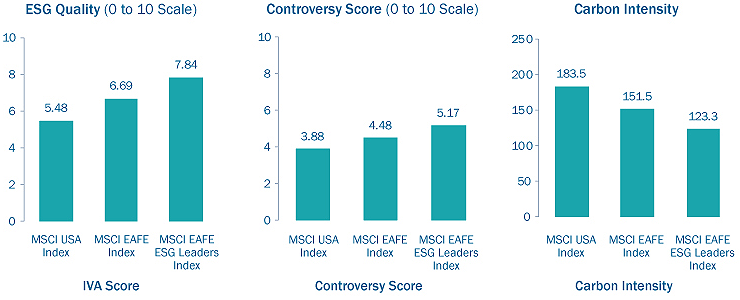
 

Improved Sustainability from non-US dev market and ESG-fig1
Figure 1: Improved Sustainability Outcomes from non-U.S. Developed Market and ESG Focus.                              Source: Impax Asset Management. Data from MSCI and Factset as of 6/30/19.


So, why do companies in the MSCI EAFE Index demonstrate stronger ESG characteristics than the MSCI USA Index, on average? It’s a two-part explanation: 1) the MSCI EAFE Index has a greater proportion of top-tier ESG leaders that are concentrated in the European[2] region, and 2) the MSCI USA Index ESG quality score gets dragged down by a greater proportion of companies that lag on ESG measures.

First, let’s consider European ESG leadership. We believe that stricter European regulations and a stronger cultural awareness of ESG issues, particularly environmental matters, have resulted in company profiles that rate higher on ESG than in regions where perhaps a sustainability mindset is less established and where there is less required reporting of ESG-related data.

An important distinction, however, is that all European countries are not the same when it comes to ESG strengths. For instance, German companies tend to be more ESG-savvy than Israeli or Italian companies, and there is a much larger weight in the MSCI EAFE Index toward German companies than to those in Israel or Italy.

Still, on average, the 14 countries that make up the MSCI EAFE “Europe” classification, which includes Israel, have better ESG scores than other regions represented in that index, including Australia, Hong Kong, Japan, New Zealand and Singapore.

Meanwhile, the U.S. has a greater allocation of ESG laggards, which we believe is primarily reflective of the country’s highly diversified economy. ESG laggards in the MSCI USA Index represent many industries, however there are notable concentrations in the ESG-challenged pharmaceuticals, automotive and energy areas of the market.

In our view, U.S. investors with a home country preference can take a step toward improving the sustainability profile of their portfolios by incorporating an international developed markets allocation.

ESG Integration Has Led to Risk Mitigation

ESG integration is now widely recognized as a strategy for mitigating risk,[3] and in our experience that certainly applies to non-U.S. developed markets.

As illustrated in Figure 2, the Pax MSCI EAFE ESG Leaders Index Fund, which tracks the performance of the MSCI EAFE ESG Leaders Index, has experienced -4% less volatility and -4% less downside risk than the MSCI EAFE Index since its inception, as of 6/30/19. These risk statistics provide support for the growing body of research that finds integration of ESG factors is correlated with reduced risk.[4]
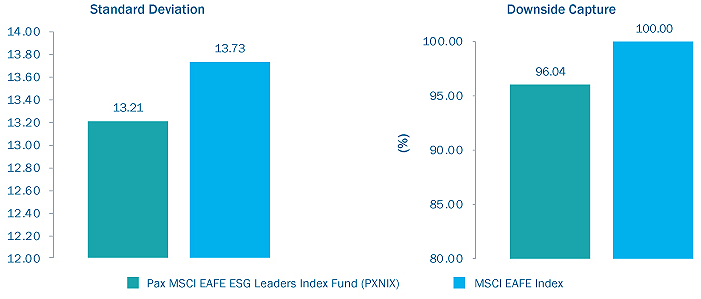
 

ESG Risk Mitigation Benefits-6.30.19-fig2
Figure 2: ESG Risk Mitigation Benefits – Pax MSCI EAFE ESG Leaders Index Fund Has Delivered Lower Volatility and Downside Risk than the MSCI EAFE Index, Since Inception 1/27/11 as of 6/30/19. Source: Impax Asset Management, MSCI and Factset. PXNIX Inception (1/27/11) through 6/30/19. Past performance does not guarantee future results.


Evidence of Positive ESG Performance Effect

Since what differentiates the Pax MSCI EAFE ESG Leaders Index Fund from the MSCI EAFE Index is its focus on companies with higher ESG scores, a closer examination of its performance provides insights into the key role that ESG factors have played in results.

Through performance attribution we have found that the bias to companies with stronger ESG profiles is, in fact, driving the excess return.

Figure 3 depicts the weight of each of the IVA tiers and their contribution to performance since inception. The large overweight to top-tier companies drove the greatest positive contribution to relative performance since the Fund’s inception, providing further evidence of ESG factors’ materiality on performance.
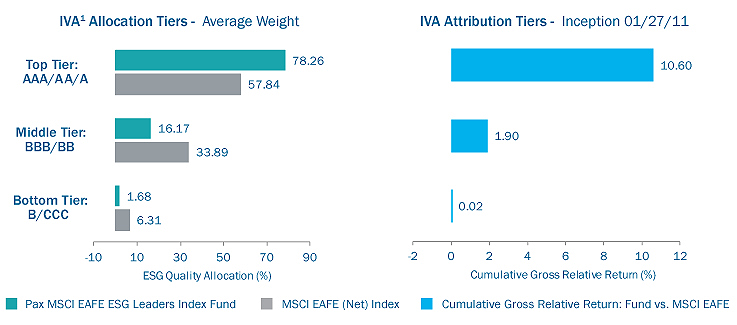
 

Excess Return Driven by Top-tier ESG companies-fig3
Figure 3: Excess Return Driven by Top-tier ESG Companies. Source: Impax Asset Management, MSCI and Factset. IVA Allocation and Attribution – Inception (1/27/11) through 6/30/19. Attribution is based on daily gross holdings-based results, which does not include fund expenses and trading costs, etc. The total cumulative gross return for the fund was 57.87% vs. 42.97% for MSCI EAFE. Other not-rated securities and cash were excluded from both charts. Past performance does not guarantee future results.


Non-U.S. Developed Markets and ESG Investing

For long-term investors, the case for an international equity allocation isn’t a “why now” argument, it’s timeless. In our view, the same holds true for international sustainable investing. As we’ve witnessed through managing the Pax MSCI EAFE ESG Leaders Index Fund these past eight years, international developed markets with a focus on highly rated ESG leaders can provide high ESG quality as well as competitive risk-adjusted performance. This presents a fine opportunity for U.S. investors to look eastward for a sustainability advantage that can provide diversified international equity exposure.

For additional information on the Fund including Holdings and Country Allocation, visit the Fund’s Web Page.


Article by Scott LaBreche, Director, Portfolio Analytics & Index Strategy Optimization, Impax Asset Management LLC. Portfolio Manager, Pax Ellevate Global Women’s Leadership Fund, Pax MSCI EAFE ESG Leaders Index Fund

Scott LaBreche is Director, Portfolio Analytics & Index Strategy Optimization at Impax Asset Management LLC, formerly Pax World Management LLC, and a Portfolio Manager of the Pax Ellevate Global Women’s Leadership Fund and the Pax MSCI EAFE ESG Leaders Index Fund. Across all Pax World Funds, Scott is responsible for fund research, quantitative ESG research, advanced analytics, risk oversight, fund optimization and board reporting, as well as overseeing performance and attribution.

Prior to joining the firm in 2007, Scott was a Securities Fund Analyst at Lincoln Financial Group. He has been in the mutual fund industry since 1999. Scott holds a Bachelor of Science in Business Administration and a Masters of Business Administration with Advanced Certificate in Finance from Southern New Hampshire University.

Article Notes:

[1] MSCI ESG Intangible Value Assessment (IVA) provides research, ratings, and analysis of companies’ financially material risks and opportunities arising from environmental, social and governance factors. Companies are rated by MSCI ESG analysts on a seven-point scale of ‘AAA- CCC’ relative to the standards and performance of their industry peers. The MSCI ESG IVA ratings provide a signal to investors of the extent to which a company is well-positioned to manage the financially material risks and opportunities arising from key ESG trends.

[2] Europe, in the MSCI EAFE Index classification, includes Austria, Belgium, Denmark, Finland, France, Germany, Ireland, Israel, Italy, Netherlands, Portugal, Spain, Sweden, Switzerland and the United Kingdom.

[3] Julie Gorte, “The Business Case for Sustainability,” Impax Asset Management, July 10, 2019, https://paxworld.com/the-business-case-for-sustainability/

[4] https://paxworld.com/category/research/esg/

The MSCI EAFE ESG Leaders Index is designed to measure the performance of equity securities of issuers organized or operating in Europe, Australasia and the Far East that have high ESG ratings relative to their peers as rated by MSCI ESG Research annually.

The MSCI EAFE Index (Europe, Australasia, Far East) is a free float-adjusted market capitalization index that is designed to measure the equity market performance of developed markets, excluding the US & Canada. The MSCI EAFE Index consists of the following 21 developed market country indexes: Australia, Austria, Belgium, Denmark, Finland, France, Germany, Hong Kong, Ireland, Israel, Italy, Japan, the Netherlands, New Zealand, Norway, Portugal, Singapore, Spain, Sweden, Switzerland, and the United Kingdom.

One cannot invest directly in an index.

Standard Deviation measures a Fund’s variation around its mean performance; a high standard deviation implies greater volatility.

Downside Capture is a statistical measure of an investment manager’s overall performance in down-markets.

MSCI ESG Research evaluates companies’ ESG characteristics and derives corresponding ESG scores and ratings. Companies are ranked by ESG score against their sector peers to determine their eligibility for the MSCI ESG indices. MSCI ESG Research identifies the highest-rated companies in each peer group to meet the float-adjusted market capitalization sector targets. The rating system is based on general and industry-specific ESG criteria, assigning ratings on a 7-point scale from AAA (highest) to CCC (lowest).

The returns for the Pax MSCI EAFE ESG Leaders Index Fund – Institutional Class (PXNIX) were: 1 year: 1.98%, 3 year: 7.81%, 5 year: 1.97%, Since Inception (01/27/2011): 4.46%. The returns for the Pax MSCI EAFE ESG Leaders Index Fund – Investor Class (PXINX) were: 1 year: 1.67%, 3 year: 7.55%, 5 year: 1.71%, Since Inception (01/27/2011): 4.19%. The returns for the MSCI EAFE Index were: 1 year: 1.08%, 3 year: 9.11%, 5 year: 2.25%, Since Inception (01/27/2011): 4.35%.

Performance data quoted represent past performance, which does not guarantee future results. Investment return and principal value of an investment will fluctuate so that an investor’s shares, when redeemed, may be worth more or less than their original cost. Current performance may be lower or higher than the performance data quoted. For most recent month-end performance information visit paxworld.com.

Total annual Pax MSCI EAFE ESG Leaders Index Fund operating expenses, gross of any fee waivers or reimbursements, for Institutional Class and Individual Investor Class shares are 0.55% and 0.80% as of 5/1/2019 prospectus. The management fee is a unified fee that includes all of the operating costs and expenses of the Fund (other than taxes, charges of governmental agencies, interest, brokerage commissions incurred in connection with portfolio transactions, distribution and/or service fees payable under a plan pursuant to Rule 12b-1 under the Investment Company Act of 1940 and extraordinary expenses), including accounting expenses, administrator, transfer agent and custodian fees, Fund legal fees and other expenses. (For this purpose, Impax Asset Management LLC does not consider acquired fund fees and expenses to be operating costs and expenses of the Fund.)

Note About Inception Date: On 3/31/2014 Pax World International Fund and Pax MSCI EAFE ESG Index ETF merged into the Pax MSCI EAFE ESG Leaders Index Fund (the Fund), a passively managed index fund which seeks investment returns that closely correspond to the price and yield performance, before fees and expenses, of the MSCI EAFE ESG Index. Based on the similarity of the Fund to Pax MSCI EAFE ESG Index ETF, Pax MSCI EAFE ESG Index ETF (the Predecessor Fund) is treated as the survivor of the mergers for accounting and performance reporting purposes. Accordingly, all performance and other information shown for the Fund for periods prior to 3/31/2014 is that of the Predecessor Fund. Inception date for Institutional Class shares is that of the Predecessor Fund, January 27, 2011. Inception date of Investor Class is March 31, 2014. The returns shown for Investor Class shares for periods prior to March 31, 2014 are those of the Predecessor Fund. These returns have been adjusted to reflect the expenses allocable to Investor Class shares.

RISKS: The Fund does not take defensive positions in declining markets. The Fund’s performance would likely be adversely affected by a decline in the Index. Equity investments are subject to market fluctuations, the fund’s share price can fall because of weakness in the broad market, a particular industry, or specific holdings. Emerging markets and International investments involve risk of capital loss from unfavorable fluctuations in currency values, differences in generally accepted accounting principles, economic or political instability in other nations or increased volatility and lower trading volume. Investments in Asia/Pacific increase the impact of events and developments associated with the region can adversely affect performance.

Investments involve risk, including potential loss of principal. You should consider Pax World Funds’ investment objectives, risks, and charges and expenses carefully before investing. For this and other important information, please download a fund prospectus. Please read it carefully before investing.

Copyright© 2019 Impax Asset Management LLC, formerly Pax World Management LLC. All rights reserved. Pax World Funds are distributed by ALPS Distributors, Inc. Member: FINRA. ALPS Distributors is not affiliated with Impax Asset Management LLC. PAX008786 (10/19)

Energy & Climate, Featured Articles, Impact Investing, Sustainable Business
GreenMoney Journal Wins 2019 International Finance Award

International Finance Awards - GreenMoney Journal 2019Acquisition International is Proud to Announce the Winners of the 2019 International Finance Awards:

GreenMoney Journal – Leading Source for Sustainable Investment News, USA 2019

Acquisition International Magazine has announced the winners of the 2019 International Finance Awards. Returning once again the prestigious AI International Finance Awards continues to recognize the companies, and individuals, within the finance industry who have shown excellence and dedication in their field. We aim to reveal and reward those who have overcome the difficulties posed by the ongoing global economic issues to thrive and prosper.

Not limited to just finance companies, we showcase the best from the retail sector, internet and commercial banks, credit unions, savings and loans associations, investment banks and companies, brokerage firms, insurance companies, mortgage companies and many more.

Commenting on the success of her deserving winners, Natalie Farrell, Awards Coordinator, said: “These awards showcase the innovation, dedication to client service and sheer hard work of some of the world’s greatest financial companies. I am proud of all of my winners and truly honored to be able to showcase their success to my readers.”

Acquisition International prides itself on the validity of its awards and winners. The awards are given solely on merit and are awarded to commend those most deserving for their ingenuity and hard work, distinguishing them from their competitors and proving them worthy of recognition.

To learn more about our award winners and to gain insight into the working practices of the “best of the best”, please visit the Acquisition International website.


About Acquisition International Magazine

Acquisition International is a monthly magazine brought to you by AI Global Media Ltd, a UK-based publishing house that has reinvigorated corporate finance news and reporting. Its topical news articles make it a valued read, and this readability ensures that advertisers will benefit greatly from their investment. AI works alongside leading industry analysts to ensure we publish the most up-to-date figures and analysis. The magazine has a global circulation, which brings together all parties involved in deal making and, in an increasingly global deal market, we are uniquely positioned to reach the deal makers that matter.

Additional Articles, Impact Investing, Sustainable Business

CCM’s Impact Bond Fund Celebrates its 20th Anniversary

Community Capital Mgmt logoThe CRA Qualified Investment Fund, one of America’s largest market-rate, impact/ESG investing bond funds turns 20 years old in August 2019. Community Capital Management, Inc. (CCM) launched its flagship CRA Qualified Investment Fund CRA Shares (ticker: CRAIX) in August of 1999 for financial institutions looking to meet community development investing under the requirements of the Community Reinvestment Act (CRA) by directing the impact of their investments to specific communities in need around the United States. Since the Fund’s beginnings focused on place-based community investments primarily utilized by financial institutions, it has evolved to include 18 impact themes and diversified its client base through the launch of an Institutional Shares (ticker: CRANX) for religious organizations, non-profits, foundations, and high net worth investors along with a Retail Shares (ticker: CRATX) for individual investors.


To date, CCM, on behalf of the Fund and its separate accounts, has invested close to $10 billion in community development initiatives nationwide, in accordance with the geographies or impact themes requested of its clients, with the following powerful impact:

• $4.2 billion in financing 405,000 affordable rental housing units
• $3.5 billion financing 21,000 affordable home mortgages
• $36 million in affordable healthcare and rehabilitation facilities
• $696 million in economic development (i.e., environmental sustainability, healthy communities, neighborhood revitalization)
• $961 million in statewide homeownership and down payment assistance programs
• $337 million in enterprise development/job creation

“Every dollar invested in the Fund directly and positively impacts a family or community in need – from a social and/or environmental perspective,” said Alyssa Greenspan, CCM’s president and COO. “Over the past 20 years, the firm has worked closely with its clients to expand its impact customization to include new and relevant impact themes such as disaster recovery, gender lens, sustainable agriculture, and transit-oriented development. It is gratifying to share the impact of our investments with clients through our customized impact reporting while also providing liquidity, diversification, and historical competitive returns.”

“We are extremely proud that the Fund was in the top 1% of its intermediate government category of 309 funds in the calendar year of 2015 and the best performer in its intermediate government category of 250 funds in the calendar year of 2017, as measured by Morningstar Inc.,” said Andy Kaufman, CCM’s chief investment officer. “As a fiduciary, our primary objective is to deliver superior risk-adjusted returns and to preserve capital which we have met for our clients over the last 20 years.”

“Impact/ESG investing is embedded in CCM’s mission and DNA – our team analyzes and researches the use of proceeds for every bond prior to purchase to determine the projects and/or programs financed and what positive impacts result from that investment,” said David Sand, CCM’s chief impact strategist. “The Fund is also fossil fuel free, which allows for investors to have a fixed income option when fully divesting a portfolio.”

The Fund’s Institutional Shares (CRANX) has a 4-Star Overall Morningstar Rating™ and its annualized total return for 1-year, 5-year, and 10-year is 6.28%, 2.55%, and 3.05%, respectively, as of July 31, 2019. The Fund had total net assets of $2.1 billion as of July 31, 2019.


Community Capital Management, Inc.

Community Capital Management, Inc. (CCM) is an investment adviser registered with the Securities and Exchange Commission. Headquartered in Fort Lauderdale with employees in Boston, Charlotte, the New York City area, and Southern California, CCM was founded in 1998 and manages approximately $2.6 billion in assets. The firm believes a fully integrated portfolio – one that includes environmental, social and governance (ESG) factors – can deliver strong financial performance while simultaneously having positive long-term economic and sustainable impact. For more information.

As of 6/30/19, the average annual total returns for CRANX for 1-year, 5-year, 10-year and since CRANX inception were 5.97%, 2.47%, 3.10%, and 3.50%. The performance data quoted represents past performance and does not guarantee future results. The investment return and principal value of an investment will fluctuate so that an investor’s shares, when redeemed, may be worth more or less than their original cost and current performance may be lower or higher than the performance quoted. For performance data current to the most recent month-end, please call 866-202-3573. The expense ratio for CRANX is 0.45%.

Carefully consider the risks, investment objectives, charges and expenses of the Fund before investing. The prospectuses contain this and other important information. Call 866-202-3573 for a prospectus. Please read the prospectus carefully before investing.

Community Capital Management, Inc. is an investment advisor registered with the Securities and Exchange Commission under the Investment Advisers Act of 1940. Past performance does not guarantee future results. Market conditions can vary widely over time and can result in a loss of portfolio value. A full list of regulatory disclosures for Community Capital Management, Inc. are available by visiting: https://www.ccminvests.com/regulatory-disclosures

The Fund is distributed by SEI Investments Distribution Co. which is not affiliated with Community Capital Management, Inc.

The Morningstar Rating is calculated for managed products (including mutual funds, variable annuity and variable life subaccounts, exchange-traded funds, closed-end funds, and separate accounts). Exchange-traded funds and open-ended mutual funds are considered a single population for comparative purposes. It is calculated based on a Morningstar Risk-Adjusted Return measure that accounts for variation in a managed product’s monthly excess performance, placing more emphasis on downward variations and rewarding consistent performance. As of 7/31/19, CRANX was ranked 25 out of 205 funds in the last three years, 14 out of 190 funds in the last five years, and 28 out of 149 funds in the last ten years. Rankings for the other share classes may vary.

Source: CCM

Additional Articles, Impact Investing, Sustainable Business

Natural Investments Named a 2019 “Best For The World” B Corp

Natural Investments, a Certified B Corporation, has been named a Best For The World honoree in recognition of their work to improve the lives of their customers through the use of their product or service. Ranking in the top 10 percent of all 3,000 B Corps for their positive impact on their customers, Natural Investments earned this honor because their financial services promotes public benefit, is designed to generate positive social and ecological environments, in addition to uplifting underserved populations. The firm aims to set a gold standard for how business can be a force for good for people around the world.

Best For The World recognition is administered by B Lab, the global nonprofit that certifies and supports Certified B Corporations, which are for-profit companies dedicated to using business as a force for good. Today there are 3,000 Certified B Corporations across 64 countries and 150 industries, unified by one common goal: to redefine success in business.

Michael Kramer, Managing Partner, says, “As a high-touch firm, we value the importance of being accessible to our clients and listening carefully to their concerns and needs. We also believe in rewarding their loyalty to us over time as an expression of gratitude for their business.”

B Corps meet the highest standards of verified social and environmental performance, public transparency, and legal accountability to balance profit and purpose. B Corp Certification doesn’t just evaluate a product or service, it assesses the overall positive impact of the company that stands behind it—like Natural Investments. Using the B Impact Assessment, B Lab evaluates how a company’s operations and business model impact its workers, community, environment, and customers. To achieve the B Corp Certification, a company must achieve a score of at least 80 points on the assessment.

“We’re incredibly proud of this year’s Best For The World honorees,” says Anthea Kelsick, Chief Marketing Officer of B Lab. “These inspiring companies represent the kinds of business models and impact-driven business strategies that are building a new economy—one that is inclusive, regenerative, and delivers value to all stakeholders, not just shareholders. To that end, B Corps like Natural Investments are redefining capitalism and showing that it actually can work for everyone.”

1,000 B Corps from 44 countries were named to the 2019 Best For The World lists, including Patagonia, Beautycounter, Dr. Bronner’s, TOMS, Seventh Generation, and Greyston Bakery. The 2019 Best For The World honorees are determined based on the verified B Impact Assessments of Certified B Corporations. The full lists are available here.


About Natural Investments, LLC

Natural Investments has been at the forefront of the socially responsible investment world for over 30 years. A national portfolio management firm, Natural Investments is an innovative, client-focused company, with a high level of personal attention and individualized service.

The firm literally wrote the book (or books) on socially responsible investing: Investing From the Heart in 1992, Investing with your Values: Making Money & Making a Difference in 2000 [with co-author Cliff Feigenbaum of the GreenMoney Journal], and The Resilient Investor: A Plan for Your Life, Not Just Your Money (Berrett-Koehler 2015). For more information.

About B Lab

B Lab is a nonprofit that serves a global movement of people using business as a force for good. B Lab’s initiatives include B Corp Certification, administration of the B Impact Management programs and software, and advocacy for governance structures like the benefit corporation. B Lab’s vision is of an inclusive and sustainable economy that creates a shared prosperity for all. To date, there are 3,000 Certified B Corps in over 150 industries and 64 countries, and over 50,000 companies use the B Impact Assessment. For more information.

Additional Articles, Impact Investing, Sustainable Business

Mellody Hobson Elevated to Co-CEO of Ariel Investments

Ariel Investments, LLC Founder, Chairman and CEO John W. Rogers, Jr. announced recently that current President Mellody Hobson has been elevated to the position of Co-CEO. Hobson’s promotion recognizes her longstanding commitment and unparalleled leadership. Rogers will continue to oversee firm-wide research in his capacity as Chief Investment Officer, manage Ariel’s flagship domestic equity portfolios and provide oversight to the firm as Chairman of the Board and Co-CEO.
“Mellody has been an energetic and relentless member of the Ariel family since she joined nearly 28 years ago,” said Ariel Investments Founder, Chairman and Co-CEO John Rogers. “Her elevation to Co-CEO recognizes the reality that we have both led this firm for many years. Ariel and our clients are in terrific hands with Mellody sitting at the helm alongside me and I know she will take our firm to the next level.”

Hobson’s leadership has been invaluable to Ariel, where she has been President for more than 19 years. She has also served in the boardrooms of some of the largest publicly traded companies around the world. She is the Vice Chairman of Starbucks Corporation, a director at JPMorgan Chase and Quibi, a short-form video content company. She was a longtime board member of The Estée Lauder Companies Inc. and also served as the Chairman of the Board of DreamWorks Animation.

“Ariel has been my home for nearly three decades and I am excited about the profound possibilities for the next chapter of our storied history,” said Ariel Investments Co-CEO Mellody Hobson. “Ariel has always focused on delivering exceptional long-term results for our clients and I will continue that tradition as Co-CEO.”

In his letter to clients and friends of the firm, Rogers explained that:

“In an effort to better align both our titles and equity, Mellody will soon purchase approximately 14% of my holdings. Upon completion of this transaction, which is scheduled to close on or before July 19, 2019, I will own 34.1% of Ariel and she will hold 39.5%. Ariel employees and board members own 21.8% with the remaining 4.6% held by a small number of outsiders. Both her promotion as well as this share purchase represent a long-planned generational transition of leadership and ownership while simultaneously allowing us to maintain continuity. As many know, I have never been a seller of my Ariel stock and these are the only shares that I ever plan to sell. I am happily doing so to level the playing field.”

Rogers added, “Research drives our investment results and is the cornerstone of everything we do. With Mellody as Co-CEO, even more of my attention will be focused on ensuring we continue to deliver exemplary performance for our investors.”

And while the firm is deliberately considering succession planning, Rogers made clear in his letter that he will continue managing the firm’s stock portfolios for at least another decade, if not more.

Read the letter from Founder, Chairman and Co-CEO John Rogers to clients and friends of Ariel Investments.

Read Ms. Hobson’s biography or to learn more about Ariel’s leadership team here.


About Ariel Investments

Ariel Investments, LLC is a money management firm headquartered in Chicago, with offices in New York City and Sydney. Ariel Investment Trust is comprised of five no-load mutual funds: Ariel Fund (its flagship fund), Ariel Appreciation Fund, Ariel Focus Fund, Ariel International Fund, and Ariel Global Fund. As of June 30, 2019, Ariel Investments’ firm-wide assets under management totaled approximately $13.0 billion. For more information about the firm, please visit Ariel’s website at https://www.arielinvestments.com

Note to Reader: Mellody Hobson wrote one of GreenMoney’s most insightful articles, some years ago, entitled “Women and the Future of Investing”. Read her April 2015 article here.

Additional Articles, Impact Investing

Matthews Asia ESG Fund Looks Beyond ESG Integration

By Vivek Tanneeru, Portfolio Manager, Matthews Asia

Matthews Asia seeks to uncover investment opportunities with a focus on environmental, social and governance (ESG) factors across the world’s fastest-growing region.

Matthews Asia logoIn Asia, ESG investing encompasses large, transformational changes. It focuses on companies that can potentially deliver profits and growth from improving the quality of life across the region. Within this context, Matthews Asia launched the Matthews Asia ESG Fund (Investor Class: MASGX; Institutional Class: MISFX) more than four years ago. Managed by Vivek Tanneeru, the Fund seeks to capitalize on the growth of the region by investing with an ESG lens.
“For ESG investors, a regionally diversified approach can help capture global growth,” said Vivek. “We believe Asia offers a prime opportunity to invest in highly innovative and profitable companies addressing critical ESG challenges through robust and sustainable business models,” he noted.

Integrating ESG into Investment Decisions

The Matthews Asia ESG Fund seeks to invest in cash-flow generative businesses that are improving quality of life and promoting positive environmental, social and economic outcomes.

We define ESG integration as taking an “investment first” approach to building an ESG portfolio. This means we pay equal attention to a company’s ESG record and its long-term return potential. We focus on identifying attractive long-term investment opportunities through bottom-up, on-the-ground fundamental research. We also maintain a sharp focus on corporate governance, which has been a hallmark of our investment process for 27 years.

Representing a universe of more than 10,000 publicly traded companies, Asian equities tend to receive less coverage by global research firms, investment banks and third-party ESG ratings providers.

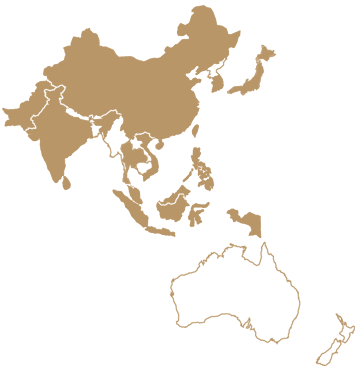
Matthews Asia SRI funds global mapOur active due diligence process differentiates us from some other managers who may rely solely on third-party ESG ratings for security selection. Through extensive research and our ESG factor analysis framework, we aim to improve the quality of the ESG inputs we use and broaden the opportunity set by including companies that may not be rated by third-party providers.

Once we have evaluated a company’s business and are satisfied with its financial fitness, we then assess its additional merits through an ESG lens, and examine potential ESG impacts. This strategy seeks to go beyond ESG integration with an emphasis on positive outcomes. ESG factors tend to have many subjective characteristics, can be difficult to analyze, and frequently involve a balancing of a company’s business plans, objectives and actual conduct, among other issues. ESG factors can vary over different periods and can evolve over time, and they may also be difficult to apply consistently across regions, countries, industries or sectors. For these reasons, ESG standards are adapted to each region or country and applied flexibly.

For additional information on the Fund including Holdings and Country Allocation, visit Matthews Asia ESG Resource Center.


Article by Vivek Tanneeru, lead Portfolio Manager of the Asia ESG Fund at Matthews Asia. Prior to joining Matthews Asia in 2011, Vivek was an Investment Manager on the Global Emerging Markets team of Pictet Asset Management in London. Before earning his M.B.A. from the London Business School in 2006, Vivek was a Business Systems Officer at The World Bank and served as a Consultant at Arthur Andersen Business Consulting and Citicorp Infotech Industries. He interned at Generation Investment Management while studying for his M.B.A. Vivek received his Master’s in Finance from the Birla Institute of Technology & Science in India. He is fluent in Hindi and Telugu.

Risks to Consider: Matthews Asia ESG Fund’s consideration of ESG factors in making its investment decisions may impact the Fund’s relative investment performance positively or negatively. Additionally, although an investment by the Fund in a company may satisfy ESG standards in the view of the portfolio managers, there is no guarantee that such company actually promotes positive environmental, social or economic developments. Investments in Asian securities may involve risks such as social and political instability, market illiquidity, exchange-rate fluctuations, a high level of volatility and limited regulation. Investing in emerging and frontier markets involves different and greater risks, as these countries are substantially smaller, less liquid and more volatile than securities markets in more-developed markets.

About Matthews Asia

As an independent, privately owned firm, Matthews Asia is the largest dedicated Asia-only investment specialist in the United States. With US$29.9 billion in assets under management as of June 30, 2019, Matthews Asia employs a bottom-up, fundamental investment philosophy, with a focus on long-term investment performance.

A strong commitment to improved ESG outcomes helps Matthews Asia foster the growth and development of the communities where we invest, while also aiming to generate long-term alpha for our clients. As a UNPRI signatory, the firm maintains a responsible investing policy, with a mission of fostering sustainable growth in Asia. For more information.

Disclosure and Notes

You should consider the investment objectives, risks, charges and expenses of the Matthews Asia Funds carefully before making an investment decision. This and other information about the Funds is contained in the prospectus or summary prospectus, which may also be obtained by calling 800.789.ASIA (2742). Please read the prospectus carefully.

The views and information discussed herein are as of the date of publication, are subject to change and may not reflect current views. The views expressed represent an assessment of market conditions at a specific point in time, are opinions only and should not be relied upon as investment advice regarding a particular investment or markets in general. Such information does not constitute a recommendation to buy or sell specific securities or investment vehicles.

Matthews Asia Funds are distributed in the United States by Foreside Funds Distributors LLC, Berwyn, PA

Energy & Climate, Featured Articles, Impact Investing, Sustainable Business

International SRI Funds – Domini, Thornburg and Boston Common

This is the first of two articles featuring short profiles on a number of the International SRI Mutual Funds, which invest in companies outside the United States. The information below comes from each Fund and is subject to change. We have included their website links for you to look up the latest information including Company Holdings, Country Allocations and Financial Performance.

READ International SRI Funds article #2


Domini Impact International Equity Fund

Domini logoThe Fund invests primarily in stocks of companies in Europe, the Asia-Pacific region, and throughout the rest of the world that meet Domini Impact Investments’ social and environmental standards. Subject to these standards, the Fund’s subadvisor seeks to add value using a diversified, quantitative stock selection approach, while managing risk through portfolio construction.

Visit the Domini Impact International Equity Fund website.


Thornburg Better World International Fund

Thornburg Investment Mgmt LogoThe Fund invests primarily in a broad range of companies that demonstrate one or more positive environmental, social and governance (ESG) characteristics that the investment manager identifies as significant. The Fund targets companies of any size or country of origin, and which are high-quality, attractively valued and, are making, or will make, a positive impact on the world.
Visit the Thornburg Better World International Fund website.


Boston Common ESG Impact International Fund

Boston Common Asset Mgmt logoThe Fund’s goal is to preserve and build capital over the long term through investing in a diversified portfolio of companies it believes are high quality from an environmental, social, and governance (ESG) perspective and undervalued. The Fund’s advisor, looks for companies that, in its opinion, have sound governance and a history of responsible financial management which the advisor believes have the potential to be consistently profitable over a long time horizon.

Visit the Boston Common ESG Impact International Fund website.


Photo credit:  EcoNews; Southeast Asia becoming centre for renewable energy development, by David Twomey, April 5, 2019

A report published by global auditing firm KPMG titled The Renewable Energy Transition noted that while there are still 70 million ASEAN citizens without access to reliable electricity, the potential for renewable energy is huge in those markets and governments are increasingly turning to solar and wind energy to address the issue.


Energy & Climate, Featured Articles, Impact Investing, Sustainable Business

International SRI Funds – Calvert, Green Century, Praxis, Mirova

This is the second of two articles featuring short profiles on a number of the International SRI Mutual Funds, which invest in companies outside the United States. The information below comes from each Fund and is subject to change. We have included their website links for you to look up the latest information including Company Holdings, Country Allocations and Financial Performance.

READ International SRI Funds article #1


Calvert International Equity Fund

Calvert logoThe Fund invests primarily in stocks of non U.S. large-cap companies whose market capitalization falls within the range of the MSCI EAFE Index. In conjunction with financial analysis, the Calvert Principles for Responsible Investment guide the investment research process and decision making.

Visit the Calvert International Equity Fund website.


Green Century MSCI International Index Fund

Green Century Funds logoThe Fund seeks to achieve long-term total return which matches the performance of an index comprised of the stocks of foreign companies selected based on Environmental, Social, and Governance (ESG) criteria. The Fund invests in Large- and mid-cap companies with outstanding ESG performance and is completely fossil fuel free.

Visit the Green Century MSCI International Index Fund website.


Praxis International Index Fund

Praxis Mutual Funds logoThe Fund seeks capital appreciation through a portfolio of equity securities that seeks to reflect the performance of both foreign developed and emerging equity markets, while incorporating stewardship investing criteria. The fund invests primarily in foreign equity securities and uses optimized indexing techniques to reflect the performance of the MSCI All Country World ex-U.S. Index, and attempts to minimize risk through broad diversification among foreign countries and industries.
Visit the Praxis International Index Fund website.


Mirova International Sustainable Equity Fund

Mirova Investing in Sustainability logoThe Fund is an all-cap international equity fund that seeks long-term capital appreciation. The Fund also seeks to maximize exposure to companies with a positive impact on the United Nations’ Sustainable Development Goals (SDGs), while avoiding companies whose activities or products have a negative impact on or create risk to achieving such goals.

Visit the Mirova International Sustainable Equity Fund website.


Photo credit:  The Irish Times; Amazon Web Services (AWS) to invest in Donegal wind farm as it eyes renewable energy goal, by Clara O’Brian, April 8, 2019. The 91.2 megawatt wind farm will be developed by Invis Energy and is expected to begin providing energy by the end of 2021.


Energy & Climate, Featured Articles, Impact Investing, Sustainable Business

Money, Money, Money – It’s What We Want?

Over 27 years of publishing, one of GreenMoney’s main goals has been to bring our readers more clarity about their relationship with money as it informs so much of how we approach our daily lives on a variety of levels.

It’s those “levels” that we want to examine here. Assessing our relationships with money requires honest self-examination on a variety of money-related topics.

Of course, many of us want lots more money, even while harboring negative attitudes about the people who have it. We tell ourselves that if blessed with a jackpot, we would doubtlessly do better things with it. Both saints and sinners among us feel entitled to money. We’re just waiting to prove it when our ship comes in.

Then there are the “P” words – Politics and Power – and the season of election we are in. “Give us your Money!!” our mailboxes scream – though personally I have a hard time donating money to candidates with more capital than I have. But still, I give, because my financial support for any candidate, or lack thereof, speaks volumes about who I am and what I believe.

Do you race against others for money? Do you hoard it, as if there were never enough – and by the way, what is your definition of enough?

Do you squirrel it away, save it, or invest it? Do you have a rainy-day fund or a budget? I often ask myself how much do I spend today and how much do I save for tomorrow? Oh financial security, — ever elusive!

Another question circles the money conversation – How much shall we give away, and to whom? How much can we give away? Do we “give freely to anyone who asks,” (Matthew 10:8) or only to those we deem worthy of sharing in our assets? Do we tithe, in or out of church, and does our giving nudge the world in positive directions?

Does money equal respect? We often assume that wealthy individuals are either lucky or smart or hardworking, but does respect necessarily follow? It’s hard to hold envy and respect in the same hand.

Our net worth and our personal worth get confused at times. It is value versus values. In Mark 8:36, Jesus asks a crowd “For what does it profit a man to gain the whole world and forfeit his soul?”

What are your financial priorities? If you’ve made some money mistakes, your priority might be getting your financial house in order. (The teachings of Buddha suggest that an organized budget will alleviate suffering.) If you’re just scraping by, the term “living wage” may hold little meaning. What can your money portion buy you? House or apartment? Tesla, or bus ride? Happy Meals or Whole Foods? We may live in the same cities, and walk the same sidewalks, but our money experiences and money attitudes will vastly differ.

This September 2019 issue of GreenMoney continues the exploration into our complex relationships and history with money. Please send us your ideas and feedback to – cliff@greenmoney.com

And finally, this is the second in GreenMoney’s ongoing series on “Our Money Stories.” Check out the previous issue, where I wrote my own ‘Money Story’ about growing up in a beautiful home in sunny Malibu, to living down in a mobile home in rainy Washington state in less than ten years. Find this and other stories here.

Feel free to share your story in the comment section below.

I would like to thank Ted and Diane Ketcham for their insightful assistance with this article.


Article by Cliff Feigenbaum, founder and publisher of the GreenMoney Journal and GreenMoney.com now it’s 27th year of publishing award-winning content on Sustainable Investing and Business. Read more about Cliff and his 27-year journey covering the SRI industry.

Additional Articles, Impact Investing, Sustainable Business

A Dream Deferred

By Amberjae Freeman, COO, Etho Capital

What happens to a dream deferred?

Does it dry up
like a raisin in the sun?
Or fester like a sore–
And then run?
Does it stink like rotten meat?
Or crust and sugar over–
like a syrupy sweet?

Maybe it just sags
like a heavy load.

Or does it explode?

– Langston Hughes, 1959, ‘Dream Deferred’ (Harlem) from The Panther & the Lash


Amberjae Freeman and her Mom, Etho Capital
Me and my mother

“Look at my choices Mija, and be sure to make better ones.” This is what my mother used to say to me when I was young. I was a happy and precocious child and my mother took great care of me. I was her first child and only daughter and I always felt loved. She made our home a place of love, laughter, learning, and music.

Our lives took a turn for the worse when my mother married. I was seven. Our lives changed completely when I was ten. Things got harder, but that is a story for another time. Suffice it to say, there were a few times when we were briefly homeless – living in a shelter or a motel.

We moved often.

My mother was brilliant, but did not finish high school. To her mind, this was one of a number of reasons why we struggled. I think it was in those moments her words were meant to underscore our condition and to emphasize that there was another way. A way without struggle, a way where every cent is not allocated for survival.

It may not be obvious to most, but money management and budgeting are luxuries.

Scarcity, whether of time or money, tends to force people to prioritize their most pressing needs. To stretch your budget to make ends meet. People in the vice of scarcity are forced to choose but no matter what they choose – they know it will come at a price. Important items are deprioritized out of necessity.

As a result, the hole deepens.

My mother always worked, usually as a secretary. But she went from having the ability to build a modest but happy life for us, to scarcity. As our family grew, so did the challenges. My mother wasn’t bad with money, she simply didn’t earn enough to meet her obligations all of the time.

This isn’t an unusual situation. There are plenty of people who hold down full-time jobs or have two or three part-time jobs, and still live in their cars.

We call them the working poor.

The U.S. is a wealthy country but the distribution of wealth is criminally uneven, even when correcting for an individual’s output. You need look no further than the proliferation of how many hourly workers have to make use of the limited social safety net services available (e.g. food stamps) to understand the situation.

Suffice it to say, my relationship with money is informed by not having any growing up.

To my mother’s credit, I didn’t realize how poor we were when I was young. My mother was a master at masking the situation. She always made sure I had a little money to buy a book during my elementary school’s book fair each semester. She knew how much I loved to read. Trips to the public library and free days at museums and science centers were how we spent our leisure time on weekends. We would go to thrift shops and used record stores for books and vinyl.

The word enrichment is a noun according to the dictionary. To my mother, it was a verb. She encouraged me to learn. She supported my indefatigable curiosity.

As I got older, I understood better how much my mother sacrificed and struggled to make ends meet.

The thing that held my mothers’ finances back in addition to that missing high-school diploma was being black and female in the U.S. My mother was so smart and very well read, but she was also always underpaid, woefully underestimated, and completely misunderstood. This is common for black women, no matter their education level, professional status, or industry.

My mother insisted that I go to college, but she didn’t have to push, I was delighted by the idea. I wanted to learn so that I could build the skills needed to care for her the way she had for me and my brothers. For me, money is a tool. Nothing more. When you have it, you don’t think about it. When you don’t, its absence is palpable.

The absence of access to resources in general, and capital in particular, is even more pronounced for many in developing countries.

In school, my focus of study was global and international development: I wanted to improve the lives of the most vulnerable everywhere. However, what I realized rather quickly in the field is that access to capital is a major barrier. What good is your idea if you can’t bring it to market? If you can’t bring it to market, how can you scale it? The answer is, you can’t. I learned this first hand as I watched farmers in East Africa struggle to grow enough to eat, let alone grow enough to transport any remaining goods to the sales stalls.

I was on a research fellowship in Rwanda, tasked with reviewing business plans and identifying potential investors for agriculture projects. I had no experience doing this exactly, but I learned quickly. I began to think, if the financial markets have all of the capital why not work there and leverage it for the social and environmental progress we wish to see?

Formerly colonized by the Belgian and subsequently the Germans, the country of Rwanda was finally released from its colonial subjugation in 1962. Today, a single 1,000 Rwandese franc is equivalent to $1.13 US (as of June 30, 2019). In 2007, I spent the equivalent of $7.00 US on a box of rice at a market in Kigali. A box of rice. You would be hard pressed to find a subsistence farmer in Rwanda with a surplus of $7.00 US to buy rice.

This is why I went into finance.

I am the eldest of three. My two brothers are 10 years and 17 years younger than I am respectively. Because my mother was raising us alone, I was often tasked with childcare. This was a great cost saving for her—anyone with children knows how expensive babysitters can be. So, I suppose that from a very young age, I was always acting as a steward in one capacity or another.

When I left home for college, it was hard for my mother and for my brothers. Suddenly the thin budget was spread thinner, as I mentioned – childcare is expensive. But she wouldn’t have it any other way. I left with the mind to return to make my mother’s life better. What I didn’t understand is how being so far behind financially can make the climb upward steeper than it is for those that are more fortunate at the outset.

Climbing out of poverty takes much, much longer than those who have never been impoverished realize. I did my best to help as much as I could.

With no college savings in place, I worked multiple jobs and still had to incur considerable debt to attend school. The combination of that debt and the job markets of 2004 and 2008 created a dire situation. And, like my mother, I am a black woman.

The only thing more overt than blatant discrimination is its institutional presence. The stats around the earning differentials and advancement opportunities for women and people of color are well documented and speak for themselves. As such, I won’t recount them here.

I’ll simply say that being a member of both groups, my path has always been a bit complicated. As I used to tell my students at UCSB and SBCC, “The game is rigged, the deck is stacked, behave accordingly.”

Now, I am a fiduciary. I take this responsibility very seriously. My aim is to try to both protect and grow assets for investors, but to do so in a way that works in tandem with, rather than at the expense of our society and our environment.

My money journey that began so meagerly has brought me to my current post after 16 years of professional struggle. I have always wanted to use the money I earn to give my mother all the things that she deserved. I wanted to show her the world. My mother, Pamela Jean Kirkland (nee Freeman) was exceptional, even in the face of her lifetime of adversity. I often tell people; my mother was magic and I mean that with my whole heart.

My mother, who didn’t finish high school, produced three beautiful human beings who work in finance, software development, and government intelligence. That is her legacy.

I was right beside her when she died on August 20, 2018. She was 58. Her cancer went undiagnosed until May 2018, by then it had already reached stage 4.

The year before, I asked her, “If you could go on a trip to anywhere in the world, where would you go?” Without hesitation she said, “Egypt, because I’ve always wanted to see the pyramids.”

I was saving so I could take her for her birthday. It’s in November.

(“What happens to a dream deferred?…”)

Today, I help create investment products and indices with a focus on companies that generate profits while managing their environmental and social risks.

Not too far from my original plan.

Through hard work and perseverance I found my way from a place of scarcity, scrambled up the steep hill of poverty, and largely view money as a resource. One that I want to help investors who are trying to create a better future for themselves and the ones they love build.

I want to help others live in a world where there are no more deferred dreams.

Shortly before she died, my mother told me that her children are her most cherished gifts. “That’s funny, mom” I told her. “That is exactly what you are to me.”

Special thanks to Ms. Sara Nicole Sivens for her edits, notes, and general awesomeness.


Article by Amberjae Freeman, Chief Operating Officer, Etho Capital. Amberjae brings more than a decade of experience in public and private sector research to her role at Etho Capital. Previously, she served as Portfolio Management and Impact Research at Swell Investing and as principal analyst for the SRI Wealth Management Group at RBC where she provided proprietary ESG and impact research for clients representing $2 billion in assets under management.

During her graduate studies, she received dual fellowships with the Clinton Global Initiative (CGI) in New York City and the Clinton Hunter Development Initiative (CHDI) in Kigali, Rwanda where she determined the financial viability of farmer participation in projects funded under the Clean Development Mechanism (CDM), and reviewed business plans for agricultural industrialization schemes. Amberjae also served as an adjunct professor of Political Science and Economics at Santa Barbara City College (SBCC), she subsequently coordinated country-specific research for asylum cases at the Center for Gender & Refugee Studies (CGRS), at UC Hastings College of the Law. Amberjae holds a bachelor’s degree and an MA in Global & International Studies from the University of California, Santa Barbara.

Featured Articles, Impact Investing

X