Tag: Impact Investing

Morgan Stanley Survey: High Investor Enthusiasm for SRI

• 85% of U.S. individual investors now express interest in sustainable investing strategies.

• As the market matures, individual investors seek more product choices that match their interests and impact measurement capabilities.

More than eight in ten U.S. individual investors now express interest in sustainable investing, while half take part in at least one sustainable investing activity, according to a new survey published in September 2019 by the Morgan Stanley Institute for Sustainable Investing. The third edition of the individual investor survey, Sustainable Signals, examines the attitudes, perceptions and behaviors of individual investors towards sustainable investing. Following two prior Sustainable Signals individual investor surveys, the findings show that interest and adoption of sustainable investing has grown steadily since 2015.

“These findings reaffirm that sustainable investing has entered the mainstream and is here to stay,” said Audrey Choi, Chief Sustainability Officer and Chief Marketing Officer at Morgan Stanley. “Increasingly, investors want to know what they own and want those holdings to reflect their values.”

Results from the survey reveals four central themes in the sustainable investing field:

Investor interest and adoption continues to rise; 85% are interested in sustainable investing –

• 95% of millennials now express interest in sustainable investing.

• This trend also extends to adoption: 52% of the general population and 67% of millennials take part in at least one sustainable investing activity, such as investing in companies or funds that target specific environmental or social outcomes.
Investors want products that match their interests; 84% want the ability to tailor their investments to their impact goals, 90% among millennials

• The survey also found strong interest among investors for tracking the impact return on their investments—84% wanted an impact report, 90% among millennials.

Investor conviction outweighs financial trade-off concerns; 86% believe that corporate ESG practices can potentially lead to higher profitability and may be better long-term investments.

• 88% believe that it is possible to balance financial gains with a focus on social and environmental impact.

• Nevertheless, perceptions of trade-offs linger, with 64% agreeing that investors must choose between financial gains and sustainability. Meanwhile, Morgan Stanley’s recent report, Sustainable Reality: Analyzing Risk and Returns of Sustainable Funds, shows that there is no financial trade-off in the returns of sustainable funds compared to traditional funds, and they demonstrate lower downside risk.

Investors want more product choices; 65% cited lack of available financial products as a barrier to including sustainable investing in their portfolios.

“Morgan Stanley has been a pioneer in the impact investing space since we launched our Global Sustainable Finance Group over a decade ago, and have since witnessed the rising interest and adoption in the market over time,” said Matt Slovik, Head of the Global Sustainable Finance Group at Morgan Stanley. “We’ve responded to this market demand by creating innovative products, such as the Morgan Stanley Impact Quotient, to empower our clients to participate in ESG investing and are focused on improving industry capabilities for portfolio customization and impact measurement.”

The survey polled 800 U.S. Individual Investors with minimum investable assets of $100,000. The survey also included an oversample of 200 Millennials, aged 18-37. This survey builds on a previous Morgan Stanley survey conducted in 2017 titled, Sustainable Signals: New Data from the Individual Investor.

For more information.


About The Morgan Stanley Institute for Sustainable Investing

The Morgan Stanley Institute for Sustainable Investing builds scalable finance solutions that seek to deliver competitive financial returns while driving positive environmental and social impact. The Institute creates innovative financial products, thoughtful insights and capacity building programs that help maximize capital to create a more sustainable future. For more information – Morgan Stanley Institute for Sustainable Investing.

About Morgan Stanley

Morgan Stanley (NYSE: MS) is a leading global financial services firm providing investment banking, securities, wealth management and investment management services. With offices in more than 41 countries, the Firm’s employees serve clients worldwide including corporations, governments, institutions and individuals. For more information about Morgan Stanley

About Morgan Stanley Wealth Management

Morgan Stanley Wealth Management, a global leader, provides access to a wide range of products and services to individuals, businesses and institutions, including brokerage and investment advisory services, financial and wealth planning, cash management and lending products and services, annuities and insurance, retirement and trust services. Morgan Stanley Wealth Management is a business of Morgan Stanley Smith Barney LLC.

Disclosures

This material was published on September 11, 2019 and has been prepared for informational purposes only and is not a solicitation of any offer to buy or sell any security or other financial instrument or to participate in any trading strategy. This material was not prepared by the Morgan Stanley Research Department and is not a Research Report as defined under FINRA regulations. This material does not provide individually tailored investment advice. It has been prepared without regard to the individual financial circumstances and objectives of persons who receive it. Morgan Stanley Smith Barney LLC and Morgan Stanley & Co. LLC (collectively, “Morgan Stanley”), Members SIPC, recommend that recipients should determine, in consultation with their own investment, legal, tax, regulatory and accounting advisors, the economic risks and merits, as well as the legal, tax, regulatory and accounting characteristics and consequences, of the transaction. The appropriateness of a particular investment or strategy will depend on an investor’s individual circumstances and objectives.

This material contains forward-looking statements and there can be no guarantee that they will come to pass. Information contained herein is based on data from multiple sources and Morgan Stanley makes no representation as to the accuracy or completeness of data from sources outside of Morgan Stanley. References to third parties contained herein should not be considered a solicitation on behalf of or an endorsement of those entities by Morgan Stanley.

The returns on a portfolio consisting primarily of Environmental, Social and Governance (“ESG”) aware investments may be lower or higher than a portfolio that is more diversified or where decisions are based solely on investment considerations. Because ESG criteria exclude some investments, investors may not be able to take advantage of the same opportunities or market trends as investors that do not use such criteria.

Investing in the market entails the risk of principal loss as well as market volatility. The value of all types of securities may increase or decrease over varying periods.

Past performance is not a guarantee or indicative of future performance.

Investors should carefully consider the investment objectives and risks as well as charges and expenses of a mutual fund/exchange-traded fund before investing. To obtain a prospectus, contact your Financial Advisor or visit the fund company’s website. The prospectus contains this and other information about the mutual fund/exchange-traded fund. Read the prospectus carefully before investing.

Morgan Stanley, its affiliates and Morgan Stanley Financial Advisors do not provide tax, accounting or legal advice. Individuals should consult their tax advisor for matters involving taxation and tax planning and their attorney for matters involving legal matters.

© 2019 Morgan Stanley & Co. LLC and Morgan Stanley Smith Barney LLC. Members SIPC. All rights reserved. CRC 2654273 09/2019

Additional Articles, Energy & Climate, Impact Investing, Sustainable Business

GreenBiz Names the 2019 VERGE Vanguard Award Winners

GreenBiz Group has named the 2019 VERGE Vanguard, honoring 20 dreamers, pioneers, entrepreneurs, designers, engineers, business leaders, policymakers and investors on the cutting edge of sustainability and technology.

Every economic movement, every technology revolution is led by the vanguard — individuals who flout the rules to create products, services and business models that blaze a trail to the future. To recognize that pioneering spirit, GreenBiz debuted the VERGE Vanguard feature in 2018.

The special report is aligned with the annual GreenBiz VERGE conference and expo (held each October), which is dedicated to exploring scalable, cross-cutting solutions and advancing the most dynamic and influential markets driving a sustainable future.

The second annual VERGE Vanguard feature recognizes 20 individuals who are:

• inspiring an equitable, inclusive transition to a clean power grid;
• laying the roadmap for a zero-emissions transportation system;
• creating the framework for a more circular economy; and
• enabling communities and companies around the world to draw down levels of atmospheric carbon dioxide.

The list includes a diverse group of people who are disrupting the status quo from within large organizations including Cummins, Ford, General Mills, IKEA, REI and VMware. It also celebrates the women behind four entrepreneurial ventures: Kiverdi (turning carbon into nutrients and bioproducts); LanzaTech (converting captured carbon into fuels and chemicals), Renewlogy (transforming plastic waste into fuel); SHYFT Power Solutions (simplifying energy monitoring using the internet of things) and The RealReal (the circular fashion company which this summer pulled off an IPO that values it far above $1 billion).

While their backgrounds are unique, the 2019 VERGE Vanguard honorees share a common conviction: to harness innovation to mitigate climate change and facilitate the clean economy transition.

“It’s easy to focus on the game-changing technologies, policies and finance mechanisms undergirding the clean economy without giving due credit to the trail-blazing people behind them,” said Shana Rappaport, Vice President and Executive Director of VERGE. “This year’s VERGE Vanguards reflect precisely the kind of courageous, visionary leadership needed to turn our pressing global challenges into massive opportunities, and we’re delighted to honor them for their bold, pioneering work.”

The VERGE Vanguard honorees were selected from nominations submitted from diverse industries during July by GreenBiz readers and editors, and by the VERGE Advisors who helped shape the sessions at this year’s event

“Each of these individuals should be celebrated not just for their inspiring, disruptive ideas and technical contributions but for their untiring evangelism of a cause that’s critical to the future well-being of all humanity — the transition to an inclusive and equitable clean economy,” said Heather Clancy, GreenBiz Group Editorial Director.

Here is the complete list of 2019 VERGE Vanguard honorees and their profiles.


About GreenBiz Group

GreenBiz Group’s mission is to define and accelerate the business of sustainability. It does this through a wide range of products and services, including its acclaimed website GreenBiz.com and e-newsletters, GreenBuzz and VERGE; webcasts on topics of importance to sustainability and energy executives; research reports, including the annual State of Green Business; the GreenBiz Executive Network, a membership-based, peer-to-peer learning forum for sustainability executives; and conferences: the annual GreenBiz forum and VERGE.

Additional Articles, Energy & Climate, Impact Investing, Sustainable Business
ESG 2.0: ACORE on Renewable Energy Use and Investments

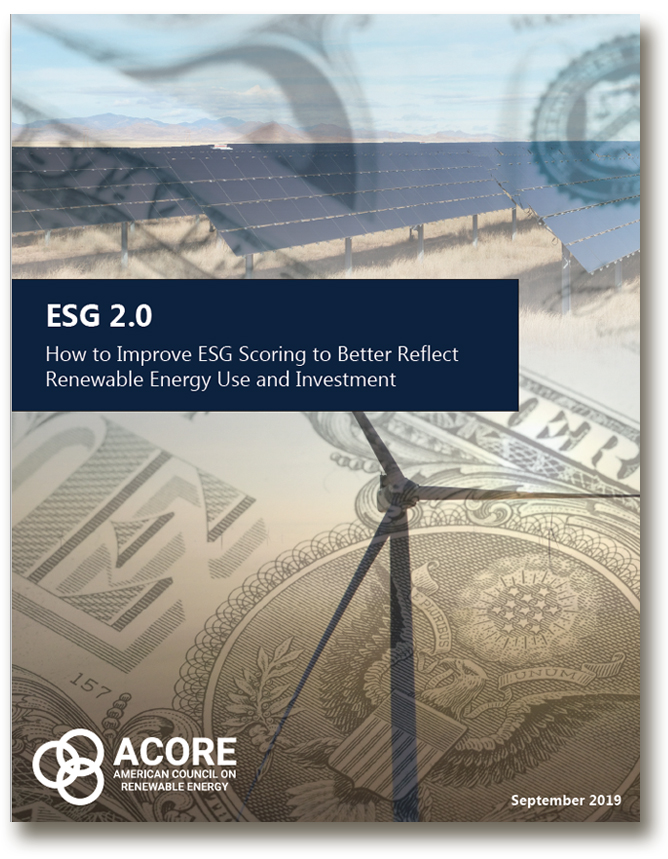
ESG 2.0 ACORE cover-GreenMoneyIn a new white paper released recently, the American Council on Renewable Energy (ACORE) explores the current state of Environmental, Social and Governance (ESG) investing in the U.S. and provides recommendations for ESG methodologies that better reflect renewable energy use and investment.
“ESG scoring today does not sufficiently reflect investment in, and deployment of, renewable power, which is an indispensable part of the climate solution and a critical barometer of carbon emissions,” said ACORE President and CEO Gregory Wetstone. “To accurately measure the climate impact of ESG investments, a more transparent, standardized, material and forward-looking approach is needed.”

The paper, ESG 2.0: How to Improve ESG Scoring to Better Reflect Renewable Energy Use and Investment, outlines how a fragmented marketplace, a lack of transparency in rating methodologies and a failure to focus on truly material information can lead to “sustainability” investments that do not necessarily drive renewable energy deployment or lower greenhouse gas emissions.

“Investors and issuers alike find it difficult to navigate inconsistent and incomplete ESG data, which underscores the need for agreed upon reporting standards,” said David Giordano, ACORE Board Chairman and Global Head of Renewable Power at BlackRock. “As BlackRock continues to grow the range of sustainable investing solutions that we offer, including in renewable power, we recognize the importance of increased transparency and reporting on material ESG factors so that investors can better understand the environmental risks and opportunities associated with their investments as well as the climate-related impact of their capital.”

ESG 2.0: How to Improve ESG Scoring to Better Reflect Renewable Energy Use and Investment includes the following recommendations:

• Enhance Renewable Energy Disclosure in Scope 1-3 Emissions. The extent to which companies drive additionality through their methods of renewable energy procurement, i.e., whether they add new renewable generation to the grid, should be more accurately captured in companies’ Scope 1-3 emissions reporting for their ESG scores.

• Provide Credit for Avoided Emissions. Capital providers should receive credit for avoided GHG emissions attributable to their investment decisions.

• Implement Standardized, Material and Forward-Looking Data Reporting. To provide meaningful comparisons, ESG scoring should increasingly rely on widely agreed upon data inputs. In order to be impactful, ESG scoring based on that widely agreed upon data should include forward-looking analysis capable of holding rated companies accountable for progress over time.

• Adopt a Universal Climate Benchmark. ESG scoring should help accelerate the transition to a decarbonized economy. International initiatives, like the Paris Climate Agreement and U.N. Sustainable Development Goals, can provide a common global benchmark against which companies’ ESG performance can be judged.

Download the new white paper here.


About ACORE:

Founded in 2001, the American Council on Renewable Energy (ACORE) is the nation’s premier pan-renewable organization uniting finance, policy and technology to accelerate the transition to a renewable energy economy. For more information.

Additional Articles, Energy & Climate, Impact Investing

Toniic: How Private Impact Investments are Funding SDGs

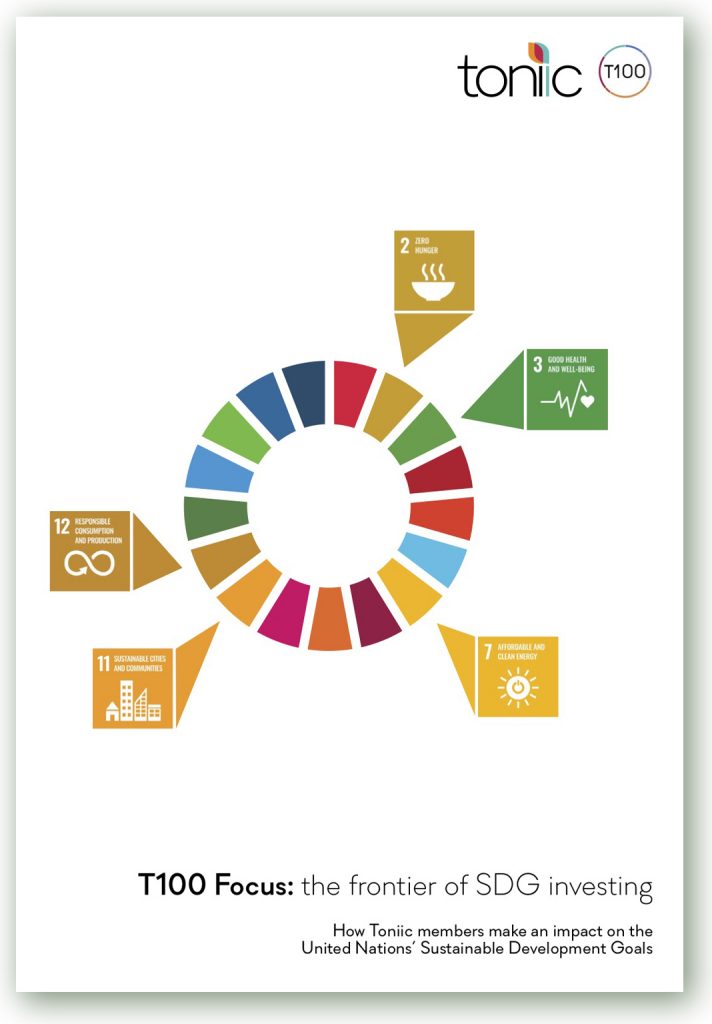
Tonic T100 SDG investing Cover-GreenMoneyImpact investors are fueling solutions to the systemic challenges framed by the UN Sustainable Development Goals (SDGs), finds a new report from Toniic, the global action community for deeper impact investing.

The report, T100 Focus: The Frontier of SDG Investing, unearths data from 76 Toniic member portfolios, totaling $2.8 billion in committed capital, to reveal where the most active impact investors see investable opportunities towards the SDGs across asset classes.

These investors are filling the financing gaps in affordable housing, smart cities and clean energy, and they’re going beyond these “media darlings” to address health, hunger and the circular economy in their portfolios.

Sustainable Cities and Communities Take the Spotlight

While the aggregated T100 portfolios address all 17 SDGs, just five account for more than 60 percent of the invested capital:

• SDG 11: Sustainable Cities and Communities (29%)
• SDG 7: Affordable and Clean Energy (17%)
• SDG 3: Good Health (7%)
• SDG 2: Zero Hunger (6%)
• SDG 12: Responsible Consumption and Production (5%)

Sustainable cities and communities are the top target of the portfolios, attracting nearly a third of all SDG investments — making it even more of a focus than renewable energy. As urban areas continue to expand, people all over the world struggle with inadequate infrastructure, pollution and lack of service, which gives a sense of urgency to investors pursuing this goal.

Toniic member Lital Slavin, who invested in Hadarim Fund, an urban renewal project in Israel, said it will “be one of the major impacts of my life if we are successful — a template for urban revitalization that benefits the residents and does not displace them.”

Her investment in this fund reflects that within SDG 11, community empowerment attracts the largest share of funding (37%), followed by green building (30%), affordable housing (24%) and smart cities and mobility (9%). Nearly half of the investments pouring into this goal are in real assets (49%), such as real estate, and fixed-income investments in community lending dominate community empowerment, helping to make it the most liquid theme.

Clean Energy Investments Take Second Place

Ensuring access to affordable, sustainable energy for all attracts the second-largest amount of capital across T100 portfolios, invested in three theme areas: the transition from fossil to clean energy (65%), access to clean energy (28%) and energy efficiency (7%).

Investments in SDG 7 are spread across asset classes, including fixed income, private equity, public equity and real assets. Investors are expecting higher financial returns for investments in this goal; possibly due to the relatively high exposure to private equity. For example, Wermuth Asset Management invests private equity in companies that produce cheap electric power and in electric cars that charge the grid.

Focus on Good Health, no Hunger

A broad spectrum of capital is making the world healthier. Investors in SDG 3 mainly support access to healthcare (58%) and disease prevention and response (34%), and there is a near-even split of private equity for startups that develop new models and products, and public equity focusing on companies of scale. Biotech company Novo Nordisk illustrates the use of public equity to fund the development of medicines for rare and chronic conditions.

Investments in sustainable agriculture — mainly through real assets such as sustainable farmland — feed SDG 2. Direct investments accounted for two-thirds of SDG 2 allocations, and the remaining third through funds. Investors accept a longer timeline for returns in this area — greater than five years — reflecting the need for more patient capital to support transformative change in sustainable agriculture.

Finally, SDG 12 investments reflect the widespread need to minimize resource extraction and use of toxic materials. There’s a wide variety of opportunities in resource efficiency, which comprise 84 percent of SDG 12 commitments. The circular economy (15%), too, is a focus for investors like private equity fund Circularity Capital, which supports businesses that decouple their growth from resource constraints, enhance resource productivity and drive competitive advantage.

Investing Across a Spectrum of Capital

While the report shows that investments across asset classes are needed to address all the SDGs, each goal has distinctive investment opportunities.

Private equity is the most common investment in SDG 12 and SDG 7, and public equity is the top asset class in SDG 3, reflecting the scale of healthcare solutions. Real assets dominate in SDG 11 and SDG 12, where fundamental needs such as land acquisition for sustainable agriculture require more patient capital.

T100 investors are also looking beyond the obvious: Many of the investments in the studied portfolios are private and illiquid, with aspirations for tremendous impact that goes far beyond what is typically achievable with public market investments.

Additional Articles, Energy & Climate, Food & Farming, Impact Investing, Sustainable Business

Innovation in Community Impact Investing

By Andy Posner, Capital Good Fund

Capital Good Fund logoAccording to US SIF: The Forum for Sustainable and Responsible Investing, Socially Responsible Investing (“SRI”) has reached the $12 trillion asset mark. Unfortunately, the vast majority — 97 percent, to be precise — comprises investments in the traditional capital markets in which decisions are made using Environmental, Social, or Governance (“ESG”) criteria. While I applaud people adding ESG screens to their portfolio, it is imperative that we find ways to support direct, community-level investments.

Innovative nonprofits are at the forefront of driving social change, but for them to scale they must attract significantly more capital. Fortunately, at Capital Good Fund (“Good Fund”), a nonprofit Community Development Financial Institution that provides small-dollar consumer loans to the economically marginalized, we have been testing a solution for over three years. Before diving into the solution, it is important to state the problem:

High-growth nonprofits with a revenue model face significant challenges when it comes to funding their growth: grant dollars are scarce, often come with restrictions, and are too small to allow for mid-to-long term planning. At the same time, since nonprofits are owned by the public, they cannot raise equity. This leaves a final source of growth capital — debt. Nonprofits are not legally limited in the amount of capital they borrow, but not all debt is prudent. Debt for asset purchases such as property or equipment, or to fund a loan pool, for instance, is not problematic because the liability is offset, and can be collateralized by, an asset. Debt to fund growth (such as personnel and technology) carries the significant downside of adding a liability, but not an asset, to the balance sheet. Like any business, an over-leveraged nonprofit’s existence can be threatened, as donors, investors and others may become less inclined to support the organization, philanthropically or otherwise.

Capital Good Fund client Mamadou-GreenMoney
Mamadou is a CGF Loan Client. Due to a lengthy immigration process, Mamadou and his family had been apart for over seven years. After everything was finally settled, Mamadou needed financial assistance to fly his wife and children from Africa to their new home in Rhode Island. Capital Good Fund’s innovative fundraising strategy provided the growth capital needed to support a loan to Mamadou and reunite him with his family. Afterward, he told us, “My experience was excellent. You are the only ones who could resolve my problem.”

The solution is to expand on an already common fundraising mechanism known as a Direct Public Offering (“DPO”). Many organizations, both for profit and nonprofit, have used DPOs to raise capital. Nonprofits in particular are well-suited for DPOs because they can use various federal exemptions, not available to for profits, that entail a lighter regulatory burden. Numerous CDFIs, including Good Fund, have used DPOs to successfully and inexpensively raise debt to fund loan pools or create other assets (buildings, vehicles, etc.). The innovation in our solution, however, is in how the DPO enables a nonprofit to borrow for “growth capital” — operating expenses that enable revenue generation over time — without the liabilities damaging the organization’s balance sheet.

Here’s how it works. The debt is issued, not by the nonprofit, but rather by a subsidiary organization controlled by the nonprofit. Structured this way, the liability is held on the balance sheet of the subsidiary, thereby preventing the parent nonprofit from becoming over-leveraged. To get the funds from the subsidiary to the parent, the proceeds of the investment are donated in the form of an unrestricted grant. The parent recognizes the grant as income on its profit and loss statement, increasing its net assets and therefore strengthening its balance sheet, much like an equity investment.

The parent now has money to make the operating investments needed to increase earned income. But how does the parent then get the funds back to the subsidiary to pay back its investors? Remember that the subsidiary is newly created and, as of yet, does not have any activity outside of issuing debt through the DPO. The answer is that the subsidiary can provide the parent a service, such as accounting, marketing, or loan servicing, with the value of that servicing contract equal to what’s due to the investors.

Let’s look at a case study. Imagine a nonprofit, Main Street Soup Kitchen (“The Kitchen”), that seeks to open a restaurant run by returning citizens that will, over time, generate enough revenue to cover its operating expenses. The Kitchen seeks $1 million in operating money to launch the restaurant. To do so, they create a subsidiary called Main Street Investment Club (“The Club”), which issues $1 million in debt at five percent to impact investors via a DPO. The term for the investment is 10 years with annual principal and interest payments. Ten investors — individuals, foundations, family offices, and others — each invest $100,000. The Club shows the $1 million as a liability on its balance sheet and donates the proceeds to the Kitchen, which books the money as an unrestricted grant. The Kitchen uses the funds to scale its operations, and soon the restaurant is generating revenue.

To make the annual loan payment of $115,000, the Club charges the parent nonprofit $115,000 for marketing services each year, which it uses it repay investors. In a sense, this approach allows a nonprofit to raise equity without it being equity. Yes, the Club must find a specific type of impact investor willing to make an unsecured, patient investment and, possibly, at a below market rate. But there are trillions of dollars going into ESG and other SRI investments that cannot approach the impact of The Kitchen’s work. Unlocking this capital for community organizations is going to fund deep social change. At a time of urgent injustices around the world, we need to provide investment vehicles that can drive solutions that meet the scale of these challenges, be they climate change, mass incarceration, or predatory lending.

Capital Good Fund has raised over $3.5 million via a DPO through our subsidiary, Social Capital Fund. This unrestricted capital has been essential to our growth, allowing us to increase our net assets by nearly 800% in three years. As more nonprofits leverage this mechanism, we can tap into hundreds of billions of dollars. This will also allow nonprofits to spend more of their valuable time fulfilling their missions instead of the endless “starvation cycle” of traditional grant-dependent organizations.

This article was adapted from Funding Challenge: Debt vs. Equity vs. Philanthropy, published in The Non-Profit Times.


Article by Andy Posner, who founded Capital Good Fund in February of 2009 while getting his Master of Arts in Environmental Studies at Brown University, where he was studying financing mechanisms for clean energy. After reading Banker to the Poor by Dr. Muhammad Yunus, the ‘Father of Microfinance’ and 2006 Nobel Peace Prize winner, he quickly realized that equitable financial services could unlock the potential of the poor just as they could do the same for clean energy technologies. At the same time, as the financial crisis of 2008 began to unravel the economy and devastate low-income communities, Andy decided to take action. He created Capital Good Fund with an eye toward using financial services to tackle endemic poverty, first in Rhode Island, and then nationwide.

Andy is a firm adherent of Dr Yunus’ dream to put poverty into museums; or, as Andy likes to put it, to put poverty out of business. Andy’s work has been featured in Providence Business News, the Providence Journal, the Providence Phoenix, the Federal Reserve Bank of Boston’s quarterly publication, the Rhode Island Small Business Journal, CNN and other print, radio and television media. He is also proud to be the Treasurer of the national Board of Directors of the Credit Builders Alliance, an organization of which Capital Good Fund is a member, as well as a member of the Board of the Community Reinvestment Fund, one of the largest nonprofit lenders in America.

Featured Articles, Food & Farming, Impact Investing

A First Step for Place-Focused Foundations

By Travis Green, LOCUS Impact Investing

LOCUS Impact Investing logo - GreenMoney

Three ideas for getting started as local impact investors

A decade from now, local impact investment funds will be an essential asset for most place-focused foundations. Why? Principally, communities need this type of flexible investment. Foundations leading these funds demonstrate their willingness to remain relevant in their communities – putting distance between themselves and other financial services companies and online tool providers that offer transactional grantmaking services. Such organizations replace functions performed traditionally by local foundations. Local investing, like community leadership or growing unrestricted endowment, is something that is difficult for big banks or online tools to replicate. It keeps foundations relevant as mission-aligned endowment stewards.

Of course, we’re not there yet. There’s a lot for foundations to learn and questions to unpack. What is a royalty or a participation? This isn’t what my investment committee should be doing, is it? We’ve defined the ideal local impact investment in our investment policy, but how do we actually find opportunities in our community? Will my community banks see this as a threat? How much of my endowment should I commit? Isn’t this risky? Is this legal? Any foundation leader considering becoming a local impact investor is right to feel like there is a long list of to-dos and no clear place to start.

Foundation leaders need starting points, or clear and productive ways to build the muscles needed to be a local impact investor. Here are three of our favorites:

Just Do It

For some time, the LOCUS team and philanthropic impact investors have been telling foundations to quit talking and just make an impact investment. You’ll learn best by doing. In these early days of practice, puzzling through an actual investment highlights the ways a foundation must evolve to deploy their dollars. Sourcing, assessing, and servicing these assets will take the board and staff conversations from the theoretical to the practical. For a first straightforward investment, consider a loan to a reliable local nonprofit. Another option is partnering with nonprofit lenders like community development financial institutions. You can find out if your community has one here.


TravisGreen-LOCUS-Impact-Investing-GreenMoney
The Humboldt Area Foundation collaborated with a local CDFI to fund the renovation of the historic Carson Block by a local community organization.

Develop an Action Plan

Some risk averse CEOs and boards are uncomfortable experimenting with actual investments. Instead, they prefer that their policies, governance, due diligence, servicing and reporting processes be worked out prior to investing their first dollar. For such risk-averse foundations, a good alternative is to first abstract what you do, qualify what’s working, and identify how to evolve comfortable practices to become a local impact investor. This year, LOCUS started helping foundations through an assessment called Local Investing for Impact Fundamentals which asks staff and board leaders a set of probing questions to understand their assets, skills and relationships. Then, in an action-oriented planning process, the foundation explores how their assets might be leveraged through concrete short and medium-term steps to gradually become a local impact investor. Another alternative: assess your landscape, identify capital gaps, and build the case to become a local investor. This process might highlight partners in your region who are already leading efforts that you can join.

Find a Learning Hub

Another obvious starting point, especially for those who learn by doing but also want help along the way, is field learning opportunities. Mission Investors Exchange (MIE) provides great resources, workshops and conferences that can be an important entry point. LOCUS offers field learning opportunities too. With our partners at the Aspen Institute Community Strategies Group, NetWork Kansas and the Kansas Health Foundation, we are in the middle of a Kansas-based learning cohort to assist community foundations in growing their economic development efforts, and, if relevant, build a local impact investing program to support that effort. This peer-learning model builds off the great programming of Aspen, CF Leads, and the Charles Stewart Mott Foundation who introduced a powerful peer learning model for community foundations exploring community leadership. We and others hope to offer more of these learning opportunities to help all kinds of community foundations take their nervous first steps into prosperity-building local impact investing.

Fortunately, the “where to start” dilemma will be a short lived. Every day, the great work of community foundations like Atlanta, Baltimore, Humboldt, New Hampshire and so many more will distill ways of doing that will be adopted by others. In fact, if you’ve made an opportunistic local investment, we want to hear about it! In the meantime, just doing it isn’t bad advice. Neither is taking an assessment approach like our Fundamentals. For those of you who like facilitated learning opportunities, turning to MIE, LOCUS or others for workshops or peer learning cohorts can be the right approach.

If you’d like to talk about good starting points for local impact investing and your foundation, please reach out to Travis Green at travis@locusimpactinvesting.org


Article by Travis Green, a solutions consultant with LOCUS Impact Investing. Travis assists place-rooted foundations and organizations in implementing regional community economic development strategies to help people and places prosper. He authored a series of practitioner guides on value chain economic development focused on wealth building for low-income households. He also coordinated Rooting Opportunity, a national conference on emerging economic development practice. Previously Travis served as program manager at the Aspen Institute in Washington, DC focusing regional community economic development and community development philanthropy.

Featured Articles, Impact Investing, Sustainable Business

How Community-Focused Municipal Bond Investments Can Drive Social Impact

By Emily Robare, Gurtin Municipal Bond Management

GurtinMunicipalBondMgt-logoPairing the words “community-focused” and “municipal bonds” together feels redundant, because at their core, the purpose of most municipal bonds is to invest in a local community. Whether through building roads and bridges, fire stations and school buildings, or community centers, municipal bonds frequently fund the bones of a community. Well-maintained and updated infrastructure can provide a solid backdrop for a community to flourish, but I didn’t fully appreciate the role that municipal infrastructure can fill, in bringing a community together until becoming a parent and exploring the full range of free and low-cost community spaces.
Many cities now have modern-day playgrounds complete with “ninja warrior” climbing structures, public pools with water slides, libraries with computers, free Wi-Fi, and child play areas. These updates help equalize play by providing a space for all children in a community to access amenities that otherwise would be available only to children whose families can afford to visit private facilities. Ultimately, municipal bonds provide a way for governments to afford these types of infrastructure projects.

In addition to providing community spaces, municipal bonds contribute to the development of structures that ensure all members of a municipality have their basic needs met, which can positively impact the individuals affected and their surrounding communities. One such example is the role of municipal bonds in funding affordable housing.

Why Underserved Communities Need Affordable Housing Assistance

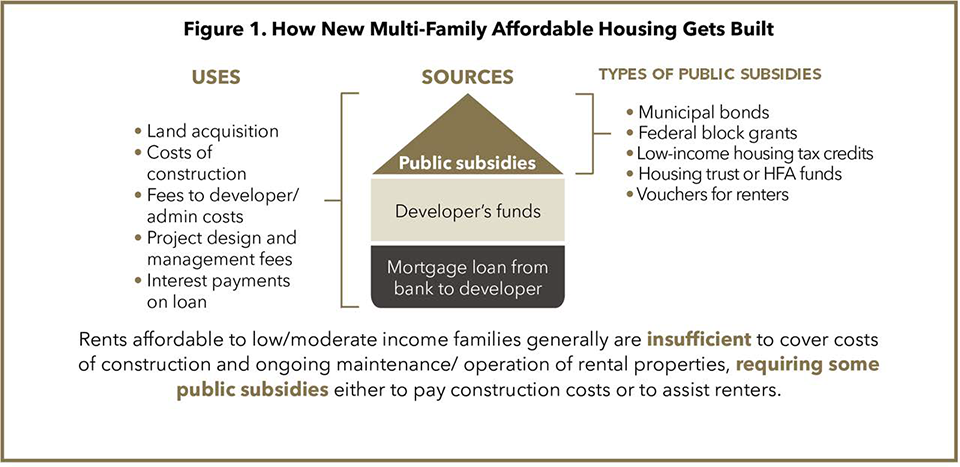
Whether due to a shortage of available housing in high-demand areas or to the lack of developer interest in maintaining inexpensive housing, the United States is experiencing an affordable housing crisis. A 2017 study by the Joint Center for Housing Studies reported that the number of homes costing $2,000 or more in rent per month had increased by 97% over a 10-year period.[1] In many locations, private markets cannot provide sufficient affordable housing without the help of a public subsidy because rent generated from low-income households oftentimes does not fully cover costs. To combat this, state and local governments work with the federal government to offer funds and tax credits to help provide access to affordable housing. One way that state and local housing finance agencies (HFAs) provide financing to housing projects is through issuing municipal bonds. (See Figure 1: How Affordable Housing Gets Built.)

HFAs typically loan funds generated from municipal housing bonds to:

1) Real estate developers to finance multi-family housing projects with units rented to moderate- and low-income families;

2) Finance single-family home mortgages targeted at first-time homebuyers who meet income and purchase price requirements.[2]

Municipal bonds allow developers to finance projects at lower interest rates and facilitate eligibility for the federal government’s low-income housing tax credit program, which helps developers offset the cost of developing and rehabilitating affordable rental housing.[3]


How New Multi-Family Affordable Housing Gets Built-Gurtin
Source: Rebekah King and Ethan Handelman, The cost of affordable housing: Does it pencil out? July 2016


The Positive Impact of Affordable Housing on Moderate- and Low-Income Residents

For moderate- and low-income families, the availability of affordable housing can positively affect their health, education, and economic opportunities.

• Reducing Negative Health Outcomes

Adults who can spend less on housing are more likely to fill prescriptions and adhere to health care treatments than those who are cost burdened.[4] Additionally, children in low-income families who receive housing subsidies are more likely to meet “well child” criteria, which measures development, weight, and health.[5] Well-constructed and maintained housing also limits exposure to environmental toxins and allergens.[6]

• Increasing Educational Achievement

Access to affordable housing can reduce frequent moves, which can have a negative impact on children’s educational achievement.[7] Stable housing helps avoid school absences, changing schools, and loss of friendships and community ties, all of which can lead to declines in educational achievement.[8]

• Enhancing Economic Opportunity

Housing stability can also help residents avoid job loss and increase their economic security.[9] Researchers estimate that involuntary housing loss through eviction increased the risk of job loss by 11% to 22%. Spending less on housing costs allows moderate- to low-income residents to increase economic security through providing a greater ability to save for retirement, pay for higher education, or use discretionary income to build up an emergency fund.

Positive Impact on Communities

Affordable housing can also have a positive influence on a surrounding community through neighborhood improvement and economic impacts.

For instance, affordable housing projects can improve the communities where they’re built by reducing blight and fostering greater stability.[10] Stable housing also allows communities to retain and attract qualified workers.[11] Additionally, affordable housing may increase a community’s property values, especially if it replaces a decaying property.[12]

Gurtin Investment in Housing Bonds

Gurtin seeks to support social impact by investing in municipal bonds that fund essential government projects — such as those helping to improve access to affordable housing — in low- to moderate-income or high-poverty areas. In addition to affordable housing projects, Gurtin also seeks to support social impact in communities by investing in municipal bonds that help finance projects related to parks and recreation facilities, libraries, public transit, bridges, and other essential infrastructure that benefits underserved communities throughout the United States.

Through municipal bond investing, we aim to help improve the communities’ social and economic fabric by making it more inclusive, safe, resilient, and sustainable.


Article by Emily E. Robare, head of ESG (environmental, social, and governance) research on the municipal credit research team at Gurtin Municipal Bond Management, a PIMCO company. As head of ESG research, Ms. Robare leads the firm’s sustainability and ESG research efforts, including integration of ESG risk factors into credit analysis for all bond holdings and conducting in-depth research on ESG topics, such as climate change and public pensions. Ms. Robare co-led the development of Gurtin’s Municipal Social Advancement strategy, allowing investors to target sustainable municipal bond investing in impactful projects in local communities across the United States. In addition, Ms. Robare sits on the Investment Committee and continues to conduct day-to-day credit analysis on municipal bonds across a variety of states and municipal sectors.

Outside of her role at the firm, Ms. Robare is on the Board of the Minnesota Chapter of Women in Public Finance.

Important Disclosures

Gurtin Fixed Income Management, LLC dba Gurtin Municipal Bond Management, a PIMCO company (the “Adviser” or “Gurtin”), is a registered investment adviser with the U.S. Securities and Exchange Commission (the “SEC”). This confidential presentation has been prepared solely for prospective investors considering the investment advisory services provided by Gurtin Municipal Bond Management (the “Adviser” or “Gurtin”). The contents of the presentation should not be construed as investment, tax, financial, accounting or legal advice. Investors should seek such professional advice for their particular circumstances.

Gurtin claims compliance with the Global Investment Performance Standards (GIPS®). Gurtin has been independently verified for the periods February 1, 2008 through March 31, 2017 by Ashland Partners & Company LLP and from April 1, 2017 through September 30, 2019 by ACA Performance Services. GIPS is a registered trademark of CFA Institute. CFA Institute has not been involved in the preparation or review of this report/advertisement. A copy of the verification report is available upon request.

This presentation does not constitute an offer to sell or a solicitation of an offer to buy any securities in any jurisdictions. Offers may only be made to prospective investors through a prospectus. Neither the SEC nor any other federal or state agency or non-U.S. commission has confirmed the accuracy or determined the adequacy of this document. Any representation to the contrary is unlawful.

Each prospective investor will be required to execute an Investment Management Agreement and related Account opening documents (collectively, “Agreements”). If any of the descriptions or terms in this presentation are inconsistent with the terms of the Agreements, such Agreements shall control.

No assurance can be given that the investment objectives will be achieved or that investors will receive a return of any capital. In considering any prior performance information, historical or hypothetical, contained herein, prospective investors should bear in mind that prior performance does not guarantee nor is it indicative of future results. There can be no assurance that the investments made by the Adviser will achieve any particular results.

Article Notes:
[1] Out of Reach 2018: The High Cost of Housing, National Low Income Housing Coalition, 2018.
[2] Housing Revenue Bond, Municipal Securities Rulemaking Board, n.d.
[3] Mark Keightley, An Introduction to the Low-Income Housing Tax Credit, Congressional Research Service, March 2018.
[4] Nabihah Maqbool, Janet Viveiros, and Mindy Ault, The Impacts of Affordable Housing on Health: A Research Summary, Insights from Housing Policy Research, Center for Housing Policy, April 2015.
[5] Ibid.
[6] Ibid.
[7]Maya Brennan, Patrick Reed, and Lisa A. Sturtevant, The Impacts of Affordable Housing on Education: A Research Summary, Insights from Housing Policy Research, Center for Housing Policy, November 2014.
[8] Ibid.
[9] The Gap: A Shortage of Affordable Homes (2018), National Low Income Housing Coalition, March 2018.
[10] Measuring the Economic Impact of Affordable Housing in Rhode Island, HousingWorks RI, 2010.
[11] Ibid.
[12] Ibid.

Energy & Climate, Featured Articles, Impact Investing

Plan for Tomorrow by Supporting Vulnerable Communities Today

By Ebony Perkins, Self-Help Credit Union

Self-Help CU logo-GreenMoney

Recycle? Check!

Reduce energy use? Check!

Skip the straw? Check!

Divest from fossil fuel companies? Check!

Support vulnerable communities currently bearing the brunt of the environmental damage? *Crickets*

Temperatures are increasing, ice sheets are melting, and sea levels are rapidly rising. Scientists have been sounding the alarm for decades. With youth-led climate strikes gaining attention in 2019, a broader group of Americans are acknowledging how our actions have affected the home future generations will inherit. We are in crisis mode and need to protect our tomorrow. But in our efforts to protect tomorrow, we need to make sure to support the people and communities affected today.

Historically, our most vulnerable groups—low-income and minority communities—feel the effects of our declining planet before the general population because they often lack the resources to shield them from the inevitable chain of events that occur as a result of environmental decline and failing infrastructure. They experience the effects of climate change at higher rates, are plagued by water contamination, and are more often located near landfills and hazardous waste sites than other groups. As a result, they suffer from mounting health issues, displacement, and even death. Unfairly so, they are robbed of the chance to live and raise their families in safe communities where they can enjoy healthy food, drink safe water, and breathe clean air.

At Self-Help we have long believed that it is crucial to invest in communities on the front lines of harm from climate change, and we are committed to this fight. Our mission is to create and protect economic opportunity for all. While our work benefits communities of all kinds, our focus is on those who may be underserved, including people of color, women, rural residents and low-income families and communities. We have made loans totaling over $386 million to projects with environmental benefits: recycling businesses, land conservation, efficient affordable housing, and solar energy.

Over time, as we worked to help families build wealth, we recognize that they are being increasingly affected by more-frequent, more-intense hurricanes, wildfires, and irregular weather that were much less common decades ago. We see that we need to create new tools to help our members adapt to and bounce back from the shocks and stresses of changing climate. In that work, we look to our innovative borrowers to take on environmental stewardship in ways that work for their communities. Read on for examples of the direct investments that Self-Help has made to entrepreneurs, homeowners and community organizations who are affected by environmental issues.

How Self-Help Supports Vulnerable Communities

Ryan Behea-Oyster Farmer-Self-HelpCU-GreenMoney
Ryan Bethea of Wilson, NC. Photo Courtesy of the Wilson Times.

• Environmentally Restorative Oyster Farming

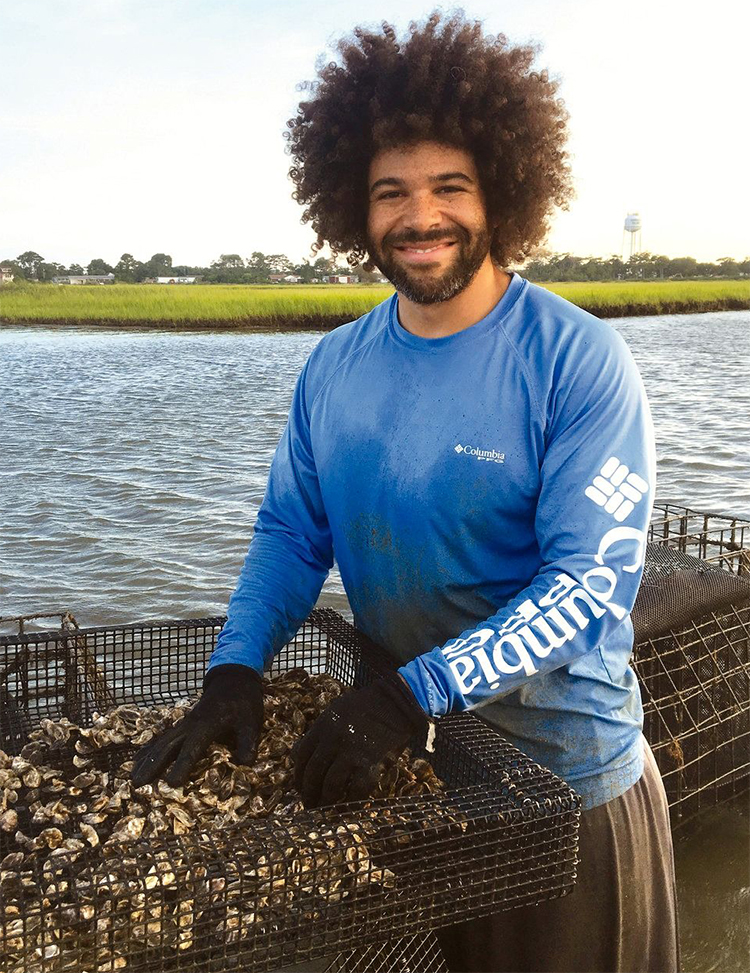
In Self-Help’s home state of North Carolina, many coastal communities are seeing rapid growth in the mari-culture industry. Ryan Bethea of Wilson, NC decided to start an oyster-farming business and came to Self-Help for financing. He is passionate about protecting and preserving North Carolina’s natural beauty and resources, and we were excited to partner with an entrepreneur with an environmentally restorative business. A few months after receiving the loan, Ryan won the coveted Oyster of the Year award at the annual NC Seafood Festival in Morehead City — surely the first of many future successes.

• Building Sustainable Food Ecosystems

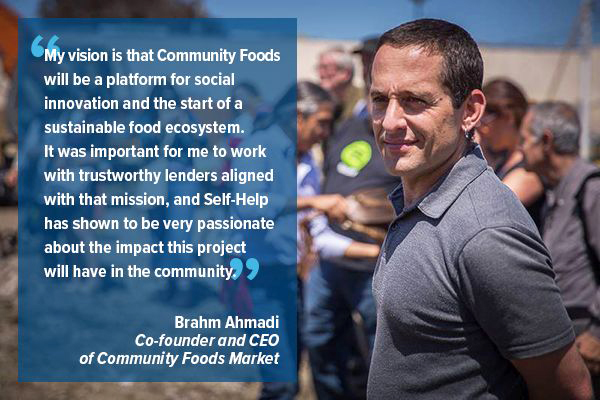
Community Foods Market is a project spearheaded by Brahm Ahmadi in West Oakland, California, who was inspired by the enthusiasm for healthy living he witnessed in the area. This community, rich in its people and culture, has long suffered from disinvestment and financial marginalization. Residents have not had a full-service supermarket for 40 years, often resulting in a lack of healthy and nutritious food options for its residents. The loan, used to fund construction of a 14,000 square foot space, will support Community Foods Market as they become a full-service grocery store, health resource center, and community hub that engages residents to lead healthier and more socially connected lives.

BrahmAhmadi-CommunityFoodsMarket-SelfHelpCU-GreenMoney

• Energy Efficiency in Public Schools

Atlanta Neighborhood Charter School (ANCS) is a high-performing public charter school that has an outstanding record of providing great education for its diverse students. While building a superb learning environment, ANCS also wanted to build on environmental sustainability for their buildings and cafeteria. Working with their Self-Help loan officer and our sustainability expert, ANCS reviewed their energy options and invested in systems that reduced costs and improved the educational environment: LED classroom lighting that adjusts to daylight levels, high efficiency HVAC, and kitchen upgrades.

Thanks to these improvements, the school earned an Energy Star Certification from the US Environmental Protection Agency (EPA). In fact, the school received an Energy Star score of 99, way above the 75 required for eligibility. ANCS also was named a National Green Ribbon winner by the US Department of Education.

How You Can Support Vulnerable Communities

At Self-Help, we are committed to support communities impacted by environmental issues today. Below are a few ways you can do the same.

1. Invest in Community Development Credit Unions: Put your money where your values are by placing your cash reserves with local community development credit unions. They offer money market accounts, term certificates, and savings accounts, all at competitive rates. Self-Help Credit Union even offers a special green certificate of deposit that supports our lending to environmentally sustainable projects.

2. Support local environmental justice organizations: The environmental justice movement is made up of dynamic grassroots groups who seek to halt the pollution that harms their communities and advance sustainable, cooperative, and regenerative communities. National organizations such as the NAACP Environmental and Climate Justice Program, Green for All and the EPA’s Environmental Justice office are great starting points.

If our goal is to achieve environmental and economic justice, we need to prepare for tomorrow by investing today in the communities that are most vulnerable to the shocks and stresses of climate change and most impacted by the burdens of pollution.


Article by Ebony Perkins, a dedicated, solution-oriented social entrepreneur whose heartbeat is community. She has a demonstrated ability of working with investors and donors and helping them make smart and strategic decisions. As the Investor & Community Relations Manager at Self-Help Credit Union, Ebony helps groups and individuals invest funds in a mission-aligned institution that supports communities of all kinds, especially those underserved by conventional lenders. Before that role, she served as the Donor Relations Manager at Central Carolina Community Foundation where she managed a system to engage and educate over 400 individuals and groups to help them achieve their charitable goals.

Ebony’s commitment to investing in the community is evident by her service and contributions to Women In Philanthropy, Durham Center for Senior Life, University of North Carolina MPA Alumni Board, Association of Black Foundation Executives, Friends of African American Arts & Culture, and Columbia College as a mentor.

Energy & Climate, Featured Articles, Food & Farming, Impact Investing, Sustainable Business

Cash Deposits Can Make a Meaningful Impact on Communities

By Jared Gonsky, LOHAS Advisors

Lohas Advisors logoBecause public and private equity investing garner most of the attention of impact investors, the liquid “cash” portion of the portfolio is often overlooked despite the availability of a variety of socially impactful options that may even yield better returns at a lower risk than traditional approaches. The most well-known of these are community development financial institutions (CDFI’s) which are banks (both nonprofit and for-profit) that must dedicate the majority of their lending dollars to their stated missions, typically tied to community benefits (e.g., lending to low-income families, investing in small businesses, etc.). Another option is the handful of banks that are part of the Global Alliance for Banking with Values (GABV) which are banks that dedicate their business practices and lending activities to align with specified social or environmental standards.
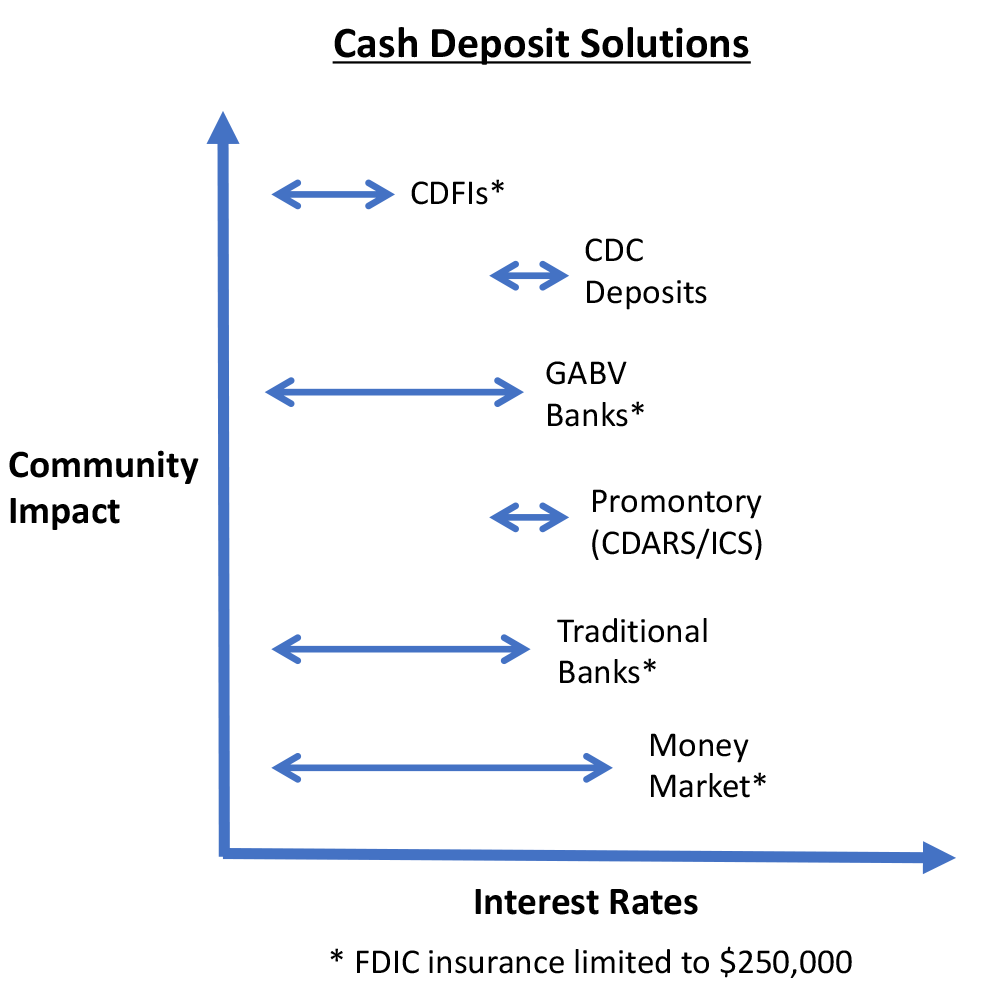
These may be ideal options for parties with smaller volumes of funds to deposit, but because FDIC insurance is limited to $250,000 in any given bank, many limit their exposure in GABV banks or CDFI’s accordingly. Others may find that the financial returns from CDFI’s (and the certificates of deposit or other products they offer) are substantially less than they can garner through other avenues and are unwilling to accept the tradeoff.

Social Impact Money Market Alternatives

A somewhat lesser known option that addresses these limitations is CDC Deposits, a mission-driven organization that specializes in large cash deposit management. With over a billion dollars in their Impact Deposit Program, CDC provides FDIC insurance on all deposits, next-day liquidity, and competitive rates while also delivering a wide-spread social impact program in conjunction with their network of community banks. CDC’s program is typically utilized by parties with $1 million or more in deposits and may be ideal for socially-minded individuals and family offices. Additionally, CDC’s program supports local nonprofits, which aligns particularly well with “place-based” community foundations, local governments and pensions, corporations, and other community-focused organizations that have interest in selecting the particular nonprofits or causes in their community to support.

Cash Deposits Solutions-CDFIs-CommunityImpact-LOHAS advisors

While these strong social impact cash solutions exist, most individuals, companies, institutions, and even organizations dedicated to impact (like foundations, endowments, and nonprofits) continue to place their cash in traditional banks (with track records like Wells Fargo) or money market funds in their trading accounts that often pay significantly lower returns on those funds than could be obtained from a program like that of CDC Deposits. Some parties believe that their banks are using solutions like CDARS (a Promontory cash management solution) for funds over the $250,000 FDIC limit and that this is a socially impactful option; but while CDARS is used by some CDFI’s that benefit from the extra funds for lending on their balance sheets, the portion of CDARS depositors’ funds that actually go to CDFI’s is actually quite small, with most going to a broader network of large banks (like, for instance, the Bank of China) with practices that may run counter to the goals of impact investors.

What’s Preventing Action

So why do parties who are avid impact investors ignore the potential social benefits and continue to put their cash deposits in traditional banks and money market funds? Why do corporations making public sustainability announcements continue to do likewise with their corporate treasuries? How can local governments and pension funds chase returns through riskier corporate paper when comparable financial returns can be achieved through options that benefit their very communities? Even harder to understand, how can foundations, endowments, and nonprofits ignore options that can directly support the causes they champion in favor of less impactful solutions (that may even advocate against causes they care about or deliver worse returns)?

The answer, unfortunately, goes back to the original point and it’s a bit disheartening. While the market focuses on “sexier” equity investments, cash is ignored or seen as trivial. Boards spend precious time arguing over the merits or drawbacks of “ESG” investing in the public markets, but often cash decisions continue to be the purview of the CFO who generally cares little about the positive social or environmental stance of their organization and would rather take the familiar path (perceived to be less risky). Yes, these social impact options may not be on the investment platform they use so a quick check of the money market funds box may not be possible. And, it may require funds to be wired to a different CDFI, bank, or program custodian. But why make the effort if nobody is going to question their lack of action? Ultimately, it comes down to a lack of motivation. We have heard every excuse under the sun, but these are not complicated choices, and the minimal effort to move funds from the current structure to another clearly is not an insurmountable impediment.

Size of the Opportunity

Almost no one is looking at this topic from a system-wide perspective. According to recent banking data, total deposits at U.S. banks are at an all-time high of $14 trillion, which includes over $5 trillion in money market accounts and $3 trillion in savings accounts. Imagine the positive impact that even a small portion of these deposits could have in our communities if placed in CDFI’s or CDC’s Impact Deposit Program!

We often ask parties where their cash sleeps at night, but in reality, it never sleeps. Your funds and those of your clients are always working. The question is whether they are working to strengthen the causes, values, and organizations you support or serve in neutral or (even worse) contradictory positions. The choice is yours. Take action or don’t. But know that cash options are available that support communities and positive social and environmental causes, and your cash deposits and money market funds have the ability to make a meaningful impact.


Article by Jared Gonsky, a partner at LOHAS Advisors where he bridges the gap between asset owners and managers that want to make a meaningful impact and innovative sustainability and social enterprises that address today’s most pressing challenges. He is an expert in impact investing and leads the firm’s support for intergenerational wealth transfer.

Jared’s knowledge and expertise in sustainability run deep. Following his travels and time abroad in the mid-2000s, Jared came to the realization that the inequitable business practices and unsustainable use of resources that frustrated him at home were increasingly being replicated globally. He quickly identified this as an urgent issue and took it upon himself to help lead the change towards transformative business models that create healthier systems.

With this goal in mind, Jared began his journey in sustainability as a management consultant at ERM where he helped set up the company’s Energy, Climate Change and Sustainability practice, and led projects for leading Fortune 500 firms across Consumer Products, Transportation, and Healthcare. Following his time at ERM, Jared then went on to lead project financing and commercial activities for a variety of clean technology ventures in the area of energy, waste conversion, sustainable buildings, and infrastructure including DuPont and LanzaTech.

Jared started his career during the dot-com boom in the late 90s with CGI Capital where he performed due diligence and evaluated direct private investments in bio-based and high-tech firms. He earned his BS degree in cell biology, magna cum laude, and his MBA from the University of Illinois. He also holds certifications in sustainable enterprise, corporate social responsibility, and impact investing.

Additional Articles, Impact Investing

Why Invest Internationally in Companies with Strong ESG Practices?

By Scott LaBreche, Director, Impax Asset Management

To boost portfolio ESG quality and the potential for improved risk-adjusted returns

Impax Asset Mgmt logoThe megatrends underlying the transition to a more sustainable economy, such as climate change and widening inequality, are global issues. It should come as no surprise, then, that companies are addressing sustainability risks and opportunities regardless of their domicile.
So investors may be wondering, how are companies in developed markets outside the U.S. and Canada performing on sustainability issues? It varies, of course, but on the whole, they are performing better than those in the U.S.

In this article we take a closer look at this ESG quality phenomenon and share other takeaways about risk and performance from our experience managing the Pax MSCI EAFE ESG Leaders Index Fund — and its predecessor based on the same index — since 2011. The Fund uses an index-based strategy that seeks to track the performance of the MSCI EAFE ESG Leaders Index, consisting of equity securities with favorable ESG ratings in developed markets outside the U.S. and Canada.

International Developed Markets Have Higher ESG Quality

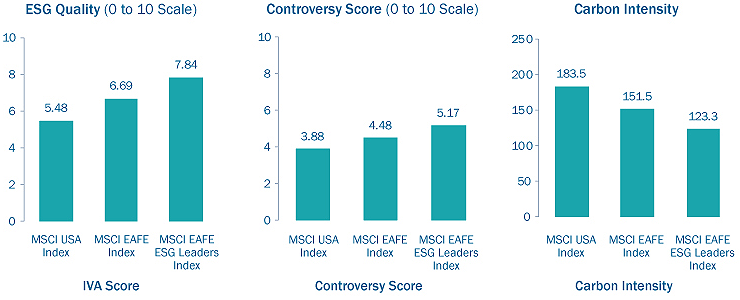
First, it should be noted that investors gain a built-in sustainability boost simply by investing in non-U.S. developed markets, even before applying an ESG-integrated investment approach. As shown in Figure 1, below, the ESG research score (IVA rating[1]) of the MSCI EAFE Index, which measures the equity market performance of developed markets outside the U.S. and Canada, is better than that of the MSCI USA Index, which measures the performance of large and mid-cap segments of the U.S. market.

Figure 1 also shows that investors can build on that MSCI EAFE Index sustainability advantage by focusing on companies that have the highest-rated ESG performance in each sector, which is the methodology behind the MSCI EAFE ESG Leaders Index. Correspondingly, we can see the same pattern in controversy scores and carbon intensity data for all three indexes.


Improved Sustainability from non-US dev market and ESG-fig1
Figure 1: Improved Sustainability Outcomes from non-U.S. Developed Market and ESG Focus.                              Source: Impax Asset Management. Data from MSCI and Factset as of 6/30/19.


So, why do companies in the MSCI EAFE Index demonstrate stronger ESG characteristics than the MSCI USA Index, on average? It’s a two-part explanation: 1) the MSCI EAFE Index has a greater proportion of top-tier ESG leaders that are concentrated in the European[2] region, and 2) the MSCI USA Index ESG quality score gets dragged down by a greater proportion of companies that lag on ESG measures.

First, let’s consider European ESG leadership. We believe that stricter European regulations and a stronger cultural awareness of ESG issues, particularly environmental matters, have resulted in company profiles that rate higher on ESG than in regions where perhaps a sustainability mindset is less established and where there is less required reporting of ESG-related data.

An important distinction, however, is that all European countries are not the same when it comes to ESG strengths. For instance, German companies tend to be more ESG-savvy than Israeli or Italian companies, and there is a much larger weight in the MSCI EAFE Index toward German companies than to those in Israel or Italy.

Still, on average, the 14 countries that make up the MSCI EAFE “Europe” classification, which includes Israel, have better ESG scores than other regions represented in that index, including Australia, Hong Kong, Japan, New Zealand and Singapore.

Meanwhile, the U.S. has a greater allocation of ESG laggards, which we believe is primarily reflective of the country’s highly diversified economy. ESG laggards in the MSCI USA Index represent many industries, however there are notable concentrations in the ESG-challenged pharmaceuticals, automotive and energy areas of the market.

In our view, U.S. investors with a home country preference can take a step toward improving the sustainability profile of their portfolios by incorporating an international developed markets allocation.

ESG Integration Has Led to Risk Mitigation

ESG integration is now widely recognized as a strategy for mitigating risk,[3] and in our experience that certainly applies to non-U.S. developed markets.

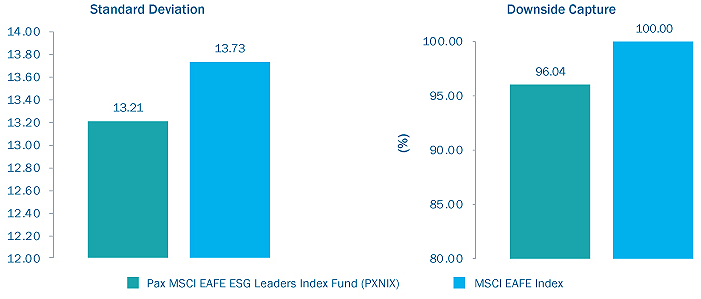
As illustrated in Figure 2, the Pax MSCI EAFE ESG Leaders Index Fund, which tracks the performance of the MSCI EAFE ESG Leaders Index, has experienced -4% less volatility and -4% less downside risk than the MSCI EAFE Index since its inception, as of 6/30/19. These risk statistics provide support for the growing body of research that finds integration of ESG factors is correlated with reduced risk.[4]


ESG Risk Mitigation Benefits-6.30.19-fig2
Figure 2: ESG Risk Mitigation Benefits – Pax MSCI EAFE ESG Leaders Index Fund Has Delivered Lower Volatility and Downside Risk than the MSCI EAFE Index, Since Inception 1/27/11 as of 6/30/19. Source: Impax Asset Management, MSCI and Factset. PXNIX Inception (1/27/11) through 6/30/19. Past performance does not guarantee future results.


Evidence of Positive ESG Performance Effect

Since what differentiates the Pax MSCI EAFE ESG Leaders Index Fund from the MSCI EAFE Index is its focus on companies with higher ESG scores, a closer examination of its performance provides insights into the key role that ESG factors have played in results.

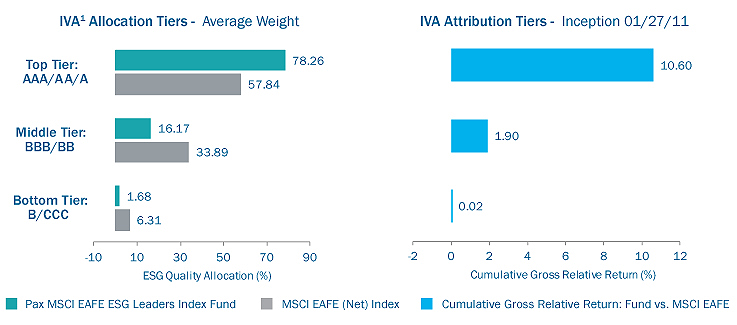
Through performance attribution we have found that the bias to companies with stronger ESG profiles is, in fact, driving the excess return.

Figure 3 depicts the weight of each of the IVA tiers and their contribution to performance since inception. The large overweight to top-tier companies drove the greatest positive contribution to relative performance since the Fund’s inception, providing further evidence of ESG factors’ materiality on performance.


Excess Return Driven by Top-tier ESG companies-fig3
Figure 3: Excess Return Driven by Top-tier ESG Companies. Source: Impax Asset Management, MSCI and Factset. IVA Allocation and Attribution – Inception (1/27/11) through 6/30/19. Attribution is based on daily gross holdings-based results, which does not include fund expenses and trading costs, etc. The total cumulative gross return for the fund was 57.87% vs. 42.97% for MSCI EAFE. Other not-rated securities and cash were excluded from both charts. Past performance does not guarantee future results.


Non-U.S. Developed Markets and ESG Investing

For long-term investors, the case for an international equity allocation isn’t a “why now” argument, it’s timeless. In our view, the same holds true for international sustainable investing. As we’ve witnessed through managing the Pax MSCI EAFE ESG Leaders Index Fund these past eight years, international developed markets with a focus on highly rated ESG leaders can provide high ESG quality as well as competitive risk-adjusted performance. This presents a fine opportunity for U.S. investors to look eastward for a sustainability advantage that can provide diversified international equity exposure.

For additional information on the Fund including Holdings and Country Allocation, visit the Fund’s Web Page.


Article by Scott LaBreche, Director, Portfolio Analytics & Index Strategy Optimization, Impax Asset Management LLC. Portfolio Manager, Pax Ellevate Global Women’s Leadership Fund, Pax MSCI EAFE ESG Leaders Index Fund

Scott LaBreche is Director, Portfolio Analytics & Index Strategy Optimization at Impax Asset Management LLC, formerly Pax World Management LLC, and a Portfolio Manager of the Pax Ellevate Global Women’s Leadership Fund and the Pax MSCI EAFE ESG Leaders Index Fund. Across all Pax World Funds, Scott is responsible for fund research, quantitative ESG research, advanced analytics, risk oversight, fund optimization and board reporting, as well as overseeing performance and attribution.

Prior to joining the firm in 2007, Scott was a Securities Fund Analyst at Lincoln Financial Group. He has been in the mutual fund industry since 1999. Scott holds a Bachelor of Science in Business Administration and a Masters of Business Administration with Advanced Certificate in Finance from Southern New Hampshire University.

Article Notes:

[1] MSCI ESG Intangible Value Assessment (IVA) provides research, ratings, and analysis of companies’ financially material risks and opportunities arising from environmental, social and governance factors. Companies are rated by MSCI ESG analysts on a seven-point scale of ‘AAA- CCC’ relative to the standards and performance of their industry peers. The MSCI ESG IVA ratings provide a signal to investors of the extent to which a company is well-positioned to manage the financially material risks and opportunities arising from key ESG trends.

[2] Europe, in the MSCI EAFE Index classification, includes Austria, Belgium, Denmark, Finland, France, Germany, Ireland, Israel, Italy, Netherlands, Portugal, Spain, Sweden, Switzerland and the United Kingdom.

[3] Julie Gorte, “The Business Case for Sustainability,” Impax Asset Management, July 10, 2019, https://paxworld.com/the-business-case-for-sustainability/

[4] https://paxworld.com/category/research/esg/

The MSCI EAFE ESG Leaders Index is designed to measure the performance of equity securities of issuers organized or operating in Europe, Australasia and the Far East that have high ESG ratings relative to their peers as rated by MSCI ESG Research annually.

The MSCI EAFE Index (Europe, Australasia, Far East) is a free float-adjusted market capitalization index that is designed to measure the equity market performance of developed markets, excluding the US & Canada. The MSCI EAFE Index consists of the following 21 developed market country indexes: Australia, Austria, Belgium, Denmark, Finland, France, Germany, Hong Kong, Ireland, Israel, Italy, Japan, the Netherlands, New Zealand, Norway, Portugal, Singapore, Spain, Sweden, Switzerland, and the United Kingdom.

One cannot invest directly in an index.

Standard Deviation measures a Fund’s variation around its mean performance; a high standard deviation implies greater volatility.

Downside Capture is a statistical measure of an investment manager’s overall performance in down-markets.

MSCI ESG Research evaluates companies’ ESG characteristics and derives corresponding ESG scores and ratings. Companies are ranked by ESG score against their sector peers to determine their eligibility for the MSCI ESG indices. MSCI ESG Research identifies the highest-rated companies in each peer group to meet the float-adjusted market capitalization sector targets. The rating system is based on general and industry-specific ESG criteria, assigning ratings on a 7-point scale from AAA (highest) to CCC (lowest).

The returns for the Pax MSCI EAFE ESG Leaders Index Fund – Institutional Class (PXNIX) were: 1 year: 1.98%, 3 year: 7.81%, 5 year: 1.97%, Since Inception (01/27/2011): 4.46%. The returns for the Pax MSCI EAFE ESG Leaders Index Fund – Investor Class (PXINX) were: 1 year: 1.67%, 3 year: 7.55%, 5 year: 1.71%, Since Inception (01/27/2011): 4.19%. The returns for the MSCI EAFE Index were: 1 year: 1.08%, 3 year: 9.11%, 5 year: 2.25%, Since Inception (01/27/2011): 4.35%.

Performance data quoted represent past performance, which does not guarantee future results. Investment return and principal value of an investment will fluctuate so that an investor’s shares, when redeemed, may be worth more or less than their original cost. Current performance may be lower or higher than the performance data quoted. For most recent month-end performance information visit paxworld.com.

Total annual Pax MSCI EAFE ESG Leaders Index Fund operating expenses, gross of any fee waivers or reimbursements, for Institutional Class and Individual Investor Class shares are 0.55% and 0.80% as of 5/1/2019 prospectus. The management fee is a unified fee that includes all of the operating costs and expenses of the Fund (other than taxes, charges of governmental agencies, interest, brokerage commissions incurred in connection with portfolio transactions, distribution and/or service fees payable under a plan pursuant to Rule 12b-1 under the Investment Company Act of 1940 and extraordinary expenses), including accounting expenses, administrator, transfer agent and custodian fees, Fund legal fees and other expenses. (For this purpose, Impax Asset Management LLC does not consider acquired fund fees and expenses to be operating costs and expenses of the Fund.)

Note About Inception Date: On 3/31/2014 Pax World International Fund and Pax MSCI EAFE ESG Index ETF merged into the Pax MSCI EAFE ESG Leaders Index Fund (the Fund), a passively managed index fund which seeks investment returns that closely correspond to the price and yield performance, before fees and expenses, of the MSCI EAFE ESG Index. Based on the similarity of the Fund to Pax MSCI EAFE ESG Index ETF, Pax MSCI EAFE ESG Index ETF (the Predecessor Fund) is treated as the survivor of the mergers for accounting and performance reporting purposes. Accordingly, all performance and other information shown for the Fund for periods prior to 3/31/2014 is that of the Predecessor Fund. Inception date for Institutional Class shares is that of the Predecessor Fund, January 27, 2011. Inception date of Investor Class is March 31, 2014. The returns shown for Investor Class shares for periods prior to March 31, 2014 are those of the Predecessor Fund. These returns have been adjusted to reflect the expenses allocable to Investor Class shares.

RISKS: The Fund does not take defensive positions in declining markets. The Fund’s performance would likely be adversely affected by a decline in the Index. Equity investments are subject to market fluctuations, the fund’s share price can fall because of weakness in the broad market, a particular industry, or specific holdings. Emerging markets and International investments involve risk of capital loss from unfavorable fluctuations in currency values, differences in generally accepted accounting principles, economic or political instability in other nations or increased volatility and lower trading volume. Investments in Asia/Pacific increase the impact of events and developments associated with the region can adversely affect performance.

Investments involve risk, including potential loss of principal. You should consider Pax World Funds’ investment objectives, risks, and charges and expenses carefully before investing. For this and other important information, please download a fund prospectus. Please read it carefully before investing.

Copyright© 2019 Impax Asset Management LLC, formerly Pax World Management LLC. All rights reserved. Pax World Funds are distributed by ALPS Distributors, Inc. Member: FINRA. ALPS Distributors is not affiliated with Impax Asset Management LLC. PAX008786 (10/19)

Energy & Climate, Featured Articles, Impact Investing, Sustainable Business

X