Tag: Impact Investing

Gender Equality and Climate Change: The Synergies
By Julie Gorte, Impax AM and Pax World Funds

PAX World Funds logoClimate change is a story that encompasses everyone — believer, denier, rich, poor, black, brown, white, majority, minority, male or female. It’s an equal opportunity wolf at the door. But, as is the case with diversity in almost every pursuit, more diverse groups bring more to the table, and considering that climate change is the most important problem humans must solve, diversity has a contribution to make to climate change.

Specifically, there’s an emerging story about women and climate change. The usual narrative on this topic goes something like this: Climate change will take a greater toll on the poor than on the rich. Women are more likely to be poor. Women will suffer more as the globe warms than will men. That’s all true. But there’s a more hopeful, useful narrative: More gender diversity in climate decision-making gives us a better toolkit to address climate change, a problem that threatens us like none we’ve ever confronted before.

We know from many years’ worth of academic and business literature, including the results of our own gender-focused investment strategy, that diverse groups tend to make better decisions than homogeneous groups. Companies, organizations and governments that invest in women are better positioned for success but also contribute to a more harmonious and resilient society by applying a broader, more diverse perspective to big problems, essentially giving us a better shot at making smarter decisions about the threats we face.

Investors who steer their dollars toward companies that understand this contribute to solutions.

Consider the literature. Research has shown that more diverse teams make decisions faster, with fewer meetings, and deliver superior results. McKinsey research showed that companies in the top quartile for racial and ethnic diversity in management were 25 percent more likely to have financial returns above industry means, and companies in the top gender diversity quartile were 15 percent more likely to have above-industry-average performance. These are not unusual results. Why do diverse groups do better? Diversity helps teams avoid groupthink and focus more on facts and less on assumptions or memory, and diverse groups are more likely to remain objective.
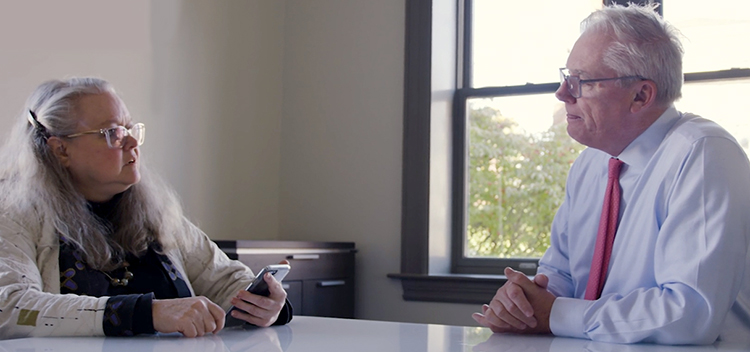
 

Julie Gorte SrVP Sustainable Investing with Joseph Keefe pres and CEO Pax World Funds
Julie Gorte, Senior Vice President for Sustainable Investing at Pax World Funds, with Pax President and CEO Joseph Keefe

These attributes of diverse-group decision-making help us to understand why boards and executive suites with more gender balance might tend to be better about acknowledging and dealing with climate change. But do they? There is some evidence that this is happening. Two studies have shown that more gender-diverse boards are significantly more likely to respond to the annual Carbon Disclosure Project (CDP) questionnaire that asks companies to report their emissions, climate risks and opportunities, and the degree to which they are managing those risks and investing in decarbonization or resilience opportunities. One of those studies looked at all CDP responders, across 33 countries, and one looked only at India; both found that companies with more gender-diverse boards were more likely to report to the CDP. Both of these studies comport with another that found a positive association between the gender diversity of company audit committees and ESG reporting generally.

Of course, reporting is not the same as solving the climate problem, but it is, for companies, step one. A company that reports on its risks and opportunities with respect to climate change is simply better prepared to manage those risks and opportunities than a company that doesn’t understand the impact of climate on its operations. But to address the real problems that climate poses, it’s crucial that companies move beyond reporting and on to the things that must be done to prevent a climate crisis. Here, too, there is some evidence of a gender diversity link.

A study published last year found that firms with female CEOs have lower air, water and greenhouse gas (GHG) emissions than their peers and receive fewer environmental penalties. That study also helped reinforce the initial correlation by noting that toxic emissions were reduced when the CEO transitioned from male to female. That reinforces an earlier paper from UC Berkeley that found companies with more women in the upper echelons of decision-making were more likely to invest in renewable power generation; integrate climate change effects into developing products designed to help customers manage climate risks; measure and manage GHG emissions in the company and its value chain; and otherwise create solutions to manage and reduce environmental risks.

Climate change presents us with the kind of problem that humanity has proven, over millennia, to be incapable of solving. Read Jared Diamond’s book “Collapse,” or Richard Conniff’s article “When Civilizations Collapse, or Naomi Oreskes and Erik M. Conway’s The Collapse of Western Civilization: A View From the Future,” and it is instantly apparent that solving problems that require discernment of threatening long-term trends or present-day actions to avoid impacts generations into the future, or those that present obstacles that living people have never experienced, is something humans absolutely have not mastered. Hedonism is far more gratifying, in the present, than altruism for generations not yet born.

To solve this problem requires us to be not only forward-thinking but innovative — and that is something humans are good at. Here, too, there is evidence that gender diversity can provide a useful assist to innovation. Companies with more gender-diverse boards have been shown to have more patents, and more novel patents. Moreover, companies with more gender-diverse boards also tend to have cultures that are more tolerant of failure and tend to provide long?term performance incentives. Both of those are essential to the business of innovating in the private sector. While it may sound odd to extol failure tolerance as a virtue, it is useful to remember that innovation is something we don’t know how to do if the only thing that is tolerated is success. Thomas Edison is reputed to have said, “I have not failed. I’ve just found 10,000 ways that won’t work.” Any company that demands that every innovative effort be rewarded with a commercial product is not a good candidate for survival. Having a board that understands that innovation involves much trial and error is a positive attribute.

In the long run, of course, an infinite capacity for tolerating failure is not a winning strategy. Failure is just a step along the road to successful innovation, and understanding the role of failure, again, is associated with diversity. Boston Consulting Group found that companies with more diverse leadership teams tend to have higher proportions of revenue attributable to innovation.

Climate change may be one of the greatest problem that humanity faces, but another of our grand challenges is inequality. Solving both problems will make just about every other issue we face easier to deal with. We don’t need to treat them as two distinct things; there is solid evidence that diversity and inclusion not only addresses the problems of inequality but can help us deal with climate change as well. By investing in entities that understand the importance of gender diversity, impact investors will be part of the solution to both.


Article by Julie Gorte, Senior Vice President for Sustainable Investing, Impax Asset Management LLC and Pax World Funds. She oversees environmental, social and governance-related research on prospective and current investments as well as the firm’s shareholder engagement and public policy advocacy. Julie is also a member of the Impax Gender Analytics team.

Julie serves on the boards of the Endangered Species Coalition, E4theFuture, Clean Production Action and is the board chair of the Sustainable Investments Institute. She also serves on the Investment Committee of the United Nations Environment Programme Finance Initiative.

Prior to joining Pax, Julie served as Vice President and Chief Social Investment Strategist at Calvert. Her experience before she joined the investment world in 1999 includes nearly 14 years as Senior Associate and Project Director at the Congressional Office of Technology Assessment, Vice President for Economic and Environmental Research at The Wilderness Society, Program Manager for Technology Programs in the Environmental Protection Agency’s policy office and Senior Associate at the Northeast-Midwest Institute. She received her Bachelor of Science in Forest Management at Northern Arizona University and a Master of Science and Ph.D. from Michigan State in resource economics.

Energy & Climate, Featured Articles, Impact Investing, Sustainable Business

Investing to Advance Women: A Guide for Investors from SIF

This recently released guide from the US SIF explores the business case for investors seeking to put their dollars to work to address the pressing issues that affect women. It presents summary information on the socioeconomic status of women in the United States and globally, the challenges they face in achieving parity with men in the business and economic realm and the investment products that investors can use to address these issues. Options across a range of asset classes and vehicles, including stocks, mutual funds, fixed income and cash instruments, as well as shareholder engagement approaches, are discussed.

To access a free copy of the report, Download Here

Executive Summary

Investing to promote gender equality and advance the socioeconomic standing of women and girls is a leading priority of many sustainable investors. The US SIF Foundation found that at the start of 2018, institutional investors considered “gender lens” as a criterion in $868 billion of investment assets. This is more than double what was identified in 2016.

In this brief report we present summary information on the socioeconomic status of women in the United States and globally, the challenges they face in achieving parity with men in the business and economic realm, the business case for investors to put their dollars to work to address these pressing issues and strategies and products that will allow them to do so.

After a brief Introduction, the report examines The Changing Socioeconomic Status of Women and presents key facts on the socioeconomic status of women in the United States and globally. While women have made notable political, economic and educational gains in recent decades, they still earn on average less than men. In many countries, women face legal and cultural barriers that restrict their economic and educational opportunities.

The Business Case for Advancing Women highlights the substantial and growing body of research that demonstrates the business case for investing in gender equality, and the gains the world stands to reap by rectifying gender equality issues.

For example, research shows that companies with greater representation of women on their boards of directors and in senior management are likely to have higher profitability and produce better returns than their less diverse peers.

Investment Strategies and Products that Support Women offers a summary of funds that are singularly focused on investing in gender equality, those where gender-related criteria are incorporated in investment analysis and those that prioritize shareholder engagement across environmental, social and governance (ESG) issues, including gender-related issues. You will also find links to searchable databases of investment products and services.

Your Investments provides specific guidance for both retail and accredited/institutional investors on how to invest in companies and funds that support women’s socioeconomic advancement as well as how to make your voice heard as a shareholder or fund investee.

The report concludes with a section encouraging you to consider your ability In Your Community to influence the investment policies of non-profit organizations, university endowments, religious institutions and local government operating and pension funds with which you have ties.

Additional Articles, Impact Investing, Sustainable Business

Recalibrating Risk Assessment for Indigenous Women

By Kate Finn, First Peoples Worldwide

FirstPeoplesWorldwide-LogoRisk assessment is a ubiquitous tool to understand the impacts of investment. What past assessment tools have lacked, however, is a complete understanding of Indigenous women’s experiences of life in their communities. As we craft a new lens toward affecting a just transition for all, investors have an opportunity to recalibrate these tools to more aptly account for Indigenous women’s economic and social wellbeing. This necessarily includes a focus on the impacts of violence against Indigenous women in Indian Country.

In the spirit of recalibration, I’d like to start with a question. It’s about expectations. When you call 911, what happens next?

Likely, the call will be answered by a trained operator, who will then deploy first responders to your exact location in a matter of minutes. The expectation of a rapid and expert response is ingrained from an early age in many of our worldviews and the expectation itself provides a measure of safety and assurance.

How does this apply to investing? Because when you invest in a project in Indian Country, or in Indigenous communities worldwide, the women and children in those communities do not have that same experience, nor do they have the same expectation of a safe response.

The set of assumptions they carry are different. And, economic development and investment, as they have proceeded historically, only confirm their experience of violence and community instability.

Moving forward, investors have a critical role in either endorsing or dispelling this reality for Indigenous women and children.

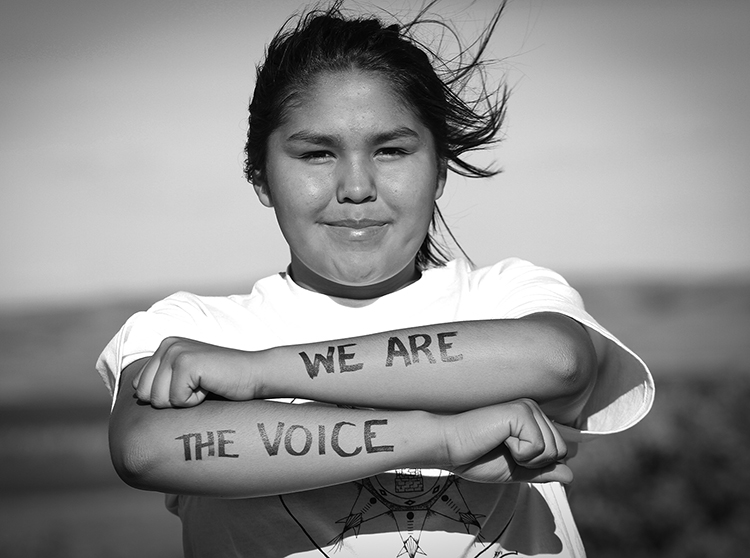
We are the Voice, photo by Allie Fredericks

To start, Native women and children do not have an expectation of basic safety and security in many parts of Indian Country. Murder is the third-leading cause of death of American Indian and Alaska Native women and, in some places in the United States, the rates of violence on the reservations can be ten times higher than the national average. Studies show that four out of five Native women are affected by violence in their lifetime. This reality has resulted in an epidemic of Missing and Murdered Indigenous Women and Girls (MMIWG) throughout North America. In 2016, 5,712 cases of MMIWG were reported to the National Crime Information Center.

Part of the reason for the outsized rates of violence against Indigenous women is that tribes do not have the authority to hold non-Native perpetrators accountable for their crimes in Indian Country. Federal, state and tribal authorities have distinct responsibilities that shift depending on the case. So, when Native women call 911 or file a missing persons report, the first questions aren’t about safety but rather to determine whether there will be a response deployed at all.

For these reasons, criminal investigations in Indian Country are slow to start, if they begin, and they rarely result in prosecution. Of the thousands of MMIW cases logged in 2016, only 116 cases were registered in the US Department of Justice’s missing persons database. Violence against Indigenous women and children occurs with seeming impunity. Status quo, as it has been created through history and policy, is that no one is on the other line answering their call for help.

This experience is magnified by extractive investment and development practices. A Bureau of Justice Statistics study found that, as a result of the oil development in the Bakken region, serious violence crime increased by 30 percent in the oil-producing counties but decreased by four percent in the non-oil producing counties. Increase of violent victimization by offenders who were strangers to the victim increased by 53 percent in the region. In short, development often brings violence to the area that would not otherwise be in that place.

Construction of the Dakota Access Pipeline (Bakken/Dapl) near New Salem, North Dakota, photo by Tony Webster

The increase of violence and human trafficking attendant to development is particularly devastating because it contributes to the cumulative impact of violence in a community. It brings more violence, it brings more trauma, and, at the end of the day, Indigenous women are in their home left to sift through those impacts; often with little economic resources gained from the development inflicted on their community.

Thus, investors focused on implementing just transition must not only seek to do no harm by evading extractive industry development near Indigenous communities, but must seek out opportunities to do better by Indigenous women and children to harness their strengths in the short- and long-term.

The first step is to reframe consent as it is conceived in the sexual violence prevention field. The #MeToo movement has reinforced our shared social norm that individuals have the ultimate decisional authority over their body to give or to withhold consent as to any act in an intimate scenario. This definition at the individual level is exactly the same as consent at the collective level, where Indigenous Peoples have a collective right to give or to withhold consent as to the social, cultural, and economic issues that uniquely affect their wellbeing. This is Free, Prior and Informed Consent (FPIC). Believing and then acting in accordance with Indigenous Peoples’ experiences and expertise as to their social and environmental resources is exactly the way the transition into a new energy economy will be made just.

The second step is to back investments that are Indigenous-led or are driven by Indigenous leaders. Indigenous leaders are chosen representatives for their communities and are, therefore, in the best position to evaluate the ways that investment will affect the economic, social, and culture balance in those places. These leaders know what happens when someone calls 911. They know whether the local law enforcement infrastructure will be overwhelmed, or not. They know what giving or withholding consent means for their community. Investors that integrate that expertise into a social risk assessment are prioritizing long-term wellness over short-term profit.

This also means proactively investing in Indigenous and women-led opportunities. The platform set by Native Women Lead is a powerful example of the way that Native women are multiplying opportunities for economic empowerment and leadership for all Native women. Their analysis shows that Native American women are the critical drivers of Indigenous businesses that contribute $11 billion to the economy. Indigenous women have power and intention to shape culturally connected communities now and in the future. Invest accordingly.

Finally, investors must not assume that renewable energy development will be necessarily different than fossil fuel industry development. It is entirely possible that green energy investment will proceed without the FPIC of Indigenous leaders, or without consideration of the opportunities created or denied Indigenous women in the communities where the resources are located. In other words, renewable energy development could confirm expectations of violence. Again, recalibrating assessment to proactively consider Indigenous women’s needs and expertise will guard against repeating the extractive model of development.

These steps are difficult but turning away from these realities only begets more violence. The statistics demonstrate as much. Stepping into a new direction requires leadership to invite Indigenous participation into a process of risk assessment in a way that bridges worldviews to open new possibilities to community wellness. Investors can then leverage financial vehicles to accumulate benefits, not trauma, for generations.


Article by Kate R. Finn, a Staff Attorney for First Peoples Worldwide. She most recently served as the inaugural American Indian Law Program Fellow at the University of Colorado Law school where she worked directly with tribes and Native communities. Kate holds a J.D. and a Masters in Public Administration from the University of Colorado, and a B.A. from Princeton University.

Kate’s work encompasses building healthy Native communities through economic development initiatives and addressing violence against indigenous women. She has co-authored several articles on the intersection of resource development and violence against women in Native communities.

Prior to attending law school, Kate served as a Program Coordinator with the Denver Victim Services Network ensuring that victims of crime in the Denver metro area had access to a comprehensive network of services. She worked on the local level to connect service agencies and advocated at the federal level for adequate protections for victims of crime. Kate is an enrolled member of the Osage Nation.

Additional Articles, Energy & Climate, Food & Farming, Impact Investing, Sustainable Business

Investing with Tribal Partners to Create a Climate Safe World

By Dan Chu, Sierra Club Foundation

Sierra Club FoundationThe mission of the Sierra Club Foundation (SCF) is to educate, inspire, and empower humanity to preserve the natural and human environment. We recognize that to advance our shared vision of a climate safe world for all, we must nurture meaningful partnerships with tribal leaders. Many tribal lands are rich in renewable resources, including clean energy sources such as wind and solar. Yet Indigenous Peoples are also on the frontline of fossil fuel extraction and exploitation and are often the first communities to feel the impacts of climate change. In defending against the extractive industry, we have built partnerships with the Lummi Nation to stop proposed coal export facilities that would devastate salmon runs in Washington State, with a coalition of Southwestern tribes to create the Bears Ears National Monument in Utah to preserve sacred sites and natural wonders, with the Standing Rock Sioux Tribe and their efforts to protect their water and burial sites from the Dakota Access Pipeline, and with the Gwich’in to protect the breeding and calving grounds of the Porcupine Caribou Herd from oil and gas development on the coastal plain of the Arctic National Wildlife Refuge. We enter into these partnerships with a deep commitment to support tribal sovereignty, to understand and respect Indigenous values, and to collectively plan for seven generations ahead.
SRI in Indigenous Arctic Communities-GreenMoney Talks podcast-March 15.2020
Listen to this Edition’s GreenMoney Talks podcast – where guest editor Carla Fredericks speaks with Bernadette Demientieff, of the Gwich’in tribe about their fight to protect sacred Arctic caribou habitat from drilling.

Last year, the Sierra Club Foundation embarked on an intentional effort to partner with tribes not only to defend the environment from extractive industry but also to invest early capital into clean energy projects that advance social justice outcomes. We established a new High Impact Investment Fund within our broader investment portfolio. Through this fund we seek investments that infuse early capital into clean energy projects that directly benefit people on the front line of fossil fuel extraction and pollution, including tribal communities. We recognize that providing early capital carries greater risk, but can also result in greater reward, both in financial returns as an early investor and, more importantly, through climate justice outcomes. We see some of the greatest opportunities to work at this nexus in Indian Country. Standing Rock Sioux Wind Energy Project is an example of our impact investments advancing climate solutions in Indian Country.

Standing Rock Sioux Wind Energy Project

Located in North and South Dakota, the Standing Rock Sioux Reservation has a population of 8,000 and covers 2.3 million acres. The Standing Rock Sioux Tribe (SRST) is internationally known for their non-violent resistance against the Dakota Access Pipeline (DAPL). The DAPL pipeline threatens the drinking water for the Tribe and millions of others who depend on the Missouri River. After the #noDAPL protests, SRST made a bold commitment to develop clean energy that benefits all tribal members.

Camp Oceti North Dakota-Wilberta Red Tomahawk
2016 Camp Oceti in North Dakota, photo by Wilberta Red Tomahawk

The SRST Reservation sits at the center of the most consistent and productive wind area in North America. A stark indicator of the energy inequity the Tribe faces is that they are currently contracted to sell power they generate from a small solar facility into the regional grid at 2.6 cents a kilowatt hour yet tribal residents purchase power BACK from the same regional grid at over 14 cents a kilowatt hour. For years, the Tribe rejected proposals from wind power developers to lease their land to install large wind farms.

Instead, the Tribe has formed a federally chartered corporation, SAGE, to develop renewable energy on the reservation to generate revenue for community development priorities. SAGE is a Public Power Authority (PPA) that has a tribally appointed women-led Board of Directors. SAGE has a vision of having majority ownership of a large-scale wind farm of about 250 megawatts in size. The first step in realizing such a vision is to complete pre-development activities such as conducting transmission studies, wind measurements, environmental and cultural heritage reviews, developing project finance models and securing power purchase agreements. Such “De-Risking” during the pre-development phase is essential to attract project investors and permanent financing for construction on terms that will advantage the Tribe’s efforts at majority ownership over time.

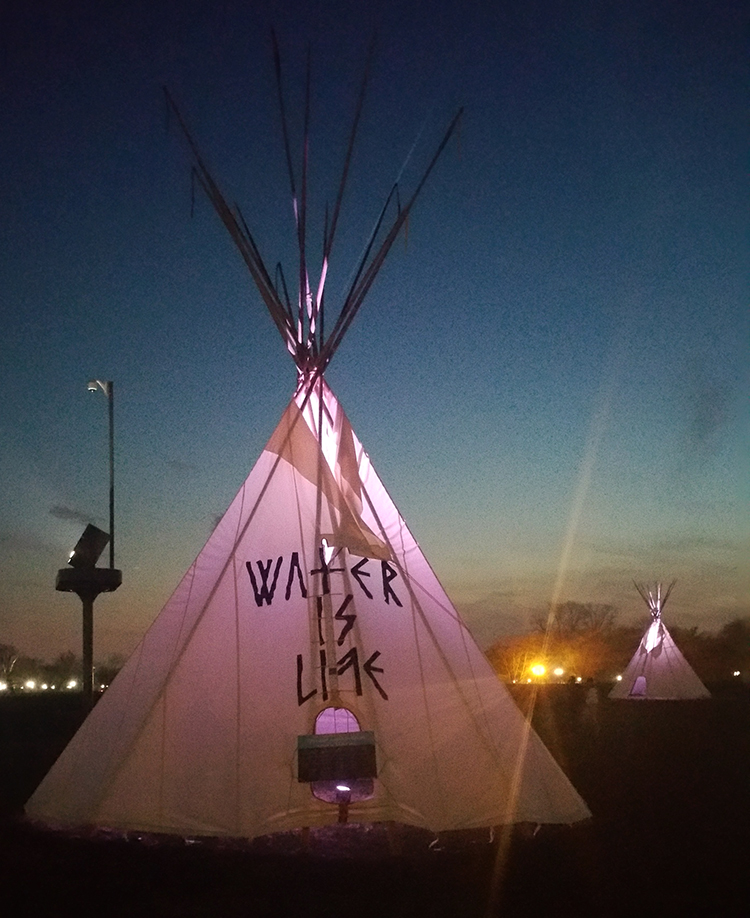
“Water is Life” teepee at 2017 Women’s March in Washington, D.C., photo by Wilberta Red Tomahawk

Last year, the Sierra Club Foundation joined with other foundations to provide catalytic capital to the Tribe to fund these predevelopment activities. These initial impact investments will convert to an equity holding in a limited liability company comprised of SCF and other impact investors. The LLC will provide capital to the Tribe’s public power utility, as it secures a developer and a power purchaser. In return the LLC would receive financial returns from the wind farm over time. The LLC would then re-invest a significant portion of those returns back into SRST for community development projects, including other clean energy projects.

Addressing the climate crisis can provide opportunities to fundamentally transform a long and brutal history of colonization of Indigenous Peoples into a future of self-determined, economic growth and clean energy leadership from Tribes and Indigenous communities around the world.

If you are interested in learning more, please contact Dan Chu at dan.chu@sierraclubfoundation.org


Article by Dan Chu, Executive Director, Sierra Club Foundation. Dan joined the Sierra Club Foundation as Executive Director in November 2016. Previously, he served as the National Director of the Sierra Club’s Our Wild America campaign and the Vice President for regional programs at the National Wildlife Federation. Dan is a returned Peace Corps Panama volunteer and holds a Master of Science degree from the University of Colorado. Dan currently serves on the board of the Confluence Philanthropy, a community of foundations, donors, and investors committed to social and environmental impact.

Additional Articles, Energy & Climate, Impact Investing, Sustainable Business

Solving the SRI Puzzle

By Becky Albert-Breed, First Nations Community Financial

First Nations Community Financial logoMy journey understanding Sustainable Responsible Impact Investing (SRI) and how to implement it within Indian Country has been a captivating and everchanging learning experience. This journey led me to meet many inspiring people along the way that have dedicated their lives to the SRI beliefs. Their commitment and enthusiasm have captured my attention from the beginning and kept me moving forward to help solve this puzzle for my tribe. I am a proud enrolled member of Ho-Chunk Nation (HCN), People of the Big Voice, in Wisconsin, with over 7,000 tribal members nationwide.
My introduction to SRI was puzzling indeed and normally I like to consider that I catch onto concepts and theories rather rapidly but for the SRI concept eluded me initially. At this time, in 2005, SRI stood for Socially Responsible Investing and even the title puzzled me. As I began to research this concept my understanding grew but honestly more in a book sense. Initially my thoughts resulted in doubts that only translated in my mind to “loss of income” to those participating. Because I love challenges, I felt that I really needed to gain a better understanding for myself. My recollection was of a prior conference where I heard about a tribal member, Susan White (Oneida Nation Trust Officer) implementing an SRI policy. I reached out to Susan and from there the puzzle began to come together.

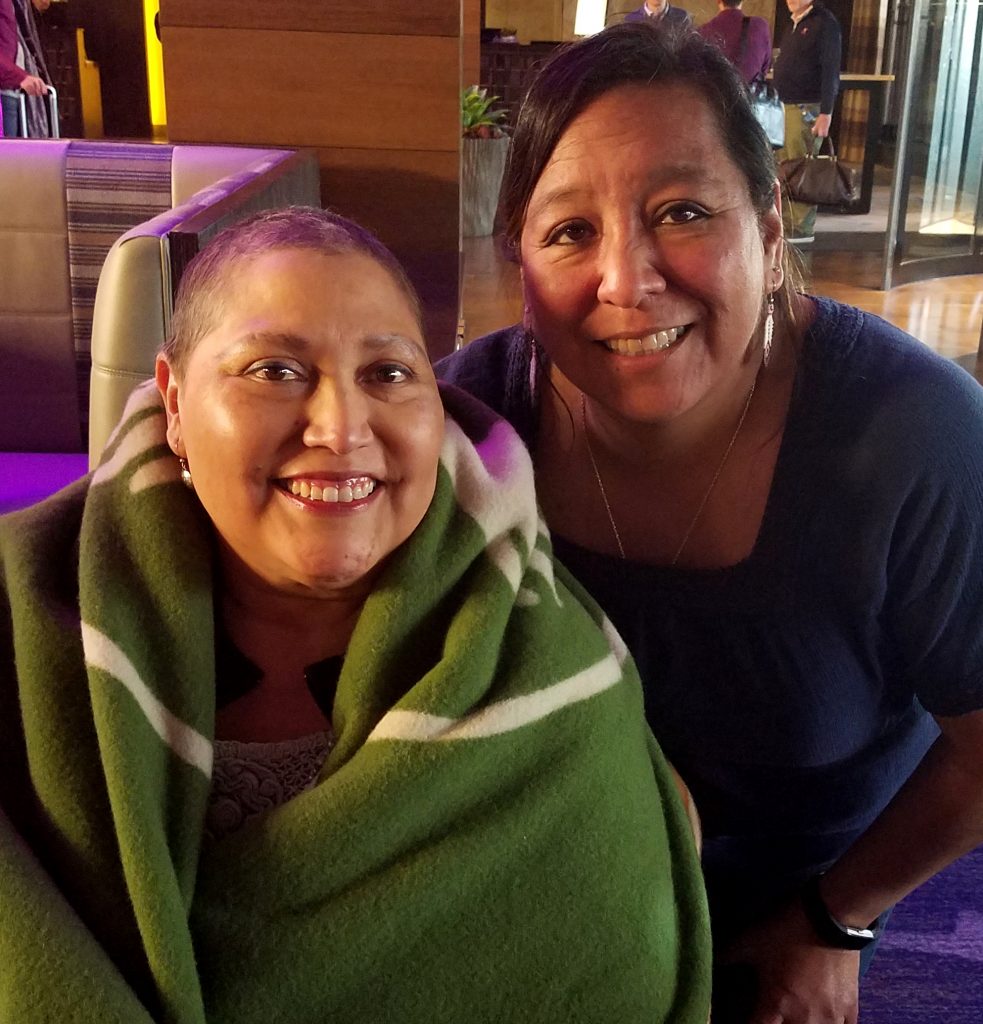
Susan White and Becky Albert-Breed
SRI leader Susan White of the Oneida Nation and Becky Albert-Breed at the 2018 Annual Travois Conference, where Susan gave her last presentation as she passed away later that year.

Similar to that of other tribes, we began the path of Native Gaming operations decades ago that resulted in gaming per capita payments for our enrolled members. The minors’ (underage tribal members) cut of the pie is placed in trusts and invested until they turn 18, at which time the assets are distributed. Without investing expertise at that time, our tribe relied upon outside professionals to make those investments on our behalf. The importance of how we can use our investments to support Indian County and our own beliefs as a tribe began to grow through our awareness of SRI.

Ho-Chunk Nation’s original investment policy statement from the 1990’s for the minors’ trust fund initially included a statement that divested alcohol companies from the portfolio and had not been updated since that time. As I worked as Treasurer for the Ho-Chunk Nation, my awareness of the need to focus fiduciary oversight over the tribe’s portfolios grew. My work continued as I assumed the new, first ever financial position created within the Ho-Chunk Legislative branch – Financial Examiner. A Children’s Trust Fund task force was created to strengthen the much-needed oversight that included SRI discussions. Visits from our (Ho-Chunk/HCN) Legislature with Oneida Trust Committee from Oneida Nation of Wisconsin resulted in participation in an SRI conference attended by many HCN Legislators which moved efforts forward. Through dedicated efforts and focus of our elected officials, we discovered the need to pursue alternative vendors that were cognizant, open to our voice and the SRI elements. In 2012, an overhaul of our Investment Policy Statement (IPS) for our minors’ trust included SRI language and we actively engaged our seven member Trust & Investment Committee in the process of adopting SRI guidelines within our minors’ trust IPS.

The once separate puzzle pieces began to come together as I began to work closer with the Investors & Indigenous Working Group (IIPWG). This group was the glue needed to bring the puzzle pieces together. The passion, the heart, the purpose became clear for pursuing SRI and the value became apparent. Once I had this understanding from listening to my predecessors, it motivated me to share with others. The presentations, IIPWG monthly phone calls, attendance at both the USSIF Conference and The SRI Conference produced more of the pieces that clarified why this is so important to Indian Country.

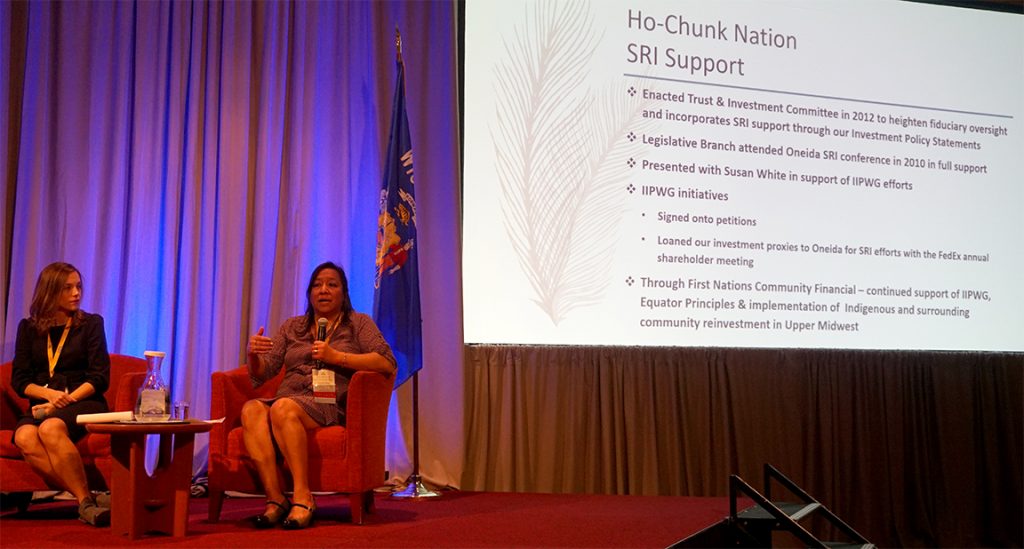
Kate Finn and Becky Albert-Breed
An SRI presentation with Kate Finn of First Peoples Worldwide and Becky Albert-Breed at the 2020 WI Governor’s Conference on Economic Development.

Our legislators passed a motion to support the IIPWG efforts by protesting the offensive Washington Redskins NFL team name. Their efforts included a demonstration at Minneapolis stadium when the Vikings were playing the Washington team. Following that, HCN provided our Fed Ex proxy votes to file a resolution on the floor of the Fed Ex annual meeting. Lending proxy votes to have a voice became part of our new practice with the SRI component of our investment portfolios. This type of shareholder activism tool was new to the tribe and has been an educational process. We have also joined in efforts using our proxies to oppose some mining company practices. Most recently HCN supported the Dakota Access Pipeline protests and we continue to use our united voice through the IIPWG in support of a nationwide voice to have our culture, values and way of life preserved into the future.

Our current puzzle pieces have found their place by integrating SRI language into all of our investment portfolios and contractual agreements so that we can build on the work we have started. Our Trust & Investment Committee work is supportive of the strengthening of the Equator Principles framework, lending proxy votes for activism, and building core SRI policy that actively uses our investments as a voice for Indigenous rights.

As my heart began to lead me on this path, I have moved away from Gaming Financial Management as a career to Native community work through a non-profit Native CDFI, Community Development Financial Institution. Once exposed to all the great work in the SRI environment, my dedication moved to directly working in the communities to make a difference. Impact Investing can make dreams happen for tribal communities and I want to be a conduit for that to happen. The vision is to connect these worlds together and use our investments not only for building financial wealth but creating a long-term sustainable people/societal wealth that includes indigenous people.

I am extremely indebted to our predecessors and all those working to build a stronger, bigger voice for Indigenous rights throughout our country and others. Our puzzle is not complete but has enough pieces to create a beautiful core framework that will continue to march forward in hopes of setting an example for other tribes to join. The glue is the heart, the passion, the commitment to value our mother earth and all the core values of our tribal communities past, present and the future.


Article by Becky Albert-Breed, Executive Director, First Nations Community Financial. Becky is an enrolled tribal member of the Ho-Chunk Nation. She holds a bachelor degree in accounting from University of Wisconsin-Milwaukee and an MBA from Cardinal Stritch University. Prior work experience includes both internal and external auditing for City of Milwaukee, large corporate bank, tribal government and gaming. Ho-Chunk Nation financial positions include Treasurer, Business Finance Director over Casinos and C-Stores, and Legislative Financial Examiner. She was instrumental in advocating for positive change within the Children’s Trust Funds for her tribe. This effort lead to establishment of the Trust & Investment Committee to preserve and protect investments of her tribe with portfolios holding over half a billion dollars and has served on the committee since inception in 2011.

Becky has served as Chairperson at First Nations Community Financial (FNCF), a Native Community Development Financial Institution (CDFI) since its inception in 2010. She is excited to recently transition to the Executive Director role at FNCF.

Featured Articles, Impact Investing, Sustainable Business

Driving Capital from a Foundation of Indigenous Values

By The Staff, First Peoples Worldwide

FirstPeoplesWorldwide-LogoInvestors in the SRI community have been considering promising practices for driving capital into Indigenous communities through a responsible lens for over three decades. In this time, SRI investors, tribes, and Indigenous Peoples globally have forged considerable connectivity. Some of the most prominent examples are the collaborative efforts vis a vis corporate engagement to push investors to eliminate racist images and to halt cultural appropriation, and to cultivate corporate and investor support for the rights of Indigenous Peoples.

A remarkable number of tools have been created to assist SRI and impact investors to act upon their ethos to drive positive social, environmental, and financial returns. These tools range from positive and negative screens, ratings metrics, and environmental, social, and governance (ESG) indices, to industry associations that pool ideas and experiences. Many of these tools are helpful, alongside traditional investment information, for investors to deliver capital into Indigenous initiatives.

At First Peoples Worldwide (First Peoples), we continue to hone these tools–and to create new tools–that focus directly on the risks of development on Indigenous territories and the potential rewards of meaningful partnership with Indigenous Peoples.

One of the consistent challenges, especially in relation to investing in Indigenous communities, is measuring the “S” in ESG for the dual purposes of understanding the full extent of social impacts as to development, but also to advocate for an inclusive process that elevates Indigenous perspective and values as to social and cultural impacts.

Qualitatively, the definition of social risks has broadened over time. The 2014 Report Costs of Company-Community Conflict in the Extractive Sector, links social costs to the negative social impacts of a project that develop into social conflict in opposition to an extractive industry project. The social conflict then escalates and companies must exert resources to manage the conflict. Managing social risks in this context includes assessing changes that may occur as a result of the project to local demographics, social infrastructure, the local economy, and environmental changes such as pollution or access to resources. The report also considers managing the process of change through consultation, communication, participation and consent of the local community. In recent years, the qualitative discussion around social impacts has grown to encompass a fuller consideration of human rights. Several tools have been distilled from international standards such as the Universal Declaration on Human Rights and, in this case, the United Nations Declaration on the Rights of Indigenous Peoples (Declaration).

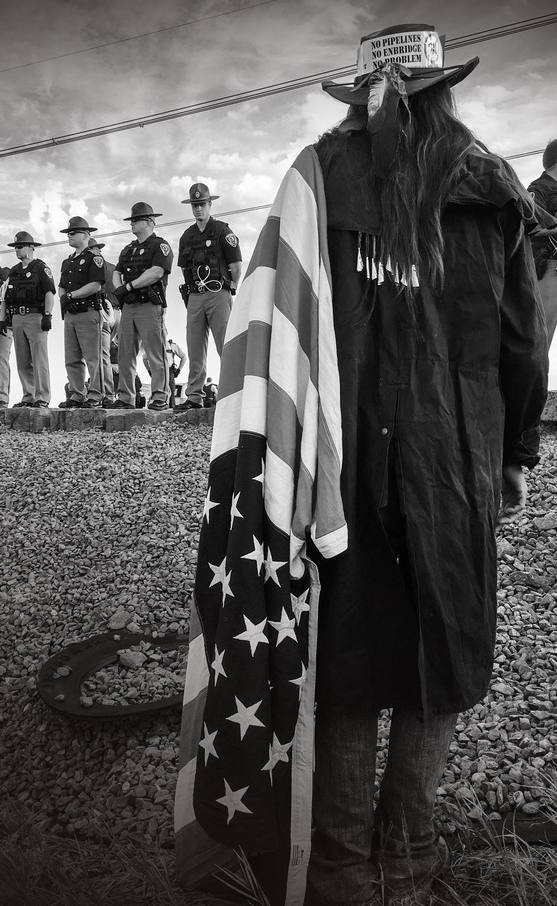
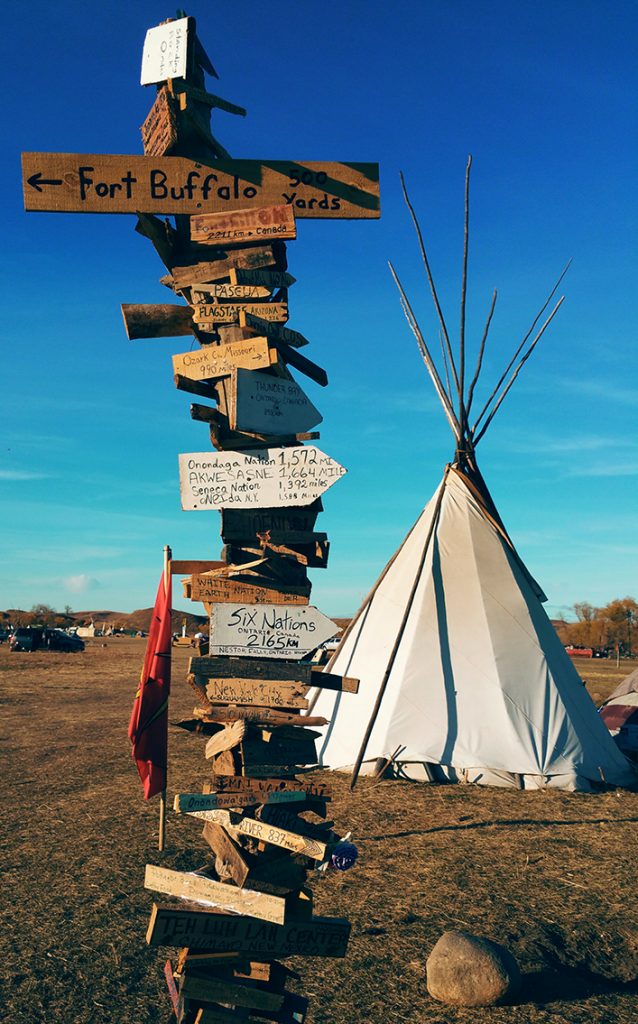
Standing Rock flag protestor-Allie Fredericks
Photos from Standing Rock by Allie Fredericks

Of course, consideration of the participatory rights of Indigenous Peoples in any development involving their lands, territories, and resources has always been, and must continue to be, inextricably tied to the Declaration. Adopted by the United Nations in 2007, the Declaration represents the global consensus on the rights of Indigenous Peoples. Though it has been invoked in countless fora to enumerate Indigenous rights to free, prior and informed consent (FPIC), the Standing Rock Sioux Tribe’s opposition to the Dakota Access Pipeline surfaced for the world the considerable conflict that can occur when the human rights of Indigenous Peoples are not respected.

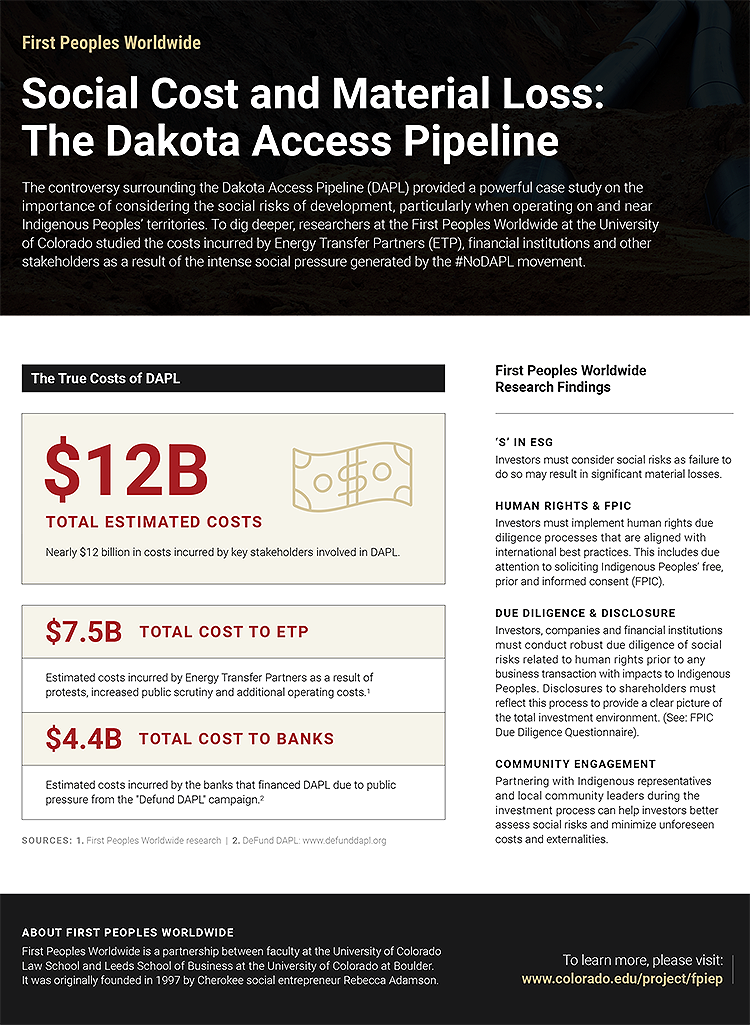
An aspect of the Dakota Access Pipeline (DAPL) controversy that made it different from the similar conflicts in Indigenous communities around the world, was that it took place largely in the public eye and within public governmental processes. First Peoples took this opportunity to gather the available data and publish a case study that developed and tested metrics to quantitatively measure the financial losses associated with social conflict. In short, the case study, Social Cost and Material Loss: The Dakota Access Pipeline, is one of the first academic studies to undertake measurement of the “S” in ESG.


True Costs of DAPL infographic


First Peoples found that Energy Transfer Partners’ (ETP), DAPL’s parent company, stock price significantly underperformed relative to market expectations during the study period, and it experienced a long-term decline that persisted after the project was completed. In fact, from August 2016 to September 2018, ETP’s stock declined in value by almost 20 percent whereas the S&P 500 increased in value by nearly 35 percent, a differential of 55 percent. The case study did not assert that this underperformance was exclusively attributable to social pressure however, given the magnitude of media attention generated by the controversy as well as the magnitude of financial losses, social pressure was a likely contributor.

ETP initially estimated the cost of the pipeline at $3.8 billion, however First Peoples estimated that the final cost of the pipeline was upwards of $12 billion. This total includes the $7.5 billion incurred by ETP, and the $4.4 billion in costs incurred by the banks that financed DAPL. Further, at least $38 million was incurred by taxpayers and other local stakeholders. Thus, the findings of the case study show that social costs lead to real material losses.

The financial losses strongly correlated with the social conflict are largely consequences of failing to account for the social risks of development, including a failure to respect human rights. The failure stemmed, in part, from a lack of adequate due diligence at the outset of the project. While the bare minimum standards of due diligence within the domestic legal and regulatory regime were completed, the scope of the process was far too narrow to assess the true nature of the opposition as to the social, environmental, and cultural impacts of the pipeline on and near the Standing Rock Sioux Tribe’s territories.

Because we found that the lack of due diligence had a direct correlation to the material losses experienced by investors and others, First Peoples published an FPIC Due Diligence Questionnaire for outside entities seeking a better assessment that integrates respect for the rights of Indigenous Peoples. The questionnaire provides a series of questions that lead the reader through a rights-based set of considerations specific to working with Indigenous leaders and in Indigenous territories. The purpose of the questionnaire is to expand a routine social risk assessment in a way that provides a comprehensive picture of the potential and actual social impacts attendant to the particular project.

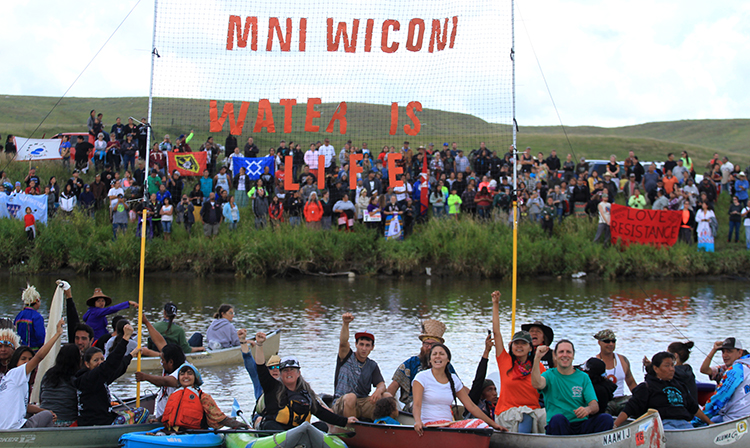
Water is Life-Standing Rock-by Allie Fredericks
“Water is Life” – Mni Wiconi – canoe flotilla at Standing Rock, photo by Allie Fredericks


Article by the staff at First Peoples Worldwide. First Peoples Worldwide addresses the unique social and environmental impacts of development in indigenous communities, while preparing current and future leaders to meet the pressing social responsibility challenges facing today’s businesses. First Peoples Worldwide is a partnership between Faculty at the University of Colorado Law School and the Center for Ethics and Social Responsibility at Leeds School of Business and is housed within the Center for Native American and Indigenous Studies.

Energy & Climate, Featured Articles, Impact Investing, Sustainable Business

Reconciliation and the Role of the Indigenous Economy

By Mark Sevestre, NATOA, and Katie Wheatley, SHARE/RRII

In recent years, Canada has embarked upon a journey to reconciliation. At the core of this societal movement is the need to reconcile Indigenous and non-Indigenous peoples, nations, and ways of being and knowing. Reconciliation in Canada stems from growing recognition of the historical plight of Indigenous peoples through colonization, residential schooling, and other actions pursued to forcibly assimilate First Nations, Métis, and Inuit peoples, as well as acknowledgment of the continued barriers to Indigenous peoples’ wellbeing and success.

Canada’s Truth and Reconciliation Commission (TRC) (2008-2015) documented the many impacts of Indian Residential Schools, a state-sponsored assimilation strategy spanning the 19th and 20th centuries, and provided a framework for redress and reconciliation by publishing 94 Calls to Action. Of particular relevance to our work is Call to Action 92, which calls on corporate Canada to adopt the United Nations Declaration on the Rights of Indigenous Peoples (UNDRIP) as a framework for reconciliation, and instill it within corporate policies and processes. This includes engaging in meaningful consultation and obtaining Free, Prior, and Informed Consent (FPIC) prior to launching economic development projects; ensuring equitable access to jobs, training, and education opportunities in the corporate sector; educating and training management and staff on the history of Indigenous peoples; and more.

Many sectors, organizations, and individuals in Canadian society have taken great strides to redress wrongdoings against Indigenous peoples, and respect Indigenous rights and title. Indigenous peoples have, in their own right, pursued self-governance and self-determination through renewing Indigenous legal orders and governance structures, and reclaiming threatened languages and cultures. Yet historic exclusion from economic activities has slowed the emergence of a full, vibrant Indigenous economy.

Reconciliation and Responsible Investment InitiativeWithin the investment world, reconciliation in Canada is largely in its infancy. As a result, in 2015, we founded the Reconciliation and Responsible Investment Initiative, which aims to align capital with Indigenous values. The Initiative has emerged through a partnership between the National Aboriginal Trust Officers Association (NATOA) and the Shareholder Association for Research and Education (SHARE). NATOA and SHARE have taken a multifaceted approach to reconciliation and responsible investment, working alongside Indigenous and non-Indigenous investors alike.
First, we aim to build investor leadership among Indigenous trusts as asset owners, supporting trusts’ efforts to align investment with community values, development aspirations, and economic reconciliation at large. In Canada, Indigenous communities increasingly control pools of investment capital developed either through own-source revenues, specific or comprehensive claims, or other financial settlements. Collectively, Indigenous trusts in Canada are valued at billions of dollars. Trusts established by First Nations, Métis, and Inuit communities are in a newfound position to increase Indigenous economic opportunities and exert influence as shareholders, all while fulfilling their fiduciary obligations and meeting financial goals. Trustees can thus mobilize a much larger pool of mainstream investment capital to support the growth of the Indigenous economy. To this end, our Initiative is facilitating dialogues and workshops with Indigenous trusts across Canada who wish to harness positive impact through responsible investment leadership.

NATOA President Mark Sevestre also serves as General Manager for the Community Trust of the Mississaugas of the Credit First Nation (MCFN). In the last year, the MCFN Community Trust began re-evaluating their investment policy. MCFN is looking to ensure their values and priorities are represented not just in the disbursements they make in their community – such as in funding educational, health, and language programming – but in their investment portfolio as well. Active ownership of these financial resources leverages trusts’ capacity to foster growth in line with Indigenous rights, values, and economic aspirations, delivering benefits well beyond those generated by trust incomes.

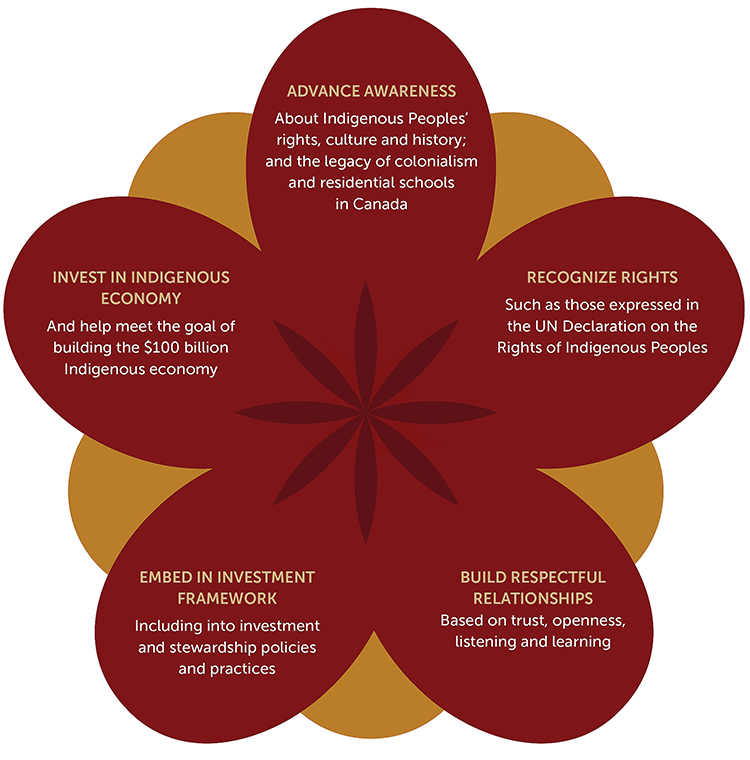
Second, we are working with institutional investors across Canada to promote responsible investment policies and practices in alignment with reconciliation. Our Guide for Investors sets out a number of key steps (Figure 1):

Key Steps for Investors Towards Reconciliation
Figure 1: Key Steps for Investors Towards Reconciliation

• Advance awareness;

• Recognize rights;

• Build respectful relationships;

• Integrate reconciliation into investment frameworks; and

• Invest in reconciliation and the Indigenous economy. For instance, private and public equity companies can make measurable commitments, like setting procurement targets, to foster growth in the Indigenous economy.

Beyond providing guidance to investors to instill reconciliation within their own policies and practices, we are also amplifying investor voices in support of Indigenous rights, and engaging with Canadian companies to seek demonstrable improvements in their policies and practices. SHARE works with a network of over 100 investment organizations–including foundations, religious investors, universities, pension funds, Indigenous trusts, and asset managers–with more than $22.5 billion in assets to improve corporate sustainability practices. Investors collaborate to see corporations prioritize diversity criteria in board representation, establish scholarships and apprenticeship programs for Indigenous youth, set Indigenous procurement and employment targets for Indigenous peoples and businesses, and more. In mobilizing investor leadership, we are building towards a more sustainable and inclusive economy.

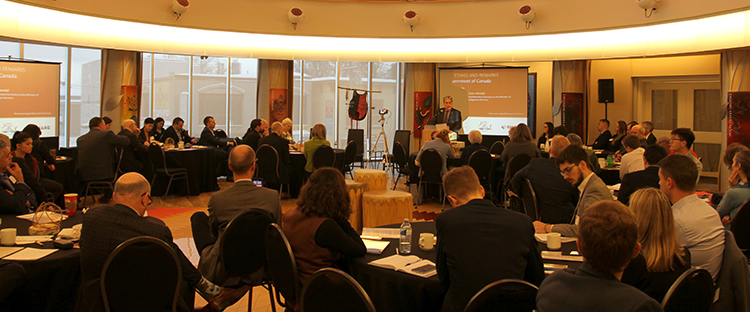
Forum on Investing in Reconciliation and Indigenous Economy-Feb.2019
Forum on Investing in Reconciliation and the Indigenous Economy. Ottawa, ON, February 2019

It is our goal and belief that in activating both Indigenous and non-Indigenous investors to engage with corporations under the auspices of reconciliation, the corporate community will see the economic benefits of this process. Where Indigenous communities were overlooked or ignored by governments and corporations, negative outcomes have resulted for one or both parties. When both Indigenous and corporate parties are fully engaged, resulting outcomes include successful projects, advances to the Indigenous economy, and broad economic growth.

Ultimately, the Reconciliation and Responsible Investment Initiative is part of an emerging movement to align investment with reconciliation and Indigenous rights and values. Long-term investment returns depend on resilient communities and sustainable economies; as such, it is in the best interest of Indigenous and non-Indigenous investors alike to harness our collective power and better our shared future.

Please visit us to learn more or join us.


Article by Mark Sevestre, NATOA and Katie Wheatley, SHARE/RRII

NATOA logo

Mark Sevestre – President, National Aboriginal Trust Officers Association. Mark is a Turtle Clan Mohawk from the Six Nations of the Grand River First Nation in Southern Ontario. Currently serving as the President, Mark is one of three founding members of NATOA in 2006. Mark also currently holds the position of General Manager of the Mississaugas of the Credit First Nation Community Trust, a $23 Million Indigenous Trust fund. Mark graduated with a Bachelor of Commerce Degree from Mount Allison University in 1991 and spent his early working career with the Federal Government’s Department of Indian and Northern Affairs, Industry Canada. Mark opened a Bank of Montreal Branch within a First Nation Community in Southern Ontario in the position of Branch Manager. Mark lives in Six Nations of the Grand River First Nation with his wife and two sons.

SHARE logoKatie Wheatley – Originally from Montreal, Katie is the Project Lead of the Reconciliation and Responsible Investment Initiative. The Initiative, a partnership between SHARE and the National Aboriginal Trust Officers’ Association (NATOA), aims to promote responsible investment policies and practices that include reconciliation goals. Prior to joining SHARE in Vancouver, Katie worked for First Nations in Western Canada to protect their Indigenous rights and title and enhance environmental conservation through intergovernmental affairs. Previously, Katie advanced social development and reconciliation from within non-profit organizations, a private family foundation, and a municipal government in Eastern Canada. Katie holds a Bachelor of Arts in Joint Honours International Development and Anthropology, as well as a Master of Arts in Environmental Anthropology.

Additional Articles, Energy & Climate, Impact Investing, Sustainable Business

At the Forefront of Economic Development in Indian Country

By Chris James, American Indian Enterprise Development

National Center for American Indian Enterprise Development_logoFor over 50 years, the National Center for American Indian Enterprise Development (NCAIED) has played a leading role in economic development for tribes, tribal owned businesses, Native American and Alaska Native entrepreneurs, and anyone seeking to do business or invest in Indian Country. Through our training and technical assistance programs, expert staff, and knowledge of the business landscape across the over 500 federally recognized tribes and other Native American or Alaska Native entities in the United States, there is no doubt that we mean business for Indian Country.
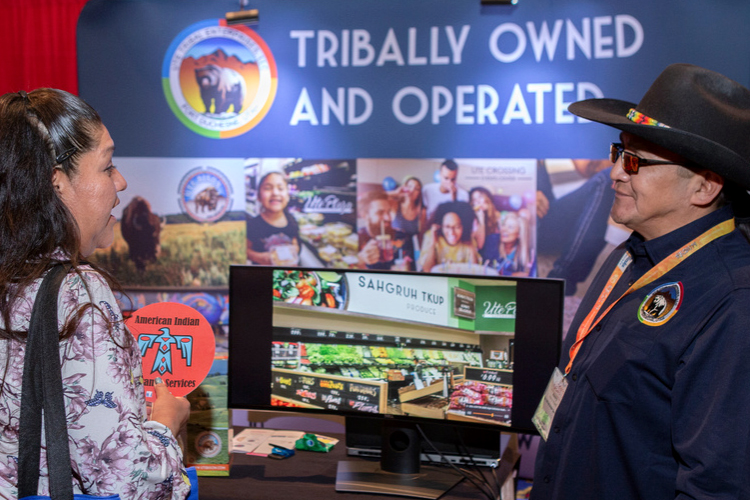

Our most notable event is the Reservation Economic Summit (RES), which takes place every March in Las Vegas. For four days, thousands of entrepreneurs, corporate and government officials, tribal leaders, and many others gather to learn about the Native American economy and its challenges – and many investment and partnership opportunities. For over three decades, countless partnerships and business relationships have emerged from the connections made and lessons learned at RES.

NCAIED Reservation Economic Summit 2019
2019 NCAIED Reservation Economic Summit Tradeshow

Of course, the National Center is more than RES. Our American Indian Procurement and Technical Assistance Centers (AIPTACs) located around the country provide expert training and services to companies that want to contract with both the government and private sectors. With offices in Arizona, New Mexico, Colorado, Georgia, and Virginia, to date our AIPTAC has assisted thousands of businesses to secure over $4 billion in contracts, creating tens of thousands of jobs and economic development opportunities for tribes and their members.

The National Center focuses on advocacy at the federal level, joining with fellow Indian Country organizations such as the National Congress of American Indians, National Indian Gaming Association, Native American Contractors Association, and the Native American Finance Officers Association to push a robust agenda in Washington. It is important for our community to speak with a united front in DC, especially since we’ve fought for so long and so hard to get where we are today. We now have four Native American members of Congress, including the first two females to be elected at the federal level. The National Center is proud to help share the need for robust economic development legislation targeting the needs of our Native entrepreneurs.

We are also grooming the next generation of Native leaders and entrepreneurs through our annual business scholarship program and Native American 40 under 40 awards. Over the past 10 years, we have recognized over 400 impressive individuals through this program, who have gone on to do amazing things in diverse fields. One–Sharice Davids–is one of those Members of Congress, representing Kansas’s 3rd Congressional District. One of our organization’s new initiatives is creating a forum for 40 under 40 winners to continue to stay in contact and ultimately work with each other, enabling an even stronger community.

When it comes to investing in or doing business with Indian Country, partnership, collaboration, and community are encouraged. I see this every year at RES. While many of the companies that participate in RES are ostensibly competitors, there is never a hesitation to share wisdom and advice with fellow Native business leaders. Though it may be a cliché, we realize that a rising tide lifts all boats. This mantra is certainly true for Native and tribally owned businesses.

Native businesses often operate with a different sense of purpose than their non-Native competitors. The “7th Generation” principle is very strong in the Native American economy. It’s the idea that every decision made today should benefit both the people and the lands on which they live seven generations into the future. Native businesses operate and invest with a deep understanding of the long term, as well as the investment’s impact on the environment and the well-being of members of the tribe.

However, far from a burden, these principles often create opportunity. For example, Bristol Bay Native Corporation (BBNC) in Alaska touts its “Fish First” priority – a recognition of the centrality of salmon to the Alaska Native way of life. But responsible commercial fishing is also a part of BBNC’s diversified portfolio. In 2019, BBNC acquired two of the leading freezer longline cod fishing companies, putting the company in a position to bring Bering Sea earnings home to Alaska, benefiting its 10,000 shareholders as well as the local economy.

A commitment to environmental sustainability and community connects many Native-owned businesses. Over the last two years, we have profiled Native businesses so we can share their stories with a broader audience. Without prompting, many of these companies tout their sustainability and commitment to giving back to their communities.

For example, the Oneida Nation of Wisconsin’s ESC Group’s mission is “to preserve, restore, and enhance the natural and constructed environment for future generations through successful project delivery for our customers.” Denver-based Iron Woman Construction and Environmental Services’ motto is “Building Today for a Sustainable Tomorrow.”

Investing in the tribe and the mentor-mentee relationship are common themes among the businesses with which we work. Managing Partner of Green Bay, WI-based Mavid Construction Zoar Fulwilder notes, “I take pride that I can help provide a place where Natives can learn, get medical care, and live.” The Navajo Nation’s Dine Development Corporation has a robust mentor/protégé program designed to train, prepare, and ultimately promote tribal members into leadership positions within the tribe’s economic development entities.

The spirit of collaboration is encapsulated in Deidra Mitchell, CEO of Waséyabek Development Company, LLC, (WDC), a wholly-owned entity of the Nottawaseppi Huron Band of the Potawatomi that’s based in downtown Grand Rapids, Michigan: “Although my time is fully dedicated to building the WDC portfolio of businesses these days, I still try to find time to help new companies.”

Though Native-owned businesses are diverse and operate in virtually any field imaginable, there is much more that unites than separates them: a sense of purpose, giving back, environmental sustainability, and a view for the future. These are all common traits for the companies with which I work, and one of the reasons it’s an honor to lead an organization dedicated to their long-term success.


Article by Chris James, President and CEO of the National Center for American Indian Enterprise Development. Prior to joining the National Center in 2017, Chris was Associate Administrator at the U.S. Small Business Administration. Chris was closely involved in White House and interagency coordination with the SBA and had a hand in implementing all SBA programs and services nationwide, including those focused on the Native American community. His first job in the Obama Administration was at the Department of Treasury, where he served as an Associate Program Manager focused on Native American Community Development Financial Institutions. His entry in tribal economic development was as Associate Director and Senior Loan Officer for the Sequoyah Fund, a Native American CDFI and an enterprise of the Eastern Band of Cherokee Indians. Chris has a Master of Entrepreneurship from Western Carolina University and a Bachelor of Arts in Communication Studies from UNC-Wilmington.

Energy & Climate, Featured Articles, Food & Farming, Impact Investing, Sustainable Business

Partnering with Indigenous Peoples to Ensure a Just Transition

By Carla Fredericks, First Peoples Worldwide at CU

March 1st Edition Overview


FirstPeoplesWorldwide-LogoAs I read through the articles for this March 1st Edition by so many esteemed contributors, I am struck by the progress that we have made together in this field. Our work has led us all to consider individually–and now collectively–the frameworks and practices necessary to implement a just transition with and for Indigenous Peoples.
Just transition, in its widest definition, encompasses all the complex interactions between individual and communities, between local and trans-global economies, and between consumptive approaches to natural resources and long-term sustainability. I venture a guess that we are all wading into this complexity because we see that the current paradigm that is resulting in climate chaos and community instability is no longer tolerable.

It is deplorable, but no accident, that Indigenous Peoples were over-represented in the number of human rights defenders murdered in the last few years. It is also not surprising that Indigenous Peoples care for 50 percent of the earth’s land surface but have legal title to only 10 percent. By marginalizing Indigenous Peoples, global leadership has fueled destruction of the planet and its people.

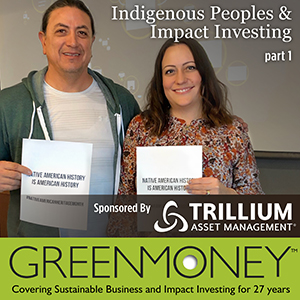
Indigenous Peoples and Impact Investing Podcast-part.1-GreenMoney
Click to listen to this issue’s special podcast – Carla Fredericks of First Peoples Worldwide speaks with Dave Archambault II, former Chairman of the Standing Rock Sioux Tribe, about indigenous entrepreneurship and economic development. Episode sponsored by Trillium Asset Management.

On a personal note, I am humbled to be a part of this movement of Indigenous Peoples and impact investors from my position as Director of First Peoples Worldwide. I watched for a decade as First Peoples Worldwide (FPW) led in creating innovative approaches to indigenizing corporate values. So, I was especially honored when Rebecca Adamson, founder of First Peoples, called to ask if I would continue the organization’s trailblazing work upon her retirement.

First Peoples, from its inception, has pushed the cutting edge of thought-leadership and applied research that integrates indigenous worldviews into mainstream investing practices. In part, Rebecca’s innovation came from her shrewd observation that mainstream investing principles were too narrow to encompass indigenous values. So, not one to eschew hard work, she redefined those principles. She redefined capital as inclusive of natural resources and community, and she empowered individuals as shareholders within their own community ecosystems. Then, Rebecca brought those definitions to boardrooms as fundamental design principles upon which investors could deploy meaningful impact investment consonant with the expertise and rights of Indigenous Peoples.

First Peoples Worldwide has continued initiatives to conduct Shareholder Advocacy Leadership Training workshops to tribes and Native collectives; to generate innovative, applied research on the “S” in ESG; and to articulate and address the impacts of infrastructure development unique to indigenous communities. With the transition of FPW to the University of Colorado, we were also able to create the Rebecca Adamson Indigenous Rights & Business Scholarship to support indigenous scholars in their graduate careers.

In the vein of ever moving the needle forward for Indigenous Peoples, we at First Peoples Worldwide announced in August 2019 that we are designing a model for a private equity fund. The ideas behind the fund are further explored in Issue 2, but I note here that the concept for the First Peoples Private Equity Fund came from our experience watching deals made between Indigenous Peoples and outside entities where too few of the benefits inured to the Indigenous Peoples whose resources formed the core of the investment.

Our goal is to create a new pathway for investments that is Indigenous-driven from beginning to end. In short, we seek to harness the strengths of private equity to amplify Indigenous self-determination, produce financial success, and forward renewable energy.

Maybe she wouldn’t have put it this way at the time, but now, in this era, I believe Rebecca laid the foundation for critical aspects of our current discussion of just transition. The ideas behind just transition of creating inclusive economies that simultaneously value social, economic and cultural wellbeing, and of creating viable vehicles for investment in indigenous communities are a central part of these discussions.

In the first of two issues, publishing in March 2020, we focus on ways that tribal communities are leading as entrepreneurs in sustainable development. In the second issue, we pivot to how investors can partner with Indigenous Peoples to achieve a more sustainable future. I hope that these issues serve as a catalyst to spur discussion and cross-pollination of ideas as we elevate the rights of Indigenous Peoples into new definitions of economic wellness and return on investment.


Article by Carla Fredericks, Director of the American Indian Law Clinic at the University of Colorado Law School and Director of the First Peoples Worldwide. She is a graduate of the University of Colorado and Columbia Law School.

Ms. Fredericks’s areas of research expertise include indigenous peoples law, federal Indian law, human rights, development, finance, and business and human rights.

Ms. Fredericks has significant practice experience in securities litigation and was previously a partner at Milberg LLP in New York, where she also founded Milberg’s Native American practice and directed the firm’s civil/human rights litigation. She maintains an active pro bono practice focused on complex and appellate litigation and Native American affairs, representing Indian tribes and organizations in a variety of litigation and policy matters. She is chair of the Board of Trustees for the Mashantucket Pequot (Western) Endowment Trust. Finally, she is a proud, enrolled citizen of the Mandan Hidatsa, and Arikara Nation of North Dakota.

Energy & Climate, Featured Articles, Food & Farming, Impact Investing, Sustainable Business

Oneida Nation: Rebuilding and Refining our SRI Practices

By Keith Doxtator, Oneida Nation

Oneida Nation Keith Doxtater - GreenMoney JournalThe Oneida Nation, located in northeast Wisconsin, was one of the first Native Nations to formally adopt Sustainable, Responsible and Impact investing policies for our trust assets. This resulted in nearly 30 years of engaging with companies as shareholders to bring forth issues impacting Native Country and the environment. While our involvement may not directly be responsible for changes to the ways companies do business or how new policies and agreements are formed, I’d like to think our involvement brought light to issues shareholders may not have seen before and acted as the catalyst for positive change.

This effort was led by one of the legends of Indigenous Impact investing, Susan White, who passed away far too early in 2018. As she would humbly request, this article is not about her selfless work to improve the lives of Oneidas and Native populations across the country and world; but instead the spotlight will be the process.

We hope hearing Oneida’s story of rebuilding and refining our SRI practices will inspire Advisors and key business decision makers to follow along. By intentionally crafting and revising our investing policies, we can further shape positive change for environmental, social and legislative issues.

The void of Susan’s departure created a unique opportunity to re-engage community leaders and garner support for our SRI objectives. The direction of our Trust assets is controlled by a nine-person, elected Committee. Our first SRI conversation started at that level and simply defined the primary issues and topics in which we wanted to make a difference. Our Committee is deeply appreciative of Susan’s work, and this conversation pushed several members into more of a leadership role around our SRI policy. The Committee took the reins and ran with it, adopting a strategic SRI resolution highlighting indigenous communities, environmental impacts, workplace safety, workplace diversity and community development.

Next, our Committee discussed the levels of engagement, participation and time available to work in these issues. To those starting off or without significant time available, partnering with an SRI money manager offers a great benefit. The right manager can perform screens based off issues that pertain most to your clients or business. They can bring current issues to your attention, provide opportunity to join current shareholder resolutions and keep you informed of current governance changes to these processes. One of Oneida’s first steps was to reengage with our current managers to better understand their SRI process and how we can best utilize their work. We are fortunate to be able to dedicate some staff time to SRI issues, and we have carved out a monthly agenda item with our Committee to highlight our progress and next steps. Fortune aside, we’re maximizing the time we have by leveraging our SRI managers and resources to not create extra work for either party.

The next step may be to network and become involved with other like-minded investors. This is where Oneida’s SRI engagement evolved from avoidance to activism. Whether it’s a general SRI group or one specific to niche issues or specific geographic areas, this is the entry point to learn about the specific issues and what is being done at the shareholder level to address them. There is tremendous value to witnessing the process as it evolves from an idealistic issue, into an actionable shareholder resolution, which can impact company or government policy. Oneida has prioritized re-familiarizing our staff and Committee with various networks and the current issues and projects they are currently working on.

In today’s technology driven world, all this networking can easily be accomplished in the comfort of your office by joining conference calls, email lists and working in online forums. However, if you have the time and resources available to attend a larger conference, the ability to meet peers and discuss issues is second to none. This is a welcoming community that understands the collective whole will always be greater than the sum of its parts. My first conference was an overwhelming response of friendly welcomes and people introducing themselves and sharing their connection to Oneida and/or Susan. Admittedly, I enjoy the privilege of displaying “Oneida Nation” on my name tag, but I’d be shocked to hear other newcomers not experiencing an equally warm welcome. As we recruit others to engage in ways meaningful to them, the momentum of positive change can only accelerate.

In Oneida, our process to replace a leader like Susan has been a community effort. Both the elected leaders and staff have taken ownership of the SRI initiatives. As responsible asset owners, we have intentionally and thoughtfully decided we’d like to make a difference with our assets. If you haven’t yet, we’re asking you to commit to the same. After that, it’s just the details of why and how to make a difference. As professionals entrusted with managing assets and businesses, we already perform the due diligence of matching investments to goals, objectives, time horizons, etc. It’s one more step forward to align our assets with the issues we care about as well.


Article by Keith Doxtator, the Oneida Nation Trust Enrollment Director. The role provides him a rewarding cross-section of cultural impact and financial planning. He received his B.S. from UW-Green Bay in Earth Sciences and M.S. from the American College in Financial Services. His love of numbers and solving puzzles directed his career path towards helping others plan their financial futures while owning a financial planning practice. Keith is a member of the Oneida Nation, and his current role provided an opportunity to widen the scope of people he can help. Keith lives in Appleton, WI with his wife and three children. When not cheering on the Badgers or Packers, he can be found hiking/biking the local trails or playing board games. He can be reached at kdoxtat1@gmail.com

Additional Articles, Energy & Climate, Food & Farming, Impact Investing, Sustainable Business

X