Tag: Impact Investing

US SIF Foundation Launches Sustainable Investing Course For Individual Investors

This free online course is designed for individual investors who want to learn the basics of sustainable investing and is meant to make it easier for individuals to align their investments to address their social and environmental priorities.


The US SIF Foundation recently launched “Sustainable Investing: An Introductory Course for Individual Investors,” a free online course designed for investors who want to learn the basics of sustainable investing.

Interest in sustainable and impact investing has grown significantly in the past decade. As of 2018, total US-domiciled assets under management (AUM) using sustainable investment strategies grew from $8.7 trillion at the start of 2016 to $12.0 trillion at the start of 2018, a 38 percent increase. This course is meant to make it easier for individual investors to align their portfolios to address their social and environmental priorities.

The genesis of the course was a 2019 roundtable on expanding retail investor participation in sustainable investing, organized by the US SIF Foundation with the support of The Rockefeller Foundation. One of the biggest barriers the attendees identified to more individuals choosing sustainable investments was lack of basic knowledge about sustainable investing, such as definitions, product options and financial performance. The course launched today is meant to address this gap and to enable those who complete it to initiate conversations about sustainable investment options with financial advisors.

The US SIF Foundation has several initiatives to educate financial advisors about sustainable investing, including an online course on the “Fundamentals of Sustainable and Impact Investment.” In addition, in conjunction with the College of Financial Planning, it offers the only professional financial services designation for sustainable investing in the United States.

US SIF Foundation staff developed the course for retail investors with input from US SIF member firms. The course, which takes approximately 30 minutes to complete, provides a brief overview of the development of sustainable investing and summarizes the investment options and strategies available. It also links to additional resources and offers next steps for interested investors.

The modules include:

Module 1: What is Sustainable Investing?

Module 2: Investment Options

  • Individual stocks
  • Mutual funds and exchange-traded funds
  • Retirement accounts
  • Community-oriented cash and fixed income products

Module 3: Next Steps

  • Professional investment advice
  • Make an impact in your community
  • Resources

Quiz

  • Let’s test your knowledge
  • Action items

Lisa Woll, CEO of the US SIF Foundation and US SIF said: “In order to fully carry out our mission of advancing sustainable investing, we need to empower individual investors with the baseline knowledge to differentiate between conventional and sustainable investments. We believe this course gives them the tools to do so.”

“This is an excellent time for individual investors to take the course,” said Michael Young, Manager of Education Programs at the US SIF Foundation. “As a result of the COVID-19 epidemic, many retail investors are looking for positive and productive ways to spend time under the various levels of quarantine they are undergoing. What’s more, interest in sustainable investing continues to grow as investors are more aware than ever of the social and environmental impacts that money can have.”

Adam Connaker, Principal, Innovative Finance at The Rockefeller Foundation said, “Foundations, family offices and high net worth individuals are increasingly interested in investing for impact and have an array of advisory services and other resources to assist them in this regard. In contrast, there have been few resources until now for retail investors — who are a key part of growing assets in sustainable and impact investing. We therefore are happy to support and congratulate the US SIF Foundation for developing this free course for retail investors. We believe it will further accelerate the growth of sustainable investment.” 

The free online course can be accessed here.


About US SIF and the US SIF Foundation

US SIF: The Forum for Sustainable and Responsible Investment is the leading voice advancing sustainable, responsible and impact investing across all asset classes. Its mission is to rapidly shift investment practices toward sustainability, focusing on long-term investment and the generation of positive social and environmental impacts. US SIF members include investment management and advisory firms, mutual fund companies, asset owners, research firms, financial planners and advisors, broker-dealers, community investing organizations and nonprofit associations.

US SIF is supported in its work by the US SIF Foundation, a 501(C)(3) organization that undertakes educational and research activities to advance the mission of US SIF. The US SIF Foundation will publish the 2020 Report on US Sustainable and Impact Investing Trends in November.  The Foundation also offers training on the Fundamentals of Sustainable and Impact Investment and in partnership with the College for Financial Planning, offers the only sustainable investment designation in the United States, the Chartered SRI Counselor™ (CSRIC™). A graduate-level program for advanced financial planners, CSRIC™ provides a blend of foundational knowledge and scenario learning to work with sustainable and impact investments for a variety of clients.

Additional Articles, Impact Investing

Within Our Reach – Equitable Local Economies through Action and Investment

By Sydney England, LOCUS Impact Investing

Sydney England-LOCUS Impact InvestingThe intersection of a global pandemic and reinvigorated demands for racial equity and social justice has created a gut-check moment for communities across the country, one that calls for a “new model” of place-based philanthropy. Now is the time to re-imagine a community and economy that work for all and re-invest to make them happen. What would our communities look like if our local economic organizing principles were people and prosperity-centered? How would that shift impact the work of grantmakers and philanthropy? Would the work be more joyful and less pressured by resource scarcity?

In my mind, there are three distinct actions that will define this new approach for place-based foundations:

1) unlocking endowment assets to root wealth in place, 2) embracing community-determined solutions and 3) investing in the work and capacity of organizations advancing equitable economies. Doing the work of philanthropy in this manner – where equity is the visible driver of investment – will involve new structures and result in new outcomes. What should our foundations be willing to disrupt to better address economic inequality – financial return, investment security, control or ownership of local agenda-setting efforts?

Recent conversations with leaders across the country leave me inspired and encouraged by early signs of the bold action that will be the staple of “new philanthropy.”

• Unlocking endowment assets to root wealth in place. By our estimates, roughly 25 percent of a community foundation’s assets are derived from local sources – dollars that were gifted to the foundation that were previously held in homes and local businesses. Holding that to be true, the traditional community foundation model – taking gifts from local donors, investing those funds or endowment resources in traditional capital markets and distributing four to six percent in annual grants – actually results in a net divestment from the local community.

Our current economic climate – where small businesses struggle to stay afloat, and economists fret that our country is on a raft waiting for the next great wave of evictions and foreclosures – calls for additional capital in our communities. The Hutchinson Community Foundation is answering this call by investing in the broadband infrastructure needed in rural communities in their county to enable equitable access to virtual learning this fall and better equip remote workers to stay employed. When asked about assuming this leadership role, HCF President Aubrey Abbott Patterson said, “One thing the pandemic has made clear is that we’re going to have to leverage our own resources to address many of the challenges we face because help isn’t coming from anywhere else. To that end, we’ve been exploring for a while now how Hutchinson Community Foundation might invest a portion of its assets locally to better serve our community. We’ve long known about the gap in internet access in our rural areas, so when the pandemic forced all of us to rely more heavily on the internet, it made sense to seize this opportunity to level an inequity. We have committed to make a loan to a locally owned broadband company that has a plan to expand access to those underserved areas, and in doing so, we will help a local business address a community problem in a timely manner instead of waiting for government funding.”

  • Embracing community-determined solutions. Marian Kaanon, President and CEO of the Stanislaus Community Foundation, describes SCF’s commitment to making the local economy work for all as “leading from the middle.” She acknowledges that the Foundation has access to local power and a moral obligation to lift-up resident voices as the collective community defines strategies that move residents from the economic margins toward greater economic prosperity. In addition to advancing community-determined solutions, the Foundation is investing in the capacity of local organizations to become Community Development Corporations and Community Development Financial Institutions. These actions ensure Stanislaus County has dedicated community actors that will continue to address economic inequality. For inspiration, check out SCF’s “Building Shared Prosperity” work plan here.
  • Investing in the work and capacity of organizations advancing equitable economies. The Community Foundation of Louisville (CFL) has layered racial equity assessment into its due diligence process with the goal of providing more resources to businesses and organizations serving communities of color, women, immigrants and refugees – particularly those employing wealth-building strategies in the community. For CFL, this goal of advancing a more equitable economy means investing in organizations like LHOME – a CDFI on the frontline of community-based investing in historically red-lined neighborhoods of South and West Louisville. Recently, CFL was able to fully realize the benefit of its early investment in a well-networked, front-line organization like LHOME. When COVID-19 halted the local economy LHOME quickly pivoted to response mode – raising $1.5 million of new capital to deploy in small business assistance loans and life-line assistance loans for low-income residents. CFL Senior Program Officer Mary Grissom shared the following insights on the shift in CFL Impact Capital’s investment strategy. “2020 is the year that we dedicate our entire Impact Capital fund to equitable economic development – investing in affordable housing, Black- and Brown-owned small businesses and entrepreneurship, and community facilities in underinvested neighborhoods. We are kicking off that commitment with [a second] loan to LHOME – Louisville’s intentionally inclusive lender. Lending a portion of your tax-deductible philanthropic funds in a way that increases ownership and opportunity for neighbors while earning a social and financial return, is something you can only do locally with the Community Foundation of Louisville. Local impact investing is a tool that allows our foundation and donors to directly confront persistent racial wealth and capital gaps.”

For the purpose of visioning this new way forward, I believe a place to start for place-focused foundations is to answer these questions:

  • If half of the seats on our investment committees were held by leaders of minority business councils, urban leagues, local community development corporations, credit unions or community development financial institutions, would we be allocating more of our portfolio to local impact investing?
  • If our impact investing committees and task forces were led by residents, would our neighborhood-level investments look different?
  • If we value equity, has our foundation designed grantmaking and local investing systems that are transparent and accessible to everyone in the community?
  • If our foundation is interested in investing in entrepreneurship, should we prioritize investment opportunities with entrepreneurs of color by offering creative financing that builds ownership assets, e.g. revenue-sharing agreements vs. equity investments?
  • If our foundation’s portfolio includes significant local real estate holdings, would we consider structuring those investments with a profit-sharing mechanism so that as markets improve, community organizations can benefit from the increased value?

While this is a gut-check moment for our foundation partners and LOCUS, we recognize that this is more than a moment – it is a long-term commitment. Transformative and equitable change for communities requires defining a new way of doing and investing for place-based philanthropy. LOCUS is committed to being a partner in defining this new way forward. Is place-focused philanthropy ready to join us?


Article by Sydney England, Solutions Consultant, LOCUS Impact Investing. Sydney joined the LOCUS team in 2017 after working for several years at a $300 million private foundation in Florida. While at the foundation, Sydney oversaw a $5.5 million place-based PRI portfolio, a $300,000 small grants program, and New Markets Tax Credit relationships with four CDE lenders. Previously, Sydney worked in communities across Arkansas and Virginia to mobilize grassroots coalitions aimed at civic participation. Sydney’s migration from coalitions to philanthropy to place-based capital systems is a reflection of her evolving understanding of what it takes to advance a more equitable, just society. At LOCUS, Sydney works to match interested philanthropic parties with the right place-based impact investing solutions and on-ramps

Sydney graduated summa cum laude with a BA from a small liberal arts college in southwest Virginia.

Featured Articles, Impact Investing, Sustainable Business

Sustainable Investments that Foundations can make for People and the Planet

By Christen Graham, Giving Strong

Christen Graham-Giving Strong-GreenMoneyThe climate emergency is driving innovation that philanthropy can fund, and is funding, with foundation investment capital. With the lived-experience of forest fires, major hurricanes, coastal flooding and other recent, tangible consequences of a rapidly warming planet, the urgency to deploy more capital to find solutions is activating more immediate action. The disproportionate impact that environmental injustice has on communities of color and low-income communities in the United States and around the world expands the universe of foundations seeking to change how they deploy capital.

Many foundations are responding by reaching beyond grantmaking and reconsidering their investments in traditional asset classes, creating new models and collaborating, all while keeping the future of planet Earth and the people who populate it as their central missions.

Foundations also have a unique ability to provide capital to ramp up new technologies, catapult “moonshot” ideas to fruition, influence corporate behavior and activate other funders to participate in projects that might have otherwise been considered too risky for business or government, accountable to a different set of external stakeholders.

With some 100,000 private foundations in the U.S., just a small percentage are the size of the Bill and Melinda Gates Foundation. No matter the size of the foundation, all of them can combine grantmaking and sustainable investing now for immediate benefits to climate.

Reconsidering ESG

GreenMoney Journal has covered the merits of sustainable and Environmental, Social and Governance (ESG) portfolios for several decades. Foundations that align their endowments to climate missions are demonstrating the financial benefits. Rockefeller Brothers Fund (RBF) just underscored that point, when in May 2020 it detailed how its investment returns beat market benchmarks since divesting from fossil fuels five years ago. The case study Investing in Our Mission shows the RBF posted an average annual net return of 7.76 percent over the five-year period that ended December 31, 2019. Over the same period, an index portfolio made up of 70 percent stocks and 30 percent bonds—including coal, oil, and gas holdings—returned 6.71 percent annually. With more than $1.22 Billion in assets, RBF’s experience provides a proof that gives other foundations the encouragement to model.

Look Close to Home

Foundations are not limited to aligning their endowments to an ESG lens. The old adage, think global and act local has taken on a new moniker: place-based impact investing. Installing renewable energy generators like solar and wind projects are already proven to ease carbon consumption while providing a financial return to its investors in specific locations, both urban and rural parts of the country. Foundations can help amplify those outcomes by investing in building an ecosystem of stakeholders, knowledge-holders and investors.

Community Development Financial Institutions (CDFIs) are reliable and effective intermediaries for channeling mission-focused fixed income allocations to specific places relieving foundations of the work of sourcing projects, conducting due diligence and monitoring performance. CDFI’s are known for lending to local environmental projects that struggle with securing conventional bank financing, often because of the profile of the borrower. CDFIs have knowledge of the local nuances relating to natural resources, policy and cultural considerations that make foundation investments better perform. For instance, the Maine-based CDFI CEI deploys philanthropic capital toward lowering the cost of municipal solar projects in non-wealthy rural communities.

Collaborate for Innovation

The climate emergency is daunting and leaves many boards of directors overwhelmed with evaluating best paths to make the greatest, fastest impact. Collaboration helps to amplify a single foundation’s investment and encourage others to participate, especially when it comes to new ideas.

For instance, there is an enormous pipeline of exciting new technology designed to cut carbon emissions in development across the U.S., much of it happening at college campuses. From designing floating offshore wind turbines to capturing storage from the air, these dramatic projects are at risk of never leaving the laboratory because the path to commercialization is expensive and risky. That is the formula for what’s known as the “valley of death,” – the period where great ideas fail to take off due to lack of financial support.

Philanthropic capital helps bridge that gap. Prime Coalition is a public charity that partners with mission-aligned investors to support extraordinary companies that combat climate change, have a high likelihood of achieving commercial success, and would otherwise have a difficult time raising adequate financial support to scale. This spring Prime announced a $50 million impact fund to support such high-risk, high-reward climate ventures with support from family offices, corporations, and foundations such as the Sierra Club Foundation and the David and Lucile Packard Foundation.

Influence Corporate Behavior

As share owners of public companies foundations can behave as active owners, using their voices and proxy to help change corporate behavior on climate change – from pollution emission caps to limiting use of certain chemicals and pesticides, to influencing the influencers, as in voting for more women and more people of color to serve on corporate boards. Even though most shareholder proposals are advisory and don’t require companies to respond, companies will react to pressure if proposals are highly publicized or receive a majority vote. One victory for this kind of effort occurred this summer, 2020, when JP Morgan Chase agreed to disclose how much its loans and investments contribute to greenhouse gas emissions.

No Time to Wait

Foundations trustees and boards of directors have the discretion to mobilize quickly. During the COVID pandemic and racial justice reckoning of 2020, plenty of foundations called emergency meetings to re-direct capital to make an immediate impact. The results of this will reverberate over time as foundations keep and grow their commitments.

RESOURCES

There is myriad support available to foundations seeking to put more investment capital to work on climate. Here are some of them:

Mission Investors Exchange is the leading impact investing network for foundations dedicated to deploying capital for social and environmental change. Members connect for best practices, new investment opportunities, deal partnerships, and innovations in impact investing.

Rockefeller Philanthropy Advisors released “Impact Investing Handbook: An Implementation Guide for Practitioners” a follow up to its pioneering first release more than a decade ago. This resource meets funders where they are in their impact investing journeys and provides comprehensive frameworks and actionable tools to help asset owners better align their investments with their values.

The Global Impact Investing Network builds critical infrastructure and supports activities, education, and research that help accelerate the development of a coherent impact investing industry.

As You Sow is a nonprofit organization that promotes environmental and social corporate responsibility through shareholder advocacy, coalition building and innovative legal strategies.

Nathan Cummings Foundation guide Changing Corporate Behavior through Shareholder Activism is based on its firsthand experience.


Article by Christen Graham, Founder and President of Giving Strong, Inc. Christen brought together her head and her heart when she founded Giving Strong. In previous tenures as a journalist, public relations professional and executive, she intentionally incorporated social impact into her work. Christen has worked with pioneers of the Corporate Social Responsibility movement, leading academic institutions, modern foundations and influential media. She has given voice to underserved people and built programs that foster opportunity. Christen advocates for immigrants by serving on the board of ProsperityME, activates women to be impact investors by serving on the steering committee of Invest for Better, and mentors young people as a Fresh Air Fund host. She is a Tufts University graduate.

Energy & Climate, Featured Articles, Impact Investing, Sustainable Business

Asset Building for Immigrant Communities through Affordable and Sustainable Homeownership

By Laura Altomare, Homewise

Laura Altomare-Homewise-GreenMoneyHomeownership is one of the most important ways that Americans create financial security and build wealth, which are critical to a family’s financial well-being and quality of life. According to the Federal Reserve’s 2016 Survey of Consumer Finances, the median net worth of a homeowner is $231,400 compared to $5,200 for renters, barely two percent of the homeowner’s wealth. Federal Reserve data tell us that the typical white household owns 10 times the wealth of a Latino household and researchers at Brandeis University found homeownership was the most important factor explaining the racial wealth gap. Homewise serves an economically distressed population who are mostly low-income living in the greater Santa Fe and Albuquerque areas of New Mexico. The majority of our clients identify as Latino (69 percent of households) and 42 percent are members of foreign-born households.

Many families, especially those in the immigrant and Spanish-speaking population, face obstacles that lock them out of the long-term economic benefits of homeownership. Homewise addresses these obstacles through a two-pronged strategy that combines Spanish-speaking financial capability and homebuyer education with access to affordable capital through our unique New American Mortgage Lending Program.

Advancing Family Financial Capability: Financial Capability and Homebuyer Education

There is a high need for quality financial capability and homebuyer education serving the Spanish-speaking and immigrant populations to enable individuals and families to achieve their financial and homeownership goals. Homewise offers these courses for free to help underserved clients manage money, reduce debt, repair credit, and build savings in order to build long-term financial wellbeing. Our curriculum is aligned with the comprehensive Homewise homeownership process, which also includes non-commissioned real estate services, affordable mortgage lending and down payment assistance, refinance and home improvement lending, high-quality energy-efficient home building and disinvested property rehabilitation, to support clients on an affordable and sustainable path to successful homeownership.

Through this program, over the last three years we helped an average of 51 immigrant households per year who had no traditional credit history to establish a credit profile. And for immigrant clients who came to us with financial obstacles and went on to achieve homeownership, they increased their credit score by an average of 83 points, decreased monthly debt by $171, and increased savings by $5,151. These results are a testament to the power of financial capability and homebuyer education as a tool for making measurable impact on family assets and building financial resilience and stability.

Access to Affordable Mortgage Lending Capital: New American Mortgage Lending Program

Many immigrants do not have a Social Security number and most have limited credit history, which often disqualifies them from obtaining an affordable mortgage loan. In many cases the only creditors who will lend to borrowers without a Social Security number are those with products offering high interest rates and unfavorable terms. And research shows that particularly during the subprime lending boom, risky and predatory loans were made to minority borrowers at a far higher rate than to similar white borrowers. This has led to a general cycle of families being locked out of an affordable and accessible path to homeownership. Homewise is interrupting this cycle by making it easier for people to buy a home and build assets by unlocking access to affordable mortgage lending capital. The New American Mortgage Lending Program offers a competitive, fixed-rate 30-year mortgage for clients with an ITIN (Individual Tax Identification number) instead of a Social Security number.

Since 2014, Homewise has made 724 loans totaling over $57,101,474 to 403 new homeowners through the New American Lending program without a single defaulted loan, proving that offering affordable, responsible financing coupled with focused, high quality financial capability education can result in a high-quality loan portfolio.

How Can You Help?

The Homewise Community Investment Fund offers an impact investment opportunity for investors seeking to bridge the gap between social impact and their investment portfolio. Investments in the Fund offer a source of capital for Homewise and can be targeted to support the New American Mortgage Lending program, helping to break down barriers to homeownership for this underserved population. With a minimum investment of $1,000, investors can select a term of one to 15 years with corresponding interest rate returns of one to four percent, dependent upon the term. Learn more about the Homewise Community Investment Fund.


About Homewise

Homewise is a New Mexico-based nonprofit Community Development Financial Institution (CDFI) founded in 1986. Our mission is to help create successful homeowners and strengthen neighborhoods so that individuals and families can improve their long-term financial wellbeing and quality of life. Our services include financial literacy education and coaching, real estate services, affordable mortgage lending and down payment assistance, loan servicing, refinance and home improvement lending. We strengthen neighborhoods by increasing homeownership through real estate development, property rehabilitation, and revitalizing communities to benefit existing residents. Since Homewise was founded in 1986, over 17,000 New Mexicans have attended our financial capability and homebuyer education workshops. During that time, we’ve helped over 5,600 New Mexicans purchase homes, over 2,300 make energy efficient home improvements, and more than 800 refinance their mortgages. We’ve also built over 800 high quality, energy efficient and affordable homes. To learn more, visit the Homewise website.

Article by Laura Altomare, Chief Communications Officer at Homewise. Laura leads the organization in developing and implementing marketing and communication strategies, is responsible for securing grant and impact investment funding, and oversees the organizations human resources functions. Ms. Altomare earned a B.A. from Colorado State University.

Disclosures:

Homewise Community Investment Fund Notes are offered to both individual and institutional investors who reside in states in which our Notes are registered or exempt from registration. This currently includes: Alaska, New Mexico, California, Colorado, Connecticut, Hawaii, Illinois, Iowa, Maine, Massachusetts, Mississippi, New Jersey, New York, Rhode Island, Texas, Utah, Vermont, Washington, West Virginia, Wyoming. This notice is not an offer to sell or the solicitation of an offer to buy, nor shall there be any sale of securities in any state in which such offer, solicitation, or sale is not authorized. The offering is made solely by the Prospectus, which more fully describes certain risks involved in a purchase of securities. The securities are not FDIC or SIPC insured, are not bank deposits, and are not guaranteed by any federal agency.

Featured Articles, Impact Investing, Sustainable Business

Become an Impact Venture Capitalist using Donor-Advised Funds

By Rick Davis, LOHAS Advisors

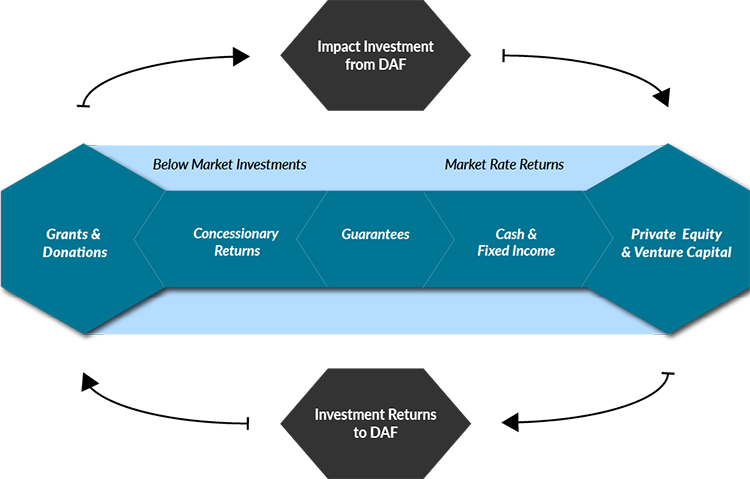
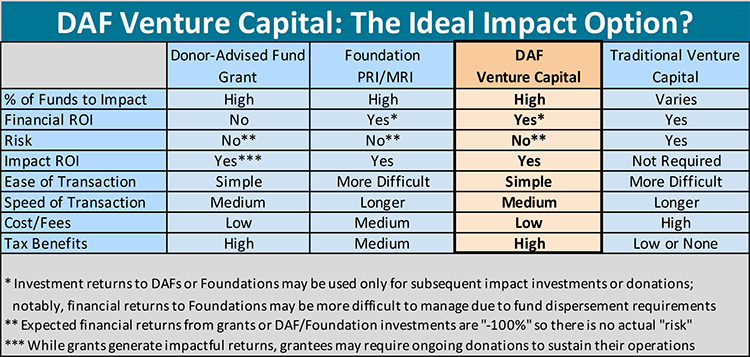
Lohas Advisors - GreenMoneyDonor-Advised Funds (“DAFs”) are quite the hot topic in the world of philanthropy and impact investing. Seems everyone has a perspective on how DAFs could be better utilized or why they’re underleveraged. Most of the news stories (correctly) center on the topic of DAFs growing in size, but funds often remaining stuck without ever reaching the parties who need this capital the most. Many of these same articles discuss various DAF-related legislative changes that, if implemented, could change the “set it and forget it” DAF dynamic. At LOHAS Advisors, while we applaud the attention being brought to this topic, we think that one path to unleashing the power of DAFs is through impact venture capital, which closes the loop on the impact investing return spectrum as illustrated below.

DAF Impact Venture Capital closes the loop on impact investing return

For those unaware, DAFs are philanthropic and social impact investment tools that allow donors (which could be individuals, families, corporations, etc.) to fund special accounts through DAF “sponsor” organizations. Donors receive immediate U.S. income tax deductions and maintain allocation privileges over the funds’ ultimate distribution. According to the 2019 Donor-Advised Fund Report of the National Philanthropic Trust (NPT), assets in DAFs now total over $121 billion, with over $23 billion in new DAF contributions made in 2018 alone. Notably, there are now over 728,000 individual DAFs across the U.S., and the number of DAFs grew an astonishing 55% from 2017 to 2018.

The Challenge

So, what’s the problem? As both Will Hobson in his Washington Post article and Alan Cantor in his Chronicle of Philanthropy piece have clearly demonstrated, there’s an inherent motivation challenge in the system. Per Hobson, four of America’s ten wealthiest charities are now DAF sponsors (Fidelity, Schwab, Vanguard, and Goldman Sachs) which have converted a fundraising technique designed for community foundations into another product to offer their clients. As Cantor notes, because DAF operators can charge management fees and (for those like the four above tied to large investment houses) invest the money and assets from their DAFs, these DAF sponsors are not motivated to see the capital put to use. As tax records show, Fidelity Charitable paid its parent company Fidelity more than $46 million in 2017, to manage its over $21 billion in assets.

Furthermore, while these DAF operators claim that they pay out 20 percent of their funds to charities each year, as Hobson details, sometimes the funds are just moving capital from one DAF to another. In fact, an Economist study of three of the largest DAF sponsors found that two of the three largest recipients of their charitable spending were other DAF operators (due to account holders searching for better fee arrangements). And as Cantor notes, many DAF sponsors do little if anything to encourage their donors to distribute funds (despite suggestions to the contrary). Both Hobson and Cantor reference an interview with Fidelity Charitable President Pamela Norley in which she was asked whether she would be happy if all of Fidelity’s DAF holders decided to spend at least half of their DAFs this year thereby causing her organization’s assets to plummet from $21 billion to about $10 billion, and she tellingly responded with a “no comment.”

Our Solution

So, if the problem is that DAF sponsors want to maintain (and, ideally, grow) their funds under management and are disinclined to motivate their donors to do otherwise, how can we change that paradigm? What if DAF operators could get the public credit for dispersing funds (to legitimate causes) but also the (financial) benefit of capturing returns on investment (thereby restocking their coffers)? Might that change their reluctance to encourage their donors to distribute funds?

While DAFs have typically been used for charitable donations and philanthropic grant making, astute donors recognize that by directly investing DAF capital in for-profit companies, funds, or projects, DAFs can become extraordinary vehicles for achieving meaningful social and environmental impact while also generating attractive returns. In fact, if managed correctly, DAFs can become impact investing venture capital funds for donors, serving as either their first steps into the impact investing world or enhancing the work they are already doing with their traditional portfolios.

DAFs are an ideal impact investment tool because they are completely risk free – the funds have already been donated so no financial returns to the donor are expected – but investments from a DAF that generate real financial returns can flow back into the DAF so that (like with a traditional investment portfolio) that capital is available for the donor to direct towards the next socially or environmentally impactful venture. In fact, DAF venture capital holds many benefits for impact investors over other forms of investment or philanthropy, and even over traditional venture capital.

DAF Venture Capital-The Ideal Impact Option?

For Whom and How?

There are four main types of DAF sponsors: financial institutions (like Fidelity, Schwab, etc.), community foundations, religious and cause-based organizations, and independents – and impact investing from DAFs is a great solution for each of them. Unfortunately, most DAF operators do not currently allow their donors to use their DAFs as (for-profit) impact investing mechanisms, and those that do often offer only a limited selection of investment options for donors. However, some DAF sponsors are showing greater flexibility, and DAFs can be easily transferred to other sponsors that better support donors’ impact investing goals.

There are a variety of ways in which the capital held in DAFs can be invested to further one’s impact goals. For example, they can be ideal capital to use for early stage or higher risk investments (that may not be comfort zones for the donor’s main portfolio) or to support solutions to particular societal challenges (e.g., COVID-19). Similarly, corporate DAFs provide a simple mechanism for making strategic investments in mission-aligned companies that complement the corporation’s business model or further a stated impact goal. Notably, DAF funds can even be used to pay advisors to help transfer DAFs (when needed), analyze investment opportunities, and deploy DAF capital as effectively as possible.

For LOHAS, our focus is to serve as managers of our clients’ DAF impact venture capital funds and help convert their passions into action. We seek to close the loop between DAF donations and impact venture capital and allow the financial returns of successful investments of donated funds to replenish DAF accounts, thereby allowing donors to continue to make meaningful social and environmental impact investments while also encouraging DAF sponsors to participate actively in the true purpose of DAFs.

Learn more about becoming an impact venture capitalist using donor-advised funds.


Article by Rick Davis, managing partner at LOHAS Advisors. With extensive experience in the environmental and social impact sectors serving in strategy, business development, company funding, and project financing roles, Rick Davis’ professional career spans legal, technology, financial, and entrepreneurial pursuits, with leadership roles in venture-backed and publicly traded companies advising CEO’s, developers, and governments around the world.

Rick has a degree with honors from Rice University and law and graduate business degrees from the University of Texas at Austin. Among other environmental pursuits, he is an advisor and an investment committee member of the Caribbean Basin Sustainable Energy Fund, which is focused on renewable energy projects and delivering social impact in Central America and the Caribbean.

As a Founder and Managing Partner of LOHAS Advisors, Rick recognizes the challenges in moving beyond ESG in public markets to direct impact investing, and he is dedicated to helping individuals and organizations achieve their growing desire to capture attractive financial returns while also generating meaningful impact for the causes they value most.

Featured Articles, Impact Investing

Domini Impact Investments releases the Domini Funds 2019 Impact Report

Domini Impact Investments LLC, a U.S. pioneer in impact investing, has published the Domini Funds 2019 Impact Report, which highlights the firm’s achievements and explains how Domini works for its shareholders to create value for the planet and its people.

Throughout 2019, the firm enhanced its Impact Investment Standards, continued to identify how its investments support the United Nations’ Sustainable Development Goals, and collaborated with a wide variety of stakeholders, including companies, civil society organizations, and other investors.

In addition to its focus of addressing climate change and human rights through its investment process and engagements, the report specifically highlights its efforts to help preserve forests, promote diversity at the board and executive level, and encourage pharmaceutical companies to broaden access to medicine.

Domini’s goals of contributing to universal human dignity and ecological sustainability are achieved by implementing three core impact-investing strategies:

• Investment Standards: Use social and environmental standards to find better investments

• Community Investing: Invest to help build healthy communities

• Engagement: Use our voice as investors to improve corporate behavior

Key Impact Highlights include:

For over 20 years Domini has been working to change the way the world investsInvestment Standards

Launched an initiative to address the systemic risks of deforestation and how to work to protect the value that forests provide.

Formalized an exclusionary screen on for-profit prison and immigration detention center operators.

Refined and enhanced key performance indicators (KPIs) for the Materials, Retailing, Media & Entertainment, and Telecommunication Services industries to ensure investment evaluations remain focused on the most meaningful and relevant sustainability challenges and opportunities.

Integrated forest-related key performance indicators to capture risks and opportunities across 24 sub-industries.

Maintained a lower carbon footprint. The Domini Impact Equity Fund and Domini Impact International Equity Fund are 65% and 29% less carbon intensive, respectively, than their public benchmarks.

Community Investing

Continued to direct capital to investments that communities depend on, such as access to affordable and quality housing, health care, education, and more.

Highlighted how Domini supports the United Nations Sustainable Development Goals through community investing, including nearly $10 million invested in green and sustainability bonds and over $500,000 invested with Community Development Financial Institutions.

Engagement

Engaged a total of 511 (300 U.S., 211 non-U.S.) companies with over 680 contacts through our various collaborations and partnerships, addressing topics such as forests, diversity, climate change, human rights, access to medicine and public health, and weapons and firearms.

Filed six shareholder proposals with companies on topics related to access to medicine and executive compensation plans, establishing a human rights committee on the board of directors, lobbying disclosures, and publishing a sustainability report. The firm successfully withdrew five of our proposals after reaching agreements with the companies, further demonstrating the importance of the shareholder proposal process in addressing environmental, social and governance change at companies.

New proxy voting standard for diversity on boards. The Domini Funds now oppose the election of some or all directors where women make up less than 40% or at least three members of the board (whichever is greater). The Funds apply the same standards for historically underrepresented ethnic and racial groups in markets where the information is available.

Find out more about these initiatives and highlights, download our report:

Domini Funds 2019 Impact Report

About Domini Impact Investments LLC

Domini Impact Investments LLC is an SEC-registered investment adviser specializing exclusively in impact investing. Domini serves individual and institutional investors who wish to create positive social and environmental outcomes while seeking competitive financial returns. Domini applies social, environmental and governance standards to all its investments, believing they help identify opportunities to provide strong financial rewards to its fund shareholders while also helping to create a more just and sustainable economic system.

Before investing, consider the Fund’s investment objectives, risks, charges and expenses. Contact us for a prospectus containing this and other information. Read it carefully. The Domini Funds are not insured. You may lose money. Shares of the Domini Funds are offered for sale only in the United States.

The Domini Impact Equity Fund is subject to market, recent events, impact investing, portfolio management, information and mid-to large cap companies risks. The Domini Impact International Equity Fund is subject to market, recent events, impact investing, portfolio management, information and mid- to large-cap companies risks. The Domini Sustainable Solutions Fund is subject to market, recent events, sustainable investing, portfolio management, information, mid- to large-cap companies, and small-cap companies risks. The Domini Bond Impact Fund is subject to market, recent events, impact investing, style, information, interest rate, and credit risks. DSIL Investment Services LLC, Distributor. 05/20

Additional Articles, Energy & Climate, Impact Investing, Sustainable Business

Parnassus on Companies Becoming More Relevant to Customers during COVID-19

By Todd C. Ahlsten, Parnassus Investments

By Benjamin E. Allen, Parnassus Investments

Companies that exhibited the best capabilities to serve customers as they began to shelter in place relied on innovation long before the pandemic emerged. Remaining relevant to customers during this time requires doubling down on inventiveness, adaptability and resilience.

Companies Stepping Up

Humans are incredibly innovative, and the companies they have built are finding ways to meet the challenge of the pandemic with innovations to fight the virus and keep the economy up and running. As the pandemic has unfolded, companies that provide essential services have continued to experience strong demand. Possessing technology that supports continued operations during the shelter in place has provided a sizeable advantage. Some of these businesses have also pitched in to help address the COVID-19 threat, building positive reputations that will boost their brands over the long term.

Parnassus Investments believes that high-quality, well-managed companies that aren’t pulling back now, but instead are upping investments in R&D, will emerge stronger from the pandemic. Companies that are able to avoid furloughs and layoffs also are likely to perform relatively well. In addition, planning now for future improvements, such as rethinking approaches to supply chains that were revealed to be vulnerable, is vital.

Joining the Fight Against the Virus

As the pandemic began to unfold, some companies, like Deere and Pentair, have continued to support customers’ needs for essential products and services while also pivoting to help communities increase their supplies of protective and medical equipment. At the same time, many companies in the health care sector, such as Becton Dickinson and Illumina, are contributing to efforts to develop medical treatments for COVID-19.

• Deere & Co. leverages technology to help feed more people using fewer resources at lower costs. For example, data collected by a Deere combine travels to a data center where technicians can recommend adjustments to optimize pesticide, fertilizer and water use. Equipment problems can also be diagnosed remotely, supporting faster repairs. And to help protect medical workers during the pandemic, Deere has produced more than 350,000 face shields.

• Pentair offers customers water-efficient irrigation systems as well as water treatment, desalination and filtration products designed to expand and improve the quality of the fresh water supply. A small portion of Pentair’s business is manufacturing filtration components for hospital ventilators. During the pandemic, the company has ramped up production of these ventilator components, building goodwill with the community.

• Becton Dickinson supplies coronavirus testing products and is innovating in the moment to improve testing options. Becton also provides instruments, data analysis and platforms for vaccine research. It is a market leader across a number of medical consumables, including needles and syringes, as well as monitoring machines. The company employs approximately 1,000 software engineers and maintains a substantial R&D budget.

• Illumina is the largest provider of gene sequencing instruments and invests heavily in innovation. Not surprisingly, the company has turned its attention to sequencing the COVID-19 virus to support the development of vaccines and therapies.

Supporting the Virtual Economy

Recent events have revealed the critical importance of leveraging technology to spur economic growth. At the onset of the pandemic, the abrupt shift from physical to virtual work by millions of people provided an excellent opportunity for the following companies and others to demonstrate the essential nature of their technology-driven products and services.

• Cable One provides high-speed internet access to rural areas. Like other internet providers, this busines­s has become even more critical during the COVID-19 shutdown. Its role in facilitating access to indispensable products and virtual classrooms is particularly vital in areas where the only other choice may be dial-up internet. Cable One is offering lower pricing for customers during the pandemic.

Perhaps no company is more essential for remote work than Microsoft. From Office 365 to Azure Cloud Services and worldwide data centers, this company is key to high-performance computing and development. Microsoft recently rolled out Teams, a new collaborating tool. It is also notable that the company has announced plans to become carbon negative by 2030.

• FedEx has connected people with essential products throughout the pandemic, using a faster, more efficient network than competitors. Ecommerce was expected to continue to significantly grow over the next decade, even before the necessity to shelter in place arose. Now, the company has announced a new partnership with Microsoft that will offer FedEx customers better visibility into supply chains, more efficient inventory management and faster shipping.

Investing in the Workplace

Success requires an engaged and motivated workforce. Those companies that have made the health and safety of employees a top priority during the pandemic will be rewarded with employee loyalty and the ability to provide superior customer service relative to competitors that undervalue their workforces.

Companies that can avoid layoffs, and instead are able to retain talent, will perform better than those that lay off or furlough employees. This is especially true if the layoff decision is not preceded by other cost-cutting approaches, like eliminating unnecessary expenses, reducing executive compensation and eliminating share buybacks. Keeping the workforce intact supports both uninterrupted productivity and strong employee morale. It also allows companies to avoid rehiring, retraining and integrating new employees as the economy improves.

The following companies are among those that are taking steps to support employees during the pandemic:

• Verizon adopted a work-from-home strategy for 90% of its workforce, along with extra compensation for field technicians and retail workers. The company also offered generous paid leave for employees afflicted by COVID-19.

Apparel company VF Corp. took steps to limit pay impacts for employees and provide emergency leave compensation. The firm also implemented strict social distancing requirements and cleaning protocols to protect the health of employees.

• Waste Management which provides critical solid waste and recycling services, has guaranteed hourly workers compensation for 40 hours per week, regardless of their ability to work, and pledged to avoid layoffs.

Managing Supply Chain Risks

In addition to advantages awarded to innovation and community support during the pandemic, weaknesses in corporate structures have been revealed. Notably, companies and consumers are feeling the pain of supply chain–related shortages. Businesses that had carefully managed risks and established full transparency into their supply chains prior to the crisis are now better positioned to minimize future disruptions by taking the next steps to increase supply chain flexibility and reliability. Along with introducing redundancies, some companies will likely consider bringing some supply chains closer to home. Having critical supply chains either in the US or nearby may help reduce political risks due to trade wars, and physical risk due to climate change.

These and other companies are well positioned to help transport critical products to customers and monitor supply-chain safety today and as supply chains evolve:

• Americold Realty Trust owns and operates approximately 200 temperature-controlled warehouses that form an integral part of the food supply chain, particularly as fresh produce rises in popularity. Americold also practices energy conservation.

• Kansas City Southern has a direct tie to increasing international trade and is positioned to benefit if supply chains relocate to North America to address risks that have been exposed by the pandemic.

• Costco rates highly on customer service and the quality of its products. With kinks appearing in the supply chain and concerns about virus spread, food safety precautions are high priority. Costco has partnered with Zest Labs, a startup that uses technology to achieve complete visibility into the fresh food supply chain to both protect customer health and reduce food waste.

Winning Over the Long Term

A pandemic is clearly not good news. Nor is an economic downturn. However, these unwelcome events have been accompanied by silver linings for companies that continuously learn and grow. Remaining relevant to customers in this environment requires adaptability and resilience, which is predicated on having effective and experienced management teams in place. We believe that high-quality companies that came into the pandemic with strong balance sheets, healthy profit margins, relatively low debt and an emphasis on research and development are likely to gain market share as we emerge from these difficult conditions.

Parnassus anticipates that company leaders will remember the importance of remaining nimble to meet customers’ needs and will increase their confidence that investments in innovation can drive future success. It is our hope that companies will also apply what they have learned to more urgently address other wide-ranging risks, such as climate change. Just as in this crisis, timely preparation for changes in our physical environment will likely create winners in the marketplace, while those companies that are overly focused on the short term will risk falling behind.


Article by Todd C. Ahlsten, Chief Investment Officer, Parnassus Investments and Benjamin E. Allen, Chief Executive Officer, Parnassus Investments

To learn more, visit www.parnassus.com or call (800) 999-3505.

Article published July 2020.

Important Information

The mention of individual securities should not be construed as a recommendation to buy or sell. All investments involve risk, including the loss of principal.

The Parnassus Funds are distributed by Parnassus Funds Distributor, LLC.

Before investing, an investor should carefully consider the investment objectives, risks, charges and expenses of a fund and should carefully read the prospectus or summary prospectus, which contains this and other information about the fund. A prospectus or summary prospectus can be obtained on the Parnassus Investments website www.parnassus.com or by calling (800) 999-3505.

Additional Articles, Energy & Climate, Impact Investing, Sustainable Business

MSCI: How 30 Years of ESG Indexing Informs Portfolio Construction

By Linda-Eling Lee, MSCI

Whatever type of new normal emerges from the coronavirus pandemic, the upheaval it has triggered has investors examining anew the ability of companies to withstand unexpected events and exogenous shocks.

From the interrelatedness of supply chains, to the importance of health and safety and the interdependence of companies and communities, the pandemic partially underscores the significance of environmental, social and governance (ESG) factors in identifying and assessing such risks.

It also highlights the extent to which investors have internalized ESG strategies. In a recent GAO survey, 12 of the 14 institutional investors interviewed look to ESG factors to better understand the risks that companies face over time. Assets in exchange-traded funds and the number of such funds themselves have surged in recent years.

As it happens, index-based investing and ESG investing met 30 years ago this year, when Peter Kinder, Steve Lydenberg and Amy Domini, who together ran a research firm in Boston, assembled a set of socially responsible stocks they called the KLD 400 Social Index.

Visit MSCI’s interactive timeline, which traces the evolution of ESG indexes that began with the launch of the world’s first socially responsible index in 1990.

By then socially responsible and ethical investing had been a well-known practice of faith-based organizations1. In the 1980s, it crossed a watershed in the divestment campaign against apartheid South Africa. But by collecting companies based on their commitment to social and environmental issues (at a time when few companies disclosed such information voluntarily), the KLD 400 Social Index offered an investment universe that enabled investors to benchmark the performance of ESG strategies.

The index, which MSCI acquired as part of KLD Research & Analytics in 2010, has a decades-long track record and is still running in real time. It supports at least three insights that can inform how investors construct portfolios.

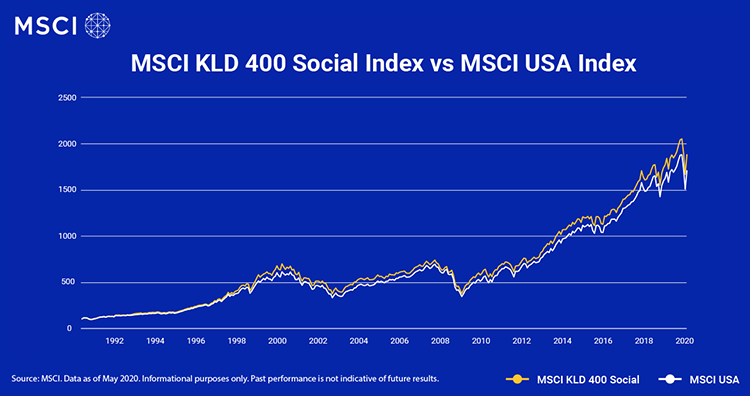
The first is that responsible investing does not necessarily equate to underperformance and that conventional investment factors are general determinative of difference in performance between ESG investment and the S&P 500.2 Though the methodology used to construct the index has evolved over time, the MSCI KLD 400 Social Index has, since inception, generated a total return of 10.43% compared to 10.07% for the MSCI USA Index, a 36 basis points (bps) difference (as of May 31). This spread has also been maintained during the last five years, as the MSCI KLD 400 Social Index outperformed the MSCI USA Index 10.37% versus 9.84%, a 53 bps difference.

30 Years of Performance

As the history suggests, companies that showed strengths in environmental and social responsibility (the term ESG was not coined until 2005) tended to be more profitable, with better returns on investment, than companies excluded from the index. On average, the index increased exposure to the best-performing companies and reduced exposure to the worst performers.

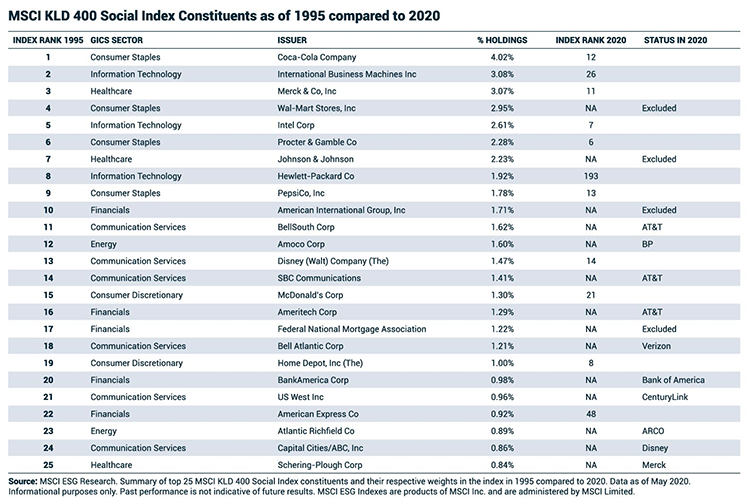
Second, while many ESG indexes today maintain similar sector exposures relative to the broad market, the 30 years of history for the MSCI KLD 400 index reminds us that the industries and business models of tomorrow may lie beyond our contemplation today. Fourteen of the top 25 constituents of the MSCI KLD 400 Social Index in May 2020 were not constituents at inception; they either had not yet been listed, were the product of M&A or spin-off action, or existed but did not qualify for inclusion.3

As of May 2020, Microsoft, Facebook and Alphabet anchored the index. Two of those companies did not exist in 1990. The third, Microsoft, was not a constituent and was still a relatively nascent company focused on extending the dominance of MS-DOS.


As it happens, the growth of technology in transforming our everyday life has also enabled more investors to adopt ESG in their investment process. Thirty years ago, companies submitted securities filings on paper and frameworks such as the Global Reporting Initiative had yet to be established. Now advances in computing enable us to analyze and extract meaning from a myriad of information sources that shed light on the risk companies confront, the innovations they pursue, and the practices that govern them.

Finally, if we’ve learned anything in 30 years, it’s that ESG has less to do with disclosures that companies tuck into boilerplate than it does with the capacity of companies to address the risks and opportunities denoted by the three pillars of ESG.

That’s what ESG attempts to quantify. For example, we know from the newest research that governance has been more relevant than environmental and social indicators in terms of their impact on profitability, idiosyncratic risk and systematic risk over a relatively short period of time such as one year. By contrast, environmental and social indicators have tended to grow in relevance over multiple years.

ESG shines a light on some of the characteristics of companies that are most difficult to quantify and often times on risks that have yet to materialize. That helps explains why investors increasingly bring an ESG lens to their investments. Whether they are building strategies to track demographic trends, robotics or electric vehicles, creating ESG-focused investment products, or looking to benchmark performance of complex portfolios, our interactions with clients and market participants point to an increasing demand for ESG optimization incorporated into indexes by design.

As the pandemic reminds us, the risk from events that stretch the capacity of companies is all too real and often those risks show up in the bottom line. We turn to ESG investing because we know that building a sustainable business starts with a recognition that we’re all in this together.


Article by Linda-Eling Lee, Managing Director and Global Head of ESG Research, MSCI

As Global Head of Research for MSCI’s ESG Research group, Linda-Eling Lee oversees all ESG-related content and methodology. MSCI ESG Research is the largest provider of ESG Rating and analytics to global institutional investors. Linda leads one of the largest teams of research analysts in the world who are dedicated to identifying risks and opportunities arising from material ESG issues. She and her team have been widely recognised as the best SRI/ESG researchers by market surveys and awards.

Linda joined MSCI in 2010 following the acquisition of RiskMetrics, where she led ESG ratings research and was head of consumer sector analysis. Linda joined RiskMetrics Group in 2009 through the acquisition of Innovest. Prior to joining Innovest, Linda was the Research Director at the Center for Research on Corporate Performance, developing academic research at Harvard Business School into management tools to drive long-term corporate performance.

Previously, she was a strategy consultant with Monitor Group in Europe and in Asia, where she worked with Fortune 500 clients in industries ranging from beverages to telecommunications. Linda received her AB from Harvard, MSt from Oxford, and PhD in Organizational Behavior from Harvard University.

Linda has published research both in management journals such as the Harvard Business Review and MIT’s Sloan Management Review, as well as in top academic peer-reviewed journals such as Management Science and Journal of Organizational Behavior. She is frequent media commentator on ESG topics and sustainable investing in outlets including the Financial Times, Wall Street Journal, Forbes and the New York Times.

Footnotes:

[1] https://www.investopedia.com/news/history-impact-investing

[2] The Long-Term Performance of a Social Investment Universe (Kurtz; DiBartolomeo) compares U.S. social investing to the S&P 500 index.

[3] Source: MSCI. Data as of May 2020. Informational purposes only. Past performance is not indicative of future results. MSCI ESG Indexes utilize data from but are not provided by MSCI ESG Research LLC. MSCI ESG Indexes are products of MSCI Inc. and are administered by MSCI Limited (UK).

Additional Articles, Impact Investing, Sustainable Business

Water and Pandemics

By Alina Donets, Allianz Global Investors

The COVID-19 pandemic has brought much uncertainty to human lives and the global economy, questioning a wide range of established beliefs and predicaments. In this turmoil, the water theme has not remained immune, facing many ambiguities and difficulties but also potential opportunities to be explored.
Allianz Global Investors-logoWe first assessed whether COVID-19 can spread through the water and sewage systems. Thankfully, it cannot, due to the virus’ characteristics.

Once this key safety question was answered, other important considerations followed, including whether water utilities could ensure consistent water supply and sewage operations while the world remained closed for business. This had to be carried out despite the distancing measures and the health risks for the employees, as well as restricted supply chains.

Looking forward, the water industry now needs to consider the resilience of this essential service in the light of future risks, be it against pandemics or other unexpected but highly impactful emergencies. In addition, investors now must assess the short-, medium- and long-term implications of the pandemic on businesses. Understanding these impacts will help to identify attractive opportunities and future winners.

The ability of water investments to navigate these headwinds will determine their ability to recover from the recent market pullback, as well as their competitive positioning in the future. More importantly, this pandemic further empathizes the importance of water for the wellbeing of our societies.

COVID-19 and Water-borne Pathogens

While SARS-CoV-2, the virus that causes COVID-19, spreads through air-droplets, the WHO has confirmed that it has not been detected in water sources.1 Furthermore, the virus has been characterized as unstable, making it susceptible to traditional disinfectant chemicals such as chlorine, which is often used in the water treatment process. This strand is different from SARS-CoV, the virus that causes severe acute respiratory syndrome (SARS), which had a large outbreak in 2003. Back then, a sewage leak in Hong Kong caused human infection through the release of droplets containing the virus into the air. The WHO concluded that poor plumbing in Hong Kong led to the spread of the virus.2 Fast forward to 2020, it is fortunate that the COVID-19 virus cannot be spread through water.

Water Quality: Treatment Focus

Today, water treatment systems are generally effective in killing a wide range of known and unknown bacteria and viruses, including coronaviruses. The pathogens that fall under this umbrella encompass those of specific significance and proved risk of spread through water.

Most viruses and bacteria can be killed with a handful of common water treatment methods, such as several chemicals and/or UV light treatment. Usually, utilities would opt for a combination of both, as different bacteria can survive different sanitation measures. Despite the resilience of some virus families to common disinfection methods, these measures are generally deemed adequate to provide safe drinking water, creating no significant health hazards.

Ultimately, countries with better developed water infrastructure have better success preventing these types of outbreaks, as they have technology that kills most known water- and sewer-borne pathogens.

The developed world has worked to establish effective standards and treatment when it comes to water quality. For example, US regulation requires 99.99% of viruses to be removed from the water, utilizing several treatment technologies.

In emerging markets, which often have poor infrastructure, the situation can be quite different. This is not necessarily due to weaker standards of pathogen regulation, but due to lower sewage infrastructure penetration or poorly enforced standards. For example, only 50% of Brazil’s population is connected to a wastewater system.3 Globally, 25% of the population is exposed to contaminated or poorly treated water. Of that 25%, half is located in emerging markets.4 This insufficiently treated water is, in turn, responsible for 90% of worldwide deaths from diarrhea.5

Unsurprisingly, water quality and treatment solutions are among the top spending priorities for both water utilities and governments worldwide.

Water Supply: Resilience of Infrastructure

Water treatment is not the sole solution to create a safe supply of potable water. As the world remains isolated at home waiting for the virus to be contained, utilities are working around the clock to ensure seamless continuation of water supply while simultaneously ensuring the safety of their employees.

Now, more than ever, this is a testament to the global importance of water utilities. To be prepared for future pandemics, we must reassess our emergency preparedness plans as well as the resilience of our current infrastructure. This pandemic has prompted additional sanitation measures to ensure that unlike with the SARS epidemic, this virus will not be transmitted through water. Utilities have already started working on new water technology to ensure the adequate treatment and detection of any contaminant and the resiliency of this finite resource.

Greater Sanitation

There has been much innovation of late to reduce the spread of viruses. Recently, there was a proposal for pre-treating wastewater in highly susceptible and dense areas such as hospitals before it reenters the sewage system.6 This would eliminate a significant portion of contamination risk resulting from wastewater. It should also include increased sanitation services at highly contaminated sites with effective disinfection agents. Sanitation service companies have seen an increased demand for their services during the pandemic. They have helped numerous clients such as hospitals and other institutions ensure the safety of their staff and continuity of essential services.

Quality Monitoring

Another important aspect of water safety is quality monitoring. We have seen a growth in this field as water utilities and governments seek to identify contaminants before they significantly harm the source. It is clear that water testing needs to be scaled for greater precision and detection of microbial contents. Firms that specialize in water quality monitoring help this goal by ensuring comprehensive water testing while also helping to impose additional sanitation measures.

Automation

Lastly, water services and workers within the water infrastructure industry are essential. It is estimated that half of US water utility firms prepared adequately for the pandemic. Many of these companies worked to create on-site living quarters to ensure continuity of water to citizens without increasing the risk of workers infection.7 One leader within the industry is a water utility in the Midwest that kept several workers across three water treatment facilities living on-premise to ensure water supply to over half a million people.8

While most of the utilities worldwide managed to sustain their operations, relying on their dedicated workforce and some level of automation sufficient to run the infrastructure with minimal human contact, these systems are not yet fully optimized. Utilities have already started to plan for increased automation, including better distance management, invoicing and meter readings. A large European-based utility firm has discussed increased digitalization to target better wastewater management and water optimization. As a result, water technology firms have seen a growing demand for their IT solutions.

Outlook

COVID-19 has and will continue to cause significant hardship for the global economy. Water-related investments are not fully immune, as the financing of many essential infrastructure investments is now under increased scrutiny. What remains clear, however, is the number of incremental measures required at the water infrastructure level that will support continued targeted spending. Resilience of water infrastructure has never been more important, and the social value of water has never been this high. As a result of this pandemic, many utilities have gained firsthand experience testing their emergency preparedness and business continuity plans. There remain numerous opportunities for improvement and automation within this field, and a result, there will be an acceleration of spending on water-related technologies.

As the world starts to reopen and we evaluate the “new normal,” water technology and smart water solutions will become even more essential to ensure adequate clean water for all. The societal need for these investments remains, which will result in continued demand despite the uncertain economic future we face.


Article by Alina Donets, co-lead portfolio manager, and a vice president with Allianz Global Investors, which she joined in 2017. She co-manages the Water strategy; and is a member of the Global Thematic team where she researches and develops investment themes globally, with a specific focus on themes aligned to SDGs and other societal goals. Ms. Donets previously worked as a portfolio manager at Bank Audi. Before that, she worked as an investment manager on thematic funds at Pictet Asset Management. Ms. Donets has a B.Sc. with honors in business studies from Cass Business School (London), and an M.Sc. with honors in International business from HEC (France). She is a CFA charterholder.

Footnotes:

  1. https://www.aquatechtrade.com/news/article/coronavirus-and-water-wastewater-global-advice/
  2. https://www.who.int/mediacentre/news/releases/2003/pr70/en/
  3. https://static.btgpactual.com/media/brut170308-water-privatization.pdf
  4. https://www.who.int/topics/water/en/
  5. https://journals.plos.org/plospathogens/article?id=10.1371/journal.ppat.1004867
  6. https://www.sciencedaily.com/releases/2020/04/200403132347.htm
  7. https://www.epa.gov/newsreleases/epa-urges-states-support-drinking-water-and-wastewater-operations-during-covid-19
  8. https://www.iowapublicradio.org/post/utilities-aim-keep-specially-trained-employees-healthy-and-working#stream/0

Disclosures

Investing involves risk. Investing involves risk. The value of an investment and the income from it will fluctuate and investors may not get back the principal invested. Past performance is not indicative of future performance. This is a marketing communication. It is for informational purposes only. This document does not constitute investment advice or a recommendation to buy, sell or hold any security and shall not be deemed an offer to sell or a solicitation of an offer to buy any security.

The views and opinions expressed herein, which are subject to change without notice, are those of the issuer or its affiliated companies at the time of publication. Certain data used are derived from various sources believed to be reliable, but the accuracy or completeness of the data is not guaranteed and no liability is assumed for any direct or consequential losses arising from their use. The duplication, publication, extraction or transmission of the contents, irrespective of the form, is not permitted.

This material has not been reviewed by any regulatory authorities. In mainland China, it is used only as supporting material to the offshore investment products offered by commercial banks under the Qualified Domestic Institutional Investors scheme pursuant to applicable rules and regulations. This communication’s sole purpose is to inform and does not under any circumstance constitute promotion or publicity of Allianz Global Investors products and/or services in Colombia or to Colombian residents pursuant to part 4 of Decree 2555 of 2010. This communication does not in any way aim to directly or indirectly initiate the purchase of a product or the provision of a service offered by Allianz Global Investors. Via reception of his document, each resident in Colombia acknowledges and accepts to have contacted Allianz Global Investors via their own initiative and that the communication under no circumstances does not arise from any promotional or marketing activities carried out by Allianz Global Investors. Colombian residents accept that accessing any type of social network page of Allianz Global Investors is done under their own responsibility and initiative and are aware that they may access specific information on the products and services of Allianz Global Investors. This communication is strictly private and confidential and may not be reproduced. This communication does not constitute a public offer of securities in Colombia pursuant to the public offer regulation set forth in Decree 2555 of 2010. This communication and the information provided herein should not be considered a solicitation or an offer by Allianz Global Investors or its affiliates to provide any financial products in Brazil, Panama, Peru, and Uruguay. In Australia, this material is presented by Allianz Global Investors Asia Pacific Limited (“AllianzGI AP”) and is intended for the use of investment consultants and other institutional/professional investors only, and is not directed to the public or individual retail investors. AllianzGI AP is not licensed to provide financial services to retail clients in Australia. AllianzGI AP (Australian Registered Body Number 160 464 200) is exempt from the requirement to hold an Australian Foreign Financial Service License under the Corporations Act 2001 (Cth) pursuant to ASIC Class Order (CO 03/1103) with respect to the provision of financial services to wholesale clients only. AllianzGI AP is licensed and regulated by Hong Kong Securities and Futures Commission under Hong Kong laws, which differ from Australian laws.

This document is being distributed by the following Allianz Global Investors companies: Allianz Global Investors U.S. LLC, an investment adviser registered with the U.S. Securities and Exchange Commission; Allianz Global Investors Distributors LLC, distributor registered with FINRA, is affiliated with Allianz Global Investors U.S. LLC; Allianz Global Investors GmbH, an investment company in Germany, authorized by the German Bundesanstalt für Finanzdienstleistungsaufsicht (BaFin); Allianz Global Investors (Schweiz) AG; Allianz Global Investors Asia Pacific Ltd., licensed by the Hong Kong Securities and Futures Commission; Allianz Global Investors Singapore Ltd., regulated by the Monetary Authority of Singapore [Company Registration No. 199907169Z]; Allianz Global Investors Japan Co., Ltd., registered in Japan as a Financial Instruments Business Operator [Registered No. The Director of Kanto Local Finance Bureau (Financial Instruments Business Operator), No. 424, Member of Japan Investment Advisers Association and Investment Trust Association, Japan];and Allianz Global Investors Taiwan Ltd., licensed by Financial Supervisory Commission in Taiwan. 1183829

Energy & Climate, Featured Articles, Food & Farming, Impact Investing, Sustainable Business

The Rise of Water Investing

By Justin Winter, Impax Asset Management

Justin Winter-Impax Asset Mgmt-The Rise of Water InvestingClean water and sanitation for all is the subject of the United Nations’ sixth sustainable development goal, and an increasingly relevant topic to both emerging markets and the developed world. The need for water infrastructure is great in the developing world, and in the developed world, ensuring access to clean water is an ever-present issue, as recent crises have illustrated. This brings opportunities for investors.
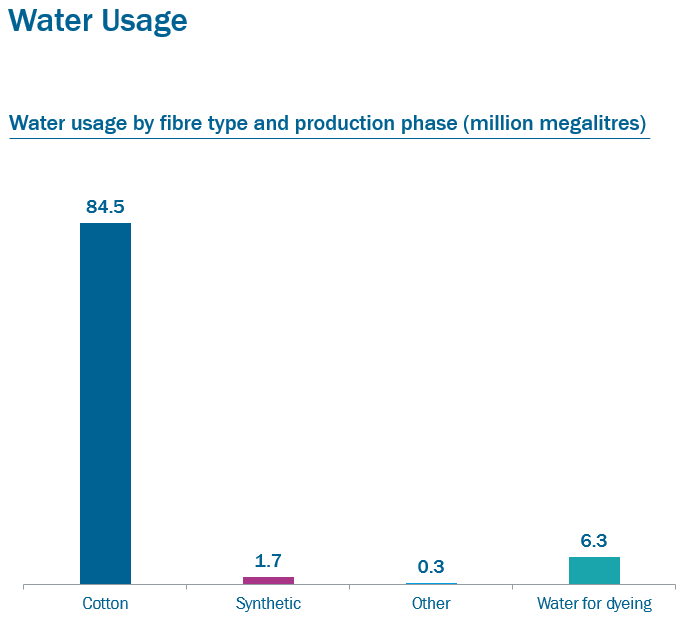
In recent years, the universe of investable water-related companies has increased, and many of these companies have seen accelerated growth. Climate change, pollution and a growing, increasingly urban population all drive demand that innovation and technology can help fulfill.

Governments, public bodies and private industry are all investing in new and upgraded infrastructure, and the investment momentum keeps gaining pace.

Access and Changing Preferences

Emerging market regions such as China, India and Sub-Sahara require the development of water infrastructure where it previously did not exist. This development has been driven in no small part by urbanization, growing populations and changing consumption patterns that demand higher standards of living.

Aging Infrastructure

A great deal of the infrastructure in the developed world is outdated, inefficient or struggling to meet modern water demands. This was exemplified by the crisis in Flint, Michigan, where cost cutting led to insufficient water treatment and lead leached into the water supply. The project to replace the lead pipes, which commenced in 2016, continues1 with costs running into hundreds of millions of dollars.

The Curse of Cotton

The falling cost of textiles and the explosion of fast fashion in recent years have created a ballooning — but largely overlooked — environmental impact. Producing textiles, especially cotton-heavy textiles, is water intensive. The European Union plans to focus on the textiles sector in 2020, and we expect the issue to rise in public consciousness.2

Water Usage Graph-by fibre type and production phase-Impax
Source: Ellen MacArthur Foundation, “A New Textiles Economy: Redesigning Fashion’s Future,” 2017

Climate Change

Climate change is impacting water security. In recent years, several severe droughts and water shortages have impacted farming yields and industrial productivity and have brought revenue losses for workers, such as the 2011–17 California and the 2014-2017 Brazil droughts. South Africa’s second largest city, Cape Town, with a population of circa four million people, suffered its own water crisis recently. Rainfall well below historical levels meant the city’s main reservoir was close to zero in March 2018. Cape Town residential water use was cut from around 120 litres (31 gallons) per person per day in 2015 to 50 litres (13 gallons) at the start of 2018. More recently, prolonged drought in Australia contributed to one of the deadliest bush fire seasons on record and unprecedented water shortages.3

For officials and residents in these regions, the long-term impact of climate change on water supply requires investment in a range of measures, including conservation and leak detection.

An Ocean of Opportunities

The investment opportunities in water are surprisingly diverse and resilient. Risk characteristics are comparable to equity markets and water runs through the global economy, across markets, sectors and regions. Water also provides attractive opportunities through the economic cycle, encompassing both defensive and cyclical businesses.

In our view, water-related investment opportunities fall into three major areas of focus: water infrastructure, water treatment and water utilities. We expect companies offering water efficiency solutions such as smart meters to increasingly penetrate not only the residential and municipal areas but also business and agriculture. We also anticipate that a whole range of industries, such as pharmaceuticals and semiconductors, will increasingly seek products to help them reduce the amount of water used in their operations. Thus, we expect the companies that provide such solutions to benefit.

Leakage is a problem in many existing and outdated water infrastructures, and as these systems are repaired and replaced, we expect companies that provide solutions in this area to gain traction, including those in metering, leak detection and software solutions.

Technology and innovation play key roles in reducing water consumption. Smart meters, for example, can help utilities manage the supporting infrastructure more efficiently, and provide an early warning sign of and location of leaks. Public entities and private industry globally are investing in upgrading their infrastructure and this investment momentum looks set to continue.


Article by Justin Winter, Portfolio Manager, Director, at Impax Asset Management, where he analyzes investment opportunities for the firm’s investment strategies. He is a member of the portfolio construction team for the Impax specialists and water strategies, and he is co-manager of a product that combines these strategies. Justin has specialist research experience in both renewable energy and water, having worked at New Energy Finance and as a consulting engineer specializing in water issues and environmental impact statements.

Footnotes:

[1] Nicole Trian, “Australia Prepares for ‘Day Zero’ – the Day the Water Runs Out,” France24, Sept. 19, 2019.

[2] Impax Asset Management, “Impax’s 2020 Vision: An Outlook for Investors in the Sustainable Economy,” Jan. 2020.

[3] City of Flint, Michigan, https://www.cityofflint.com/gettheleadout/

Energy & Climate, Featured Articles, Food & Farming, Impact Investing, Sustainable Business

X