Tag: Impact Investing

New Guide for Retirement Plan Sponsors from US SIF

This easy-to-follow five-step guide assists retirement plan sponsors considering the addition of investment options that address ESG criteria to their defined contribution retirement plans.


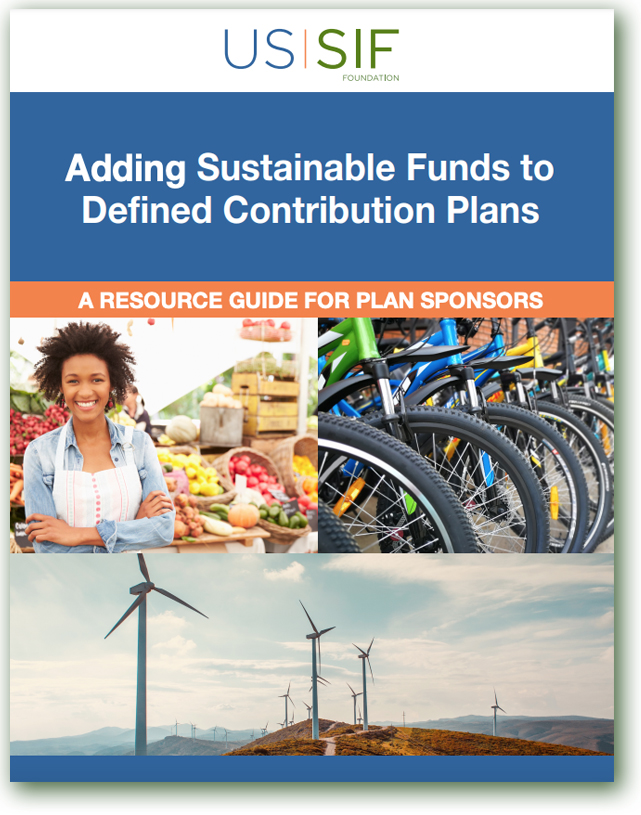
The US SIF Foundation recently released an updated resource for retirement plan sponsors, Adding Sustainable Funds to Defined Contribution Plans: A Resource Guide for Plan Sponsors.

Retirement Plan Guide-US SIF coverThis easy-to-follow five-step guide assists retirement plan sponsors considering the addition of investment options that address environmental, social and governance (ESG) criteria to their defined contribution (DC) retirement plans. The five steps include increasing plan sponsor knowledge of sustainable investing, gauging participants’ interest, discussing implementation, choosing funds and educating participants. It also contains a summary of studies on the financial performance of funds utilizing ESG criteria as well as updates on relevant Department of Labor regulations. Along with practical tips and suggestions, the guide lists links to additional resources.

With asset flows to sustainable investments at an all-time high, retirement plans are lagging in their incorporation of these funds. Assets under professional management that take ESG factors into account in the United States increased by 42 percent between 2018 and 2020 from $12.0 trillion to $17.1 trillion, representing one out of every three dollars under professional management. While most of this activity has been from institutional asset owners, studies from the Morgan Stanley Institute for Sustainable Investing and Natixis Global Asset Management show that demand from individual investors is on the rise.

“The expected reversal of Department of Labor rules on the use of ESG criteria in funds included in retirement plans will provide plan sponsors will greater certainty about adding sustainable products to their offering. This guide will help provide the tools to add such funds and to meet the increasing demand for sustainable investment options,” said Lisa Woll, CEO of the US SIF Foundation.

To access a free copy of the guide, click here.


About US SIF and the US SIF Foundation

US SIF: The Forum for Sustainable and Responsible Investment is the leading voice advancing sustainable and impact investing across all asset classes. Its mission is to rapidly shift investment practices toward sustainability, focusing on long-term investment and the generation of positive social and environmental impacts. US SIF members include investment management and advisory firms, mutual fund companies, asset owners, research firms, financial planners and advisors, community investing organizations and non-profit associations.

US SIF is supported in its work by the US SIF Foundation, a 501(C)(3) organization that undertakes educational and research activities to advance the mission of US SIF. Learn more at ussif.org.

Additional Articles, Impact Investing, Sustainable Business

Homewise Releases their 2021 Annual Report

Homewise, a nonprofit organization based in Santa Fe, NM, that creates successful homeowners and strengthens neighborhoods, has released its 2021 Annual Report.


“Homewise encounters new challenges every year but Fiscal Year 2021 was certainly unique in that regard,” says Mike Loftin, Chief Executive Officer. “Over this past year, we remained flexible and adaptable as we continued to focus on achieving our mission in an impactful and organizationally sustainable way in this ever-changing environment. What began as a quick pivot to delivering our programs and services remotely, evolved into the need to respond to changing economic and market conditions with innovative new programs, services and assistance for our clients,” he says.

With mortgage rates at historic lows, and many families looking for ways to save money, Homewise saw an opportunity to help many of our clients refinance their current mortgage to reduce their monthly payment. They quickly dedicated more staff and increased outreach efforts to meet the demand and provide our clients with the highest level of service, even in a remote-working environment.

These are just a few of the challenges confronted and successes achieved in the last year. Take a deeper dive into the report and learn more about Homewise’s growth and the lessons during this unprecedented time by visiting- https://2021annualreport.homewise.org/


Note To Readers: You can read the most recent article from Homewise CEO Mike Loftin on “Addressing Housing Affordability with Access to Homeownership” in GreenMoney’s October 2021 issue on Community Impact Investing.

Also note that GreenMoney founder, Cliff Feigenbaum, who lives in Santa Fe, is a long-time investor in the Homewise Community Investment Fund.

Additional Articles, Impact Investing, Sustainable Business

Impact Shares ETFs Receive 5-Star Morningstar Rating

NACP, WOMN and SDGA rank in the top percentile of their respective Morningstar categories following their three-year anniversaries


Impact Shares, the first 501(c)3 nonprofit ETF issuer in the U.S. recently announced its three flagship ETFs — NACP, WOMN and SDGA — have received 5-Star Overall Morningstar Ratings™ in their respective categories following their three-year anniversaries.

“Since day one, our mission at Impact Shares is to transform the way people think about investing,” notes Ethan Powell, CEO of Impact Shares. “The outstanding financial performance of our three flagship funds demonstrates the viability of working with leading advocacy firms to achieve actively-managed social outcomes without sacrificing financial returns.”

The Impact Shares NAACP Minority Empowerment ETF (NYSE: NACP) returned 20.6% annually over the past three years, placing it within the 6th percentile beating 1176 of the 1252 funds in the U.S. Fund Large Blend category (as of 7/20/21).

The Impact Shares YWCA Women’s Empowerment ETF (NYSE: WOMN) generated a 25.08% annualized return over the past three years, placing it within the top percentile of the 1,256 funds in Morningstar’s U.S. Fund Large Blend category (as of 8/25/21).

The Impact Shares Sustainable Development Goals Global Equity ETF (NYSE: SDGA) generated a 13.42% annualized return since inception, placing it in the top percentile of the 1,130 funds in the U.S. Large Value category (as of 10/6/21).

Backed by The Rockefeller Foundation, Impact Shares helps organizations such as the NAACP, YWCA and United Nations Capital Development Fund (UNCDF) translate their values into an investable product traded on the New York Stock Exchange. Companies included in each ETF must commit to an evolving set of criteria, defined by the nonprofit partners, to ensure ongoing alignment of corporate behaviors with social values. Impact Shares donates all net profits from advisor fees back to these nonprofit partners.*

For more information visit Impact Shares.


About Impact Shares 

Impact Shares is an ETF issuer and investment manager that is creating a new and innovative platform for clients seeking maximum social impact with market returns. Impact Shares’ goal is to build a capital markets bridge between leading nonprofits, investors and corporate America to direct capital and social engagement on societal priorities. Impact Shares is a tax-exempt non-profit organization under Section 501(c)(3) of the Internal Revenue Code. For more information about Impact Shares visit https://impactetfs.org

Statements in this communication may include forward-looking information and/or may be based on various assumptions. The forward-looking statements and other views or opinions expressed herein are made as of the date of this publication. Actual future results or occurrences may differ significantly from those anticipated and there is no guarantee that any particular outcome will come to pass. The statements made herein are subject to change at any time. Impact Shares disclaims any obligation to update or revise any statements or views expressed herein.

Carefully consider the Funds’ investment objectives, risk factors, and expenses before investing. This and additional information can be found in the Impact Shares statutory and summary prospectuses, which may be obtained by calling 855-267-3837, or by visiting https://ImpactETFs.org  . Read the prospectus carefully before investing.

Investing involves risk, including the possible loss of principal. Bonds and bond funds are subject to interest rate risk and will decline in value as interest rates rise. Mortgage-backed securities are subject to prepayment and extension risk and therefore react differently to changes in interest rates than other bonds. Small movements in interest rates may quickly and significantly reduce the value of certain mortgage-backed securities. As an actively managed Fund, OWNS does not seek to replicate a specified index. Narrowly focused investments and investments in smaller companies typically exhibit higher volatility. Investments in commodities are subject to higher volatility than more traditional investments. NACP may invest in derivatives, which are often more volatile than other investments and may magnify the Fund’s gains or losses. The Funds are non-diversified.

There is no guarantee that investors mentioned will continue to hold shares of the Fund. Shares of any ETF are bought and sold at market price (not NAV), may trade at a discount or premium to NAV and are not individually redeemed from the Fund. Brokerage commissions will reduce returns.

Impact Shares ETFS are distributed by SEI Investments Distribution Co., with is not affiliated with Impact Shares Corp., the Investment Adviser for the Funds, or Community Capital Management Inc.

* Net Profits is the excess, if any, of Impact Shares’ fund fees after the deduction of operating expense and a reserve for working capital. Due to the relatively small size of the Fund, Impact Shares’ Fund fees have not yet exceeded its related operating expenses. Accordingly, Impact Shares has not yet made any charitable contributions from such fees. There can be no assurance that Impact Shares’ Fund fees will exceed operating expenses in the future.

The Morningstar Rating™ for funds, or “star rating”, is calculated for managed products (including mutual funds, variable annuity and variable life subaccounts, exchange-traded funds, closed-end funds, and separate accounts) with at least a three-year history. ETFs and open-ended mutual funds are considered a single population for comparative purposes. It is calculated based on a Morningstar Risk-Adjusted Return measure that accounts for variation in a managed product’s monthly excess performance, placing more emphasis on downward variations and rewarding consistent performance. The Morningstar Rating does not include any adjustment for sales loads. The top 10% of products in each product category receive 5 stars, the next 22.5% receive 4 stars, the next 35% receive 3 stars, the next 22.5% receive 2 stars, and the bottom 10% receive 1 star. The Overall Morningstar Rating for a managed product is derived from a weighted average of the performance figures associated with its three-, five-, and 10-year (if applicable) Morningstar Rating metrics. The weights are: 100% three- year rating for 36-59 months of total returns, 60% five-year rating/40% three-year rating for 60-119 months of total returns, and 50% 10-year rating/30% five-year rating/20% three-year rating for 120 or more months of total returns. While the 10-year overall star rating formula seems to give the most weight to the 10-year period, the most recent three-year period actually has the greatest impact because it is included in all three rating periods.

The Impact Shares YWCA Women’s Empowerment ETF (NYSE: WOMN) was rated against 1,256 U.S.-domiciled Large Blend funds over the last three years and received a Morningstar Rating of 5 stars.

The Impact Shares NAACP Minority Empowerment ETF (NYSE: NACP) was rated against 1,252 U.S.-domiciled Large Blend funds over the last three years and received a Morningstar Rating of 5 stars.

The Impact Shares Sustainable Development Goals Global Equity ETF (NYSE: SDGA) was rated against 1,130 U.S.-domiciled Large Value funds over the last three years and received a Morningstar Rating of 5 stars.

©2021 Morningstar. All Rights Reserved. The information contained herein: (1) is proprietary to Morningstar and/or its content providers; (2) may not be copied or distributed; and (3) is not warranted to be accurate, complete or timely. Neither Morningstar nor its content providers are responsible for any damages or losses arising from any use of this information. Past performance is no guarantee of future results.

Additional Articles, Energy & Climate, Food & Farming, Impact Investing, Sustainable Business

Green Bond Pioneers Create Advisory Firm – ImpactARC

Leading Pioneers in Fixed Income Impact Investing and ESG Launch a Consultancy Focused on Supporting a Genuine Transition to a Net Zero and Inclusive Global Economy as Rapidly as Possible.

Founding members, Dr. Judith Moore and Alya Kayal, JD, along with Senior Advisor Stuart Kinnersley, have recently announced the launch of ImpactARC LLC, a dedicated impact advisory firm that aims to support asset owners and managers, international financial institutions, corporates and non-profit organizations in a just transition towards net zero outcomes.

ImpactARC’s experienced team of forward-thinkers are driven by a shared passion to progress impact investing to the next level and support organizations in a genuine transition. We help clients develop resilient and customized processes and portfolios, making them fit for purpose in our rapidly changing world. The integration of strategic and authentic sustainability practices will both minimize reputational risks and lay the foundation to meet challenging business demands.

With over 40 years of experience in sustainability, Dr. Judith Moore originated the eligibility criteria for Green Bonds while at the World Bank and headed Verification and Impact at Affirmative Investment Management (AIM), an impact fixed income firm. “The time to act is now. We are lagging far behind in the actions needed to keep our societies and livelihoods intact. To reach net zero goals, we must accelerate investments in infrastructure, energy systems, new technologies and in resilient nature-based solutions. Strong investment verification systems are essential to identify the best paths forward,” said Moore.

As former Director of Policy and Programs at US SIF, VP of Sustainability Research at Calvert Investments and Partner at AIM, Alya Kayal brings over 27 years of experience and insight into the social impacts of climate change and a transition to a low carbon economy. “As organizations move towards net zero targets, a just transition is needed to ensure that social dimensions are realized. A successful transition must take into account impact on people and address inequality and poverty,” said Kayal.

Stuart Kinnersley has more than 33 years of investment experience and wasco-founder and former Managing Partner at AIM and ex-Chief Investment Officer and CEO at Nikko Asset Management Europe. Kinnersley created the world’s first Green Bond fund in conjunction with the World Bank in 2010. “At ImpactARC, our aim is to help optimize positive impact from investments while generating a market return. Positive impact is the focused target, not an incidental byproduct.”


About ImpactARC

Impact ARC is an impact consulting firm based in the Washington DC area that provides forward-looking innovative solutions to support a genuine and rapid transition. The ARC symbolizes the commitment to bridge gaps between global challenges, key financial participants, and financing deficits. ImpactARC’s mission is to aid the mobilization of capital to preserve and make the planet a fair habitat for all.

Additional Articles, Energy & Climate, Impact Investing, Sustainable Business

Powerful Tools to Avert Climate-based Financial Instability

By Sean Kidney, Climate Bonds Initiative

Central banks must be leveraged to avoid massive risk from climate change — and they’ve only just begun.


Climate and Capital Media Featured NewsIn case heat waves, raging fires and monster hurricanes were not enough, the latest IPCC Assessment Report reminds us in no uncertain terms that this decade is our last chance to avoid an utterly catastrophic climate breakdown.

The headlines are stark, but the reality is that we have in hand the powerful financial tools we need to shift the global economy from its current high-volatility risk, carbon-fueled path to a lower-risk, sustainable and resilient future: and central banks are at the heart of that.

Central banks have the responsibility to examine and manage forward risks to the financial system and the economy underpinning that system. That includes ensuring material risks — like the impacts of climate change — are adequately disclosed, and that risk mitigation measures are taken wherever possible.

For many central banks that includes aligning their asset purchasing programs with supporting risk mitigation — investing in green bonds, for example. However, as modeling by the Network for Greening the Financial System (NGFS), an association of more than 90 central banks, has shown, shifting portfolio emissions requires more than green bond purchases; fossil exposures must also be severely limited.

The pressure is on. Climate forecasting group Inevitable Policy Response (IPR) cites regulator fears of climate-based financial instability as one of the underlying forces that will accelerate climate policymaking to 2025.

IPR also sees extreme weather events and civil society pressures, among other drivers, exerting continued pressure on policymakers to take rapid action in the lead up to the COP26 summit in November — and that’s on top of the substantial 2030 emission reduction commitments major economies made at the Biden Climate Summit.

Reaction to the extreme weather events in the first half of 2021 bears out this assessment, and the growing discussions at G20 Finance and Central Bank Governors summits around sustainability and stability, are signals that sharper decisions on global financial regulation will emerge in the immediate years ahead.

Among the leaders is DNB, the Netherlands central bank, which has recently launched its Sustainable Finance Strategy covering risk management, research and data and monetary operations. The ECB’s new climate action plan promises alignment of monetary policy with the Paris Agreement, (For a deeper dive into those landmark commitments, here’s recent analysis from CBI). We hope that COP26 will see the launch of many more sustainability strategies by central banks.

At the end of the day, it’s about better management of risk, very substantial risks.


Article by Sean Kidney is founder and CEO of Climate Bonds Initiative, an international investor-focused non-profit that is working to mobilize the $100 trillion bond market for climate change solutions.  

Related content:

U.S. banking sector far more exposed to climate risk than previously thought

Insurance companies face a climate reckoning

Reprinted with permission from Climate & Capital Media, a strategic partner with GreenMoney Journal.

Energy & Climate, Featured Articles, Impact Investing, Sustainable Business

The Green Bond’s Awkward Kid Brother Enters the Market

By Kari Huus, US Green Bonds Review, Climate & Capital Media

Sustainability-linked bonds could help finance the transition of carbon-heavy companies, but only if the issuers are serious about climate. 


Kari Huus - US Green Bonds ReviewThe green bond market is on fire, channeling record funds into climate-friendly projects around the globe — and at a relatively low cost to issuers. Green bonds offer a promising synergy between investors with trillions of dollars chasing ESG products and the need for climate finance, especially in developing countries where access to affordable debt is essential to install those solar arrays, wind turbines and other infrastructure to underpin a new green economy.

But there’s another piece of the puzzle: Can we also funnel money into the transition of carbon-intensive industries to support their transition to a clean economy, breaking the addiction to fossil fuels? In a perfect world, this is where a newer product, Sustainability-Linked Bonds (SLBs) could play a role.

SLBs are still very much a work in progress. So it’s fair to ask: When a global coal developer raises $300 million through an SLB, does it really help finance the transition, or just raise cheap capital to continue business as usual? More on that real-world example shortly, but first, some background.

Most green bonds are labeled “green” by virtue of their use of proceeds — predetermined projects that mitigate or build resilience to climate change. High-quality green bonds typically align with one or more of the predominant green finance frameworks, which lay out what qualifies as green, along with verification and reporting standards.

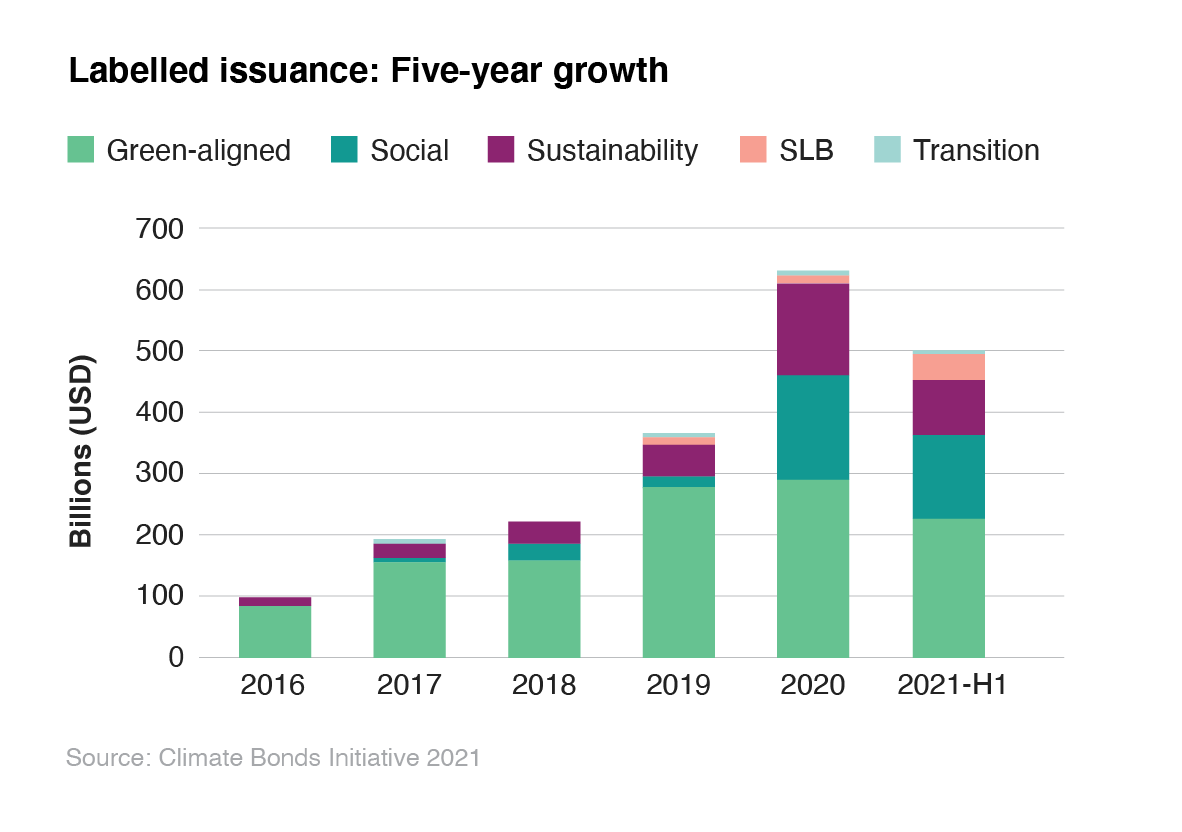
This is a hugely successful model for funding green infrastructure. So far in 2021, green bond issues have hit nearly $356 billion globally, compared to about $300 billion for all of 2020, according to the nonprofit Climate Bonds Initiative (CBI). And with asset managers of trillions of dollars seeking investments to green their portfolios, green bond issues will likely hit $1 trillion annually by 2023, perhaps even in 2022, according to Sean Kidney, CEO and founder of CBI.

Flying the Plane While Building It

The SLB market, with its first issue in 2019, is just taking off — hitting issuance of $32.9 billion in the first half of 2021, up from zero in the same period of 2020. It’s tiny compared to the whole labeled bond market, but growing fast.

Sustainability-linked bonds, not to be confused with sustainability bonds, raise funds for general use rather than pre-specified projects. And SLBs are structured so that the yield is linked to the issuer’s ability to meet climate transition goals or “key performance goals” such as certain carbon emissions reductions that are set by the company. If the company fails to meet these KPIs, they agree to pay a higher yield, say 25 or 30 basis points more, to bondholders.

In essence, the issuer pays less for capital if they meet their climate targets. Raising money in this way creates an incentive toward sustainability for companies that are just beginning the transition process, especially in hard-to-abate sectors.

Even though the market lacks a set of standards for setting performance goals, verification and reporting, there is a growing number of SLB issuers raising money, and some are certainly raising eyebrows.

Having It Both Ways

Back to that coal giant, Adani Group, based in Ahmedabad, India. In July, Adani Electricity Mumbai Ltd. (AEML), a utility under the conglomerate’s transmission subsidiary, raised $300 million through an SLB.

AEML’s bond lays out an ambitious plan, with short-term key performance indicators (KPIs) to increase the renewable energy in its portfolio to 30% by 2023 and then to 60% by 2027, from a current level of 3%. It maps its goals to U.N. Sustainable Development Goals and the Paris Agreement and stipulates step-ups in the coupon rate if the company fails to meet its goals.

The issue was “oversubscribed 9.2x by high-quality real money global investors …” the company press release trumpeted. Impressive right?

But in the bigger picture, not so much, according to Tim Buckley, an expert on the energy market in India for the Institute for Energy Economics and Financial Analysis (IEEFA). In his view, a sustainability-linked bond in a green subsidiary merely frees up capital for Adani Group as a whole to continue business as usual – and that business is building coal capacity at an alarming rate.

The conglomerate, under patriarch Guatam Adani, has six listed companies. While one company, Adani Green, is an aggressive leader in installing renewable energy infrastructure in India, another is profiting from coal imports, Adani Ports, and yet another, Adani Enterprises, is perhaps the biggest private developer of new coal capacity in the world. Adani Transmission supports both the renewable and the fossil-fuel sides of the business.

“Practically, the conglomerate runs as a single group,” with Guatam Adani as controlling shareholder and chairman of all six listed companies in the group, says Buckley. “They have intercompany loans left right and center. They have intercompany transactions left right and center. They have behind-the-scenes unsecured, undisclosed loans left right and center and they transfer assets willy-nilly just to facilitate the greenwash.”

SLBs: The Promise and the Limits

There are climate finance forces at work to create order and consistency in the SLB market. One challenge is to allow flexibility so hard-to-abate sectors can access financing for a transition to a cleaner business model, without leaving the door wide open to greenwashing. Another is to require goals or KPIs that are sufficiently ambitious without being unreachable. It’s a fine balance.

SLBs as they currently exist also present another major problem: They seem to reward investors with higher returns when the company they invested in fails to reach its climate transition targets. That seems counterintuitive if the goal is to drive investment to climate solutions.

So for now, the SLB market includes an array of the good, the bad and the ugly. While climate finance experts hash out the proper framework for SLBs, green investors are left to scrutinize individual companies to determine their ambition, roadmaps and, perhaps most of all, their sincere commitment to making a transition to climate-friendly business.


Get the US Green Bond Review free when you subscribe to Climate Finance Weekly.

Article by Kari Huus, managing editor for the US Green Bond Review from Climate & Capital Media. She was a long-time reporter for MSNBC.com, with stints covering international business, foreign policy, and national affairs. Earlier, she covered China for the Far Eastern Economic Review and Newsweek in Beijing. 

Energy & Climate, Featured Articles, Impact Investing, Sustainable Business

The Rise in Green Bonds: What This Means for Investors and Our Planet

By Leslie Samuelrich, Green Century Funds

In the first half of 2021, the total value of new green bonds issued reached $248.1 billion, more than the value of all bonds issued in all of 2020.

Leslie Samuelrich Green Century FundsGreen bonds help finance environmental and climate change mitigation projects around the world, and they’re already proven to be an effective way to mobilize private capital. They have the same fundamental risk and return characteristics as conventional bonds, and investors may not need to sacrifice yield or assume additional risk to add these fixed income options to their portfolios.

The rising use of green bonds is great news for our planet. We need to invest roughly $6.9 trillion in sustainable infrastructure each year up to 2030 to meet the goals of the Paris Agreement – and government budgets are insufficient. Green bonds are playing an increasingly important role in mitigating climate change.

Green Century° was an early proponent of green bonds. The Green Century Balanced Fund purchased its first green bonds in 2008, when they were still a new development. Today, green and sustainable bonds constitute more than 60 percent of the fund’s fixed-income holdings.1

While the marketing of green bonds is expanding, not all “green” bonds fund projects with clear and measurable environmental benefits. To ensure that you and your clients are making an impact, you may want to seek bonds that follow the standards that we use:

  • Have earned the Green Bond label. While the term “green bond” is not legally defined in the U.S., many issuers abide by voluntary third-party standards that determine which projects are eligible for green bond financing.
  • Follow value-based screens. We do not invest in bonds associated with fossil fuels, tobacco, factory farms, GMOs, nuclear power or weapons (including U.S. Treasury bonds).
  • Score highly on the issuer’s financial standards, credit quality, and Environmental, Social, and Governance (ESG) criteria.
  • Make an impact. We seek solution-oriented bonds, including those that provide clean water, public transportation and renewable energy.

A sustainable investment strategy which incorporates environmental, social and governance criteria may result in lower or higher returns than an investment strategy that does not include such criteria.

Recently, the Balanced Fund purchased a green bond issued by Visa, Inc.,* which is the first green bond in the digital payments industry and exemplifies the expanding options available to investors. This bond supports sustainable buildings, energy efficiency renovations, on-site clean energy projects and clean energy purchasing. In under a year, these projects helped Visa reduce its carbon emissions by over 125,000 metric tons CO2e, equivalent to the emissions from powering 15,000 homes for one year, and work towards its goal of carbon neutrality by 2040.

Since green bonds’ purpose is known, investors can see the difference they’re making, whether by helping coffee farmers in Africa adopt more sustainable practices (Starbucks Sustainability Bond*) or expanding public transportation to reduce carbon pollution (The San Francisco Transbay Transit Bay Bond*). Adding green bonds to a portfolio allows your fixed income holdings to make a positive impact.


Article by Leslie Samuelrich, who leads Green Century’s unique three-pronged approach combining a fossil fuel free sustainable investing strategy with award-winning shareholder advocacy and support of environmental nonprofits. The Green Century Funds have experienced 570 percent growth under her leadership and reached $1B AUM recently.

Ms. Samuelrich has more than 30 years of experience in ESG investing, corporate engagement, and environmental and public health advocacy. Her comments have appeared in The Wall Street Journal, Bloomberg, the New York Times, and many other outlets. She is serving her second term on the Board of Directors of the Forum for Sustainable and Responsible Investment (USSIF), was honored with the 2019 SRI Service Award and selected as one of the “43 World-Changing Women in Conscious Business” in 2020.

About Green Century Capital Management

° Green Century Capital Management, Inc. (Green Century) is the investment advisor to the Green Century Funds (The Funds). The Green Century Funds are the first family of fossil fuel free, responsible, and diversified mutual funds in the United States. Green Century Capital Management hosts an award-winning and in-house shareholder advocacy program and is the only mutual fund company in the U.S. wholly owned by environmental and public health nonprofit organizations.

Footnote: 1. As of June 30, 2021, green and sustainable bonds comprised 62.42 percent of total bonds held in the Green Century Balanced Fund.

*  As of June 30, 2021, Visa, Inc., Starbucks Corporation, San Francisco Bay Area Rapid Transit District, the U.S. International Development Finance Corporation comprised 0.49%, 2.07% and 0.00%; 1.89%, 0.69% and 0.00%; 0.54%, 0.00% and 0.00% and 1.49%, 0.00% and 0.00% of the Green Century Balanced Fund, the Green Century Equity Fund and the Green Century MSCI International Index Fund, respectively. References to specific securities, which will change due to ongoing management of the Funds, should not be construed as a recommendation by the Funds, their administrator, or their distributor.

You should carefully consider the Funds’ objectives, risks, charges and expenses before investing. To obtain a Prospectus that contains this and other information about the Funds, please visit www.greencentury.com for more information, email info@greencentury.com or call 1-800-934-7336. Please read the Prospectus carefully before investing.

Stocks fluctuate in response to factors that may affect a single company, industry, sector, country, region or the market as a whole and may perform worse than the market. Foreign securities are subject to additional risks such as currency fluctuations, regional economic or political conditions, differences in accounting methods, and other unique risks compared to investing in securities of U.S. issuers. Bonds are subject to risks including interest rate, credit, and inflation. A sustainable investment strategy which incorporates environmental, social and governance criteria may result in lower or higher returns that an investment strategy that does not include such criteria.

This information has been prepared from sources believed to be reliable. The views expressed are as the date of this writing and are those of the Advisor to the Funds.

The Green Century Funds are distributed by UMB Distribution Services, LLC. 235 W Galena Street, Milwaukee, WI 53212. 10/21

Energy & Climate, Featured Articles, Food & Farming, Impact Investing, Sustainable Business

Green Bond-anza: Making Sense of the Categories

By Benjamin J. Bailey, Praxis Mutual Funds & Everence Financial

Benjamin J Bailey of Praxis Mutual Funds and Everence FinancialWind turbine image courtesy of Praxis Mutual Funds

INTRODUCTION

With the recent announcement that the European Union will begin issuing green bonds starting in October of 2021 and predictions that have annual green bond issuance hitting $1 trillion by 2023, many have been left wondering: “What exactly is a green bond?”

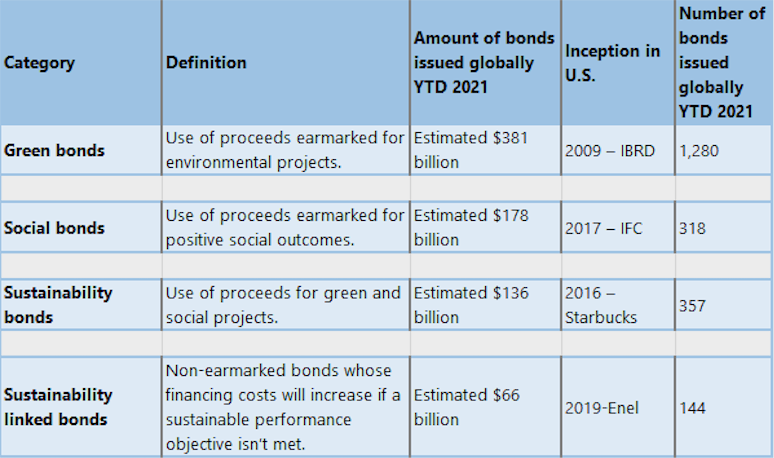
Green bonds allow investors to buy bonds that make a specific impact on the environment, often with specific attention to climate. Green bonds first came to the U.S. market in 2009 with an International Bank for Reconstruction and Development (IBRD) issuance. The green bond market started slowly, but a slow and steady start has led to the strong and diverse market of today. Successes in the green bond space later led to the introduction of social and sustainability bonds. Recently, the issuance of positive impact bonds has grown to include new categories, such as blue bonds and sustainability-linked bonds.

For many investors and clients, it can be exciting to learn that by actively lending to issuers who are making a positive impact, they are able to support a variety of life-altering causes such as bettering the Earth’s air quality, educating children, providing affordable housing and more.

Traditionally, investors who wanted to make an impact were more likely to “screen out” bonds that had negative societal impacts. However, investing in positive impact bonds allows investors to make a greater, more diverse and more intentional impact.

Current Trends in the Green Bonds Space

Scathing climate reports like IPCC climate report released in August 2021 and growing concern about climate change has led to accelerated growth in the green bonds space. The green bond market continues to grow at an exponential pace, with cumulative green bond issuance surpassing $1.2 trillion in 2021. Additionally, when thinking about the breadth of the green bond market, it is important to note that there has consistently been strong issuance in different maturity buckets and across different rating categories.

In the U.S., the social and sustainability bond issuance has been lower than that of green bonds, but these markets have grown substantially in recent years, with a huge increase in 2020. The COVID-19 pandemic and racial justice movements are partially what spurred growth in social bond issuance starting in 2020. For example, this commitment to racial justice can be seen in the financial corporate bonds that went to supporting black-owned banks. Similarly, the COVID-19 pandemic catalyzed the sustainability bond issuance in 2020 with several large companies like Alphabet and Sysco issuing sustainability bonds.

This is not just a phenomenon in the U.S., as globally, too, green bonds are on a tear. According to Bloomberg, the issuance of positive impact bonds continues to rise globally; already in 2021, over $794 billion in green, social and sustainability bonds have been issued versus just under $500 billion in all 2020. Issuance continues to increase each year, with YTD 2021 already having 2,095 different positive impact bonds issued versus only 1,362 issued in 2020.

Comparing Green Bonds and Other Impact Bond Categories

Comparing Green Bonds with Other Bonds from Bloomberg-Sept. 21
Chart Source: Bloomberg, September 24, 2021

What Does the Future Hold?

We continue to see high growth in the social, green and sustainability bonds market, and due to the increasing concern about the environment and mitigating climate change, we anticipate a continued appetite for green bonds.

As the positive impact bond market continues to grow, some investors might have heard the term sustainability-linked bonds (SLB), and they might wonder what role SLBs could play moving forward. Sustainability-linked bonds don’t necessarily use the proceeds for green projects; instead, the coupon of the bond can vary based on whether or not the issuer meets predefined green or social objectives within a predefined timeline. This penalty in higher borrowing costs should motivate the issuer to meet the set targets.

The SLB market is still relatively young and while some issuers have strong environmental, social and governance (ESG) integration and a more progressive business model, other companies may be further behind on their ESG journey. While some investors may prioritize buying bonds from companies that already have high ESG ratings, sustainability-linked bonds that are issued by companies with historically low levels of ESG integration should not be discounted solely due to their poor sustainability performance in the past.

Moving forward, sustainability-linked bonds could be seen as a tool that impact investors can use to incentivize companies that have struggled to address ESG concerns to become more sustainable, increase diversity or implement other green or social initiatives. Our criteria in analyzing SLBs is to make sure that real impact is being delivered, that the stated objectives are not too easily achieved and that the coupon increase is meaningful.

At Praxis Mutual Funds®, we know that there is more than one way that investors can directly impact the world. Strategically buying positive impact bonds is one approach that can drive improvements within issuers. Additionally, we stress the importance of investor engagement as an important tool in encouraging companies to embrace better governance and increased sustainability.

Although shareholder engagement is better known, bondholders can also make an impact by reaching out to issuers and underwriters about important ESG topics—especially when it comes to companies who are more likely to favor traditional solutions. Bondholder engagement allows investors to effectively convey to companies how these issues are important to them and the company’s future.

As positive impact bonds continue to rise in issuance and popularity with investors, it is important to see how these bonds open another avenue for savvy impact investors to make a real difference with their portfolios. By understanding the distinctions between green, social, sustainability and sustainability-linked bonds, investors can and should make intentional choices about how they want their bond purchases to impact the world—be it through underwriting the addition of solar to a utility company, encouraging a company to increase diversity in the board room, supporting affordable housing construction or any number of projects that positive impact bonds back worldwide. Our changing climate demands major structural changes in many areas, and people should realize that their investments can make a difference, too. Green bonds and positive impact bonds are a great way to get started by investing together, impacting the world.


Article by Benjamin Bailey, CFA®, Vice President of Investments, Praxis Mutual Funds.

Benjamin joined Everence in 2000 and was named Co-Portfolio Manager of the Praxis Impact Bond Fund in March 2005, and Co-Manager of the Praxis Genesis Portfolios in June 2013. In 2015, he was named Senior Fixed Income Investment Manager, providing leadership to the fixed income team and oversight to external sub-advisory relationships. Benjamin is a 2000 graduate of Huntington College in business-economics. Connect with Benjamin on LinkedIn.

Disclosures and Additional Information

Consider the fund’s investment objectives, risks, charges and expenses carefully before you invest. The fund’s prospectus and summary prospectus contain this and other information. Call 800-977-2947 or visit praxismutualfunds.com for a prospectus, which you should read carefully before you invest.

Praxis Mutual Funds are advised by Everence Capital Management and distributed through Foreside Financial Services, LLC, member FINRA. Investment products offered are not FDIC insured, may lose value, and have no bank guarantee.

As of Aug. 31, 2021, the Praxis Impact Bond Fund has invested 0.17% of its assets in Enel, 0.39% of its assets in IBRD, 0.32% of its assets in IFC and 0.14% of its assets in Starbucks; the Praxis Growth Index Fund has invested 7.09% of its assets in Alphabet Inc. and 0.34% of its assets in Starbucks; the Praxis Value Index Fund has invested 0.38% of its assets in Starbucks and 0.26% of its assets in Sysco; the International Index Fund has invested 0.36% of its assets in Enel. Fund holdings are subject to change. To obtain holdings as of the most previous quarter, visit praxismutualfunds.com.

Bond funds will tend to experience smaller fluctuations in value than stock funds. However, investors in any bond fund should anticipate fluctuations in price, especially for longer-term issues and in environments of rising interest rates. The Fund’s investment strategy could cause the fund to sell or avoid securities that may subsequently perform well, and the application of ESG screens may cause the fund to lag the performance of its index.

Energy & Climate, Featured Articles, Impact Investing, Sustainable Business

Green Bond Standards Advance, Bringing Greater Clarity for Issuers, Investors

By Henry Mason and Brian Ellis, Calvert Research and Management

Henry Mason and Brian Ellis - Calvert Research and MgmtThe green bond market, which is anticipated by Climate Bonds Initiative (CBI) to reach $1 trillion annually by 2023, has played an increasingly important role in financing assets needed for the transition to a low-carbon future. In 2021 labelled green bond issuance as a percentage of the total has grown to 20% in Europe and 3% in the US, with green bonds making up approximately half of all labelled bonds ($356.2 billion in YTD issuance) and instruments with other green elements (sustainability and sustainability-linked bonds) comprising more than half of the remainder.1 Issuers from 47 different countries executed a green debt deal in the first half of 2021 alone.2

The collective focus on green project categories that address climate change mitigation-related issues (such as energy, buildings and transport) has remained strong despite the expansion of the market — likely due to increasing adoption of climate targets at national and organizational levels (Exhibit 1).
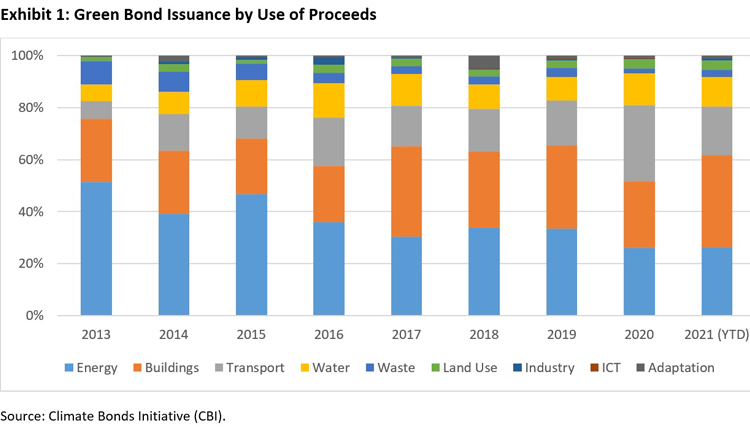
Exhibit 1 - Green Bond Issuance by Use of Proceeds - source - Climate Bonds Initiative - Calvert

This growth, however, has outpaced the development of precise global standards and guidance as to which bonds qualify as “green.” This creates present-day hurdles for issuers and investors, placing further market growth at risk to the extent that trust in the “green bond” label could falter in the context of growing scrutiny over investment funds’ possible greenwashing. Many standard-setting bodies have recently sought to address this issue.

Standardization Aims to Increase Confidence, Credibility

While use of bonds proceeds fairly quickly coalesced around the guidelines laid out in the International Capital Market Association’s (ICMA’s) Green Bond Principles,3 certain corners of green finance continue to grapple with uncertainty. Some issuers remain doubtful as to whether their projects have sufficient impact to qualify in the green financing market. Others fear their perception among ESG investors as a non-green entity may disqualify them from participation.

Some notable guidance has emerged since the beginning of 2020. One key area is “transition” finance, where companies in higher-carbon-emitting industries and businesses look to pursue a greener path. In September 2020, CBI and Credit Suisse published “Financing Credible Transitions,” a framework that defined specific principles for an ambitious climate transition strategy and proposed a set of labels for economic activities along the spectrum from net-zero aligned to stranded to bring clarity to potential entrants to the transition bond market. In December 2020, ICMA released its “Climate Transition Finance Handbook”, which delivered issuer-level recommendations on the disclosure necessary to generate trust from investors regarding transitions, even if it did not provide a definitive framework for defining transition bonds as some had hoped. Broader frameworks like the Transition Pathway Initiative and IEA Net Zero by 2050 Roadmap help to define the credibility of issuer transition strategies and trajectories to date. CBI contributed further to this effort in September 2021 with the publication of a discussion paper on transition finance for transforming companies. This document proposed “hallmarks of a credibly transitioning company” — adoption of Paris-aligned targets, and evidence of robust plans and governance, implementation action, internal monitoring, and transparent reporting — to encourage the disclosure of material and decision-useful information by issuers, and to assist investors in their evaluation of the adequacy of an issuer’s transition.

Investor concerns generally center on whether they have adequate information to make well-informed decisions. Greater formalization of transition benchmarking and green bond qualifications is expected to provide “confidence for investors, credibility for issuers and clarity for bankers.4 This, in turn, could promote greater market growth in high-emitting areas of the economy.

EU Taxonomy Advances

The European Union (EU) has established a sustainable activities taxonomy set to underpin the EU Green Bond Standard and serve as a benchmark for a bond’s alignment with six key environmental objectives. The first delegated act on sustainable activities for two of those objectives — climate change mitigation and climate adaptation — was adopted in June 2021, with preliminary recommendations for the remaining four objectives (water, circular economy, pollution prevention & control, and biodiversity & ecosystems) also published earlier this year. The EU taxonomy will provide significant guidance to investors and issuers worldwide on what economic activities may be considered sustainable and the metrics that can be used to make such determinations and may serve as an effective template for other regulatory regimes that seek to provide similar guidance to markets.

China Raises its Standards

China has historically been the only major center of green bond issuance where a significant percentage of green bonds consistently fall short of broadly accepted international standards. However, it has recently made significant headway in raising its green bond qualification standards.

In May 2020, the People’s Bank of China (PBOC), China’s central bank, released a consultation draft of its 2020 Green Bond Catalogue, which removed “clean utilization of fossil fuel” projects from its list of programs eligible to be funded by green bonds. The final draft was published in April 2021, along with a commitment from PBOC Governor Yi Gang to introduce more consistent rules on disclosure. These updates also consolidated standards for issuers across China’s disparate jurisdictions that were previously overseen by several different regulators. The National Development and Reform Commission (China’s state economic planning ministry) and China Securities Regulatory Commission jointly rolled out the new Green Bond Catalogue with the PBOC. This provided a more coherent view on acceptable green projects in the country. Differences remain between these sometimes less-stringent standards and internationally accepted green project categories, such as their allowance for natural gas-fired power generation, indicating some level of dislocation is still likely to persist.

Reporting Needs

Reporting on labeled green bond issuance is one of the more fragmented elements of the market, and it remains a challenge for advisors to reflect the impact of their investments to clients. While most issuers of labeled debt today explicitly commit to reporting on the impact of their securities, this has not always been the case. Moreover, such reporting arrives to investors in a variety of formats with varying levels of granularity, timeliness and disclosures of underlying assumptions.

Third-party efforts such as the ICMA Harmonized Handbook for Impact Reporting and the NPSI Position Paper on Green Bonds Impact Reporting have emerged as best-practices frameworks to enable effective impact reporting.

Investors can accelerate impact metrics development by telling issuers what information they deem most critical and what they regard as market best practices. As engagement with issuers, consultants and banks continues, we expect to see greater market growth and comprehensive green bond standards formalized.

Potential Pitfalls

Although regulatory guidance on the definition of environmentally sustainable investments has been broadly anticipated by the market and is seen as a necessary step, the rapid growth of initiatives risks additional complexity as well. The Future of Sustainable Data Alliance recently published an overview of the various taxonomy projects underway around the world, detailing five regulations already in place, three in draft, 15 under development and two being discussed as a possibility. With notable exceptions, such as the regionally applicable regulations developed by the EU and the ASEAN Taxonomy Board, these regulations are commonly established at the country level, indicating more may yet arise.

As different bodies strive to provide the market with the standardization it is looking for, they risk solidifying differing regional or national definitions of “green” and creating a complex web for issuers, investors and other stakeholders to navigate. Nevertheless, the institution of taxonomies around the globe, so long as they operate on fundamentally similar principles, may provide a much greater benefit in terms of reducing greenwashing concerns. Efforts are already underway to institute “Common Ground” taxonomies, such as the one in development between the EU and China as part of the International Platform on Sustainable Finance (IPSF).

The green bond market is critical to financing the global transition to a more environmentally sustainable society in line with scientific targets. Calvert’s process for evaluating green bonds places a focus on the trajectory and intentionality of issuers in addition to the qualities of financed assets to parse the true impact of green bonds, but even for sophisticated green bond investors, improved disclosure and standardization of green and sustainable bond classifications will help facilitate meaningful investment analysis in addition to promoting broader market growth.


Article by Henry Mason, an ESG senior research associate for Calvert Research and Management; and Brian Ellis, a vice president and portfolio manager for Calvert Research and Management

See their biographies below.

The value of investments may increase or decrease in response to economic and financial events (whether real, expected or perceived) in the U.S. and global markets. Investments in income securities may be affected by changes in the creditworthiness of the issuer and are subject to the risk of nonpayment of principal and interest. The value of debt securities also may decline because of real or perceived concerns about the issuer’s ability to make principal and interest payments. As interest rates rise, the value of certain income investments is likely to decline.


Henry Mason is an ESG senior research associate for Calvert Research and Management, which specializes in responsible and sustainable investing across global capital markets. He is responsible for evaluating sustainable fixed income, as well as supporting environmental, social and governance (ESG) research coverage of the electrical equipment industry. He joined Calvert in 2019.

Henry began his career in the investment management industry in 2019. Before joining Calvert, he was a climate change and sustainability specialist at ICF, a global management consulting firm. Previously, he served as a research fellow at the National Center for Environmental Economics, an office of the EPA, where he conducted quantitative econometric research to support rulemaking.

Henry earned a B.A. as well as an M.E.S. from the University of Pennsylvania.

Brian Ellis is a vice president and portfolio manager for Calvert Research and Management, which specializes in responsible and sustainable investing across global capital markets. He joined Calvert Research and Management in 2016.

Brian began his career in the investment management industry in 2006. He has been affiliated with the Eaton Vance organization since 2016. Before joining the Eaton Vance organization, he was a portfolio manager of fixed-income strategies for Calvert Investments. Previously, he was a software engineer and analyst at Legg Mason Capital Management (now ClearBridge Investments).

Brian earned a B.S. in finance from Salisbury University. He is a CFA charterholder and an FSA credential holder. He is a member of the CFA Institute and the CFA Society of Boston.

Footnotes:
[1] BofA ESG in Fixed Income Quarterly, “On track for $1tn in 2021 bond issuance,” October 6, 2021.
[2] Climate Bonds Initiative, Sustainable Debt Market Summary, H1 2021, September 2021.
[3] ICMA’s suite of guidance for sustainable finance instruments – The Green Bond Principles, The Social Bond Principles, The Sustainability Bond Guidelines, The Sustainability-Linked Principles and Climate Transition Finance – has been instrumental in creating a shared understanding of sustainable finance instruments. However, more technical guidance will be necessary to provide heavy-emitting issuers with a road map to accessing sustainable capital.
[4] Climate Bonds Initiative, ”Financing Credible Transitions: How to ensure the transition label has impact,” September 2020.

Energy & Climate, Featured Articles, Impact Investing, Sustainable Business

Investing in a Disruptive Climate

By Scott Schwartz, EntentVest

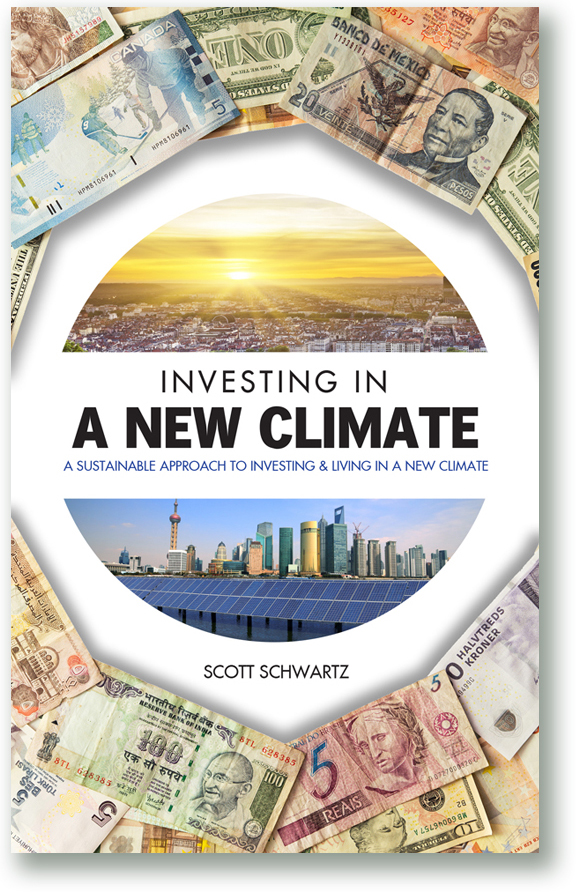
Investing in A New Climate-A sustainable approach to investing and living in a new climate by Scott Schwartz by Scott SchwartzMy book, Investing in a New Climate is not about doom and gloom, but about adapting to change. Climate change is about the shifting of circumstances we have long taken for granted. To survive — and succeed — we must adapt. We must learn how to live and how to plan ahead within the realm of reasonable extrapolation of a changing global climate. Warming of the climate system is unequivocal and, since the 1950s, many of the observed changes are unprecedented. The atmosphere and oceans have warmed, the amounts of snow and ice have diminished, the sea level has risen, and the concentration of greenhouse gases has increased.

We need to think about a new normal. This new normal has to do with a changing climate, but not solely the meteorological climate. The concept of the changing climate also has to do with what a new meteorological climate means to economies, industries, and financial markets around the world. The meteorological climate is one catalyst, but I am talking about Climate with a big “C.” Adapting to the changing climate also includes advances in technology such as in medicine, energy, transportation, artificial intelligence, and computing.

Climate change is inevitable — a static climate is short-lived. There is no doubt that the Earth is getting warmer. We can put our head in the sand and not accept that change is taking place, or we can take a proactive and sensible approach to dealing with the changing climate.

What can we do?

First, get a handle on the facts of what’s happening. Second, determine what we can do about it in our own lives. And finally, put together a plan to help mitigate changes and to adapt to the inevitable changes. Some things we can do are understand economic trends, look at industrial impacts and modify our lifestyles. We need to analyze our current investments and consider updating our investment portfolios. Should we invest in northern European agriculture industries, companies that build dikes, and/or water purification technologies? Perhaps we should not retire to a seashore that is about to be underwater.

Meteorological changes affect economic trends. As the Earth gets warmer, northern latitudes will become more temperate, while equatorial and sub-equatorial climates could become more stressed. Countries in higher latitudes that are generally more economically successful will likely weather the change better, while lower latitude countries that are currently on the edge will likely become even more stressed.

With so many types of climate change occurring (economic, meteorological, industrial), we don’t have the luxury of denying that change is happening. There is a metaphoric thunderstorm in front of our planet. Having been a professional pilot, I have faced quite a few storms. In flight, we have three options: fly around the storm, turn around, or fly through the storm. Most of us don’t want to turn around or fly through the storm. Most of us think modifying our course and avoiding the storm is the most prudent approach. So, let’s gather the facts, analyze the situation, and modify our course. And let’s look at the troubling, new, and exciting opportunities that emerge.

The following are sustainable sectors to consider with specific ETF (Exchange Traded Funds) as examples of investments to consider investing in:

  1. Food and Agriculture:  KROP global ETF seeks to provide investment results that correspond generally to the price and yield performance of the Solactive AgTech & Food Innovation Index. The fund invests at least 80% of its total assets, plus borrowings for investments purposes, in the securities of the underlying index and in ADRs and GDRs based on the securities in the underlying index. The underlying index is designed to provide exposure to companies that are positioned to benefit from further advances in the fields of agricultural technology and food innovation (Mirae Asset Global Investments: KROP). No ESG Rating
  2. Water:  First Trust Water FIW ETF follows the ISE Clean Edge Water Index and has 36 holdings, including Roper Technologies and Danaher Corp. a global science and technology innovator (First Trust Water: FIW). MSCI ESG Rating AA
  3. Renewable Energy: ICLN invests in global clean energy companies, which is defined as those involved in the biofuels, ethanol, geothermal, hydroelectric, solar, and wind industries. ICLN also includes companies that develop technology and equipment used in the process. (iShares Global Clean Energy: ICLN) MSCI ESG Rating AA
  4. Real Estate and Construction: Invesco GBLD MSCI Green Building ETF tracks an index of companies engaged on “green building,” such as the design, construction, redevelopment, retrofitting or acquisition of properties that have been certified as meeting certain building standards for energy efficiency and resource sustainability (Invesco MSCI Green Building: GBLD). MSCI ESG Rating A

These sectors and their corresponding ETFs are just examples and are not an exhaustive list of investment options. They’re intended as a starting place to consider investing in a new and disruptive climate. The big takeaway is that “the economy is changing”: We can adapt our portfolios or lose out on potential investment performance.


Article by Scott Schwartz, CFP®, financial analyst and CEO of the sustainable investment advisory firm EntentVest Inc. His book Investing in a New Climate: A Sustainable Approach to Investing in a New Climate was published in August 2021.

Additional Articles, Energy & Climate, Food & Farming, Impact Investing, Sustainable Business

Signup to receive GreenMoney's monthly eJournal

Privacy Policy
Copyright © GreenMoney Journal 2025

Website design & development by BrandNature

Global Events Calendar

View All Events

april

21aprAll Day232026 Sustainable Packaging Coalition: SPC Impact – Nashville

27aprAll Day30Women Deliver 2026 Conference (WD2026) – Melbourne

X