Tag: Impact Investing

Investing in Water Stewardship
By Thomas Schumann and Willem Buiter, Thomas Schumann Capital & Columbia University

Scarcity of fresh, clean water will be a defining issue for the 21st century. It will be a major challenge – for many an existential one – even if climate change is addressed effectively. Further global warming will exacerbate freshwater shortages in much of the world, although increasing evaporation and higher average precipitation will benefit some regions. Reduced snowfall, rising sea levels, increased likelihood and severity of extreme weather events will adversely affect the availability and quality of fresh water in many regions. Freshwater scarcity is one of the key dimensions of water risk confronting businesses in every sector of the economy, as captured in the TSC Water Security Index.

Fresh water is a unique resource. It is essential to life, prosperity, and environmental sustainability. Many see it as a gift from God. It is also a limited, scarce resource. Given enough time it is renewable through nature’s hydrologic cycle, or, more expeditiously, through the expenditure of real resources on recycling through treatment and purification. At any given point in time demand outstrips supply and water must be rationed.  Every community faces the challenge of designing a rationing mechanism that is efficient, environmentally sustainable, and just. Markets for physical water and for water rights must play a key role in ensuring efficient and environmentally sustainable water use. The government must ensure an equitable and sustainable allocation of water.

Water is also a private good that can be allocated efficiently using the market mechanism. First, it is “rival in use” (you can’t drink, what I am drinking). Second, it is in many cases quite easily “excludable”: the cost of preventing “free” water consumption is often low. Excludability requires that water consumption is observable and that property rights in water can be enforced. There are issues with the definition and enforcement of surface water rights, that can become acute when a river is shared by two or more nations. Groundwater rights can encounter common access problems. All these issues are surmountable. Water can be priced.
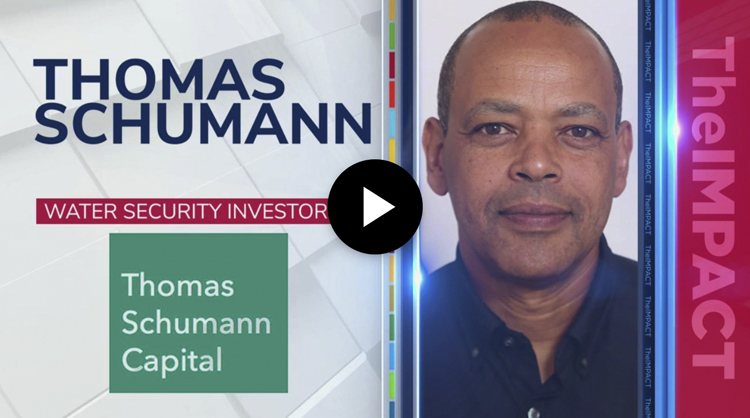
Thomas Schumann Water Security Investor on Fintech.TV
FINTECH TV The Impact:  In this episode Thomas Schumann, a sustainability pioneer and the only expert for Water Security investment and financial products, discusses why the climate crisis is a water crisis, lack of water risk assessment, the global effect of the water crisis and much more.

It will not be possible to achieve a fair, efficient, and sustainable allocation of fresh water unless water is priced in all its uses to reflect its opportunity cost and scarcity value, including any negative environmental externalities.

Making sure that the true social marginal cost of delivering fresh, clean water is charged for agricultural water use is key. Globally, agriculture irrigation accounts for 70% of all freshwater withdrawals. The figure is over 40% in many OECD countries, including the USA.

Agricultural water is frequently provided for free or at heavily subsidized prices. Making farmers pay the full social marginal cost of water will raise the cost of agricultural products, including food and other essentials. This will disproportionately impact low-income households. The government should address these equity issues through income support using fiscal instruments, like a universal basic income.

Household water consumption likewise is often priced well below its social marginal cost. Raising household water prices inflicts hardship on low-income households. Again, fiscal support for low-income households must be forthcoming to address this fairness issue. A second-best solution would be to use a “block tariff”, making the social minimum volume of water available at a low price (or free of charge) but charging the full social marginal cost for water use above the social minimum volume.

The physical integration of water markets is far from complete. In California, agricultural water district rates in June 2021 ranged from $200 – $500 per acre-foot in the southern end of the Central Valley to less than $1.00 per acre-foot in some districts in the northern part of the state. Cross-border freshwater scarcity differences can be even more dramatic – compare the water-abundant UK or the Netherlands to the water-deprived nations in the Middle East and North Africa (MENA).

Transformative projects are underway to deepen integration of physical water markets and reduce interregional price differences in an environmentally sustainable manner. Two examples are sponsored by Thomas Schumann Capital. One is SkyH2O’s Atmospheric Water Generation (AWG), based on a proprietary technology which extracts clean fresh water from the atmosphere. Productive capacity can be located close to the ultimate customers. Two key drivers of financial viability are atmospheric humidity and the cost of energy. The second pathbreaking initiative is Project Greenland which aims to bring the abundant high-quality fresh water contained in the polar icecaps to markets in the MENA region. Its Iceberg Management and Water Extraction Program identifies appropriate free-floating North Atlantic icebergs which are towed to an operational location in the west of Scotland where the ice and water are processed for further transportation to the ultimate MENA consumers.

The higher water prices that are necessary and unavoidable will serve environmental sustainability by discouraging wasteful water usage; they will also boost the financial viability of innovative private sector projects like the two sponsored by Thomas Schumann.

As the integration of the physical water markets progresses, deeper and more competitive spot markets for water rights have developed. Notable examples can be found in California and in Australia. The trading of long-term leases and forward contracts has prompted the creation of a water rights futures market in California. Other water rights derivatives markets are imminent. Properly regulated and supervised these markets for water rights as an asset can improve the intertemporal allocation of water. The water century is here now.


Article by Thomas Schumann, Thomas Schumann Capital and Willem Buiter, Columbia University

BIOGRAPHIES:

Thomas Schumann is the founder of Thomas Schumann Capital. He is a sustainability pioneer and expert for Water Security investment and financial products. His birthplace, Frankfurt am Main, Germany’s financial capital, and the 2015 world’s most sustainable city according to the Sustainable Cities Index inspired his path. Thomas’ MTP (Massive Transformative Purpose) is Agenda 2030, “Transforming our World”, specifically United Nations Sustainable Development Goal 6 “Water Security” and 13 “Climate Action”.

Willem Buiter is an independent economic advisor and speaker. He is currently an Adjunct Professor of International and Public Affairs at Columbia University and an Adjunct Senior Fellow at the Council on Foreign Relations. He was Global Chief Economist at Citigroup from 2010 to 2018 and a Special Economic Advisor at Citigroup from 2018 to 2019. Previously, he was Chief Economist and Special Counselor to the President of the European Bank for Reconstruction and Development and an original member of the Monetary Policy Committee of the Bank of England. He was the Juan T. Trippe Professor of International Economics at Yale University and has also held professorships at the London School of Economics and Cambridge University. He is the author of 78 refereed articles in professional journals and seven books.” He is an advisor/consultant to Thomas Schumann Capital.

Energy & Climate, Featured Articles, Impact Investing, Sustainable Business

The Role Investors Play in Addressing Global Water Challenges

By Suleyman Saleem, Calvert Research and Management

(Above photo credit: Getty Images, courtesy of Calvert Research and Management)


Suleyman Saleen Calvert Research and MgmtResponsible investors seek the potential for long-term value creation and positive impact throughout the global capital markets. In doing so, asset managers like Calvert Research and Management look to invest in companies and other issuers that balance the needs of financial and nonfinancial stakeholders as well as demonstrate a commitment to the global commons and to the rights of individuals and communities. Climate change has been a key investment strategy focus, as more investors subscribe to the overwhelming conclusion of climate scientists that the Earth’s climate is warming, and human activity is the primary driver of this warming.

Amid all of the key factors related to climate change, water stands out as the most nuanced – it is both a symptom and a cure. Higher atmospheric temperatures are one of the primary culprits of climate change, causing the expansion of sea water and melting of polar ice, which are projected to raise global sea levels by 0.26-0.77 meters by 2100 in a 1.5-degree scenario and even higher in a 2-degree scenario (note: we are currently on a path above 2 degrees).

In certain regions, water scarcity will likely continue to emerge as a threat to daily life. Different regions face different problems such as access to clean drinking water and adequate wastewater treatment in more agricultural regions and infrastructure and water distribution challenges in cities. Similarly, companies face their own water-related challenges based on what they produce and where they are located. But water also has some of the greatest potential to mitigate the effects of climate change by decarbonizing power generation, industry and transport – which, in total, comprise over 65% of global greenhouse gas emissions.

This naturally leads to the question of the role companies and investors can play. Companies that are leaders in water efficiency and water reuse practices as well as companies offering innovative solutions to global water challenges may be in position to outperform their competition over the long term. Investors can play their parts by allocating capital to companies equipped to meet these challenges. We believe that driving capital to responsible companies in the water industry will drive more investment in solutions to global water challenges.

Ways to Look at Water

The reality of water scarcity is that stewardship is a financially material issue for many industries. Water is essential for natural resource inputs along manufacturing supply chains; negative impacts on scarce water resources can influence a company’s social license to operate and can impact consumer preferences.

A multipronged approach to investing in water is needed to actively address global water challenges as well as to ultimately balance the risk and opportunity. Our ESG research framework identifies water as a scarce resource for the vast majority of the industries that comprise the global economy, with a particular focus on companies that limit their own usage or that of others.

Four key areas of focus are:

  • Water utilities and distributors: Responsibly deliver and provide clean water at affordable rates, which we view as essential for economic growth and development.
  • Water technology: Have proven or emerging technologies that test, monitor or improve the quality of water, or address the efficient use of water, helping reduce consumption globally.
  • Water infrastructure: Are addressing the growing and urgent need to invest in the rehabilitation of aging infrastructure or expand infrastructure in order to deliver clean water to communities and drive economic growth.
  • Solution providers: Are leading their peers in water efficiency and reuse practices in the most water-intensive industries, effectively reducing overall water demand.

Companies that are low in water intensity and have implemented closed-loop systems, such as those in health care and technology services, may be in better short- and long-term positions to limit water usage. Our approach to solution providers is grounded in understanding the impacts of technology, infrastructure and services limiting the use of our most precious natural resources.

Within this universe of companies, it’s also important to consider water usage leaders that provide solutions to other issues. Companies mining metals such as copper and lithium are critical to electrification but often operate in water-stressed regions such as South America and Southeast Asia.  Instead of avoiding companies exposed to those regions, we have found many of these companies understand their geographic predicaments and have responded by implementing groundbreaking desalinization and solution mining techniques that close the loop.

Finally, responsible investors can play a role in water stewardship efforts through engagement. One critical need is for better disclosure on industry-specific water impacts. Industries’ impacts on their local watersheds vary. Some industries consume vast amounts of water, while other industries’ water impacts come from the conditions of water discharge. Understanding the specific impacts of a company on the environment and the communities it operates in is dependent on better company disclosure. Active engagement directly with company management is one way to advocate for more transparency and consistency of this information.


Article by Suleyman Saleem, Vice President and ESG senior research analyst for Calvert Research and Management, which specializes in responsible and sustainable investing across global capital markets. He is responsible for environmental, social and governance (ESG) research coverage of the industrials and materials sectors. He joined Calvert in 2019.

Suley began his career in the investment management industry in 2010. Before joining Calvert, he was a senior equity research associate at BMO Capital Markets and Susquehanna Financial Group. Previously, he was a research analyst at Episteme Capital Partners.

Suley earned a B.A. in economics and history from the University of Pennsylvania


The views expressed are those of Suleyman Saleem and are current only through the date stated. These views are subject to change at any time based upon market or other conditions, and Calvert disclaims any responsibility to update such views. These views may not be relied upon as investment advice and, because investment decisions for Calvert are based on many factors, may not be relied upon as an indication of trading intent.

Investing involves risk including the risk of loss. There is no guarantee that any investment strategy, including those with an ESG focus, will work under all market conditions. Investors should evaluate their ability to invest for the long-term, especially during periods of downturn in the market.

Calvert Research and Management is part of Morgan Stanley Investment Management, the asset management division of Morgan Stanley.

Energy & Climate, Featured Articles, Impact Investing, Sustainable Business
We Can’t Afford Polluted Water

By Gloria Reuben, Waterkeeper Alliance

(Above photo credit: Unsplash – Tim Mossholder)

Gloria Reuben Waterkeeper AllianceFor far too long, protections for clean water and other environmental regulations have been framed as an impediment to a strong economy. When in reality, the opposite is true. Water is the foundation of a stable and growing economy and thriving communities. Protecting everyone’s right to clean water is a moral obligation. And it’s also a financial necessity. We simply can’t afford polluted water.


Defending our shared resources from pollution means that businesses and municipalities need to invest in smart water management strategies which hinge on reliable infrastructure, policy, and regulation. Thankfully, there has been great progress with the signing of a $1 trillion infrastructure bill last November. However, the $55 billion set aside for drinking water, wastewater, and stormwater projects doesn’t fully address the U.S. Environmental Protection Agency’s (EPA) projections of more than $800 billion in combined funding needs. The short-term costs are daunting, yet they pale in comparison to the long-term costs of pollution and cleanups, not to mention the countless lost opportunities therein.

As an example, there are over 1,300 Superfund remedial sites in the United States. According to a 2015 EPA report, over 50 million Americans live within three miles of a Superfund site. Nonetheless, the program has been relatively successful and helped right a lot of wrongs by cleaning up and remediating a lot of toxic sites. For signs of progress, look no further than to the Whole Foods supermarket on the shores of the Gowanus Canal in Brooklyn, or to the herd of American bison roaming the Rocky Mountain Arsenal in Denver. Both of these Superfund sites prove that cleanups work. But surely, preventing these areas from becoming toxic wastelands that require billions of dollars in cleanup would have been the more sound investment.

Until somewhat recently, these remediation projects were funded by a trust paid for from a tax on gasoline. Since 2000, however, the American taxpayer has largely been responsible for the $21 billion in costs. And that is just for the cleanup. It says nothing to the deleterious effects these toxic sites have on property value or, more importantly, people’s health outcomes and the related costs. According to researchers at Kansas State University, freshwater pollution from nitrogen and phosphorus alone costs taxpayers over $4 billion a year.

Hudson-River-NY-Waterkeeper-Alliance
Hudson River, New York; Waterkeeper Alliance

When it was passed 50 years ago, the Clean Water Act was intended to solve a lot of these problems. However, it continues to be weakened by a lack of enforcement and is often skirted by polluters. A common refrain is that it’s too expensive to be compliant, and that these types of environmental regulations are akin to red tape choking out business. But, what’s rarely mentioned are the lost opportunities related to the businesses that will never be created on account of pollution. Industries like tourism, recreation, agriculture, fishing, and more rely on clean water.

Towns and cities should be tripping over themselves to have the cleanest water and be as environmentally friendly as possible. It would attract more business, as well as more people. That is what is happening in Buffalo, New York, where tens of millions of dollars were spent as part of the Great Lakes Restoration Initiative. Since that time, the city has seen a huge uptick in water-based recreation, along with several new residential buildings and commercial developments, including a brewery. They are even seeing some population growth. Needless to say, people don’t want to live in a polluted place.

Businesses, too, can benefit from investing in clean water and the environment, as corporate stewardship can be a powerful recruiting tool. According to an IBM survey from 2021, over 70 percent of job seekers hope to work for an environmentally sustainable company. Conversely, a reputation built for years can be wiped away immediately if the company is seen as jeopardizing people’s right to clean water.

When viewed through the lens of environmental justice, it is almost impossible to calculate the costs of pollution. That’s because contaminated water and toxic waste are not just bad for one’s health, they are also bad for one’s potential. It’s difficult to precisely quantify the opportunities lost to a life hampered by pollution. However, it’s easy to say that a young child drinking unsafe water and breathing polluted air will have a harder time growing up to become a leader in science, or discover a life-saving medicine. In this way, pollution not only robs the individual of their own fulfillment, it also robs the rest of us from the contributions that they could have made.

Knowing all of this, we must view environmental regulations and other forms of stewardship as crucial to a strong and just economy. Infrastructure must be vigorously funded as an investment that will help American citizens and their businesses. Furthermore, laws protecting the environment should also be seen as protecting our bottom line. A fully enforced Clean Water Act, as an example, won’t hurt businesses. On the contrary, these types of laws may very well end up fostering all sorts of new job creation, while also saving the taxpayer a lot of money.

A healthy economy and a healthy environment are not mutually exclusive. In fact, both will thrive when they work in concert. Our economy, and nearly every aspect of our lives, need clean water to thrive and blossom. We can continue to ignore this vital connection…. But it will cost us.

Article by Gloria Reuben, president of Waterkeeper Alliance, an organization that strengthens and grows a global network of grassroots leaders protecting everyone’s right to clean water.


Growing up in Toronto, Canada, Gloria Reuben distinctly remembers when it was forbidden to wade into Lake Ontario because of toxicity and high bacteria levels — it’s an experience a young child may not fully comprehend but can never forget. Now, decades later, she lives a few minutes from the mighty Atlantic Ocean and is filled with gratitude every time she visits its shores for its cleansing presence, primal rhythm, and healing power. Whether day or night, each visit to the water anchors Gloria in her commitment to do whatever she can to protect drinkable, swimmable, fishable waterways for generations to come.

As president of Waterkeeper Alliance, Gloria represents more than 350 Waterkeeper groups on six continents and amplifies our organizational vision for drinkable, fishable, swimmable water. The Waterkeeper movement’s clean water warriors are on the front lines of our global water crisis, fighting for the future of the planet, the world’s great water sources, and the communities surrounding them.

An actress and social activist, Reuben served as a Trustee with Waterkeeper Alliance from 2007 to 2010, before becoming an advisor to Vice President Al Gore’s environmental organization, The Climate Reality Project. Reuben previously served on the Advisory Council of the National Wildlife Federation and the Leadership Council for the Natural Resources Defense Council.

In addition to her life’s work as an environmental champion, Reuben is an actress, singer, and published author whose credits in television include ER, Raising the Bar, Marvel TV’s Cloak & Dagger, City on a Hill, and Mr. Robot. She has also starred in films, including Lincoln, Admission, and Reasonable Doubt. In 2007, Gloria won the Lucille Lortel Award for Outstanding Lead Actress for her portrayal of Condoleezza Rice in David Hare’s play, Stuff Happens. Gloria’s first nonfiction book, My Brothers’ Keeper. Two Brothers. Loved. and Lost, was published in November 2019.


Note to Reader: This is GreenMoney’s third article from Waterkeeper Alliance, here is their 2020 article by Mary Beth Postman on The Future of Water.

Energy & Climate, Featured Articles, Food & Farming, Impact Investing, Sustainable Business

Navigating the Canals of Water Investing

By Garvin Jabusch and Betsy Moszeter, Green Alpha Advisors

Garvin Jabusch and Betsy Moszeter of Green Alpha Advisors

From March 2022 ArchiveWater is elemental. Crucial for life as we know it. Finite in supply—particularly fresh water—it is chronically degraded by pesticides, herbicides, fossil fuels operations, discarded plastics, and countless other contaminants. Add it all up and it seems like the perfect combination of inelastic demand and diminishing supply. In fact, 2.2 billion people around the world do not have safely-managed drinking water services and 4.2 billion people don’t have safely-managed sanitation services. In the U.S. alone, fully one in six gallons of the fresh water we produce is wasted through old, leaky, deteriorating infrastructure, equaling 6 billion gallons of treated water wasted every single day before it has a chance to be consumed or otherwise put to productive use.

The easy math: we need more, and better access to, safe fresh water. It seems very straightforward to invest in freshwater solutions and enjoy the returns. But, invest in what, exactly?

Time to Do Your Homework

Key to deciding what to invest in is discerning what not to invest in, or, at least, what is more or less likely to give us the market exposures we had in mind. So, tonight’s homework assignment: scour the list of water-themed ETFs available on any given brokerage platform. Look at the underlying holdings. You will find companies that produce water infrastructure…but almost none of it is for recycled or recyclable water projects. You will see companies in water ETFs’ 10 Largest Holdings lists that have little water exposure at all, such as a firm that garners only six percent of its revenues from water testing and 94 percent from entirely different industries and activities. Keep looking, and you will find water utilities with no sustainability, stewardship, or other related efforts behind their sale of water. They are in charge of the earth’s most precious resource while failing to demonstrate good stewardship of it. In fact, many water-themed ETFs hold utilities that derive a material portion of their revenue from selling water to fracking companies.

As is so often the case in ESG investing, it pays to do your homework, and to know that your fund manager is doing theirs, too.

The Value of Water: A Growing, Global Risk by The World Economic Forum (WEF) highlighted the critical need for investors to take action on the water shortage. This striking report outlines a comprehensive list of risks and opportunities related to freshwater scarcity across all industries globally. In fact, according to WEF’s analysis, water scarcity will not just slow economic growth and exacerbate social inequalities, but is one of the greatest risks to global stability. Activities like selling water for use in fracking fluid will not decrease our economy’s freshwater risks.

The Value of Water report concludes that:  Water security has increased in importance for investors; private sector actors have a vital role to play in securing water supplies through investments in infrastructure and technology solutions; a growing number of opportunities exist to invest in water-related projects that have positive environmental and social outcomes.

It is time for investors to pay attention and consider where their money can do the greatest good when it comes to one of our most precious resources: fresh water. Advisors should resist the temptation to “blanket” buy a water fund or ETF and call it good enough. Rather, in order to navigate the complex and increasingly urgent issue of freshwater scarcity, they should consider if what they buy are genuine, significant, sustainable water solutions that help to mitigate and to assist in adapting to the real-world problems confronting us. This is important in terms of sending market signals that only true solutions have value, and in increasing our probabilities of competitive investment returns. Inadequate or false solutions will not ultimately hold value.

Never Stop Questioning for a Better Future

Clearly one purchases a mutual fund or ETF because they have faith in their professional manager, and because they may not have the time or inclination to do the research and pick stocks to determine what the constituents of a portfolio should be. However, before buying a fund, performing a small amount of homework on the largest holdings list can go a long way to ensure the fund’s investment committee has the same vision of the future as you and/or your clients. Where investments are made – where capital flows – defines what the economy is, so it is imperative to invest assets in the future we want to see unfold. By looking at the largest holdings list, an investor can do quick research on those few companies to evaluate what each is doing to earn their revenues. What a company gets paid to do is tantamount to the company’s reasons for existing.

Investors should ask: Is there a clear market need for the product/service they are delivering? Does this investment solve that problem? How do we know if the solution works? Is the solution scalable and sustainable? How high quality is the management team’s track record with similar activities? Are they aligned financially to succeed – meaning are their incentives linked directly to performance of that investment over time? This kind of inquiry can help an investor understand exactly what a company does to earn its money.

Water scarcity is a pressing global issue that is not going away, and is, in fact, getting appreciably worse by the day. But—investable solutions exist. By engaging in some prudent research, we can ensure that our money flows toward solutions seeking to create a better and brighter future.


Article by Garvin Jabusch, Chief Investment Officer for Green Alpha Advisors and Betsy Moszeter, Chief Distribution and Sales Officer and a Portfolio Manager Green Alpha Advisors.

BIOGRAPHIES:

Garvin Jabusch is the Chief Investment Officer for Green Alpha Advisors, where he leads investment research; conducts macroeconomic, scientific, and technological analysis; and develops and communicates the Next Economy investment approach.

Garvin previously worked at Forward Management, LLC where he managed the Sierra Club Stock Fund and the Sierra Club Equity Income Fund. Prior to that he was Vice President of Strategic Services at Morgan Stanley, where he contributed to such projects as the integration of European acquisitions and the sale of Morgan Stanley Online. He also served as a product manager at Morgan Stanley Online, managing the launches of wireless trading and after-hours trading for the firm’s clients. After-hours trading on MarketXT marked the first time retail investors in the U.S. had the opportunity to trade in the after-close markets. His other experience includes research and analysis, trading and mutual fund sales. Earlier, Garvin studied in the Ph.D. program in physical anthropology and archeology for five years at the University of Utah. Garvin was a field Director for the American Expedition to Petra, Jordan for two excavation seasons, and served as archeologist and crew chief at many sites in the American West. Other jobs held by Garvin have included EMT and whitewater rafting guide.

Betsy Moszeter is the Chief Distribution and Sales Officer, and a Portfolio Manager for Green Alpha Advisors. She serves as the lead analyst on a portion of Green Alpha’s investable universe and is the lead PM on Green Alpha’s portfolio strategies that overtly focus on diversity and social inclusion issues in addition to the sustainability and innovations on which all Green Alpha portfolios are centered.

She first became acquainted with Green Alpha through her work at First Affirmative Financial Network, LLC. As a core part of her job, Betsy became familiar with many sustainability-oriented investment options and was particularly impressed by Green Alpha’s rigorous research approach. As the SVP and a Managing Member of First Affirmative, Betsy was responsible for building the firm’s third-party platform business and institutional account investment capabilities. Prior to First Affirmative, Betsy was the Chief Operating Officer and Chief Compliance Officer of TAMRO Capital Partners, LLC in Alexandria, VA. She participated in all aspects of the firm’s growth from $200 million to $2 billion, growing the business to include five mutual funds, a collective investment trust fund (CIT), institutional accounts, and separate accounts for high-net-worth clients, as well as separately managed wrap accounts and UMA programs where TAMRO served as an asset manager. She began her investment management career at Harbor Capital Management in Boston, MA, where she did everything from portfolio administration to new client due diligence meetings, attribution analysis, earnings calls, trading support, and FX communications.

Energy & Climate, Featured Articles, Food & Farming, Impact Investing, Sustainable Business

NEXUS Launches Impact Accelerator: Next Gen for Social Impact

(Above: NEXUS Impact Accelerator, Photo Credit: Teri Beardsley)

The world’s most philanthropic families provide social entrepreneurs with tools for success and growth in partnership with H/L Ventures, BNP Paribas Wealth Management, and sponsors.

Nexus LogoNEXUS, a unique global community that brings together Next Gen philanthropists, impact investors and social innovators representing over $700B in family assets with a deep dedication to social impact, announced in mid-January the launch of its second annual NEXUS Impact Accelerator. To help manage this exciting program, NEXUS is partnering with H/L Ventures (“H/L”), one of the original venture studios and New York’s most active firm focused on impact and diversity. Working together, the NEXUS Impact Accelerator team is primed to bring value to impact-driven start-ups by combining powerful networks, varied experience, diversity in all respects, and potential access to capital.

“NEXUS embodies the values of impact, sustainability, mentorship, and creating positive change through entrepreneurship,” said Rachel Gerrol, Co-Founder and CEO of NEXUS. “Working with our partners at H/L and our excellent sponsors, we’re honored to help bring these start-ups to their next stage of growth. We can’t wait to see how each founder grows throughout the program.”

The NEXUS community has traditionally united powerful philanthropic leaders to discuss solutions to some of the world’s biggest problems. Combining its values of learning and evolution with the support of H/L, including the firm’s dynamic ecosystem and philosophy of daily active engagement, the NEXUS Impact Accelerator is an institutionalized way for the organization to support socially responsible startups that are solving critical global challenges.

Six start-ups were selected for this year’s NEXUS Impact Accelerator cohort, including clean energy-, sustainability-, water safety-, and financial equity-focused start-ups:

  • Bloc Power: BlocPower is a climate technology startup that is making American cities greener, smarter and healthier. Since its founding in 2014, the company has retrofitted more than 1,200 buildings in disadvantaged communities in New York City, with projects underway in 26 cities. BlocPower uses proprietary software for analysis, leasing, project management, and monitoring of clean energy projects that save customers between 20-70 percent on annual energy costs.
  • CNote: CNote is a women-led fintech platform helping individual and institutional investors align their fixed income and cash portfolios with their values. Hosting a nationwide network of community finance institutions, CNote helps investors reach their financial goals while driving greater economic justice in low-income communities and communities of color across the United States.
  • LOLIWARE Inc.: LOLIWARE Inc. is an award-winning materials tech company on a mission to advance the planet towards a plastic-free, decarbonized future with products that are Designed to Disappear.  The company’s innovative technology, SEA (Seaweed-derived, Emission-avoiding, Alternatives to plastic) represents a new category of scalable biopolymers derived from seaweed – a bio-renewable, regenerative, and carbon-sequestering input.
  • Resolute Marine: Resolute Marine is developing an innovative technology that harnesses ocean wave energy to produce fresh water and electricity in off-grid areas of the world and provide relief from the harmful economic and social effects of water scarcity.
  • Solstice: Solstice is dedicated to bringing affordable solar power to the 77% of Americans who cannot install a rooftop system. Their platform connects households and businesses to free community shared solar farms–giving them guaranteed electricity savings and access to local clean energy–and manages the customer experience for the life of the 20-year project.
  • Spry: Spry is an NIL (Name, Image, and Likeness) solution that meets and streamlines the unique needs of both athletic departments and student-athletes in one comprehensive technology platform. Designed by a former professional athlete (once a collegiate student-athlete) Spry empowers student-athletes to manage NIL opportunities and compliance while earning a foundational education for a “richer” future.

“We are thrilled to work with NEXUS on this exciting initiative,” said Oliver Libby, Co-Founding Managing Partner of H/L Ventures. “NEXUS and H/L, along with our extraordinary sponsors, share the belief that the nexus between growth, impact, and diversity is where truly exciting companies can be found and nurtured. The start-up economy can be a powerful engine of social change when supported by mission-driven partners like NEXUS.”

BNP Paribas Wealth Management is the lead sponsor of the Accelerator, joined by DLA Piper, Acru Solutions, and H/L itself in support of this community of founders. These sponsors play a meaningful role in the development of these world-changing ideas by supporting the early-stage entrepreneurs and sharing their expertise through customized experiences.

“We are very happy to share our industry knowledge and contacts with social entrepreneurs to help grow and scale their businesses,” said Pierre Ramadier, Global Head of Entrepreneurs and Families, BNP Paribas Wealth Management. “The six carefully selected BNP Paribas mentors will put their extensive experience in impact investing, corporate banking, sustainable finance, philanthropy and innovative business development at the service of these socially-responsible startups to help them build a more inclusive and sustainable world.”

Through the NEXUS Impact Accelerator, start-up founders will gain access to powerful networks, a plethora of experience across different industries, a welcoming and diverse culture, and potential opportunities to raise capital. The program will provide founders with a holistic experience, including a structured mentorship plan, coaching, and masterclasses with luminaries and experts. These founders will also have a platform to share their stories with thousands of NEXUS members virtually and in person at the NEXUS Summit.

Past members of the inaugural NEXUS Impact Accelerator program have gone on to achieve great success with their chosen ventures, including Sam Teicher, who recently won Prince William’s Earth Prize for Oceans restoration for his work founding . Other past founders include Marita Cheng, Founder & CEO of Aubot; Felix Böck, Founder & CEO of ChopValue; Katharina Sophia Volz, Founder & CEO of OccamzRazor; Ivelyse Andino, Founder & CEO of Radical Health; Emily Best, Founder & CEO of Seed & Spark; and Blayne Ross, Co-Founder & CEO of ShoreLock.

For more information visit NEXUS Impact Accelerator.


About NEXUS
NEXUS
is a global community that brings together next gen philanthropists, impact investors and social innovators from many of the world’s leading business families to educate, inspire and activate tomorrow’s leaders. With over 6000 Members from 70 countries, we work to catalyze new leadership and accelerate needed political, societal, indigenous, financial, environmental, and equal justice solutions. NEXUS has hosted over 40 Summits across six continents to connect the next gen with unique influence, access and resources from diverse backgrounds and link communities that would otherwise never meet.

About H/L Ventures
Hatzimemos/Libby Holdings LLC, (“H/L Ventures“) strives to help mission-driven founders build inspiring, valuable companies from inception to exit. Founded in 2009, H/L Ventures began its history as one of the first modern venture studios, and certainly among the earliest company-building firms focused on start-ups at the nexus of growth, impact, and diversity. H/L Ventures is specifically designed to deliver on Daily Active Engagement with all its portfolio companies, providing an unparalleled ecosystem of resources to entrepreneurs throughout their journey. These resources include a core studio team of more than thirty core staff and Venture Partners, the CityRock Series A fund, a Trusted Partner Network, select managed services, and more. A large majority of H/L Ventures’ studio-backed companies feature diverse founding teams, all of the CityRock fund’s portfolio companies have underrepresented founding CEOs, and 92% of every dollar invested by H/L Ventures has gone to underrepresented founders. In addition, every one of H/L Ventures’ more than thirty portfolio companies has both a strong case for economic performance and also a mission to protect and promote people and the planet.

About BNP Paribas Wealth Management
BNP Paribas Wealth Management is a leading global private bank and the largest private bank in the Eurozone with €411 billion worth of assets under management as at September 2021. Present in three hubs in Europe, Asia and the United States, it employs over 6,800 professionals who support High-Net-Worth and Ultra-High-Net-Worth individuals in protecting, growing and passing on their assets. The bank aims at building a sustainable future by combining its deep expertise and reach with its clients’ influence and desire for impact. The bank was recently named Best Private Bank in Europe, in North Asia, in US West and in the Middle East.


Additional Articles, Energy & Climate, Food & Farming, Impact Investing, Sustainable Business

Starbucks Selects 7 Local Lenders for First Round of Community Resilience Fund

These organizations focus on advancing small business growth and community development projects in BIPOC communities across the country

In January 2022 Starbucks selected the first seven Community Development Financial Institutions (CDFIs) to receive funding as part of the company’s Community Resilience Fund.1 With this first round, Starbucks is investing $21 million across these organizations to support equity and economic growth in the communities it serves.

Meet the Organizations:

ACE | Access to Capital for Entrepreneurs, Inc. (Atlanta, Ga.) is a mission-driven nonprofit lender that has supported over 2,000 businesses to create and retain more than 14,000 jobs in Georgia for two decades. ACE provides loans and business development services with a focus on diverse entrepreneurs – persons of color, women and low to moderate income individuals. These services include coaching and providing capital to sustain their businesses, retain their employees and thereby support their local communities.

“Our partnership with Starbucks will allow ACE to continue our critical work of capitalizing businesses of varying size and scope. Starbucks capital investment is timely, and the partnership will support ACE’s mission and vision of growing small businesses, spurring economic growth, and creating wealth within communities. In 2021, ACE deployed more than $32 million in affordable lending capital and provided 18,000+ hours of business advisory – which represents historic volume for our CDFI. With 87% going to underserved small businesses, it highlights our ability to move capital quickly and meet diverse small businesses where they are as the economic impacts of the pandemic linger.” – Martina Edwards, Chief of Strategic Partnerships, Access to Capital for Entrepreneurs.

Accion Opportunity Fund (National) is one of the nation’s leading nonprofit Community Development Financial Institutions focused on small business lending, business advising and supporting diverse communities. Accion Opportunity Fund works to create an inclusive, healthy financial system that supports the nation’s small business owners by connecting entrepreneurs to affordable capital, educational resources, coaching, and networks. Opportunity Fund Community Development is the lending arm of Accion Opportunity Fund, California Finance Lender license #6050609.

“Small businesses have a tremendous impact on local communities, driving economic growth and creating job opportunities. This partnership with Starbucks will reinforce Accion Opportunity Fund’s mission to advance financial equity and inclusion for the nation’s smallest businesses.” — Luz Urrutia, CEO, Accion Opportunity Fund

Created in 1987, Black Business Investment Fund’s (BBIF) (Miami, Fla.) mission is to develop and promote Black business enterprises through education, training, loans, investments and other activities. In tandem, BBIF invests in promoting an atmosphere conducive to the development of Black businesses. A mission-driven lender, BBIF helps communities and businesses thrive by providing loan capital and specialized financial technical assistance services. Since its inception, BBIF has provided over $62 million in loans to more than 800 businesses and leveraged $292 million in New Markets Tax Credit community investments. BBIF’s investments have helped to create and sustain over 17,800 jobs.

“Through this Starbucks partnership and investment, Black Business Investment Fund is excited to continue to expand our work and support to Black businesses in the Miami metropolitan area, providing affordable, creative, and flexible capital, while impacting job growth and promoting business resiliency.” —  Inez Long, President and CEO, Black Business Investment Fund

“This is not our first time engaging with Starbucks to create change in our community – BBIF was a Create Jobs for USA grantee in 2011. Having Starbucks continued support of BBIF’s intentional work and unique mission underscores the critical importance of CDFIs, particularly in BIPOC communities.” — Jasmine Gebon, VP of Strategic Initiatives, Black Business Investment Fund

IFF (Detroit, Mich.) is a mission-driven lender and real estate expert that works at the nexus of facilities and finance to help community organizations achieve their missions by creating safe, inspiring physical spaces. IFF works across many sectors, including human service agencies, schools, childcare providers, community health centers, housing developers, and grocery stores. They are guided by a commitment to be an inclusive, anti-racist and anti-oppressive institution that honors communities as asset-rich and as experts in their own stories. IFF serves the Midwest, including Detroit, where IFF has deployed over $100 million in loans to support community organizations since the Detroit office was established in 2014.

“Since our founding, IFF has been working hard to overcome the systemic barriers to accessing capital by redefining how we assess risk and seeing all that communities have to offer rather than all that they lack. This is especially salient for a city like Detroit, which is 78% Black and has struggled to overcome structural challenges like low appraisal values for decades. Where some investors see risk and challenges, IFF sees a rich, vibrant history with everyday heroes working to improve their communities. The low-cost, patient capital from Starbucks is critical in helping IFF support community organizations bring quality services and jobs to local residents.” — Chris Uhl, Executive Director of Eastern Region, IFF

Pacific Community Ventures (PCV) (Los Angeles and San Francisco Bay Area, Calif.) is a 501(c)(3) nonprofit community investor that envisions a world of thriving communities where everyone has a fair shake. Their mission is to invest in addressing racial and gender wealth gaps, and build community wealth by investing in small businesses, helping them create good jobs for working people, and making markets work for the common good. They achieve their mission through a “Good Jobs, Good Business” model that combines affordable loans with pro-bono advising, small grants, and tools and incentives to create dignified good jobs. Through September 2021, 84% of PCV’s loan capital has gone to women- and/or BIPOC-owned businesses, and 85% has gone to small businesses located in economically distressed areas.

“When the pandemic hit, we saw demand for our capital leap almost 10,000 percent, with loan inquiries totaling $172 million. This impact capital from Starbucks will allow us to continue delivering restorative capital to underestimated entrepreneurs who are facing the end of federal and state relief programs, to shape a more inclusive recovery ahead.” —Bulbul Gupta, President and Chief Executive Officer, Pacific Community Ventures

PeopleFund (Houston, Texas) is a nonprofit Community Development Financial Institution creating economic opportunity for underserved communities in Texas. The organization provides access to capital, education and other resources to build healthy small businesses. Over the years PeopleFund has deployed almost $200 million in loans and grants helping more than 4,500 small businesses create or retain 15,000 jobs. 65% of participants in PeopleFund’s programs are minority and 70% live in or serve low- and moderate-income communities.

“In 2021, PeopleFund launched the BIPOC Small Business Accelerator, a permanent program with the goal of graduating 20 people of color per quarter with the tools, capital and network they need to establish and grow their businesses. This partnership with Starbucks will make a long-lasting positive impact in our communities ensuring that more business owners than ever have access to what they need to succeed and attain financial stability.” — Gustavo Lasala, Chief Executive Officer, PeopleFund

At TruFund (Atlanta, Ga., Houston, Texas, New Orleans, La., New York, NY), it is our commitment and mission to help historically disadvantaged individuals and communities create thriving and resilient small businesses and entrepreneurial ecosystems in order to close racial and economic disparities and ensure an inclusive and equitable society. TruFund works to achieve this mission by combining comprehensive business development services with capital investments to generate economic opportunity, build wealth and create livable wage employment opportunities.

“This partnership with Starbucks will have a myriad of positive benefits and will drive impactful and innovate solutions that will create access to affordable capital and advisory services for BIPOC business owners. We strongly believe that access to capital and business advisory services is critical to growing resilient small businesses and sustaining vibrant communities. This partnership moves us beyond the power of one to the power of team to foster inclusive economies and help close the racial wealth gap.” — James H. Bason, President and CEO of TruFund Financial Services, Inc.


For more information read – Starbucks Announces $100 Million Investment in CDFIs and Other Impact-focused Financial Institutions

Footnotes:
[1] The Community Resilience Fund will initially focus on 12 U.S. metropolitan areas and their surrounding regions: Atlanta, Detroit, Houston, Los Angeles, Miami, Minneapolis, New Orleans, New York City, Philadelphia, San Francisco Bay Area, Seattle and Washington D.C.

The cities listed next to the names of the CDFIs below indicate where each CDFI has lending operations across the CRF’s 12 target cities. Each CDFI may have operations outside of the scope of the cities listed.

Additional Articles, Impact Investing, Sustainable Business

GreenMoney Named One of the Most Influential DEI Leaders for 2021

Mogul logoMogul, Inc., an innovative HR Tech and Executive Recruiting disruptor with a vision to unlock the world’s greatest potential, recently announced final selections for its list of “Top 100 DEI Leaders in 2021.”
The full list of winners, which includes GreenMoney and its founder Cliff Feigenbaum, can be found here.

“At Mogul, we believe it is important to recognize and reward leaders who work to improve the lives of diverse individuals. The Top 100 DEI Leaders in 2021 is our latest effort to shine a light on individuals who are driving positive change within their organizations and communities. We are proud to recognize these remarkable individuals and we look forward to seeing their continued impact in the years to come,” said Tiffany Pham, CEO and founder, Mogul.

According to Pham, Mogul’s Top 100 lists honors those who have demonstrated exceptional DEI leadership and inspire others to greatness.

Selected individuals were determined through weighted scoring, taking into account the development and implementation of new practices, support of DEI practices, and resources for employees, as well as social contributions to raise the bar for industry-wide work standards.

About Mogul – at Mogul, our vision is to unlock the world’s greatest potential. We support diverse individuals and organizations to achieve their goals and cultivate meaningful success, through pioneering technology solutions and inclusive community.

An innovator in the $200 billion global recruitment market, Mogul is a diversity recruitment platform and one of the world’s largest resources for diverse talent. We partner with the Fortune 1000 and the world’s fastest-growing companies to attract and advance top diverse talent — from entry-level to executive and board-level worldwide — through our market-leading software and executive recruitment services. Our long-time clients include hundreds of top companies and Fortune 1000 organizations such as Anheuser-Busch, Bain & Co., The Hershey Company, The Honest Company, Shopify, Stanley Black & Decker, and United Healthcare.

With our rapid growth, Mogul supports, invests in, and provides free resources for the economic advancement of individuals in need globally, through international partners such as the United Nations.

Mogul has been named one of the “100 Most Exciting Startups” by Business Insider, “Best Website for Finding Top Talent” by Inc. magazine, “Top Website for Marketing Your Company” by Forbes, and “Top Online Learning Platform” by Entrepreneur.

With market-leading HR technology, fully diversified recruitment services, and a diverse, inclusive online community of executive and board-level talent, Mogul is innovatively paving the way for diverse professionals and the companies that need them.

Additional Article, Energy & Climate, Food & Farming, Impact Investing, Sustainable Business

How Crypto Currency is Bringing Ownership to the People

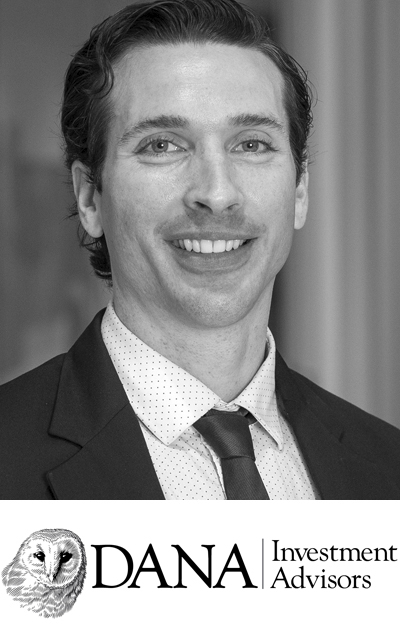
By David Weinstein, Dana Investment Advisors

David Weinstein of Dana Investment Advisors.2Many of us were sitting around the dinner table at Thanksgiving or Christmas and someone youngish started talking about blockchain cryptography. They probably called it something different though: “crypto,” “bitcoin,” maybe something about a “doge”-coin? Breathless talk of massive returns may have followed. A cult leader would be impressed by the level of evangelism.
Inevitably a wiser individual asks some variation of the question: “But what is it and why do I need it?”

“It’s digital gold.”

“It’s replacing the U.S. dollar.”

“It’s a tool for the decentralization of corrupt centralized power structures in a post-capitalist world.”

Ok. Blockchain cryptography (a.k.a. crypto) may be some or none of those things, but here’s why I think it matters – a lot.

Blockchain Cryptography Brings Ownership to the People

Blockchain cryptography can put an explicit PRICE – a value – on nearly any asset. It can do this because the combination of blockchain databases and cryptography enables the creation of tokens (like bitcoin, but there are thousands more) that embed inalienable rights. These tokens are secure, tradeable 24/7/365, and most importantly, verifiably OWNED.

When you put an explicit price on something it starts to matter in a very different way. Suddenly you own something worth X dollars and you can sell (or buy) it at will. Ownership is the ultimate incentive and the simplest explanation for crypto’s explosive growth and adoption (now a $2 trillion asset class). It brings ownership to the People.

Economic systems have evolved to proliferate asset ownership and blockchain cryptography is the latest revolution. We’ve transitioned from medieval titles and landed gentry to 20th century home ownership to 401ks and ETFs – and now to digital tokens. Each step along the way brought the possibility of ownership closer to the People.

What if Uber paid its drivers in Uber tokens that were the equivalent of Uber stock? What if they did the same for customer loyalty points? Remember, these Uber tokens would have a verifiable dollar value (the equivalent of Uber’s stock price). Would drivers eschew working for Lyft when they became owners of Uber? Would customers immediately see the value in heretofore nebulous loyalty points when paid in Uber tokens, and isn’t this a great incentive for them to use Uber instead of Lyft or DoorDash ?

During its latest earnings call, Starbucks talked about tokenizing its “Stars” loyalty program. How many other loyalty programs would benefit from an easily valued and tradeable token? Credit cards, hotels, airlines and retailers come to mind. No more logging in to an opaque rewards system and hoping that you have enough points for that flight to Ireland, or that hotel in Orlando. No more lingering suspicions that you were taken advantage of. The price is the price – just go check it on Coinbase (note: this hasn’t happened yet).

Not happy with the value of your American Express tokens? Go trade them for Chase tokens on an exchange in an instant. Accrued a bunch of Hilton tokens but need to stay at a Hyatt? Trade them for Hyatt tokens. Simply want to cash out? You can do it in an instant. If Marriott tokenized its rewards wouldn’t Hilton have to follow? What customer wouldn’t want such an easily verifiable value proposition?

A simple framework to think about blockchain-based tokenization is to imagine that most major assets traded on exchanges like stocks. Your house, your car, your ownership stake in a private business. The price is clear, the fees are low, and the transaction hassle is minimal. Jettison the realtors, auto dealerships and other middlemen.

Blockchain Cryptography Is Eating Financial Markets

Financial markets facilitate the ownership, transfer and pricing of assets in a secure manner. Blockchain technology and cryptography are tailor-made for this purpose.

We’ve built a labyrinth of financial markets with countless entrenched participants – banks, exchanges, governmental entities, payment networks, complicated remittance networks, countless intermediaries and the list goes on. We generally did this for the right reasons, to ensure trust, provide liquidity (i.e. good pricing), expand asset ownership and grow innovative economies – to make everyone better off.

Blockchain cryptography will do most of this financial market stuff better – i.e. more efficiently and for a broader group of people.

Why shouldn’t I be able to trade stocks any time I want – early morning, midnight, on the weekends? The world doesn’t stop. The reality is that trading during non-market hours is sort of available now. You just need a bunch of money, a close relationship with an investment bank, and the willingness to pay a hefty commission. Crypto markets have traded 24/7/365 for several years and, while not perfect, have largely done the job they were designed for.

Why does a worker in the U.S. pay a 5% fee to wire money home to a different country? Why do payment networks charge 3x (or more) their domestic fees to process cross-border transactions?

Legacy financial markets are messy. Different participants use different technologies. Systems don’t “talk” to one another very easily. Everyone has their own database of record and reconciling those databases is half of the problem (and the reason transaction settlement often takes days).

With blockchain cryptography, the blockchain is the database, cryptography is the security, and the token is native to the digital world and therefore easily transferable as “bits.” Moving digital money or assets will be cheap, fast and painless.

The “eating” of markets will be a gradual process and it doesn’t mean that J.P. Morgan or Mastercard is going out of business. It will, however, create opportunities for crypto-forward companies.

The Future of Investing in Crypto-Related Markets

Companies building crypto-related businesses are already issuing tokens instead of traditional stock and many of these tokens have rights to cash flow and/or governance. These crypto companies are very different from the current crop of public equities. They are often early stage, internationally-based and/or creating entirely new and disruptive business models.

With tokens, almost any investor can access opportunities that until now were primarily the domain of venture capital or private equity. This is happening at the individual level and increasingly will be available through institutional investment strategies (my firm, Dana Investment Advisors, is beginning to offer separate accounts for crypto-tokens). Venture capital has been the most lucrative asset class of the last few decades but blockchain-based tokens could take that mantle in the decade to come.

With great potential, however, comes greater risk. Crypto’s trajectory as an asset class will be full of twists, turns, dips and peaks. The reality today is that many tokens, even some of the most valuable, are probably worth close to nothing. The ecosystem remains a hotbed for get-rich-quick schemes and outright fraud. Future regulation is uncertain and will have a significant impact.

Notwithstanding, there are valuable businesses being built in blockchain infrastructure, finance, commerce, gaming and entertainment – and more are on the way. It strikes me as rare to be living through the creation of an asset class as innovative and potentially widespread as crypto-tokens. It’s definitely worth your attention.


Article by David Weinstein, JD, Senior Vice President, and Portfolio Manager. David joined Dana Investment Advisors in May 2013. He is the Lead Portfolio Manager for Dana’s Unconstrained Strategy and co-Portfolio Manager of Dana’s Social ESG, Catholic ESG and Large Cap Equity Strategies.

He graduated from the University of Notre Dame with an Honors Program degree in Political Science in 2005. David graduated cum laude from the University of Pittsburgh School of Law in 2008 and served as Managing Editor of the Law Review. He returned to Notre Dame and received his MBA in Investments in 2012, graduating magna cum laude.


Note to Reader: This article is the exclusive opinion of the writer and not necessarily those of the GreenMoney Journal, greenmoney.com or its ownership.

Featured Articles, Impact Investing

Charitable Planning for Millennials and the Use of Donor-Advised Funds

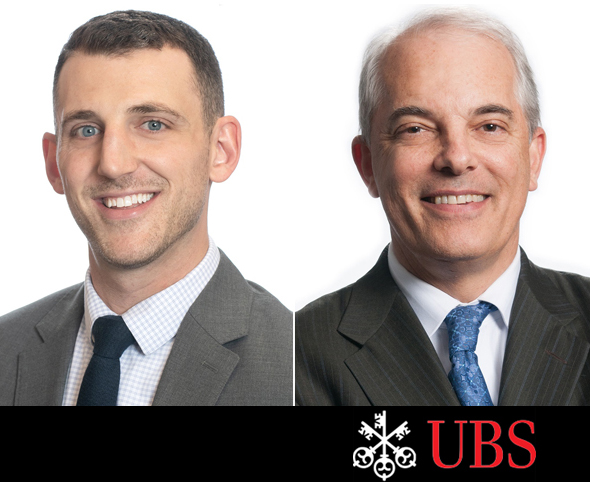
By Jack O’Connor, CFP® and John S. Adams, CFP®, UBS Financial Services

Jack O'Connor and John S.Adams UBS Financial ServicesMost millennials express their commitment to helping non-profits through volunteering either in non-profit activities or by serving on boards and through financial donations. There are several planning tools that Millennials can use that go far beyond making a routine contribution. Here we will talk about three tools Millennials can use for improving organization of charitable activities and long-term impact. This can be especially useful for people that have “sudden wealth” due to sale of a company, real estate, or public stock.

Which passions and causes will take you furthest with your philanthropy? Your philanthropic vision begins to take form when your passion and motivation meet your skills and resources. Meaningful philanthropy requires asking difficult questions and making strategic choices for each gift to be impactful. Diving deeper can help you focus on specifically what you hope to achieve, where and for whom. As a starting point, we recommend these questions to guide and provide clarity to you as your philanthropic vision takes shape.

The first question you might ask is “who will I help?”. This can be certain age groups, genders, populations, or socioeconomic communities. You then might ask “what issue will I focus on?” This can be a large range of needs such as health, environmental concerns, social justice, or educational opportunities. The third question might be “where will I act?”. Are you focused on home or abroad, and at the global, regional, national, or local level?

In addition to giving intentionally for maximum impact, it is smart to be familiar with charitable tools at your disposal. Many of our clients use a Donor-Advised Fund (DAF) as a repository for their charitable donations.

DAFs are offered by multiple investment companies and community foundations and we use several of them. Like with any investment account it is best to ask your Financial Advisor about any fees in advance and to compare vendors if possible.

UBS Donor Advised Funds

Instead of simply giving cash to a charity, many people give from taxable stock accounts or IRAs. If a donor funds a DAF with cash, the donor may deduct the gift up to 60% of their adjusted gross income (AGI) for the year and 30% for gifts of long-term capital gain property (like closely held business interests or publicly traded securities).1 If the donor has a low cost-basis in an asset and has significant unrealized gains the potential benefits of donating them to a DAF can be enormous. This allows the donor to avoid paying capital gains on the donated securities as well as reducing their AGI.

The use of a DAF provides you with a multi-faceted tool. All DAFs are qualified charities; they are pass-through repositories with a “valve” that you can control as the donor. This means that you can still gift stock and obtain the same tax deduction and gain forgiveness as giving directly to a charity. You can also gift from an IRA. Any stock you place in a DAF are sold and turned to cash as received, then reinvested in your selected investment option until you direct the DAF to distribute to your chosen charities. There is no specific requirement about when you need to distribute from your DAF, so assets can accumulate and earn considerable interest while awaiting distribution.

One of the primary reasons we advise clients to use a DAF is ease of use and record-keeping. Donors are provided with an online portal where they can keep track of their investment allocations, amount of donations, a list of donations made to charities from the fund, and tools to locate charities to which they may be interested in donating.

A second reason is that it allows our clients to think long-term and to be “impact philanthropists”. A large sum can build up in a DAF that can be gifted to favorite charitable organizations over many years. This approach allows you to participate with and monitor the charity. If initial contributions are well used, then you can follow with additional gifts from your DAF.

The third is that for those of us that are deeply committed to charities and know we will be after retirement; the DAF can be thought of like a charitable mega-retirement account. It can be drawn on during retirement years (Or years when taking time off work for non-profit activities). While we can’t draw on the DAF for personal needs, the DAF is available to generate charitable contributions on an on-going basis and to be used for gifting to charities when you are not working.

The use of a DAF is one of the most useful tools we have in planning for our Millennial clients that have the goal of engaging as “impact philanthropists” during their lifetimes.


Article by Jack O’Connor, CFP® and John S. Adams, CFP®, who are members of the Arbor Group at UBS Financial Services Inc. (Member FINRA/SIPC) and can be reached at: 206-689-3136.

Certified Financial Planner Board of Standards Inc. owns the certification marks CFP® and CERTIFIED FINANCIAL PLANNER™ in the U.S.

Footnotes:
[1] U.S. Department of the Treasury. Internal Revenue Service. (2021). Limits on deductions Retrieved from https://www.irs.gov/forms-pubs/about-publication-526

Featured Articles, Impact Investing

Transformational Investing in Communities of Color

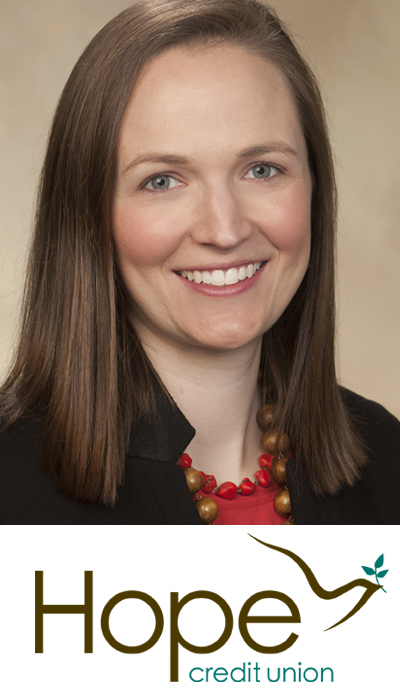
By Mary Bruce Alford, Hope Credit Union

Mary Bruce Alford of Hope Credit UnionAfter spending a decade working nationally to advance social and environmental justice through land conservation, I was looking for a way to continue purpose driven work while also establishing roots within the community where I was living. There was no turning back after I discovered CDFIs.

For those looking to invest in a solidarity economy, Community Development Financial Institutions (CDFIs) offer a proven way to achieve the instant gratification of knowing one’s investment will immediately make a positive impact on someone’s life and contribute to a long-term shift in who participates in our nation’s economy. Attuned to the greatest needs of underrepresented communities, investments in CDFIs represent an opportunity to place one’s money where it has meaning, to generate a return on relationships and to join a movement of some of the most influential corporations in the world.

Invest in a Place Where Your Money has Meaning

Nowhere do dollars invested make a greater difference than those invested in CDFIs led by and located in communities of color. HOPE, a Black and Women Owned CDFI Credit Union, has helped generate $3 billion in financing that has benefited nearly 2 million people across the most economically distressed areas of the Deep South. Far too often, communities of color are overlooked and underserved by the banking sector. As a result, these capital starved communities simply do not have the wealth traditional banks require to qualify for and meet the demand for small business or mortgage loans.

CDFIs have a long track record of importing dollars into these communities to address this challenge. Since 1973, CDFIs have worked for economic, social, and political justice and now manage more than $200 billion, creating jobs, affordable housing, access to financial health, and a chance to build wealth for many that would not otherwise have that opportunity. I see this every day at Hope Credit Union (HOPE), where I work. Take for example the town of Itta Bena, MS (population of approximately 2,000, where nearly 1 out of 2 residents live in poverty). The deposit potential for the entire community is less than $1.5 million. Even if HOPE had every dollar on deposit at our Itta Bena branch, the only financial institution in the community, we could not meet every financial need. Resources from the outside are essential for fostering economic mobility.

When impact investors deposit money at HOPE, it doesn’t just fill financial gaps – it changes lives. HOPE member, Dominique is a prime example. A single Black mother of a 3-year-old child, she became a first-time homebuyer through HOPE. When she did not have the resources to save for a down payment, HOPE had the financial products to get her into a home. HOPE’s Affordable Mortgage Product provides financing up to 100% of the value of the house being purchased. Additionally, HOPE also taps networks to make Down Payment Assistance available to cover closing costs. Dominique took advantage of HOPE’s mortgage program and is a proud homeowner today. (For more on Dominique’s story watch this Banking On Us video)

Banking On Us is the new 3-part limited series by Strong Black Lead that discusses key issues that the Black community faces in gaining financial empowerment and highlights a few Black business and homeowners that are thriving towards this goal. Home ownership creates a deep sense of empowerment and belonging that can help shape the legacies for Black families in America. Together, we can own on our terms. [Episode 3]

These products are a tangible response to the historic and structural disadvantage caused by the racial wealth gap. The gap is about 10:1 – $171,000 in median net worth for white families in contrast to $17,150 for Black families (source: Brookings). CDFIs like HOPE use financing tools like the mortgage program summarized above to close – rather than widen this gap. At HOPE, 8 out of 10 mortgage borrowers are people of color and first-time homebuyers; sixty-five percent are women.

A Return on Relationships

Along the path towards building a more just economy, we are used to hearing all of the promises of technology. While I see daily the efficiencies created through technology, I also know there are lessons learned, trust built, and other efficiencies created by interacting with another person. For many in HOPE’s Deep South region, a region with a long history of disinvestment in people of color, a lack of trust toward financial institutions creates barriers to accessing capital. CDFIs build trust first by being present. In many communities, rural and urban, HOPE is the only responsible financial institution to offer affordable loan products and advice. Perhaps this is why Ms. Fannie Dotson, a Black woman who spent her entire life in the Mississippi Delta, waited until her 100th birthday to open her first bank account at Hope Credit Union – the first financial institution she felt listened and treated her with respect.

This approach extends to building relationships with impact investors by providing transparency on the impacts of one’s investment, an understanding of the community challenges the organization is working to address, and excellent customer service.

A Movement of Moments

For fixed-income investments, many CDFIs offer notes with varying rates of return and terms as well as certificates of deposit (CDs). Both of these offer low-risk and little barrier as they can be opened at $1,000 or sometimes less. For CDFI banks and credit unions, investments like these fuel the loans like the one made to Dominique.

Recently, the U.S. Treasury announced awards for 84 CDFIs and minority designated credit unions through the Emergency Capital Investment Program (ECIP). ECIP was created by Congress in late 2020 to provide community development credit unions and banks with long term (30 year), low-cost capital to help businesses, homeowners and individuals recover from the economic crisis. As a result of the federal program, there is an unprecedented opportunity to leverage deposits and expand the impact of organizations like HOPE in the nation’s most economically distressed region. For HOPE, this means our $88 million ECIP award, a loan that can be treated as regulatory capital, has an opportunity to raise over $700 million in deposits – every dollar of which can be deployed in places like Itta Bena. These deposits will work alongside hundreds of existing deposits from major corporations like PayPal, NIKE, and Netflix to small nonprofits, individuals, and others. By investing cash reserves in HOPE’s Transformational Deposit program, a low-rate money market or CD account, one contributes to scaling impact in the Deep South more than any other time in our 27 year history, all with the safeguards in place of a federally insured and regulated institution.

In a nation becoming more Black and Brown, HOPE’s Transformational Deposit program represents an investment in the potential of the nation as a whole and the values on which it was founded. If you or your clients are looking to prioritize social profitability instead of purely financial profits, track records show CDFIs are positioned to advance economic opportunity for all. Now more so than any other time in our movement, we have the opportunity to scale this work together.


Article by Mary Bruce Alford, Senior Vice President of Investor Relations at Hope Credit Union, a Black and Women-Owned credit union working to strengthen communities, build assets and improve lives in economically distressed areas of the Deep South. Mary Bruce directs HOPE’s capitalization strategy with impact investors and mission depositors.

Prior to HOPE, Mary Bruce worked at The Trust for Public Land where she Co-Directed the Conservation Almanac, the premier resource for tracking U.S. investments in protected lands and supported the passage of ballot initiatives resulting in hundreds of millions of dollars for the enhancement of public spaces.

Featured Articles, Impact Investing, Sustainable Business

Signup to receive GreenMoney's monthly eJournal

Privacy Policy
Copyright © GreenMoney Journal 2025

Website design & development by BrandNature

Global Events Calendar

View All Events

april

21aprAll Day232026 Sustainable Packaging Coalition: SPC Impact – Nashville

27aprAll Day30Women Deliver 2026 Conference (WD2026) – Melbourne

X