Tag: Impact Investing

The IPCC Report: Four Takeaways for Investors

By Jon Hale, The ESG Advisor

Above: Changing by Alisa Singer, 2021 — www.environmentalgraphiti.org 

Are your asset managers doing enough?

The latest report on climate change was released in August 2021 by the UN Intergovernmental Panel on Climate Change (IPCC). It is the Sixth Assessment Report (AR6) issued by the IPCC. The first was completed in 1990, recognizing climate change as a challenge with global consequences and requiring international cooperation.

More than 30 years later, climate change is no longer simply a challenge, but an urgent crisis, according to the AR6. The Report is unequivocal in its assessment that human activity during the industrial era has caused global warming, that warming will continue to rise ultimately until global temperatures exceed the 1.5 degrees Celsius increase over pre-industrial temperatures that we have been trying to avoid, but that there is still time for concerted action that could bring down those increases to a more-manageable level by the end of the 21st Century.

Four Takeaways for Investors

Here are several ways for investors and asset managers to address climate change:

Reduce Climate Risk in Portfolios:  Make sure the funds/strategies in which you invest are actively considering climate risk and how to reduce it. For asset managers there is really no excuse for not doing this, but judging from the scant information on the topic coming from asset managers, not all of them are doing so. Perhaps not even very many.

Reducing climate risk in portfolios can be accomplished by carefully and systematically assessing the climate risk of every investment, building climate-risk assessments into valuation models, and taking steps to minimize exposure to companies and industries that face significant climate risks.

Keep in mind that climate risk is not limited to fossil-fuel firms and utilities that burn coal and natural gas to generate electricity. It includes firms creating products and services that generate carbon emissions in their usage (think transportation or cloud computing) and those that are heavy emitters in their production processes (concrete and steel, for example). Firms in just about every sector face transition risks as they shift away from reliance on fossil fuels.

(To assess transition risks in funds, a good place to start is Morningstar’s fund-level measure of carbon risk, which assesses how much transition risk the holdings in a portfolio harbor. Here’s a link to a paper I wrote explaining our measure.)

In addition to the risks associated with the imperative to reduce emissions, many firms and their suppliers are physically located in places that are exposed to extreme weather events and sea-level rise, and others may have customer bases residing in climate-sensitive areas, which broadly affects the real estate, banking and insurance industries. Many firms will face growing physical risks as the effects of global warming worsen.

If you are an advisor, ask the asset managers of funds/strategies you use in client portfolios to tell you specifically how they are accounting for climate risk. At this point, every asset manager should have a clearly articulated approach to mitigating climate risk across the full range of strategies offered. It should be front-and-center — easy to find — on their websites.

Unfortunately and to put it mildly, many asset managers are still getting up to speed on how to assess climate risk in their strategies. Until very recently, the only asset managers talking about climate change being relevant to their investments were the relatively few early adopters of ESG.

Pressure Companies to Make Net-Zero Emissions Commitments:  Your asset managers should be exercising their influence as major shareholders of public companies to actively demand net-zero emission commitments and follow-through from the firms in which they own shares. Firm-level commitments and data showing progress on them is necessary for asset managers to be able to assess a firm’s climate risk more accurately in the first place.

Again here, if you are an advisor, you should expect your asset managers to be meeting this very reasonable expectation and they should be able to demonstrate that they have been doing this via their engagement and proxy voting activities.

Invest in the Energy Transition:  When it comes to investing, climate change isn’t only about risks. Adding exposure to companies that do have climate-resilient business models, and to industries that are creating climate solutions helps finance the transition to a low-carbon economy and seems likely to be a profitable long-term investment theme. This can be done through investing in the growing number of sustainability themed funds now available.

Pressure Policymakers to Address the Climate Crisis:  Because climate change poses major systemic and financial risks that will have an economic, if not direct physical impact, on their end-investor clients and on their own profitability, asset managers around the world should be pressuring policymakers to act, and they should be pressuring the companies in which they own shares to pressure policymakers to act.

For advisors, this may seem somewhat far afield from typical investment considerations. But asset managers, especially the largest ones, have enormous resources and considerable clout with policymakers, if only they would use it. So ask them about this one, too.

If you’re an advisor, you should already be acting on all four of these points. If you’re not, you may not be serving your clients well amidst the growing climate crisis.

Read Jon Hale’s full article here


Article by Jon Hale, The ESG Advisor. Mr. Hale is Global Head of Sustainable Investing Research at Morningstar. Views expressed here may not reflect those of Morningstar Research Services LLC. or its affiliates.

Read additional articles from Jon in his column on Medium, The ESG Advisor and follow him on Twitter: @Jon_F_Hale

Additional Articles, Energy & Climate, Impact Investing, Sustainable Business

Oceans 2050 Receives Keeling Curve Prize for Pathbreaking Seaweed Carbon Work

Aerial photo of a Nori Seaweed farm in Japan that is participating in the Oceans 2050 Seaweed Carbon Farming Project.

Annual Prize Recognizes Best Climate Solutions the World has to Offer

Oceans 2050 logoOceans 2050 is honored to announce its selection as a 2021 laureate of the Keeling Curve Prize. Each year, the Keeling Curve Prize Selection Committee identifies and funds the best climate solutions the world has to offer. The prize was awarded at a July 31st ceremony hosted by the Global Warming Mitigation Project in Monterey, California.

“We are deeply honored to receive the Keeling Curve Prize in recognition of our pathbreaking work on the carbon sequestration potential of seaweed aquaculture,” said Oceans 2050 Founder Alexandra Cousteau. “The prize will be critical to advancing our mission to restore abundance to the world’s oceans.”

The Keeling Curve Prize recognizes the work of Oceans 2050’s Chief Scientist Professor Carlos M. Duarte. Under his leadership, Oceans 2050 is completing a scientific study to quantify carbon sequestration by seaweed in sediment below seaweed farms across ?ve continents as a part of the first-of-its-kind Seaweed Carbon Farming Project. The goals of the project are to advance the scienti?c basis for seaweed aquaculture as a solution to helping address the climate crisis while contributing to ocean restoration and create market access and incentives to catalyze this solution. Supporters of the study include the ClimateWorks Foundation, the Jeremy and Hannelore Grantham Environmental Trust, and WWF.

“Seaweed farming is a scalable solution that, if properly deployed and managed, contributes to sequester carbon while also improving water quality, enhancing local biodiversity, and locally mitigating ocean acidification and deoxygenation. By quantifying carbon sequestration rates below seaweed farms, Oceans 2050 is setting the scientific foundations to catalyze the deployment of this promising ocean-based climate change solution,” said Carlos M. Duarte.

Oceans 2050 plans to using funding from the Keeling Curve Prize to support the design of the first carbon-optimized seaweed farm, applying learnings from the study. The prototype farm will aim to minimize the carbon footprint of seeding, harvesting, and processing seaweed while maximizing carbon sequestration during the growing period as well as maximizing displaced emissions due to ultimate use of the biomass.

“We are grateful to the Keeling Curve Prize team and judges for this recognition of our project and of the importance of the oceans for climate. The oceans have absorbed 30 percent of all anthropogenic carbon dioxide emitted since the Industrial Revolution, and carbon dioxide is constantly in flux between ocean and atmosphere. To meet our global climate goals, we have to reduce carbon dioxide loads in the ocean, and seaweed farming is currently the only scalable solution. Seaweed farmers around the world, including the thousands of farmers at the 22 farms on five continents that are partners in our study, are already contributing to climate mitigation and adaptation every day. Our project to quantity carbon removal by seaweed farms and create a new voluntary carbon methodology for it will allow them to get paid for their work, and all of us to better understand how to optimize seaweed farming for climate objectives,” said Megan Reilly Cayten, Senior Advisor to Oceans 2050.

The Keeling Curve Prize is named for the Keeling Curve graph that represents the concentration of carbon dioxide in Earth’s atmosphere since the 1958. In the decades since the carbon dioxide measurements began, the concentration of carbon dioxide in the atmosphere has steadily increased, representing anthropogenic climate change. The goal of the Global Warming Mitigation Project and the Keeling Curve Prize is to bend the curve back down.


About Oceans 2050
Established in 2018, Oceans 2050’s mission is to mobilize a global alliance to restore the world’s oceans to abundance by 2050. Founded and led by Alexandra Cousteau, the platform identi?es and develops solutions that harness the power of markets to reshape an ocean strategy ?t for current and future challenges by producing impact at a scale that is meaningful for the oceans, the climate, and the millions of people that depend on them.

Additional Articles, Energy & Climate, Impact Investing, Sustainable Business

Ten to Watch: Pioneers of the Blue Economy

By the Climate & Capital Team,

On World Oceans Day in June, the Climate & Capital team dove into the blue economy, what’s emerging and why it’s a critical part of the climate economy.

CCM Featured news for GreenMoney readersThe “Blue Economy” is defined as the systems and economic opportunities emerging in how we protect and maintain a healthy ocean. For World Oceans Day, we showcase Ten to Watch innovators and leaders in the blue economy.

We hope these ocean innovators will inspire and excite you over the coming week. Read our profiles and then have a deeper look at their websites for detailed information about what they do. Each one is an amazing story.

Here are the Ten Pioneers to Watch:

  • ECOsubsea Scrubs Ship Slime to Save the Seas
    ECOsubsea cleans the “bio-fouling,” i.e. accumulated sea slime on hulls, that makes ships less efficient and threatens ocean ecosystems.
  • TransOceanic Wind Transport Harnesses the Air for Low-carbon Shipping
    A blend of ancient and cutting-edge, TransOceanic Wind Transport uses wind-powered vessels to meet modern shipping needs.
  • Data-driven, LED-powered Smart Fishing Could Help Save Ocean Ecosystems
    SafetyNet’s LED-powered Pisces system attracts target catch whilst repelling others, cutting down on millions of tons of wasted bycatch.
  • This Architecture Firm Makes Houses From Plastic in the Seas
    SPARK Architects makes their signature beach huts using plastic waste collected from Singapore’s shoreline.
  • This Maine Fishery makes the Eel Trade More Sustainable
    The global eel trade is inhumane, corrupt and an environmental disaster. Maine-based American Unagi gives chefs a carbon-free, local eel.
  • The Robot Fish Making Seafood More Sustainable
    Aquaai’s mechanized surveillance swimmers are helping fish farms be more efficient and clean. Liane Thompson and her husband and business.
  • The Next Big Thing in Plant-food? Sustainable Seaweed
    Seaweed for breakfast? Cascadia Seaweed believes its cornucopia of kelp could change the plant-based food world.
  • Investable Oceans: The Investment Platform for the Blue Economy
    Investable Oceans is an investment platform devoted to unlocking capital for sustainable oceans ventures.
  • Can we Harness the Lunar Power of Waves? One Scottish Firm is Trying
    Orbital Marine Power is harnessing Scotland’s ocean currents for sustainable power.
  • BlueNalu’s Cell-cultured Seafood Offers Fresh Fish Without the Catch
    With global fisheries on the brink of collapse, BlueNalu’s land-grown fish and seafood could be the future of ocean eating.

Read more about each of these companies and their innovations here.


Reprinted with permission from Climate & Capital Media, a strategic partner with GreenMoney Journal.

Additional Articles, Energy & Climate, Food & Farming, Impact Investing, Sustainable Business

Ensuring Planetary Stability: Banks as Unlikely Allies?

By David Barmes and Marya Skotte, Climate Safe Lending Network

Of all the types of institutions playing a role in averting catastrophic climate change, banks are perhaps unlikely protagonists. Yet by the everyday process of allocating capital and issuing loans to clients, lenders can be powerful allies or destructive antagonists in the fight for a just and climate-safe world. Traditionally, banks manage localized financial risks their borrowers might face, but the impact of their lending decisions has significance on the climate, our ecosystems and overall planetary stability.
At this year’s COP26 conference, the financial sector will be high on the agenda. The Glasgow Financial Alliance for Net Zero (GFANZ), chaired by Mark Carney, will convene institutional commitments from across the financial sector including the Net Zero Banking Alliance (NZBA) with 43 banks promising to reach net-zero by 2050. That still leaves a lot of the banking sector who have not made those commitments, and even for those who have, criticism has been levelled at their lack of near-term action and ongoing investments in fossil fuels.

The global financial sector is jeopardizing an environmentally sustainable future by facilitating climate change beyond a 1.5 or 2 degrees Celsius temperature rise. Since the Paris Agreement in 2015, the world’s 60 biggest banks funneled USD 3.8 trillion into fossil fuel activities, despite many publicly committing to Paris-aligned net-zero targets. None have responded to the IEA’s declaration that any expansion or exploration of fossil fuels is incompatible with a 1.5 degree scenario. The largest banks have also bankrolled extinction: in 2019 alone, they invested $2.6 trillion into activities that are responsible for the destruction of terrestrial and ocean biodiversity.

Progress on this systemic problem requires bringing campaigners, stakeholders, and banks together to change the finance system. The Climate Safe Lending (CSL) Network is a transatlantic multi-stakeholder collaborative of banks, NGO’s, investors, regulators, experts, and leaders from across the banking system. CSL aims to accelerate the decarbonization of the banking sector to secure a climate-safe world in line with a well-below 1.5C temperature rise. We believe that a cross-sector network approach can harness the collective intelligence of the system to find new and bold solutions, foster new relationships amongst leaders, and mobilize the power of many to ensure that the financial system contributes to a climate-safe future. CSL hosts cross-sector convenings, publishes emerging insights, and houses several key initiatives.

Aligning Finance for the Net-Zero Economy - from Climate Safe Lending Network

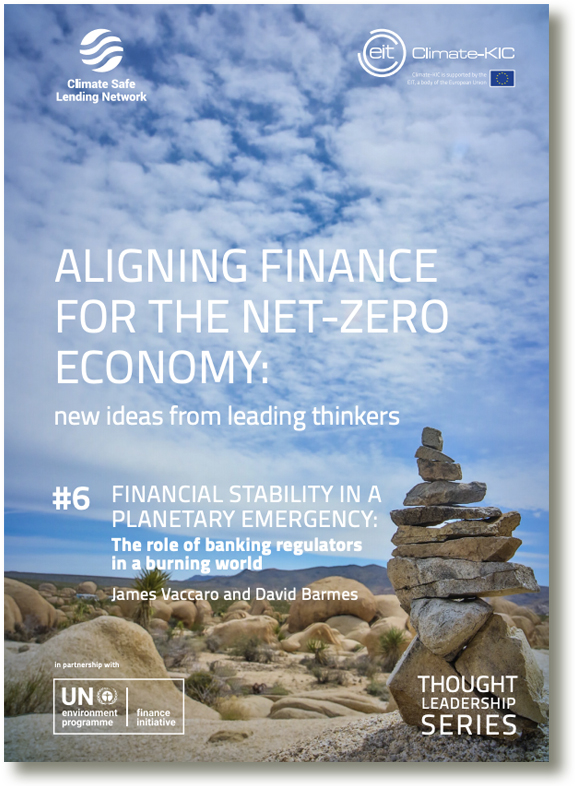
A key pillar of the Network is the Climate Safe Policy Initiative, grounded in CSL’s report, Financial Stability in a Planetary Emergency, published by UNEP FI and Climate-KIC. We proposed ten cutting-edge proposals for climate-related financial regulation that could shift financial flows to safeguard planetary (and by extension financial) stability. The proposals were assessed by experts from across the system based on impact and feasibility. They included the creation of a non-proliferation treaty on fossil fuel and deforestation finance, the implementation of a ‘climate communities reinvestment act’ to redirect capital to communities and ecosystems on the front lines of climate change, and more.

The Climate Safe Policy Initiative currently focuses on the following key proposals:

  • Full disclosure of the climate impacts of financial activities
  • Changing the rules for capital buffers that banks need to keep in reserve on the basis of their contribution to systemic climate risk, thereby making finance for fossil fuels and deforestation unattractive
  • Mandatory, regulated bank climate transition plans

These proposals, explained in further detail below, can significantly enhance transparency and shift the necessary capital to ensure financial and planetary stability.

Windfarm pic courtesy of Climate Safe Network

First, finance-related climate impact disclosure would require all financial institutions to disclose the climate impacts of their financing. The financial system has an inward focus – focusing on the risks of climate to the financial system, rather than an outward focus on how the financial sector contributes to climate breakdown. CSL recently responded to the Task Force on Climate-related Financial Disclosures’ (TCFD) request for public comment and urged the TCFD to expand its scope to include finance-related climate impacts. A new Task Force for Finance-related Climate Impacts (TCFI) could help understand the impacts financial portfolios have on emissions and encourage disclosure of nature-related impacts, to foster greater transparency of banks’ direct impacts on oceanic and terrestrial biodiversity destruction.

Second, financial regulators can tweak capital requirements – the amount of capital banks are required to hold against certain exposures – to account for climate and nature-related risks. Building on the work of Finance Watch, we argue that exposures to new fossil fuel projects should have a 1250% risk weight, so that banks hold capital at least equal in value to these exposures. This would not only protect the financial system against instability as fossil fuel assets become stranded, but it would increase the cost of lending to these projects and incentivize banks to shift away. Changes to the bank capital framework should not be limited to fossil fuel exposures; they could extend to exposures to activities that impact ocean ecosystems, such as industrial fishing.

Practical guidance and strategies for net-zero transition plans could spell promise for terrestrial and ocean ecosystems. There is a flurry of activity around banks setting net-zero targets and goals by 2050; however, no one quite knows how banks should develop net-zero transition plans or what a good one looks like. CSL is creating a “Good Transition Plan” concept paper, reflecting stakeholder expectations and emerging best practices to guide what needs to be done to limit emissions in bank operations, lending practices, client strategies, and how to best reach net-zero goals before 2050.

While CSL focuses on climate change, these policy proposals can ensure progress on a holistic range of sustainability impacts including social impacts and the conservation and restoration of terrestrial and ocean ecosystems. While progress has been made, there is much work to be done by all relevant stakeholders to ensure a climate-safe and ecologically stable future and banking system.

Learn more about the Climate Safe Lending Network by visiting our website and subscribing to our monthly newsletter. We invite you to reach out with questions or opportunities for collaboration by emailing: connect@climatesafelending.org


Article by David Barmes and Marya Skotte, Climate Safe Lending Network

David Barmes, Senior Economist, Positive Money & Climate Safe Lending Policy Initiative Support, Climate Safe Lending Network. David leads Positive Money’s research on green central banking and escaping growth dependency, while also contributing to our work on monetary-fiscal coordination and the economic response to Covid-19. He holds a bachelor’s degree in Economics and Psychology from McGill University and a master’s degree in Socio-Ecological Economics & Policy from the Vienna University of Economics and Business. David has previously worked on projects in environmental politics, environmental conflict, and ecological macroeconomics.

Marya Skotte, Program Manager, Climate Safe Lending Network. As CSL’s Program Manager, Marya contributes to the growth and development of the Climate Safe Lending Network and its ongoing initiatives. Marya manages CSL’s communications, and contributes to stakeholder engagement and recruitment, and core operations. Prior to joining the Climate Safe Lending Network, Marya graduated from the Impact MBA program at Colorado State University where she studied entrepreneurship and sustainability for business. While in the program, Marya researched socially and environmentally sustainable finance and launched a venture with other students to help mission-driven lenders implement socially sustainable financing. Prior to her MBA, Marya managed a national network of partners at the National Park Foundation in Washington, DC.

Energy & Climate, Featured Articles, Impact Investing, Sustainable Business

Investing in an Ocean Economy

By Arturo Tabuenca, Blue Marble Investments and Earthfolio

Arturo Tabuenca - Blue Marble InvestmentsHow Sustainable Investing and Shareholder Activism Can Save Our Oceans
“As we got further and further away, it diminished in size. Finally, it shrank to the size of a marble, the most beautiful you can imagine. That beautiful, warm, living object looked so fragile, so delicate, that if you touched it with a finger, it would crumble and fall apart. Seeing this has to change a man.”  – James B. Irwin, Astronaut and Moonwalker

Astronauts call it the overview effect. A shift in awareness that happens when humans view the totality of their home planet. On December 24, 1968, humanity as a whole experienced this shift as the first manned voyage to the moon transmitted images of a swirled blue marble rising over the horizon of a lifeless, gray lunar landscape. Earthrise.

The Earth is singular — as far as we know. A water world covered by vast oceans and a sheltering atmosphere. All life emanates from and is sustained by this watery cradle. Every breath we take, every drop we drink, every aqueous cell that binds our physical being; reminds us that we are water creatures.

For much of history, the sheer immensity of our oceans made them appear impervious to man’s presence. But they are not. Since the 1970s, oceans have absorbed an astonishing 90 percent of heat generated from greenhouse gas emissions.

“It is a curious situation that the sea, from which life first arose should now be threatened by the activities of one form of that life.”  – Rachel Carson, writer, scientist, and ecologist

While the plight of our oceans is real, there is still reason for hope. This optimism comes from a new generation of activist shareholders dissatisfied with status quo investing and challenging financial institutions to be less passive in their investment selection and more active in engaging the companies they own.

Major financial institutions manage the retirement savings of millions of Americans. Funds managed by these institutions aren’t exclusively owned by the wealthy. They represent the hard-earned savings of a majority of middle-class American’s striving to supplement their retirement, saving for their children’s college education, or simply investing for a rainy day.

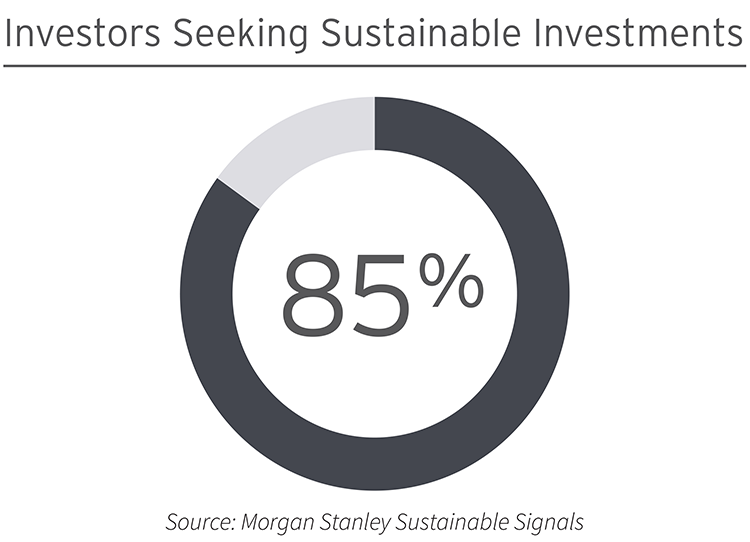
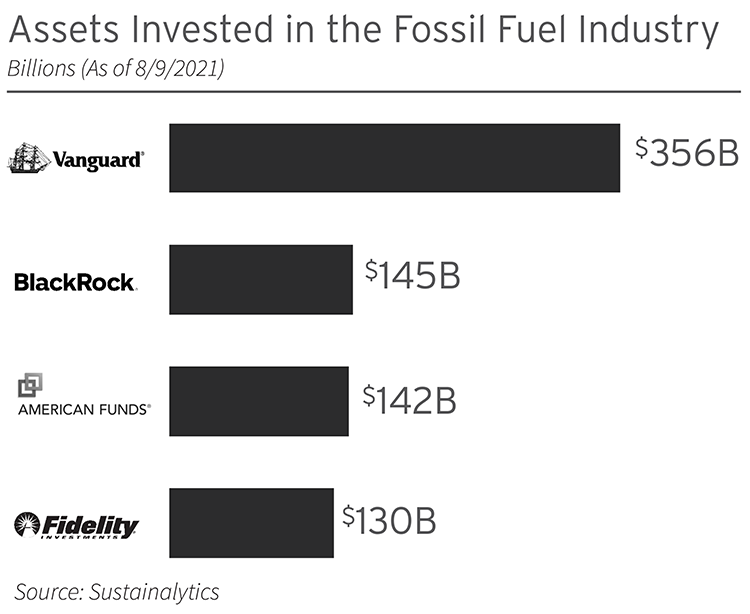
In spite of Americas’ overwhelmingly desire to own investments that protect the environment, billions of dollars continue to be funneled into oil, coal, and gas by the major financial institutions investors rely on.

For years, Wall Street has insisted there is a trade-off between economic prosperity and the well-being of our planet. At the center of their argument is energy cost. However, in the same way technology has dramatically lowered the cost of telecommunications, microprocessors, and even space travel, technology’s most fundamental 21st century legacy will be its ability to create inexhaustible, clean, and virtually free energy that powers it all.

After nearly a century of oil’s dominant presence in indexes and portfolios, fossil fuels are now increasingly perceived as a stranded asset; even by some of the largest U.S. investment firms. In a telling admission, BlackRock’s CEO bluntly warned shareholders,

“Climate risk is investment risk […] the defining factor in companies’ long-term prospects.” – Larry Fink, Chairman and CEO, BlackRock

The future is no longer what it used to be. Today, in over half the world, renewable energy is cheaper to produce than conventional fossil fuels —the primary driver of climate change. The practical reality of this shift is already rippling through economies and markets at a speed that would have once seemed unimaginable.

While most major fund families are beginning to recognize the need to start shifting their portfolios away from fossil fuels, many continue to have significant oil and gas holdings embedded throughout their mutual funds and ETFs.

“Don’t fight forces, use them.”  – R. Buckminster Fuller, architect and designer

Divestment is a useful tool, but it is not the only way to instigate change. Investors are also stakeholders. And in the same way that citizens have a duty to exercise their First Amendment rights, shareholders have a right to speak up and demand accountability from the companies they own.

This year, in a David and Goliath matchup, a tiny investment firm named Engine No. 1, challenged Exxon and won, decisively. How did it pull off what The New York Times described as “one of the biggest upsets in the history of corporate board fights”? By building an unlikely coalition of Exxon’s largest shareholders—Vanguard, BlackRock, and State Street—with the support of three of the biggest U.S. pension funds.

Once the largest public company in the world, Exxon’s greatest asset has now become its greatest liability. Last year alone, Exxon was downgraded by credit agencies, lost $20 billion, and was unceremoniously dropped from the Dow Jones Industrial Average after a 100-year reign. The pain of Exxon’s persistent denial of a rapidly emerging green energy economy has been largely borne by its shareholders. Over the last ten years, Exxon’s stock price has plummeted 35 percent while the S&P 500 has risen 214 percent.

Galvanized not by idealism but a pragmatic desire to prevent Exxon’s further demise, Engine No. 1 removed three board members and replaced them with leadership focused on transitioning Exxon to a net-zero future. Time will tell.

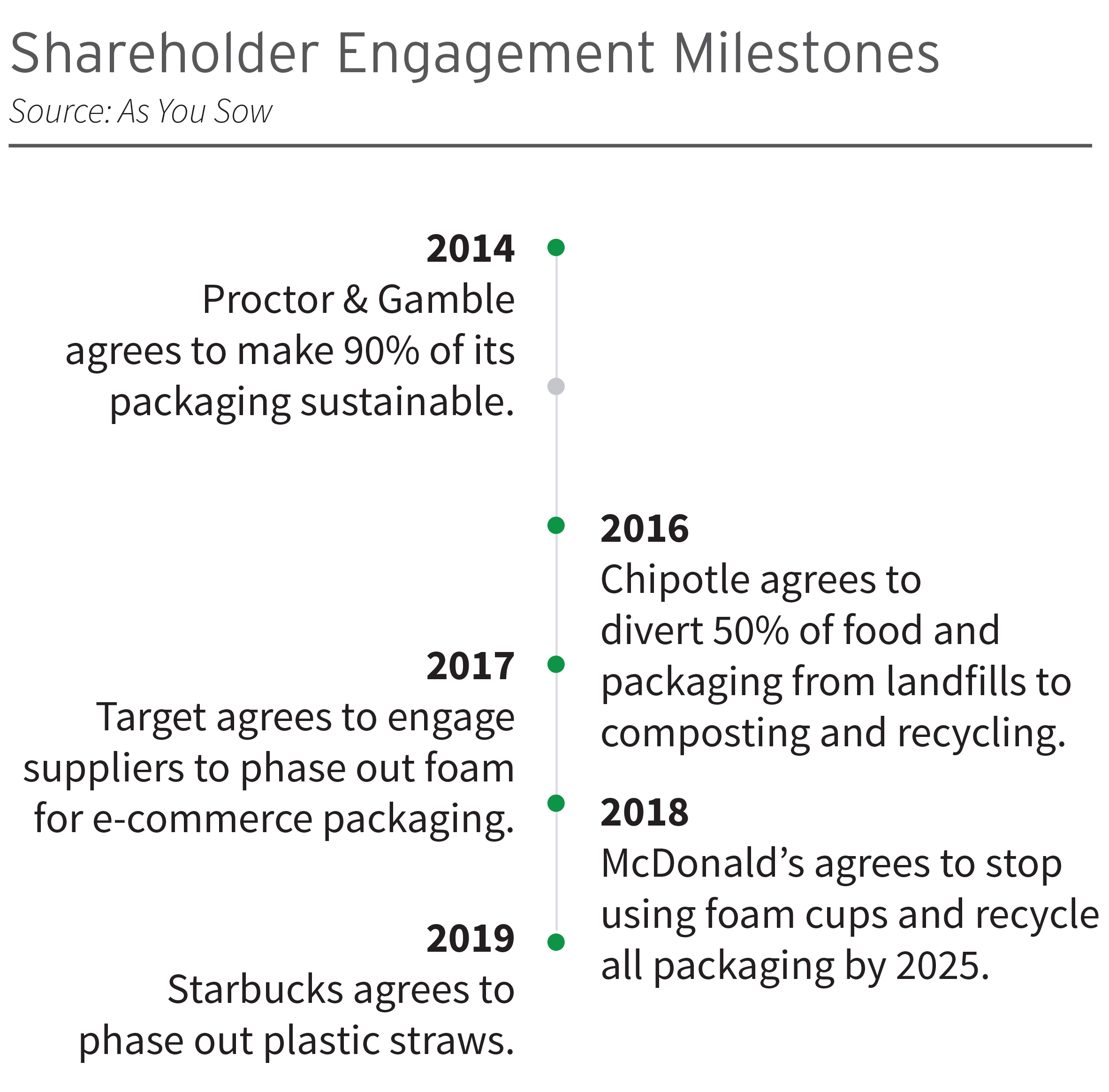
2014-2019 Shareholder Engagement Milestones - source- As You Sow

“If you want to build a ship, don’t drum up the men to gather wood, divide the work, and give orders. Instead, teach them to yearn for the vast and endless sea.” – Antoine de Saint-Exupéry, French writer

Glancing at current headlines, witnessing melting glaciers, or snorkeling over a bleached reef are all tragic reminders that our planet is off course and we are passengers on board. But we are not helpless. In the same way humanity has challenged the status quo and found new ways to adapt to a changing world, life will once again persevere.

The fullness of this realization will not come from witnessing the delicate arc of our blue marble from space. It will come from the small choices to remain in intimate contact with what makes each of us alive. To do this steadfastly, against the odds, is the true definition of being Invested:  To seek a personal return with something you are fully engaged with.


Article by Arturo Tabuenca, founder of Blue Marble Investments and EarthFolio — the nation’s first sustainably focused robo-advisor. His insights and work have appeared in The Economist, The New York Times, The Wall Street Journal and other publications. The Blue Marble Foundation is proud to support Sea Legacy, a collective of world-renowned photographers and filmmakers using the power of storytelling to protect the health and beauty of our oceans. 

Energy & Climate, Featured Articles, Impact Investing, Sustainable Business

Climate Positive Financing in Sea Farming

By Leah B. Thibault, Coastal Enterprises Inc.

Leah B. Thibault of CEIAdapting to and combating climate change through aquaculture investment
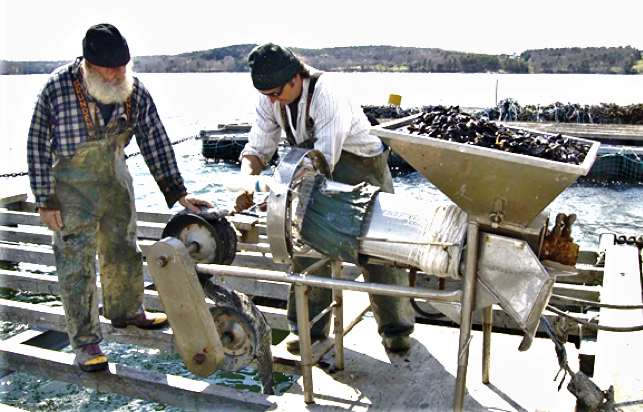
When it comes to climate change, oceans are the bellwether of our shifting circumstances. For states like Maine, with a heritage and economy heavily tied to the sea, this is increasingly apparent in the changing behaviors of marine creatures. Maine shrimp are highly sensitive to warmer temperatures; the fishery has been closed since 2013 due to low stocks. Cod, once abundant in Maine waters, have effectively moved north to Iceland. And warm water species like black sea bass and seahorses are found more frequently, along with the invasive green crab.

These changes are affecting people’s lives and livelihoods. For the thousands of workers employed in Maine’s iconic fishing industry, known for its sustainable management of marine resources, commercial aquaculture can be a part of the solution, helping to retain a vibrant working waterfront and build on the state’s reputation as a source of high-quality seafood, while reducing climate change impact.

When implemented and managed appropriately, aquaculture expands food production, boosts economic growth in coastal and rural areas, and improves the health of ocean ecosystems. Certain species, such as kelp, can also directly combat climate change by sequestering vast amounts of carbon – up to 20 times more carbon per acre than land forests1.

For Coastal Enterprises, Inc. (CEI), a community development financial institution (CDFI) based in Brunswick, Maine, investing in aquaculture supports community economic development and helps diversify income streams along the rural coastline. An increasing focus on climate-positive investment in shellfish and sea vegetable businesses led to the development of CEI’s “sea farm loan” for operating capital; purchasing boats, gear, and equipment; renovating or building facilities; land acquisition and debt restructuring. CEI expands the reach of its business advice and financing through Aquaculture in Shared Waters, an annual training program, which CEI co-hosts with the Maine Aquaculture Association, Maine Sea Grant and the Maine Aquaculture Innovation Center, for lobstermen, fishermen and other entrepreneurs who want to develop a business plan for an aquaculture venture.

Over the past decade, Maine has seen 2.2 percent annual growth in aquaculture, with an overall economic impact of $140 million annually, according to the University of Maine2. The majority of aquaculture businesses in Maine, and those financed and advised by CEI, are small, local businesses that employ fewer than 600 people in total.

Seeding mussel rope with biodegradable cotton - Pemaquid Mussel Farms
Seeding mussel rope with biodegradable cotton; photo courtesy of Pemaquid Mussel Farms

Local Innovations in Mussel Production

When Carter Newell shifted from growing oysters to mussel production, he experienced higher capital costs, water environments less protected from storms and crop losses to some very hungry Eider ducks. A scientist with degrees in marine ecology and aquaculture, Newell set out to develop more efficient and effective equipment for growing mussels in Maine waters. His big idea: a patented submersible raft that solves many of the challenges associated with traditional raft culture methods.

Environmental sustainability is key to Newell’s methodology. Local stocks are used for seed and grown in coastal waters on biodegradable rope, rafts are built using Maine-sourced goods, and ultimately, mussels are sold to Maine restaurants, wholesalers and farmer’s markets. And mussels, like oysters, filter out pollutants and chemicals like nitrogen and phosphorus, leaving the waters they are raised in cleaner than before.

As the research and development of the technology progressed, Newell knew he needed significant capital to push the project forward. Grants from USDA and the Maine Technology Institute supported the development of the submersible raft system; CEI stepped in with business advice and a loan for expansion. CEI subsequently provided financing for an aquaculture processing facility, a refrigerated truck and two additional submersible rafts.

Capital providers with knowledge of aquaculture and relationships within the community are vital for the industry to grow and prosper – as traditional lenders and investors are often deterred by risks associated with a mussel’s 18-month grow out period and the fact that most of the collateral is underwater.

Atlantic Sea Farms - 1
Photo courtesy of Atlantic Sea Farms

Relying on Kelp Networks for Business Expansion

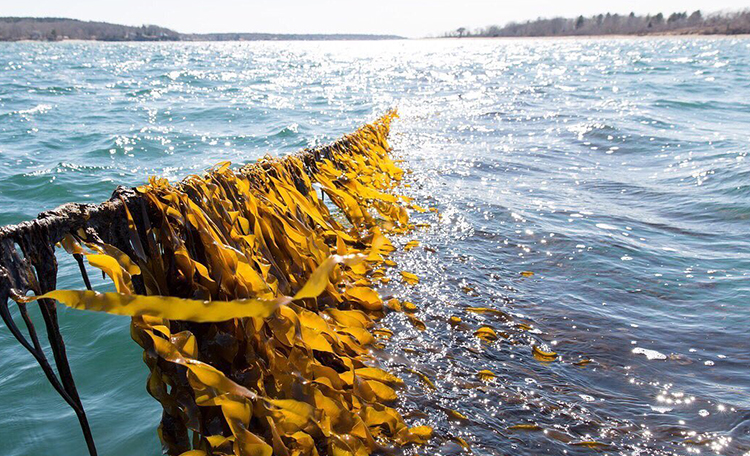
Because it is grown and harvested in a single season, kelp farming has a lower risk profile than mussel farming. However, American consumers are far less likely to be familiar with kelp, a challenge CEO Briana Warner has faced head-on since taking over Atlantic Sea Farms in 2018. Warner is focused on establishing a national retail brand, marketing kelp as the “virtuous vegetable,” with farmed kelp adding a healthful, sustainable food source that requires no arable land, irrigation, or any pesticides or herbicides.

The heart of Atlantic Sea Farms is its network of 24 kelp farmers. Since 2018, the company has chosen to work with Maine fishermen by supplying them with kelp seed, teaching them grow out techniques and providing a guaranteed purchase of their entire harvest. The arrangement allows Atlantic Sea Farms to outsource farming to individuals knowledgeable about Maine’s waters, with the necessary equipment (boats, ropes) on hand. It helps the farmers, who primarily fish or lobster, diversify their income and reduce their risk.

To date, Atlantic Sea Farm’s growth has been financed by a dedicated group of angel and institutional investors, including a loan from CEI in 2012. Given the company’s relationship with its kelp farmers, Atlantic Sea Farms was an also an excellent fit for CEI’s Catalyst Fund, which makes early-stage equity investments in food system businesses.

Atlantic Sea Farms - 2
Photo courtesy of Atlantic Sea Farms

“Entrepreneurs need investments in infrastructure,” said Warner. “That’s where CEI first came in. Then, the Catalyst Fund equity gave us the flexibility and time to scale up our value-added products, helping to grow the impact and health of seaweed farming along the coast, with the objective of building a diversified income stream for coastal fishermen in the offseason.”

Warner and Newell are redefining how to balance economic and environmental considerations as they grow innovative businesses that depend on healthy ocean and coastal ecosystems. Like other pioneering entrepreneurs before them, one of the greatest challenges is finding the capital to finance their ideas. Educated, dedicated investors can help create new opportunities and the potential of a more ecologically sustainable and economically diverse future.


Article by Leah B. Thibault, who manages marketing and communications initiatives at Coastal Enterprises Inc. (CEI), including media outreach, public relations, social media management and storytelling.  Leah previously served as Director of Executive Administration and Special Projects for CEI Capital Management LLC, and has run her own small business as a freelance crafts pattern designer for over a decade. A highly-efficient Jane-of-All-Trades and a skilled writer and creative, Leah’s design work and writing has appeared in books, traditional and independent magazines, trade journals and web-based publications. She received her B.A. in Performance Studies from Willamette University in Salem, Oregon and holds an HR certification from the University of Southern Maine.

Featured Articles, Food & Farming, Impact Investing, Sustainable Business

Sustainable Ocean Investing Gets Real: Opportunities Across All Asset Classes

By Ted Janulis, Investable Oceans

Ted Janulis Investable OceansAbove: Shark Reef and refinery, photo by Morgan Bennett-Smith
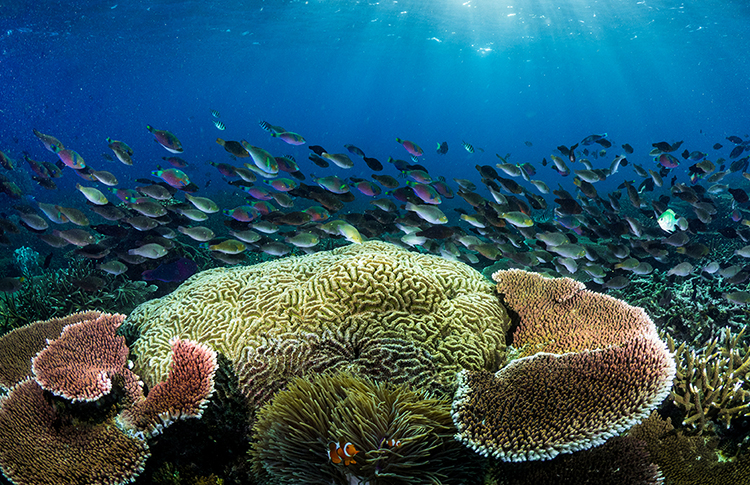
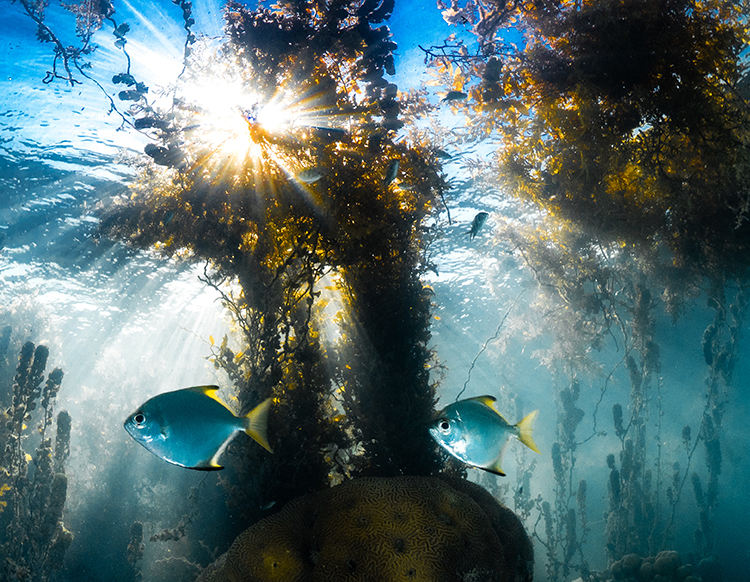
(First published Sept. 2021) ESG and sustainable investing have taken center stage in asset management. Climate and now oceans are leaders in this elevation with a proliferation of products, firms, and frameworks increasingly on investors’ radar screens. This is good news: the oceans are becoming broadly investable, with market-based opportunities across all sectors of the Blue Economy. These cover the entire asset allocation pie chart – equites, fixed income, private equity and venture capital.

At Investable Oceans, we provide a platform to connect investors and companies across all these sectors and asset classes. Our goal is to simplify and accelerate market-based sustainable ocean investing by centralizing research, commentary, inspiration, and access to blue enterprise in one place. A vital part of our mission is education, which comes in a wide variety of forms including academic research, visual arts, and podcasts to accommodate different learning preferences. We also engage the ocean community extensively through partnerships and participation in numerous initiatives. Going forward, we plan to continue expanding our range of offerings to reach the deepest and broadest investing audience possible.

Coral and School of Fish - photo by Morgan Bennett-Smith
photo by Morgan Bennett-Smith

If you’re wondering whether investing in the Blue Economy applies to you, consider this variety of offerings: an ocean-focused ETF from BNPP; a public equities ocean engagement fund from Credit Suisse and Rockefeller Asset Management; a private equity aquaculture fund from Netherlands-based Aqua-Spark; and a variety of blue bonds from issuers such as the Seychelles and the Bank of China. You can even invest $100 in an Ocean Health portfolio using the Newday Impact Investing app; or $100 in a crowdfunding raise for C-Combinator to help turn the largest seaweed bloom on the planet into valuable materials that combat climate change.

The broader ocean economy is enormous, so the diversity of investment opportunities shouldn’t come as a surprise. The OECD’s often quoted 2016 report, “The Ocean Economy in 2030”, conservatively estimated a $3 trillion ocean GDP by 2030. In addition, a 2015 WWF report estimated the value of key ocean assets to be at least $24 trillion. The Blue Economy is a subset of this broader ocean economy, with the latter capturing all human business activities in the ocean, and the former a narrower slice of activities that utilize the oceans resources in a sustainable manner. The Economist defines the Blue Economy as “An economy that harnesses ocean resources for economic growth while protecting ocean health and ensuring social equity.” In the post-COVID world, both the ocean economy and importantly the Blue Economy are poised to expand as we build back with more awareness of and respect for the natural world.

Kelp Forest and Fish - photo by Morgan Bennett-Smith
photo by Morgan Bennett-Smith

Achieving a sustainable Blue Economy is critical, as healthy oceans will continue to provide us with food, oxygen, transportation, recreation and climate regulation. Greenhouse gases (GHGs) are the central threat to both our climate and our oceans, contributing greatly to warming, acidification and deoxygenation. The global community is becoming increasingly aware that we can’t fix the climate crisis without addressing the oceans, and vice versa (see the IPCC’s 2019 Special Report on the changing oceans and cryosphere for a compelling argument). And, our key takeaway is this: climate-friendly investments are inherently also investing in ocean health.

Market-based ocean investing focuses on addressing many of these challenges while providing financially attractive opportunities for participants. Importantly, it’s not a replacement for the vital contributions of philanthropy, concessionary impact investments, governments and NGOs – rather, it’s an important complement. Market-based approaches for our blue planet can unlock substantial capital that requires returns comparable to other market-based opportunities. Harnessing these can significantly increase the amount of funding available to attain, for example, the oceans and climate objectives of the United Nations’ Sustainable Development Goals (SDGs) #13 (Climate Action) and #14 (Life Below Water). Some argue that the oceans touch nearly every other SDG, and that positive ocean actions will have enormous benefits for all.

Because there are many facets of the Blue Economy that we don’t have space here to cover – governance, investment frameworks, social justice and gender issues, to name a few – we’ve set up a section on the Investable Oceans website for GreenMoney readers that provides some of the excellent research on the broader topic. These elements are critical for broader context on investing in the Blue Economy.

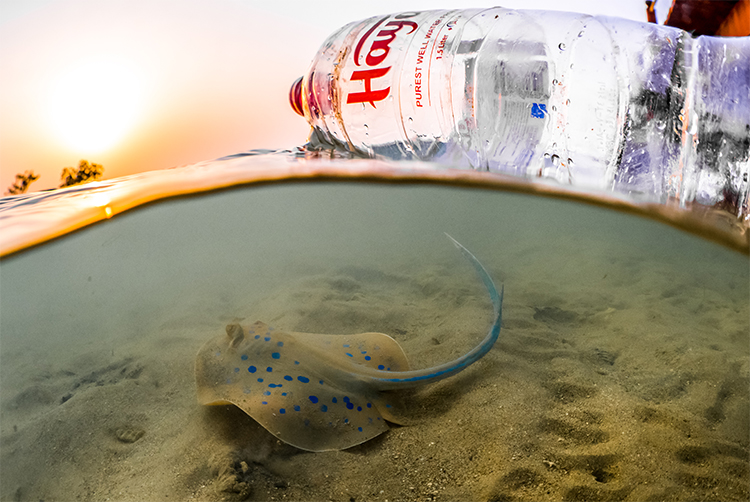
Plastic pollution and Ray - photo by Morgan Bennett-Smith
photo by Morgan Bennett-Smith

So what are the investable sectors of the Blue Economy? At Investable Oceans, we use the following five categories: Energy Solutions, Fisheries & Aquaculture, Plastics & Pollution, Shipping & Ports and Tourism. There are other options; for example, some view technology as a separate category. While we agree that technology is critical, we see it expressed across all sectors. We also exclude fossil fuel and deep-sea mining because they don’t seem consistent at this time with the express goal of sustainable ocean stewardship. Investments that involve water are included to the extent that they have a reasonably direct connection to the ocean. For instance, keeping plastics out of the ocean, agricultural run-off and coastal habitat destruction are all represented on the site.

The nature of investments in these five sectors varies. In offshore wind, for example, projects are developed by large corporate players such as Orsted or Equinor, while related supply chain and technology opportunities are available through smaller private enterprises. Fisheries & Aquaculture investments can take place in public or private companies, as well as funds and a dizzying array of startups. For emerging companies, each ocean sector has unique characteristics, and investors often specialize and dive deeply into just one or two.

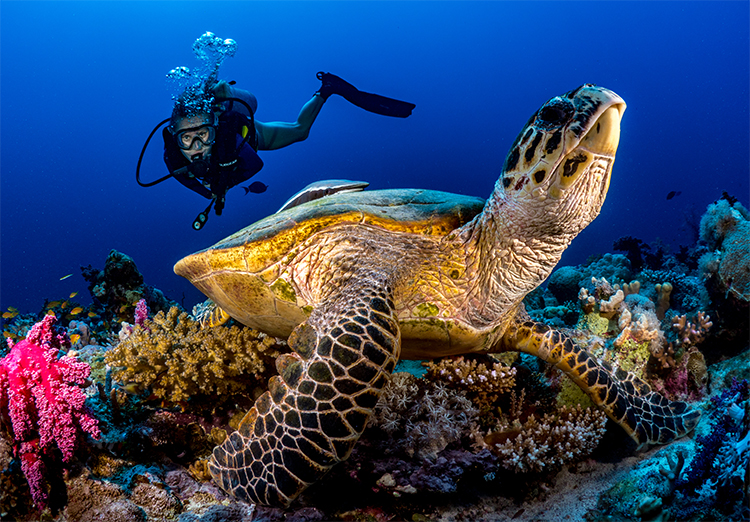
Turtle and diver - photo by Morgan Bennett-Smith
photo by Morgan Bennett-Smith

With respect to asset classes, public equity markets offer opportunities but also require extra work. While there are companies that are clearly ocean related, such as Orsted (offshore wind), Mowi (seafood) and Lindblad (tourism), ocean activities are often embedded in companies that operate along multiple business lines. Recent research efforts have unpacked and analyzed “ocean business” because interest continues to swell. Some notable examples include: “The Ocean 100” (the hundred largest transnational corporations in eight core industries of the ocean economy), the Business for Ocean Sustainability report and UNEP FI’s Turning the Tide: How to finance a sustainable ocean recovery. In-depth studies like these are laying groundwork for an eventual “ESGs for the Seas.” There is still a distance to go, but this is undoubtedly a promising and impactful start.

On the fixed income front, The Ocean Finance Handbook by Friends of Ocean Action provides an excellent mapping of various debt securities to ocean issues. Following in the wake of Green Bonds, “Blue Bonds” are also becoming an exciting emerging asset class, with a wide variety of issuance types recently coming to market. Investable Oceans and DLA Piper, together with other key stakeholders, recently hosted a Blue Bond webinar that provides an overview of this growing and important market. More broadly, structured finance and securitization principles can be found in many investments, often used to facilitate risk-sharing and/or subordinated investments.

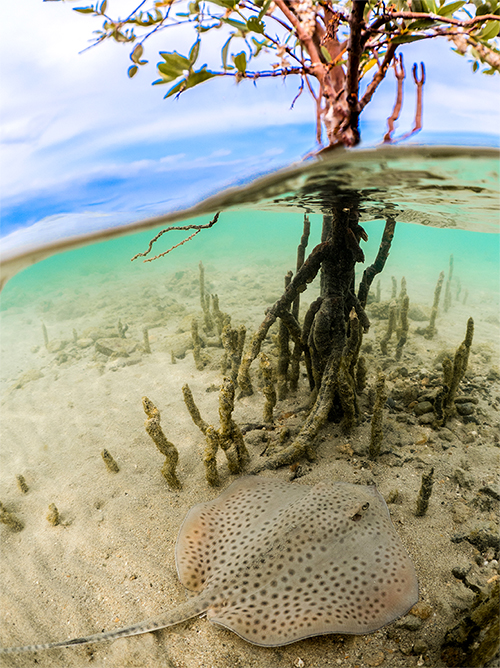
Mangrove and spotted ray - photo by Morgan Bennett-Smith
photo by Morgan Bennett-Smith

Private equity and venture capital play critical roles in financing the Blue Economy. Institutional investment in funds is still in its early stages, partly due to limited track records and smaller fund sizes. Still, there have been numerous compelling fund launches recently, adding to a number of existing funds led by experienced investors. For earlier stage companies, a global innovation ecosystem of well over one hundred incubators, accelerators, clusters and contests is stimulating startup company creation and growth from Oslo to Cape Town to Seattle to Sydney. Organizations like 1000 Ocean Startups and Ocean Visions are bringing together powerful combinations of individuals and institutions to accelerate global change in responsible ocean business and stewardship.

As you can see, the opportunities for market-based sustainable ocean investing are real – it is an exciting time to do good and do well, for our oceans and ourselves.


Article by Ted Janulis, Founder and Principal, Investable Oceans

 Ted has served in various executive positions, including CEO, at financial institutions involved in Capital Markets, Banking and Asset Management over a 30+ year business career. He is President Emeritus of The Explorers Club in New York City and currently serves on a number of for-profit and not-for-profit boards, including Gannett Co. Inc., Roc Capital, RiskSpan Inc and Duke University’s Nicholas School of the Environment.

 The oceans have been one of Ted’s passions since he was young, and he’s excited to combine this passion with his finance background in launching an oceans investment platform called Investable Oceans.

Energy & Climate, Featured Articles, Food & Farming, Impact Investing, Sustainable Business

B Lab Announces the Best For The World 2021 B Corps

Recognizing the companies globally that are operating at the highest level of stakeholder-driven businesses

In July, B Lab announces the Certified B Corporations (B Corps) that have achieved the distinction of Best for the World™ 2021 companies. B Lab’s Best for the World recognizes the B Corps globally whose B Impact Assessment (BIA) scores rank in the top five percent of their company size track across one or more of the five impact areas evaluated on the BIA—community, customers, environment, governance, and workers.

The Best for the World recognition is administered by B Lab, the global nonprofit network that certifies and mobilizes B Corps, which are for-profit companies that meet the highest standards of social and environmental performance, accountability, and transparency. Today there are more than 4,000 B Corps across 77 countries and 153 industries, unified by one common goal: transforming the global economy to benefit all people, communities, and the planet.

B Corps meet the highest standards of verified social and environmental performance, public transparency, and legal accountability to balance profit and purpose. The B Corp Certification doesn’t just evaluate a product or service, it assesses the overall positive impact of the company that stands behind it. Using the B Impact Assessment, B Lab evaluates how a company’s operations and business model impact its workers, community, environment, and customers. To achieve the B Corp Certification, a company must achieve a score of at least 80 points on the assessment.

“Best for the World is a special program for the B Corp community, and we’re thrilled to resume it after pausing the program in 2020 due to COVID-19,” said Juan Pablo Larenas, Executive Director of B Lab Global. “This year’s Best for the World companies are operating at the very top of their class, excelling in creating positive impact for their stakeholders, including their workers, communities, customers and the environment. We’re proud of the community of stakeholder-driven businesses we’ve cultivated over the last 15 years; together we’re marching toward our collective vision of an inclusive, equitable and regenerative economic system for all people and the planet.”

Best for the World-B-corp 2021

Close to 800 B Corps from more than 50 countries were named to the Best for the World 2021 lists, including 4G Capital, KeepCup, Natura, The Big Issue Group, TOMS, Too Good To Go, and Patagonia.

The Best for the World 2021 list is determined based on the verified B Impact Assessments of B Corps. Find the full list of 2021 recognized B Corps in the 5 different categories here.


About B Lab:  

B Lab is the nonprofit network transforming the global economy to benefit all people, communities, and the planet. Our international network of organizations leads economic systems change to support our collective vision of an inclusive, equitable, and regenerative economy. We began in 2006 with the idea that a different kind of economy was not only possible, it was necessary–and that business could lead the way towards a new, stakeholder-driven model. We became known for certifying B Corporations, which are companies that meet the highest standards of social and environmental performance, accountability, and transparency. But we do much more than that. We’re building the B Corp movement to change our economic system–and to do so, we must change the rules of the game. B Lab creates standards, policies, tools, and programs that shift the behavior, culture, and structure of capitalism. We mobilize the B Corp community towards collective action to address society’s most critical challenges. By harnessing the power of business, B Lab positively impacts 150 industries in 74 countries, helping them balance profit with purpose. Together, we are shifting our economic system from profiting only the few to benefiting all, from concentrating wealth and power to ensuring equity, from extraction to regeneration, and from prioritizing individualism to embracing interdependence. For more information, visit https://bcorporation.net/

Additional Articles, Energy & Climate, Food & Farming, Impact Investing, Sustainable Business

Impax Asset Management Engagement Report 2021

We are pleased to present our newest engagement report, which showcases the results of our global engagement activities in 2020.

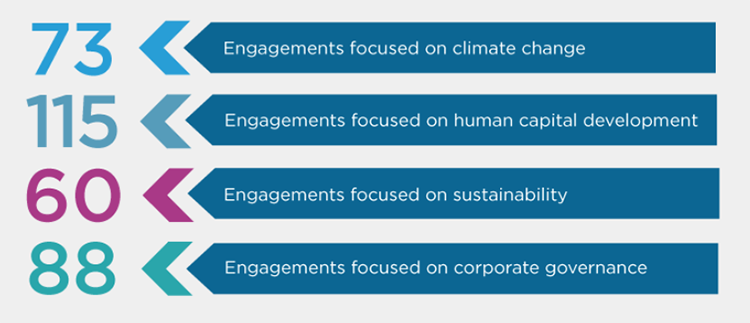
In 2020, we executed 300 engagement meetings:

Impax 2021 Engagement Report - 73 focused on climate change

Our newest report showcases key milestones achieved through company engagements, including that of a Chinese water infrastructure and technology provider that is more aware of its physical climate risks due to our analysis of its exposures and ongoing dialogue, and that of an energy efficiency provider that is better poised to reap the many business benefits of a more diverse workplace by welcoming two female directors to its board of directors at our encouragement.

Impax buys company securities that we believe are well-positioned to add value over the long term, as we make the needed transition to a more sustainable, low-carbon economy. We expect the companies in which we invest to adapt intelligently to changing conditions, but no company is perfect, and sometimes we believe companies can do more to avoid the risks and embrace the opportunities associated with the transition to a more sustainable future.

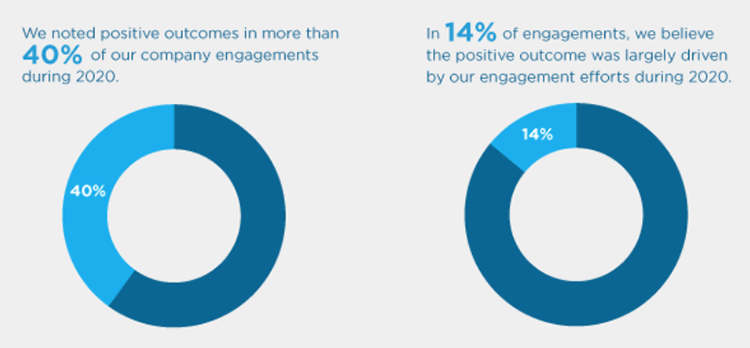
Imapx 2021 Engagement Report-40 percent positive outcomes

Engagement helps us better understand the companies in which we invest, and it allows the companies to understand our decisions better; buy and sell decisions convey little information by themselves. Engagement also helps us determine how companies understand their own risk and opportunity landscapes and helps us improve our pricing of risks — particularly emerging ones such as physical climate risks and water availability. Finally, because companies that focus on environmental, social and governance factors often tend to outperform those that are less sustainably focused, successful engagements can at times make companies even better investments.1

This engagement report also includes commentary on how the global pandemic and social unrest changed engagement in 2020; details on the shareholder resolutions we filed — 67% of which we withdrew after successful dialogue with the companies in question; and our proxy voting record. We are one of the few firms that reads every word of the many proxies we review each year — they average 85 pages — and we vote on 100% of them.

In ShareAction’s “Voting Matters 2020” report,* Impax’s voting record ranked first out of 60 of the world’s largest asset managers on 102 shareholder resolutions on climate change, climate-related lobbying and social issues.

In Morningstar’s 2020 proxy voting report,** Impax’s support for key ESG resolutions exceeded the conventional funds’ average and sustainable funds’ average by wide margins.

The public policy realm of engagement kept us busy during 2020. This report details our efforts to influence outcomes that support solutions to environmental and social challenges, including:

  • our push for ambitious national action on climate change solutions in the UK and Europe,
  • our support for initiatives to “green” the financial system by introducing effective regulatory frameworks for sustainable finance,
  • our request for the U.S. Securities and Exchange Commission (SEC) to require companies to disclose the precise locations of their significant assets so that investors, analysts and financial markets can better assess the physical risks they face connected with climate change,
  • our participation in the European Union’s effort to develop a regulatory framework for sustainable finance, and
  • our letter to the SEC opposing a proposed rule to significantly curtail shareholder resolutions.

Impact Asset Mgmt 2021 Engagement Report CoverBringing about change often seems to take a long, slow arc to completion, but with ice sheets collapsing, resources diminishing and inequality widening, there is new urgency to deliver the major changes needed to transition to a more sustainable economy and a growing recognition of the crucial role the financial sector can play in accelerating that transition. We are committed to helping shape this important work.


Article by Lisa Beauvilain and Julie Gorte, Ph.D.

Lisa Beauvilain, Head of Sustainability & ESG, Executive Director

Lisa is responsible for the development and oversight of Impax’s Sustainability and Environmental, Social and Governance (ESG) analysis, including overseeing stewardship work in the Listed Equity team. She is the Chair of Impax’s ESG, Sustainability Lens and Environmental Committees and also Co-Heads Impax’s impact investment work

Julie Gorte, Ph.D., Senior Vice President for Sustainable Investing

Julie Gorte is Senior Vice President for Sustainable Investing at Impax Asset Management LLC, the North American division of Impax Asset Management Group and investment adviser to Pax World Funds.

Footnotes:
[1] Julie Gorte, “The Financial Impact of Diversity,” Impax Asset Management, July 16, 2020.
* Jeanne Martin, Lauren Peacock, Martin Buttle, Rachel Hargreaves and Xavier Lerin, “Voting Matters 2020,” ShareAction, December 2020.
** Jackie Cook, Jon Hale, “Sustainable Fund Proxy Votes Show a Range of Support for ESG Measures,” Morningstar Research, December 2020. (Conventional funds defined by Morningstar as funds offered by the 20 largest U.S stock fund managers. Sustainable funds include open-ended and exchange-traded funds available in the U.S. that are tagged as “sustainable investments” by Morningstar.)

Additional Articles, Energy & Climate, Impact Investing, Sustainable Business

GSIA Releases Global Sustainable Investment Review 2020

Key Findings

  • At the start of 2020, global sustainable investment assets under management (AUM) reached US$ 35.3 trillion, a 15 percent increase since the 2018 report (based on assets reported by the United States, EU, Australia/New Zealand, Canada and Japan).
  • Global sustainable investment AUM are 35.9 percent of total assets under management, up from 33.4 percent in 2018.
  • Sustainable investment AUM is largest in the United States with $17.1 trillion, followed by Europe ($12.0 trillion), Japan ($2.9 trillion), Canada ($2.4 trillion) and Australia/New Zealand ($906 billion).
  • Sustainable investment assets continued to grow in most regions, with Canada experiencing the largest increase in absolute terms over the past two years (48 percent growth), followed by the United States (42 percent growth), Japan (34 percent growth) and Australia/New Zealand (25 percent growth) from 2018 to 2020.
  • The most common sustainable investment strategy is ESG integration, followed by negative screening, corporate engagement and shareholder action, norms-based screening and sustainability-themed investment.

In mid-July 2021, the Global Sustainable Investment Alliance (GSIA), of which US SIF is a founding member, released its biennial Global Sustainable Investment Review 2020, revealing an industry that has grown to US $35.3 trillion, up 15 percent since 2018. It now comprises 36 percent of all professionally managed assets globally.

The Global Sustainable Investment Review, now in its fifth edition, has become the most comprehensive report on the size, growth and dynamics of the global sustainable investment industry.

The 2020 report reveals how the growth of sustainable investment and trends varies by region. It also reveals that there is an increasing focus on moving the industry toward standards of best practice.

The United States and Europe represent more than 80 percent of global sustainable investment assets. The United States has the largest share of sustainable investment assets with $17.1 trillion, followed by Europe ($12.0 trillion), Japan ($2.9 trillion), Canada ($2.4 trillion) and Australia/New Zealand ($906 billion).

Canada experienced the largest increase in absolute terms over the past two years (48 percent growth), followed by the United States (42 percent growth), Japan (34 percent growth) and the Australia/New Zealand (25 percent growth). Europe reported a 13 percent decline in sustainable investment assets between 2018 to 2020 due to changes in the methodology from which European data is drawn for this year’s report. This change reflects a transition associated with the implementation of revised definitions of sustainable investment that the European Union has embedded into legislation as part of the European Sustainable Finance Action Plan.

ESG integration is now the most prevalent sustainable investment approach globally, affecting $25.2 trillion in assets, followed by negative/exclusionary screening, applied to $15.0 trillion in assets and corporate engagement/shareholder action with $10.1 trillion. In 2018 negative/exclusionary screening was reported as the most popular sustainable investment strategy. This shift towards ESG integration was particularly pronounced in Japan where ESG integration became the most common sustainable investment strategy, taking over from corporate engagement and shareholder action.

This year’s report also includes additional market insights from the United Kingdom, China and other areas of Asia, as well as Latin America and Africa.

“The Global Sustainable Investment Review 2020 reveals the continued interest in and growth of sustainable investment across multiple markets from 2018-2020,” said Lisa Woll, CEO of US SIF and the US SIF Foundation. “In 2021, the Biden Administration’s policy priorities and investor desire to address economic and racial inequality as well as climate change, among other critical issues, have fostered additional interest in sustainable investment in the United States.”

“The Global Sustainable Investment Review 2020 demonstrates that sustainable investment is a major force shaping global capital markets, and, in turn is influencing companies and others seeking to raise capital in those global markets” said Simon O’Connor, Chair of the GSIA.

The US SIF Foundation and the GSIA are grateful for sponsorship from RBC Asset Management and Robeco for this edition of the Global Sustainable Investment Review. The US SIF Foundation also appreciates the sponsors of the Report on US Sustainable and Impact Investing Trends 2020, which provided the underlying US data for the GSIA report.


About the Global Sustainable Investment Review 2020
The Global Sustainable Investment Review 2020 is the fifth edition of this biennial report mapping the size, growth and dynamics of the global sustainable investment industry. This edition collates results from US SIF: The Forum for Sustainable and Responsible Investment (US SIF), Japan Sustainable Investment Forum (JSIF), the Responsible Investment Association Canada (RIA Canada) and the Responsible Investment Association Australasia (RIAA) and in the case of Europe (including the UK), from secondary industry data. All 2020 assets are reported as of 31 December 2019, except for Japan which reports as of 31 March 2020. The report also includes additional market insights from the United Kingdom, China as well as other parts of Asia, and across Latin America and Africa, to form a global picture of the sustainable investment industry.

About the Global Sustainable Investment Alliance (GSIA)
The GSIA is a group of the world’s largest regional and national sustainable investment organizations that collaborate to deepen and expand the practice of sustainable investment. The GSIA is comprised of the sustainable investment membership organizations in the United States, Canada, Australasia, Japan, EU and the UK with a combined membership of many hundreds of investment organizations managing trillions of dollars of assets. The organizations in the GSIA have the deepest reach into the world’s largest sustainable investment markets, from retail to institutional investors.

About US SIF and the US SIF Foundation
US SIF: The Forum for Sustainable and Responsible Investment is the leading voice advancing sustainable and impact investing across all asset classes. Its mission is to rapidly shift investment practices toward sustainability, focusing on long-term investment and the generation of positive social and environmental impacts. US SIF members include investment management and advisory firms, mutual fund companies, asset owners, research firms, financial planners and advisors, community investing organizations and non-profit associations.


US SIF is supported in its work by the US SIF Foundation, a 501(C)(3) organization that undertakes educational and research activities to advance the mission of US SIF.

Additional Articles, Energy & Climate, Food & Farming, Impact Investing, Sustainable Business

Signup to receive GreenMoney's monthly eJournal

Privacy Policy
Copyright © GreenMoney Journal 2025

Website design & development by BrandNature

Global Events Calendar

View All Events

april

21aprAll Day232026 Sustainable Packaging Coalition: SPC Impact – Nashville

27aprAll Day30Women Deliver 2026 Conference (WD2026) – Melbourne

X