Tag: Impact Investing

The Next 30 Years: GM’s Vision for a More Sustainable and Equitable Future
By Kristen Siemen, General Motors

Kristen Siemen GM - GreenMoneyOver two years ago, businesses were forced to adapt to the extraordinary circumstances caused by the COVID-19 pandemic. The world experienced disruptions on a massive scale, which pushed companies like General Motors to find new and more tactical ways of doing business.

For GM, the pandemic became an opportunity for even more company-wide innovation. With the development and launch of electric vehicles like the Bolt EUV, the Cadillac LYRIQ and the GMC Hummer EV Pickup, we showed ourselves and the world just how agile and creative we could be, even during a difficult and challenging time for everyone across the globe.

Today, we’re using what we’ve learned during these unprecedented times to propel forward our vision of an all-electric, more sustainable and more inclusive future.

Here’s what we see happening in the next 30 years.

Putting Everyone in an EV

We know climate change is an urgent priority, and we know EVs can be a critical part of the solution. It will take millions of new EVs hitting the road every year to reach the zero-emissions future we’re striving for.

Understanding that our customers want and need options, GM is addressing multiple aspects of what it takes to help put everyone in an EV, and we envision a future in which EVs fit a wide range of lifestyles and price points. We are rapidly building out our own batteries, software, manufacturing, and customer experience to make that a reality while also laying the critical foundations for customer education and charging infrastructure.

GM’s versatile Ultium platform provides the building blocks for everything, from mass market to high performance vehicles – all from a single, common cell in most markets and a set of interchangeable propulsion components. © 2020 Steve Fecht and General Motors

A key part of GM’s strategy is our Ultium EV Platform, a combined EV architecture and propulsion system, from which GM will quickly be able to scale a full lineup of ground-up EVs. Instead of designing a new battery system for each new EV, GM is using its Ultium Platform for many of its future EVs — from high-volume crossovers like the recently revealed 2024 Chevy Equinox EV at an estimated MSRP around $30,0001, to the 2024 Chevy Silverado EV pickup truck, Cadillac LYRIQ and the GMC Hummer EV Pickup. Ultium affords GM’s EVs competitive range and performance, sporty driving and will help expedite the company’s transition to an all-electric future.

GM has announced significant battery capacity expansion at four battery cell manufacturing plants and already has binding agreements securing many battery raw materials and precursors to support our goal of one million units of EV capacity in North America annually by 2025. We plan to invest $35 billion in electric and autonomous vehicles through 2025 and convert 50 percent of our manufacturing footprint to EV production by 2030.

GM 2024 Equinox Interior
General Motors Chair and CEO Mary Barra confirmed during her 2022 CES keynote address that Chevrolet will launch the Chevrolet Equinox EV in the 2024 model year. © 2020 Steve Fecht and General Motors

Because we can’t help everybody have access to an EV if we don’t ensure everybody has access to EV chargers, we’re building out charging infrastructure and creating a convenient charging experience with Ultium Charge 360. Ultium Charge 360, which gives customers access to more than 100,000 charging stalls in the U.S. and Canada through agreements with 11 different operators, GM vehicle mobile apps and other products and services, will make charging your EV at least as easy as filling up a tank of gas, if not even simpler.

Autonomizing Transportation

Imagine a world with no car crashes and no traffic, where you’re free to get around no matter your age, your stage of life or your physical capabilities. Self-driving vehicles offer promising potential to contribute to this future and support all three pillars of GM’s zero crashes, zero emissions and zero congestion vision.

GM is investing in Cruise, which became the first company to offer a fully driverless commercial ride-hailing service to the public in a major U.S. city. This first-of-its-kind service in San Francisco is provided in the fully autonomous Cruise AV, which is a zero-emission vehicle based on the Chevy Bolt EV. The Cruise AV has already logged over a quarter of a million driverless miles and thousands of driverless rides in San Francisco an effort to make the dream of self-driving a reality. The next step in GM and Cruise’s self-driving journey is the Cruise Origin, a purpose-built, zero-emission, shared autonomous vehicle designed to operate without a human driver. The Cruise Origin represents the pinnacle of GM’s leadership in automation, electrification and mobility.

Cruise AV, ©Bax+Towner

Cruise’s AVs represent a significant step in the journey towards achieving a zero-emissions future, in addition to offering accessible mobility options for seniors, people who are blind or have low vision and other communities that have traditionally faced barriers to accessing reliable transportation. Self-driving vehicles like these that remove the human driver aim to significantly reduce or eliminate the risks associated with human driver error, with the goal of reducing the number of injuries and fatalities on our roadways. GM and Cruise are working hard to deploy autonomous vehicles at scale to help create a safe, less-congested future for all.

HD Cruise Origin, ©Vasyl, stock.adobe.com

Electrifying Everything

Our vision of an all-electric future encompasses so much more than just personal electric vehicles; it even extends beyond the transportation industry. One of the things we are most excited about for the future is that we want to broaden the application of our technology to electrify everything: planes, trains, semi-trucks, boats, and more.

Through our hydrogen fuel cell technology, which is a great compliment to our Ultium batteries, we want to help other industries meet their clean energy targets.

We’ll aim to get there by leveraging both our Ultium Platform and our HYDROTEC fuel cell power cube.

Ultium’s capacity to power many types of vehicles is already being proven with BrightDrop, a connected ecosystem of electrified delivery products and fleet management services helping make last-mile deliveries smarter, safer and more efficient. HYDROTEC fuel cell generators could ultimately replace diesel-burning generators with fewer emissions at worksites, buildings, movie sets, data centers, outdoor concerts and festivals. They could also back up or temporarily replace grid-sourced electricity for residential and small commercial enterprises at times of power disruption.

Innovation in how we use these platforms will help extend the zero-emissions mission across land, air and sea.

Cadillac LYRIQ pairs next-generation battery technology with a bold design statement which introduces a new face, proportion and presence for the brand’s new generation of EVs. © 2020 Steve Fecht and General Motors

Prioritizing an Equitable, All-Electric Future

We recognize that no two communities experience climate change in the same way and that some are more vulnerable to climate impacts or lack the resources to fully participate in and benefit from the transition to a more sustainable future. As the effects of climate change take hold across the globe, it has never been more urgent to ensure our sustainability solutions are guided by inclusion and equity.

We envision an all-electric transition that includes our current and future workforce, customers and communities that may be more likely to experience the impact of climate change disproportionately. At GM, that means prioritizing Equitable Climate Action.

GM’s Equitable Climate Action initiative is rooted in four key areas:

  • The Future of Work – This includes our current workforce and the pipeline of future talent. We will help our current workforce transition to an all-electric future, and we will help support the future workforce as the market shifts to more clean energy jobs through education, training and investments in STEM.
  • EV Access – We want to put everyone into EVs, so we’ll offer a wide selection of EVs across a range of price points. GM was the first company to introduce an affordable, high mileage EV with the Chevrolet Bolt EV in 2017, and that vehicle is now more affordable than ever. We believe this will increase EV accessibility and adoption so more consumers can enjoy the benefits of affordable EV ownership.
  • Infrastructure Equity – We want to see ubiquitous charging solutions that can help meet customer needs wherever they are. We must address concerns about charging deserts and other scenarios that can hinder EV ownership and are working with our dealers and 3rd parties to accomplish this.
  • Climate Equity – We are committed to helping fund organizations that are closing the climate equity gap at the community level and across these four key areas. Through our $50 million Climate Equity Fund, to date we’re working with a total of 39 grantees to accelerate the transition to an inclusive zero-emissions mobility future.

Cadillac Lyriq-GM
Cadillac LYRIQ pairs next-generation battery technology with a bold design statement which introduces a new face, proportion and presence for the brand’s new generation of EVs. © 2020 Steve Fecht and General Motors

It’s no secret — GM is driving towards an all-electric, more sustainable future and moving faster than ever. We’re committed to driving the industry forward with a range of EVs in several sizes and styles that meet customers where they are on price, while prioritizing sustainable solutions, diversity, equity and inclusion as we transition.

Our sights are set on continuing to excite and inspire everyone about the road ahead and we know that our culture, strong values, robust strategies and proven execution will allow us to accelerate towards the promise of a more equitable, all-electric future, together.


Article by Kristen Siemen  Appointed to Chief Sustainability Officer in February 2021, Kristen Siemen helps to lead General Motors to a future with zero emissions as the company continues to take bold actions against climate change, including GM’s commitment to become carbon neutral in its products and operations by 2040. Under Siemen’s leadership, GM has received numerous recognitions including JUST Capital’s MOST JUST Companies, the Dow Jones Sustainability Indices Gold Class for corporate sustainability leadership, and Ethisphere’s World’s Most Ethical Companies for demonstrating exceptional leadership and commitment to business integrity.

Siemen is also passionate about promoting inclusion and gender equality. She was instrumental in creating GM’s career reentry program, “Take 2,” serves as GM’s key executive for the Society of Women Engineers and is the co-lead for the GM Women Ally Program. Since transitioning into her role as CSO, Siemen has garnered several individual recognitions for exemplary leadership, most notably including Crain’s Notable Leaders in Sustainability, Future 50 Tech, and Sustainability Mag’s Top 100 Women in Sustainability. Siemen serves on the Oakland University School of Engineering & Computer Science Advisory Board, where she received both her bachelor’s and master’s degrees in Electrical Engineering.

Footnote:
[1] MSRP excludes DFC, tax, title, license, dealer fees and optional equipment and is subject to change.

Energy & Climate, Impact Investing, Sustainable Business

Reflecting on the ESG Industry’s Strong Foundation and Bright Future

By Tim Smith, Boston Trust Walden

Tim Smith Boston Trust Walden--Reflecting on the ESG Industrys Strong Foundation(Above:  Jesse Jackson, Tim Smith and Donna Katzin at a demonstration in the 1980’s calling on Citibank to end lending to the apartheid government in front of the bank’s headquarters in NYC.)

(First published Sept. 2022) In light of my forthcoming retirement in December 2022, I am especially pleased to be included in this 30th anniversary issue of GreenMoney. It has been a tremendous privilege to be embedded in the evolution of ESG Investing for 50 years, first at ICCR and then at Boston Trust Walden.

This is an occasion to look ahead at the ESG industry’s future. But that is best done by reflecting on the foundation laid by investors over the last plus 50 years. In 1971, the Episcopal Church filed the first shareholder resolution calling on General Motors to leave South Africa because of its racist system of apartheid, a historic moment. That resolution ushered in a new era of shareowner engagement, including two decades of work on South Africa. Global economic pressure from investors and governments played an important catalytic role in making the apartheid regime negotiate, leading to a peaceful transition to power sharing and the election of Nelson Mandela as President.

Also, the ESG industry’s history is marked by major long-term campaigns, like the infant formula campaign leading to a global code of conduct, saving the lives of hundreds of thousands of infants. And early work on issues of diversity, human rights, climate, and the environment – both in direct operations and throughout global supply chains – were essential stepping stones for future work.

Building on that past, let’s look at some encouraging signs that promise a bright future for the industry’s ESG work. At the same time, let’s also look pragmatically at the challenges for the next quarter century. Obviously, this is a best guess on my part, but that is the nature of crystal ball gazing, isn’t it?

Clearly there has been an explosion of interest and involvement in ESG or Sustainable and Responsible Impact Investing (SRI), especially in the last two decades. For example, US SIF’s 2020 Report on US Sustainable and Impact Investing Trends points to a total of over $17 Trillion in US AUM in ESG, an increase of 42% since 2018. And the Principles for Responsible Investing has 3750 global investor members with over $110 Trillion of AUM (depending on market swings, of course). These asset managers and asset owners pledge to integrate ESG into their investment practices believing these issues have a distinct impact on the bottom line. Many also commit to active ownership, urging transparency from the companies in which they invest. Of course, we could all debate the actual figures and how legitimate these ESG practices are, but it is undeniable that ESG investing is expanding in the marketplace. This “genie is not going back in the bottle.”

Simultaneously, the growth of sustainability within the business community has increasingly been accompanied by specific measurable goals and objectives. Certainly, many companies embrace the belief that sustainability protects and advances shareholder value. Such statements are a concrete and welcome validation of the ESG work of investors. A considerable majority of large global corporations now produce sustainability reports to publicize their commitments and progress. I could go on for pages regarding specific decisions and changes by corporations in response to shareholder engagement on issues spanning climate change, board and workforce diversity, governance reforms, consumer protection, etc. (www.iccr.org and www.ceres.org have extensive catalogs of shareowner impact over the years). I believe such reporting and transparency is going to expand in depth and breadth going forward.

Another significant change is the influence and power of proxy voting on ESG issues by asset owners and managers. There has been a huge shift in recent years on votes in support of shareholder proposals (35 resolutions received majority votes in both 2021 and 2022, as well as scores of votes in the 35%-49% range) demonstrating broad investor support on specific issues like racial justice, climate change, plastic pollution, and board diversity. These voting changes are described in updated proxy voting policies, or Stewardship Reports, and of course in NPX reports displaying every vote. And this voting power is held by some of the largest asset managers in the world, such as State Street Global Advisors, BlackRock, T. Rowe Price, and Vanguard. While it is hard to imagine these firms filing resolutions, their engagements with companies in support of ESG issues sends a powerful message that is hard for a business to ignore.

In addition, even though the final vote has not yet occurred, the dramatic Securities and Exchange Commission’s (SEC) proposed rule calling for specific corporate climate disclosures signals federal government support for a new and necessary level of ESG disclosure by companies, further affirming the importance of investors’ work seeking improved disclosure.

Larry Fink, BlackRock’s CEO, has said, “the tectonic shift towards sustainable investing is still accelerating.” I agree the future is bright for ESG investing. And we are likely to see more investment managers be prodded and held accountable by their clients to embrace continuous improvement in ESG practices. Many large asset owners now hold their investment managers accountable on ESG. This accountability is also likely to grow because when the “markets speak,” managers listen.

But despite such promise, I fear the next quarter century is not likely to be smooth sailing. What I refer to as “the old opposition” is attempting to rebrand and attack ESG to reverse the tides. Former Vice President Mike Pence has described ESG as a “new trend of woke capitalism” and the enemy of the free enterprise system.

Such attacks have grown in 2022 as ideological opponents argue that ESG is a violation of fiduciary duty and will result in poorer portfolio performance. For example, the state of Texas recently passed legislation threatening to end business relations with investment firms that “boycott fossil fuel companies.” Such threats can certainly impede ESG expansion and sadly may well become part of the political polarization growing in the U.S.

Finally, I expect the future, as in the past, will include investors with a range of ESG motives and mandates. Pension funds may emphasize that ESG incorporation is a prudent move that protects long-term shareowner value. Foundations may stress alignment with their missions. Some individuals may strive to ensure their investments are consistent with their values, while others may seek tangible environmental and social impact from their investments. The Sustainable Investing umbrella can certainly comfortably include investors led by different North Stars, especially when they so often have similar messages on vital issues like climate, diversity, and governance, to name but a few.

In summary, while investor motives and constraints may differ, the larger umbrella of SRI/ESG Investing is likely to expand in size and grow in its real-world impact. While there is inevitably more work to be done, I am deeply proud to have contributed to this enormous economic shift in partnership with so many of you.

Passing the climate torch to the next generation


Article by Tim Smith, who has been part of the ESG industry since 1971. After earning a BA from the University of Toronto and Master of Divinity degree from Union Theological Seminary in New York, he joined the Interfaith Center on Corporate Responsibility (ICCR). He spent thirty years at ICCR, including 24 years as its Executive Director. He joined Boston Trust Walden Company in 2000, where he advanced the firm’s shareholder engagement efforts related to a variety of issues including climate lobbying and governance. He also frequently represented Boston Trust Walden at public events and helped to foster long-term client relationships.

In 2007, 2012, and 2013, Tim was named as one of the “Top 100 Most Influential People in Business Ethics” by Ethisphere Institute. In 2010, he received the Bavaria Award for Impact at the third annual Joan Bavaria Awards for Building Sustainability into the Capital Markets. In 2011 and 2012, he was named one of the most influential people in corporate governance by the National Association of Corporate Directors.

Tim has served on multiple boards and chaired advisory councils for several different institutions. He was the former Chair of US SIF and currently serves as chair of Shared Interest, which mobilizes economic resources for communities in Southern Africa. He also serves on the Principles Committee of Wespath, the United Methodist Pension Board, which leads the Board’s ESG and shareholder advocacy work. Finally, he served as Chair of the Sustainability Advisory Board of Kimberly-Clark.

Tim currently serves as Senior ESG Advisor at Boston Trust Walden. His retirement commences at the end of 2022. As for the next chapter, he looks forward to continuing to work on many key sustainability issues and continue to cause “good trouble,” in the words of Congressman John Lewis.


This commentary solely reflects the views of the author, Timothy Smith, and is subject to change without notice. This commentary is provided for informational or educational purposes only and is not an endorsement of any security and should not be relied upon for any investment decision. These views do not necessarily reflect the opinions or views of Boston Trust Walden Company or its affiliates.

Energy & Climate, Featured Articles, Impact Investing, Sustainable Business

UNFI’s Climate Goals Validated by SBTi

Company commits to significantly reduce emissions across its operations and value chain


United Natural Foods, Inc. (NYSE: UNFI) (“UNFI”) announced in late May its science-based emissions reduction targets covering the organization’s operations and value chain have been validated and approved by the Science-Based Targets initiative (SBTi), making the Company among the first North American wholesale grocery distributors to adopt these targets. A core element of UNFI’s 2030 Environmental, Social and Governance (ESG) agenda, Better for All, is a commitment to reduce greenhouse gas (GHG) emissions, waste, and make progress on other key ESG priorities.

“Climate change continues to pose a serious threat to our planet and UNFI is committed to taking bold action on environmental issues and investing in opportunities to reduce our emissions,” said UNFI Chief Executive Officer, Sandy Douglas. “Through adoption and pursuit of these science-based targets, UNFI is proud to help lead the North American wholesale and grocery distribution industry, and humbly recognizes the critical importance of coordinated and rapid decarbonization.”

UNFI’s emissions reduction targets1 approved by the SBTi are consistent with levels required to meet the goals of the Paris Agreement. The three validated targets below are based on a fiscal 2020 emissions base year and fiscal 2030 emissions target year.

Operations Targets

  1. Reduce scope 1 and 3 heavy freight well-to-wheel GHG emissions from transportation by 38 percent on an intensity basis.
  2. Reduce absolute scope 1 and 2 GHG emissions from all other emission sources by 50 percent.

UNFI’s fleet of over 2,000 owned and leased trucks makes 1.37 million deliveries to over 30,000 customer locations each year. These deliveries are facilitated through UNFI’s 56 distribution centers which represent approximately 30 million square feet of warehouse space. Together, distribution centers, retail, fleet and all refrigerant emissions account for less than 5 percent of the Company’s total scope 1, 2 and 3 emissions.

Value Chain Target

  1. Reduce absolute scope 3 GHG emissions from purchased goods and services by 25 percent.

UNFI purchases nearly 300,000 products from over 12,000 suppliers and growers, which account for around 90 percent of total scope 1, 2, and 3 emissions. To promote reductions, UNFI created the Climate Action Hub to provide tools and resources, including opportunities for suppliers and vendors to learn from experts and each other, to innovate and scale climate solutions across the food system. Hub visitors will find resources such as a Climate Action Guide which provides tips on how to advance their own emissions reduction work.

“We are excited to take the next step in our emissions reduction journey by having our targets validated by SBTi, but we know we can’t accomplish these goals alone,” said Alisha Real, UNFI Director of Sustainability and Social Impact. “We take the need for business accountability in solving this global challenge seriously and look forward to engaging our value chain in these important efforts.”

“UNFI’s commitment to reducing their emissions, including their scope 3 emissions, sets a strong precedent in the food industry. By working in collaboration throughout their network of suppliers, UNFI is helping to activate and support much needed climate action,” said Courtney Pineau, Executive Director at The Climate Collaborative. 

To see a short video with UNFI Chief Executive Officer, Sandy Douglas, please visit – https://vimeopro.com/user48556009/sbti


About United Natural Foods

UNFI is North America’s premier food wholesaler delivering the widest variety of products to customer locations throughout North America including natural product superstores, independent retailers, conventional supermarket chains, ecommerce retailers, and food service customers. By providing this deeper ‘full-store’ selection and compelling brands for every aisle, UNFI is uniquely positioned to deliver great food, more choices, and fresh thinking to customers everywhere. Today, UNFI is the largest publicly traded grocery distributor in America. To learn more about how UNFI is Fueling the Future of Food, visit www.unfi.com.

Safe Harbor Statement under the Private Securities Litigation Reform Act of 1995: Statements in this press release regarding the Company’s business that are not historical facts are “forward-looking statements” that involve risks and uncertainties and are based on current expectations and management estimates; actual results may differ materially. Examples of these statements include, but are not limited to, statements regarding our emissions reductions targets and related plans to achieve those goals. The risks and uncertainties which could impact these statements include those described in the Company’s filings under the Securities Exchange Act of 1934, as amended, including its annual report on Form 10-K for the year ended July 31, 2021 filed with the Securities and Exchange Commission (the “SEC”) on September 28, 2021 and other filings the Company makes with the SEC. Any forward-looking statements are made pursuant to the Private Securities Litigation Reform Act of 1995 and, as such, speak only as of the date made. The Company may from time to time update these statements, but it is not obligated to do so.

Footnote:
[1] UNFI commits to reduce scope 1 and 3 heavy freight well-to-wheel (WTW) GHG emissions from transportation 38% per tonne kilometer by FY2030 from a FY2020 base year. UNFI also commits to reduce absolute scope 1 and 2 GHG emissions from all other emission sources 50% by FY2030 from a FY2020 base year. UNFI further commits to reduce absolute scope 3 GHG emissions from purchased goods and services 25% within the same timeframe.

Additional Articles, Energy & Climate, Food & Farming, Impact Investing, Sustainable Business

Bloomberg Launches Indices in Climate Index Family

New indices include EU Paris-Aligned Benchmarks, as well as broad equity, corporate and sovereign fixed income offerings


Bloomberg announced in early June the launch of new indices within the Bloomberg Climate Index Family, expanding the firm’s fixed-income and equity index offerings.

Newly launched indices in the family include those labelled as EU Paris-Aligned Benchmarks (PAB), which deliver investors the tools and insight they need to measure and align their investment strategy with the Paris Climate Agreement’s decarbonization targets. The Climate Family also includes indices providing comprehensive exposure to broad equity, as well as corporate and sovereign fixed income universes, that incorporate various climate and low-carbon themes, including a new Government Climate Risk score developed by Bloomberg Sustainable Finance Solutions.

“Investor demand for tools that help them build trustworthy ESG investment products and lower their carbon footprint has never been higher and Bloomberg’s new Climate Index Family provides industry-standard climate benchmarks investors can use with confidence,” said Chris Hackel, Head of ESG Indices, Bloomberg. “To be at the forefront of the net zero transition, investors can also rely on Bloomberg’s Paris-Aligned Indices, built using Bloomberg emissions data. We will continue to build upon this family to support customer demand of solutions backed by Bloomberg’s sustainable finance expertise and look forward to working with investors to leverage our ESG data sets to create additional custom climate strategies to meet their specific needs.”

Bloomberg’s PAB offering is underpinned by the Company’s comprehensive greenhouse gas (GHG) emissions data on over 50,000 companies, which includes company-reported data and estimates for companies that do not report their emissions. Bloomberg’s GHG emissions estimate model provides a distribution of estimates and confidence score showing the quality and availability of data for each estimate. This approach allows for the use of more conservative estimates, which follows the United Nation’s precautionary principle to ensure corporate GHG data is not underestimated to incentivize companies to report their GHG emissions.

As with all Bloomberg Indices, the Bloomberg Climate Index Family is available for benchmarking, asset allocation and product creation purposes. The indices can be further customized to meet specific individual investor needs with respect to liquidity requirements, decarbonization trajectory, additional ESG exclusions, portfolio construction and the inclusion of additional ESG data sets.

The equity indices launched include:

  • PAB Canada Large-Mid NR Index (CAD), ticker: CAPABNL Index
  • PAB Canada Large-Mid NR Index (EUR), ticker: CAPABNE Index
  • US Large-Mid NR Index, ticker: USPABN Index
  • Japan Large-Mid NR Index, ticker: JPPABN Index
  • Eurozone Developed Large-Mid NR Index, ticker: EURPABN Index
  • Europe ex Eurozone Developed Large-Mid NR Index, ticker: EUXPABN Index
  • APAC ex Japan Developed Large-Mid NR Index, ticker: APXPABN Index

Bloomberg EU Paris-Aligned Benchmarks Indices

The fixed income indices launched include:

  • Bloomberg US Corporate Paris-Aligned Index, ticker: I37119US
  • Bloomberg Euro Corporate Paris-Aligned Index, ticker: I37117EU
  • Bloomberg Global Corporate Paris-Aligned Index, ticker: I37120US
  • Bloomberg Global Treasury Carbon-Scored Index, ticker: I37033US
  • Bloomberg Pan-Euro Treasury Carbon-Scored Bond Index, ticker: I37034EU
  • Bloomberg Euro Treasury Carbon-Scored Bond Index, ticker: I37035EU
  • Bloomberg EM Local Currency Government Universal Carbon-Scored Bond Index, ticker: I37036US
  • Bloomberg EM Local Currency Government Carbon-Scored Bond Index, ticker: I37037US
  • Bloomberg Global Treasury Universal Carbon-Scored Bond Index, ticker: I37038US
  • Bloomberg Global Inflation-Linked Carbon-Scored Bond Index, ticker: I37039US
  • Bloomberg Pan-Euro Inflation-Linked Carbon-Scored Bond Index, ticker: I37040EU
  • Bloomberg Euro Inflation-Linked Carbon-Scored Bond Index, ticker: I37041EU

Bloomberg clients can access the available indices on the Bloomberg Terminal and all research and methodology for the indices is available at Bloombergindices.com.

Bloomberg provides an independent, transparent approach to indexing for customers across the globe. To learn more about Bloomberg’s Sustainable Finance Solutions, visit Bloomberg ESG.


About Bloomberg Index Services Limited
Bloomberg’s index team has a proven track record in creating industry leading and bespoke indices across asset classes, including best in class fixed income and commodity indices. Bloomberg Index Services Limited (BISL) takes an innovative approach to delivering strategic benchmarks that help market participants address their evolving needs. As an integral part of Bloomberg, BISL has access to a comprehensive range of trusted data and reliable technology for calculations, analytics and workflow automation, along with distribution capabilities that can help amplify the visibility of our customers’ products.

About Bloomberg
Bloomberg is a global leader in business and financial information, delivering trusted data, news, and insights that bring transparency, efficiency, and fairness to markets. The company helps connect influential communities across the global financial ecosystem via reliable technology solutions that enable our customers to make more informed decisions and foster better collaboration. For more information, visit https://Bloomberg.com/company or request a demo.

Additional Articles, Energy & Climate, Impact Investing, Sustainable Business

Newday Impact Launches Ocean Health ETF

Pledges 5% Donation to Non-Profit Working in Ocean Health. The ETF has over 80% of Portfolio Actively Involved in Protecting Ocean Resources


Newday Impact, a San Francisco-based asset management and financial technology company that brings authentic responsible investing to those seeking investments that reflect their values, recently launches the Newday Ocean Health ETF (NYSE: AHOY). The fund – Newday Impact’s first exchange traded fund and one of the few ETFs dedicated to protecting and restoring healthy marine ecosystems – builds on the company’s five years of impact investing and strong relationships with grassroots nonprofit organizations working to mitigate environmental damage to the world’s oceans.

The Newday Ocean Health ETF seeks long-term capital appreciation through investments in companies that are diverting ocean-bound plastic waste, supporting sustainable fisheries, controlling ocean acidification caused by CO2 emissions, and actively using other strategies to combat ocean pollution and other threats to marine health. The entire portfolio is also aligned with UN Sustainable Development Goals including zero hunger, clean water and sanitation, decent work and economic growth, responsible consumption and production, climate action, and life below water.

Through its ESG screening methodology and proprietary fundamental research models, the Newday Ocean Health ETF currently has over 80% of the companies that either has a direct or indirect connection to protecting and restoring healthy marine ecosystems and climate change.

Newday Impact has a policy to contribute a portion of revenues from its thematic portfolios to its nonprofit partners. The company will donate 5% of its net revenue of Ocean Health ETF to EarthEcho International, an environmental nonprofit organization established by Philippe and Alexandra Cousteau in honor of their father, Philippe Cousteau Sr., and their grandfather, legendary explorer Jacques-Yves Cousteau. Newday Impact has partnered with Philippe Cousteau and EarthEcho International since 2021 to provide sustainability education to thousands of students and teachers who are part of the SIFMA Foundation’s National Stock Market Game. The EarthEcho team has also provided Newday Impact with important insights into ocean health and sustainability that the company uses in building its investment portfolios.

“Several sustainable investing ETFs are created by financial services companies that see marketing opportunities in the ESG space but include environmentally irresponsible companies to improve the fund’s performance,” said Doug Heske, CEO of Newday Impact. “Our Ocean Health ETF portfolio is 100% focused on companies with effective, legitimate green agendas, based on the knowledge and relationships we’ve built in our five years of impact investing. We believe that affecting positive change can also drive positive financial returns, and this fund is an opportunity for socially conscious investors to make a difference in both areas.”

“Ocean health is critical to the survival of the planet for reasons ranging from its role in absorbing CO2 and supplying oxygen to providing food for billions of people around the world, creating millions of jobs, and even supplying ingredients for life-saving medications,” said Philippe Cousteau of EarthEcho International*. “Newday Impact’s new ETF is an important step in helping fund companies that are investing in protecting the ocean ecosystem for future generations.”

The Newday Ocean Health ETF was developed in partnership with Toroso Investments and Tidal ETF Services.  For more information, visit newdayimpactetfs.com.

* Phillipe Cousteau may be indirectly compensated for this endorsement through Newday Impact’s donation to EarthEcho.


About Newday Impact

Newday Impact is a financial services company that provides authentic portfolios for socially responsible investors. Backed by insightful research and recognized community leaders, Newday Impact offers portfolios addressing the major ESG issues in the world. The company also supports its partners by donating 5% of net revenue to nonprofits focused on this transformational change. Newday Impact works with family offices, institutions, investment advisors, financial services platforms, and individual investors, who want both a return on investment and community impact. For more information about Newday Impact’s work and investment opportunities, email info@newdayinvesting.com or visit https://newdayimpact.com.

About Tidal ETF Services

Formed by ETF industry pioneers and thought leaders, Tidal ETF Services, LLC sets out to thoughtfully disrupt the way ETFs have historically been developed, launched, marketed, and sold. With a focus on helping ETF issuers, Tidal offers a comprehensive suite of services, proprietary tools, and methodologies designed to bring lasting ideas to market. We are advocates for ETF innovation on a mission to help issuers efficiently and effectively launch their ETFs and optimize their growth potential in a highly competitive space. Learn more at tidaletfservices.com.

IMPORTANT INFORMATION

Before investing you should carefully consider the Fund’s investment objectives, risks, charges and expenses. This and other information are in the prospectus. A prospectus may be obtained by calling 833-4UN-SDGS or 833-486-7347 or by visiting newdayimpactetfs.com.

Please read the prospectus carefully before you invest. 

Investing in ETFs involves risk including possible loss of principal.  The Fund is a recently organized management investment company with no operating history or track record to evaluate. The Fund’s portfolio composition is dependent on proprietary quantitative models and is subject to data risk. Any decisions made in reliance on the data could have a direct impact on the fund’s performance.

The Fund is non-diversified, which means that it may invest a greater percentage of its assets in the securities of a smaller number of issuers or sector than if it were a diversified fund.  This may increase the Fund’s volatility and cause the performance of a relatively smaller number of issuers to have a greater impact on the Fund’s performance.  The Fund’s investment strategy or emphasis on the Ocean Health sector and utilizing Environmental, Social and Governance criteria may limit the types and number of investment opportunities available to the Fund and it could underperform other funds that do not use this screening methodology.

The Fund may invest in American Depositary Receipts (ADRs) which has the risk that it may not provide a return that corresponds with an underlying foreign share.  Investments in foreign securities are subject to risks associated with adverse political and economic developments including economic sanctions.  Also, there may be less rigorous disclosure or accounting standards and regulatory practices which may cause more fund volatility.  Investing in small or mid-capitalization companies may be more vulnerable to adverse issuer, market, political, or economic developments than securities of large-capitalization companies. The securities of smaller companies generally trade in lower volumes and may be subject to greater and more unpredictable price changes.

The Fund is distributed by Foreside Fund Services, LLC.

Additional Articles, Energy & Climate, Food & Farming, Impact Investing, Sustainable Business

The Challenge of Decarbonizing Cities and Real Estate

By Cynthia Curtis, JLL

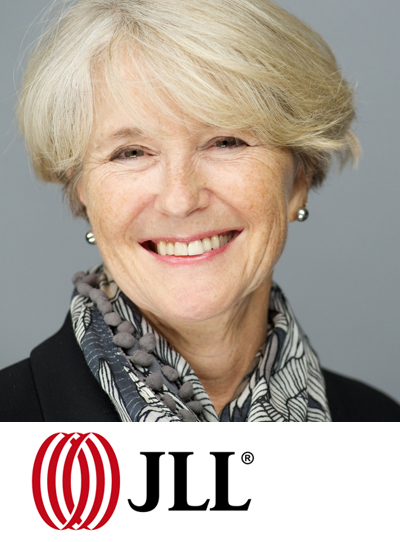
Cynthia Curtis-JLL-GreenMoneyBased on government estimates, buildings account for 60% of carbon emissions in cities. And with more than 2.5 billion people moving into cities in the next 30 years, there is a responsibility to ensure that the real estate sector, and the permanency of buildings and our communities, are evolving and adapting in a sustainable way. This isn’t only good for the planet – it also benefits job creation, health, and equality.

As the world emerges from the pandemic and seeks to tackle multiple other pressing challenges ranging from war in Ukraine, food shortages, inflation, and cost-of-living pressures, it is vitally important we do not lose collective focus on the catastrophic risks posed by climate change.

Global urbanization offers a time-limited opportunity to work towards widespread climate-resilient development and transformational adaptation. There needs to be an all-in approach in the built environment sector to deliver the critical 1.5oC pathway. A significant majority of the world’s major cities have committed for all new buildings to be net zero by 2030 and all buildings to be net zero by 2050. But with approximately 80% of existing building stock set to still be standing in 2050, meeting this net zero goal is a huge challenge for the real estate sector.

The real estate industry must play a central role in enabling companies, communities, and cities to deliver their net zero goals. It is encouraging to see that our industry’s collective response is spearheaded by the growing number of net zero carbon commitments, as governments and companies act to limit global warming to 1.5oC. The urgency of which was reinforced by the IPCC’s latest report that calls for immediate, ambitious and sustained efforts to slash emissions. At the same time, the pandemic and continuing advances in technology have changed how and where we work, with long term implications for health, wellbeing, and inclusivity.

Taken together, these trends are likely to lead to substantial change, challenges, and opportunities for the real estate industry. For JLL, understanding and responding to these trends is fundamental to our purpose of shaping the future of real estate for a better world.

Responding to the Climate Emergency

To help inform real estate decarbonization strategy – looking beyond current regulation to create competitive advantage and future-proof real assets – JLL has released a new research study examining efforts taking place across 32 world cities.

Our findings point to five key issues:

  • The urgent need to decarbonize real estate: city governments are now recognizing that it’s time for action. They are introducing a raft of measures covering new and existing commercial real estate. Some cities are ahead of their peers in tackling real estate decarbonization – New York, Paris, Singapore, Toronto, and Sydney.
  • You can’t improve what you can’t measure: real estate owners/investors and occupiers are increasingly being asked to comply with mandatory regulations and to benchmark and report emissions, energy, water, and waste. U.S. cities like Boston, New York and Washington DC are leading the way.
  • There is an urgent imperative to address the retrofitting challenge of existing buildings. Around 50% of the world’s raw material is consumed in the development of buildings. And of the 40% of emissions stemming from the built environment, 11% is from embodied carbon from the construction process.1
  • Retrofitting a city’s existing building stock to net zero carbon is going to be central to decarbonizing a city’s economy. To meet the commitment for all buildings to be net zero by 2050, retrofitting rates will have to accelerate from the current level of 1%-to-2% per annum2 to 3%+.
  • Without decarbonizing the energy grid there are limits to what building owners can achieve in reducing their emissions. Most major global cities now have ambitious targets to move to clean energy generation. Leading the way is Munich, which aims to be powered 100% from renewable sources by 2025.3

The research points to a tapestry of responses: some cities are trailblazers, others just starting out. However, the direction of travel points towards harmonization over time and spotlights best practice, which can also be scaled along the way.

Focusing our Sustainability Efforts Where We Can Deliver the Greatest Impacts

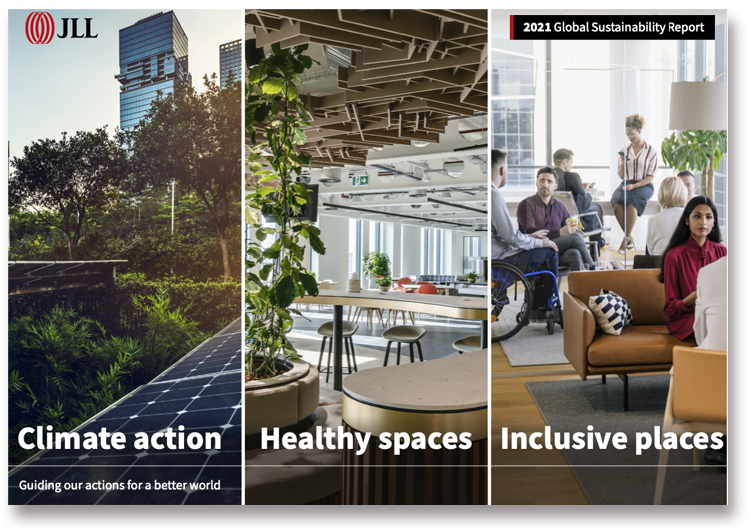
JLL believes in leading by example. Being a responsible business is central to our values. Our global sustainability program is focused on three issue areas where we can achieve the greatest impacts: climate action for sustainable real estate, healthy spaces for all people, and inclusive places for thriving communities. These are informed by JLL’s purpose and aligned to the firm’s Beyond Business strategy.

JLL Climate Action Healthy Spaces Inclusive Places REPORT

In June 2022, we released our latest Global Sustainability Report. Key highlights included:

Climate action for sustainable real estate:

  • JLL’s net zero target aims for the full abatement of 95% of its carbon footprint by 2040. By the end of 2021, JLL had reduced Scope 1 and 2 emissions by 17% from our 2018 baseline and the firm is on track to meet its net-zero 2030 target for occupied office space and vehicle fleet.
  • The first real estate company – and one of just seven companies globally – with a net-zero target validated by the Science Based Target initiative (SBTi) – in 2021, the SBTi launched the world’s first corporate Net-Zero Standard, enabling businesses to set emissions reductions target in line with science.
  • 65,301 metric tons CO2e averted by advising clients on renewable energy projects, a three-fold increase on 2020.

JLL--Healthy spacesHealthy Spaces for All People:

As well as the focus on climate change, the program recognizes the importance of promoting health, safety, and wellbeing among our workforce through the buildings which JLL occupies and manages for clients.

  • 390 sustainable building certificates achieved for clients, over 30% more than in 2020.
  • 45% of JLL offices with a sustainable building certificate4, on track for 100% by 2030.


Inclusive places for thriving communities:

JLL’s sustainability program also puts diversity, equity, and inclusion (DEI) front and center. The firm is determined to create a culture that fosters DEI in all areas of its business.

  • 36% of our top two senior management levels are female, with a target to achieve 40% by 2025.
  • Supported 33 Women’s Business Network Business Resource Groups around the world and launched a global Women Transforming Tech resource group.
  • Continued to grow Business Resource Groups – nine in the Americas, eight in EMEA, and seven in Asia Pacific (along with 11 country and regional DEI groups) – which help drive the business by providing professional development, training and networking opportunities for employees with shared backgrounds, experiences, aspirations and goals.
  • Strengthened our global training to empower every individual to reach their full potential by launching a new learning platform providing access to 25,000 tailored courses and increased our investment per employee by four-fold in 2020, to $316 per employee.
  • $1.97 billion spent with diverse suppliers, doubling spend on the previous year – and set a target to reach $2.5 billion by 2025.
  • $8.9 million contributed to charitable causes – a 15% increase over 2020, with 919 organizations supported – an increase of 40% over 2020.

In the real estate industry, we’ve always been used to collaboration, whether that’s between the owner of a building, the occupier of a building, local governments to get permits in place to retrofit or to build buildings. To drive the change necessary to meet the challenge of decarbonizing our cities and sector, it’s going to take an ‘all-in’ approach. At JLL, we are committed to playing our part and supporting our clients on their journey. To discover how, read our latest JLL 2021 Global Sustainability Report or download the summary report here.


Article by Cynthia Curtis, SVP and Corporate Sustainability Officer, Americas for JLL. She is responsible for elevating JLL’s sustainability program across the region and embedding it broadly throughout the business. Included in her scope is delivering against JLL’s net-zero carbon target of reducing scope 3 emissions from the properties that it manages on behalf of clients. She serves as the company’s representative on the World Green Building Council’s Corporate Advisory Board. Cynthia also collaborates with the Investor Relations team to ensure its investors have a more complete understanding of JLL’s competencies, goals and impacts through outreach and disclosure.

Cynthia serves on the Board of Directors for Greenback Renewable Energy Company, LLC, which is dedicated to investing in projects and managing capital for its public shareholders as well as institutional investors in the sustainable infrastructure sector. Previously, Curtis has worked in the public, private and non-profit sectors, including Ceres and CA Technologies, where she served as vice president and chief sustainability officer. 

She lives in the Boston area, is a member of the New England Women in Energy and the Environment, chairs the Wellesley Village Church Energy Committee, and built one of the region’s first gold LEED-certified residences.

Footnotes:
[1] Source: WorldGBC, Bringing Embodied Carbon Upfront, Sept 2019
[2] World Economic Forum, A Framework for the Future of Real Estate, April 2021
[3] Stadtwerke München’s (SWM) target, https://renewablesnow.com/news/munich-on-track-to-reach-100-renewables-in-2025-770469/
[4] For JLL offices over 10,000 sq. ft.

Additional Articles, Energy & Climate, Impact Investing, Sustainable Business

It’s Official: The Climate Crisis is a Health Emergency

By Ebony Perkins, Impact Finance Center

Above – A Self-Help financed solar project in Kinston, North Carolina. Self-Help has invested over $175 million in solar development companies that are providing a clean energy alternative to fossil fuels and opportunities for economic advancement in rural communities. These installations have created 2,250 jobs in the clean-energy sector and have provided over 280 megawatts of clean energy to the grid–enough to power 53,000 homes.


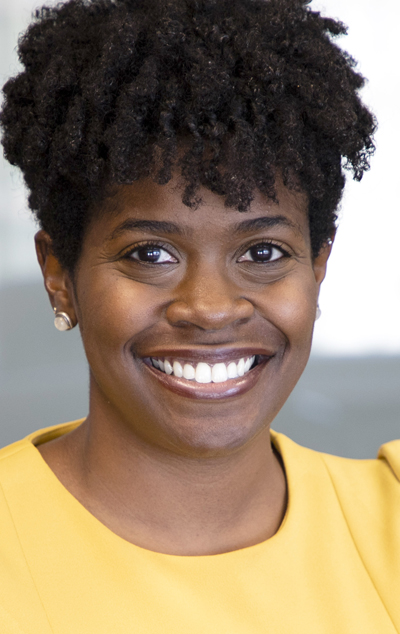
Ebony Perkins Impact Finance Center

GreenMoney Journal is turning 30!

The guests have arrived, the music is playing, and the celebration is about to begin.

But wait…don’t pop the champagne just yet. We still have work to do.

It’s natural to want to celebrate our progress in the fight against climate change. Since GreenMoney Journal’s founding in 1992, we’ve had a few wins—we’ve bent the emissions curve, national leaders have committed to cutting emissions even further, electric vehicle sales have skyrocketed, and clean energy costs have declined.

Investors are also strategically using their investments to support communities that are currently experiencing the direct effects of climate change in their everyday lives. Community development financial institutions have received a surge of investments in the last decade. According to the US SIF 2020 trends report, “community investing assets nearly doubled between 2014 and 2016, then increased by just over 50 percent between 2016 and 2018, and most recently grew by 44 percent between 2018 and 2020.”  Money managers have invested $266.3 billion into community investing institutions.

Yet, investments in community investing institutions are still only 1.6% of the $16.6 trillion in ESG incorporated assets. Many communities are in crisis mode as they face mounting health issues and even death because of climate change.

Though we’ve made progress in the fight against climate change, we must remain persistent and continue to protect our most vulnerable populations.

The Climate Crisis is a Health Emergency

Our most vulnerable groups — low-income and minority communities — feel the effects of our declining planet before the general population because they often lack the resources to shield them from the inevitable chain of events that occur resulting from environmental decline and failing infrastructure. They experience the effects of climate change at higher rates, are plagued by water contamination, and are more often located near landfills and hazardous waste sites than other groups. These groups are robbed of the chance to live and raise their families in safe communities where they can enjoy healthy food, drink safe water, and breathe clean air.

The World Health Organization estimates that in 2012 environmental factors contributed to 12.6 million deaths globally, nearly 23% of all deaths. In the United States, physicians are speaking out about the health risks that pregnant women, children, the elderly, and others with chronic health conditions are experiencing because of climate. They are seeing more patients with increased allergies, respiratory complications, heat-related difficulties, or mosquito-borne illnesses, among other issues.

Many individuals are now taking their health into their own hands after realizing the damaging effects of gas. Clean Energy Credit Union member John from Texas turned to the credit union after experiencing a storm that affected him and his family. He said, “I [decided] to go solar after the huge storm in Texas in February of 2021. After losing power for almost 48 hours and having to huddle around the gas fireplace just to survive, we had enough and decided to take control of our own energy production. We purchased a system large enough to produce 100% of our energy needs, with a battery backup that is generator ready. We feel much safer in our own home now that we have this system.”

Many green financial institutions recognize that no one should continue to jeopardize their health because of expensive financing options from traditional lenders. Nicole Buford, Marketing Director at Clean Energy, doubled down on their efforts to build healthier communities: “We recognize that there is a strong connection between health and the environment, and we are committed to leveraging clean energy to reduce pollution for the public’s health.”

In the future, investors will tailor their strategy in the fight against climate change to address the growing health problems vulnerable communities face. Some institutional investors are already investing in affordable housing that provides safe, environmentally-friendly living conditions. Others are increasing diversity in healthcare so patients experiencing environmentally-caused health conditions can work with a doctor or other healthcare professionals that can both identify with their plight and meet their needs.

West Oakland Community Foods Market
Community Foods Market is a full-service grocery store, health resource center and community hub that engages residents to lead healthier and more socially-connected lives. Self-Help’s $1,985,000 loan helped fund construction of the 14,000 square-foot grocery store to support the vibrant community of West Oakland.

How You Can Build Healthier Communities & Fight Climate Change

You don’t have to decide between either fighting climate change or building healthier communities. Below are a few ways you can achieve both:

  • Invest your cash with green financial institutions providing healthy alternative products: Some credit unions specialize in affordable clean energy loans. Consider placing your savings at Self-Help Credit Union in a CD, IRA, or money market account so they can help others lead healthier, environmentally-friendly lives.
  • Give to nonprofits addressing the public health effects of climate change: Many organizations are serving communities experiencing these health issues. Consider donating to organizations like The Medical Society Consortium on Climate & Health or PUSH Buffalo to help them continue to raise awareness and address health inequities.
  • Speak up for populations experiencing the brunt of this health crisis: As you continue to advocate for climate change, verbally acknowledge the people currently suffering from these health issues. Although we can continue to address carbon emissions and rising sea levels, we must not forget the growing number of human lives lost each day because of this current health crisis.


Article by Ebony Perkins, Senior Advisor, Impact Finance Center

Ebony Perkins is a dedicated, solution-oriented social entrepreneur whose heartbeat is community. She has a demonstrated ability of working with investors and philanthropists to help them make smart and strategic decisions. As the Director of Impact Investments for a Fortune 5 company, Ebony advances their social impact and tax credit investment strategy across the country. Before that role, she served as the Vice-President & Director of Investor Relations at Self-Help Credit Union. Ebony managed a national team that helps groups and individuals invest funds in a socially responsible financial institution that supports communities of all kinds, especially those underserved by conventional lenders.

Ebony co-hosts the Renegade Capital Podcast: The Activist’s podcast for finance and investments. She interviews thought leaders who go into the ring every day to fight against the racist, sexist, and exclusive norms established by traditional financial and capital systems. Ebony is also a Senior Advisor with Impact Finance Center and is supporting the creation of a membership organization that provides shared due diligence for a diverse asset manager database. 

Ebony’s commitment to community investing is evident by her service and contributions to Clean Energy Credit Union, Conservation Trust of North Carolina, US SIF, and Women In Philanthropy. She was also recognized on the SRI Conference’s inaugural 30 Under 30 List.

Ebony holds a Master of Public Administration from the University of North Carolina at Chapel Hill and a Bachelor of Science in Marketing from Claflin University as a summa cum laude graduate. She also has an Executive Certificate in Financial Planning from Duke University.

Energy & Climate, Featured Articles, Food & Farming, Impact Investing, Sustainable Business

What Would Nature Do? What Would Nature Have Me Do? The Next Thirty Years

By Katherine Collins, Putnam Investments

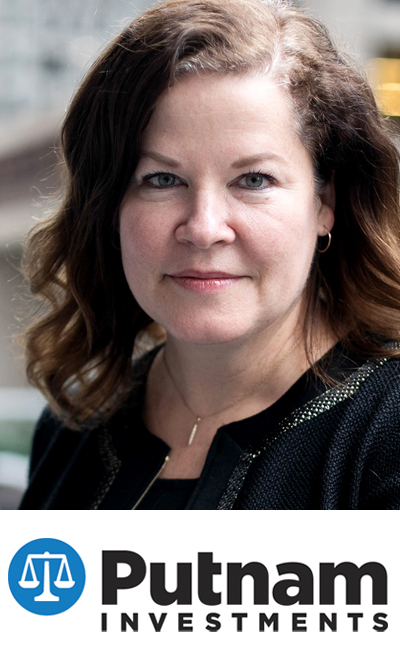
Katherine Collins - Putnam InvestmentsWhen I was pensive as a child, I’d hop on my bike and ride to a little creek down the lane, where I could watch the caddisflies assemble their crazy pebbly houses.
When I was yearning to consolidate my thoughts after divinity school, I walked 500 miles through the fields of wheat and sunflowers in northern Spain.

When I was returning to practice in a large financial institution, I endlessly studied the interactions my honey bee hives.

In the early days of the pandemic, I began to stop on my daily walk to lean against a 200 year old oak, though it was weeks until I was aware of this habit.

And once, at a conference in Las Vegas, I hid amidst the branches of a big potted ficus tree, the only thing around that was not flashing lights or bleeping at me.


It is perhaps no surprise, then, that I see a great reconnection in business and investing taking root – a joining-up of finance and the wisdom of our natural world. I don’t mean a focus on investing in nature, though in many ways that is vital. I mean a focus on investing as nature, a shift in how our decisions are considered and made and monitored. This shift goes beyond the changing jargon and labels and frameworks of our profession, important though they can be. It reflects a deeper level of reunion, a reconnection of investing with the world it is meant to serve.

I acknowledge that this trend is not so visible some days.

Here in our “now,” things are pretty complicated.

Over the past two years, we have witnessed the tragic and disruptive impacts of the pandemic; continued evidence of racial injustice in the United States; record-breaking fire, hurricane, drought, and flood conditions across many parts of the world; and the ongoing polarization of civil discourse. Recent months have brought news of the horrific invasion of Ukraine, inflationary pressures, and tumult in economies and financial markets. The opportunities to improve the systems that support our well-being, livelihoods, and societies are enormous, sometimes overwhelming.

And yet.

When times are difficult, both shortcomings and strengths are revealed. Individuals, communities, companies, and societies have the chance to rediscover our most valuable assets. Amid the challenges noted above, we have also experienced the joy of reunion, the power of effective collaboration, and the glory of our natural environment. We are reminded daily of the power of social connection, positive technological advances, and effective systems of care and governance.

What are the common characteristics of these newly vivid assets?

Effectiveness over efficiency.
Connection over isolation.
Adaptation over rigidity.
Partnership over predation.

These are also the design principles at work in healthy natural systems, the ideas that sit at the heart of the practice of biomimicry.

What Would Nature Do?

Biomimicry asks us to look to nature as our most magnificent library of wisdom, not just a warehouse full of stuff. It asks us to stop before we design a process, or invent a taxonomy, or create a product, and to ask, What Would Nature Do? How is this function I’m considering present in natural systems, and what can I learn from the billions of years of cumulative experience all around me?

Fittingly, my introduction to biomimicry was itself a re-rooting. I was visiting with the incomparable Hazel Henderson at her home in Florida, where visionary scientists and teachers Janine Benyus and Dayna Baumeister introduced us to the core principles of biomimicry and natural systems design. At one point, Janine summarized by saying, “so this is how the world functions,” and I felt a huge whoosh of my own exhaled breath. This is how the world – our home – already functions. It is not so hard to imagine realigning our puny, brand-new financial systems once this reality is clear.

In some ways an investment practice or business operation aligned with natural systems might still seem a faraway dream. But I see the green shoots sprouting up everywhere I look. When a CEO reports on the benefits of their products to customers before talking about operating margins, that’s a sprout. When a CFO tells me with eyebrows raised that increasing wages is an investment and not just a cost, that’s a sprout. When my own team shares stories of the best things in our weeks before diving into our spreadsheets, that’s a sprout. When analyst and CIO commentary recognizes that all of these activities contribute to financial returns, that it’s not a zero sum, fixed pie world, that is more than a sprout; it is a sapling!

What Would Nature Have Me Do?

A more recent reframing of this core question has recently come to me through reunion with the Harvard Divinity School community, and particularly with the legacy of Reverend Peter J. Gomes. I’m sorry to report that one of my main lessons from Divinity School is, unless you are Reverend Gomes, no one really wants to hear your sermon! Thankfully we still have the records of his orations to draw upon for inspiration and guidance.

Rev. Gomes famously upped the ante on the popular Christian phrase, “What would Jesus do?” by asking instead, “What would Jesus have me do?” This has me wondering, what if we extend our inquiry to ask, What would Nature have me do?

These two tiny words make all the difference. They move us from a place of judgment to a place of responsibility, from analysis to action. Whatever we honor, this edit tilts the question inward, and forward.

In this demand we find love.
In this demand we find hope.

Like the green shoots of biomimicry design principles, I see sparks of this hope everywhere. The buttoned-up CFO who tells us about sharing personal struggles with his team during the pandemic is a spark. The analyst whose enthusiasm for the circular economy earns the attention of a cranky old colleague is a spark. The manager who insists on a higher standard of substance over a check-the-box approach to reporting is a spark.

As I compose this curious combination of reflection and prediction, dear Hazel has just “gone virtual” (in her words). She leaves us with great bushels of seeds from her far-ranging wisdom, and great arcs of illumination from the sparks of her spirit. As we go forward with the planting, as we try to light a path ahead, how fitting it would be for us to also take up her mantra, “the wealth is in the network!” This work is joyful, and also sometimes lonely. But we are not alone.

These seeds and these sparks are my hope for the next thirty years. They are the source of my faith in what could lie ahead. Here is the work of our time, to reconnect all that has been held falsely separate.

What rewards it could bring!

Study Nature. Love Nature. Stay close to nature.
It will never fail you. – Frank Lloyd Wright


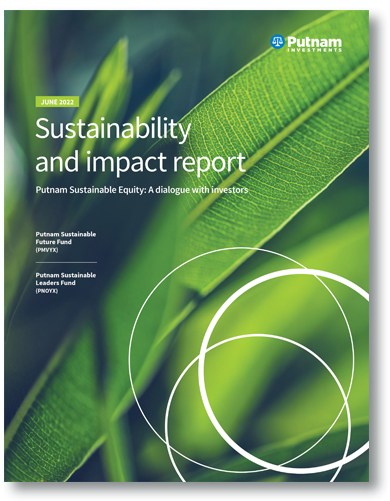
Putnam Investments 2022 Sustainability ReportArticle by Katherine Collins, Head of Sustainable Investing at Putnam Investments and portfolio manager for Putnam’s Sustainable Leaders and Sustainable Future strategies, with approximately $8 billion in assets under management. 

Ms. Collins has over thirty years’ experience as an active fundamental investor and was named to the inaugural Forbes “50 Over 50” list of leaders who are shaping the future of finance in 2021. She is the author of Month of Sundays and The Nature of Investing, and founder of Honeybee Capital, an independent investment research firm focused on sustainable investment themes. Earlier in her career, she served as Head of Equity Research, Portfolio Manager, and Equity Research Analyst at Fidelity Investments.

Katherine serves on several nonprofit boards, including the Santa Fe Institute, Omega Institute, and Harvard Divinity School Dean’s Council. She earned a Master of Theological Studies from Harvard Divinity School and a B.A. from Wellesley College, and is a CFA charter holder

Energy & Climate, Featured Articles, Food & Farming, Impact Investing, Sustainable Business

The Next 30 Years: Investing in the Transition to a More Sustainable Economy

By Joe Keefe, Impax Asset Management

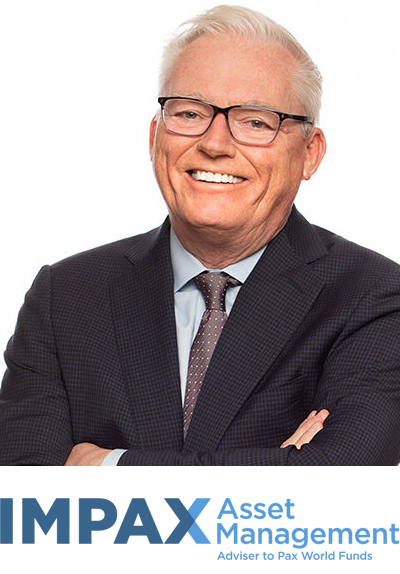
Joe Keefe - IMPAX Asset MgmtThe next 30 years will require an epochal transition from an industrial-age economy where negative long-term environmental and social externalities are ignored to a sustainable economy where future growth is accompanied by dramatically improved environmental and social outcomes. The future of human civilization as well as countless species, and indeed of nature itself, depends on it.

The transition to a more sustainable economy will require far more intentionality than we see today, in the sense that businesses, capital markets, civil society and governments will need to reach a broad consensus on goals and set a course to reach them. We should not underestimate the immensity of this challenge. Moving to a “sustainable economy” goes beyond achieving net zero emissions by midcentury to avert a climate catastrophe – an ambitious agenda in and of itself – but to a much broader transition from a depletive economic model to a more circular, restorative economic model.

Not only are global temperatures rising but oceans and marine life are choking to death on plastic. Not only are polar ice caps melting but clean water, wetlands, fisheries and natural food systems are endangered. Not only are biblical storms, fires and floods becoming everyday news events but habitat destruction, biodiversity loss and species extinctions are proceeding at alarming rates. Planet Earth is remarkably resilient, but climate change is only the most prominent among a growing, interrelated matrix of environmental disruptions that is truly existential.

To complicate matters further, we need to understand that the task before us is not confined to environmental challenges; the transition to a more sustainable economy must be accompanied by a transition to a more equitable society. This will require repairing and strengthening the social fabric across a range of issues including pay equity and fairness, worker health and safety, paid leave and flexible work, improved access to health care, nutrition, child and elder care, education and finance as well as a host of demographic and human capital issues such as diversity, inclusion and gender equity. Growing inequality, exclusion, marginalization and oppression in a world of haves and have-nots is quite simply not a foundation on which to build a sustainable future.

In essence, what we need is a sustainability revolution equal in significance to the industrial revolution that ushered in the modern period. And in a historic moment beset by pessimism – stemming from a global pandemic, war, economic woes and social divisions – there is the added challenge of summoning the will and marshalling the resources to move forward. The task before us is enormous.

Foundations for the Transition Have Been Laid

Yet there are reasons to be hopeful – even confident and optimistic. We can be encouraged not only by what we have already accomplished but by the rich tableau of opportunity before us. Investors have been and must continue to be at the forefront of this historic transition.

Thirty years ago, few if any companies were issuing corporate responsibility or sustainability reports. Today more than 5,000 do so and many countries are about to require such reporting. Back then, there were but a handful of corporations that had embraced diversity on their boards or in senior leadership. In 2021, by contrast, 45% of Fortune 500 board appointments went to women and 41% to non-whites. Thirty years ago, there was no Institutional Investor Group on Climate Change, with members representing over $4 trillion in assets; no UN Principles on Responsible Investment, with signatories representing more than $100 trillion; no Paris Agreement; no Carbon Disclosure Project; no Investor Alliance for Human Rights; no Thirty Percent Coalition advancing corporate diversity; no Global Impact Investing Network; no Ceres; no Net Zero Asset Managers Initiative; no Task Force on Climate-Related Disclosure; no proposed SEC Rules on corporate climate disclosure.

You get the picture.

Suffice it to say that we have traveled some distance and are already witnessing the early stages of the transition to a sustainable economy. We have a lot of work to do, and clearly need to move at a faster pace, but it has begun.

Investors’ Key Role in Driving Change

Importantly, none of this would have happened had it not been for engaged, sustainability-focused investors making the case that businesses and capital markets must begin accounting for material risks and opportunities associated with the transition. Over the past few decades, we have articulated a compelling investment rationale for more corporate disclosure, improved policies and practices, and a longer-term outlook that is in the best interest of corporate shareholders as well as other stakeholders. Investors have made the business case for corporate responsibility, for environmental stewardship, for gender and racial equality and inclusion; we have made the investment case for capital markets to hasten the transition to a more sustainable economy.

As a result of this work, we have witnessed the decline of the shareholder model of the corporation, famously captured by economist Milton Friedman’s dictum that the only duty of a business is to make a profit. In its place, a more expansive view of the modern corporation has emerged where a company’s duties are not only to its shareholders but to all stakeholders, including employees, customers, the communities where it does business, the natural environment, and indeed, the public interest. The significance of this shift cannot be overstated.

Over the coming decades, businesses and capital markets will be profoundly re-shaped by global sustainability challenges. Some parts of the global economy, including certain sectors and industries, will face headwinds while others will enjoy tailwinds. Some companies will be well-positioned to benefit from the sustainability transition while laggards that fail to adjust will be left behind. There will be clear investment risks but also enormous investment opportunities.

For example, G7 countries and the EU have committed to largely de-carbonize their electricity sectors during the 2030s, while policy commitments to phase out vehicles with internal combustion engines (ICEs) have prompted major carmakers such as Ford, General Motors, Volvo and Mercedes-Benz to sunset the manufacture of ICE vehicles worldwide. The accelerating shift to electric vehicles will create significant opportunities for long-term investors.

G7 countries and the EU have committed to largely de-carbonize their electricity sectors during the 2030s - by Joe Keefe Impax Asset Mgmt

More than 100 countries have pledged to cut methane emissions by 30% by 2030. Another 50+ countries have pledged to phase down coal power generation as we continue the transition to renewables, which are on the verge of surpassing coal as an energy source. A global treaty to curb further biodiversity loss is in the works under the auspices of the UN Biodiversity Conference. For long-term investors, there seems little doubt that investment in renewables, zero-emissions transportation, water stewardship and conservation, resource efficiency and climate and ecosystem resilience will continue to grow. These investment themes and emergent industries will enjoy tailwinds while taking market share from legacy sectors.   

Political Challenges Must Be Overcome

One challenge, clearly, is that public policy advances will be needed to facilitate and enable this transition, and some of the investment opportunities mentioned above are in fact being driven by public policy choices. Just as clearly, in the United States, the largest economy in the world, there is no public policy consensus at the moment. In fact, there are deep political divisions over whether human activity even causes climate change or that it need be addressed. To compound matters, a rear-guard campaign against “woke” corporations endeavoring to align their business strategies with certain sustainability – or ESG-related goals is currently underway and perhaps gathering momentum.

What we might call the politicization of the marketplace is not likely to fade away quickly. Legacy sectors such as the fossil fuel industry will not go gently into the night. Not coincidentally, disruptions associated with globalization have already given rise to various “populist” movements and autocratic impulses around the globe, including in the US. These trends will likely intensify over the near term, posing profound challenges.

My own view is that the transition to a more sustainable economy and a more equitable society will require a renewed commitment to the values of the enlightenment and the liberal idea: individual liberty, democratic self-governance, free markets, the rule of law, equality of opportunity, respect for human rights.

The next three decades will be fraught with risk and instability as these battles play out. But they are also brimming with opportunity and promise. All periods of historic transformation are disruptive. Change never comes in a straight line, nor is it inevitable. We must bring it into being.

But investors have 30 years of experience and accomplishment under our belt. This should give us confidence that we can successfully shape and manage the next 30. I believe we will.


Article by Joe Keefe, President of Impax Asset Management LLC, the North American division of Impax Asset Management Group and investment adviser to Pax World Funds. He is responsible for the distribution of Impax’s full capabilities across North America. 

Prior to joining the firm in May 2005, Joe was President of NewCircle Communications, a strategic consulting and communications firm specializing in corporate social responsibility and public policy communications. He served as Senior Advisor for Strategic Social Policy at Calvert Group from 2003-2005 and as Executive Vice President and General Counsel of Citizens Advisers from 1997-2000. He is a former member of the Board of Directors (2000-2006) of US SIF, the trade association representing asset managers and investors engaged in sustainable investing throughout the United States. Before entering the investment management industry, Joe worked in private law practice for 16 years.

 Joe holds a Juris Doctor from the University of Virginia School of Law and a Bachelor of Arts in philosophy from the College of the Holy Cross.

Energy & Climate, Featured Articles, Impact Investing, Sustainable Business

The Way You Invest Matters: Setting the Stage for the Next 30 Years

By Amy Domini, Domini Impact Investments

Amy Domini, Domini Impact Investments(Article graphics from the Domini Funds 2021 Impact Report)


(First published July/Aug. 2022) The first phase of the responsible investment movement has matured. We find our approach of arguing that scrutiny of the way companies respect their relationships with people and the planet adds value to the investment decision-making process. Our stakeholders include the natural ecology, work forces, suppliers, customers, investors, taxpayers, and communities, both locally and in the global sense. We have demonstrated value and so regulators, large investors, investment banks and partner-nonprofits mobilized to begin the process of standardizing data and providing it to investment decision makers.

Roughly every fifty years a new awareness of a better way for investors to make money emerges. In 1934 Benjamin Graham published Security Analysis which forever shaped the way professionals approached the investment decision making process. He argued that being disciplined, investing in the company—not simply the stock—and staying invested for the long haul allowed one to achieve superior results. His stock-by-stock approach prevailed for roughly fifty years before the next tidal wave of insight appeared: The Modern Portfolio Theory, which argued that a thoughtful diversification would reduce risk and enhance return revolutionized portfolio management. Although Harry Markowitz introduced the concept in 1952, it did not sweep institutional investing until David F. Swensen famously built the highly successful Yale endowment by utilizing the theory in the late 1980s. Today we witness a global rush to investing with values, frequently referred to as Environmental, Social and Governance, or ESG investing, although impact or sustainability investing is favored by many.

Modern Portfolio Theory did not remove security analysis—it is used alongside it. ESG will not cause the demise of security analysis and will not cause the demise of diversifying portfolios. Instead, it sets out to strengthens investors’ capacity to make sound investment decisions that help outcomes for their clients. Many on Wall Street did not expect this outcome, but as the idea spread, these people have become converts. In fact, we are now headed to universal acceptance that there is a value add.

Thirty years ago, socially responsible investing, as it was called, was generally ignored by professional investors as a tool for making investment decisions. When it was discussed, concerns were raised. Was it possible to perform with such constraints? Was it legal? Who decides what is good and how do they weigh its pros and cons? Today we have set aside most of these concerns. There is plenty of academic literature and lived experience to give comfort to those who are hesitant.

I anticipate that the next several years will see an increase in standardized reporting on topics of interest to responsible investors. Many of these data points will result from demands by regulators. We have already seen the Securities and Exchange Commission mandate disclosures relating to executive compensation and board makeup. Some data points will continue to be collected voluntarily.

Carbon Disclosure Project is an example of what can be accomplished without specific regulation when investors voice an interest in a disclosure.

The question of who decides what is good is quickly emerging as a hot topic. Recent news that S&P Global does not consider controversial behavior that happened more than ten years ago drew some criticism. But I thought ten years was more than adequate and as I generally consider four years as adequate for the aging off of a concern. A difference of opinion is a good thing. All investors have identical information of earnings per share and the price of a security, yet some are buyers and some are sellers. It is, as they say, what makes a market.

2021 Domini Funds Impact Report-2

Nonetheless, for the sake of a strong outcome, advocates of the integration of social and ecological considerations into the investment process could benefit from a greater convergence over “what matters,” even if we do not agree on how to interpret it.

In 1989 Peter Kinder, Steven Lydenberg and I created the metrics to identify a company’s impacts on several stakeholders in an even-handed way. With this tool, we could create a splatter of data points. We did not assign values to each data point, arguing that the investor should stand back from the canvas, stare, and see the points form a picture. Certainly, we had to decide which companies to put into the Domini 400 Social Index*, but there was no simple numerical entry point.

Currently, the largest research vendors have a tendency to use data points to come up with a single score for a company. It is an approach that is, in my opinion, unlikely to continue to be much sought after. As a portfolio manager, I am somewhat interested in buy and sell recommendations, but I certainly don’t take someone else’s opinion blindly. I want to know why and I want to know in detail about the tidbits of information that have helped me in the past, such as qualifications of top management or cash flow trends. The same is true for stakeholder analysis. I want to judge for myself whether the company has taken steps to address their ecological damage, or to attract and retain a diverse and empowered workforce. I have my own prejudices as to what matters with what companies.

Domini Funds 2021 Impact Report-3One of these prejudices is that the treatment of the taxpayer deserves greater scrutiny. If your employment base must rely on public assistance to make ends meet, your company is not, in fact, a functioning capitalist company. It is living on handouts and needs to be priced as such. I raise this only as an example of potential areas to explore for greater understanding of whether a corporation is in fact a good place to invest money.

In addition to how we, who manage impact portfolios, look at companies, a shift has occurred in how investors look at us. The issuer of investment products labeled as responsible or green is being asked to demonstrate consistency. If a mutual fund is green, the fund management is expected to vote green on proxies. This may seem simple and obvious to insiders in the field, but it was in reality not the case and has led to claims of greenwashing, confusing the public. Nonetheless, it is effectively moving mountains. Large asset managers are integrating value across proxy voting, headquarter building, diversity programs and a host of other areas. Consistency will grow.

Intentionality is also under scrutiny. When Morningstar began to rate mutual funds for ESG, shock waves were set off as dozens of funds with a special purpose and no intentionality to be ESG were given good scores. Was a fund that bought only solar panel manufacturers really a “better” ESG investment than a diversified portfolio that intentionally engaged with its portfolio companies and had a prospectus stating that it used environmental standards to make investment decisions?

What do the next thirty years hold? I believe there will be universal acceptance of ESG as a valid and useful tool for investment advisors; a move towards greater disclosure of granular data; a move away from top line scores; and an avalanche of new research on the approach. This is not, however, as important as what the byproduct of our growth will bring. With data comes knowledge and with knowledge comes corrective action. That will be our legacy.

We have always believed that investors matter in assuring that there is a tomorrow, and that tomorrow includes a livable planet and lives worth living. And our field is built on the idea that we are more alike than different from each other, that our combined impact will be an important source of engaging finance in creating a better world. We are on the cusp of seeing our goals met. Our simple concept, the way you invest matters, will have positive real world results.


Article by Amy Domini, Founder and Chair of Domini Impact Investments (“Domini”). She has been a leader and innovator in the development of impact investing for over 30 years. Widely regarded as one of the world’s eminent authorities in the field, she was named to Time magazine’s list of the world’s 100 most influential people in 2005.

Ms. Domini began her career as a stockbroker and became especially interested in working with clients that were concerned with ecological sustainability and universal human dignity. She co-founded KLD Research & Analytics and, in 1990, was instrumental in the launch of the Domini 400 Social Index. She later co-created the Domini Impact Equity Fund. Ms. Domini serves as a voting member of Domini’s Impact Review Committee and Standards Committee. She also serves as co-Portfolio Manager for the Domini Impact Equity Fund, Domini International Opportunities Fund, and Domini Sustainable Solutions Fund.

Ms. Domini was acknowledged with the Clinton Global Initiative citation for innovation and finance. She has also received an honorary Doctor of Business Administration degree from Northeastern College of Law, an honorary Doctor of Laws degree from Flagler College, and an honorary Doctor of Humane Letters from Yale University’s Berkeley Divinity School. Ms. Domini was named to Directorship magazine’s Directorship 100, the magazine’s listing of the most influential people on corporate governance and in the boardroom, and Barron’s selected her as one of the 30 most influential people in the mutual business. In 2009, she was named to Time magazine’s list of 25 “Responsibility Pioneers” who are changing the world.

Active in her community, Ms. Domini is a board member for the Center for Responsible Lending. She is also a past board member of the Church Pension Fund of the Episcopal Church in America; the National Association of Community Development Loan Funds, an organization whose members work to create funds for grassroots economic development loans; and the Interfaith Center on Corporate Responsibility, the major sponsor of shareholder actions. A frequent guest commentator, Ms. Domini has appeared on CNBC’s Talking Stocks and various other radio and television shows.

Ms. Domini holds a B.A. in international and comparative studies from Boston University and holds the Chartered Financial Analyst designation.

Select Publications:

Ms. Domini is the author of Thoughts on People Planet, & Profit (2021), Socially Responsible Investing: Making a Difference and Making Money (Dearborn Trade, 2001) and The Challenges of Wealth (Dow Jones Irwin, 1988), and a coauthor of Investing for Good (Harper Collins, 1993), The Social Investment Almanac (Henry Holt, 1992), and Ethical Investing  (Addison-Wesley, 1984). 

Footnote:
* Now known as the MSCI KLD 400 Social Index, owned by MSCI, Inc. MSCI and Domini Impact Investments LLC are not affiliated.

This commentary reflects the views of the author and are subject to change as market and other conditions warrant. No forecasts are guaranteed. This commentary is provided for informational purposes only and is not an endorsement of any security, mutual fund, sector, or index.

Energy & Climate, Featured Articles, Food & Farming, Impact Investing, Sustainable Business

Signup to receive GreenMoney's monthly eJournal

Privacy Policy
Copyright © GreenMoney Journal 2025

Website design & development by BrandNature

Global Events Calendar

View All Events

april

21aprAll Day232026 Sustainable Packaging Coalition: SPC Impact – Nashville

27aprAll Day30Women Deliver 2026 Conference (WD2026) – Melbourne

X