Tag: Impact Investing

Farmer by Farmer, Investor by Investor, Regenerating America’s Farmland

By Teresa Opheim, Board Manager, Iroquois Valley Farms

In northern Montana, Doug and Anna Jones-Crabtree restore soil health while growing organic heirloom and specialty grains, pulse and oilseed crops on 4,700 acres. A thousand miles away in Central Minnesota, the Main Street Project sequesters carbon as it transforms 100 acres of bare ground to a permaculture farm alive with hazelnut trees and foraging chickens.


These two farms are dramatically different, but both are part of Iroquois Valley Farms’ quickly expanding network of farmers who are growing healthy food and stewarding the land. They and our 40 other farms around the country are proving to investors that the biggest “regenerative” investment opportunity in the world is to move away from the dead soil monoculture toward ecological-driven organic operations and that the solution is supporting organic farming agri-preneurs.
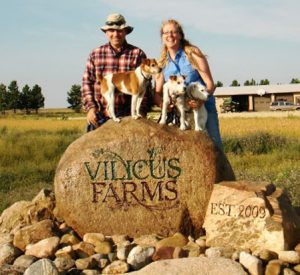
Iroquois Valley Farms starts with the farmers, who choose the land that they need to run profitable farms on. Our company purchases the land and rents it to the farmers (they can buy it from us later if they chose) or we provide financing so that the farmers can hold title. Eighty percent of our farmland investment portfolio is owned farmland; 20 percent is mortgage assets. Our company takes advantage of the appreciation of farmland over the years, plus a steady supply of income from rental and mortgage payments. In a sense, we focus on both growth and income for our investors.

We are purposefully structured to allow broad-based ownership, so that the smaller investor can both diversify into organic farmland and support the production of healthy food on living soils. Our 300-plus investors are individuals, family offices, foundations, faith-based investors and more. We are excited to be reaching the growing number of millennial investors as well.

Our company has a pipeline of farmers nationwide who want our help. You can make this happen in two ways:

•  Equity Shares in our Real Estate Investment Trust (we moved from an LLC format to a REIT this year). The target distribution yield is 2-3 percent. Redemption rights are available after seven years, allowing for returns driven by asset appreciation.

•  Soil Restoration Notes™, a three-year fixed income security that pays 1.5 percent per annum semi-annually. We use a portion of the Soil Restoration Note™ proceeds to help our farmers restore conventional degraded farmland to organic health. We know that the faster they make that transition, the more quickly they restore their soils, sequester carbon and return profits to themselves and the company.

Here’s what makes this 10-year-old company the leader:

•  Iroquois Valley Farms is fiercely focused on farmers: Our farmers — most from multi-generational farm families — make their own business decisions and run their own operations. We support farmers as entrepreneurs; we are not asking them to be laborers in someone else’s farmland investment business plan. We help them through their challenges so that they will thrive. All of us need them to stay on the land — they are the innovators (researchers call them “early adopters”) whom other farmers look to become better stewards.

•  Because of our farmer-focus, we are in this for the long term—for, as the Iroquois Nation says, the next seven generations. We are NOT a farmland trading company. Our model is not the quick fix, quick profit thinking that got us stuck in the dead zone monoculture that is the current ag industry standard. We provide family farmers the land security that will help them regenerate soils, rebuild communities, and continue to pass on their family farms to their farming children.

•  Millennials are our stars. In a country of rapidly aging farmers, we are proud to report more than 70 percent of our tenants are millennials. We are eager to help more. There is no shortage of young farmers who want to make this world a better place, and they deserve secure land tenure. Yet these young people report that a lack of land access and capital are their top two challenges, according to the National Young Farmers Coalition.
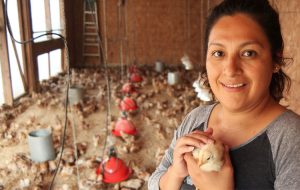
We thrive on diversity. Our farmers grow nuts, berries, beans, corn, hay, wheat, rye and more; they milk cows and raise beef cattle, chickens, hogs, and ducks. They farm from Maine to Montana and many places in between. With the addition of the Main Street Project to the Iroquois fold, we have begun adding ethnic diversity to our portfolio as well, as the Main Street Project serves Latino farmers. Diversity is our strength and a good investment as well. Our farmers’ varied enterprises, locations and farming systems mean we “don’t have all of our eggs in one basket,” which is particularly important given the severe climatic events we are all experiencing.

Iroquois Valley Farms is perfectly positioned to respond to a number of major trends over the next 25 years:

• There is a massive turnover of farmland occurring. Farmland owners are expected to transfer 91 million acres in the next five years (another 57 million acres will be included in landowners’ wills), according to the U.S. Department of Agriculture. Much of this land will be transferred within families, but when the land does come on the market, it will be sold quickly. Small and mid-sized farmers need the resources and agility of Iroquois Valley Farms to help them get – and stay on – the farm.

Organics is the fastest growing sector of the U.S. food industry, according to the Organic Trade Association; as companies like General Mills will attest, they simply cannot get enough raw product to serve their consumers’ demands for healthy food. Millennials are driving that change in habits—more than 50 percent incorporate organic foods in their diet, according to the Organic Trade Association. Iroquois Valley Farms is helping meet that demand, which will only grow as these values-focused young people age.

• We have left ourselves and the next generation a climate change challenge we are just beginning to understand. Iroquois Valley Farms isn’t waiting for the federal government leadership on this most serious of issues. Our farmers are working creatively in so many different ways to sequester carbon—from pasture-based systems, to extended rotations of crops, to permaculture crops like hazelnuts. These farmers don’t have a choice if they want to save their soils—they are on the front lines of intense rains and lingering drought.

• And finally, a most hopeful trend: Impact investors and so many others are acting quickly and effectively to protect the future of our planet. The success and projected growth for Iroquois Valley Farms proves that many of us aren’t putting up any longer with the industrial agriculture system that results in fewer and larger farms, disdains farmers and their livelihood, and treats our soils and water as expendable. We are a movement that will not be stopped.

For more information, visit www.iroquoisvalleyfarms.com or call Alex Mackay, Director of Business Development and Investor Relations, amackay@iroquoisvalleyfarms.com


Article by Teresa Opheim, Board Manager of Iroquois Valley Farms and manager of a USDA Natural Resources Conservation Service Conservation Innovation Grant, which supports the development of the Soil Restoration Notes™. She is the former Executive Director of Practical Farmers of Iowa, editor of the book The Future of Family Farms and author of Your Farmland and the Future: Setting Goals, Taking Action.

Additional Articles, Food & Farming, Impact Investing

The SRI Conference on Sustainable, Responsible, Impact Investing is November 1-3 in San Diego

The SRI Conference on Sustainable, Responsible, Impact Investing, is the industry’s seminal event. The 28th annual conference is right around the corner. Thought leaders, investors, and investment professionals from all corners of the Sustainable, Responsible, Impact (SRI) investing universe convene to gain and share knowledge and strategies that align financial performance with positive change. Conference participants are working to catalyze a shift to a more socially equitable and environmentally sustainable economy.

The 28th Annual SRI Conference is November 1–3, 2017 at the Hotel del Coronado in San Diego, CA.

Steve Schueth, conference producer and President, First Affirmative Financial Network, sat down with SunStar Strategic’s Ben Gerow, Associate Account Executive, to discuss this year’s conference. They discussed the history of the conference, how to encourage networking, and why this is “THE best way for an advisor to climb the SRI learning curve.”

Ben: With the rate that SRI investing is growing, how has The SRI Conference kept up with industry growth?

Steve: Ten years ago we were the only game in town; there was no real competition. But there are a lot more people and organizations engaged in the impact investing industry now. As the bigger players have gotten involved (e.g. Morgan Stanley, Goldman Sachs, State Street, BlackRock, Bain Capital, Oppenheimer, Van Eck, etc.), the growth has been spectacular. The growth of the conference has been reflective of the larger SRI/ESG industry. We hosted 742 attendees in 2016, and we’re expecting 800 this year.

Ben: With more competition in The SRI Conference space, have you managed to differentiate yourself in the market?

Steve: We continue to be on the cutting edge. For example, an emerging topic we’ve focused on is the UN Sustainable Development Goals (SDGs). A year ago, the SDGs weren’t even on the radar. But as I’ve observed the sustainability reports being released by global public companies over the past six months, I’ve noticed an increasing focus on the SDGs. On the other side of the desk, investment analysts and managers are beginning to re-tool their analysis of the data and judge companies and their management teams based on their commitment and progress against the SDGs. I’m predicting that viewing companies as prospective investments through the lens of the 17 SDGs will be the next evolution of Sustainable, Responsible, Impact investing: SRI 3.0. This is just one example of a topic we are focusing on in November that will keep The SRI Conference ahead of the curve.

The other way we differentiate ourselves is by the number of advisors we put in the rooms. It’s a two-day immersion experience where an advisor with a CFP, CFA, or CIMA designation can walk away with as many as 12 Continuing Education (CE) credits. Two days at The SRI Conference is far and away the best way for an advisor to climb the SRI learning curve.

Ben: The common takeaway from most conferences is that the most important thing you leave with is the connections you make while you’re there. How does The SRI Conference encourage networking and ensure these connections are made?

Steve: I agree; the most valuable part of the conference experience is the networking; this is consistent with the feedback we receive every year. We do a number of things to facilitate robust interaction and engagement, including a lot of time in the Exhibit Hall, and a generous amount of time to Q&A and dialogue with speakers during sessions.

Nearly 40% of conference attendees have been first-time attendees in recent years. These are both new people working for companies already engaged in the SRI/ESG industry, or they are brand new to the space. We’ve found that The SRI Conference has become a first point of entry for people who are interested in responsible investing for positive impact.

We encourage and facilitate networking beginning with our New Participant Orientation. We walk people through the conference notebook, show them where to find things, how to use the conference app, etc., then we invite everyone to briefly introduce themselves. Most people who attend this orientation session make a handful of immediate connections they can build on and leverage during the conference.

We also offer Topic Tables which several years ago were an experiment in response to feedback where people expressed a desire for more time to talk to people who have similar interests. A Topic Table is simply a round table with ten chairs and a person who has volunteered to facilitate a conversation about a specific topic, such as the politics of climate change or sustainable agriculture. People with a personal or professional interest in that topic will sit down to discuss it. Most of the time, Topic Table participants are meeting new people with similar interests.

Ben: A big theme for impact investing is that millennials are leading the charge and are willing to sacrificetheir private wealth for the public good. Is that an emphasis on this year’s conference?

Steve: Not many are willing to sacrifice performance for positive impact. Fortunately, the industry has debunked that myth. The conference flows around questions of how to invest for competitive returns while having a positive impact on our world at the same time. We won’t have specific sessions on millennials this year, but it’s a theme that weaves throughout the program. We invite millennials to speak on panels. We have a dozen or so millennials speaking at the conference and sharing their stories – it’s more of a theme than a topic focus.

Ben: Will there be any marketing/PR panels that focus on how to grow your sustainable fund?

Steve: We do have a session this year that will focus on branding and positioning an advisor’s practice to attract and serve impact-oriented investors.

Ben: Do you have any final thoughts or focal points you’d like to share with the readers?

Steve: This conference has always been designed for investment professionals and it is the best place by far for a client-facing advisor to climb the learning curve and prepare to have deeper conversations with clients who care. But any investment professional who is or wants to be working to direct the flow of investment capital toward the creation of a truly sustainable future is welcome to join us November 1 – 3, 2017 at the Hotel del Coronado in San Diego.

Details at – www.sriconference.com


Steve Schueth is President of First Affirmative Financial Network, LLC, an investment advisory firm providing socially conscious, purpose-driven investors with Sustainable Investment Solutions. He understands that all spending, saving, and investing has impact and assists investors and investment professionals in paying attention and consciously embracing investment strategies that are positively impactful. Since 1989, Mr. Schueth has dedicated his professional life to helping direct the flow of investment capital to catalyze a shift to a truly sustainable future – a world that works for everyone. A nationally recognized authority, consultant, and resource to the responsible investment industry, he is the primary producer of The SRI Conference on Sustainable, Responsible, Impact Investing.

Additional Articles, Impact Investing

LOCUS Impact Investing is Empowering Foundations To Build Prosperous, Vibrant Communities

New consulting, financial advisory and services organization offers comprehensive solutions to help foundations unlock new sources of capital, generating more impact in local economies.

New consulting, financial advisory and services organization offers comprehensive solutions to help foundations unlock new sources of capital, generating more impact in local economies
Leading community development financial institution (CDFI) Virginia Community Capital (VCC) and the nationally recognized Center for Rural Entrepreneurship (CRE) announced in June the launch of LOCUS Impact Investing (LOCUS), a new social enterprise to empower place-focused foundations to invest their capital locally to build prosperous, vibrant communities.

We are entering a new era in philanthropy and community investing that requires different, more comprehensive solutions,” said Teri Lovelace, LOCUS President. “LOCUS Impact Investing provides an on-ramp for foundations around the country that want to engage in local investing for impact, but who currently lack the financial expertise or resources to do so.” Increasingly, place-focused foundations—or philanthropies whose efforts are concentrated in a geographic location—are looking to complement traditional grantmaking with direct community investments, and they seek to do so in a way that manages risk and aligns with their charitable purposes. To unlock this new source of capital effectively for the benefit of communities, foundations need access to a different set of capacities.

LOCUS can help these foundations by assessing the landscape for deals, conducting financial due diligence on specific deals and partners, providing investment services (sourcing, servicing, monitoring and impact tracking) and building internal foundation capacity for continued impact investing. “We are pleased to see LOCUS, led by a longtime member of Mission Investors Exchange, bringing its resources to help meet the needs of foundations in this sector,” said Melanie Audette, Senior Vice President for Mission Investors Exchange.

Mission-Aligned Investing Expertise

LOCUS pairs VCC’s mission-aligned investing expertise in Virginia with CRE’s national community economic development expertise. CRE brings field-tested expertise and resources in entrepreneurial development and community development philanthropy. VCC, as a regulated financial institution and a certified CDFI, created over $915 million of project impact in underserved communities and grew $15 million to over $218 million in assets dedicated to building prosperous, vibrant communities.

Collectively, the two organizations have worked with over 30 CDFIs and empowered more than 40 foundations to expand their assets and engage in community economic development, unlocking local capital for community impact. Building on the collective expertise of VCC and CRE, LOCUS offers a continuum of solutions for foundations and donors as they define their role in this new era of community investing.

As Virginia Community Capital looked to leverage its experience with local investing to a broader national audience, we found in the Center a partner with a national reputation and deep experience in community development philanthropy essential to the successful launch of our new social enterprise, LOCUS,” said Jane Henderson, CEO of Virginia Community Capital. “Through LOCUS Impact Investing, we believe we can empower more foundations to explore and engage in local investing for impact.

Ultimately, LOCUS will serve as a supportive partner as foundations and donors embark on local investing for impact. With this support, place-focused foundations will be better equipped to make community investments (program- and mission-related investments) that build prosperous, vibrant communities.


Learn More About LOCUS

To learn more about LOCUS, visit – www.locusimpactinvesting.org or follow us on Twitter @LocusImpact and on LINKEDIN.

Virginia Community Capital is a regulated financial services holding company that operates a non-profit Community Development Financial Institution (CDFI) and a for-profit bank, Community Capital Bank. As a CDFI, VCC provides credit and financial services to people, businesses, and communities not served by mainstream lenders. Community Capital Bank is the first regulated bank in America to earn the designation of a Benefit Corporation (B Corp.) setting a new model for the financial industry.

The Center for Rural Entrepreneurship helps communities throughout the U.S. and Canada build a prosperous future by supporting business, social and civic entrepreneurs. We work in partnership with communities to provide research-based, asset-focused, comprehensive and customized economic development strategies emphasizing entrepreneurship and community development philanthropy. The Center is a 501(c)(3) nonprofit organization operating under Virginia Community Capital.

LOCUS Impact Investing operates three related entities under the umbrella of Virginia Community Capital. LOCUS Capital is a benefit corporation and registered investment advisor providing financial services (due diligence, servicing, monitoring and reporting) for direct mission investments. LOCUS Solutions is a 501(c)(3) organization that can support place-focused foundations to achieve greater impact by actively engaging in community economic development through mission-aligned investing. LOCUS Foundation is a 501(c)(3) foundation that can help individuals and other foundations use donor-advised funds for direct economic and community development investments.

Contact:
Ann Chaffin – ann@locusimpactinvesting.org
Phone (402) 730-6785

Additional Articles, Food & Farming, Impact Investing

TONIIC T100: Insights from Impact Advisors and Consultants 2017

This New Report Offers Insights From 37 Impact Advisors and Consultants who are Transforming the Financial Service Industry

Toniic Institute, the global action community for impact investors recently released T100: Insights from Impact Advisors and Consultants 2017. This is the second report in the T100 Research Project, a longitudinal study of 100% impact investing portfolios of Toniic members.

In this new report, 37 impact advisors and consultants from 12 countries, partnering with 38 of Toniic’s 100% Impact Network members, open the door to their impact practices to demystify, inspire and activate both investors and the financial services industry. While today there are more impact firms and product offerings to choose from than ever before, information on impact intermediaries, especially for private asset owners, remains sparse despite the growth of the industry.

As a trusted third party, Toniic can aggregate information through the T100 Project, and help investors and advisors learn from what’s happening on the frontier of impact investing,” said Toniic CEO Adam Bendell. “With this second report in the T100 project, we complement the initial findings of the ‘T100: Launch’ report with the perspective of active impact advisors and consultants in the field, helping private and institutional investors moving to 100% impact in their portfolios.”

What we see is a dedicated, articulate, optimistic, innovative, and definitely persistent group of entrepreneurial founders as well as large company intrapreneurs,” said Lisa Kleissner, co-founder of Toniic and its 100% Impact Network. “Beyond fulfilling their clients’ impact needs, they are building new impact products and services, and volunteering their time to strengthen and grow the impact ecosystem. All of them, while cognizant of the challenges, are optimistic there are solutions and a bright future for impact.

Impact advisors and consultants surveyed are reporting:

A significant increase in the depth and diversity of the impact intermediary offering, with sector growth led by client demand. That demand is led by women and millennials asking for values-aligned investment opportunities.

Challenges, like impact measurement and access to appropriate investment opportunities, remain, but none deemed insurmountable.

Accomplishments and optimism as milestones are being achieved. Survey respondents shared success stories, from engaging with new impact clients and transitioning existing clients into impact, to creating new products, and becoming a viable 100% impact advisory business.

Financial returns are on target. Clients target mostly market-rate financial returns. In some situations, clients want and intermediaries are finding high impact investments targeting sub-commercial returns.

Looking to the future, all surveyed agree. Outlook = Growth. Respondents anticipate growth in the number of investors, advisors, and consultants in the space, growth in the breadth and depth of products and services available, and growth in talent entering the ecosystem.

As one advisor concluded, “At the end of the day, it is all about moving past the noise in the system to get to the more important task of co-creating the long-term plan for our planet.

The T100: Insights from Impact Advisors and Consultants 2017 report is available for download at www.toniic.com/T100

Podcast interviews with five advisors supporting Toniic members, conducted by Toni Johnson of Mission OutLoud with support from the Heron Foundation, are available at www.toniic.com/T100


About Toniic and the T100 Project

Toniic is the global action community for impact investors. Toniic’s members in more than 20 countries share a vision of a global financial system creating positive social and environmental impact. Toniic’s mission is to empower impact investors.

Toniic 100% Impact Network members, a sub-group of the Toniic membership, have committed to move an entire investment portfolio into 100% impact across asset classes. Portfolios range in size from less than $2 million to more than $300 million for an aggregated commitment of close to $4 billion.

The T100 Project is a longitudinal study of the portfolios of some of those investors. It reveals insights into the impact journey and feasibility of 100% impact investing. The T100 project includes periodic reports, issue briefs, videos and podcasts, and the Toniic Diirectory, a peer-sourced directory of over 1,000 impact investments across all asset classes. For more information, visit www.toniic.com/T100 or contact us at T100@toniic.com

Additional Articles, Impact Investing

How ‘Catalytic Philanthropy’ Could Solve Global Waste

By Doug Woodring, Founder, Ocean Recovery Alliance

The world faces a looming challenge of handling our waste, an in creasing percentage of which is made of plastic, which simply does not go away. Plastic usually accounts for up to 20 percent of a municipality’s waste generation by weight, but by volume, the proportion is significantly higher. Most small communities do not have access to solutions, and this is where “catalytic philanthropy,” particularly in the resource recovery sector, can make an enormous impact on peoples’ lives on a global basis.

Catalytic philanthropy refers to an approach in which donors take a structured, active role in addressing some of the world’s biggest challenges. According to one well-known philanthropist[1], it “has the high-stakes feel of the private market, but can transcend the key market limitations above: The investor doesn’t need a share of the benefits.

The idea is to open the mindset of donating to issues that should be solved by small businesses (as opposed to NGOs) in the developing world, where even basic technology, resources, knowledge and funding are not readily available. If donors are willing to give for education and health, why not also give to solutions that can solve problems that affect education and health but that are run as businesses?

These solutions do not usually get funding (due to the local economic conditions or relatively smaller size) or donor support (due to the fact of not being an NGO). This is a gap that particularly needs to be filled in the waste and recycling sector, and catalytic philanthropy is one of the fastest and most efficient ways to seed examples that can be replicated in neighboring communities or jurisdictions.

Waste impacts billions of people on a daily basis worldwide, affecting water quality, health, tourism, fishing, agriculture and natural ecosystems. Yet budgets for keeping a city, municipality, town or village clean are often too small to meet the needs of the waste we generate or are lost to corruption along the way. Waste disposal and recycling is usually seen as a cost to a community, rather than an opportunity for resource recovery and generating revenues. Therefore, the investments needed are easily eliminated or limited by those trying to cut corners and simply do the bare minimum to maintain civil order.

This is one reason why our waters and ocean are polluted much more than they need to be.

A Lack of Tools

Proper waste management (to be called resource recovery from here on)is a social need all governments have an obligation to provide.

With technologies improving for resource recovery, and the ability to make use of many resources as if they were new commodity streams, there is now much less excuse to simply “get rid of waste” by burying it in a landfill or burning it. The perceived old-fashioned mindset that waste has little value, coupled with long-term waste-hauling contracts with little incentive for change, mean that many of the world’s communities lack the necessary tools and capacities to recover, process and extract the value of these materials, thus leaving our communities littered with the afterlife of our consumption.

In developing economies particularly, the haves and have-nots are even more defined, in terms of municipalities that provide their communities the resource recovery options they deserve. This is due to a variety of factors, which include smaller economies of scale, smaller markets, less access to technology (even basic equipment that can bring value to waste streams), less access to funding, corruption and lack of well-written waste-hauling (resource recovery) contracts, which thwart incentive for change.

What most of these smaller and medium-sized communities need is the ability to recover and process their waste, particularly plastic, the ultimate material challenge for today’s waste streams. By allowing these communities to capture value from their materials, they will be incentivized to collect it properly, thus reducing the overall waste burden of the society in a significant manner. The machines and equipment needed to create value need not be high-end or expensive, but without them, it is difficult to bring economies of scale and “worth” to the solution.

Catalytic philanthropy is needed to bridge the funding gap for small businesses and local operators in order to do their jobs effectively if given the equipment. This equipment is usually too “small” to qualify for bank loans or multilateral funding, and it is not something that venture capital or most other investors will seek out – at least until it is proven “at scale.” Only when small communities can be shown to make large, civic improvement with resource recovery, will replication and expansion of these systems, programs and methods take place.

If a donor is going to give money to a school, water sanitation system or other program, why not give that donation to a small company that knows how to make value from this material, effectively providing a social good for the community that the local government could not provide?

Filling a Gap

Until these case studies are shown to others, it is extremely hard for such solutions to be introduced in the first place. Catalytic philanthropy can fill an important funding gap that is critical to fill in the waste sector, which weighs down a high percentage of the world, simply because the capacity and infrastructure are not there to complete the link to a sustainable economic system of value creation.

The challenge, therefore, is to have donors understand the need to be able to donate to companies that know how to run operations that can result in resource recovery that most of today’s public jurisdictions do not have the ability to facilitate.

The sparkplug of innovation will come when these machines and equipment, even at the basic level, are introduced. Without them, they will be hindered by what should be simple improvements in community betterment: clean water; good health; profitable tourism; abundant fishing; civic pride; and good livelihoods.

Without a new funding mechanism such as catalytic philanthropy, it is unlikely that the snowball effect of economic, social and environmental improvement will get the kick-start that it needs to move these solutions along in a much greater fashion than we are seeing today.

More information at Ocean Recovery Alliance – www.oceanrecov.org

[1] https://www.gatesnotes.com/About-Bill-Gates/The-Power-of-Catalytic-Philanthropy

Article Source: GreenBiz.com

Additional Articles, Impact Investing, Sustainable Business

Morningstar and Sustainalytics Expand Their Sustainability Collaboration

Morningstar, Inc. acquires 40 percent ownership stake in Sustainalytics

In a continuing and growing commitment to helping investors integrate sustainability considerations into portfolio decisions, Morningstar, Inc. (NASDAQ: MORN), a leading provider of independent investment research, and Sustainalytics, a leading global provider of environmental, social, and governance (ESG) research and ratings, announced in July 2017 that Morningstar has acquired a 40 percent ownership stake in Sustainalytics. The direct investment represents an important milestone in Morningstar’s long-term sustainability strategy and intends to support Sustainalytics’ ability to deliver high-quality, innovative ESG products and services to the global investment community.

In August 2015, the two firms announced a strategic collaboration that resulted in the March 2016 launch of the Morningstar Sustainability Rating™ for global mutual and exchange-traded funds (ETFs). The ratings, which now cover more than 35,000 mutual funds and ETFs, use Sustainalytics company-level ESG research, allowing investors to gauge how well companies held in their funds are managing ESG issues. The Sustainability Rating is available in Morningstar Direct, Direct Cloud, Morningstar Office, Advisor Workstation, 15 global Morningstar websites, and Data Feeds. Building upon the Sustainability Rating and its work with Sustainalytics, in October 2016 Morningstar launched the Global Sustainability Index Family, a series of 27 global equity indexes designed to provide a standard for sustainability investing. In addition, Morningstar released company level ESG metrics for the holdings of 35,000 mutual funds and ETFs and Morningstar Portfolio Sustainability Reports in April 2017, and a tool that enables investors to screen portfolios for various ethical issues in June 2017.

Enhancing this relationship enables us to leverage the expertise Sustainalytics has built over the last 25 years, and build on the momentum we started with the launch of the Sustainability Rating,” said Kunal Kapoor, Morningstar’s chief executive officer. “We have the largest ESG fund coverage universe today, and we look forward to continuing to meet the increasingly sophisticated ESG needs and requirements of our clients through integrated solutions and innovative research that highlights good stewardship, lower costs, and transparency for investors.”

The studies supporting the growth in responsible investing are plentiful. According to the Global Sustainable Investment Alliance, almost 30 percent of professionally managed assets today are associated with responsible investment strategies. At the institutional level, more than 1,700 asset managers, asset owners, and other financial market participants are now signatories to the U.N.-backed Principles for Responsible Investment (PRI), representing $62 trillion in assets under management.

“We welcome Morningstar as a new and significant shareholder,” said Michael Jantzi, chief executive officer of Sustainalytics. “Close collaboration with Morningstar over the last two years has helped to broaden distribution of our ESG research, allowing Sustainalytics to work with more asset managers and owners to integrate ESG into their investment processes. Our entire executive team is excited about expanding our relationship with Morningstar and continuing to work together to bring meaningful ESG insights and innovative products and services to investors worldwide.”

As part of the transaction, Steven Smit, head of sustainability at Morningstar, will join the Sustainalytics board of directors and the Sustainalytics executive team has taken a minority equity stake in the company.


About Morningstar Inc.

Morningstar, Inc. is a leading provider of independent investment research in North America, Europe, Australia, and Asia. The company offers an extensive line of products and services for individual investors, financial advisors, asset managers, retirement plan providers and sponsors, and institutional investors in the private capital markets. Morningstar provides data and research insights on a wide range of investment offerings, including managed investment products, publicly listed companies, private capital markets, and real-time global market data. Morningstar also offers investment management services through its investment advisory subsidiaries, with more than $200 billion in assets under advisement and management as of March 31, 2017. The company has operations in 27 countries.

About Sustainalytics

Sustainalytics is an independent ESG and corporate governance research, ratings and
analysis firm supporting investors around the world with the development and implementation of responsible investment strategies. With 13 offices globally, Sustainalytics partners with institutional investors who integrate environmental, social and governance information and assessments into their investment processes. Today, the firm has more than 300 staff members, including 170 analysts with varied multidisciplinary expertise of more than 40 sectors. Through the IRRI Survey, investors selected Sustainalytics as the best independent responsible investment research firm for three consecutive years, 2012 through 2014, and in 2015 and 2016 Sustainalytics was named among the top three firms for both ESG and Corporate Governance research. For more information, visit www.sustainalytics.com

Contact: Sarah Cohn, Director of Marketing, Sustainalytics
Phone: +1 646 963 6944
Email: sarah.cohn@sustainalytics.com

Additional Articles, Impact Investing, Sustainable Business

Sustainable Investing: From Possibilities to Probabilities

By Joe Keefe, President & CEO, Pax World Management LLC and CEO, Pax Ellevate LLC

 
When industry leaders look at the future of sustainable investing, our tendency is to pat ourselves on the back for the tremendous progress we have made and make optimistic predictions about the wonderful progress that still lies ahead. While not wanting to be the skunk at the garden party, and while remaining a die-hard optimist when it comes to possibilities, I am more pessimistic about probabilities if we remain on our current course. We need to up our game.

I assume that none of us believe that the global community will adequately address climate change and other critical sustainability issues simply by continuing to do what we have been doing. And I assume that none of us believe that humanity is so smart or gifted or somehow smiled upon by destiny that global sustainability issues will naturally resolve themselves through new technologies and the inevitable march of progress. To the contrary, we will need to consciously shape a revolution in the way we do business and govern and organize societies if we are to build a sustainable capitalism capable of delivering inclusive growth. We will need a Sustainability Revolution equal in significance to the Industrial Revolution that ushered in the modern period.

This revolution is not inevitable. If you read books like Thinking, Fast and Slow by Nobel laureate Daniel Kahneman, about how humans actually make decisions, you understand that deep-seated cognitive biases often prevent us from making rational choices, as short-term, emotional thinking tends to cloud longer-term, more logical and expansive thinking. If we are being asked at the present historical moment to focus on the long term and remake capitalism and re-shape human society in profound ways, there is room for healthy skepticism about whether we are up to the task.

And the task is made more difficult by the current crisis of the public sector.

On July 4, I was in attendance as 101 immigrants from 42 countries and five continents were sworn in as new U.S. citizens at a public ceremony in Portsmouth, NH. To say that I was teary-eyed, or that the ceremony was profoundly moving, would be serious understatements. Afterwards, however, I couldn’t help but reflect on the troubling gulf between this beautiful testament to America’s promise and the sorry state of our public life. Increasing numbers of Americans, feeling left behind by globalization, technological advances and political gridlock, have lost faith in established institutions, including the media, corporations and our democratic system of government itself. We are witnessing a profound trust deficit and a breakdown of what we might call the Enlightenment consensus – shared ideals, shared notions of the truth, a belief in science, reason and democratic norms. Instead, alternative facts, a rejection of science and a rejection of truth itself characterize a new tribalism where group identities and grievances replace traditional notions of the common good.

Against this backdrop of a legitimization crisis in the public sector, we must nevertheless find a way to transition, over the next 25 years, from an industrial age economy fueled by coal and oil to a sustainable economy fueled by renewable energy, conservation, innovation and new technologies. We must also transition from a global system of haves and have-nots to a more vibrant, dynamic and just global community. As the UN Sustainable Development Goals make clear, it is not only the existential threat of climate change that we must tackle but other urgent priorities including gender inequality, extreme poverty, and access to education, health care, nutrition and clean water.

I grew up during an era when we expected a vital public sector to lead the way on such matters. The public sector is no longer vital; it is moribund. Under these circumstances, the private sector – businesses and markets, with some assistance from multi-lateral institutions and NGOs – will need to step into the breach. This is the task of sustainable investing over the next 25 years – to lead the Sustainability Revolution and usher in a new phase of sustainable capitalism, and to do so without the favorable, forward-thinking public policy environment that would otherwise be optimal.

The good news is that the transition to sustainable capitalism provides a clearer path to economic growth and wealth creation. In the year 2016 alone, employment in the solar energy sector grew 17 times faster than overall job growth in the U.S. economy and accounted for 2 percent of all new jobs. More Americans now work in the solar industry than for Apple, Facebook and Google combined [1]. Moreover, business corporations increasingly understand that the future of their businesses are inextricably linked to healthier, better educated employees, vibrant communities and ecological health. Investors, meanwhile, are embracing sustainable investing in record numbers and mainstream asset managers – Morgan Stanley, Blackrock, State Street, Fidelity – are beginning to respond.

The bad news is that financial markets are still dominated by short-term traders whose decisions often distort and undermine positive social and environmental outcomes. The business class is still overly focused on quarterly earnings and other short-term markers that fail to take sustainability concerns into account. Women still face discrimination, unequal pay and other inequities despite overwhelming evidence that advancing gender equality can make companies more profitable and communities more vital. The climate continues to warm. The recalcitrant wing of the business community, represented by the Chamber of Commerce, the Koch Brothers and others, continues to do everything in its power to oppose the sustainability agenda. Indeed, they are busy trying to take away shareholder rights as I write.

According to the 2016 US SIF Foundation Trends report, SRI assets represent approximately 22 percent of the $40.3 trillion in assets under professional management. That means approximately 80 percent of investments still fail to take into account ESG or sustainability factors. A 2016 UN PRI survey of over 1000 chief executives found that, although 88 percent agreed that greater integration of sustainability in financial markets is essential, only 10 percent cited pressure from investors as one of the top three factors driving them to take action[2]. This is insufficient. We need to alter these numbers. We really do need to up our game.

All of us should have a sense of urgency about this moment. The UN Sustainable Development Goals (SDGs) have set an ambitious agenda for where humanity and the planet need to go. To get there – to usher in the Sustainability Revolution – will require a healthy, vibrant sustainable investing industry that changes the face of investing and hence of businesses and capital markets. Despite the growing interest in sustainable investing and the continued mainstreaming we are seeing every day, however, the pace of progress remains too slow. Our current trajectory will not get us to where we need to go. The mere accumulation of well-intentioned efforts will not get us there, nor will technology and innovation come to the rescue and save us. It is not inevitable that we will achieve our goals. There needs to be a new level of intentionality and mindfulness regarding the end game of sustainable investing.

In my view, we should publicly commit ourselves to a goal of having the majority of all assets under management, and all investment inflows, integrate ESG or sustainability factors by the year 2030, which is the target period of the SDGs. This is an ambitious yet achievable goal. We can achieve it through investor education, research, shared best practices and clearer standards, through asset allocation and investment decisions, through company engagement and the development of new financial strategies, tools and products. Setting a more public goal, building consensus around it and consciously devising strategies to implement it will help get us to where we need to go. It will incentivize us to work together more collaboratively, to be more innovative and entrepreneurial, and to set a faster pace – which will ultimately be required.

We must do everything in our power to assure that sustainable investing ultimately prevails and that sustainable development is ultimately achieved. The task ahead is to turn possibilities into probabilities.


Article by Joe Keefe, President and Chief Executive Officer of Pax World Funds and its investment adviser, Pax World Management LLC, as well as its majority-owned subsidiary, Pax Ellevate Management LLC.

Under Joe’s leadership, Pax World has become one of the leading innovators in the rapidly growing field of sustainable investing. Prior to joining Pax World, Joe was President of NewCircle Communications, a strategic consulting and communications firm specializing in corporate social responsibility and public policy-oriented communications. He served as Senior Adviser for Strategic Social Policy at Calvert Group from 2003-2005 and as Executive Vice President and General Counsel of Citizens Advisers from 1997-2000. He is a former member of the Board of Directors (2000-2006) of US SIF, the trade association representing asset managers and investors engaged in sustainable investing throughout the United States.

Joe is a leading advocate for investing in women and the critical role that gender diversity plays in business success. He was one of the founders of the Thirty Percent Coalition and the first chair of its institutional investor committee, whose work has led to women joining over 100 previously non-diverse boards. He is Co-Chair of the Leadership Group for the Women’s Empowerment Principles, a joint program of the United Nations Global Compact and UN Women, and in 2014 was honored at the United Nations as one of five recipients of the Women’s Empowerment Principles of Leadership Award. He also serves on the Board of Directors of Women Thrive Alliance, a global network of over 230 member organizations working to achieve gender equality.

Joe has been named by Ethisphere magazine as one of the “100 Most Influential People in Business Ethics” five times, was recognized in 2012 by Women’s eNews as one of “21 Leaders for the 21st Century” (where he was the sole male honoree,) and in 2015, Financial Times named him one of its 10 “top feminist men” for his work helping women succeed in business and beyond. In 2016, Joe was named the University of New Hampshire’s “Social Innovator of the Year” and received the Global Leadership Award from the World Affairs Council of New Hampshire.

Article Notes
[1] “The Transformation of Growth,” Generation Foundation, June 2017
[2] “What Do the Sustainable Development Goals Mean for Investors?”

Featured Articles, Impact Investing, Sustainable Business

Reflections from a Field Builder: The Next 25 Years of Sustainable, Responsible and Impact Investing

By Lisa Woll, CEO, US SIF: The Forum for Sustainable and Responsible Investment

While offering the standard disclaimer that past performance is no guarantee of the future, I nevertheless offer some predictions for, and reflections about, the future of sustainable and impact investing.

 

The field has grown from $639 billion in assets in 1995 to $8.72 trillion in 2016. It will be very surprising if the next decade does not bring continued expansion in assets and in the types of investors who control those assets, as well as further growth in the products and services available.

High net worth individuals, on their own or as part of a family office or foundation, will increasingly drive their assets into this space. Foundations, historically slow movers in changing their investment process, will feel increasing pressure from the leadership shown by many smaller foundations and several large ones in connecting their mission to their endowments. Pension funds, including private sector funds that might be motivated by recent ERISA changes, will take their time, but more will offer sustainable investment options, especially if plan participants demand this.

Retail investors may be the next big movers in sustainable investment if the market can continue to bring interesting investment options to them in public equities, fixed income, and local and community investment options. Of late, every month seems to bring a new robo-advisor that either focuses on SRI or has created an SRI platform. These robo platforms will put pressure on advisors and advisor platforms to be informed on sustainable investment. Courses like our Fundamentals of Sustainable and Impact Investment are ways for advisors and other professionals to quickly gain familiarity.

We’ll also continue to see more service providers come to market with SRI products, ratings and platforms. Ultimately, investors will benefit from the greater depth and breadth of available products along with greater visibility into the underlying holdings in their portfolios.

Our sector should spend less energy debating terminology and whether one asset class is superior to another.

There is no winner in these debates. This field has been around for more than 30 years and firms will continue to use different terminology. It is more important to have a shared and compelling message on why we do what we do than identical vocabulary.

And if we can agree that the “name game” is not the place to put our attention, can we also agree that impact occurs across all asset classes? The recent debates about direct impact through private markets versus other approaches that are defined as having less or no impact have brought interesting issues to the forefront and multiple measurement tools. However, the same debates have also appeared to “pit” approaches against one another. It’s important to remember that sustainably invested assets are still just a bit more than one-fifth of the US market.

The opportunity we cannot miss in the next several years is to link up each part of our ecosystem to a broad portfolio approach. The future needs more industry leaders speaking inclusively about our shared work so that the public understands that investments that have impact can be made in public equity, private equity and fixed income, and in institutions like community banks and credit unions.

ESG integration will be the preferred strategy among many new entrants to the industry, but the field will remain rich in approaches.

Survey data from our biennial Report on US Sustainable, Responsible and Impact Investing Trends suggests that US money managers are applying ESG integration processes to assets that totaled $5.8 trillion at the beginning of 2016. At the same time, there are firms with decades of SRI experience as well as new entrants trying to address thorny issues like mass incarceration, income equality and clean energy through a multi-faceted investment approach, often including shareholder engagement. Our opportunity is to welcome the multiplicity of approaches and continue to offer education, training, research, convenings and other resources to help financial professionals gain expertise.

However, managers taking an opaque approach to ESG integration are on borrowed time.

Our 2015 report on Unlocking ESG Integration found that only half of the 16 large money managers surveyed that claimed to practice ESG integration provided full disclosure in the form of examples or detailed information on the ESG criteria they consider for these assets. This is becoming an energetic discussion topic among industry professionals, many of whom question whether this lack of information will turn investors away. Managers who disclose the specific ESG criteria they consider and clearly articulate whether their ESG integration practice is systematic and consistent across all affected assets will be better positioned to attract investors.

The future should be one where sustainable investors are present in the rooms where it happens – the offices of their elected and appointed officials at local and national levels.

Commitment to address climate change, the ability to offer shareholder resolutions and a host of other important issues for sustainable investors are at risk in our current policymaking environment. But this engagement is not only important in times when we are playing “defense.” As our paper on the Impact of Sustainable and Responsible Investment has shown, the policy work of sustainable investors has yielded important victories over the last several decades. Sustainable and impact investors are already linking environmental and social outcomes to the financial markets—the engagement in policy should be recognized as a critical way to further support and achieve these outcomes. US SIF is creating a policy training program to help a cadre of our members embed this expertise in their firms.

Europe and the United States will continue to be the leading actors in the sustainable and responsible investment marketplace in terms of assets, but the near future will see sustainable investment pick-up in markets that have been largely quiet.

It’s exciting to think about the opportunity to work together with our partners in the Global Sustainable Investment Alliance (GSIA) to help our colleagues advance SRI in Latin America, Africa, Asia and the Middle East. Already, the GSIA’s Global Sustainable Investment Review has contributions from Africa, Asia and Latin America, and field building institutions are being created in different regions around the world.

What we know and act on today will determine what the next 25 years look like.

We don’t have a crystal ball for the next quarter century, but we do know where we are today. Today, we can create more inclusive messaging that will attract the broadest range of investors. We can assist the change-makers in firms who are advocating for the addition of sustainable and impact investing practices. We can join forces to set expectations around more rigor and depth in our field. We can invest in working with the media to enhance journalists’ expertise on sustainable and impact investment and to cover it regularly. We can engage with policymakers who too often don’t know that our field exists and why it matters. We can build upon decades of practice and innovation to create an even more exciting and comprehensive ecosystem. And we can commit to working together to address the challenges and opportunities that the next 25 years will bring.


Article by Lisa Woll, CEO of US SIF: The Forum for Sustainable and Responsible Investment (www.ussif.org) and the US SIF Foundation and leads the organizations’ overall direction. She has been responsible for strategic planning, developing a robust policy and media presence, expansion and diversification of funding, launching the national SIF Conference, creating the Center for Sustainable Investment Education and playing a lead role in creating the Global Sustainable Investment Alliance (GSIA).

Prior to US SIF, Lisa was executive director of the International Women’s Media Foundation, an organization focused on press freedom and expansion of women’s role in the media. During her tenure, the IWMF played a significant role in re-orienting the way journalism training was carried out on the issues of HIV-AIDS, malaria and TB in several African media organizations. Lisa also spent a decade working on children’s human rights. She was the director of the first international study to look at the impact of the Convention on the Rights of the Child and directed the Washington, DC office of Save the Children. She was a member of the Advisory Council of the Children’s Rights Division of Human Rights Watch.

Lisa’s early career focused on domestic social policy and began in the New York City Human Resources Administration as an Urban Fellow and the US Congress as a legislative assistant. Lisa is the founder of Suited for Change, a Washington, DC-based nonprofit organization that provides professional clothing and ongoing career education to low-income women who have completed job training programs and are seeking employment. She was a founding board member and former president of the board of The Women’s Alliance, a national membership organization of community organizations that increase the employability of low-income women. She was also Board President of Women’s Voices for the Earth, a national environmental health organization based in Montana. She has written and spoken widely on human rights and development, as well as leadership. She was a board member of the Children’s Environmental Health Network and the founder, with her teenage son, of Advantage Ethiopia: Kids’ Tennis and Education Initiative.

In 2001, Lisa was named a Washingtonian of the Year by Washingtonian Magazine in recognition of her pioneering role with Suited for Change. She has received numerous other awards and has volunteered on other nonprofit boards and commissions. Lisa holds a bachelor’s degree in political science from the University of Illinois and a master’s degree in public policy and women’s studies from George Washington University. She spent 1990 – 1991 in Melbourne, Australia, as a Fulbright Fellow.

Featured Articles, Impact Investing, Sustainable Business

Responsible Investing: Past, Present and Future

By Benjamin E. Allen, President, Parnassus Investments and a portfolio manager for the Parnassus Core Equity Fund


As President of Parnassus Investments, I often think about what responsible investing might look like over the coming decades. The future is anchored in the past, so I believe the best way to begin an answer to this question is with a look back at the early years of responsible investing.

The Origins of Values-Based Investing

The modern movement to link investors’ values with their portfolio holdings is rooted in the 1970s. During this period, social concerns like the Vietnam War, civil rights, women’s equality and environmental protection became passionate causes for many members of the Baby Boomer generation. At this early stage of the movement, some idealists were willing to accept lower returns in exchange for investments that aligned with their views on social issues.

The key feature of these early responsible investment strategies was the application of screens to limit the investment universe. The idea was to avoid companies that were perceived as harmful to the environment and society. Many observers concluded that a limited universe would necessarily diminish returns over time. This notion that responsible investing would, by definition, under perform persisted for many years.

Parnassus Investments began with a different vision. The firm’s founder, Jerome L. Dodson, launched Parnassus in 1984 with the idea that a well-designed responsible investment strategy could outperform traditional investment strategies. Starting with this mission of delivering “Principles and Performance®,” Parnassus developed a process that evaluated both the financial merits and the environmental, social and governance (ESG) characteristics of each potential portfolio company. The result was an investment strategy designed to uphold shareholders’ values and to perform as well or better than non-ESG strategies over the long term.

Sustainability Joins the Mainstream

Thanks to vocal consumers, shareholders and responsible investment firms, a growing number of companies are now promoting their sustainability, workplace and other social achievements as essential aspects of their brands. At the same time, many corporate leaders have come to realize that pursuing social responsibility can reduce litigation and reputational risk, while also improving innovation and efficiency. In addition, recent academic studies have demonstrated that investing in companies with strong ESG profiles can improve portfolio returns.

In the context of these developments, it is not surprising that responsible investment strategies have grown dramatically. Morningstar now tracks more than 200 socially conscious mutual funds with combined total assets in excess of $100 billion. Many of the new offerings have been launched by large investment managers, who hadn’t traditionally been associated with the responsible investing movement. For example, Natixis, Eaton Vance and BlackRock have developed sustainable fund lineups over the past three years.

The Baby Boomers who grew up with the responsible investment movement now have more options than ever to align their investments with their values. Meanwhile, their children, the generation dubbed “millennials,” have demonstrated a keen interest in ESG investment options.

Expectations for Broader and Deeper ESG Influences

Given this backdrop, I expect two developments in responsible investing going forward:

• First, ESG research will be incorporated at some level into investment processes that aren’t primarily marketed as ESG solutions. This is because investment managers will recognize the performance advantages of companies with positive ESG profiles.

• Second, as traditional asset managers get comfortable with using ESG research, they will continue to look for ways to offer ESG versions of their traditional investment products. This is the natural response to the increased desire by shareholders to align their investments with their principles.

Both trends should increase the demand for even more ESG research from third-party providers. This research will likely come from traditional brokerage firms that already provide fundamental research, as well as from research firms that specialize in ESG analysis. Eventually, demand for ESG data should lead to more transparency and standardization of ESG metrics, expanding on the work that the Sustainability Accounting Standards Board (SASB) is already doing. In turn, corporate executives and board members will become even more savvy about ESG issues. These improvements in measurement and transparency should lead to better company and portfolio-level ESG performance over time.

Risks and Opportunities for Responsible Investment Managers

As ESG research becomes more widely available from third parties, responsible investment managers’ competitive advantages could potentially erode. However, I think portfolio managers who succeed at finding companies that continually raise the bar on corporate sustainability will be able to add value relative to their peers over time. And, in my experience, on-the-ground research—visiting companies and establishing relationships with management—is a critical aspect of developing this type of comprehensive view of portfolio holdings.

Company Engagement

But getting to know company leaders is not enough. Advocating for the values we share with our clients through engagement with management is a natural evolution of the original concept of linking shareholders’ values with their investments. An ongoing exchange of ideas with management can develop a better understanding of how the company operates. It also provides insights into management’s sensitivity to ESG-related issues and the level of effectiveness of the board’s oversight.

Furthermore, as a relationship deepens over time, it is easier to address controversial events that may arise, discover what steps are already being taken to improve ESG performance and help management formulate additional remedies, if needed.

Building relationships that help companies improve their corporate social responsibility is good for all stakeholders. Because of this, a leader in the responsible investment industry must be willing and able to effectively engage with the management teams of portfolio companies on ESG issues.

Responsible Wealth-Building for the Long Term

In summary, I am confident that companies will benefit economically by pursuing excellence in corporate responsibility. This is especially true in the context of climate change and increased resource scarcity. As responsible investing integrates into the mainstream, I anticipate that ESG data will be incorporated into greater numbers and types of investment strategies. I believe that those investment firms that can successfully identify companies with leading ESG profiles, strong financials and attractive fundamentals will be the most likely to succeed. Finally, I think that leadership in the responsible investment industry will require meaningful engagement with portfolio companies on ESG issues.


Article by Benjamin E. Allen, President of Parnassus Investments and a portfolio manager for the Parnassus Core Equity Fund. Parnassus has offered socially responsible investments since 1984.

Mr. Allen joined Parnassus Investments in 2005 as a Senior Research Analyst and was previously a Parnassus research intern. In 2008, he was promoted to Director of Research and subsequently became Portfolio Manager of the Parnassus Core Equity Fund in 2012. Prior to joining the firm, Mr. Allen worked at Morgan Stanley in New York, first as an Investment Banking Analyst and later in the firm’s venture capital group. Raised in Massachusetts, he is an alumnus of the Boston Latin School. Mr. Allen graduated Phi Beta Kappa and magna cum laude from Georgetown University with a bachelor’s degree in government, and completed the general course in philosophy at the London School of Economics. Mr. Allen received his master’s degree in business administration from the University of California, Berkeley.

Featured Articles, Impact Investing, Sustainable Business

GreenMoney’s 25 Year Journey

By Cliff Feigenbaum, founder & managing editor, GreenMoney

Twenty-five years. Is that possible? Have I been publishing the GreenMoney Journal for 25 years?

When I realized that 2017 was upon us, and that 25 years had passed, I knew it was time to take a look “back” to the future that GreenMoney has been striving to help create since 1992.

So it’s time to re-explore our roots, although, truth be told, I’m more comfortable writing about the future than about the past. GreenMoney’s “mission” has always been about where sustainable business and responsible investing is headed rather than about where it has been. In this special Anniversary issue we will explore “The Next 25 Years”, but before we get to that, let’s go back to the beginning.

And of course it starts with a few questions…

What were the roots of all of this for me? Was it the wildlife programs on TV like Mutual of Omaha’s “Wild Kingdom” or the “Undersea World of Jacques Cousteau” or the Ecology flags we pasted on our bumpers in the early 70s? Or was it that public service ad on TV of the canoeing Native American tearing up as he looked at the litter and pollution along the river. Or maybe it was those smog alerts in the early 70s in LA where I grew up.

Fast forward to the late 80s; I had been a member of both Greenpeace and the Cousteau Society for many years, but was far from being an environmental activist. I recall a lunch break from my job when I read the latest Greenpeace newsletter and I thought to myself – “can things really be that bad”? I continued to read more about corporate malfeasance and environmental degradation, not to mention the growing perils to animals and other species.

A few years later I was working at a hospital in Spokane, WA. After I chose my 401k plan I soon discovered, as I was trying to make more “informed” financial decisions, that the mutual funds had numerous tobacco stocks in their holdings. Wow! At a healthcare institution! So I took my finding to the CFO, who said he could not do anything about it. As I left his office he said “Oh, by the way, don’t tell anybody about this, because I don’t think they’ll care…” There were over 1000 employees and I thought they would like to know. At that time a good friend of mine happened to be a skilled writer and editor; we decided after much research to write an article on socially responsible investing (SRI) for the local Journal of Business. Much to our surprise they published our first draft.

A sign. A moment of clarity. It was the first of many events over the years that inspired me to keep moving forward. Within a year I had left the hospital job to begin talking, writing and eventually launching GreenMoney Journal (GMJ). The first quarterly issue was published in August 1992.

I also began attending a variety of business and investing conferences around the US and Canada, including The “SRI in the Rockies” Conference (which I have attended 26 years in a row) where I met the SRI greats, from whom I learned extensively. Most memorable was meeting someone I still call a friend, Hal Brill, who years later would end up co-writing a book with me. I was also giving many talks to spread the SRI message around Spokane, mostly at the Peace and Justice Center. There I met my second and long time editor, Ted Ketcham and his wife Diane, who have been the guiding “tone” in the GreenMoney articles over the last 20 years.

As I began publishing, the idea of selling ad space came into clarity when a potential advertiser asked us to take ads. Yes, the money component. The content, the printing, the paper, the mailing list – were all elements to publishing and sales that I had no clue about. Though I lacked direct publishing experience, it turned out I was good at all aspects because I really believed in what we were doing. Also some years earlier, I had earned a Business Management degree from Whitworth University where people of faith helped guide me through life’s challenges. Through Whitworth, I got to travel the world a bit, as well.

In 1993, another one of those inspirational moments of “clarity” occurred when well-known author and activist Paul Hawken mentioned GreenMoney Journal by name in his article on Sustainable Business in the much-respected Utne Reader magazine. Wow! I had no idea it was coming, but it brought with it a tremendous boost. The quarterly publishing continued with more readers, more feedback, and more advertisers.

“…newsletters like GreenMoney, are drawing up new codes of conduct for corporate life that integrate social, ethical, and environmental principles.”

– Paul Hawken, author and environmentalist

As GreenMoney started to take shape, there were lots of questions from friends about what we were doing. I knew it was the “right” thing for me to be spending a considerable amount of my time creating this new publication. The driving force within me was about “helping people make informed financial decisions”. Many friends did not understand, as the national popularity of “entrepreneurship” had not taken off just yet. So they had 9-5 jobs and I did not. That led to many disappointments for them and for me when I was unavailable.

A different sort of “clarity” came in 1995 when I was approached by someone who wanted to takes us “online.” I hardly knew what he meant, but yes, that is where the GreenMoney.com website was born. Though we worked together for several more years it was not a great partnership. In fact, he attempted to trademark my “GreenMoney Journal” name and take the website. I am not one to admit failure but that was a bad call on my part and I learned an expensive lesson: Just as you pick your business partners carefully you must also pick your relationship partners carefully. You can’t always see the pitfalls ahead. A marriage that started that year also did not last.

I was on the road a lot meeting interesting people and expanding my knowledge on a variety of topics to cover in the publication. I vividly recall meeting a hero of mine, Jane Goodall. In truth I felt her eyes looked deeper into my soul then I had ever experienced. Some years later I even had lunch with one of Jacques Cousteau’s son, Jean-Michael.

1997 was a huge year for GreenMoney. My editor for the first five years, Tom Kliewer became too busy with his full time job and a new baby at home, so he called to resign. Luckily, Ted Ketcham, whom I mentioned before, was available. He, along with wife Diane (pictured), have served as editors ever since. Ted’s experience as an English teacher helped me develop more confidence in writing articles and even doing some of the editing.

Late in 1997, “the call”, as I refer to it, came in. The call, that really changed GreenMoney’s trajectory was from Bloomberg Press in NYC. They wanted to know if I was interested in writing a book on SRI. After a slight hesitation, I responded with “I am not sure we can work together because you believe first in profits. I believe first in principles, then in profits.” Their acquisitions editor’s response: “We see this coming and we want to publish a book on it first. Since you know more than we do – we won’t edit very heavily”.

I thought about it carefully and agreed while panicking inside. I had never written a book. Clueless, I reached out to good friends who had written a book, Hal Brill and his father Jack. Both were SRI financial professionals who had written for several publications and whose writing I admired. They said a tentative yes. Later that year Hal and I attended a conference on Business and Spirituality in Mexico along with sustainable business leader Hazel Henderson. Hazel agreed to meet with us and discuss her process of writing a book. She had written several by then. In her ever graceful but straightforward way Hazel said, “It is yours to do in the world, now go to it”. Period.

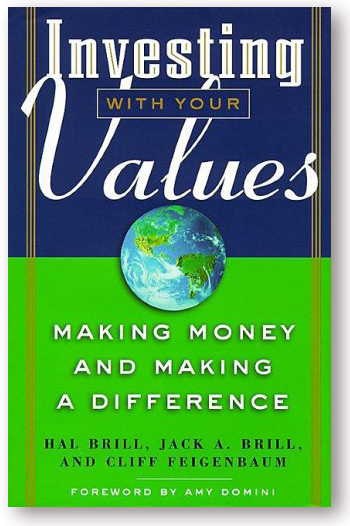
So began the book-writing odyssey that eventually led us to New York City and Bloomberg HQ, once the book, “Investing with Your Values” had been published in May of 1999. Let me also mention that we were honored to recruit well-known SRI pioneer Amy Domini to write the foreword to the book. I bought a very nice suit for that trip. We did a variety of necessary book promotion efforts and a paperback came out the following year.

Over the summer of 2000 I made a big life change as my daughter graduated from high school and went off to college, so I decided to move to Santa Fe, NM. Where I still live today.

From that time forward Hal, Jack and I each grew so busy with success in our own businesses that we never got back to writing another book, though we still remain friends. The next few years were full of travel and publishing GreenMoney quarterly to a growing readership of 10,000.

Of course we all experienced the shock of 9/11 in 2001, but I was fortunate to be with my SRI family at The SRI in the Rockies Conference in Tucson. It was good to be with friends after such an unfathomable event. I do consider the people in SRI industry to be my family.

Time moves forward, especially publishing quarterly. We are always looking out a year ahead, planning what to leave in and what to leave out. The 10-year anniversary of GreenMoney came and went rapidly. As is often the case with anniversaries, it was time for more change. We really needed our design to look as good as we sounded. The team from Ranch 7 Creative approached me about a change to revive our logo at no cost if we didn’t like what they did. But it was a fantastic change that really started us on a new drive to better our overall design. That ethic has been very strong ever since. We still use their logo design today, and we worked together on updating our design for many years.

Another new chapter in GreenMoney’s history emerged as the economic downturn hit. We saw it in our ad sales. Most of our advertiser’s budgets fell quite rapidly, and we are mostly ad supported. During that time I also began working with a local designer here in Santa Fe, Michelle Mosser of Brand Nature (who we still work with today) on developing an eNewsletter in addition to the print. As our 20th Anniversary approached in 2012 we asked ourselves what did we want to accomplish next. The answer was to have more impact and more frequency and better profitability. All of that led to eventually ending our print issues and moving online to publish a high-quality monthly eJournal, as the publishing world was really changing. This was a very trying decision.

In 2012, traveling began to lessen as the relationship with my girlfriend Julie really began to grow, as well as the new on-going demands of the monthly eJournal, which in truth I underestimated. One of the highlights of that year, was having Philippe Cousteau, grandson of Jacques, write an article for GreenMoney. It was quite an honor to draw the past forward. One of those “moments” of clarity on what we can really achieve. Later that year our exciting 20th Anniversary issues featured some very influential names in the world of sustainability who shared their outlooks on “The Next 20 Years.”

After 20 years and a lot of planning, we moved from print to the monthly eJournal in January 2014. What I thought would be a smooth transition turned out to be even more demanding in the fast-changing technology world. As we have all experienced over the last decade, technology “never”sleeps. The work continues as we strive diligently to improve every issue that goes to a readership of over 25,000.

Through the years there had been numerous awards, including several nominations for The SRI Service Award, and recently being named to the 2017 List of Leaders in Corporate Responsibility and Sustainability by CR magazine. With an ever-increasing sense of growing influence and impact for “GreenMoney” our mission statement became just two words “Influence Capital.” That is basically all we do 24/7. Also “socially responsible” investing was being redefined as sustainable responsible impact investing. The new SRI.

In 2014, we shifted toward theme issues like “Millennials and Investing” followed by “Women and Investing” and “Faith and Investing” three groups that are taking to SRI in droves. The SRI movement was actually founded by Churches and is still active in the faith community. We also launched an annual issue on Sustainable Agriculture since, food is essential to all.

As is Clean water. In 2015 we took on the topic of water, for which Robert F. Kennedy Jr. wrote a piece on “The Future of Water.” Another outstanding contributor to GreenMoney was Mellody Hobson of Ariel Investments in Chicago. Mellody wrote for our first “Women and Investing” issue.

That August we did a very impactful issue on Native Americans. The issue featured the incredible photography of a young, Tlingit Alaskan Native American woman, Zoe Urness, who has since gone on to win many national awards. It is always fun to be there to help someone launch their career. That year marked our 100th issue as well. Wow.

Our designer, Michelle Mosser, is never one to let us rest on our laurels. We introduced an all-videos issue in 2016. Readership response was outstanding, so we did it again in 2017. Also the “Future of Energy” felt like something we should look at “and what an issue it was! We followed that with an issue on “Green Building” which turned out to be our most viewed issue ever.

2017 brings many opportunities to look ahead as well as to reflect on our 25 years. It was also time, (actually past time), to upgrade our website – which we undertook in the first half of the year – so you will now find a new vastly upgraded GreenMoney.com experience – this continual work in progress will take GreenMoney to the next chapter(s).

Speaking of which, as we were finishing this July/Aug issue we received some very big news – another moment of “clarity” on what GreenMoney can accomplish. We are excited to announce that Mary Barra, Chairman and Chief Executive Officer of General Motors Company is writing on “The Next 25 Years of Transportation and Sustainability” in our Sept/Oct issue. Yes, Wow.

Let me close with a Thank You to our readers, writers, contributors and advertisers for making GreenMoney what it is today.


Article by Cliff Feigenbaum, Founder and Manager Editor, GreenMoney Journal and GreenMoney.com. Mr. Feigenbaum is co-author of “Investing with Your Values: Making Money and Making a Difference”. (Bloomberg Press 1999 and New Society Publishers, 2000). In 2013, Cliff was named “One of the Top 100 Thought Leaders in Trustworthy Business” by Trust Across America. In 2015 and 2017, Mr. Feigenbaum was named one of the “Leaders in Corporate Responsibility and Sustainability” by Corporate Responsibility (CR) magazine. He has also received numerous nominations for the SRI Service Award.

Featured Articles, Impact Investing, Sustainable Business

Signup to receive GreenMoney's monthly eJournal

Privacy Policy
Copyright © GreenMoney Journal 2025

Website design & development by BrandNature

Global Events Calendar

View All Events

april

21aprAll Day232026 Sustainable Packaging Coalition: SPC Impact – Nashville

27aprAll Day30Women Deliver 2026 Conference (WD2026) – Melbourne

X