Tag: Impact Investing

My 2018 Outlook

By Amy Domini, Founder, Domini Impact Investments and The Sustainability Group

As simplistic as it is, I believe that when attempting to predict the market action for the year ahead, it is necessary to first review the secular environment. Over the past century, our stock market has tended to take a staircase steps approach to progress. We see roughly 15 years of flat followed by roughly 15 years of forward. Consider 1968 through 1982. The Dow Jones Industrial Average reached 1,000 three times, only to fall back dramatically, before finally and permanently breaking through in 1982. Although the next seventeen years saw drops and frights, it did basically charge ahead until 1999. Next came a period with a drop of 25 percent, followed by recoveries to old highs, followed by a drop of 25 percent followed by a rise. It took until 2013 to break through the old record highs. That meant 14 years of volatile sideways drift. By this reckoning (breaking old peaks), we are only four years into a secular bull market, though I acknowledge that the popular press considers us nine years into it—using the market bottom as a starting spot.

I say we are midway through a secular bull market. However, it must be recalled that bull markets also contain severe drops. In October 1987, during the middle of the last secular bull market, we saw markets fall 22.5 percent in the U.S. and more overseas in a single month. Could we be at such a juncture? Could we be in a secular bull market with a shock to the system overdue? And if so, what’s an investor to do?

We know that economics matter. Looking ahead through 2018, higher corporate earnings — inevitable with the gift the U.S. government will be giving them in the form of lower taxes — ought to lead to the sort of volatility-free rise that 2017 saw.

Further, employment is full in this country; emerging economies continue to grow at rates that exceed those of developed economies; exciting new industries such as software-as-a-service, alternative energy storage and the internet of things arise with comforting regularity fueling dynamic growth. Stocks are pricey, but if we add five percent growth rates in (the result of a five percent cut in taxes) they are fair. Why worry?

Then there’s the other picture. There are two enormous longer-term and permanent threats to my cheerful scenario. One is a macro geopolitical one and the other is due to climate change. Further, there are three short-term unavoidable threats, also worth acknowledging.

I begin with the macro geopolitical fact that overhangs all if we look ahead a few decades: China. Earlier this year a report from the World Economic Forum pointed out that China graduates 4.7 million STEM scholars from colleges or technical institutions in a year while the U.S. graduates 568,000. With over twelve times as many potential entrepreneurs produced each year, China is positioned to take on global economic leadership during our lifetimes. The nation is building a university every week. Their GDP growth is over twice as high as ours, their literacy rates are comparable. A seismic shift from U.S. economic domination to Chinese economic domination is underway.

In an article about stock market behavior next year, we need not pursue this line much longer, but it cannot be ignored as the framework within which we look at current global risks. Russia may meddle in elections in democratic nations and create weakness, but it will be China that picks up the benefits.

Now consider climate change. This fall we witnessed extreme weather events in our nation. The taxpayer is picking up much of the bill. National Centers for Environmental Information enumerates the costs in billions: wildfires, droughts, hail, flooding, and tornadoes had cost the nation roughly $13.2 billion before Hurricanes Harvey, Maria and Irma arrived with their estimated $600 billion price tag. This is bad news; considering that our National Flood Insurance Program was already $25 billion in debt by August 2017. It is only a matter of time before the costs of these events create the next financial services collapse. There will be a year when New York or Miami is leveled, the entire seaboard is washed out, or an entire year’s worth of crops fails. Banks and insurance companies will refuse to engage in lending or selling insurance to entire regions. Once again, the shock will go global and markets will fail. Longer term, China and climate change are coming at us, but probably not during 2018.

Near term, the most immediate risk is North Korea. Deeply proud of their self-reliance, the nation is now under the leadership of Supreme Leader Kim Jong-un, who has accelerated his nation’s preparedness for the attack he expects. With 25 nuclear warheads, electromagnetic pulse bombs, sophisticated cyber warfare capacity and at least 5,000 tons of chemical weapons ready to launch, North Korea will not stop accelerating the production of weapons. Our behavior in Libya took that off the table. Recall that Libya’s President Muammar Gaddafi, agreed to give up all weapons of mass destruction, allowed inspections, in exchange for assurances of protection by NATO and Western allies. Within a decade, his supposed protectors intervened in the uprising in Libya and Muammar Gaddafi was hunted down to the culvert he was hiding in, then “shot like a dog.” Kim Jong-un will make no such mistake. However, he is not an aggressor. He views himself as proving his readiness to defend his nation. If we avoid leading him to believe he is under attack, he will continue down his albeit scary, but harmless-to-markets tact.

The second immediate threat is higher interest rates. The easy money position of global banks is ending. With its loss will come rising interest rates – creating investment competition for stocks.

Further, rising rates in a close to zero inflation environment will have a dampening effect on large sectors of the economy, like homebuilding, which counts on presumed higher valuations long into the future. Every firm on Wall Street estimates what a stock is worth versus the ‘risk-free’ alternative of Treasury issues. Rising rates make stocks seem more expensive.

The third immediate threat is a November election. Should Republicans fail to prove that they can govern (meaning should they fail to cut corporate taxes), that party will fracture further, giving Democrats a chance to regain leadership in the Senate, perhaps even state and local legislatures and the House. Any step in that direction represents greater regulation, corporations shouldering more costs, and increased government spending on services and infrastructure. Wall Street will be thrown into panic and the collapse will follow.

In the end, my belief is that we are still about half way through a secular bull market and that the 15 to 25 percent pullback that always happens during a secular bull market will be triggered by a rising Democratic party.

So where am I placing my funds? I’m almost all in. For me, a ten percent cash allocation is a conservative position; I’m there. Economics are strong; markets are going to get a boost; market drops of 15 percent come (on average) every two years; America still rules the world; the rich still take all and the rest lump it; nothing has changed. Sometimes what’s good for markets isn’t what’s good.


Article by Amy L. Domini, CFA  She is widely recognized as the leading voice for socially responsible investing. Her passion for the field has led her to create three businesses and to write several books. She has been awarded acknowledgements of these efforts, including: Time magazine named her to the Time 100 list of the world’s most influential people in 2005. That year she also received a citation from President Bill Clinton for her work with the United Nations Foundation. In 2008, Ms. Domini was named to Directorship magazine’s Directorship 100, the magazine’s listing of the most influential people on corporate governance. In 2014, she was awarded the Founders Award by New Yorkers Against Gun Violence for her advertising campaign (which ran in The Nation), urging investors to divest guns from their portfolios.

She is the founder of Domini Impact Investments (www.domini.com), a mutual fund company with $1.6 billion in assets under management. Ms. Domini is also founder of The Sustainability Group, which manages private client assets in Boston, MA. She has served on a number of boards, including the National Association of Community Development Loan Funds (now Opportunity Finance Network), an organization whose members work to create funds for grassroots economic development loans; and the Interfaith Center on Corporate Responsibility, the major coordinator of involved shareholders who file proxy resolutions. She is a member of the Boston Security Analysts Society.

Ms. Domini holds a B.A. in international and comparative studies from Boston University, and holds the Chartered Financial Analyst designation. In 2006, she was awarded an honorary Doctor of Business Administration degree from Northeastern University College of Law. Yale University’s Berkeley Divinity School presented Ms. Domini with an honorary doctorate in 2007.

Ms. Domini is the author of Socially Responsible Investing: Making a Difference and Making Money (Dearborn Trade, 2001) and The Challenges of Wealth (Dow Jones Irwin, 1988), and a coauthor of Investing for Good (Harper Collins, 1993), The Social Investment Almanac (Henry Holt, 1992), and Ethical Investing (Addison-Wesley, 1984). She contributes regularly to Optimist magazine and GreenMoney Journal. She lives in Cambridge, MA with her husband, Mike Thornton.

Energy & Climate, Featured Articles, Impact Investing, Sustainable Business
Pax World Management Agrees to be Acquired by IMPAX Asset Management Group PLC

Combination of Sustainable Investment Leaders Will Significantly Expand their Investment Management, Global Research and Client Service Capabilities

Pax World Management LLC (Pax), investment adviser to Pax World Funds and a pioneer in the field of sustainable investing with approximately $4.5 billion[1] in assets under management (AUM), announced in September 2017 that it has entered an agreement to be acquired by Impax Asset Management Group plc (Impax), subject to approval of the investment advisory agreement by the trustees and shareholders of Pax World Funds.

Impax, a UK-based firm with approximately $9.4 billion in AUM[1], is a leading independent investment manager specializing in opportunities arising from the transition to a more sustainable global economy. Impax and Pax partnered in 2007 to design and manage the Pax Global Environmental Markets Fund (PGRNX), which was launched in 2008 and today has over $500 million in assets.

The transaction will create a combined investment management firm with $13.4 billion in AUM[2] and significantly expanded investment management, research and client service capabilities. Both firms have a heritage as pioneers in sustainable investing and share similar corporate cultures and values.

The strategic rationale for the combination is supported by highly complementary areas of investment management expertise, together with strong product and geographic fit. This will allow the expanded group to offer enhanced resources and services to Pax’s and Impax’s existing and prospective shareholders and clients.

Under the terms of the transaction, Pax will be renamed Impax Investment Management (US) LLC and will continue to manage Pax World Funds, which will retain their name, as the U.S.-based mutual fund division of Impax’s global business. Joe Keefe, Pax’s President & Chief Executive Officer, will continue to lead the renamed company, reporting to Ian Simm, Impax’s Chief Executive, and will also be named to Impax Asset Management Ltd’s board. Mr. Keefe, together with other members of Pax’s management and senior staff, have agreed to enter new employment agreements, ensuring Pax’s continued strength and stability.

“This is an exciting new chapter in our decade-long partnership with Impax. We believe that combining our two firms will create a leading sustainable investment manager with business on both sides of the Atlantic,” said Pax CEO Joe Keefe. “Pax World Funds’ shareholders stand to benefit in significant ways from our increased scale, research and investment capabilities as we seek to deliver a more robust investment and distribution platform for the global market.”

“I am delighted that, after a decade of successfully partnering to design, launch and manage the Pax Global Environmental Markets Fund, the Impax and Pax teams will be joining forces,” said Impax Founder and Chief Executive Ian Simm. “Like Impax, Pax has a long track record as a pioneer in sustainable investing and a strong team of highly experienced investment management and support staff. The combined group will start with closely aligned business cultures and be well placed to offer a broader service and more diversified range of products to existing and future clients.”


Article Notes

[1] As of August 31, 2017

[2] Net consolidated AUM (not double counting AUM of Pax Global Environmental Markets Fund)

You should consider a fund’s investment objectives, risks, and charges and expenses carefully before investing. For this and other information, call 800.767.1729 or visit www.paxworld.com for a fund prospectus and read it carefully before investing.

Pax World Funds distributed by ALPS Distributors, Inc. ALPS Distributors, Inc. is not the distributor of Pax World’s Separately Managed Accounts. ALPS Distributors, Inc. is not affiliated with Pax World Management or with Impax Asset Management.

Additional Articles, Impact Investing

US SIF Foundation Releases Resource Guide for Retail Investors: “Getting Started in Sustainable and Impact Investing”

In response to rapidly growing demand for sustainable, responsible and impact (SRI) investing, the US SIF Foundation recently released a new guide for retail investors, “Getting Started in Sustainable and Impact Investing.” This resource is a concise guide for retail, non-accredited investors exploring investment options such as mutual funds, ETFs and direct ownership of stocks, as well as information on seeking professional investment help. Download the guide here – www.ussif.org/files/Publications/Retail_Investor_Guide.pdf

The US SIF Foundation reports a 33 percent growth in SRI assets under professional management in the United States from $6.57 trillion in 2014 to $8.72 trillion in 2016. However, most of this activity has been among institutional investors, which have ready access to professional SRI expertise, networks and associations.

“As interest in sustainable and impact investing expands, our goal in creating this guide was to provide a starting point for individuals who want to make a positive societal impact with their investments but aren’t sure where to begin,” said Lisa Woll, CEO of US SIF.

A 2017 study by the Morgan Stanley Institute for Sustainable Investing found 75 percent of individual investors expressing interest in sustainable investing. Similarly, the findings of a 2016 survey by Natixis Global Asset Management of 401k and other defined contribution plan participants also demonstrated interest in sustainable investments — 64 percent were concerned about the environmental, social and ethical records of the companies in which they invested, while 74 percent said they’d like to see more socially responsible investments in their retirement plan offering.

The guide includes information on mutual funds, ETFs, direct ownership of stocks, and community-oriented cash and fixed income products, including banks and credit unions. The guide concludes with information on the best ways to seek investment advice from a financial professional.


About US SIF:  The Forum for Sustainable and Responsible Investment is the leading voice advancing sustainable, responsible and impact investing across all asset classes. Our mission is to rapidly shift investment practices toward sustainability, focusing on long-term investment and the generation of positive social and environmental impacts. US SIF members include investment management and advisory firms, mutual fund companies, research firms, financial planners and advisors, broker-dealers, community investing organizations, nonprofit associations, and pension funds, foundations and other asset owners. The US SIF 8th US SIF Annual Conference will take place from May 30-June 1, 2018 in Washington, DC.

US SIF is supported in its work by the US SIF Foundation, a 501(C)(3) organization that undertakes educational, research and programmatic activities to advance the mission of US SIF, including offering trainings for advisors and other financial professionals on the Fundamentals of Sustainable and Impact Investment. Learn more at www.ussif.org

Additional Articles, Impact Investing

LIFT Economy named to the “Best for the World” 2017 List

LIFT Economy was recently recognized for creating extraordinary positive impact as a business based on an independent, comprehensive assessment administered by the nonprofit B Lab. Honorees are featured on B the Change, the digital Medium publication produced by B Lab, at http://www.bthechange.com. LIFT Economy was honored on three separate lists: the 2017 Best for the World Overall list, the 2017 Best for Workers list, and 2017 Best for the Long Term list.

The Best for the World Overall list is the most prestigious. This means that LIFT Economy (www.lifteconomy.com) scored in the top 10 percent of more than 2,100 Certified B Corporations across all categories on the B Impact Assessment. LIFT’s mission is to create, model and share a locally self-reliant economy that works for the benefit of all life.

The B Impact Assessment measures a company’s positive impact on its workers, community, customers and the environment. To certify as B Corporations, companies like LIFT Economy must complete the full assessment and have their answers verified by B Lab.

The full B Impact Assessment evaluates a company’s environmental performance, employee relationships, diversity, involvement in the local community, the impact a company’s product or service has on those it serves, and more.

The 176 Best for the World Overall honoree companies come from 75 different industries and 25 countries. Additional 2017 Best for the World Overall honorees include: Patagonia, Beneficial State Bank, Cooperative Home Care Associates, and Dr. Bronner’s.

“Companies like LIFT Economy exemplify what it means for a business to be a good citizen,” says Jay Coen Gilbert, co-founder of B Lab. “We’re proud to recognize their achievement. Best for the World is the only list of businesses making the greatest positive impact that uses comprehensive, comparable, third-party-validated data about a company’s social and environmental performance.”

A total of 846 Certified B Corporations were named 2017 Best for the World Honorees, including: Seventh Generation, National Co+op Grocers and Business Development Bank of Canada. Forty-eight countries are represented, including Afghanistan, Kenya, Nicaragua and Turkey.

Today there are more than 2,100 Certified B Corporations across more than 130 industries and 50 countries, unified by one common goal: to redefine success in business. Any company can measure and manage social and environmental performance at http://bimpactassessment.net

More on the 2017 BEST FOR THE WORLD Honorees

846 Companies Leading the Way to a Shared and Durable Prosperity for All

There is little debate about the future world in which we’d like to live: It is a world in which all people enjoy high-quality jobs with dignity and purpose; safe and neighborly communities that enrich our families; and a healthy environment for us and our grandchildren’s grandchildren.

Yet, like David facing Goliath, we too face forces that can feel unbeatable: the overwhelming power of amoral global capital markets; failing political institutions; and rising inequality, sea levels, discontent, and violence, both seemingly random and institutional.

As business leaders and as citizens, what will we choose to do in our moment of decision?

We don’t have to bend to conventional wisdom; nor do we have to stand alone. There is a global movement of people using the power of business to achieve a higher purpose than profit maximization. They strive to use business as a force for good: good for workers, good for communities, good for the environment. They redefine success in business by competing to be not just best in the world, but best for the world.

Today, leaders of this global community standing up to Goliaths are honored on B Lab’s annual Best for the World list. You can also read stories highlighting honorees from this year’s lists and review the Best for the World criteria here – https://bthechange.com/bestfortheworld/home

The 2017 Best for the World List

A total of 846 businesses across 52 industries from 48 countries are recognized on the full list of 2017 Best for the World honorees. The categories include: Best For the World Overall, Best for Workers, Best for Community, Best for Customers, Best for the Environment, Best for the Long Term, and Best for the World: Changemakers.


by B Lab on B the Change on Medium

Access the full list and read more about them here-
https://bthechange.com/the-2017-best-for-the-world-honorees-9412ab4a64f0

Additional Articles, Energy & Climate, Food & Farming, Impact Investing, Sustainable Business

Six New Issuers Join ImpactUs Marketplace

Financial technology provider ImpactUs announced in Sept and October the onboarding of six additional issuers to its impact investing platform, ImpactUs Marketplace. The Marketplace is a community-driven fintech platform offering institutions, individuals and financial advisors an extensive range of private impact investing opportunities.

The first four issuers* are mission-driven organizations dedicated to building strong, healthy and successful communities. Information on the other two issuers is below.

Coastal Enterprises, Inc.: A national leader in rural business development, CEI helps to grow good jobs, environmentally-sustainable enterprises, and shared prosperity in Maine and across the country.

Enterprise Community Investment, Inc.: Enterprise Community Investment, Inc., part of the Enterprise Community Partners family of companies, improves communities and lives by bringing capital to developments that make well-designed homes affordable.

Iroquois Valley Farms REIT: An early adopter of the ImpactUs Marketplace, Iroquois Valley Farms has added its REIT to the platform to enable investors to directly support the growth of the organic food movement by supporting regenerative organic farmers.

MicroVest Capital Management LLC: Founded in 2003, MicroVest applies a commercial framework to investing in unbanked and under-served markets to address financial inclusion by investing in financial intermediaries serving unbanked and underserved communities around the world.

* Some of these issuers’ offerings are only available to accredited investors. Investing in private investments requires high risk tolerance, low liquidity concerns, and long-term commitments. Investors must be able to afford to lose their entire investment.

“These four organizations are now part of the growing number of mission-driven institutions realizing the power that technology, coupled with formal investment administration services, can have in broadening their reach to current and prospective impact investors,” said Reginald Stanley, President and CEO of ImpactUs.

“While ImpactUs Marketplace is the platform through which these issuers seek to receive investments, these organizations are central to furthering our mission of creating thriving communities,” said Liz Sessler, Vice President of ImpactUs. “The issuers allow investors to seek returns in the form of affordable housing and healthcare, employment, sustainable agriculture, microfinance and more.”

ImpactUs provides the technological infrastructure to seamlessly connect investors and advisors with mission-driven institutions, providing end-to-end transactional and capital management capabilities. As a broker dealer, ImpactUs harnesses technology to make impact investing more accessible.

ImpactUs Marketplace is open to investors looking to increase their purpose-driven investments. Those interested in learning about these investment opportunities and more can log onto www.ImpactUsMarketplace.com to register.

The foundational support necessary to launch ImpactUs was provided by some of the leading organizations in the social impact sphere, including MacArthur Foundation, Ford Foundation, Kellogg Foundation, Enterprise Community Partners and City First Enterprises.

ImpactUs Marketplace Welcomes Two New Issuers to its Online Impact Investing Platform

At the SOCAP17, impact investing’s leading industry conference, in October financial technology provider ImpactUs (www.impactusmarketplace.com) has announced two new issuers to its impact investing platform, ImpactUs Marketplace—a community-driven site that offers institutions, individuals and financial advisors an extensive range of private impact investing opportunities.

The two issuers* are mission-driven organizations dedicated to building strong, healthy and successful communities.

Low Income Investment Fund (LIIF): LIIF is a national community capital organization that has invested more than $2 billion to build healthy, vibrant communities and create pathways of opportunity for over 2 million low income people.

Meow Wolf: An arts and entertainment company that creates immersive, interactive experiences to transport audiences of all ages into fantastic realms of story. This certified B Corp transforms community spaces with 400,000 visits in the last 12 months at its Santa Fe, New Mexico location. The company provides living wages to artists, advancing the arts and creative economy.

* Some of these issuers’ offerings are only available to accredited investors. Investing in private investments requires high risk tolerance, low liquidity concerns, and long-term commitments. Investors must be able to afford to lose their entire investment.

The new issuers added to the platform mark a milestones for ImpactUs. Meow Wolf is ImpactUs’ first early-stage venture and first issuer that brings a creativity lens to impact investing through the ImpactUs Marketplace. The Low Income Investment Fund (LIIF) is the first Community Development Financial Institution (CDFI) on the platform available to non-accredited investors.

“These two organizations are the newest examples of a growing number of mission-driven institutions that are expanding their reach to prospective impact investors and bolstering support for their current investors by utilizing our technology and administrative services,” said Reginald Stanley, President and CEO of ImpactUs.

“Organizations like these are vital to our shared-mission of creating flourishing communities through impact investments. We’re excited to make our services and technology available to help these institutions connect with investors that share their vision for vibrant and supportive communities,” said Liz Sessler, Vice President of ImpactUs. “Investors can seek both financial and impact returns in the (areas or sectors) of affordable housing, healthcare, employment, and now, the arts, through these issuers.”

Those interested in learning about these investment opportunities and more can log onto www.ImpactUsMarketplace.com to register.


About ImpactUs  ImpactUs Marketplace simplifies the impact investing process. It provides investors, advisors, and impact organizations greater choice at accessible costs while directing more capital to funds and projects that seek to deliver community, societal, and environmental benefits. Every day, ImpactUs connects investors with purpose, creating more equitable and thriving communities.

The information contained in this press release does not constitute an offer or solicitation and may not be treated as an offer or solicitation (i) in any jurisdiction where such an offer or solicitation is against the law; (ii) to anyone to whom it is unlawful to make such an offer or solicitation; (iii) if the person making the offer or solicitation is not qualified to do so. The issuers named in this press release can only be marketed in certain jurisdictions only.

All securities related activity is conducted through ImpactUs Marketplace LLC a registered broker-dealer and member FINRA/SIPC, located at 1875 Connecticut Ave., NW 10th Floor, Washington, DC 20009. ImpactUs does not make investment recommendations and this communication should not be construed as a recommendation for any security offering named in this press release. Private investments are only suitable for investors who are familiar with and willing to accept the high risk associated with private investments. Securities sold through private investments are not publicly traded and are intended for investors who do not have a need for a liquid investment.

Enterprise Community Investment, Inc. (“ECI”, together with its affiliates, “Enterprise”) is a Maryland corporation exempt from taxation under Section 501(c)(4) of the Internal Revenue Code of 1986, as amended (the “Code”). ECI’s business lines include, among other things, directly and through its affiliates, the syndication of Low Income Housing Tax Credits, multifamily mortgage financing and other structured finance products. ECI’s directors are appointed by Enterprise Community Partners, Inc. (“Partners”).

Partners is a tax-exempt organization under Section 501(c)(3) of the Code and is a founding member of ImpactUs Marketplace LLC, a Delaware limited liability company (“ImpactUs”), a registered broker-dealer and a member of the Financial Industry Regulatory Authority, Inc. ImpactUs’s Board of Directors (the “Board”) appointed a manager and CEO, who manages the company’s day to day affairs.

Additional Articles, Food & Farming, Impact Investing

Change Finance Launches CHGX, Impact Investing ETF

Change Finance, a majority women-run asset manager, announced in October the launch of its first ETF. The Change Finance Diversified Impact U.S. Large Cap Fossil Fuel Free ETF (CHGX) is the only ETF that uses diversified impact screens to look beyond excluding fossil fuels, taking a comprehensive approach to socially responsible investing. The first truly fossil fuel-free ETF utilizes diversified impact screens.

CHGX’s methodology is informed by the United Nations Sustainable Development Goals (SDGs). These internationally agreed-upon standards seek to eradicate poverty, protect planetary life support, and achieve lasting peace and dignity for humanity. Change Finance, devoted to providing impact-focused, performance-oriented investments, uses the SDGs to craft investment options for customers who care about impact and income.

“CHGX is a new chapter in investing,” said Donna Morton, Change Finance CEO. “Our investors want alignment with what they care about, without sacrificing performance. Fossil fuel-free is essential, but CHGX then goes further, divesting not only from companies who dig up, refine, burn and service fossil fuels, but also from companies that are serious polluters, that have significant human or labor rights violations, and that fail to meet a variety of other social and environmental standards. No other ETF does this.”

CHGX goes beyond fossil fuel-free screens as well. “We reject companies that produce pesticides or military weapons, engage in corrupt business practices or have exploitative relationships with labor and Indigenous people,” Andrew Rodriguez, Change Finance President, added. “We move money from harm to healing—harnessing our collective experience in social change. The result is an ETF that invests in companies built for the 21st century. This sort of smart investing can solve some of the worst social and environmental issues, and we believe it could serve as a core holding in any investor’s portfolio. Think of us as inspired by the values of “Occupy,” but powered by the acumen of Wall Street.”

A growing body of academic research suggests that ESG (Environmental, Social and Governance) factors can also be predictive of outperformance. “We see ‘investing to turn a profit’ versus ‘investing with your personal values’ as a false trade-off,” said Dorrit Lowsen, Change Finance COO. “You don’t have to choose between the two. There’s ample evidence that doing good for people and planet is actually just plain good business.”

CHGX’s index begins with the 1,000 largest U.S.-listed companies and applies a series of ESG screens to exclude companies that are deemed to be “bad actors,” whether they operate in the oil, gas, coal, or tobacco industries among others, or have engaged in any sort of business malpractice. The fund has an expense ratio of 0.75%, and intends to spur changes in companies through shareholder advocacy. CHGX will track the performance of the Change Finance Diversified Impact U.S. Large Cap Fossil Fuel Free Index.

“After applying these screens, what you’re left with are good global corporate citizens—large cap, U.S.-based companies representing a range of sectors,” said Hunter Lovins, Change Finance Executive Vice President of Impact, “We believe these are some of the best companies with long-term business models. They are conscientious regarding their impact on employees, supply chains, people, and planet. They do what they can to reduce their carbon footprint, implement inclusive employment practices, harness the wisdom of women, and seek to do good in the communities where they do business. They are what I want to own.”


About Change Finance  Change Finance is committed to transforming the financial landscape by providing impact investing products that are good for people, planet, and investors. The firm is the only majority woman-owned and managed financial company offering ETFs that are truly fossil free, clean, and responsible. Change Finance’s approach to investing emphasizes investing in service to life, which it implements through a “divest from harm, invest in healing” methodology, grounded in the United Nations Sustainable Development Goals.

We believe finance is the mother of all human systems. Where capital flows, momentum follows. As investors make statements with which funds they choose to invest in, corporations are primed to listen and respond. In this way, Change Finance’s suite of funds enables investors to drive impact, creating an economy in service to life through financial activism. For more information, please visit www.changefinanceETF.com

The fund’s investment objectives, risks, charges and expenses must be carefully before investing. The prospectus contains this and other important information about the investment company. It may obtained by calling 1-303-339-0524 or emailing info@change-finance.com . Read it carefully before investing.

Investing involves risk. Principal loss is possible. Investments in Real Estate Investment Trusts (REITs) involve additional risks such as declines in the value of real estate and increased susceptibility to adverse economic or regulatory developments. The social, governance, and/or environmental policy of the Fund could cause it to make or avoid investment that could result in the portfolio underperforming similar funds that do not have such policies. The Fund is a recently organized, diversified management investment company with no operating history. As a result, prospective investors have no track record on which to base their investment decisions. The Fund may trade at a premium or discount to NAV. Shares of any ETF are bought and sold at market price (not at NAV) and are not individual redeemed from the Fund. Brokerage commissions will reduce returns. The performance of the funds may diverge from that of the index. Because the funds may employ a representative sampling strategy and may also invest in securities that are not included in the index, the funds may experience tracking error to a greater extent than funds that seek to replicate an index. The funds are not actively managed and may be affected by a general decline in market segments related to the index.

The Change Finance Diversified Impact U.S. Large Cap Fossil Fuel Free ETF is distributed by Quasar Distributors, LLC.

Additional Articles, Impact Investing, Sustainable Business

The Magic of Money and Other Cautionary Tales

By Cliff Feigenbaum, Founder, GreenMoney Journal

It began with a magic trick. My father’s friend would pull a quarter out from behind my ear and then make it disappear again. This became an apt metaphor for my relationship with money: one moment there and the next moment gone, feeding two powerful feelings about money: insecurity and lots of fear about never getting it back.

My second memory of money was of being gifted with silver half dollars on my birthdays (one for every year). Not realizing their worth, I spent a few, but when I moved some years ago I found a stash of them in a small black bag. They are quite special to me.

My family was financially pretty comfortable. We lived in Malibu in the late 60s and the early 70s just a couple of miles from the beach. I had every toy I wanted, with collections of Hot Wheels and baseball cards. But as these things go, change was on the way, a big change. My Dad quit his job as a successful salesman for 3M in LA, deciding with my Mom to move us to the Northwest and buy a turn-of-the-century farm.

It turned out to be a tragic and fatal mistake. They purchased the 70-acre farm in southwestern Washington State with cash. It was quite a place – a hand-built barn and house – we bought it from the very old bachelor farmers who built it. We were ill-equipped to handle the demands of the farm. Within a matter of months I went from the having my feet in sand of Malibu beach to standing on the frozen ground of Washington. Years later my dad told me his biggest financial mistake was not buying the house we lived in back in Malibu. It was a pretty nice place. (In fact we got the word that Bob Dylan rented it after we moved out).

The back-to-the-land thing did not go well. My parents argued as they quickly burned through their capital, and my dad went to work at a real estate office within a year. The stresses of family, dwindling finances, and a farm were extreme and in a few years my dad moved out and my parents divorced. My mom kept the farm but she made many poor life decisions that my brother, sister and I unfortunately had to witness.

Farm life was not for me back then. I began to realize that the only way off the farm was to get “money” to escape. To do what, I was not sure, – just anything but being trapped on the farm. My years in Malibu showed me there was another world out there.

During my senior year in high school I moved off the farm and in with my girlfriend, who was 19 and had a job. After awhile we ended up managing my Dad’s mobile home park. Around that time I also got an American Express card by saying I worked at my Dad’s real estate company. Having a credit card at 18 without a spending limit, – well that was bad, – lots of quick debt.

The month I graduated from high school my Mother at just 40 passed away from a variety of illnesses related to alcohol. I stopped drinking for over a decade, and now drink very little.

After my Mom’s death, my insecurity hit a new low. I decided I needed a real job and began selling shoes at the Kinney shoe store, and was good at it, leading to a promotion as Assistant Manager. I was making my own money but that wasn’t enough. Basically I spent my 20s getting deeply into debt (including going to college) and my 30s getting out.

My credit stabilized in my 40s. When I went to buy my first new car for my fiftieth birthday, my credit score was so high that I could buy any car on the lot. My choice. Who knew paying bills on time could be so powerful?

Back to the timeline… It was May 1980 when Mount Saint Helens blew up in Southwest Washington, just after my dad had created a mini real estate empire by selling dairy farms. His highly leveraged empire collapsed over night, as no one wanted to buy farms near an active volcano. His yearly income went from $200K to $30K in one year, but his expenses stayed high. He had a lot of debt to service and a new young family. He never financially recovered and bankruptcy threatened him constantly. The financial stress was too much and he died on New Years day, just three and a half years after the volcano exploded. He was 46.

During the previous few years I had followed jobs to Spokane, Washington, but I was now alone. My parents only taught me half of the lessons in life: what not to do, but not what to do. Many years would pass before I informally adopted some new parents that helped me see the other side of the coin.

It seemed like I was always broke, living paycheck to paycheck, but finally the old farm sold and I was able to buy a small house in Spokane. It was a safe refuge that I kept for 19 years. I used the money to pay off the small bills first – so I had one less every month.

In 1982 I began going to Whitworth College in Spokane after being let go from my retail job. I was not expecting to be unemployed, so it was devastating and scary. I had never considered myself in college, but then it turned out to be a blessing, as Whitworth, a Presbyterian school, was a wonderful place to learn and find good role models.

Money concerns always haunted me – so during college I had a house full of roommates to pay the bills, as well as part time jobs.

After graduating I found several jobs, but still didn’t get ahead financially, always struggling and a bit fearful. My grandmother was very financially frugal and had built a nice nest egg. When she died she left money to all of the kids and grandkids. For the first time in my life, I could actually breathe, financially. I was still nervous and fearful about debt so I paid off my small home and my car. I thought now no one could disappoint me; I was free. Well sort of… I didn’t want anyone to know I had money because they would try and take it from me.

After my life took a downward turn in a bad relationship I began attending Adult Children of Alcoholics “recovery” meetings every week and continued to attend for 5 years to get my life and my life choices straightened out. It was hard but the meetings really helped. I went to church regularly, learning about living a more generous life. Bottom line, I began a more ethical life, though I still found my risk tolerance rather low.

As my life leveled out I held few jobs, from the business office of a TV station and then at a big hospital where the idea for the GreenMoney Journal first came to fruition. (Read that story from the July/Aug 2017 issue.) One of the main reasons I started GreenMoney Journal and gave talks around town on SRI was to help others work through “money” issues, – to understand how they viewed their money and the self-messages they were using as operating instructions.

I began GreenMoney Journal with a small investment in my own business; as a newly minted entrepreneur, I soon became a workaholic – the “acceptable” form of addiction in our society. I believed in GreenMoney’s mission and it was successful from day one, which fueled the fire.

It was all about investing in the kind of world we want to live in. Can we align our money with our values? But wait, what are our values? How do we know? From which business activities are we willing to profit and which do we purposely avoid?

Now, 25 years later, I am working harder then ever as GreenMoney’s sphere of influence widens. And GreenMoney has changed lives – people continually come up to me at conferences and say they have changed their profession after reading GMJ – motivating them to become financial professionals focused on SRI.

In truth I am still working on my money issues. I find it hard to relax and step away from the ever-increasing demands of our technology-driven world, but I’m working on it.

In closing, I have learned how important it is to be honest about one’s attachments to money. I try to be aware of my attitudes, judgments, and beliefs about the way things “should” be when it comes to money and society (i.e. inequalities), and to think about the personal and ethical implications of the money I spend and invest.


Article by Cliff Feigenbaum, founder, GreenMoney Journal and http://GreenMoneyJournal.com

The GreenMoney Journal was launched in 1992 and was followed by the GreenMoney Journal website in 1995. In 1999, Mr. Feigenbaum co-wrote “Investing With Your Values: Making Money and Making a Difference” published by Bloomberg Press in NYC. In 2013, Mr. Feigenbaum was named “One of the Top 100 Thought Leaders in Trustworthy Business” by Trust Across America. In 2015 and again in 2017, Cliff was named one of the “Leaders in CSR and Sustainability” by Corporate Responsibility (CR) magazine. In November 2017, Cliff was the joint recipient of the 2017 SRI Service Award with Rich Liroff of the Investor Environmental Health Network.

Featured Articles, Impact Investing, Sustainable Business

It’s Monday Morning

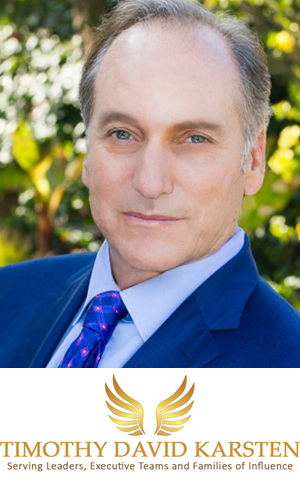
By Timothy Karsten, Life and Business Strategist

It’s Monday morning, the beginning of a new week. The day starts with greeting the sunrise from our garden that faces to the East. A few minutes of taking in the energy that provides us so many benefits every day, and then some meditation, establishes the foundation for all else. Next is a stroll through the garden to see what flowers have opened up and/or fruits and veggies that have emerged and are ripe enough to pick. A little clean up is needed to remove dead leaves and flowers, all to support the harmony and beauty of the environment.
Once this routine is complete, it is time to enter into the technological universe for a moment, a quick review of Bloomberg.com and WSJ.com. What is happening on the global stage and in the financial markets? How are the markets doing and how might global factors and the events of the day impact the people that I work with?

These rituals reflect the journey I take day to day…continually discovering how to better integrate the worlds of organic creativity and spirit with the complex interplay of finance, business, and human relationships.

Once breakfast, fitness, and other practices are complete, it is time to jump into all of the dialogues a day brings – how is the financing coming for your business? What are customers saying about your new product line? How is the sales team managing the slowdown due to seasonal changes? How are you going to go about hiring a new CFO in your portfolio company? How are the meetings going in Singapore in building out the joint venture? Which organizations should be funded to address the hurricane’s devastation in the US and earthquake in Mexico? How are your portfolios doing?

All of these highly practical and important concerns often need immediate attention and focus and all involve the use of capital. And yet, it’s the deeper conversations we often want to get to – how do you reach alignment with your spouse on what to do with your assets and your overall philosophy to money, spending and gifting? How do you inspire and motivate your team to embrace your values and the path you want to take your venture? How do you move them from short-term capital gain to a long-term perspective? Where do you need to develop the leadership skills you are lacking and how are you going to gain mastery? Where are the opportunities for your greatest impact? What is weighing on your heart and mind? These are the “getting to the core” inquiries and usually bring about the most growth and source the biggest challenges.

I first learned about the “bottom line” from my maternal grandfather who was a financial services entrepreneur at the age of 22 and lived an entire century from 1900 to 2000. No matter what the topic of conversation, whether it was what I was doing with my life or what was happening in the world, he would always drive me to answer the question, “what is the bottom line?” Having grown up in the financial services world, there was a bottom line value to everything and he applied this thinking to every aspect of life. Life was not that complicated for him – same marriage for over 60 years, same career 70 years, same assistant for 35 plus years, same business partner for over 50 years, same home city for 100 years, Chicago. Now, those are some bottom line numbers!

There was no avoiding the truth with him. He would question me until he was satisfied with the answers and more importantly that I had looked at all the issues and arrived at the correct “bottom line.”

Years ago when double and triple bottom line first started being discussed in the investment world, I brought the concept to my grandfather for discussion. While quite open minded when it came to many issues, he had a difficult time grasping this expanded definition and conversations usually ended with our agreeing to disagree. In retrospect, I believe that keeping it to one bottom line was his way of keeping things simple, which fit with his Midwest moderate approach to all life.

Today, out of necessity, we are embracing the expanded definition of what makes up the bottom line. It would be interesting to know if he would still resist adapting the new formulas or embrace them. My hunch is that he would look to business and financial leaders and ultimately, make his own decision.

Grandfather was a big influencer for me about money and wealth as well as for other family members. He was generous and caring. He wanted to inspire us to find our own ways to fulfillment and not indulge us. He clearly set the example in how he lived, healthy until his 98th year.

Some of the key messaging he passed down to my parents and hence to me and my siblings include: live well, adventure the world, be open to meeting and helping strangers, be responsible to those you love, and be caring and compassionate to those in need. These all have become core values within my family, in how we relate to one another, relate to others, and support projects and businesses through our philanthropy and investments.

My mother has further carried the torch and shown me how to live the balance of being a person of wealth – while she has always enjoyed the wealth she has had the privilege to steward, her greatest joy has come in her giving, both to her family and more so through philanthropy. Of primary importance has been her supporting the empowerment of women and girls throughout the world. She often would find obscure projects supporting women in remote regions of the world to achieve economic independence or experience educational opportunities previously unavailable.

My Mom and Grandfather taught me a great deal. In particular, they have influenced me in the practical and giving domains. And, as with everything in life, family can provide you a solid foundation, with traditions and values to carry you onwards. But also, family has its limits forcing us to venture forward into the unknown to explore and expand our definitions of self, relationship, community and more.

Beyond family, there are many other avenues to explore for the practical and also an understanding of the spiritual and emotional roles that money can play to create a fuller life. Money and wealth is indeed a domain to master – both for the pleasure and experiences and for the richer and deeper meanings found in self–expression and relationship with others and the world.

The influences of our rituals, the news, our families, our business associates and advisers impact the many choices in a day we make about money; how to earn, spend, invest and gift it. Living a healthy, integrated life around money and wealth is an everyday practice. Some days it is smooth. Some days it is choppy. Just like the sea. The good news is there is another Monday morning around the corner.


Article by Timothy David Karsten  (www.timothydavidkarsten.com), who guides leaders, executive teams and families of influence to solve life’s complexities and challenges and live optimally.

Mr. Karsten works with businesses, non-profit leaders, individuals and families of influence and their teams from the US, Europe and China to maximize global reach and impact. For over 30 years, Timothy has worked with family trusts, investment strategists, asset managers and private foundations. He is also a private investor in technology and media companies. He happily shares his home in Pacific Palisades, California with his wife, Karinna, and their Jack Russell Terrier, Sparky. When Timothy is not busy raising the bar of expectation and performance for his clients and the companies he invests in, you can find him entertaining friends and family, playing music, discovering unknown roads and mountain trails around the world, and enjoying the magic of his organic gardens.

Featured Articles, Food & Farming, Impact Investing, Sustainable Business

Doubling Down on Impact: Leveraging all that I have for the World I want to see

By Kristin Hull, PhD, Founder and CEO, Nia Impact Advisors

As an impact investor, a financial change agent and entrepreneur, my money story centers around aligning assets with values. At Nia Impact Advisors, we move investment dollars into the companies that matter—those working to create the world in which we want to live. I come by this work having grown up immersed in the belly of our financial markets.

As a child, money was tight; often a stressful topic at our house. Money messages included being prudent, entrepreneurial and thrifty. I wore hand-me-down clothes, planted seeds in our victory garden and overheard as my parents argued over whose turn it was to pick up the food stamps. My father taught math at a local high school and then took to the streets as a Fuller Brush salesman in the evenings. To bring in additional income, my mom corrected high school English papers and my father managed apartments to reduce our rent. I learned about the importance of saving money, of looking for opportunities, and of working hard.

Math was a big part of my upbringing. I dealt practice hands to my father who used his quant skills to count cards on a team in Nevada, and later started a trading company in our family’s garage. The mantra heard at the dinner table and in the back seat of the station wagon was to “buy low and sell high” as often as you possibly can.

In an effort to connect with my Dad, I spent a lot of time in the garage, and some years later on the floor of the commodities exchange in Chicago where he eventually wound up—and where I learned about algorithms, puts, calls, futures, and the price of soy and pork bellies.

Had the trading floor been even remotely hospitable to women, I might have stayed longer. My activist self, always wanting to make a difference, didn’t see the possibility for social change in the trading pits. I was called to the classroom. At 21, I began my career in education, teaching fourth grade in the Mission District of San Francisco, and later teaching Spanish bilingual classes in Oakland. I went on to co-found a charter school in Oakland. During these years I remained closely involved with the family business which had grown considerably, traveling back to Chicago for board meetings and to participate in new developments. Though, as a social justice educator, and activist, I was fairly closeted about the nature of the family business, downplaying my experience in financial markets.

In 2007, my vastly different worlds of education and finance intersected and my career came full circle. We had sold the trading firm and, for the first time, had more money than we needed. The story changed from prudent saving to going big, to leveraging resources to create a tangible difference. We decided to start a family foundation and suddenly I found myself in a position to influence and direct discretionary dollars. Having spent much of my professional life in underfunded urban schools, I had sat on the grant writing side of the table. Yet, the closest I had ever come to philanthropy was purchasing girl scout cookies.

Seeking knowledge, I attended my first philanthropy conference, the Global Philanthropy Forum. There I expected to learn strategic and efficient ways of giving, how to best address root causes of injustices and leverage grant making dollars to effect change and contribute toward social justice. Instead, I remember a session titled “2%: More for Mission.” I had no idea what that was, so I walked in and sat down in the back. There were several large U.S. foundation representatives up on the stage. The discussion was lively and somewhat contentious as they argued about foundation endowments. Something I had not yet begun to think about.

The proponents of More for Mission were encouraging foundations to invest two percent of their endowments in alignment with their stated missions. Until that day, I had never considered the endowment as part of my philanthropic tool box. With this brand new information, I immediately saw just how important this approach to investing could be. The possibility of having our endowment fuel, rather than detract from our grant making goals lit me up. I stood in the back of the crowded room with my hand in the air, wanting to ask the question “Why just two percent?” and “Why not 100 percent?” No one called on me that day, and yet the spark had been kindled. I left the session energized and on a mission to align 100 percent of our foundation assets with our mission of environmental sustainability and social justice.

That year, we identified seven community banks, all doing excellent work providing local loans and expanding financial literacy within their communities. We moved our endowment into these cash investments and were quickly 100 percent invested with our values. Not only did I decide to go all in, investing into what I wanted to grow, there was a financial upside. In 2008, U.S. foundation endowments were down on average 28 percent, yet, having made several fixed income investments by then, our foundation endowment was up two percent. For me, 2008 was a good year. These returns confirmed for me that aligning investments with our values, investing into companies we want to exist made financial sense. Growing the field of impact investing became my mission.

I went on to found Nia Community Investments in 2010, a second 100 percent values-aligned portfolio with a focus on my hometown of Oakland, California. Around this time, I began advising others on how to invest for positive impact and for change. While I loved my beautiful portfolio, I had long since left Wall Street and public markets behind, having heavily invested in early stage private equity, fixed income, and local loans. While my personal double bottom line investing was successful and exciting, the idea of leaving public markets all together didn’t seem plausible or prudent for many. I realized then that to really move the dial, my portfolio needed to resonate more strongly with what others needed. I would need to go back into public markets.

So, I began with research and, after looking into all of the SRI-screened funds at the time, found that the level of impact to which I had become accustomed was not yet available in public market portfolios. I would need to build an innovative portfolio of the most impactful, solutions-focused companies that existed, and combine that with an inclusive, gender lens, and layer it with strong activism and engagement. In 2015, the Nia Global Solutions portfolio launched, boldly investing in innovative firms with diverse leadership and ambitious goals in the fields of renewable energy, healthcare, and sustainable agriculture.

My money story continues to grow as I work to empower others in sustainable finance. We launched Nia Impact Advisors this year, expanding our mission to change the face of finance, and also launched Money Doula, a new blog and podcast series illustrating ways to align assets with our goals for an inclusive and sustainable economy. Thinking back to all of the money messages over the years I am grateful for both the early exposure to our capital markets, and the understanding that with hard work we can leverage assets to create change.


Article by Kristin Hull, PhD, Founder and CEO of Nia Impact Advisors, LLC (www.niaglobalsolutions.com), a women-led Registered Investment Advisor leading the charge to change the face of finance by hiring and training women and people of color in sustainable and transformative investing. Kristin founded Nia Global Solutions, a gender-lens portfolio of solutions-focused companies, in her efforts to bring impact investing into the public markets.

An Impact Investor since 2007, Kristin oversaw the investment process for one of the first family foundations as they moved their endowment assets into 100% alignment with their philanthropic mission. In 2010 Kristin went on to found Nia Community, a 100% mission-aligned impact investment fund focused on social change and environmental sustainability in her hometown of Oakland, California.

Kristin is also a co-founder of Impact Hub Oakland and of the North Oakland Community Charter School, and served on the founding board of George Mark Children s House. Prior to devoting her career to transforming our financial system, Kristin was a full-time educator, teaching bilingual classes in Oakland and San Francisco. She earned her PhD in Education at University of California, Berkeley, her Masters in Research in Bilingual Education from Stanford University and her BA and teaching credentials from Tufts University.

Featured Articles, Impact Investing, Sustainable Business

From Noble Poverty to my Brand of Joy

By Carrie B. VanWinkle , CFP®, Natural Investments

The first 40 years I lived a life of noble poverty. When I heard the term “noble poverty,” I had a visceral reaction in my heart and my gut. I felt deeply understood. I experienced a relief of having named a condition I had lived with since I was a child.

Mikelann Valterra, Founder of the Women’s Earning Institute, has defined noble poverty as “the belief that there is virtue in not having money and that good people do not have it.” People with this mindset live by the phrase “it is better to be good and poor than rich and evil.” Now I understand that this mindset is based on a false dichotomy that you can have one or the other, and not both. That a person does not need to live a life of scarcity and deprivation and that these are not the same as mindful simplicity and living in a conscious intentional relationship with money.

I have uncovered a lot of my unconscious ideas about money, including a deeply ingrained belief around noble poverty. I’ve done my own growth work to have a friendly, healthier, and conscious relationship with money, taking my money story on a new path of deeper authenticity.

I was raised in a devout Catholic family in a small rural town in Kentucky. My parents got pregnant just out of high school and had me when they were both 19. We lived in a blue collar environment where they worked hard and made a sweet little home for me and my two siblings. Still, it always felt like we were just barely getting by.

I learned that money and power are tightly interwoven. I watched my parents struggle with money, and these conflicts were enmeshed with power and control for many years in their marriage. Then, when I was 14, they went through a rough divorce, which continued to be a struggle around power and money and control.

While my parents were my first teachers of money and power, the authority of church was an important teacher in shaping my belief systems. I was a loving and earnest child and had a strong belief in what I was being taught in church. I wanted to be a good person and I took the lessons taught in church to help me understand how to be good.

The church, probably more than anywhere else, had some very clear messages to teach me about money. What I remember hearing taught many times about money included: “You cannot serve both God and money.” And “The love of money is the root of all evil.” And the most memorable for my child mind: “It is easier for a camel to go through the eye of a needle, than for a rich man to enter into the kingdom of God.” I took these to heart and they strongly influenced how I felt about money, what makes a good person, and how I should be doing my work in the world.

I see now that how I brought in money was as much as part of my money story as how I then chose to spend it or save it.

Money first came to me though gifts and small jobs. Brushing my grandmother’s hair meant 10 cents. A birthday card might include a five dollar bill. Being an experienced babysitter for my younger sister, as soon as someone would pay me to babysit for them, I was off and earning my own money. Then when I was 16, I started working at a local video & record store, and began to experience another level of freedom and independence. An example of this is that I started doing my own tax returns from the first one at age 16.

I put myself through college, often working 2-3 jobs, which included Subway sandwich making, grading exams for my sociology professor, and working as a cashier in the college grill. Even in those jobs, I connected to purpose and meaning and took pride in doing the work well. I was also connecting with my sense of purpose to help create positive change for a healthy environment and served as a leader in environmental groups on campus.

I was taking out as much in student loans as they would offer me. I was young and a part of the first generation to be subjected to student loan debt at new levels. I didn’t really grasp the consequences. I just knew in the short term that I had to pay for the upcoming semester. I didn’t feel like I had another choice.

There has always been a drive in me to do work that felt meaningful, which meant work that felt like it was having a positive impact on people. I was learning about Buddhism from a close friend who was a devoted practitioner, and the teachings about Right Livelihood resonated with me. While I loved my accounting class in high school, it didn’t appeal to my idealism as a young college student. I also didn’t see myself fitting in with the business and finance students. So I decided to major in my other loves: psychology and anthropology.

This led me down a path of working in social services, then getting my Master’s in Social Work, working with refugee and immigrant families, creating trainings on community building and community change, and many years in nonprofit leadership.

I found myself in my early 30s teaching financial literacy and learning much about the subject as I was teaching it. I realized I needed to start a retirement account (my job at a small grassroots nonprofit didn’t provide any benefits at the time). I had read about socially responsive investing options and somehow found an SRI mutual fund company where I could open my first IRA.

I was discovering a love for personal finance and how powerful it could be to help someone change their relationship with money for themselves, their kids, even future generations, while also being able to influence bigger systemic changes.

After continuing to expand my work in personal finance through my nonprofit leadership work, I was heading toward 40 with a plan…to retire. I felt that a significant change was coming.

I had begun to do personal development work that had helped me realize I was living so much of my life from shoulds. What I should be doing to be a good person. What I should be doing to be able to help people and make the world a better place.

After living almost 40 years from a mindset of noble poverty, I had realized that I wanted to retire from this way of thinking and living. By this time, I knew that my work in the world was to help people with the full scope of their money life by becoming a financial planner. I also realized that socially responsive investing was a part of how I wanted to do this. And yet, I was afraid to leave the safety of being an employee and my deeply rooted identity as a nonprofit leader.

So the universe did some deciding for me. I was laid off in July of 2010. It was scary then, but now I see it was just what I needed to open to the possibility of doing the work that I do now. This is the work that my whole life had been leading to. It brings together the powerful work of helping women create change in their personal money life while also having positive impact on people and the earth through socially responsive investing.

As they say, when the student is ready the teacher will appear. I have had some wonderful teachers who have helped me better my own relationship with money, starting with my stories and limiting beliefs around money. I sought out these teachers and through them have been able to create new views of money, power, and experience both in a very different way.

Lynne Twist, the author of The Soul of Money, taught me about how we live in a world of abundance, not one of scarcity. From her work with Buckminster Fuller, she understood that it is our systems that are still catching up with the reality of abundance – the reality that there is enough for everyone. My work now includes providing ways for my clients to engage in helping transform these systems where fair trade, gender equity, inclusion, and economic justice are an integral part of our economic systems from locally to globally.

Barbara Stanny, in her book Sacred Success, taught me about women and our relationship to both money and power. She says that women’s challenges with money are often really challenges in their relationship with power. I continue to explore this for myself and help my clients in their own challenges with power as it relates to their money life.

I have worked directly with business coaches Christine Kane and Sara Arey, who have both been examples of authentic power and guides in helping me transform my relationship with money. They helped me release so many shoulds in how I was living my life and then identify what feels true and authentic to me – in my life and my business, and then how to live my purpose through my work and in my personal life.

Tanya Geisler, an expert on the Imposter Complex, has helped me identify what she calls one’s Brand of Joy. She’s helped me name my core desired ways of experiencing the world. In some ways, these are my WHYs. My Brand of Joy is FREE. To feel free. To experience freedom. And my version of FREE is rooted in integrity, authenticity, justice, presence, awe, spirituality, innovation, and creativity. These are the guides in how I make decisions in my life now, they are from within me. I am less and less bound by the shoulds of my childhood.

Each of these teachers has helped me create new beliefs about money. New stories. New visions of possibility. I am continuing to release and heal, while nurturing and expanding into this work – sharing my gifts in the world – and BE-ing a person true to my core rather than acting from internalized shoulds.

I still have some of those limiting beliefs inside me, but to a lesser degree. And what I do struggle with is always an important reminder for me to have compassion and empathy with what my clients are going through as they move forward in their own money work.


Article by Carrie B. VanWinkle, CFP®, a socially responsive investment advisor and financial planner. www.naturalinvestments.com/advisors/vanwinkle

She helps smart and soulful women and couples thrive in their money life, create the life they envision, and align their values with their investments through her signature approaches to financial planning and Socially Responsive Investing. She works closely with her clients to create investment strategies that match their concerns about how they are impacting the world – such as green energy, climate change, soil health, sustainable food systems, diversity in the workplace, economic and social justice, and human rights.

Carrie is a part of Natural Investments, LLC, a collaborative group of 15 independent, fee-only advisors across the U.S. who specialize in socially responsive investing. Carrie volunteers as a member of the leadership team of Slow Money Kentucky, which she co-founded in 2013. Carrie is a proud auntie, local foodie, spirited traveler, modern day treehugger, and loves to hike with her husband, Richard.

Featured Articles, Impact Investing

Signup to receive GreenMoney's monthly eJournal

Privacy Policy
Copyright © GreenMoney Journal 2025

Website design & development by BrandNature

Global Events Calendar

View All Events

april

21aprAll Day232026 Sustainable Packaging Coalition: SPC Impact – Nashville

27aprAll Day30Women Deliver 2026 Conference (WD2026) – Melbourne

X