Tag: Impact Investing

Local Investing for Impact: A New Tool for Place-Focused Foundations

By Deb Markley, Senior Vice President, LOCUS Impact Investing

After decades of working at the intersection of community development, philanthropy and community economic development, we see a significant shift in how philanthropic assets are being used to build vibrant, prosperous communities. More and more place-focused foundations are seeking to complement their grant-making with local investments to create greater impact in their own communities. There’s a growing recognition that traditional grant-making is not enough to address complex, tough community issues like early childhood education, affordable and energy efficient housing, good jobs and career opportunities for all. But many place-focused foundations struggle with the “how to” engage in local investing for impact. Recognizing this gap, LOCUS Impact Investing, a new social enterprise owned by a nonprofit community development financial institution (CDFI) was launched in 2017 to be a resource and solution for foundations seeking to engage in local, mission-aligned investing.

With their commitment to community prosperity front and center, place-focused foundation leaders are looking at all the tools at their disposal. One tool available is impact investing – “investing in companies, organizations, and funds with the intention to generate measurable social and environmental impact alongside financial return” (Global Impact Investing Network). Impact investing is a broad, complex and evolving field and impact investing in place has its own unique opportunities and challenges. Foundations, including those focused on underserved rural and urban communities, are looking to local impact investing to build prosperity in their communities. Across the country and in communities of all sizes, local impact investing is helping to create affordable housing, access to fresh food, entrepreneur financing and availability of quality childcare. However, local mission-aligned investing presents its own challenges for foundations. How can a foundation identify and assess investment opportunities, conduct due diligence on these deals to mitigate risk, close these transactions, and then effectively service and monitor these investments for both financial and social impacts? LOCUS was created to provide the services that allow more place-focused foundations to unlock their philanthropic capital and invest locally – in companies and organizations that generate measurable social, environmental and financial returns in their communities.

Enabling place-focused foundations to invest their capital locally to build prosperous, vibrant communities is the vision of LOCUS Impact Investing. Virginia Community Capital (VCC) is a CDFI loan fund and CDFI bank that has worked for more than a decade in what Teri Lovelace calls “social capital space – deploying capital to create jobs, enhance quality of life and build stronger communities.” In 2017, VCC acquired the Center for Rural Entrepreneurship (CRE), a national nonprofit founded by Deb Markley and Don Macke, with deep experience building foundation capacity to engage in community development philanthropy and capture some of the expected intergenerational Transfer of Wealth for community investment. In true entrepreneurial spirit, we saw the need and launched LOCUS.

LOCUS builds on VCC’s 11 years of experience in successfully deploying over $400 million for vital community projects while leveraging total community impact of over $1 billion. LOCUS combines that expertise with CRE’s work with community and other place-focused foundations to embrace their important role in economic development. LOCUS’ mission-aligned “banking” experience and financial infrastructure create a much needed “on-ramp” for foundations that want to engage in local investing for impact.

So, why create LOCUS now? We are living in times when more traditional public sources of community and economic development funding are challenged; many local governments are still struggling with revenue shortfalls and federal budget impasse seems like a perpetual state of affairs. In Don Macke’s words, finding the financial resources necessary for community building is increasingly challenged; that is why I have come to believe that philanthropic impact investing represents such a promising solution”.

We know that local investing for impact is a promising solution to addressing critical community issues. We are encouraged by the experience of foundations that have chosen to invest in their communities and achieve greater impact than they could through grantmaking alone. Their stories are as varied as their geographies and sizes. The Santa Fe Community Foundation ($75 million in assets) has committed $1.5 million of its current endowment to local mission-aligned investing. The first loan for $250,000 was to a local nonprofit making home-improvement and energy efficiency loans in the community. The Community Foundation of Louisville ($335 million in assets) created an Impact Capital Fund and invited donors to “recycle” their charitable capital through this fund. Their first loan was $100,000 to a local nonprofit so that they could extend a program that provides micro-lending and coaching to low-income entrepreneurs. The Barry Community Foundation in Michigan ($35 million in assets) established a mission-aligned revolving loan fund, with support from six donors, and made a $1,000,000 loan to bring a much needed hotel into their rural community for tourism. With these experiences as inspiration, LOCUS is here to support other foundations interested in investing locally for impact.

Again, why LOCUS now? We believe that we are on the cusp of a change in community investing and community philanthropy. We are witnessing foundations that care about place – like those described here – taking an active, investment-focused role in community and economic development. Through our partnership with the Aspen Institute Community Strategies Group, we see economic development philanthropy as A New Domain for Place-Rooted Foundations. More foundations are exploring this new domain and are looking for tools, resources and guides to help them move into unfamiliar terrain – to understand the risks, find the right opportunities and measure the social, environmental and financial impacts that local investing can return. When we first launched LOCUS, Teri, Deb and Don all shared blog posts that described why we do this work and our hopes for the future of LOCUS. For Deb Markley, “when community leaders give their time, talent and treasure to work toward a brighter tomorrow, they deserve partners who respect and match their commitment”. We have created LOCUS to be that trusted partner to foundations as they seek to engage in local investments that build vibrant, prosperous places.


Article by Deb Markley with contributors Teri Lovelace and Don Macke, all of LOCUS Impact Investments

Deborah Markley, Senior Vice President

Deb has over 30 years of experience working in community economic development as both a faculty member and practitioner. She is Senior Vice President of LOCUS Impact Investing, VCC’s new social enterprise. She co-founded the Center for Rural Entrepreneurship in 2001 and participates as a member of the Center’s Entrepreneurial Communities’ and Community Development Philanthropy teams. Together, with the Aspen Institute Community Strategies Group, she is working to advance the practice of economic development philanthropy among place-focused foundations. Deb has BS and MS degrees in Agricultural Economics from Cornell University and a PhD in Agricultural Economics from Virginia Tech.

Teri Lovelace, President

Teri has over 27 years in the philanthropic, mission investing and the nonprofit sector. She is Chief Impact Officer for Virginia Community Capital (VCC), a $240 million CDFI, and President of VCC’s new social enterprise – LOCUS Impact Investing. Teri is responsible for mission impact programming as well as mission investing where socially motivated investors and foundations can invest in communities to earn both a financial return as well as a social return. Teri has a law degree from the University of Richmond, her undergraduate degree from the University of Virginia and an MBA from Virginia Commonwealth University. She is also a member of the Virginia State Bar and an investment advisor representative for LOCUS Capital. 

Don Macke, Senior Vice President

Don has more than 40 years of experience in the field of community economic development. He served on the staff of the Nebraska Legislature, the Cabinet of the Nelson Administration in Nebraska where Don served as Executive Director of the Nebraska Rural Development Commission, Co-Founder of the Nebraska Community Foundation, and worked as a consultant in 45 states, Canada and the Caribbean. Don is Senior Vice President of LOCUS Impact Investing. He co-founded the Center for Rural Entrepreneurship and provides leadership for its entrepreneurial communities, community development philanthropy and Transfer of Wealth work. Don has a MA in Regional Economics and a BS in Environmental Science from the University of Nebraska-Lincoln.

Energy & Climate, Featured Articles, Food & Farming, Impact Investing, Sustainable Business

Invest Close to Home with the Homewise Community Investment Fund

By Laura Altomare, CFRM, Director of Communications and Development, Homewise

Homewise is a non-profit Community Development Financial Institution (CDFI) that offers a comprehensive suite of homeownership services for low-to-moderate income individuals and families, many of whom have been largely underserved by traditional lending institutions. Our services include financial education and coaching, real estate brokerage, mortgage lending, home improvement and refinance lending, real estate development and disinvested property rehabilitation. Each of our services is designed to bolster our other services, providing a one-stop resource for creating an accessible and affordable path to successful homeownership.

Since our founding in 1986, we’ve helped over 14,000 households become more financially educated, 3,600 become homeowners, 2,100 make energy-efficient home improvements and emergency repairs, 600 refinance to more affordable mortgages, and we have built over 600 high-quality affordable homes. These results are made possible through the support of our investors and donors, who serve as our partners in helping families build financial resilience and stability through successful homeownership.

Earn a financial return on your investment and contribute to the vitality of our communities

The Homewise Community Investment Fund offers a source of capital for Homewise. This Fund is for individual investors seeking to bridge the gap between social impact and their investment portfolios. Investments in the Fund are pooled and used to finance fixed-rate mortgages for families in our communities, energy and water conserving home improvement loans and the development of affordable energy conserving homes. Investments directly impact community vitality and the financial security of New Mexico families.

Shape your future by investing in underserved populations in New Mexico

Investors in the Homewise Community Investment Fund may elect for their investment to be used for Homewise’s general purposes in support of our mission to help create successful homeowners so that they improve their financial wellbeing and contribute to the vitality of our communities. Investors may also choose to target their investments toward one of the following programs aimed to serve specific underserved populations:

Erika Balderas and her family became homeowners through the Homewise New American Lending Program

The New American Lending Program

Homeownership is an important way that Americans create financial security and build wealth, which is critical to family financial well-being and quality of life. In fact, researchers at Brandeis University found it was the most important factor explaining the racial wealth gap. However, many families, especially those in the immigrant population, face obstacles that lock them out of the long-term economic benefits of homeownership.

Many of those in the immigrant population do not have a Social Security number and most have limited credit history, which often disqualifies them from obtaining an affordable mortgage loan. In many cases the only creditors who will lend to these borrowers are those with products offering high interest rates and unfavorable terms. Without access to affordable financing, homeownership remains an out-of-reach dream.

Homewise, in partnership with a mission-focused credit union, offers a special fixed-rate 30-year mortgage loan program for clients with an ITIN (Individual Tax Identification Number) instead of a Social Security number, helping to break down barriers to homeownership for this underserved population.

There is also a need for high quality financial literacy education serving the immigrant population to enable individuals and families to achieve their financial and homeownership goals. Homewise offers free financial literacy education in English and Spanish to help underserved New Mexicans manage money, reduce debt, repair credit, and build savings in order to build long-term financial wellbeing through homeownership. Our curriculum is aligned with the Homewise homeownership process to support clients on an affordable and sustainable path to successful homeownership.

Since 2014, Homewise has made 185 loans totaling over $15,450,000 to new homeowners through the New American Lending program without a single defaulted loan, proving that offering affordable, responsible financing options coupled with focused, high quality financial literacy education can result in high quality loan portfolios.

Energy-Efficiency and Solar Lending Programs

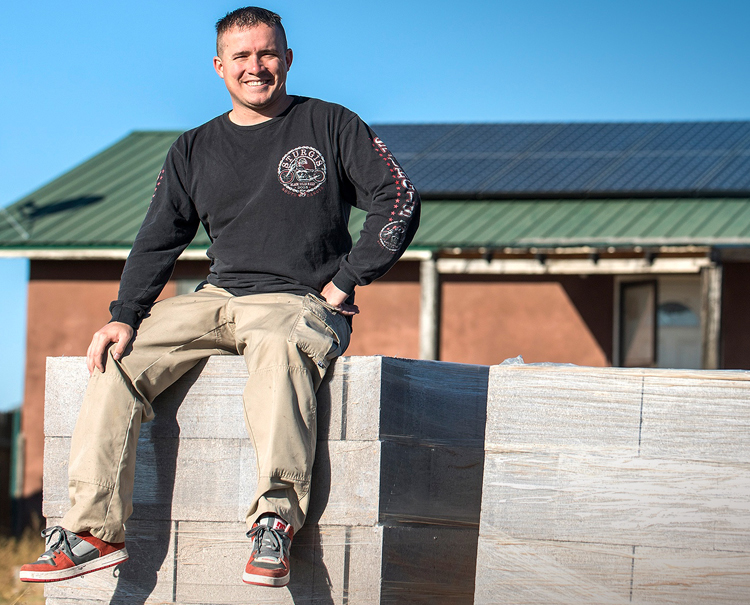
Eric Luchetti, a proud Homewise solar loan client

Homewise provides special lending programs that help make energy-efficient home improvements feasible for low-and moderate-income homeowners who historically have not had adequate access to credit, capital, and financial services. These loans are focused on energy and water saving improvements and repairs to address the rising cost of energy and the conservation of natural resources in our community. Additionally, Homewise offers loan programs to help make solar energy affordable and accessible to low- and moderate-income homeowners.

In 2014, with the support of our founding benefactors Richard Khanlian and Ann Alexander, Homewise established the Solar Opportunity Loan (SOL) Fund. The SOL Fund is aimed at making solar obtainable for regular income households, rather than a luxury reserved for the very wealthy. The Fund accomplishes this goal by reducing and eliminating the barriers that prevent people from switching to solar energy, namely up-front product and installation costs. These existing barriers are especially burdensome for low- and moderate-income homeowners who lack the liquid savings to pay the upfront equipment and installation costs associated with converting to solar energy. By offering access to affordable fixed-rate loans with terms up to 30 years, many households find that their solar loan payments are lower than they previously paid in their electric bills. Since 2010, Homewise has helped 174 households convert to solar energy and make solar-related improvements through affordable and accessible financing.

For impact investors seeking both a financial and social return on their investment, the Homewise Community Investment Fund offers a unique investment opportunity. The Fund generates social returns that can be measured in number of homeowners with decreased debt, increased credit and savings. Additionally, environmental returns can be measured in energy saved and number of energy efficient homes built. Measurable impact is reported to investors bi-annually.

Learn more about the Homewise Community Investment Fund online: https://www.homewise.org/invest-in-homewise/individual-impact-investing


Article by Laura Altomare
, CFRM, Director of Communications and Development for Homewise Inc.

Laura is responsible for directing the organization’s grant procurement, investor relations, fundraising, communication, and marketing strategies. Laura earned a B.A. in English Literature from Colorado State University and holds a Certificate in Fundraising Management from the Indiana University Lilly Family School of Philanthropy. She also holds certifications from the Soul of Money “Fundraising from the Heart” Institute and the NeighborWorks America Training Institute.

This notice is not an offer to sell or the solicitation of an offer to buy, nor shall there be any sale of securities in any state in which such offer, solicitation, or sale is not authorized. The offering is made solely by the Prospectus, which more fully describes certain risks involved in a purchase of securities. The securities are not FDIC or SIPC insured, are not bank deposits, and are not guaranteed by any federal agency. 

Energy & Climate, Featured Articles, Impact Investing, Sustainable Business

Community Impact Investing

By Jamie Horwitz, Chief Marketing Officer, Community Capital Management

Community Capital Management, Inc. (CCM) is a registered investment advisor, headquartered in Weston, Florida, with offices in Boston, Massachusetts and Charlotte, North Carolina. The firm manages just over $2.4 billion, $2.1 billion of which is in the CRA Qualified Investment Fund (CRA Fund). “CRA” stands for the Community Reinvestment Act, which regulates banks within the U.S. The CRA Fund is a market-rate, fixed income fund that invests in U.S.-based community impact investments. Community impact investments focus on positive criteria for inclusion in a portfolio and can include a wide range of intentions such as affordable housing, neighborhood revitalization, and small business development.

Launched in 1999, the CRA Fund was created for banks looking for CRA investments and has grown to include individual and non-financial institutional investors interested in its community impact investment strategy. To our knowledge, it is the largest impact investment bond fund in its peer group and the largest in the U.S. The Fund offers three share classes for investors – one for banks (ticker: CRAIX), one for retail investors (ticker: CRATX), and one for institutional investors (ticker: CRANX). All three share classes are available on a variety of platforms including Fidelity, Charles Schwab, Pershing, TD and LPL.

The CRA Fund’s strategy is fossil fuel free and focuses on investing in four sectors of the bond market where our CCM team identifies, records, and tracks the environmental and social activity that each transaction supports. These sectors include single family agency mortgage-backed securities (MBS), agency commercial MBS (CMBS), taxable municipals, and asset-backed securities (ABS). These types of investments provide capital to help finance affordable homeownership, loans to start or improve small businesses, loans to rehabilitate affordable rental housing properties and healthcare facilities, and improvements to communities nationwide such as green technology, revitalization activities, rural community development, and more.

Our pioneering research process combines impact with financial analysis providing an added layer of investment transparency by detailing the use of bond proceeds. We use a quantitative and qualitative approach to understand what each bond is financing and to report on each bond’s multiple positive-based outcomes. Since 1999, we have invested over $8.1 billion in community impact initiatives nationwide.

Impact investments are categorized using seventeen “impact themes” that include: affordable health/rehab care, affordable housing, arts & culture, disaster recovery, education/childcare, enterprise development/jobs, environmental sustainability, gender lens, government supported communities, healthy communities, human empowerment, minority neighborhoods, neighborhood revitalization, rural community development, seniors/disabled, sustainable agriculture, and transit-oriented development.

Each bond in the CRA Fund is assigned one or more of these impact themes. We believe the real heart of the story lies in the qualitative research and detailed explanations of what the bonds are financing within communities nationwide. Here are two examples:

Kivel Manor, Phoenix, AZ

Kivel Manor is an affordable independent living property for seniors in Phoenix, Arizona that consists of 118 studios and one-bedroom maintenance-free apartments each with a 24-hour emergency call system. The property is in a moderate-income and high-poverty census tract with 23 percent of the population living below the poverty line.

Kivel Manor offers residents a dining program, food pantry, social and recreational programs, and a social services coordinator at no cost. Residents also have free access to an onsite library, lounge areas, and computer center with high-speed internet access. Additional amenities include hairstyling services, a bank, dental clinic, mini-mart, laundry rooms, meal plans, and covered parking.

The entire Kivel Campus of Care, including Kivel Manor, Kivel Manor East and Kivel Manor West, serves the local community by providing 255 units of affordable housing, including 210 independent apartments and a 45-bed assisted living facility. Fifteen of the assisted units are memory-care units for assisted-living residents with Alzheimer’s disease, dementia, and other memory problems.

The campus was recently renovated with help from a $4 million grant from the U.S. Department of Housing and Urban Development as part of the Green Retrofit Program for Multifamily Housing. The grant program’s goal is to retrofit older multifamily properties with energy-efficient appliances, materials and systems, with an eye toward reducing energy costs and water consumption, assuring indoor air quality and creating jobs for industries that produce the energy-efficient products.

The impact themes associated with this investment include Affordable Health/Rehab Care, Affordable Housing, Environmental Sustainability, Seniors/Disabled.

74 West Tremont Apartments, Bronx, NY

74 West Tremont Apartments is a special purpose affordable housing property located in the Morris Heights neighborhood of the Bronx in a low-income census tract, where 97 percent of the population are minority households and 57 percent live below the property line. The building consists of 34 units, three of which are leased to Section 8 voucher tenants and 27 of which are leased to non-profit tenants who provide transitional and permanent housing for homeless youth and adults, substance abuse challenges, chronic medical conditions, and those recovering from mental and behavioral health issues.

Of these 27 units:

• Twelve are leased to Comunilife, a community-based health and housing service provider. Comunilife also operates a full-service, Latino-centered, mental health clinic and a suicide prevention program for Latina girls.

• Five are leased to Praxis Housing Initiatives Inc., which offers overdose prevention training, nutritional counselling, workforce development programs, harm reduction skills, and other services for homeless people.

• Six are leased to Services for the Underserved (SUS) that offers both supported and low-income housing. In addition to housing, SUS specializes in intellectual and developmental disabilities services, homeless services, veteran services, urban farming, and employment opportunities.

• Three are leased to Promesa, a health and human service and community development organization with a mission to enable residents to become self-sufficient citizens who contribute to the quality of life of their communities.

• One is leased to Covenant House, the largest privately funded charity in the U.S. providing care and vital services to homeless, abandoned, abused, trafficked, and exploited youth.

The impact themes associated with this investment include affordable health/rehab care, affordable housing, education/childcare, gender lens, human empowerment, and minority neighborhoods.

Both Kivel Manor and 74 West Tremont Apartments exemplify positive community impact. These are just two examples of thousands of bonds we have purchased over the last 18 years that showcase how community impact investments can have multiple positive-based outcomes to families and neighborhoods nationwide. Integrating community impact investments into your portfolio can help all communities become more viable. These investments increase the supply of affordable housing and facilitate the creation of more jobs – both of which are vital to the economic development success of society and communities nationwide.


Article by Jamie Horwitz, chief marketing officer at Community Capital Management, Inc. (www.ccminvests.com). Jamie is responsible for developing and implementing the firm’s overall positioning in the market. This includes oversight of firm-wide communications, strategic marketing initiatives, media relations, marketing compliance, websites, social media, and all marketing materials. She is also involved in sales outreach to institutional investors and consultants. Jamie is a member of the firm’s Management Committee.

Jamie joined CCM from Bear Stearns in New York City where she worked in their corporate marketing department. Prior to that, she was a credit analyst at Chase Manhattan Bank. Jamie enjoys volunteering having served as a Reading Pal through the United Way of Broward County’s ReadingPals program. The program is an early literacy initiative for children in kindergarten through third grade. It focuses on ensuring that children have been exposed to the wonders of literature and are reading at grade level at the end of third grade. She is a past mentor for Take Stock in Children, a non-profit organization that provides college scholarships for low-income and at-risk students in Florida. In 2013, Jamie participated in the CFA Pilot Program for the CFA Institute Investment Foundations™ (f/k/a Claritas Investment Certificate). Jamie received her B.A. in Economics from the University of Michigan. She holds FINRA licenses: Series 6 & 63.


Investing involves risk including loss of principal. Bonds are subject to interest rate risk and will decline in value as interest rates rise. The Fund is non-diversified.

Carefully consider the risks, investment objectives, charges and expenses of the Fund before investing. The prospectus contains this and other important information and is available at www.ccminvests.com. Please read the prospectus carefully before investing.

The Fund is distributed by SEI Investments Distribution Co., which is not affiliated with Community Capital Management. The securities described are for illustrative purposes only. Their selection was based upon non-performance criteria, such as the security’s social and/or environmental attributes. As of 9/30/17, the investment that included a loan to Kivel Manor and the investment for 74 West Tremont Apartments represented 0.11 percent and 0.22 percent of the Fund’s assets, respectively.

Featured Articles, Impact Investing, Sustainable Business

The SRI Conference Announces 2017 SRI Service Award Winners

The annual award recognizes Sustainable, Responsible, Impact Investment Industry Leadership. Richard Liroff and Cliff Feigenbaum named as 2017’s most influential leaders in SRI.

The SRI Conference, which hosted more than 800 investment professional attendees in early November, honored Richard Liroff, founder and executive director of Investor Environmental Health Network (www.iehn.org), and Cliff Feigenbaum, founder and managing editor of GreenMoney Journal (http://GreenMoneyJournal.com), with the 2017 SRI Service Award.

The annual Award recognizes individuals that demonstrate a range of contributions to the field, including industry leadership, significant innovations, high standards of ethical conduct, cooperation and communication and success in expanding the influence of investing for a sustainable future.

Under Mr. Liroff’s leadership, IEHN is now a collaborative partnership of investors representing $55 billion in assets under management (AUM) and who encourage companies to reduce and eliminate toxic chemicals in products and supply chains. The organization’s work has also contributed to the Chemical Footprint Project (www.chemicalfootprint.org), which aims to measure and report on global chemical use, and is currently supported by investors with $2.3 trillion AUM.

Mr. Feigenbaum has acted as an independent voice increasing the awareness and growth of SRI, environmental, social and governance issues, and corporate social responsibility for over two decades. He has helped his readers make informed financial decisions from the stock market to the supermarket through his work as a long-standing industry leader since 1992.

“Richard and Cliff’s work in the SRI space and their positions as leaders have been crucial to helping investors embrace the idea that purpose and profit are not mutually exclusive,” said Steve Schueth, producer of The SRI Conference and president of First Affirmative Financial Network. “Thanks to their great efforts, investors are actively making a positive impact on today’s most pressing environmental and social challenges.”

The 28th annual SRI Conference attendees were offered an opportunity to cast ballots for the recipients of this year’s award. Votes yielded the winning results, and the 2016 SRI Service Award winner, Lincoln Pain, presented the award.

To learn more about the SRI Service Award and past winners, please visit: www.sriconference.com


ABOUT THE SRI CONFERENCE
The 28th annual SRI Conference was held November 1–3, 2017 at the Hotel del Coronado (www.hoteldel.com) in San Diego, CA. Produced by The SRI Conference and Community, LLC in collaboration with many organizations working to direct investment capital toward the creation of a truly sustainable future, The SRI Conference is the premier annual forum for investment professionals and investors engaged in sustainable, responsible, impact (SRI) investing. Conference participants include investment professionals, institutional investors, and related organizations. The program features educational sessions and opportunities to network with hundreds of like-minded individuals, organizations, and leaders in the field of sustainable, responsible, impact investing. The 2018 SRI Conference will be held in Colorado Springs at The Broadmoor Hotel in early November.

Additional Articles, Impact Investing, Sustainable Business
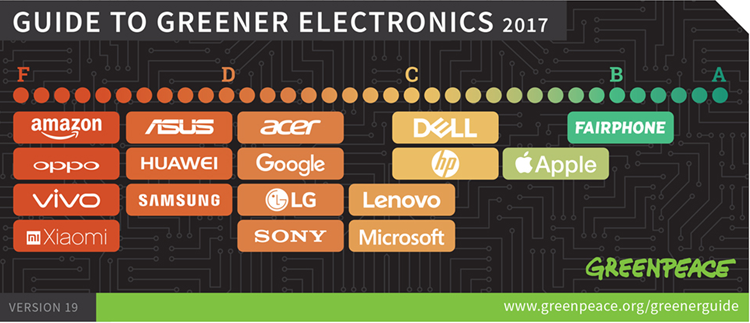
Greenpeace USA Releases 2017 Guide to Sustainable Electronics

Samsung Trails Behind Apple in New Greenpeace Guide to Greener Electronics. Average Grade Across 17 Companies Is D+, Indicating Long Way to Go Toward Sustainable IT.


The 2017 Guide to Greener Electronics (the Guide) was released in mid-October by Greenpeace USA, with rankings of seventeen of the world’s leading consumer electronics companies on sustainable manufacturing and design of IT products. Find it here: www.greenpeace.org/greenerguide

Companies were evaluated based on their transparency, commitment, performance and advocacy efforts in three critical areas: reduction of greenhouse gases through renewable energy; use of recycled materials; and elimination of hazardous chemicals.

“Tech companies claim to be at the forefront of innovation, but their supply chains are stuck in the Industrial Age. We know they can change. Rather than fueling climate change, IT companies need to show the way forward, just like Google and Apple have done with data centers run on renewables,” said Gary Cook, Senior IT Campaigner at Greenpeace USA.

The average grade across the 17 companies evaluated in the Guide was a D+, demonstrating that the sector as a whole has work to do to resolve supply chain impacts and improve product design. Fairphone, based in the Netherlands, scored best overall with a B, followed by Apple with a B-. Dell and HP follow Apple and Fairphone with a C+, while eleven companies, including Samsung, Huawei and Amazon, fall in the D and F range.

Despite its central position as both the largest manufacturer of smartphones and one of the largest suppliers of displays, Samsung’s manufacturing system relies heavily on fossil fuels. The company used more than 16,000 GWh of energy in 2016, with just 1% coming from renewables, for example.

Demand for consumer electronics continues to climb, with nearly 2 billion devices sold in 2016 alone. This drives demand for both finite mined materials and dirty energy. Meanwhile, e-waste is growing, due in part to the short lifespans of devices. The UN has estimated that e-waste globally will surpass 65 million tons in 2017–enough to bury San Francisco to 14 feet.

Key findings of the 2017 Guide to Greener Electronics include:

• Supply chain driving demand for dirty energy: Up to 80% of the carbon footprint of electronic devices occurs during manufacturing. While Google, Apple and other internet companies are making progress transitioning their data centers to renewable energy, nearly all of the companies in the Guide have yet to address the rapidly growing carbon footprint and dependence on dirty energy in their supply chains. Apple is the only company thus far that has committed to 100% renewable power for its supply chain.

• Planned obsolescence as design feature: Apple, Microsoft, and Samsung are among the companies moving in the wrong direction on sustainable product design – many of their latest products are difficult to repair or upgrade. HP, Dell, and Fairphone are the notable exceptions to this trend, producing a growing number of products that are repairable and upgradable.

• Poor supply chain transparency: Despite representing the majority of the environmental footprint for most electronic manufacturers, most companies publish little information on their suppliers, keeping their environmental footprint of their supply chain hidden from view. Of the 17 companies evaluated in the Guide, less than one third publishes a basic list of suppliers, keeping their supply chain hidden from view.

• Lack of transparency and monitoring of workplace chemicals: To protect worker health and safety, all companies need to identify and eliminate hazardous chemicals used in the production of their products, and improve worker health and safety due diligence. Apple, Dell, Google, and Microsoft are the only companies in the Guide that publish their list of substances that must be restricted in the manufacturing of their devices (MRSL), including known hazards benzene, n-hexane, and toluene.

“It is clear the impacts of the linear take-make-waste business model employed by device manufacturers extend beyond the concerns of e-waste. We need to see greater ambition, more transparency, and follow-through from companies to address the environmental impacts of their enormous supply chains. The current model cannot be maintained,” said Cook.

Greenpeace is challenging the IT sector to take responsibility for its rapidly increasing footprint on the planet by:

• Shifting their supply chains to be renewably powered;
• Reducing the cycle of constant consumption of more of minerals and other resources by designing long lasting products that use more recycled materials, and;
• Detox their products and their supply chain by finding alternatives to hazardous chemicals.

More details at: http://www.greenpeace.org/usa/reports/greener-electronics-2017

Additional Articles, Energy & Climate, Impact Investing, Sustainable Business

Green Century, the First Fossil Fuel-Free Mutual Fund Family Reaches $500 Million

Green Century Capital Management announced recently that its assets under management (AUM) reached a new landmark, exceeding $500 million as of October 20, 2017. Green Century is the investment advisor to the first family of fossil fuel-free responsible and diversified mutual funds in the U.S. Green Century’s unique combination of three characteristics allows it to make an impact well beyond its size: Green Century invests in sustainable companies, leads a shareholder advocacy program and is owned by nonprofit organizations.

Green Century (www.greencentury.com) has grown 435% from $114.9 million in AUM as of 9/30/12 to over $500 million as of 10/20/17. Its growth has mirrored both the rise of interest in sustainable investing and the growth of global fossil fuel divestment campaigns.

“More than ever, people want to make an impact through their investments,” said Leslie Samuelrich, President of Green Century Capital Management. “We are a mission-driven firm seeking to provide competitive returns for investors who want to align their values and invest in sustainable companies. We are proud to work with our investors to transition away from industries that have misled the public and have driven the devastating effects of climate change that we are witnessing today with the latest rash of hurricanes and fires. Fossil fuel-free investing is not only possible, but it is a relatively easy way to act on your concerns while providing potential financial benefits for your investments.”

One out of every 5 dollars of professionally managed assets in the U.S. is now invested with some consideration of environmental, social and governance (ESG) factors according to US SIF, the Forum for Sustainable and Responsible Investment.

“Investing using ESG performance ratings has been shown to be a valuable tool for investors and is now being adopted more widely. But, while many investors appreciate this risk management tool, they also want to have a ‘real world’ impact,” Samuelrich said. “I believe they turn to Green Century because of our commitment to help them invest for the future without compromising their values and our ability to make a difference on issues they care about, such as protecting tropical rainforests and promoting sustainable agriculture. Green Century also was founded by nine Public Interest Research Groups (PIRGs) and supports these environmental and public health non-profit organizations with 100% of the profits earned managing the Funds.”

Green Century offers three mutual funds – the Green Century MSCI International Index Funded (GCINX and GCIFX), the Green Century Equity Fund (GCEQX) and the Green Century Balanced Fund (GCBLX), a leader in investing in green bonds. The Green Century MSCI International Index is the first fossil fuel free responsible and diversified international index fund and had over $30M in AUM in its first year ended September 30, 2017.


About Green Century Capital Management

Green Century Capital Management is the investment advisor to the Green Century Funds and offers three environmentally and socially responsible funds, the Green Century MSCI International Index Fund, the Green Century Equity Fund, and the Green Century Balanced Fund. Green Century works to curb climate change through fossil fuel-free investing, reinvestment in sustainable companies, and advocating with companies to improve their environmental policies and supply chains.

You should carefully consider the Funds’ investment objectives, risks, charges, and expenses before investing. To obtain a Prospectus that contains this and other information about the Funds please click here: www.greencentury.com , email: info@greencentury.com , or call: 1-800-934-7336. Please read the Prospectus carefully before investing.

Stocks will fluctuate in response to factors that may affect a single company, industry, sector, country, region, or market as a whole and may perform worse than the market. Foreign securities are subject to additional risks such as currency fluctuations, regional economic and political conditions, differences in accounting, and other unique risks compared to investing in securities of U.S. issuers. Bonds are subject to risks including interest rate, credit, and inflation. The Funds’ environmental criteria limit the investments available to the Funds compared to mutual funds that do not use environmental criteria.

This information has been prepared from sources believed reliable. The views expressed are as of the date of publication and are those of the Advisor to the Funds. The Green Century Funds are distributed by UMB Distribution Services, LLC.

Contact:
Leslie Samuelrich, Green Century Capital Management
Email: lsamuelrich@greencentury.com
Phone: (617) 482-0800
Twitter: @LSamuelrich

For updates on Green Century, register for our e-newsletter or follow us on Twitter.

Additional Articles, Energy & Climate, Food & Farming, Impact Investing, Sustainable Business

ImpactAssets Adds New Private Debt and Equity Impact Investment Options

ImpactAssets announced in September 2017 the addition of new lower minimum, high-impact investment options within the ImpactAssets Giving Fund (www.impactassets.org), its donor advised fund.

The four private debt and equity investments are managed by leading impact investing managers and seek to generate significant social, environmental and financial returns for clients of The Giving Fund. Investment choices address a range of impact and investment themes across geographies. These ”Deep” impact investments enable clients to use philanthropic dollars to generate potentially significant social, environmental and financial returns.

“Through these professionally managed funds, donors can provide critical ‘gap-filling’ resources by channeling capital to strategies that are not typically funded by traditional capital markets or by philanthropy,” said Tim Freundlich, President of ImpactAssets. “In many instances, client investments fuel high-impact, for-profit enterprises to develop their businesses to the point where more traditional financing becomes available to them.”

“These funds appeal to donors who want a hands-on, tangible approach to impact investing with experienced asset management and solid track records,” said Sandra Osborne, Director of Investments, ImpactAssets. “The ImpactAssets Investment Committee has thoroughly reviewed each fund, bringing nearly 100 years of combined impact investment experience to the process.”

The funds, available individually for as little as $25,000, have significantly lower minimums than traditional private debt and equity, which often requires $250,000 to $1 million minimum investments. Donors can also access the funds through the turn-key ImpactAssets Impact Portfolios. The funds include:

Iroquois Valley Farms Blended Private Debt Note: A private debt fund that blends two Iroquois Valley Farms’ note offerings: a long-term note (7.5 year average duration) and the recently offered Soil Restoration Note. The long-term note supports new sustainable farmland investments. Iroquois Valley launched the Soil Restoration Note in 2017 to offer lower lease rates for its current and future farmers transitioning their farming practices to organic and sustainable practices. www.iroquoisvalleyfarms.com

EcoEnterprises Fund III Venture Fund For Nature: The EcoEnterprises fund includes private debt, mezzanine and quasi-equity holdings, and will invest in a diversified portfolio of 15-18 companies across 8 countries in Latin America. Launched in 2017, the fund takes a proven community-based, biodiversity-aware investment approach to the next level. www.ecoenterprisesfund.com

Sarona Frontier Markets Fund III: A private equity fund of funds offering that targets delivery of top-quartile returns by investing growth capital in more than a dozen private equity funds and companies that benefit local communities and the environment. Launched in 2016, the fund invests in local private equity teams who identify and help grow high-quality companies, employing progressive business strategies and operating to the highest business, ethical, social and environmental standards. www.saronafund.com

These three funds replenish more than 12 private debt and equity funds that successfully funded and closed on the Giving Fund platform. They join long-time anchor fund, MicroVest Short Duration Fund, a private debt fund that offers short- and medium-term debt and term deposits to low-income financial institutions (LIFIs), including microfinance institutions and other regulated and unregulated financial institutions in emerging and developed markets. Launched in 2010, the fund is structured to meet the demand from LIFIs for flexible short-term lending and provide investors with a liquid product in microfinance. www.microvestfund.com

ImpactAssets also added MicroVest and Iroquois Valley Farms to its Community Investment Pool, providing investors with a liquid, high impact investment option. The additions help to diversify impact and investment exposure to the pool, which includes the Calvert Foundation Community Investment Note.


About ImpactAssets:  ImpactAssets is a nonprofit financial services firm that increases the flow of capital into investments delivering financial, social and environmental returns. ImpactAssets’ donor-advised fund (“The Giving Fund”) and field-building initiatives enable philanthropists, other asset owners and their wealth advisors to advance social or environmental change through investment and granting.

About The Giving Fund:  The Giving Fund is an innovative donor advised fund that empowers donors to increase the impact of their giving by combining it with strategic sustainable and responsible investing to build a sophisticated philanthropic endowment. Donors recommend how The Giving Fund’s assets are invested across a range of leading impact investment options including community investment, turnkey portfolios, private debt and equity funds, seed venture and custom investments. The Giving Fund currently has $350M in total assets.

Additional Articles, Food & Farming, Impact Investing, Sustainable Business

2017 Moskowitz Prize Winner for Sustainable and Responsible Investing Research

The Center for Responsible Business at the Haas School of Business, University of California, Berkeley, announced in October, in collaboration with The SRI Conference, the winner of the 2017 annual Moskowitz Prize. The prize recognizes outstanding quantitative research in sustainable and responsible investing.

This year, the Moskowitz Prize acknowledged the superior quality of the paper Corporate Governance and the Rise of Integrating Corporate Social Responsibility (CSR) Criteria in Executive Compensation: Effectiveness and Implications for Firm Outcomes released in September 2017. Download the paper: https://papers.ssrn.com/sol3/papers.cfm?abstract_id=2831694

The study examined the integration of CSR contracting – that is the linking of executive compensation to social and environmental performance – and how it affects firm-level outcomes. Assistant professors Caroline Flammer (Boston University), Bryan Hong (University of Western Ontario Ivey Business School) and Dylan Minor (Northwestern University Kellogg School of Management) conducted the study.

Flammer and her co-authors compiled a new database that aggregates CSR-contracting data collected between 2004 and 2013 from company proxy statements. The authors explored how CSR contracting helps focus managers’ attention on areas that are less salient, but financially material, to the firm in the long term, thereby enhancing corporate governance.

Key findings from the study show that the adoption of CSR contracting leads to:

• An increase in long-term orientation on the part of managers;

• An increase in firm value;

• An increase in social and environmental performance;

• A reduction in emissions; and

• An increase in green innovations.

“This study provides practitioners of sustainable, responsible and impact (SRI) investing with data that shows how companies that do good also perform well,” said Steve Schueth, producer of The SRI Conference and president of First Affirmative Financial Network. “The authors’ findings add to the mounting evidence that investing in companies that integrate sustainability best practices into their operations does not hinder financial performance, but can improve it – especially for their long-term investors.”

“This is a difficult, multifaceted topic, and there has been little direct study of it,” said Lloyd Kurtz, senior portfolio manager, Wells Fargo Private Bank and faculty co-chair, Moskowitz Prize. “The authors’ new database of corporate pay arrangements creates the first really clear picture of the relationships between executive pay, corporate social performance and firm value.”

In its 22nd year, the Moskowitz Prize also recognized another study Why Do Investors Hold Socially Responsible Mutual Funds? with an honorable mention by authors Arno Riedl and Paul Smeets of Maastricht University. Download the paper here: https://papers.ssrn.com/sol3/papers.cfm?abstract_id=2318987

Lloyd Kurtz and Caroline Flammer attended The 2017 SRI Conference recently and discussed these and other recent studies that are adding value to the responsible investment industry.

Since its inception in 1996, the Moskowitz Prize has been awarded annually at The SRI Conference. The next one, 29th annual SRI Conference, will be held at The Broadmoor Hotel in Colorado Springs, CO on November 1-3, 2018. For more information please visit: www.sriconference.com

The 2017 Moskowitz Prize sponsors are Bailard, Calvert Group, First Affirmative Financial Network, Neuberger Berman, Trillium Asset Management, and Wells Fargo.
 

About The SRI Conference

The 29th annual SRI Conference will be held at The Broadmoor Hotel in Colorado Springs, CO on November 1-3, 2018. Produced by The SRI Conference and Community, LLC in collaboration with many organizations working to direct investment capital toward the creation of a truly sustainable future, The SRI Conference is the premier annual forum for investment professionals and investors engaged in sustainable, responsible, impact (SRI) investing. Conference participants include investment professionals, institutional investors, and related organizations. The program features educational sessions and opportunities to network with hundreds of like-minded individuals, organizations, and leaders in the field of sustainable, responsible, impact investing.

About The Center for Responsible Business at the Haas School of Business, UC Berkeley Building upon over a decade of research, teaching, and industry engagement, the Center for Responsible Business (CRB) brings together students, company leaders and faculty to develop leaders who redefine business for a sustainable future. The CRB, part of the Institute for Business and Social Impact at the Berkeley Haas School of Business, inspires students, practitioners, and researchers to re-think traditional business practices, envision the roles that they can play in creating change, and obtain the skills to get there.

Additional Articles, Impact Investing

SRI is Growing Up Right Before Our Very Eyes

By Matthew Blume, CFA , Director of ESG Research and Shareholder Advocacy, Appleseed Capital

What was once considered the limited domain of environmental and social activists has grown to become an established force in the capital markets that should be ignored at your own risk. The space is expanding and evolving at an accelerating rate, and this trend shows no signs of turning. Over the past few years, we have seen unprecedented asset flows into ESG, SRI, and Impact Investing strategies; at last count, more than $8.6 trillion in assets were invested in some kind of socially responsible or impact-focused investment strategy.

Along with the burgeoning interest in socially responsible investing on the part of investors, we have also seen an explosion in the number and variety of products designed to meet the needs of socially responsible investors. So significant has this movement been that the mainstream investing world has had no choice but to sit up and take notice. Some of the largest “traditional” asset managers have launched ESG investment products in order to compete for investment dollars from increasingly impact-oriented asset owners, and mainstream media outlets continue to churn out articles letting the world know that impact investing is here to stay.

At Appleseed Capital, we have watched these developments with great satisfaction. Having launched Appleseed Fund (APPLX) nearly 11 years ago, we are proud to have been a participant in the long-term movement to align investments with values. As we look forward to 2018 and beyond, we expect to see the recent trends surrounding socially responsible investing remain solidly intact. We believe that more and more traditional investors and asset managers will come to understand the value, both social and financial, of investing with a purpose, and we are confident that the SRI industry will continue to evolve in response to the changing political and economic environment.

The industry has consistently adapted to the changing economic and political winds. As an example, at Appleseed Capital we instituted our screen on “Too Big To Fail” banks in the wake of the Financial Crisis, having seen the way that the largest banks abused their power to demand bailouts while leaving homeowners to largely fend for themselves.

In this same vein, we expect that socially responsible asset managers will continue to develop innovative solutions to meet the needs of investors in a volatile and unpredictable world. We believe that the dynamism of the SRI industry will lead to yet another year of material growth in 2018, but more importantly, we believe 2018 will be remembered as the year in which shareholders finally took the reins and shifted the responsibility for holding companies accountable from the government to the private sector.

The political landscape in the United States since last November has been nothing short of chaotic. Since assuming power in January, the Trump administration has run in the opposite direction of the Obama administration, showing a strong inclination for reducing regulatory oversight of American businesses, especially in regard to environmental issues. The administration has made it clear that their focus will be on deregulation, no matter the social or environmental costs. From hastening approval of controversial pipeline projects to overhauling the Environmental Protection Agency (EPA), the Trump administration has already made significant changes to the environmental policy landscape.

In a major break with the prior administration and most other world governments, the Trump administration decided in early June to withdraw from the Paris Climate Agreement. Believing the regulatory requirements associated with the agreement to be too onerous for businesses, the Trump administration withdrew support for the agreement. This means that Federal regulatory bodies will not require businesses to implement changes that curtail carbon emissions, leaving companies to largely regulate themselves on these matters.

Not long ago, this development would have struck fear into the heart of anyone who cared about environmental impact and climate change. However, it seems that fundamental changes are afoot in the American economy. Immediately after the announcement that the United States would be withdrawing from the Paris Climate Agreement, a slew of American business leaders from major companies in diverse industries took to social media and other outlets to voice their disapproval of the Trump administration’s actions. CEOs such as Tim Cook of Apple, Elon Musk of Tesla, and Sundar Pichai of Google made public statements of concern regarding the dangers of climate change and the unfortunate direction that the administration was choosing to pursue. Even the CEOs of energy giants ExxonMobil, ConocoPhillips, and Shell expressed their disappointment and concern with the administration’s decision.

It may sound cynical, but we do not believe that business leaders would have responded in the same way ten, or even five, years ago. Businesses are being held to a higher level of accountability than ever before by their shareholders. In recent years, shareholders have taken an increasingly active role in ensuring that the managers of the companies they own are directing their businesses in responsible and sustainable ways. This trend appears to have arrived at a tipping point, and the response of business leaders to the Trump administration’s decision on the Paris Agreement indicates that we may be in a new era with respect to corporate accountability.

Even before the announcement that the United States would be exiting the Paris Agreement, we were provided with somewhat of a watershed example of just how far we’ve come with regard to investors holding businesses to a higher standard of accountability.

At the ExxonMobil annual shareholders meeting in late May, 62.3 percent of shareholders voted in favor of a resolution asking the company to publish a report outlining the risks that the company faces as a result of climate change. A similar resolution had only received 38 percent of the vote in the prior year, and no resolution of this type had ever been passed at a major fossil fuel company.

Getting a majority vote on a climate change resolution at a firm like ExxonMobil is no easy task. It requires the support of major mainstream asset managers, many of whom have historically rejected such measures, choosing instead to side with company management. At Appleseed Capital, we have firsthand experience with this kind of challenge, having engaged in a multi-year effort to persuade energy services company Nabors Industries to publish a comprehensive sustainability report. We were ultimately successful in our effort because we were able to gain the support of other large shareholders who shared our concerns. Similarly, in the case of the 2017 climate change resolution at ExxonMobil, proponents of the resolution were able to gain the support of the two largest asset managers in the world and two of the largest holders of ExxonMobil shares, BlackRock and Vanguard. Both voted in favor of the resolution, effectively pushing it across the line. It marked the first time that Vanguard had chosen to break with company management on a climate change issue, and it represented a tidal shift in the role that traditional asset managers are being asked to play by investors.

Where environmental and social policy goes from here is anyone’s guess, though it seems unlikely that the Trump administration will push for increased environmental oversight. But where the Federal government is stepping back, we see shareholders stepping up. 2017 gave us a glimpse of what is possible when shareholders demand accountability, and we see 2018 as the year when this becomes the new normal. As strong shareholder advocates, we at Appleseed Capital look forward to continuing our advocacy work in 2018 by engaging with portfolio companies and filing shareholder resolutions that address key environmental, social, and governance issues. We will continue to ensure that our investors’ voices are heard, and we are more hopeful than ever that responsible capitalism will continue to thrive in the hands of ordinary Americans who believe in a sustainable future.


Article by Matthew Blume, CFA, Director of ESG Research and Shareholder Advocacy, Appleseed Capital (www.appleseedcapital.com)

Prior to joining the firm, Matthew was an investment advisor for Cornerstone Asset Management. He earned a BS in Electrical Engineering from Valparaiso University and is currently an MBA candidate at Northwestern University’s Kellogg School of Management. Matthew is a CFA Charterholder.

Matthew lives in Chicago with his wife, Lizbeth, and their dog, Stella. Matthew is a competitive distance runner and has competed at the national level in the half marathon and marathon distances. In his spare time, Matthew volunteers with Team One Step, a Chicago Marathon charity team that raises money to help children overcome cancer.  


This commentary is prepared by Appleseed Capital for informational purposes only and is not intended as an offer or solicitation for the purchase or sale of any security. The information contained herein is neither investment advice nor a legal opinion. The views expressed are those of the authors as of the date of publication of this report, and are subject to change at any time due to changes in market or economic conditions. Although information has been obtained from and is based upon sources Appleseed Capital believes to be reliable, we do not guarantee its accuracy. There are no assurances that any predicted results will actually occur, past performance does not guarantee future results.

Energy & Climate, Featured Articles, Impact Investing, Sustainable Business

Urgent Needs for 2018

By John Streur, President and CEO, Calvert Research & Management

Aligning the capital markets more directly with the urgent needs we face as a society to halt environmental destruction and reverse decades of worsening inequality must be our priority for 2018. Alignment needs to occur at every level, across the global markets.

Despite the tremendous efforts behind the Paris Climate Accord, formalization of the United Nations Sustainable Development Goals and a long history of other efforts to change the course of climate change and inequality, we are not making nearly the progress needed. The 1,700 signatories to the United Nations Principles for Responsible Investment, which represent $70 trillion of assets and a wave of press about environmental, social and governance-oriented investing, have not gotten us on track. Even another documentary by Al Gore has not done the trick.

It is essential that we develop the tools to strengthen our investment system, getting much more capital moving away from laggard companies into companies that can drive positive change, and to make systemic changes to raise the bar for all companies. This is especially important now because the responsible and impact investment movement is being joined by massive mainstream investment firms, and the largest banks in the world are entering this business. If the tools are inadequate, we will all be gravely disappointed and the responsible and impact investing movement will fail. However, we also have an excellent opportunity to strengthen the tools and the system as we are joined by the mainstream.

Tool Number One: Data and Transparency

We need to develop information systems that allow company management, consumers, regulators, the public and investors to have insight into the social and environmental impacts that companies are creating. Various efforts are underway to create tools that are helpful in this regard and can be leveraged to translate global norms into a framework that can be used to measure how responsibly businesses are operating.

Calvert recently completed a case study with this goal in mind, linking the Sustainability Accounting Standards Board (SASB) materiality matrix with the United Nations Sustainable Development Goals (SDGs). SASB has developed a materiality-focused approach that aligns well with the investment research approach of Calvert, emphasizing sustainability issues that we believe will most impact a company’s financial performance over the long term. The SDGs provide a similar, parallel framework for nation-states and national programming, which emphasize key development goals, the achievement of which is necessary to reach sustained, equitable, economic growth and prosperity for all citizens.

Calvert’s mapping exercise identified common themes between SASB Standards and the UN SDGs. This involved matching each of SASB’s disclosure topics on financially material ESG issues and related accounting metrics, across SASB-defined sectors and industries, with the SDGs and related targets. We found that a substantial portion – 71 percent – of SASB metrics map to the SDGs and their related targets, which helps us to identify industries in which the SDGs are most likely to be financially material. This enables us to see a clearer path to investments most likely to achieve the SDGs and related positive societal outcomes, as well as those that may be better positioned to generate positive financial outcomes.

In addition, initial assessment finds that 66 percent of SASB accounting metrics could be mapped, with varying degrees of exactness (ranging from “proxy” to “exact match”), to ESG data vendor indicators. This insight brings to light the information gap that exists between an evolving corporate disclosure environment and traditional investor resources. It also highlights that, as the web of disclosure requirements and standards for corporations grows larger and more complex, finding commonalities between these standards can benefit companies and stakeholders by distilling what is most relevant and material. You can read the full study on www.calvert.com

In addition to these efforts, company managements need to develop internal reporting tools in order to provide information that their teams can use, and investors and all other stakeholders can see, in order to drive change. These tools need to tie the specific sustainability efforts to financial impacts at the company.

The resulting information needs to be made transparent for two major reasons. First, we need to know if we have priced carbon, water, pollution and various social impacts properly; understanding the financial impacts within companies is critical to building this understanding. Second, investors and consumers need to see these relationships in order to properly price stocks and bonds, and to understand the total costs of products. For instance, if one company uses materials grown in ways that destroy the rain forest, and another company uses sustainable raw materials, we need to know the economic impact and adjust prices to prevent the first company from reaping profits at the expense of the environment and society. Otherwise, this situation will persist and we will never make real progress.

All the current efforts related to sustainability reporting are voluntary, and are not tied together in any coordinated manner. We need to coalesce around a set of standards and drive the development of information management systems to create the relevant data. In 2018, the Sustainability Accounting Standards Board’s standards will be formalized and we really need companies to get started using them.

Responsible investors also need this information in order to drive impactful corporate engagement. We need to spend more of our engagement time pressing for change, as opposed to asking for disclosure.

Tool Number Two: Impact Reporting

As we strengthen our information systems, we will be able to provide impact reporting to multiple parties. In order to achieve the changes we need to address inequality and climate risk, we need people to understand the impact of their product purchase decisions, employees to understand the impact of their day-to-day business decisions, boards to have information to properly oversee management’s sustainability effort, investors be able to differentiate the quality and financial materiality of competitive companies’ sustainability efforts, and regulators and the public to hold companies accountable for their impacts. The entire system needs to tie together, just like our current financial reporting system connects.

You should be able to understand that one product you purchase has a different set of social and environmental impacts than another product, as well as the difference in the price tag. And investors should be able to see that their portfolio has a specific set of environmental and social impacts relative to a benchmark, as well as at the individual company holding level. Only when we create this type of transparency and information flow can we hope to drive the changes needed.

I believe that if investors are provided with information about the amount of toxic pollution, greenhouse gas emissions, adverse health impacts and death, human rights abuses, severe controversies, and other social and environmental impacts of their investments, many more investors will be motivated to change their portfolios. The same holds true with consumers; if your credit card or bank statement shows the contribution to social and environmental impact, you likely will begin to make different choices.

We’re still at the early stages, but once impact reporting gets started, the logical result is that investors will start to ask more questions. Shining a little bit of light will make people more eager to know the whole story, and the amount of disclosure and transparency will continue to increase. This should also have a positive effect on shareholder engagement. Armed with a complete information system, it will be much easier for engagement teams to ask for real change. And increased transparency and reporting will likely encourage more concrete and positive outcomes. The more people know what to look for, and the easier it is to measure progress, the more likely we will be able to influence the changes we need.

David MacKay, who wrote “Sustainable Energy Without the Hot Air” in 2008 to draw early attention to a potential fossil-free energy system, said, “If everyone does a little, we’ll achieve only a little.” We are long past the stage where a little bit of Responsible Investing can help protect the environment and society along with our clients’ investment dollars. Instead, the coming year will see our clients demand that we do a lot, and provide them with data that proves we are performing as we promise. With better data and transparency, and more developed impact metrics, we can help accelerate the rate of progress, which is essential on every level.


Article by John Streur, president and chief executive officer for Calvert Research and Management, a wholly owned subsidiary of Eaton Vance Management specializing in responsible and sustainable investing across global capital markets. John is also president and a trustee of the Calvert Funds as well as a director of the Calvert Foundation and member of its Risk Management Committee. He guided the creation of the Calvert Principles for Responsible Investment, the Calvert Research System and the Calvert Indices, and has placed focus on investment research and emphasis on environmental, social and governance (ESG) factors integrated with investment decisions. He joined Calvert Research and Management in 2016.

John began his career in the investment management industry in 1987. Before joining Calvert Research and Management, he was president and chief executive officer with Calvert Investments. He has managed socially responsible investments at the request of institutional clients, including public funds, religious institutions, and college and university endowments since 1991. Previously, he was president, director and principal of Portfolio 21, a boutique firm specializing in global environmental investing, and spent 20 years at AMG Funds (and its predecessors), a firm he co-founded and where he served as president, CEO and chair of the Investment Committee.

John is a Founding Member of the Investor Advisory Group of the Sustainability Accounting Standards Board and serves as a director on the board of the Environmental Media Association, whose mission it is to motivate the entertainment industry to educate the public about environmental issues and sustainability through all forms of media. He is a member of the FMC Corporation Sustainability Advisory Council.

John earned a B.S. from the University of Wisconsin, College of Agriculture and Life Sciences.

The views expressed are those of John Streur and are current only through the date stated. These views are subject to change at any time based upon market or other conditions, and Calvert disclaims any responsibility to update such views. These views may not be relied upon as investment advice and, because investment decisions for Calvert are based on many factors, may not be relied upon as an indication of trading intent. Past performance is no guarantee of future results.

Calvert Research and Management is registered as an investment adviser with the U.S. Securities Exchange Commission.

Energy & Climate, Featured Articles, Food & Farming, Impact Investing, Sustainable Business

Signup to receive GreenMoney's monthly eJournal

Privacy Policy
Copyright © GreenMoney Journal 2025

Website design & development by BrandNature

Global Events Calendar

View All Events

april

21aprAll Day232026 Sustainable Packaging Coalition: SPC Impact – Nashville

27aprAll Day30Women Deliver 2026 Conference (WD2026) – Melbourne

X