Tag: Impact Investing

New UBS Investor Watch Study Reveals Stark Differences in Sustainable Investing Globally

Largest recurring study of High Net Worth Investors finds those in China, Brazil and the UAE have highest rates of adoption in sustainable investing; US and UK have lowest levels
UBS in mid-Sept 2018 launched the latest edition of its UBS Investor Watch report, “Return on Values”, the largest recurring global study of High Net Worth Investors (HNWIs)* in the world.[1]

The study reveals stark differences in the sustainable investing landscape. Emerging economies, such as China, Brazil and the U.A.E, indicate they have the highest rates of adoption of sustainable investing (60%, 53% and 53%), while investors in the U.S. and the U.K. lag far behind (12% and 20%). However, despite lower adoption, sustainable investors in the U.S. have the highest average allocation, with 49% of their portfolio assets dedicated to sustainable investments.

“Investors see sustainable investing as the way of the future. Across all ages, wealth levels and regions, many believe sustainable investing will become a more mainstream approach over time,” said Paula Polito, Global Client Strategy Officer, UBS Global Wealth Management.[2] “A majority of the investors surveyed believe that sustainable investments are wise investments and see no need to compromise their personal values for financial returns.”

Sustainable Investment Gap

A significant majority (65%) of the world’s wealthy investors think it’s very important to use their time and resources to help create a better planet. As a result, investors are actively aligning their spending decisions with their personal values (81%) and paying more for products from companies with sustainable practices (69%).

However, these choices in everyday life aren’t always translating into investment decisions. Globally, only a minority of investors (39%) hold sustainable investments in their portfolios [with at least 1% of their investable assets].

Unknown Impact and Confusion Hold Investors Back

The study finds that among non-adopters, 72% say quantifying impact is the biggest barrier. Nearly as many (68%) believe that sustainable investment options are not firmly established, noting short track records and a lack of well-known sustainable companies.

Confusion about terminology is compounding the issue. Seven in ten investors (72%) find the language of sustainable investing perplexing, and less than half (47%) are very familiar with the term itself. Similarly, investors make little distinction between the three major sustainable investment approaches: exclusion, integration and impact investing.

In the midst of this confusion, it is clear that Advisors have an important role to play, with investors listing the advisory community as the biggest influencer in their investment decision making, followed by family and friends.

No Trade-off Between Personal Values and Returns

The study shows that very few investors expect to sacrifice returns when investing sustainably. In fact, 82% of investors believe the returns from sustainable investments will match or surpass those from traditional investments. They view sustainable companies as more responsible, better-managed and more forward thinking – thus, good investments.

Return expectations vary significantly between countries. In China and Brazil, where the adoption of sustainable investing is high, over 70% of investors believe sustainable investments will outperform traditional investments. In the U.S and the U.K., this figure is just 19% and 27% respectively.

“Education on the benefits, impact, and competitive returns is going to have to be accelerated to bring sustainable investing from niche to normal,” said Mark Haefele, Chief Investment Officer at UBS Global Wealth Management. “Today, that is both the challenge and the opportunity.”

Sustainable Investing has Strong Momentum

Despite remaining deterrents, investors expect sustainable investing to grow significantly in popularity, from 39% adoption today to 48% over the next five years. In fact, 58% of investors expect sustainable investing to become the “new normal” in 10 years. Investors in the U.A.E., China and Italy are the most convinced sustainable investing will be mainstream, while only one third of investors in the U.S. and the U.K. agree.

Worldwide, younger investors and those with the greatest wealth are the leading adopters. Seven in ten young investors [18-34 years old] expect sustainable investments to outperform traditional investments, compared to only one third of investors who are age 65 or over. Among the ultra-rich [with at least $50 million in investable assets], the average allocation to sustainable investments is more than half of their portfolio (54%), compared to an average of 36%.

To encourage further adoption, UBS has committed to raise at least USD 5bn in impact investments over five years, in support of the UN Sustainable Development Goals. At Davos 2018, UBS announced the first 100% sustainable cross-asset portfolios for private clients, targeting market rates of risk adjusted return, as well as positive social and environmental outcomes.

The key conclusions from all 10 markets can be found on the main UBS Investor Watch website at – http://www.ubs.com/investorwatch-wm

Access the Full Report here.

Key Findings

* Wealthy investors are motivated by sustainable values (65%) however globally, only a minority (39%) hold sustainable investments in their portfolios

• Investors in China, Brazil and the U.A.E. are the most likely to hold some sustainable investments (60%, 53% and 53%)

• Those in the U.S. and the U.K. trail behind (12% and 20%), but low adoption is partly offset by higher than average asset allocation (49% and 38%)

• Confusion continues to hold investors back—72% of investors find the terminology around sustainable investing perplexing, and lack of measurable impact is the biggest barrier to investing sustainably

• Globally, investors expect sustainable investing to grow from 39% participation to 48% over the next 5 years, and a majority (58%) expect it to become the norm in a decade

• 82% of all investors surveyed expect sustainable investments to match or outperform traditional investments over time


About the Research
* The cited research was conducted among more than 5,300 millionaires with at least $1 million in investable assets (excluding property). The global sample was split across 10 markets: Brazil, China, Germany, Hong Kong, Italy, Singapore, Switzerland, UAE, the UK, and the US. The research was conducted between June 2018 and August 2018.

About UBS Global Wealth Management
As the world’s largest wealth manager, UBS Global Wealth Management provides comprehensive advice, solutions and services to wealthy families and individuals around the world. Clients who work with UBS benefit from a fully integrated set of wealth management capabilities and expertise, including wealth planning, investment management, capital markets, banking, lending and institutional and corporate financial advice.

Article Notes

[1] https://www.ubs.com/us/en/investor-watch.html

[2] https://www.ubs.com/us/en/wealth/about_us/exe_committee/paulapolito.html
Additional Articles, Impact Investing

Responsible Investing Accelerates as Investment Merits Gain Traction: A new survey by RBC Global Asset Management

Ninety percent of institutional investors believe environmental, social and governance (ESG) integrated portfolios are likely to perform as well or better than non-ESG integrated portfolios, according to a new global survey by RBC Global Asset Management (RBC GAM). The results reveal that adoption of responsible investing – including ESG integration, impact investing and engagement by asset owners – is growing steadily as the focus of institutional investors moves from “whether to” to “how to” implement a responsible investment approach.
RBC GAM’s research reveals that ESG-based investing has established a solid position alongside other fundamental investment approaches. Moreover, there is a growing interest in applying ESG principles to diverse asset classes, including fixed income and infrastructure.

“This new data confirms that the majority of institutional investors and consultants have either adopted ESG principles or are actively looking at how to do so,” said Judy Cotte, Vice President and Head of Corporate Governance and Responsible Investment at RBC Global Asset Management. “Importantly, many institutional asset owners now believe they have a duty to consider a responsible investing approach. This ongoing shift has significant implications for how large institutional asset pools are allocated, as well as the advice and service provided by consultants and asset managers.”

Global Highlights

Responsible Investing: Charting a Sustainable Advantage is RBC GAM’s third annual survey of institutional investors’ perceptions and intentions regarding responsible investing. For this year’s report, RBC GAM, which includes BlueBay Asset Management, surveyed 542 institutional asset owners and investment consultants in the United States, Canada, Europe and Asia. Key findings from the survey include:

Performance has become a key selling point: A full 38% of 2018 survey respondents believe integrating ESG factors can help generate alpha – a significant increase from 2017 results when 24% of respondents said that they consider ESG to be a source of alpha. Only 20% of respondents in 2018 do not believe ESG integration is an alpha source. On the other hand, the level of uncertainty about ESG’s merits as an alpha source remains strong: 42% of respondents continue to say they aren’t sure.

Responsible investing is increasingly considered to be a fiduciary responsibility: More than 50% of all respondents who incorporate ESG factors into their investment approach say they consider this to be part of their fiduciary duty – double the percentage who said so last year.

Gender diversity on corporate boards continues to be important: Forty-two percent of institutional investors support shareholder proposals as an effective means to achieve gender diversity on boards. This replaced “market forces” as the preferred approach identified in last year’s survey. In addition this year, we asked respondents about diversity targets and discovered that 63% favor non-binding diversity targets and, of those, 64% support a target greater than 30%.

ESG goes beyond equities: Equities have been the primary focus when considering ESG factors with the survey confirming that the majority (84%) of institutional investors incorporate ESG factors into their process. However, the survey also indicates that ESG analysis is moving beyond equities, as 60% of respondents incorporate it into their fixed-income portfolios, 43% in real estate, 36% in infrastructure and 34% in alternative assets.

Exclusion screens vs. ESG integration and engagement: As responsible investing has developed, the discussion about how to apply the principles in a portfolio has evolved from negative screens (often excluding “sin” stocks such as alcohol, tobacco and firearms companies) to a range of approaches with an increased focus on engagement with companies as a way to influence corporate behavior. When asked in the context of the Fossil Fuel Free movement whether it was more effective to divest or engage, for example, 45% of the 2018 survey respondents said engagement is more effective (compared to 8% of respondents who prefer divestment), demonstrating that investors continue to favor engaging in dialogue with companies instead of simply selling their shares.

Negative screening: Among institutional investors who apply negative screens to their portfolios, companies associated with cluster munitions and landmines were the most likely to be excluded (75% of respondents screen them out), followed by weapons generally (66%), tobacco (60%) and fossil fuels (42%). With respect to fossil fuel screens, the survey revealed pointed differences by region: fossil fuel screens are unpopular in Canada (23%) while in the U.S. they are among the most widely used screens (62%) – in line with weapons and tobacco, and even slightly ahead of cluster munitions. In the UK, screens are applied more evenly across the board.

The survey results affirm that responsible investing – and the integration of ESG principles in particular – continues to grow. It also reveals that the remaining barriers to adoption may be a question of adequate resources and access to quality information, as opposed to philosophical opposition to the idea. Institutional investors, boards of trustees, consultants and other members of the investment ecosystem increasingly appear to understand the value of ESG integration and are demanding that it be incorporated into the investment process.

“As industry acceptance of ESG integration has accelerated and become mainstream, there will be greater focus on ESG-related investment research and its application in the portfolio management process,” said Habib Subjally, Senior Portfolio Manager and Head Global Equities at RBC Global Asset Management (UK) Limited. “And as the demand for responsible investment solutions grows, asset managers and consultants will increasingly be called upon to offer guidance to their clients about responsible investing options that support their long-term financial goals.”


About RBC Global Asset Management
RBC Global Asset Management (RBC GAM) is the asset management division of Royal Bank of Canada (RBC) and includes BlueBay Asset Management and Phillips, Hager & North Investment Management. RBC GAM is a provider of global investment management services and solutions to institutional, high-net-worth and individual investors through separate accounts, pooled funds, mutual funds, hedge funds, exchange-traded funds and specialty investment strategies. The RBC GAM group of companies manage more than USD$330 billion in assets and have approximately 1,400 employees located across Canada, the United States, Europe and Asia.

Source: RBC

Additional Articles, Impact Investing

The Impact Investing Landscape in Latin America: Trends 2016 and 2017 – A new report from ANDE and LAVCA

The Aspen Network of Development Entrepreneurs (ANDE), in partnership with LAVCA–The Association for Private Capital Investment in Latin America, recently released their second report on impact investing trends in Latin America. The findings underscore that impact investing—direct investments in companies with explicit social and financial objectives—is a dynamic industry with robust activity in the region.

As the inaugural 2016 report pointed out, more formal employment opportunities are needed to help resolve income disparities in Latin America. In the new report, more than half of survey respondents stated that they now align their investment strategies with one or more of the Sustainable Development Goals (SDGs). “No Poverty” and “Decent Work and Economic Growth” ranked as the top two areas of focus, illustrating that economic progress coupled with defined social targets could help close income inequalities.

The study offers an updated snapshot of the growing landscape of impact investing in Latin America. It shares insight about impact investment activity in the region—including a breakdown by sector, country, deal size, and stage—and compares this progress to 2014 and 2015. It concludes with investors’ expectations for 2018 and 2019.

Key Findings:

Study shows increased impact investments and industry growth

The report finds that firms active in the impact investing landscape in Latin America manage an estimated US$4.7 billion in assets under management (AUM) allocated to the region. During 2016 and 2017, 55 investors deployed a total of US$1.4 billion through 860 investments.

Two of the largest sectors for investments were microfinance and agriculture, accounting for 75 percent of all deals, followed by information and communication technology, with a considerable portion going to financial technology (fintech) opportunities.

Investments in growth stage companies make up almost half of all deals

Impact investments in Latin America were concentrated in later stage companies. According to the report, the total invested in expansion or growth stage companies was US$703 million, accounting for nearly half of all 860 deals.

Investors continue to report exits

Nearly a dozen firms reported a total of 27 exits during 2016 and 2017, with total proceeds of US$42 million. Exits were spread across nine countries and eleven different sectors, and were driven largely by debt repayment and strategic sales.

Challenges and Future Outlook

The investment outlook remains robust with 33 investors planning to raise funds in 2018 and 2019, with an expected fundraising totaling of over US$1 billion per year.

Although there is growing interest among traditional private equity and venture capital fund managers, family offices, and high net-worth individuals in impact investing, one challenge cited among respondents was lagging philanthropic capital: only 14 percent of those surveyed raised funds from philanthropies. According to the report, greater participation by philanthropies, often willing to take on more risk, could boost outcomes for small and growing businesses in unproven markets, sectors or regions. Fundraising and availability of capital remain a persistent challenge for impact investors as in past years, followed by “development of ecosystem players” and “appropriate investment vehicles.”

“We’re proud to report that we’re witnessing the evolution of impact investing in Latin America. The market is growing and becoming more sophisticated, though there are still significant challenges both for impact entrepreneurs seeking investment and impact investors seeking deals. ANDE is committed to address these challenges by helping the sector to build strong entrepreneurial ecosystems across the continent,” said ANDE’s Executive Director Randall Kempner.

“Private capital investors active in Latin America are increasingly focused on the impact of their investments, and backing companies that will ultimately improve social and financial conditions,” said Cate Ambrose, President of LAVCA. “As the overall investment environment matures, we expect to see continued convergence between traditional investors and impact funds in the region.”

The report is based on a survey of 67 respondents, the majority of whom identify themselves as impact investors and private equity or venture capital fund managers. Data represents 2016 and 2017 investment activity.

Download the Executive Summary and Report here www.andeglobal.org/impactinvestinginlatam


The Aspen Network of Development Entrepreneurs (ANDE) is a global network of more than 290 organizations from 150 countries that propel entrepreneurship in emerging markets. ANDE members provide critical financial, educational, and business support services to small and growing businesses (SGBs) based on the conviction that SGBs will create jobs, stimulate long-term economic growth, and produce environmental and social benefits. Ultimately, we believe that SGBs can help lift countries out of poverty. For more information about ANDE, please visit- https://www.andeglobal.org

LAVCA is the Association for Private Capital Investment in Latin America, a not-for-profit membership organization dedicated to supporting the growth of private capital in Latin America and the Caribbean. LAVCA’s membership is comprised of over 190 firms, from leading global investment firms active in the region and local fund managers to family offices, global sovereign wealth funds, corporate investors, and international pension plans. Member firms control assets in excess of US$65b, directed at capitalizing and growing Latin American businesses. LAVCA’s mission – to spur regional economic growth by advancing private capital investment – is accomplished through programs of research, networking forums, education and advocacy of sound public policy. Visit https://lavca.org for more information.

Additional Articles, Impact Investing, Sustainable Business

Gender Lens Investing: Opportunities in Fixed Income – A new report from Community Capital Management

Community Capital Management, Inc. (CCM), a leading fixed income impact investing manager, is pleased to share our new report, Gender Lens Investing: Opportunities in Fixed Income.
Gender Lens Investing (GLI) is a fast growing impact investment theme and is attracting attention from investors around the world, as shown by total assets in GLI strategies investing in public market securities that have grown to over $900 million, according to Veris Wealth Partners.

In the Gender Lens Investing: Opportunities in Fixed Income report, we take a closer look into gender lens investing, including:


• How CCM looks at and evaluates fixed income gender lens investments

• Gender lens investment case studies in fixed income

• Interviews with experts in gender lens investing


At Community Capital Management, Inc. we have been making investments that have a positive impact on women and girls since 1999. We include gender lens as one of our 18 impact themes, which is used across both our fixed income and equity portfolios. As an innovator in the field, our pioneering deep-dive research and analysis combines a quantitative assessment and qualitative review for each security purchased, identifying a variety of environmental and social outcomes, including gender lens. We are excited about the opportunities in gender lens investing, where the field is, and where it is headed.

A full list of regulatory disclosures for Community Capital Management, Inc. is available by visiting – https://www.ccminvests.com/regulatory-disclosures

Additional Articles, Impact Investing

The Purpose of Capital: Elements of Impact, Financial Flows, and Natural Being – a new book by Jed Emerson

Book Explores the Links Between Our Present Approach to Modern, Financial Capitalism and Our Need to Advance a More Integrated Approach to Investing to Create the World and Lives We Seek.

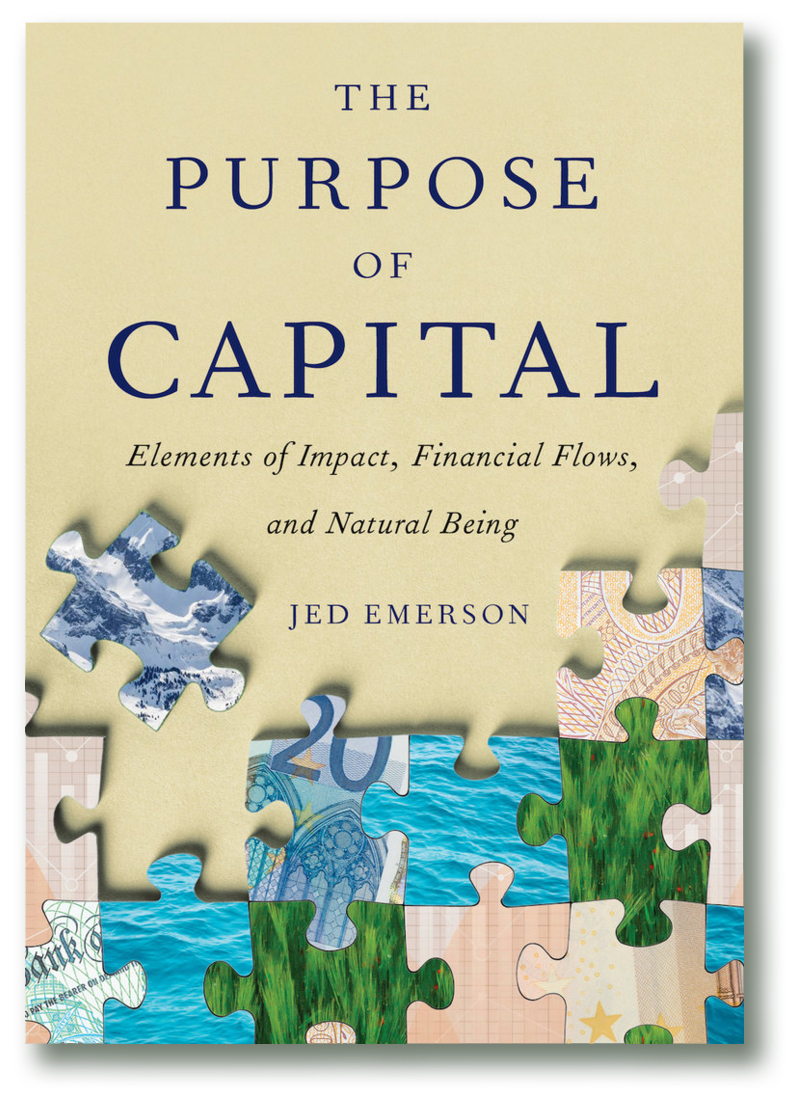
The Purpose of Capital: Elements of Impact, Financial Flows and Natural Being, is the latest book by Jed Emerson, ImpactAssets Fellow and widely recognized international thought leader on impact investing, performance metrics and sustainable finance.
The book, Emerson’s eighth on the topic of impact investing and social entrepreneurship, moves beyond the existing framework of impact investing strategy and tactics (the “how”) to a rich, nuanced and accessible discussion of the meaning and purpose of capital (the “Why”).

Emerson asks readers to reflect on the personal and historic factors that have shaped our 21st Century perception of financial capitalism, challenging us to seek a deeper understanding of the purpose of capital—and envision a future that integrates components of economic/financial value creation with social/environmental value.

Suzanne DiBianca, EVP Corporate Relations and Chief Philanthropy Officer at Salesforce, said, “In his latest and most important book, Jed Emerson helps us see how our understanding of the purpose of capital has its roots in ancient thinking and wisdom, while its future is in concepts such as Mutual Impact and Deep Economy.”

“Challenging us to understand the shortcomings of modern financial capitalism, he helps us appreciate how changing the world must be grounded in efforts to change our selves. A truly inspiring read from an open and authentic elder of our field.”

Emerson writes that the challenge of defining the true purpose of capital has been with us since the start of modern financial capitalism in 1604, but the roots of our exploration of meaning and purpose go back to the origins of humanity and in many ways are at the center of our shared, global history. As readers consider that history, they need to explore two central questions:

• How did we come to separate our understanding of economic/financial value from social/environmental value?

• How did we come to think of ourselves as being separate from our neighbors, community and planet?

By crafting a new, holistic understanding of ourselves and our relation to the Other, we are able to approach a deeper, more significant understanding of the purpose of capital for our community, which may then anchor our individual definition of the purpose of capital, how we understand the nature of returns (both financial and extra-financial) and the cultivation of a more profound understanding of the meaning of money.

E-book Distribution/Fireside Chats

In order to reach as broad an audience as possible, Emerson has opted to distribute the digital version of The Purpose of Capital at no charge. The e-book is available at – https://www.purposeofcapital.org/get-the-book

Emerson will also host a series “fireside chats,” opening up a dialogue with investor groups to more deeply explore the ideas and concepts outlined in the book.

In addition, he will be speaking on The Purpose of Capital at variety of public events.

For more information on The Purpose of Capital, visit – https://www.purposeofcapital.org


About Jed Emerson
Jed Emerson is strategic advisor to family offices and wealth management firms executing diverse approaches to investing for financial returns with social and environmental impact. He also serves as Senior Fellow with Impact Assets and The Toniic Network. Co-author of the first book on impact investing, as well as seven other books on impact investing and social entrepreneurship, he has been active in both fields for thirty years. He has served as founding director and board member of diverse social enterprises and impact investment groups. Emerson is a Senior Research Fellow at University of Heidelberg’s Center on Social Investing and has held faculty appointments at Harvard, Stanford and Oxford business schools. He has taught social entrepreneurship at Kellogg Business School and NYU-Abu Dhabi in the U.A.E.

About ImpactAssets, Fiscal Sponsor of The Purpose of Capital Project:
ImpactAssets is a nonprofit financial services firm that increases the flow of capital into investments delivering financial, social and environmental returns. ImpactAssets’ donor-advised fund (“The Giving Fund”) and field-building initiatives enable philanthropists, other asset owners and their wealth advisors to advance social or environmental change through investment and granting. In 2017, donors granted $36m to nonprofits and recommended $57 million to impact investments. The Giving Fund currently has nearly $500 million in total assets.

Twitter: @BlendedValue, #PurposeofCapital

LinkedIn: www.linkedin.com/in/jedemerson/

Additional Articles, Impact Investing, Sustainable Business

Clean Energy Investing: Changing Lives, Changing the World

By Maxwell Roe, Business Development, Clean Power USA


Over the last several years, I have realized that there has been a compelling shift in the minds of investors in our business.
Historically, most investors wanted to know the numbers. What would be the return on their investment and how soon would it happen? But more and more, I meet people who are asking about impact, not just dollars.

The momentum of that sea change hit home this spring when we met new investors, a couple. They were mission-driven. They wanted their money to have a measurable impact on the world.

From the first days of our courting this couple, we focused on why we do what we do.

For a decade, our company has acquired land for large wind and solar projects, often leasing it to developers for 30 years or more. We do that by selling shares to people excited about investing in land for wind or solar projects.

We pointed this couple to the impact of clean energy. We explained how it’s more efficient to invest in large-scale solar utility projects, than to convert individual houses to solar. We noted that an investment of $100,000 is the equivalent of converting 41 houses to clean power. We pointed to studies showing that renewable energy generates more jobs per megawatt than traditional energy. We explained that it displaces the carbon equivalent of driving 86 cars annually.[1]

They wanted to know the story of our company, asking questions about us personally and professionally. Our passion and our commitment, it seems, were also a selling point. And, yes, we outlined the financials of our fund, how land leases from clean energy projects pay high rates for a long time.

Today, we told them, doing right and making money are not-so-strange bedfellows. They became one of our largest backers, choosing to invest in their ideals.

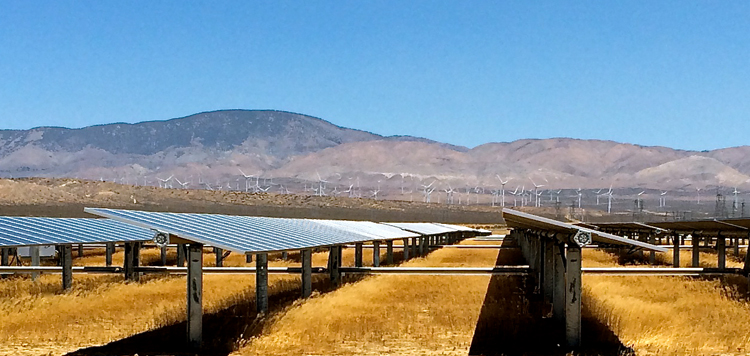
Is in Astoria Solar, a project developed by Recurrent Energy in Mohave Desert, CA

For us, that story is symbolic of the change in our industry. As the threat of climate change becomes ever more pervasive in daily life through intense storms, droughts, wildfires, and heat waves, we’ve found backers who want to see real-world changes.

They’re investing with their hearts as well as their minds. They are looking to the future or, more accurately, looking to preserve a future for their children and grandchildren. They are turning their backs on dying industries like coal, oil, and gas. They are not alone. According to a 2016 USSIF report, impact investing grew a staggering 33 percent from 2014 to 2016.[2]

The investors who joined us this spring represent the present and the future. Companies, both public and private, money managers, policymakers and investors who have failed to see this shift, are already being left in the dust of the past, the dust of mountaintop strip-mining and red-dirt drilling.

Renewable energy is mainstream. Finally. Renewables were the most-added source of new generation in 2017.[3] In an increasing number of regions, clean energy is the cheapest source of new electricity. Confidence in the clean energy sector can be seen in the large commitments made by major banking institutions.

We’ve known this was coming. Now, the public — and our investors — are grasping the reality of a renewable energy future. Rooftop solar panels are commonplace and are required on new homes in some California cities. The rise of the electric cars by Tesla and even more surprisingly by auto behemoths like General Motors with the Volt, speak volumes about where fossil fuels are headed. Solar photovoltaic installers and wind turbine service technicians have become the nation’s two fastest-growing occupations. Even the military looks at a low-carbon future as a security issue. The European Defense Agency [4] cites reducing greenhouse gases as “vital” while a Pentagon report [5] says that more than 50 percent of U.S. strategic sites are threatened by climate change.

It has been a long road for us. John Copyak [6], our founder, saw the necessity of transitioning from fossil fuels and the promise of investing in land long before others did. We signed our first wind power lease in 2007. The financials have always been in our favor. Solar leases pay from 20 to 30 years and wind leases typically pay for nearly 35 years. Return rates are 5 percent before projects are built, but ramp up to 12-18 percent in the power-producing years. These things have been true for years, but old money has continued chasing old ideas.

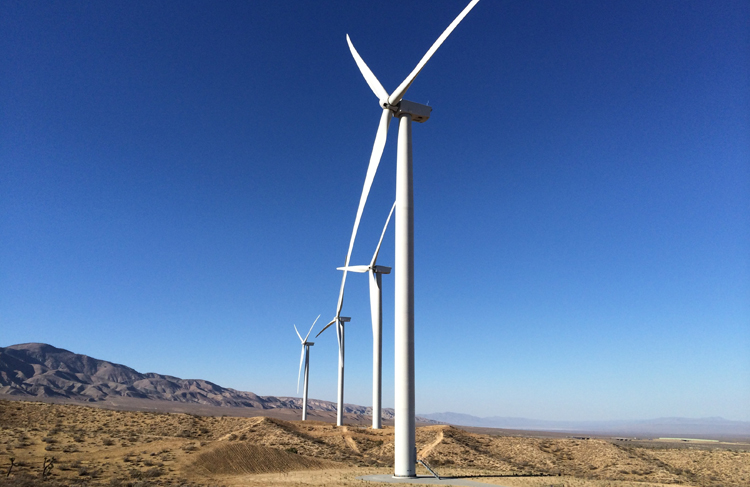
The Alta Wind Energy Center, a project developed by Terra-Gen Operating Co in Mohave Desert, CA

The perceptions of clean energy investing went through some tough years with high-profile bankruptcies and the turn towards fracking with the dubious claim that natural gas was environmentally friendly. But the economics and a broad understanding of the dangers of climate change have won over investors.

People up and down the ideological and socioeconomic ladder are backing our funds. Among our investors, we count individuals with deep family roots as coal executives. The U.S. energy tradition has been one of family legacy and honored history. We, too, have relatives who worked in the coal mines for decades.

When John founded Clean USA Power, he realized there was a problem — human-induced climate change — and he had the skill in real estate to be part of the solution. We are experts at pulling together the pieces of a land puzzle that make wind and solar projects reality. Our developer partners trust us to deliver. Our investors know we don’t rely on tax incentives. We’re well beyond the early fringe adopters’ phase. Ours is a business on solid footing.

There is no simple fix for our energy future. Climate change will force a new economic reality on the energy industry. The grid of tomorrow will be smart and dynamic, responding to demand through artificial intelligence (AI). When your phone is the guidance of AI-powered systems, electricity can be redirected from an electric car battery to power your home while you sleep. Your smart device will know your schedule, ensuring the car will be fully charged before your next use. You’ll never know the difference.

Global strides through the Paris Accords and other agreements will propel us toward a sustainable 100 percent renewable reality by 2050. The state of California has mandated 50 percent renewable energy by 2030 and a bill requiring 100 percent renewable by 2045 was recently signed California’s Governor Jerry Brown. These policies are powerful, but our power demands won’t end in 2050.

We are moving towards a global civilization that will harness all of the energy hitting our planet from our closest star, the sun. We are not close now. But if we can focus our thirst for innovation and discovery, we’ll be there before the century’s end.

The rapid changes of the past few years have made me optimistic. We’re riding the momentum of a clean-power rocket that can’t — and won’t — be stopped.


Article by Maxwell Roe, Business Development, Clean Power USA (cleanusapower.com). Mr. Roe is passionate about the renewable energy transition as an effective way to combat climate change. He has worked in property management and real estate for 8 years and is an expert in communication, business strategy, and negotiation. Maxwell loves doing anything outdoors with his wife and dog. He is an avid mountain biker who can usually be found out on the trails in Bend, OR.

Article Footnotes:

[1] www.linkedin.com/pulse/how-we-discovered-3-big-impacts-our-solar-wind-real-estate-roe

[2] www.ussif.org/trends

[3] about.bnef.com/blog/sustainable-energy-america-factbook-2018

[4] www.eda.europa.eu/docs/default-source/news/military-green-leaflet.pdf

[5] www.reuters.com/article/us-usa-climatechange-military/climate-change-threatens-half-of-u-s-military-sites-pentagon-idUSKBN1FK2T8

[6] cleanusapower.com/about

Energy & Climate, Featured Articles, Impact Investing, Sustainable Business

Decarbonize, Decentralize and Democratize: Investing in a More Just Energy Future

By Jess Brooks, Chief Development Officer, Sunwealth


The existing extractive energy economy isn’t working. Our dependence on coal, oil and gas contributes to global warming, the physical destruction of communities and pollution-related health issues which impact all of us – and disproportionately affect low-income people and communities of color. It’s not sustainable. And it’s fundamentally unjust.
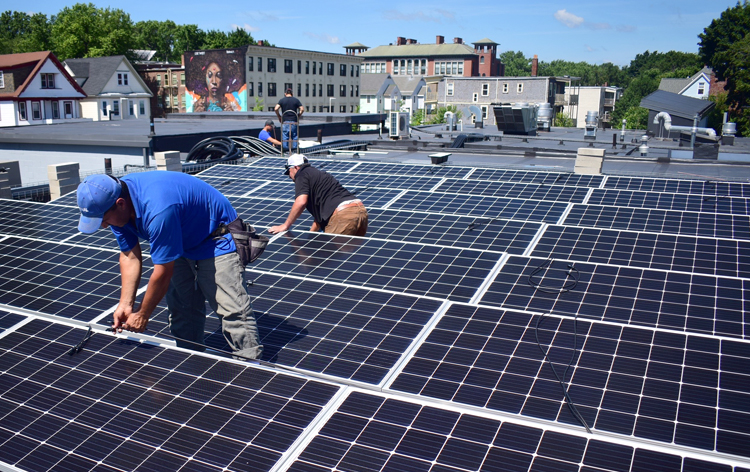
At Sunwealth, we believe the future of energy is decarbonized, decentralized and democratized. We invest in that future by financing diverse renewable energy projects that reduce greenhouse gas emissions, strengthen local resilience and bring the benefits of renewable energy to under-served communities. Since 2014, we have financed over 70 solar installations on rooftops and open spaces across our communities. Our investments bring critical capital to the commercial solar market – supporting smaller-scale solar projects ranging in size from 5 to 500 kilowatts. These are the buildings and spaces you see as you walk through your neighborhood: schools, houses of worship, child care centers, fire stations and local businesses; apartment buildings and rooftops of low- and moderate-income homeowners; and underutilized brownfields, parking lots and odd-shaped parcels ill-suited to development.

Institutional capital has neglected this market, seeking out large utility-scale transactions and aggregations of residential installations in affluent communities with high credit scores which are easier to underwrite. Their focus has created “solar deserts” among the very populations who could benefit most from clean, affordable electricity, including low-income residents, nonprofit organizations and municipalities.

We provide these consumers with clean, locally-generated energy that offers significant savings on their electric bills. Our investments create green jobs with local solar developers, whom we contract with to maintain these projects long-term. Located across our neighborhoods and business districts, our projects provide visual testament that all of us can contribute to the fight against climate change.

Sunwealth has attracted investment from over 100 investors – individuals, families, foundations, endowments, intermediaries and corporate investors looking to invest in a renewable energy future that benefits us all. Our Solar Impact Fund provides them with fixed-income returns in a non-correlated alternative asset. Investors know what projects they’re invested in and can track their investment’s financial performance and its impact in terms of carbon reduction, energy savings and jobs created. Moreover, they know their investments are regenerative rather than extractive, contributing to a more just, sustainable and inclusive energy future.

Installing solar panels on this Dorchester rooftop creates green jobs with a local, immigrant-owned solar installer, rooftop lease income to a local nonprofit organization and renewable energy credits for the City of Somerville. (Photo by Cody Eaton)

The Future of Energy is Decarbonized…

Our partners – investors, solar developers and the individuals, organizations and businesses who lease us roof space and purchase our power – understand that the future of energy is de-carbonized. They know that renewable energy improves air quality while helping address global warming, and that solar provides a proven, efficient and durable alternative to fossil fuels. Since 2010, solar installation costs have fallen 70 percent, while installations themselves have grown at an annual rate of nearly 60 percent.[1] According to the U.S. Department of Energy, nearly 350,000 Americans work in solar power generation – more than in coal, natural gas and oil combined.[2]

Sunwealth’s investment makes it possible for our partners to participate in our transition to a clean energy economy. In Somerville, MA, for example, we’ve partnered with the City to help them achieve their sustainability goals and reduce energy costs. Here’s how we do it: We use capital from investors to secure long-term rooftop leases and install solar panels on the rooftops of apartment buildings and local businesses like cleantech incubator Greentown Labs [3], providing rooftop rental income that improves their financials. We partner with local developers like United Solar, founded by a Somerville High School graduate, to install and maintain the projects, ensuring that jobs and revenue remain in the region. We sell the energy credits for the power we generate to the City to offset energy consumed by City facilities. Finally, our investors get repaid as customers pay their electric bills. A virtuous circle.

The Future of Energy is Decentralized…

We envision a future where rooftop- and ground-mounted solar installations across a community act as mini-power plants, contributing energy to the larger grid and storing that energy for future use. Puerto Rico’s experience with Hurricane Maria highlighted how vulnerable a community can be when it relies solely on an aging and centralized power infrastructure. Distributed renewable energy systems can help a community weather a storm and bounce back more quickly from natural disasters. They strengthen long-term resiliency while providing near-term savings and clean, affordable power.

Moreover, small, distributed solar installations are critical to reducing our dependence on fossil fuels. According to the National Renewable Energy Laboratory, rooftop solar installations have the potential to generate close to 40 percent of the nation’s energy. Installations on small buildings (<5000 square feet) represent close to two-thirds of that overall rooftop capacity.[4]

For investors, a decentralized energy future doesn’t need to be a complicated one. Sunwealth aggregates these smaller installations into portfolios that mimic the size and performance of a utility-scale project. These portfolios offer diversification across a range of building types, geographies and off-taker types, reducing overall investment risk. The economies of scale we obtain allow us to make solar accessible to groups who otherwise wouldn’t be able to afford it.

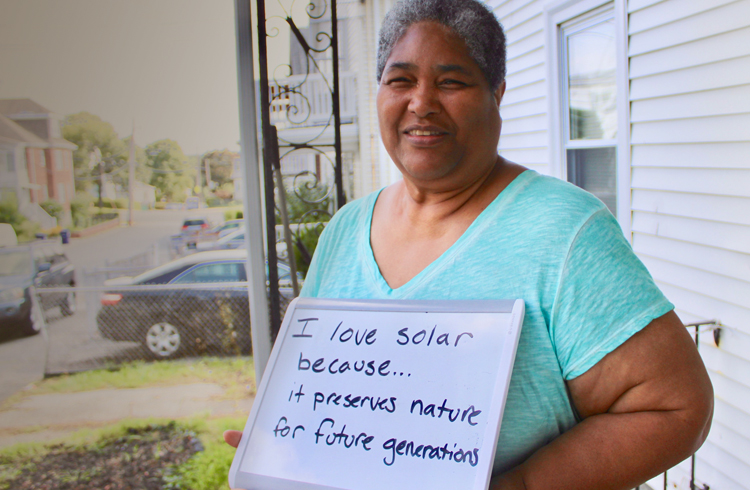
Boston resident and climate leader Olive Knight got solar panels installed on her roof at no cost through the Solar Access Program, financed by Sunwealth in partnership with local developer Resonant Energy. (Photo courtesy of Resonant Energy)

The Future of Energy is Democratized…

We believe renewable energy can and should benefit all communities – not only those who can afford the upfront installation costs. These costs are often a barrier to low- and moderate-income individuals and to nonprofit organizations, houses of worship and municipalities. These individuals and entities are in many cases unable to take advantage of tax credits and subsidies designed to make solar more affordable, creating an even larger gap between solar “haves” and “have nots.”

Sunwealth’s model helps address this inequity by connecting community-based solar projects with investors. We partner with on-the-ground developers who help us identify strong projects and work with community organizations from conception through installation. Our projects undergo a rigorous underwriting process to ensure they meet the highest quality standards and provide consumers with savings of 15-30 percent on their monthly electric bill. We also rigorously underwrite our power purchasers, paying attention to long-term viability and as well as ability to pay. We are investing for the long haul in projects and partners who will be here for decades to come. Investors have the opportunity to invest directly through our bond and tax equity offerings.

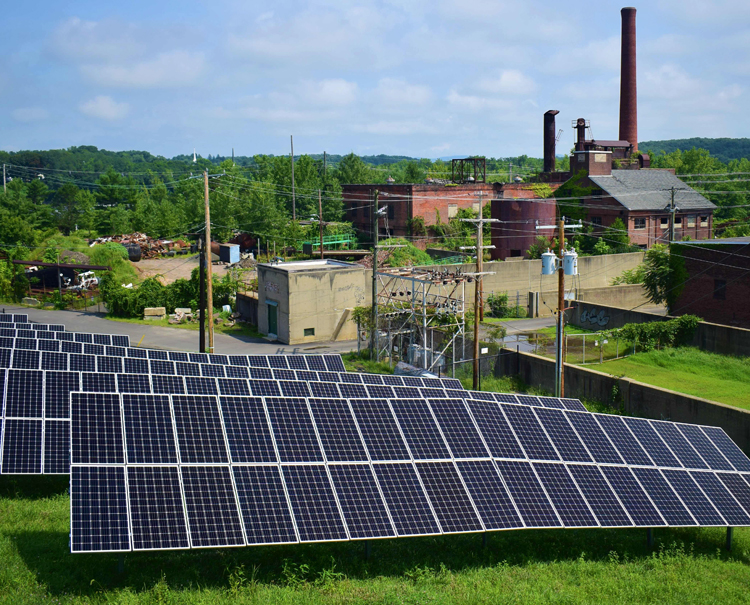
This innovative structure allows us to bring renewable energy to solar deserts. In Holyoke, MA, we turned a two-acre vacant parcel sandwiched between turn-of-the-century manufacturing buildings into a solar installation providing clean, affordable power to Holyoke Housing Authority residents for the next 20 years. [5]

A formerly under-utilized parcel in Holyoke, MA will provide clean, affordable power to Holyoke affordable housing residents for decades to come. (Photo by Cody Eaton)

The Future of Energy is Ours to Create

Sunwealth’s vision of the future of energy has attracted attention. We are poised to invest over $12 million in solar energy and storage projects in 2018, more than double our 2017 investment. We have a 2019 pipeline of over $40 million in new solar projects that will provide 20 megawatts of solar power across 50 communities, generating lifetime energy savings of over $30 million.

The future we are investing in fights climate change while promoting ecological preservation, community resilience and social equity. It generates powerful returns for our communities, our local economies, the environment and our investors.

The way we see it, this future is bright.

For more about our company:

Call (617) 714-9717 or Email – hello@sunwealth.com

Visit our website – www.sunwealth.com

Solar Impact Fund – www.sunwealth.com/featured-investments


Article by Jess Brooks, Chief Development Officer at Sunwealth, where she helps investors put their money to work building a more just, sustainable and inclusive energy future. Prior to joining Sunwealth, Jess was a Senior Vice President at Boston Community Capital, a national community development financial institution (CDFI) where she helped grow assets under management from $60 million to over $1 billion, leveraging over $5 billion in public and private investment in under-served communities nationwide; she has also worked as a director of online communities at The New York Times Company, in technology sales and as a securities trader on Wall Street.

An active civic leader, Jess serves on boards of Generation Citizen Massachusetts and First Teacher, and chairs Brown University’s Advisory Council on Relations with Tougaloo College, a historically black college in Mississippi. She is past chair of the boards of The Food Project, Cascap and Social Venture Partners Boston. Jess holds a BA from Brown University. She and her family live outside Boston, MA, where they enjoy kayaking on the Charles River and going to Red Sox games, especially in October.

Article Footnotes:

[1] www.seia.org/us-solar-market-insight

[2] www.usenergyjobs.org

[3] www.sunwealth.com/blog/2018/5/31/connected-by-the-sun

[4] www.nrel.gov/docs/fy16osti/65298.pdf

[5] www.sunwealth.com/blog/2018/1/24/going-the-extra-mile-for-impact-in-holyoke

Energy & Climate, Featured Articles, Impact Investing, Sustainable Business

2018 Money Manager Roadmap on SRI from the US SIF Foundation

The report provides best practices and practical steps asset managers can take to develop and enhance sustainable investing strategies.

The US SIF Foundation recently released a comprehensive guide for money managers on how to incorporate sustainable, responsible and impact investing at their firms. The Money Manager Roadmap provides best practices and practical steps asset managers can take to develop and enhance sustainable investing strategies.

The guide, Moving Forward With Sustainable, Responsible And Impact Investing: A Roadmap For Money Managers is the second released by the US SIF Foundation this year. The roadmaps are a core deliverable from US SIF’s strategic plan goal to identify and disseminate information about best practices within the field and provide tools for practitioners to undertake a rigorous and comprehensive approach to sustainable and impact investing. A roadmap for financial advisors was released earlier this year, and asset owners will be the focus of the third and final guide in the series.

The Roadmap was designed with input from leading portfolio managers at US SIF member firms and covers the following steps, from introductory to advanced, for money managers to develop sustainable investment programs and products:

• Establish board and senior level oversight
• Identify sources of ESG data, research and training
• Develop and implement an ESG incorporation strategy
• Develop and implement an investor engagement strategy
• Measure and manage impact
• Participate in building the field

“As the field expands, we consistently hear that asset managers need basic information about how to get started in creating ESG-focused products and strategies. We also believe that asset managers need to continually build out their offerings and provide transparency about their investing process,” said Lisa Woll, CEO of the US SIF Foundation. “The Money Manager Roadmap is a tool that asset managers can use whether they are just starting out or are experienced practitioners moving toward a more rigorous practice.”

“The roadmap is an excellent framework and resource for the growing number of investment professionals at our firm and across the industry who are incorporating ESG analysis into their portfolios,” said Aniket Shah, Head of Sustainable Investing at OppenheimerFunds.

Paul Hilton, CFA, Partner and Portfolio Manager at Trillium Asset Management, added “Investment managers can no longer simply give lip-service to sustainable investing. US SIF’s Money Manager Roadmap provides a concrete path for managers who are looking to credibly and meaningfully mobilize capital towards impact. For many of us in the field, we believe our collaborative work to grow the field is the most important step we can take to demonstrate leadership and create lasting change.”

The guide is now available on US SIF’s website and will be distributed to asset managers throughout the year. To access the Money Manager Roadmap, please visit:  www.ussif.org/store_product.asp?prodid=36


About US SIF and the US SIF Foundation

US SIF: The Forum for Sustainable and Responsible Investment is the leading voice advancing sustainable, responsible and impact investing across all asset classes. Its mission is to rapidly shift investment practices toward sustainability, focusing on long-term investment and the generation of positive social and environmental impacts. US SIF members include investment management and advisory firms, mutual fund companies, asset owners, research firms, financial planners and advisors, broker-dealers, community investing organizations and nonprofit organizations.

US SIF is supported in its work by the US SIF Foundation, a 501(C)(3) organization that undertakes educational, research and programmatic activities to advance the mission of US SIF, including offering training on the Fundamentals of Sustainable and Impact Investment. The biennial Report on US Sustainable, Responsible and Impact Investing Trends will be published later this year.

The 9th Annual US SIF Conference will be held in Minneapolis/St. Paul on June 10-12, 2019. For more information visit: www.ussif.org


Additional Articles, Impact Investing, Sustainable Business

The Future of “Clean” Energy

By Murray Rosenblith, Co-Manager, New Alternatives Fund


A recent article in Bloomberg New Energy Finance predicts that two-thirds of the world’s power will be generated by renewable resources by the year 2050. This projection is based on the continuing growth of new renewable power generation projects, primarily wind and solar, over the next thirty-plus years. Conditions have certainly changed since New Alternatives Fund entered the investment world in September 1982.

When New Alternatives began operation as the first mutual fund concentrating on what was generally called “alternative energy,” the sector was seen as a niche area. Socially responsible investing was still a relatively young concept. Investment professionals were still skeptical about the idea that principles, human values, the environment and other non-financial metrics factor in their business decisions. There were concerns about “energy security” growing out of the economic disruption caused by the OPEC oil boycott in 1973. In addition, there was a growing consensus that damage to the environment could have a negative effect on the general health of populations and economic growth.

The publication of Rachel Carson’s Silent Spring in 1962, which raised awareness of the damage that widespread pesticide use was causing, created a wider concern about water and air pollution. This sensibility eventually led the U.S. Congress to pass the Clean Air Act in 1963 and the Clean Water Act in 1972, mandating controls on waste materials that were being generated by mining, manufacturing and power generation and dumped in waterways and in the air. These laws also put limits on the amount of dangerous emissions from cars and other transportation. The Environmental Protection Agency (EPA), created under President Nixon in 1970, oversaw the enforcement of most of these regulations. But the broader concept of an emerging challenge of “climate change” was not generally part of the public consciousness as yet.

During this same period, however, the science and awareness of the larger issues involving carbon emissions and the long-term effects on the world environment were growing and would come to bear on how we viewed the total costs of energy. The United Nations Environment Programme (UNEP), starting in 1972, worked on providing support to countries around the world, with an emphasis on developing nations, to create energy plans based on systems that reduced the carbon emissions they produced. The UNEP would eventually create the Intergovernmental Panel on Climate Change (IPCC) in 1988, to provide scientific research on climate change causes and effects and promote wider introduction of clean energy production.

Hydropower for electric generation was well developed and broadly used. But solar power, in the form of photovoltaic cells and direct solar heating technology, was still mostly the province of “off grid” simple living pioneers and a few developing nations that lacked wider power infrastructure. Wind turbines were still relatively small scale, generating, on average, several hundred watts (kw) of electricity. In response to the 1973 oil crisis and the increased cost of oil and gas, the U.S. government increased funding for renewable energy research and development. As a result, more efficient and powerful turbines were designed and the first wind farms were created in the U.S. and Europe. But as late as 1981, one year before New Alternatives Fund opened, there were still only two wind farms in the U.S., generating about 10 megawatts (mw) of electricity, enough to power just over 8,500 homes. In the early 1980s, as oil and gas prices came down, solar and wind power development declined because they were now economically noncompetitive.

Governments around the world, primarily in Western Europe, Japan, South Korea, Canada and, to a lesser extent, the United States, began funding renewable energy development and enacting policies that supported the introduction of renewables into their power and transportation systems. New technologies, many with government support, improved the efficiency of wind and solar power systems, energy storage capacities and energy efficiency to the point where, today, most renewables can compete economically with fossil fuel energy generation. Considering the “externalities” of the existing power system and the growing concerns for the health and future of the world’s environment, renewable energy has emerged as the way forward. Or so it would seem if science and logic were universally applied.

New Alternatives Fund’s approach has always been to consider the broad sector of energy and related environmental areas like clean water, clean air, and naturally grown and organic food. Energy is not just the production of electric power. Conservation and efficiency play major roles in the future of the world’s energy. As populations grow and more people move to a higher standard of living, we will face greater energy demands. One of the most important trends in recent years has been the advancement of technologies that produce units of energy more efficiently, whether it is larger wind turbines being developed by Vestas Wind Systems of Denmark, more efficient solar modules from First Solar, lighting systems from Signify NV of The Netherlands or building energy management controls from Ingersoll-Rand PLC of Ireland. The ability to “do more with less” is an important aspect of the future of renewable energy.

But the path has, obviously, not been so straight. Human beings are not always rational actors. The entrenched economic interests of the existing power systems, coupled with the enormous expense involved with creating an entirely new structure for humanity’s growing power demands, has led to a back-and-forth struggle that does not always reward the renewable sector. Like any other commercial enterprise, not every company will be well run or necessarily develop a successful product. The push-back from more conservative political forces has, at times, caused a financial retreat from renewables. Fortunately, we have weathered these storms and continued the growth and development of what must ultimately be the energy of the future.


Article by Murray Rosenblith, who has been the Co-Manager of New Alternatives Fund (www.newalternativesfund.com) since 2008. He has served as a Director of New Alternatives Fund since 2003. From 1985 to 2008, he served as Executive Director of the A.J. Muste Memorial Institute, a publicly funded charitable foundation which supported activist groups working for nonviolent social change. While at the Institute, he helped start and manage the endowment of an affiliated group and was a 20-year member of the Social Investment Forum. Prior to his position at the Muste Institute, he was an editor and business manager at WIN Magazine from 1974 to 1982. Murray has been an activist and organizer in social justice movements for over 40 years. He received a B.S. in Journalism from Boston University.

Energy & Climate, Featured Articles, Impact Investing, Sustainable Business

Newday Investing Brings Impact Investing to the Mainstream

New app enables consumers to invest in proprietary portfolios for social good with a $5 minimum

Newday Investing, a financial technology and institutional asset management company bringing socially responsible investing to the mainstream, announced recently the public opening of its platform and its availability in the iOS store [see full link below]. With just a $5 minimum, investors can choose among six proprietary, themed funds that are tailored to the causes investors identify with most.

Newday is the first and only mobile app offering a true asset allocation approach to impact investing based on modern portfolio theory, with personalized recommendations based on an investor’s interests. Each Newday Impact Portfolio is a unique and targeted investment strategy built to benefit a specific area of impact: global impact, climate change, gender equality, animal welfare, ocean health and freshwater. The investment team at Newday is led by Cara Barr, chief strategy officer and former director of investment strategy at BlackRock.

“Our mission is to make socially conscious investment solutions and education available to anyone and everyone, and our proprietary investment strategies are the linchpin of that commitment,” CEO Doug Heske explained. “Rather than simply being a distribution channel for off-the-shelf investment products, we wanted to demonstrate that it’s possible to offer affordable, accessible, specialized and institutional-grade portfolios that could achieve the same or better rate of return while putting money to work for good.”


The six proprietary funds available to investors at launch are:

• Global Impact: Companies with core businesses addressing social and environmental challenges in accord with United Nations Sustainable Development Goals.

• Climate Action: Companies operating at significantly reduced greenhouse gas emissions or developing technologies used to reduce greenhouse gas emissions.

• Gender Equality: Companies with employment policies offering similar benefits for family and caring responsibilities to women and men

• Animal Welfare: Companies considering animals’ well-being, including adequate housing, nutrition, disease prevention and treatment, responsible care and humane handling.

• Ocean Health: Companies that work for the protection and preservation of ecosystems in oceans and seas, such as restoring damaged marine ecosystems and preserving vulnerable species.

• Freshwater: Companies that lead their respective fields in maximizing water efficiency and are committed to combating pollution and ensuring affordable and equitable access to water resources.

Each portfolio will benefit a selected NGO partner, which will receive 5 percent of the portfolio’s management fees. Newday’s Global Impact Equity is partnering with Conservation International while the benefiting organization for the Ocean Health portfolio is the Lonely Whale Foundation.

“Creating a healthier, more prosperous planet is an urgent challenge requiring new and creative approaches,” said Anastasia Khoo, chief marketing officer of Conservation International. “We’re proud to partner with Newday to encourage investors at all levels to direct their investing dollars to companies that reflect their values.”

Dune Ives, executive director of Lonely Whale, said, “Lonely Whale is excited to see the potential impact that can arise from Newday’s Oceans portfolio. It is inspiring to see investors’ commitment to clean water, protecting marine life, and creating meaningful positive change for our planet.”

Newday Co-Founder and President Alex Meek said, “Our ultimate goal is to reallocate capital to better companies on a massive scale. By investing in socially responsible and sustainable companies, we can not only generate competitive returns but also change the way that people make their investment decisions.”

Newday’s board of advisors has deep financial services and sustainability expertise and includes:

• Wayne Osborne, CEO of a major Bay Area family office

• Nancy Heinen, former general counsel at Apple Computer for 17 years

• Wendy Harrington, former EVP and chief marketing officer at Franklin Templeton Investments

• Rich Moran, former president of Menlo College and partner at Venrock VC

• Mark Michael, former general counsel at 3Com

• Nathan Dungan, CEO of financial education company, Share Save Spend

• Mark McKee, president, Capital Alternatives Group and board member, Hall Capital Partners

Newday was founded in 2016 by Alexander Meek and Anthony Randazzo, who bring strong backgrounds in asset management and technology development, respectively. Doug Heske, CEO, brings more than 22 years of investment management leadership.


About Newday Investing

Based in San Francisco, Newday (www.newdayinvesting.com) is a technology-enabled asset manager that provides affordable, transparent and easy-to-understand impact investment solutions to the mass market. By investing in socially responsible and sustainable companies, Newday aims to generate competitive return and, most importantly, drive meaningful change in the way companies in our portfolios adopt environmental, social and governance (ESG) practices and policies. In order to be effective in driving positive impact on corporate behavior, Newday adopts an active ownership model, engaging with companies’ decisions as they affect their stakeholders including communities, employees and shareholders.

Newday App is available in the iOS store at-

itunes.apple.com/gb/app/newday-impact-investing/id1393310932?mt=8&ign-mpt=uo%3D2

SOURCE Newday Investing

Additional Articles, Impact Investing, Sustainable Business

Signup to receive GreenMoney's monthly eJournal

Privacy Policy
Copyright © GreenMoney Journal 2025

Website design & development by BrandNature

Global Events Calendar

View All Events

april

21aprAll Day232026 Sustainable Packaging Coalition: SPC Impact – Nashville

27aprAll Day30Women Deliver 2026 Conference (WD2026) – Melbourne

X