Tag: Impact Investing

On the Road to Gender and Racial Equity in Finance

By Malaika Maphalala, Natural Investments

Twelve years ago, I was the first woman and person of color to join Natural Investments as a Financial Advisor.

Natural Investments LogoI was thrilled to have found them. Burnt out after a frustratingly underpaid fifteen years in the non-profit sector working in underserved communities, I was determined to cultivate a new career in social finance, where I hoped to more powerfully and effectively move money into things that matter, while also increasing my personal income.

I was living on the end of a dirt road in a poor, rural community in the rainforest jungle of East Hawaii, and after months of research, made a serendipitous cold call to an 800 number I’d found online for Natural Investments, an investment advisory firm that had specialized exclusively in Socially Responsible Investing since its inception. Michael Kramer, now my colleague and long-time friend, answered the phone, and we quickly found unbelievable common ground: not only did he share my passion for Permaculture, we realized we were both living on the very same island, and that he’d studied for his Financial Advising license eight years prior right in my neighborhood, on my friend’s farm. He encouraged me to come to an SRI in the Rockies conference in Whistler, Canada to get a sense of the field and meet the then four-person, all white male team. It was an absolutely inspirational conference, they were warm and welcoming, and I was hooked.

My early years were hard – I was a single mother with two young children starting from a baseline of poverty. It took years to build a practice and client base that allowed me to comfortably make ends meet. But, I deeply appreciated the warm support the firm provided me in the form of mentorship, freely shared resources, and perhaps most important, total acceptance as a mother with responsibilities to my children. I was able to build my practice on my own terms: with flexibility and the freedom to focus on my interests and passions along the way.
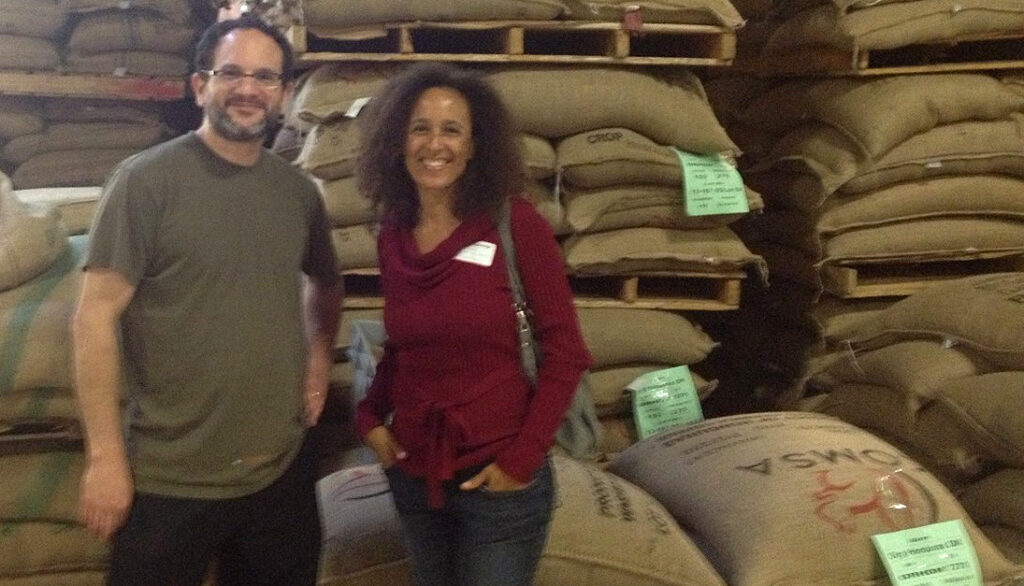
Malaika Maphalala and Daniel Fireside at Equal Exchange-worker Co-Op-organic fair trade coffee and chocolate
Daniel Fireside and Malaika Maphalala during a site visit to Equal Exchange, a democratically run, worker-owned cooperative and producer of organic, fair trade coffee and chocolate.

Today we have grown into a billion-dollar firm with 21 advisors across twelve states, and I’m honored to be one of six Partners. I am at the peak of my career, able to focus on exactly what I am most interested in and beginning for the first time to really accumulate wealth at a level I hadn’t imagined was possible for me. It’s an amazing point in my personal trajectory and I am feeling deeply moved to give back: to hold the door open for others like me, women of color from economically disadvantaged backgrounds, who never imagined they could have access to opportunities like this.

According to a 2020 report from Cerulli Associates, “Women and Black, Indigenous and People of Color (BIPOC) remain drastically under-represented among financial advisors. The research finds that women represent 18.1 percent of total financial advisor headcount, …only 2.9 percent of advisors identify as Black or African American, 5.1 percent as Hispanic or Latino, and 4.3 percent as Asian.”

As an advisory firm, we’ve done a pretty good job of addressing gender equity within the team. From the early days when it was just me and five White guys, today our team is 43 percent women – far exceeding the financial industry norm. And while I’m no longer the only person of color, we still have a long way to go to achieve racial equity. However, I’ll note that with our three Black women advisors representing 14 percent of our advisory team, we’re still beating industry statistics, and absolutely crushing representation for Black advisors.

Wonderfully, there’s a deeply shared commitment to addressing racial equity at Natural Investments, and we are working to address issues of equity both within our firm and without, through our work. Internally, we are embarking on a deep dive into racial equity, and we’re having important conversations we’ve never had before. We know that diverse teams are stronger teams, and we value the broader perspective and insights brought as we forge our path forward. With people of color making up almost 40% of our US population, we’ve committed to seriously increasing representation within our firm. We have a vision of a legacy for our firm of a beautifully diverse, gender balanced team working to transform our economic systems with humane, restorative values at the core.

One of the key strengths of diverse teams is that when multiple perspectives, connections to, and voices of different cultural experiences are informing and driving decisions, resulting outcomes are much more likely to meet the real needs of our communities. Finance is only just starting to acknowledge that we can’t hope to truly benefit oppressed communities unless representatives of those communities are not just included in the decision making, but centralized, leading, and able to redefine what power even is. As a woman in the field, a representative for mothers informed by the experience of economic disadvantage, and as a daughter of Africa, I am aware of the opportunity and responsibility I have to contribute to and shape my firm and field.

Like it or not, in our position as Financial Advisors, we become gatekeepers. At my gate, I give preference to investments that demonstrate not only financial health, but also a deep commitment to socially and environmentally responsible practices that intentionally include working to build equity across gender, race, and class through their work. This should not be just a side note, or a well-crafted sentence or two in investor materials, but a thoughtful core element of the work with attention to increasing representation and equity across management, staff, supply chain, service providers, and beneficiaries.

Through my work and with my firm, we seek to elevate voices typically left out, democratize access to power and resources, and directly counteract entrenched systems that perpetuate the racist, sexist status quo. It’s just, and it’s about time.


Article by Malaika Maphalala, Partner and Wealth Advisor at Natural Investments, a nationwide SEC registered investment advisory firm. A lifelong advocate for social change, Malaika is driven by a passion for finding innovative approaches to bringing people and resources together to address social and environmental imperatives. 

Malaika has been an advisor at Natural Investments since 2009 and holds a Certified Private Wealth Advisor (CPWA®) designation administered by the Investments and Wealth Institute in conjunction with the University of Chicago, Booth School of Business. She provides portfolio management and financial planning for high-net-worth individuals, families, and institutions across the country. Malaika specializes in Regenerative Investing, which is investment that directly supports the regenerative capacity of communities and ecosystems. Her clients share a deep commitment to socially and environmentally responsible investing and want to use their wealth as a tool to transform society and economic systems using humane, restorative, and ecological principles as the guide.

Prior to her work with Natural Investments, Malaika spent 15 years in the non-profit sector as an independent consultant providing administrative, development, and program management services for numerous socially driven organizations in Hawaii and Oregon. She holds a BA from the Johnston Center for Integrated Studies at the University of Redlands. Malaika currently serves as a Member of the Board of Directors at Iroquois Valley Farms and of the Advisory Board at Envest Microfinance. She also served as a member of the Review Committee for Impact Assets’ IA50 in 2020 and 2021.

Featured Articles, Impact Investing, Sustainable Business

Now is the Moment for Women Advisors and ESG Customization

By Theresa Gusman, First Affirmative Financial Network

First Affirmative Financial Network LogoAn enormous transfer of wealth is underway in America that presents an historic opportunity for the financial services industry and specifically for women advisors and customized ESG investing. Female advisors – though they are outnumbered by their male counterparts by more than four to one – are better positioned to guide the clients on the receiving end of this transfer.

First, let’s talk about that wealth transfer and what’s behind it.

Today, 70 percent of investable wealth held by U.S. households is held by baby boomers. McKinsey & Company determined through a survey last year that two-thirds of those assets are held by joint households where a woman is present, but not actively involved in financial decisions.

The female partner in these unions is likely to be younger and longer-lived than the male. As men in the baby boomer generation pass away, they will be leaving significant wealth to their partners. McKinsey estimates this shift will put women in control of $30 trillion in financial assets by 2030. Historically, seven in ten women move to a new financial advisor within a year of their spouse’s death.

At the same time, millennials, who are now 25 to 40 years old, are approaching their peak earning years. Many have a different view of investments than their parents.

These two demographic groups have at least one important thing in common. Millennials and women value investment principles that have a positive impact on challenging issues, such as climate change, gender diversity, social justice, and employee equity. Demographic trends are among several powerful political, economic, and societal forces combining to produce a global investment landscape that demands increased alignment of core values and investment decisions

Values are brought into investments by integrating environmental, social and governance (ESG) factors into the decision-making process. However, one size does not fit all in sustainable, responsible, and impact (SRI) investing. Values and beliefs, and ethical, environmental, and social preferences are personal. Mutual funds, managed models, and especially ETFs are not.

To remain competitive, advisors must consider a truly consultative approach, combined with portfolio-construction know-how and technology that can give investors the personalization, transparency, and access they want.

Female Advisors: More Consultative, Better Investors and in Demand

Female advisors are well-suited for the job. In choosing and retaining their financial advisor, consumers most often cite characteristics that go well beyond investment knowledge. Key traits include personalization, expertise, empathy, education, effectiveness, quality interactions, and trust. Many of these are traditionally viewed as “female characteristics.”

Although it may not be the only reason investors cite for choosing a financial advisor, women may also be better investors than men.

A study published by Goldman Sachs looking at March through August 2020 – the most volatile period in market history – found that 48 percent of female managed funds outperformed, compared with 37 percent for male managed funds.

A long-term study published by Morningstar in 2018 found that female fixed income managers outperformed their male counterparts and equity managers performed in line.

Finally, women – who will control the purse strings within 10 years – prefer to work with female advisors. According to a 2013 Insured Retirement Institute study, 70 percent of women seeking a financial advisor would prefer to work with a female advisor. Among younger woman aged 25-34, State Street Global Advisors found that 55 percent prefer to work with a female advisor.

Customization – The Future of ESG Investing

Meaningful consultation is the foundation for portfolio customization and personalization. Investors have become increasingly aware that the ways they save, spend, and invest can dramatically influence both the fabric and consciousness of society, and that they bear responsibility for the impact their money has in the world. However, most have quickly realized one-size-fits-all portfolios do not reflect their individual financial objectives and environmental, social, and ethical preferences. True customization will be the key driver of ESG investing going forward.

As a pioneer in socially responsible values-aligned investing, First Affirmative offers investors decades of environmental, social, and governance (ESG) research and portfolio construction expertise to translate a client’s values into a customized portfolio. We enable advisors to work with their clients to deliver the Sustainable Investment Solution best aligned with their client’s financial objectives and values. We help advisors assess the impact their clients’ investments have on climate change, gender diversity, income inequality, religious values, and family, community, employee, and societal health and well-being. Our recently introduced advanced technology platform, called AffirmativESG, allows advisors to build customized portfolios based on their clients’ values with ease. Its automated account opening, portfolio construction, investment policy statement generation, tax management, and performance reporting functions are easy to use and highly dependable.

Even advisors new to ESG can easily help clients align their financial goals with their moral compasses in successful investment portfolio strategies. First Affirmative is here to help. Want to learn more about First Affirmative or AffirmativESG? Please visit our website at www.firstaffirmative.com or contact us at businessdevelopment@firstaffimative.com


Article by Theresa Gusman, Chief Investment Officer at First Affirmative Financial Network, where she is on a mission to change the way companies, advisors and individuals see their investments. Her commitment to incorporating environmental, social, and governance issues into investment decisions began early in her 30-plus year investment career. First Affirmative’s unique AffirmativESG platform provides a unique, proprietary foundation for analysis, assessment and measurement.  

Additional Articles, Energy & Climate, Impact Investing, Sustainable Business

Investors Commend Market Leaders on Chemical Footprinting and Safety

Publicly traded companies with over $825B in 2019 revenue, including Ahold Delhaize, BD, Clorox, Dollar Tree, Ecolab, Hasbro, Herman Miller, HNI Corporation, Hewlett Packard, Kimberly-Clark, RB, Steris, Target and Walmart participated publicly in the 5th Annual Chemical Footprint Survey.

In February 2021, investors concerned about the financial impact of toxic chemicals used commonly in our economy commend business leaders for participating in the fifth annual Chemical Footprint Project (CFP) Survey. Companies participating in this Survey report on how they screen for a subset of chemicals known to cause harm to human health and the environment. Consumer and healthcare facing companies, like Walmart, Reckitt Benckiser Group, Hewlett Packard, Herman Miller, Becton Dickinson and Company, and Steris PLC, not only participate in the Survey but also disclose their efforts to manage chemical safety publicly for investors and customers.

“Chemicals management poses material risks to companies, and to their investors”, noted Larisa Ruoff, Director of Shareholder Advocacy, the Sustainability Group of Loring, Wolcott & Coolidge. “Shareholders should have access to clear, comparable information on how companies are managing these risks. This is why investors are asking companies to measure, reduce and disclose their chemical footprints—­just as they are doing for their carbon footprints”, concluded Ruoff.

The Chemical Footprint Project is supported by investor signatories representing AUM valued at over $2 trillion. CFP sets an actual “chemical footprint metric”, which represents a quantitative measure of a corporation’s dependency on chemicals of high concern. The most ambitious companies measure by weight over 2,200 chemicals?identified by the GreenScreen List Translator?in their products. Leading companies participating in CFP are increasing transparency on chemical safety and setting chemical footprint reduction targets. For example, Walmart committed to reducing their consumable’s chemical footprint by 10% by 2022. Clorox, another CFP responder, launched a program called “IGNITE” to reduce the chemical footprint of its cleaning products. Reckitt Benckiser Group set a goal of 100% transparency on key ingredients and, in 2019, 75% of their products met this goal.

“Investors also want retailers to manage and reduce chemicals risk,” said Susan Baker, Vice President, Trillium Asset Management, LLC.

A strong showing of nearly 45% of TJX Companies’ shareholders voted in favor of a first-year shareholder resolution filed by Trillium and First Affirmative Financial Network, asking management to report on if and how it plans to reduce its chemical footprint. Since the 2020 annual meeting, TJX announced important public commitments, including setting a few toxic chemical reduction goals and taking an active role in partnerships to better inform a larger chemical management and reduction strategy.

“While the company has room for improvement, we are very pleased TJX is engaging with shareholders and other stakeholders and is demonstrating initial positive steps to reduce toxics harmful to human health, the environment and our economy”, concluded Baker.

There is a large gap in the marketplace between those companies who disclose comprehensive chemical safety data and those who do not.  Hasbro, for example, is the only toy manufacturer to participate in the Chemical Footprint Project Survey, despite the Sustainability Accounting Standards Board’s recognition that hazardous chemicals in toys may impact a company’s social license to operate. Herman Miller has a “Design for the Environment” program that not only drives safer chemical use in their products and supply chains, but also sets targets for “radical” transparency for thousands of chemicals used in its products. Hewlett Packard is one of the few companies with clear definitions for safer chemicals in its management program.

“Chemical safety is an essential strategy that impacts many of the key sustainability issues that asset owners increasingly care about, including public health, social equity for Black, Latinx and other communities of color, biodiversity, and clean water and air”, said Caroline Boden, Director of Shareholder Advocacy for Mercy Investment Services. “This is why we are asking publicly traded companies to close the gap now and join market leaders in their efforts to measure, disclose and reduce their chemical footprints.”

Investor Environmental Health Network-logo

For the CFP 2020 Report, please visit:
https://iehn.org/resources/entry/cfp-2020-report

For the recording of the webinar on the CFP Report and Front-runners in Chemical Footprinting:
https://iehn.org/resources/entry/cfp-2020-report-webinar


The Sustainability Group of Loring, Wolcott and Coolidge. For more than 30 years, the Sustainability Group has combined investment expertise with a deep commitment to universal human dignity and ecological sustainability. We create customized portfolios that reflect each client’s values and financial objectives, through Environmental, Social and Governance (ESG) analysis, Shareholder Advocacy and Engagement, and High Impact Investing. The Sustainability Group is a part of Loring, Wolcott & Coolidge, a multi-family office committed to helping families achieve their financial goals—today and for generations to come.

Trillium Asset Management offers investment strategies and services that advance humankind towards a global sustainable economy, a just society, and a better world. For nearly 40 years, the firm has been at the forefront of ESG thought leadership and draws from decades of experience focused exclusively on responsible investing. Devoted to aligning stakeholders’ values and objectives, Trillium combines impactful investment solutions with active ownership. The firm delivers equity, fixed income, and alternative investments to institutions, intermediaries, individuals, and non-profit organizations with the goal to provide positive impact and long-term value. Trillium is a certified B Corporation.

Mercy Investment Services is the asset management program for the Sisters of Mercy and its ministries, works for systemic change in the areas of non-violence, racism, environment, concern for women, and immigration through socially responsible investing. Mercy Investment Services’ multifaceted approach includes corporate engagement, proxy voting, portfolio screening, and impact and community investments, maximizing our effect on our community, nation and world.

Trillium Asset Management, The Sustainability Group and Mercy Investment Services are members of the Investor Environmental Health Network (IEHN). IEHN, a project of Clean Production Action, is a membership-based, investor collaborative that promotes the use of safer chemicals to enhance shareholder value, public health, and the environment. IEHN recognizes that a company’s brand reputation, public trust, and market share are linked to the environmental and human health risks and safety of its products. Through direct corporate engagement IEHN members advance solutions and strategies to transform business practices through strategic tools and partnerships that include the Chemical Footprint Project.

The Chemical Footprint Project (CFP) is an initiative of investors, retailers, government agencies, non-governmental organizations (NGOs), and health care organizations that aspire to support healthy lives, clean water and air, and sustainable consumption and production patterns through the effective management of chemicals in products and supply chains. CFP Signatories, representing over $2 trillion in assets under management and over $800 billion in purchasing power, are engaging corporations in CFP. The participants in CFP recognize chemicals as they do carbon, understanding that a global transition to a reduced chemical footprint is necessary. CFP gives Signatories an invaluable tool to discern which firms bear the highest chemical risk and which are best positioned to capture new markets with safer products. The founding organizations of CFP are Clean Production Action, the Lowell Center for Sustainable Production at the University of Massachusetts Lowell, and Pure Strategies.

Clean Production Action is non-profit organization whose mission is to design and deliver strategic solutions for green chemicals, sustainable materials, and environmentally preferable products. We are a solutions organization. Our tools and collaborations simplify the complexity of toxicity by providing the resources and capacities essential for identifying and replacing hazardous chemicals with safer solutions. GreenScreen® for Safer Chemicals, Chemical Footprint Project, BizNGO, and Investor Environmental Health Network are all programs of Clean Production Action.

Additional Articles, Energy & Climate, Food & Farming, Impact Investing, Sustainable Business

Transformative Investment in Climate-Smart Agriculture

Based on new research findings, USFRA and research partners call on investors to leverage agricultural tech and finance innovation to scale up climate-smart soil health practices and revitalize rural communities

In conjunction with World Business Council for Sustainable Development (WBCSD), The Mixing Bowl and Croatan Institute, U.S. Farmers & Ranchers in Action (USFRA) recently issued a new report that analyzes the state of soil health technology and identifies opportunities to find new sources of capital to scale-up the adoption of climate-smart agriculture on farms and ranches across the U.S.

By 2025, widespread adoption of climate-smart agriculture practices could reduce U.S. agriculture’s contribution to total U.S. GHG emissions from 9.9% to 3.8%. These practices – including rotating crops, planting cover crops, reducing tillage and integrating crop and livestock systems – improve soil health, sequester carbon and produce co-benefits such as reduced erosion, increased water infiltration, and economic and environmental resiliency. By 2035, with increased investments and partnerships across the food and agriculture value chain and the integration of promising frontier technologies, U.S. agriculture has the potential to be a carbon sink, at -4% of total U.S. GHG emissions.

“As the U.S. Food and Ag sector coalesces around our first-ever sustainable development vision, Decade of Ag; it is critical the financial community partners with farmers and ranchers to unlock the potential of our soils to help the U.S. achieve a transitional net-zero economy,” said USFRA CEO Erin Fitzgerald. “Farmers and ranchers and the sector need investment over the next decade to realize the potential of agricultural soils as a natural climate solution and, at the same time, revitalize rural communities.”

By 2025 widespread adoption of climate-smart AG practices would reduce US GHG emissions from 9.9 to 3.8 percent

The new report makes the case that investors should consider climate-smart agriculture investments alongside sustainable forestry and renewable energy as critical to reaching a net-zero carbon economy and meeting the UN Sustainable Development Goals.

Over the past year, USFRA has convened leaders in food, farming, AgTech and finance to identify current capital flows, review the startup ecosystem and ground-truth actionable recommendations. The culmination of this extensive research and stakeholder-input process, “Transformative Investment in Climate-Smart Agriculture: Unlocking the potential of our soils to help the U.S. achieve a net-zero economy,” examines farmer and rancher barriers to practice adoption, the current state of climate-smart soil technology, financial mechanisms available to farmers and ranchers as well the investment case for including agriculture in the broader portfolio of net zero economy investments. The research was funded by United Soybean Board and Wells Fargo & Company (NYSE: WFC).

“This report shows that nearly $1 trillion of private capital flows annually through the U.S. agricultural system,” said David Bennell, Manager, Food & Nature, WBCSD North America. “It provides important insights into how companies and financial institutions can realign and increase their investments to support and incentivize climate smart agriculture practices that reward farmers and ranchers for improving soil health, enhancing water conservation and water quality, and helping build resilient and healthy rural communities.”

From a technology standpoint, the agriculture sector needs granular, accessible and efficient tools for soil sampling and soil carbon measurement, as well as the underlying data standards, methodologies and datasets to support decision making. Recommendations in the report include:

  • Invest in market-based solutions measuring soil health indicators versus outcomes
  • Invest in a national repository of soil carbon reference data
  • Coalesce around the standardization of reference laboratory methods, spectral measurements, and the exchange of soil data
  • Accelerate adoption of Farm Management Software (FMS)
  • Invest in solutions to leverage farmer and rancher know-how and speed collaboration

Researchers Weigh In: Realizing the Report’s Recommendations

“The continued digital transformation of agriculture is critical as we think about solving problems and scaling solutions for the food system of the future,” said Rob Trice, principal, The Mixing Bowl and report co-author. “With the right data and the right data interoperability standards, we can upend the economics of farming and deliver measurable environmental and social benefits.”

AG Capital Flows analysis - Researchers Weigh In - Realizing the Reports Recommendations

To provide informed context for an exploration of economic solutions, an Agricultural Capital Flows analysis was conducted to map the flows of capital from asset owners through asset classes and financial intermediaries to participants in the U.S. agricultural value chain. Investment totals $972 billion annually, based on 2018-2020 data, across institutional investors (approx. $600 billion), retail investors (approx. $360 billion) and the U.S. government via federal & state payments & incentives (approx. $20 billion).

Scaled adoption of climate-smart practices will take not only the realignment of existing flows of capital toward climate-smart outcomes, but also the ability to draw in new sources and forms of capital. The report details a variety of pathways in which this capital might flow and calls out the importance of collaborative and blended approaches to capital deployment to rebalance the risk equation. In terms of directly reaching farmers and those value chain actors working closely with farmers, public equity and fixed income are the asset classes that hold the most potential.

“As companies and investors continue to build out the climate-smart investing universe, there are many opportunities to create innovative financial products that simultaneously meet the needs of investors, accelerate the transition to climate-smart agriculture and improve the livelihoods of farmers,” said David LeZaks, senior fellow, Croatan Institute and report co-author. “From working capital loans for cover crop seeds to the promise of green bonds and sustainability-linked loans, we identified multiple opportunities to promote or develop financial mechanisms that enable climate-smart agriculture.”

There is also an opportunity to increase total investment in agriculture with the growing pool of environmental, social and governance (ESG) capital looking for impacts related to sustainability, socially responsible, or mission-aligned investment opportunities. Cumulatively, these investors can make a big impact by investing in agriculture that enables and targets climate-smart practice adoption and soil health outcomes.

This report is an important step toward turning the promise of soil carbon sequestration into a reality. To continue building momentum, USFRA’s Transformative Investment (TI) Action Network will bring together farmer and rancher ecosystems with data/technology providers, investors and members of the food and agriculture value chain to co-create action plans and funding/investment streams. The end game: regenerate America’s agricultural soils as a pathway to revitalizing rural communities and reducing agriculture’s carbon footprint, to meet the challenges of the next 30 Harvests.


About USFRA
U.S. Farmers & Ranchers in Action (USFRA), formerly U.S. Farmers & Ranchers Alliance, represents farmer and rancher-led organizations, and food and agricultural partners, with a common vision to further our global sustainable food systems. We believe farmers uniquely contribute to nourishing our planet, people, and natural resources. Our focus is creating a proactive collaboration between the best minds in food, agriculture, science, and technology to co-create solutions that will result in environmental, social, and economic sustainability.

About WBCSD
World Business Council for Sustainable Development (WBCSD) is a global, CEO-led organization of over 200 leading businesses working together to accelerate the transition to a sustainable world. We help make our member companies more successful and sustainable by focusing on the maximum positive impact for shareholders, the environment and societies. Our member companies come from all business sectors and all major economies, representing a combined revenue of more than USD $8.5 trillion and 19 million employees. Our global network of almost 70 national business councils gives our members unparalleled reach across the globe. Since 1995, WBCSD has been uniquely positioned to work with member companies along and across value chains to deliver impactful business solutions to the most challenging sustainability issues.

About The Mixing Bowl
Founded in 2013 and based in Silicon Valley, The Mixing Bowl strives to stimulate the adoption of IT innovation in the Food & Agriculture industries through business-focused dialogue between existing industry players, start-ups, investors, and other food innovators. We do so through in-person and online thought leadership exchange, advisory services, and by funding innovative companies through our affiliate, Better Food Ventures.

About Croatan Institute
Croatan Institute is an independent, nonprofit research institute whose mission is to harness the power of investment for social good and ecological resilience. Based in the Research Triangle of North Carolina with an extended team of affiliates in Boston, New York, Madison, WI, the Florida Gulf Coast, and Geneva, the Institute has rapidly established a reputation for rigorous, cutting-edge research and actionable analysis to support strategic decision-making by organizations and practitioners in the field.


SOURCE U.S. Farmers & Ranchers in Action (USFRA)

Additional Articles, Energy & Climate, Food & Farming, Impact Investing, Sustainable Business

Bridging the Divide Between Impact Investing and Native America

By Nikki Pieratos, NDN Fund and

By Chrystel Cornelius, Oweesta Corp

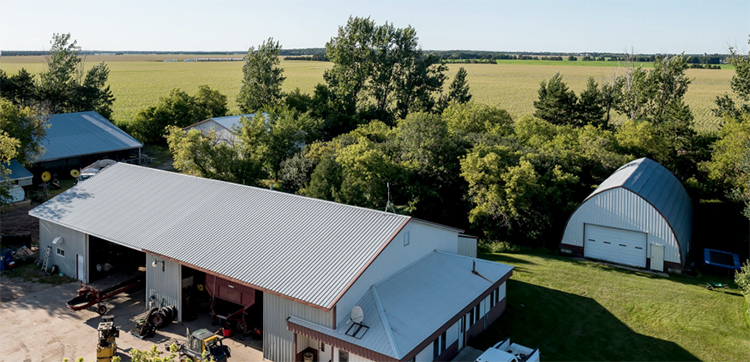
Above image courtesy iStock/InkkStudios

Indigenous intermediaries are crucial to overcoming asymmetries between impact investors and Native America through the building of relationships of trust, creation of an ecosystem for impact investing in Indigenous communities, and performance of the due diligence investors need to manage risk.

In 2018, Morgan Stanley released The Trillion Dollar Blindspot, spotlighting how skewed investment practices are towards white male entrepreneurs, and how entrepreneurs of color lack the access to the social networks that white-owned businesses take for granted. This is particularly true for Native America, which represents billions of dollars in missed opportunities. In a survey of its investor members, US SIF: The Forum for Sustainable and Responsible Investment found that while 75 percent include “Indigenous Peoples issues” in their social investment practices, less than 20 percent had actually developed specific criteria for them. Saying that it’s important to include Indigenous Peoples in decision-making practices is one thing, but if the majority lack capital screens founded on Indigenous principles and practices, how can it translate into action?

This disconnect between philosophy and practice is emblematic of broader power and relational asymmetries between Indigenous Peoples and the private investment world. Because Indigenous Peoples tend to lack relationships within the philanthropic and the investment community, Indigenous entrepreneurs often find themselves at a great disadvantage when they enter these spaces, which can lead to accepting deals on terms that do not fit their needs (or even worse, that are extractive).

Bridging the Gap

These gaps are not new, of course. But as the pandemic demonstrates, we need more investments focused on the most vulnerable pockets of the world and nation, and investing in local governments and institutions is the best way to secure their future sustainability and growth. Since federal government stimulus can never address the complexity and depth of a crisis like COVID-19—while the recently enacted CARES Act only demonstrates how tribes and Indigenous small businesses get left behind—the impact investing community must prioritize organizations and institutions closest to the impacted communities.

However, Indigenous intermediaries are crucial to overcoming asymmetries between impact investors and Native America. At the moment, NDN Collective’s NDN Fund and Oweesta Corporation are the only national funds that fulfill this intermediary function. NDN Fund provides millions of dollars in flexible and patient capital directly to Native Nations, businesses, and organizations across Native America, while Oweesta lends to and resources other Native Community Development Financial Institutions (CDFIs) to meet the microenterprise needs within their local communities. Since these organizations can deploy tens of millions of dollars each year, foundations, impact investors, and even commercial banks can support large-scale and far-reaching impact through grantmaking and concessionary investments into these intermediaries.

Building Power

As a part of a movement to “Defend, Develop, and Decolonize” our planet—and achieve true equity through large-scale economic development—NDN’s three principles align well with the integrated standards of just transition for the impact investment community. But for Indigenous communities and Native Nations to ensure just, equitable, and regenerative development for future generations, equitable development requires more than just capital flow: it requires a dramatic shift in power.

To facilitate this shift, NDN Collective established NDN Fund, Inc., a national emerging Native Community Development Financial Institution (CDFI) to increase the capital access and capacity that Indigenous changemakers, community developers, and Native Nations will need to defend, develop, and decolonize our people and planet. As part of the larger NDN Collective ecosystem, NDN Fund will move over $100 million through unique and flexible capital structures to projects in renewable energy, infrastructure, community development, housing, social enterprise, and regenerative agriculture. Currently, NDN Fund is actively capitalizing $15 million for three development projects and a COVID-19 Relief & Resilience Loan Fund. NDN Collective will also move roughly $2 million in COVID-19 grants funds directly to Indigenous businesses and to 25 Native CDFIs (the latter in partnership with Oweesta).

Oweesta supports the entire Native Community Development Financial Institution (CDFI) industry of nearly 70 US Treasury certified institutions, with a 20+ year history of building local Indigenous economies through financial education, entrepreneurship and homeownership capacity building, and lending initiatives. Oweesta also acts as a conduit for social investments to flow directly to Native CDFIs on a national scope and has a proven track record of delivering consistent returns to investors. Born out of the belief that—when armed with the appropriate resources—Indigenous people hold the capacity and integrity to ensure the sustainable economic, spiritual and cultural wellbeing of their communities, Oweesta honors the fact that our ancestors and Native Nations acted with wholly self-sustaining economies. For this reason, Oweesta has built the platform for the creation, development, and capitalization of the Native CDFI industry. Through its history, this organization has revolved $70 million in direct investments, assisting in the creation of private-sector economies, homeownership creation, and individual asset-building across Native America.

Oweesta’s efforts have already changed the landscape of tribal communities across the nation. Yet in 2020 alone, Oweesta still has an unmet capital demand of $50 million to satisfy current market demand within our respective tribal communities, and a requested $5 million of immediate demand to capitalize tribal COVID-19 emergency relief funds.

This is a place to start.

The Current State of Impact Investing in Native America

Most of the investors surveyed by the US SIF were interested in renewable energy and advances in food systems, but Native CDFIs, Indigenous businesses, and national intermediaries like ours do more than just address those goals and tenets: we embed them into everything we do. Yet Native America is not seeing an influx of social and impact investment dollars. It is difficult to accurately estimate the level of impact investments directed to Indigenous institutions, but since less than 0.5 percent of all philanthropy goes directly to Native America—and an even smaller proportion of total commercial capital—we can assume that the proportion is even less in the relatively-unexplored impact investing space. According to Oweesta’s data, our Native CDFIs estimate a $3 billion investment gap that would take their institutions over 40 years to meet in the current capital landscape.

Stanford Social Innovation Review-logoRead the full article published by Stanford Social Innovation Review (SSIR)


Additional Articles, Impact Investing, Sustainable Business

Carbon Clean 200: Investing in a Clean Energy Future 2021

By Andy Behar, As You Sow and

By Toby Heaps, Corporate Knights

Carbon Clean 200 surges ahead, leaves dirty energy index in the dust

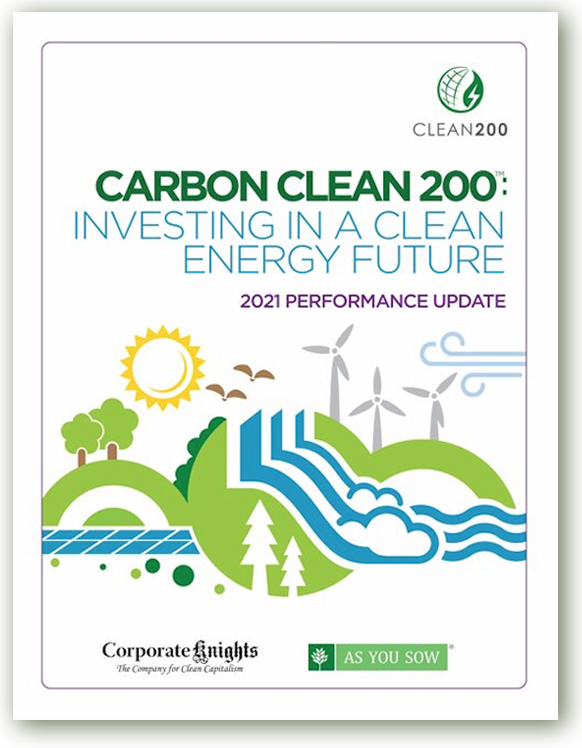
Carbon Clean 200-2021 Performance Update Report-Corporate Knights and As You SowCorporate Knights and As You Sow recently released the annual update Clean 200 list of publicly traded companies that are leading the way with solutions for the transition to a clean energy future.

Since our first report was launched in the summer of 2016 a great deal has changed in the world.

Larry Fink, the CEO of the largest investment firm in the world, wrote in his 2021 letter to CEOs: “Given how central the energy transition will be to every company’s growth prospects, we are asking companies to disclose a plan for how their business model will be compatible with a net zero economy – that is, one where global warming is limited to well below 2°C, consistent with a global aspiration of net zero greenhouse gas emissions by 2050.”

Larry Fink’s sentiment is playing out in real time. The negative impact of climate change across the entire economy, supply chains, capital markets, and public health is now well charted in particular the recent Harvard study showing that fossil fuel pollution related deaths exceeded eight million in 2018 and are growing.

This year, riding Tesla’s soaring stock, Elon Musk passed Jeff Bezos to become the richest man on the planet, with a net worth of US$189.7 billion (as of January 8, 2021).

In carrying out his mission to accelerate the world’s transition to sustainable energy, Musk has become a prophet for clean capitalism, with Tesla now ranked as the most sustainable and valuable car company in the world. It is also now the pure-play company on the Clean200.

Musk is not alone. The Prince of Wales, the pope, and critically, a global movement catalyzed by Greta Thunberg have all turned up the heat on businesses to get real about cooling the planet.

Prince Charles has long championed the environment and the central role industry and finance must play in its protection, but he’s dialed up the urgency significantly in the past year. In the fall, he said climate change poses such a severe threat that the world’s only option is to adopt a military-style response reminiscent of the U.S. Marshall Plan that helped rebuild post-war Europe 70 years ago.

In January, the prince looked back more than 800 years to the Magna Carta (which inspired a belief in the fundamental rights of people) to issue a companion document – the Terra Carta, or Earth Charter – that aims to enshrine the rights and value of nature in capitalism, inviting the world’s CEOs to make a sustainable future the growth story of our time.

Pope Francis once described unbridled capitalism as the “dung of the devil.” In a sign of the times, he recently gave his blessing to the Council for Inclusive Capitalism, a partnership between the Vatican and the leaders of some of the world’s largest businesses, including the chiefs of BP and Bank of America.

This seemingly unholy alliance seeks to make capitalism a more holy instrument for answering the cry of the earth and the cry of the poor.

There are now more than 300 companies, representing more than US$3.6 trillion in market cap, that have committed to a net-zero-emission target in line with a 1.5°C future.

Some worry these are empty words that give the impression that sufficient action is being taken – a sort of delay tactic. Thunberg, the teenage activist who kicked off a citizens’ climate movement, says, “We must forget about net-zero – we need real zero.”

She spells out what that means: “Immediately halt all investments in fossil fuel exploration and extraction. Immediately end all fossil fuel subsidies. And immediately and completely divest from fossil fuels. We don’t want these things done by 2050, 2030 or even [next year]. We want this done now.”

She’s right, but defunding carbon bombs will not be enough; not even close. The real action is going all in on funding climate solutions. What gets funded gets done. How we invest our trillions starting right now will determine our future.

To paraphrase Indian philosopher Jiddu Krishnamurti, the climate-solution revolution is today, not tomorrow. The litmus test for companies and countries (and anyone, really) is what percentage of your current budget is allocated with an intention to create a carbon-free sustainable world. If it’s less than 100%, you’ve got work to do.

The Clean200 companies are leading the way by putting sustainability at the heart of their products, services, business models, and investments, helping to move the world onto a more sustainable trajectory.

This year’s Clean200 companies rose to the top of a pool of 8,080 global firms that earn more than $1 billion a year, based on rigorous assessment of the amount of revenue each company earns from products and services aligned with the Corporate Knights Clean Economy Taxonomy, while also ensuring that their businesses are not fundamentally offside important criteria for socially responsible investors including substantial involvement in weapons, private prisons, thermal coal, or having a record of systemically obstructing climate policy.

On average, 39% of revenues earned by Clean200 companies are classified as clean, which the majority of other revenues classified as neutral, compared to just 8% clean revenue for their peers.

But none of this would have legs if the Clean200 weren’t also faring well financially. On this score, the Clean200 handily outperformed its MSCI ACWI peers by 47% over the last year (to January 31, 2021), and 34.74% since the Clean200 was launched in July of 2016.

Clean200 companies generated a total return of 113.41% beating the MSCI ACWI broad market index (78.67%) and MSCI ACWI/Energy Index of fossil fuel companies, (-13.83%) on Total Return Gross – USD Basis from the Clean200 inception of July 1, 2016 to January 31, 2021.

To put that in context: $10,000 invested in the Clean200 on July 1, 2016 would have grown to $21,340 by January 31, 2021, versus $17,867 for the MSCI ACWI broad market benchmark and $8,617 for the MSCI ACWI Energy benchmark for fossil fuel companies.

What is needed now is for the rest of the business world, most importantly the big-money investors who have been sitting on the sidelines, to also lean into this more civilized form of clean capitalism.

Now that BlackRock, the largest investor in the world, with a whopping $8.7 trillion under management, has jumped the net-zero-emissions bandwagon, it is only a matter of time before it becomes the standard, placing a 100% sustainable and zero-carbon economy within our grasp.

The good news for our species is that the forces of pride and profit have shifted in favour of those on the right side of climate history, with shame, and economic shambles awaiting those who cling to the wrong side.

With the sun shining on climate solutions, companies are free at last to shed their carbon cloaks.

With all this action, we hope that the Clean200 can do two things:

  • provide a useful North Star for investors looking to pinpoint the companies leading the way to a clean energy future.
  • to dispel the myth that clean investing is about sacrificing returns.

To make things easier, Corporate Knights and As You Sow are proud to present the latest edition of the Clean200.

While we’re not promising any home runs, we are happy to report that the Clean200 now has more than a four-year track record of outperforming its high-carbon global counterparts.

Read the full article that include performance charts and the complete Clean 200 List of companies.


About the Authors:

Toby Heaps is the chief executive officer and co-founder of Corporate Knights. He spearheaded the first global ranking of the world’s 100 most sustainable corporations in 2005, and in 2007 coined the term “clean capitalism.” He sits on the Ashoka Canada Board and the University of Toronto’s Environment and Finance Committee. Toby has been published in the Financial Times, Wall Street Journal, and the Globe and Mail. In 1998, he played centerfield for the Yugoslav National Baseball Team.

Andrew Behar is the CEO of As You Sow. Previously, Andrew founded a clean-tech start-up developing innovative fuel cell technologies for grid-scale energy storage. He recently termed off the board of the US Forum for Sustainable and Responsible Investing (US-SIF), he is on the advisory board of Real Impact Tracker and 1-Earth Institute. His book, The Shareholders Action Guide: Unleash Your Hidden Powers to Hold Corporations Accountable was published in November 2016 by Berrett-Koehler.

ABOUT CORPORATE KNIGHTS: Founded in 2002, Corporate Knights seeks to provide information that empowers people to harness markets for a better world. The company has a media and research division, which includes the award-winning business and society magazine Corporate Knights. The research division produces corporate rankings, research reports and financial product ratings based on corporate sustainability performance. In June 2013, Corporate Knights was named Magazine of the Year by Canada’s National Magazine Awards Foundation.

ABOUT AS YOU SOW: Founded in 1992, As You Sow promotes environmental and social corporate responsibility through shareholder advocacy, coalition building, and innovative legal strategies. Our efforts create large-scale systemic change by establishing sustainable and equitable corporate practices. As You Sow was founded on the belief that many environmental and human rights issues can be resolved by increased corporate responsibility. As investor representatives, we communicate directly with corporate executives to collaboratively develop and implement business models that reduce risk, benefit brand reputation, and protect long-term shareholder value while simultaneously bringing about positive change for the environment and human rights.

Additional Articles, Energy & Climate, Food & Farming, Impact Investing, Sustainable Business

Top Sustainable Business Trends 2021 from GreenBiz

By Joel Makower, GreenBiz Group

Glimmers of hope amid tough times

Now, where were we? A year ago at this time, we looked ahead and confidently saw more engagement, new initiatives and a continuation of the forward march of progress that constitutes a typical year in the world of sustainable business. We took in the enormity of the problems facing humanity and the planet, and scanned the horizon. What we saw were companies continuing to make commitments, form alliances and reach new levels of achievement in sustainability. And the year ahead certainly would bring more of the same. Or so we predicted.

And then 2020 happened. Suffice to say, it was a year like no other: Crisis after grim crisis, as the ravages of a changing climate revealed themselves in ways large and small, a pandemic devastated families and nations alike, racial justice protests roiled communities, the global economy convulsed and political leaders the world over scrambled to respond — some more successfully than others.

Such turmoil easily could have spelled the end, or at least the pause, of anything having to do with business and sustainability. But it didn’t. The forward march of progress not only continued but accelerated.

What happened? Two words: business fundamentals.

At last, sustainability has emerged from the shadows to be considered part and parcel of corporate success. Indeed, for many of the world’s largest companies, sustainability is seen as key to minimizing risk, increasing resilience, enhancing competitiveness and unlocking new opportunities. The management of environmental and social risks — as viewed through the lens of ESG metrics — “will likely emerge as the new standard of comprehensive corporate governance and underscore how non-financial E, S and G factors may affect long-term valuation,” Brie P. Williams, a vice president at State Street Global Advisors, said last fall.

Put another way, a company’s sustainability profile increasingly may be baked into its stock price and creditworthiness, possibly affecting the cost of capital it may need for growth. That’s a game changer.

So, where are we?

Ambition Uptick

Despite the disheartening headlines, action on ESG concerns has continued relatively unabated in corporate C-suites and boardrooms. To our immense satisfaction, we saw little carnage within corporate sustainability departments during 2020 relative to previous economic downturns, when such functions were often among the first to be downsized or jettisoned.

“Sustainability leaders are in a unique position, with their experience in navigating across their organization’s functions, to help align CEOs and their employees toward common environmental and social causes,” wrote GreenBiz Vice President and Senior Analyst John Davies in “State of the Profession 2020,” the latest edition of GreenBiz’s biennial report on the role of sustainability professionals inside companies. The report found that “in large companies, there has been a significant increase in terms of the sustainability leader reporting to the CEO, from 19 percent in 2018 to 26 percent today.”

Given this, it was not surprising to see an uptick in corporate ambition on sustainability issues. “Net-zero” became a key commitment during 2020 — goals that aim to eliminate, at least on paper, a company’s greenhouse gas emissions, water extractions, fossil-fuel use or deforestation activities by a given date. And while those target dates are typically decades hence, they set the stage for activists, investors and other self-appointed watchdogs to monitor corporate progress toward their stated goals.

Perhaps more surprising is the rise of “restorative” and “regenerative” among large companies in describing their ambitions to address human and planetary woes. The idea is simple but profound: a switch in thinking from “doing less harm” to “doing more good.” In other words, the leading edge of sustainable business is shifting from companies having inadvertently negative impacts to having deliberately positive ones. And while most such corporate statements are still more aspirational than actionable, they signal a critical shift in thinking about the role companies can play in the years to come.

It’s a lot to take in, especially for the many critics of sustainable business activities, who are prone to see virtually any corporate action as too little, too late. And they might be right: Most corporate commitments and achievements are insufficient to meet the moment, let alone the future. Incremental change won’t cut it at a time when so many planetary boundaries are being crossed and so many social and environmental indicators are spiraling out of control.

Peeking Around Corners

What will it take for companies to dramatically step up their ambition and actions? That is a defining question of the decade. No doubt the answer lies in a combination of investor pressure, technological innovation, consumption shifts, governmental pressure, new circular business models that reward resource efficiency — and more than a little grit and determination.

It’s a tall order, to be sure, but the future demands nothing less.

As we dare to look ahead, however tentatively, at 2021 and beyond, we see more of the same. The seeming mundanity of that sentence belies its significance: Corporate sustainability efforts are continuing apace, even amid economic uncertainty and a global pandemic that, as of this writing, is far from contained. It wasn’t very many years ago that the future of corporate sustainability was uncertain even during good times.

What’s also different about this moment is the alignment and, increasingly, integration of social and environmental issues inside companies. While it has long been known that the poorest among us endure the brunt of air and water pollution, climate change and other problems, companies largely have focused on social and environmental issues separately and, all too often, unequally.

That’s changing. The rise of social justice movements around the world is shining a harsh light on the linkages between environmental sustainability and social cohesion, not to mention economic vitality, and ESG-savvy investors are beginning to reward companies that better align corporate strategy with the interests of both people and the planet.

As the global economy finds its footing in the coming months, and as a new, more environmentally friendly administration takes hold in Washington, D.C., we expect to see the continued rise of concern and action on climate, biodiversity, air and water pollution and other pressing issues alongside deeper, more strategic investments in clean energy, green infrastructure, sustainable food systems and other elements of an emerging clean economy.

Indeed, the world’s biggest environmental challenges are being seen as inextricably linked to community resilience, economic prosperity, public health and national security. As such, they are rising to the top of the agenda for more and more companies and countries.

These are among the glimmers of hope we see during these turbulent times.

Top Sustainable Business Trends 2021:

  1. Ocean-Based Sequestration Heats Up
  2. The ‘S’ in ESG Gains Currency
  3. Community Investments Pay Dividends
  4. Aquaculture Becomes a Net-Positive
  5. Industrial Decarbonization Picks Up Steam
  6. Nature Takes Root on the Balance Sheet
  7. Sustainable Mobility Drives the Newest Perk
  8. Aviation Plots a Sustainable Course
  9. The Circular Economy Shows Its Human Side
  10. Corporate Advocacy Gets Louder

Find more on each of these Trends in the 14th annual State of Green Business Report, our annual report card on progress by the world’s largest companies. The report, published in partnership with S&P Global Trucost, is a FREE DOWNLOAD.


Article by Joel Makower, Chairman & Executive Editor, GreenBiz Group

Additional Articles, Energy & Climate, Food & Farming, Impact Investing, Sustainable Business

Praxis Mutual Funds Releases their Real Impact 2020 Report

Stewardship investing philosophy delivers real-world change through a range of impact strategies  


Praxis Mutual Funds® has released Praxis Real Impact 2020, a report that seeks to communicate the many ways Praxis’ unique Stewardship Investing philosophy delivers real-world change through a range of impact strategies.

The impact report is the first report of its kind for Praxis Mutual Funds and describes the firm’s longstanding commitment to impact investing. While the report mainly focuses on impact generated in 2019, it laid the foundation for Praxis to respond to the unprecedented social and environmental challenges of 2020.

Impact Report Highlights

  • A look at how the Praxis Impact Bond Fund seeks to beat its index, the Bloomberg Barclays Aggregate Index, while also investing over 30% of its assets to support the climate and communities through positive impact bonds.
  • A comparison of Praxis Mutual Funds’ alignment with the United Nations Sustainable Development Goals (SDGs) across six impact strategies.
  • A focus on critical issues such as climate change, human rights standards, board diversity, and private prison financing, among other issues Praxis has addressed with companies through shareholder advocacy.

A description of Praxis’ historic community investing work. For over 20 years, Praxis has channeled about 1% of each mutual fund into “deep social-impact” investments that bring direct benefits to low-income and underserved communities around the world.

“At Praxis, we believe it is important to deliver social and environmental impact, in as many forms as possible, along with consistent, competitive financial performance to the families and institutions who rely on us to help provide for their futures. We are pleased to offer this impact report as one more demonstration of our commitment to this objective.” said Praxis Mutual Funds President Chad Horning, CFA®,

This report stands as a testament to how proud we are to partner with our clients to integrate faith, values and investing,” said Praxis Vice President of Stewardship Investing Mark Regier. “It is our shared values and vision and the difference we can make together that provide the inspiration for our work.”

Download the full Praxis Real Impact 2020 report here.

For a behind-the-scenes look at how the report was created, listen to Praxis’ Mark Regier and Stella Tai, Manager of Stewardship Investing Impact and Analysis, speaking on a podcast here. For a deeper look at the many stories of impact in the report, listen to Praxis Manager of Stewardship Investing Research and Advocacy Chris Meyer’s interview here.

Additional Articles, Energy & Climate, Impact Investing, Sustainable Business

The Money Shows Up and Sustainable Investment Gets Rolling

By John Howell, Climate & Capital Media

CCM Featured news for GreenMoney readersA few years ago, during an off-the-record conversation with the long-time CEO of a major responsible investing firm, I heard an enthusiastic paean to the rapid progress of ESG and impact investing. All signs pointed to accelerating activity in the field, I was told. There was just one speed bump: Where was the money?
The question was a comment on the disconnect at that time between the increasing interest in sustainable investing and a noticeable lag in real investment. This firm had established sustainable investment products over several years — and they still weren’t attracting the funds.

No doubt, the money has arrived now.

The flood has been accelerated by BlackRock CEO Larry Fink, whose 2021 annual letter to the business community bluntly states that the climate transition “presents an historic investment opportunity.” When $8.6 trillion in AUM speaks, markets listen.

Fink’s call to action — his third such manifesto since 2018 — echoed the 2015 announcement by Mark Carney, then-governor of the Bank of England: “Climate change is the investment opportunity of our generation.” His credo was an historic turning point in the conversation about investment focused on climate change, emphasizing opportunity over risk. The real evidence came with the growing body of studies that showed so-called “profits with purpose” were beginning to outperform traditional investments in returns.

Just how much investment are we talking about? In its most recent, bi-annual report, US SIF: The Forum for Sustainable and Responsible Investment counts $17.1 trillion in sustainable assets under professional management at the end of 2019. That’s a 42% increase from the $12.0 trillion identified two years prior. The total represents 33% of the $51.4 trillion in total U.S. assets tracked by Cerulli Associates.

Then there’s this: Financial firms issued a record $357.5 billion of green and sustainable bonds in the first nine months of 2020, up 96% from the same period in 2019, according to Refinitiv. The proceeds are earmarked for projects related to climate change.

This movement of money has been noticed. Under the energetic headline “A Surge in Green Financing Boosts Climate Businesses,” a Washington Post story stacks up more big numbers:

  • From January through November 2020, investors in mutual funds and exchange-traded funds invested $8 billion globally in sustainable assets, a 96% increase over the sum for all of 2019.
  • Goldman Sachs is on record for directing $750 billion to clean energy financing over the next decade after already investing or financing $115 billion since 2006.
  • A new multi-billion dollar fund at the investment firm TPG will be dedicated exclusively to fighting climate change. Its executive chairman will be Henry Paulson, a former Goldman chief executive and U.S. treasury secretary.

We could add to this swelling climate finance pile two recent developments that give substantial amounts to the sustainable investment bottom line. I’m talking about General Motors’ announcement that the company will only sell zero-emission cars and trucks by 2035. You could argue that this visionary strategy is a practical response to the growing market for electric cars. GM, like other carmakers, is in danger of being left in the dust by the speeding success of Tesla, a company now valued by investors at more than the valuation of GM, Ford and Fiat Chrysler combined (north of $700 billion at the time of writing – early February). The electric car revolution and its accompanying billions in manufacturing costs and sales revenue and, yes, potential profits, will be a classic case study in market-driven disruption — if it is not already being studied in MBA programs.

This bold move tallies with the equally large announcement of President Biden’s recent climate-related executive order, directing the federal government to place the climate center stage in its national security policy. The order included a request for a National Intelligence Estimate on the security threat posed by climate change. If the NIE finds that climate change is a serious risk, the federal government budget could be recalibrated to reflect a climate-first procurement policy. The financial implications of potential investment by, say, a Department of Defense with its annual budget of $700+ billion ($5 billion for R&D in 2020) are as huge as that overall budget figure. With its history of multi-billion dollar projects that stretch over decades, federal money could add a real boost to private equity action. As a Bloomberg News headline drily notes, “Biden Just Linked Climate and Security. Next Comes Military Money.”

And that’s just part of the sweeping Biden pledge to dedicate 40% of federal investments in clean energy, clean water, clean transit, affordable and sustainable housing, and training and workforce development.

A final note: The new chief economic advisor to the White House is Brian Deese, former head of BlackRock’s Sustainable Investing division. In that post, he advised clients on how to achieve returns using ESG criteria. In the coming months, we can expect an unprecedented alignment between Wall Street and Washington — that is, between the private sector and public policy — on climate finance and investment in climate-related innovations. Bet on it.


Article by John Howell, Editor, Climate Finance Weekly, Climate & Capital Media.

Article reprinted with permission. GreenMoney Journal and Climate & Capital Media have a strategic partnership.

Additional Articles, Energy & Climate, Impact Investing, Sustainable Business

How Has Money Influenced My Life

By Robert Rubinstein, TBLI Group

TBLI Group logoI grew up in Brooklyn. Crown Heights, to be more precise, in a middle class Jewish family. My father was a tailor, who made custom made clothes for women, with a store on Madison Ave. That was when rents were affordable. My mom also worked with my father in the store, doing finishing work.

I did all kinds of jobs to earn extra income for special purchases or savings. Investment was never a priority. Never really grabbed me. Growing up, I did many odd jobs: worked for a butcher making home deliveries, managed a tennis court, sorted mail at the post office, delivered rental cars from one part of New York City to another. In the summer, I usually worked at a hotel, as a cook, that was for New York City Policemen, where they took their families. Throughout that period, I would religiously save money.

In 1974, I graduated from Brooklyn College, and decided that my dream to become an assistant district attorney focused on Organized Crime, was just not in the cards. Doing another few years to get a law degree was less important than traveling to Europe and Asia. Got my BA and left the next day to travel to Burma (Myanmar, now). For several years, I did travel and work (kibbutz, North Sea oil rigs, Iran doing gas exploration) before settling down in Amsterdam.

Ultimately, my dream was to be a publisher entrepreneur. The money was never the driver. It was the chess game of publishing. In late 70s, I started a bicycle magazine, called Fiets (verb and noun for bicycle). That was big financial and spiritual success, and Fiets was sold to a Dutch publisher, and that publication is still publishing. Unfortunately, at the same time I was in process of selling the magazine, I started another magazine called Menu, which was a simple idiot proof publication for creating meals in less than 30 minutes. That magazine was a spiritual success but financial disaster. So, all the money I got for Fiets was eaten up by Menu, and more.

That experience led me to my true purpose: change the business system to one where there would be many winners (society, environment, stakeholders). Source would be the magazine to help change the way business was done. However, the investors pulled the plug while we were on holiday. So, I had to start all over. No money, no resources, and still wanting to create an economy based upon well-being.

Realizing that business would only respond to pain pressure, I decided to change the financial system, so it worked for everyone, by educating asset owners and managers about sustainable investment. Remember 25 years ago, when I started Brooklyn Bridge, which later became TBLI Group, there was no PRI, CDP, GIIN, EVPA, AVPN. It was a barren wasteland. The concept of ESG or Impact Investing didn’t exist, and I had no financial background, fortunately. After looking carefully and reading all that I could, and meeting many thought leaders, I felt I understood the system and how to change it.

Changing the financial system so it would work for everyone was going to be an exercise of education, initially. The financial system and those who worked in it, were hunters.

They were incentivized for short term behavior. I looked at the list of asset owners/managers in late 90s and felt that the top 100 controlled a vast amount of the wealth. If I could change the mind set of those 100 guys (CIOs), I could get behavioral change. There were few women CIOs in 1998.

Over the years, TBLI has mobilized the equivalent in assets of those top 100 asset owner/managers. In spite of being surrounded by the billions and hundreds of billions, I was never really impressed or driven to build up a fortune or invest. It was never my hot button. I remember having lunch with an old friend from when I was 12 or 13. He worked for Cantor Fitzgerald. My wife, Rieki, who has no filter, said “what is the fun of trading money?”. He responded, “don’t you realize the thrill of making millions in less than a day”. She repeated “what is the fun of trading money. You are not creating anything that is beneficial to the real economy.” You could see that Rieki was from Venus, and Saul, my friend was from Mars.

I agreed with Rieki. Not really creating something or creating jobs or following your bliss, or pursuing your purpose, was not stimulating. There was a brief time, when I had saved up quite a bit of money and started investing in ESG funds. That went well, until I got into trouble with my last publication, Source, and had to repay loans from my savings. So, again, back to zero.

I must admit, it felt ok that the portfolio was doing well, and we had some savings, but I derived far greater pleasure, cycling to Spain, helping or mentoring startups, connecting people and most of all seeing behavioral change of asset managers and asset owners towards sustainable investment.

I often thought that was what it was about money that didn’t keep me laser focused on being a financial success. Throughout the time, I started TBLI, we had financial success, as we were early, and the market was growing. Things went easy, but even then, the idea of growing the business for more financial reward, was not a driver. When the financial crisis, hit and we lost 95 percent of our revenue, TBLI had to dramatically re-organize and downsize to one, me. We did survive, by retooling, and bounced back. The Pandemic, forced us, again, to change and adapt towards a full digital system, with focus on the original goal. Make the financial system work for all, not just a small group, and become the force for regeneration investment.

As I approach 70, next year, perhaps being more focused on money, might have made things easier. I have no regrets. I love what I do and love helping others and mobilizing capital to create an economy based upon well-being. If you are doing something that gives you energy, you are in the right place. If you are doing work that costs you energy, you are in the wrong place. I am where I belong.

I feel Walt Whitman was spot on when in verse 52 of Songs of Myself when he said “I sound my barbaric yawp over the roofs of the world.” I think we should all do that, irrespective of the upside.


Article by Robert Rubinstein, Chairman and founder of TBLI Group. He has worked on creating consciousness for sustainable values and has led money flows in ESG and impact investments over the past 25 years.

Mr. Rubinstein is the Chairman and Founding Partner of TBLI Group Holdings B.V. with headquarters in The Netherlands. The Company was founded in 1998 with the mission of integrating ESG and TBLI into the culture and strategy of international corporate business and investment companies. Mr. Rubinstein has been instrumental in championing Sustainable and IMPACT investment dedicated to solving social issues.

Prior to TBLI, Mr. Rubinstein had an extensive career in publishing. He founded the first bicycle magazine in The Netherlands, FIETS in 1981, and Source magazine in 1995, a publication focused on integrating “profits and principles” as a message to the business community. FIETS and Source were based in Amsterdam, The Netherlands. FIETS was sold to VNU Magazines and it is still in circulation today.

Mr. Rubinstein taught courses in Sustainable Finance at the Rotterdam School of Management from 2003–2006 and in his career has delivered many lectures at international business schools and universities. Mr. Rubinstein has served on various profit and nonprofit boards, as well as advises various organizations.  

Energy & Climate, Featured Articles, Impact Investing, Sustainable Business

Signup to receive GreenMoney's monthly eJournal

Privacy Policy
Copyright © GreenMoney Journal 2025

Website design & development by BrandNature

Global Events Calendar

View All Events

april

21aprAll Day232026 Sustainable Packaging Coalition: SPC Impact – Nashville

27aprAll Day30Women Deliver 2026 Conference (WD2026) – Melbourne

X