Reaping the Promise of Regenerative Agriculture
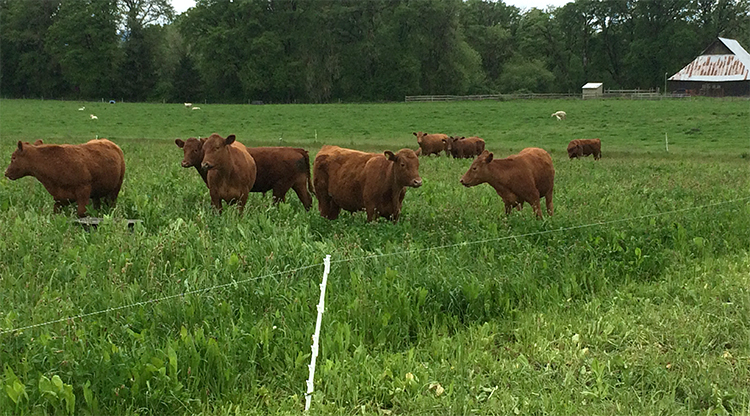
 (above) Baby lambs and their moms are an essential part of managing pasture rotations on cropland. Rather than grow corn and soy and ship it to a feedlot somewhere (ideally far away where no one can smell it), we keep the sheep directly on the farmland. The grasses and clovers convert the sun’s energy into sugar in the sweet leaves, and the sheep and cattle directly convert it to weight gain, without a corn harvester nor a transportation truck. It’s just as efficient for weight gain and results in a much higher quality product (omega 3 oils vs inflammatory omega 6 oils in corn kernels). Oregon farm (A2R farm).
I spent my summers growing up on a farm, and it grounded me well for the career I pursued in science, technology and real estate investing. But in 2008, with the birth of my daughter, I realized we’re not leaving the planet in great shape for her generation. I began to look at farmland again, with fresh eyes.
I dug into the data on farmland, and what I found shocked me. We may intuitively know that organic is better than conventional agriculture, but the hard-core numbers show that our agriculture system is broken. More than half of U.S. crop acreage grows only two commodity crops—corn and soy. More than 90 percent of that corn and soy is genetically modified and reliant on, even designed for increasing the use of toxic pesticides. Only 0.6 percent of American-grown corn is consumed by humans, while over 130 times that amount (80 percent) goes into ethanol or animal feed. Meanwhile, maxing out farmland on one crop—”monocropping”—is extremely harmful to the environment, contributing to topsoil erosion, water pollution, and other negative outcomes.
That’s how Farmland LP began. We saw how we could combine regenerative agriculture with savvy real estate management practices commonly found in the property sector. And today we’re the largest organic farmland manager in the country, with the highest sustainability rating among all global firms in HIP Investor’s worldwide universe of 10,000 corporations.
Regenerative farming involves nurturing the land through healthy soil biology, crop rotations, pollinator habitat, and other science-based practices focused on making that land more vital and productive to the roots. For us, this means we look at each 20 to 40 acre field on each farm and identify its ideal crops and develop a 10-year crop rotation plan to increase soil health, plant happiness and the best economics.
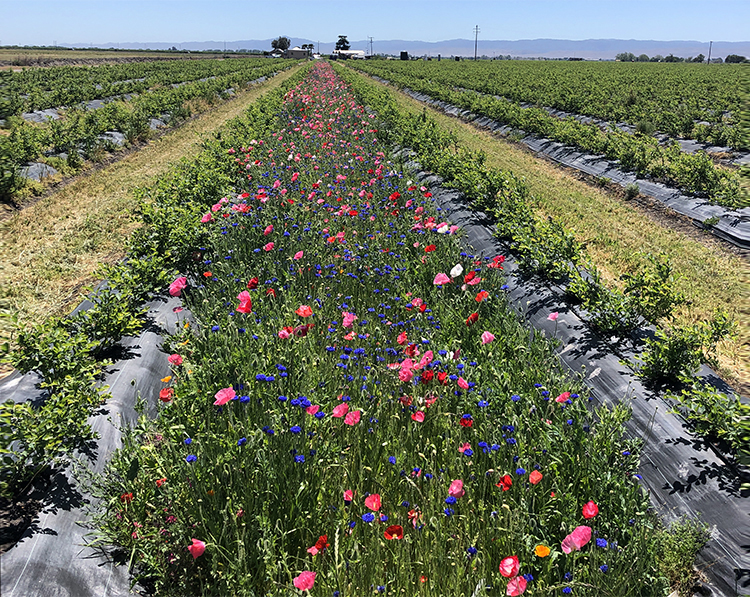
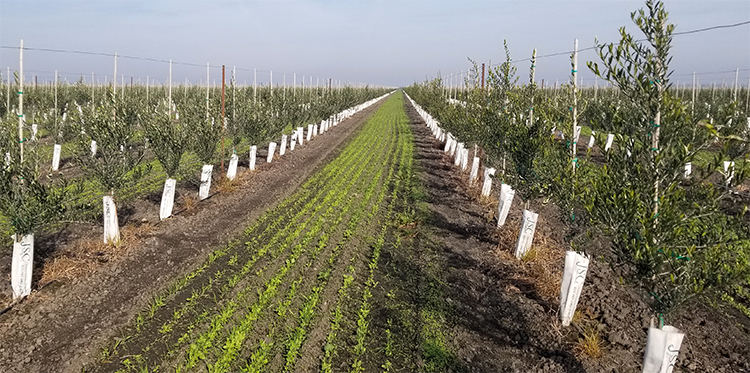
For example, for 50+ years one 4,200-acre farm we purchased had grown simple commodity crops in rotation: alfalfa, industrial corn and processing tomatoes for tomato paste. We assessed each field and identified a wide array of crops that could be grown. One of the worst patches of ground was salty and had poor soil quality, but we determined that olive trees would be happy there and found an olive oil farmer to tenant the land, increasing our potential income from a few hundred an acre to a thousand an acre once the trees matured. Next to those fields was ground that had more acidic soil that was perfect for organic blueberries – so we established a relationship with the leading organic blueberry company and grew them ourselves, increasing revenues and profits 10 to 30-fold. The olives and blueberries grow adjacent to organic vegetables in rotation to keep the farmland constantly regenerating, alternating with pasture and livestock rotations. Drip irrigation, rather than the traditional flood irrigation, not only saves water, but also helps the plants with fertilization and minimizes weeds between rows.
Our mission at Farmland LP is to demonstrate that regenerative agriculture is more profitable than commodity agriculture and maximizes returns for investors. In doing so, we propel the regenerative movement forward, attracting more and larger investors – especially institutional investors – and the impact widens. The U.S. has $2.7 trillion worth of farmland, the same economic value as all of the apartment buildings in the country, or all of the office buildings, and yet less than two percent of that farmland is institutionally owned.
Even the most environmentally conscious and impact-driven investor seeks financial returns. Decade after decade, farmland as an asset class has provided top-decile returns with low volatility. Over the past 85 years, farmland has delivered 11 percent annualized returns unlevered, with half of those returns coming from cash flow and half from appreciation. As an asset class, it has outperformed the stock market, private equity and venture capital, with low volatility and minimal leverage. It is expected to continue on this trend in the future.
The environmental benefits are equally impressive. In a USDA study, Farmland LP’s first fund—yes, the same one with the seemingly simple olives, blueberries, and rotating organic vegetables—demonstrated $21.4 million in net ecosystem service value benefits using regenerative farm management practices at scale. We also tallied a double bottom line return of 7.3 percent annual ecosystem gain on top of 9.9 percent annualized net economic gain for investors.
But the supply of this essential asset class is shrinking. While urban land has nearly tripled since 1949, U.S. cropland has declined by 18 percent to 392 million acres. The decline is happening as the population that cropland needs to feed has more than doubled to 330 million people. It takes roughly one acre to feed one person, and while historically the U.S. has been a food-exporting nation, we are approaching a deficit. We will have to use our farmland smarter to grow healthy food in ways that that are more profitable and more productive, while improving the health of the soil, water, and ecosystem we live in and rely on.
Meanwhile, the demand for organic continues to grow—and alongside it, the profit that’s possible from regenerative farmland. In our farm’s inaugural harvest, the blueberries yielded roughly 300,000 pounds of fresh fruit and $900,000 in revenue. Certified Organic, regenerative agriculture is the reason that our rents went from just $300 per acre for conventional farmland, to renting for $700 per acre for organic farmland while being fully leased.
What’s clear from our experience is that regenerative agriculture yields organic food people want, healthy soils our kids will need, and sequestered carbon too keep our climate recognizable…all while delivering strong, market leading financial returns too. That’s a formula for a strong future.
Article by Craig Wichner, Founder and Managing Partner of Farmland LP, one of the largest farmland managers and the largest organic farmland manager in the U.S. Founded 12 years ago, Farmland manages 15,000 acres of high-quality farmland in Northern California, Oregon and Washington valued at over $175 million.
Featured Articles, Food & Farming, Impact Investing, Sustainable Business


 Claire Smith (pictured above), the founder of the Beyond Investing platform, is a financial markets veteran of 35 years, whose career takes in JP Morgan Chase, UBS, Albourne Partners as well as running her own consulting business for 5 years. The Beyond investment management companies, formed in 2017, comprise Beyond Advisors, parent of Beyond Investing LLC, the advisor to the world’s first cruelty-free and environmentally friendly ETF and Beyond Impact Advisors, a specialist in investing in plant-based and cruelty-free start-ups and animal-replacing foodtech and biotech. In addition, Claire has co-founded Beyond Animal, a tech platform with the aim of accelerating the growth of the vegan economy, through the provision of a funding portal for vegan businesses which benefits from a FINMA No Action letter and FCA regulatory cover.

 Sallie Krawcheck has not forgotten what the skeptics said about Ellevest, her women’s-focused investment platform, before the service even launched. “It was like, ‘This is gonna fail; other people have tried and failed,’” she recalls. “And also, ‘What is for women anyway? That’s sort of dumb!’”
 Women have made enormous strides in the past year in the public sector. America elected its first female vice president, Kamala Harris, in November. Janet Yellen now serves as the nation’s first female secretary of the Treasury, and the 117th U.S. Congress includes a record 143 women, or 27% of its total membership.
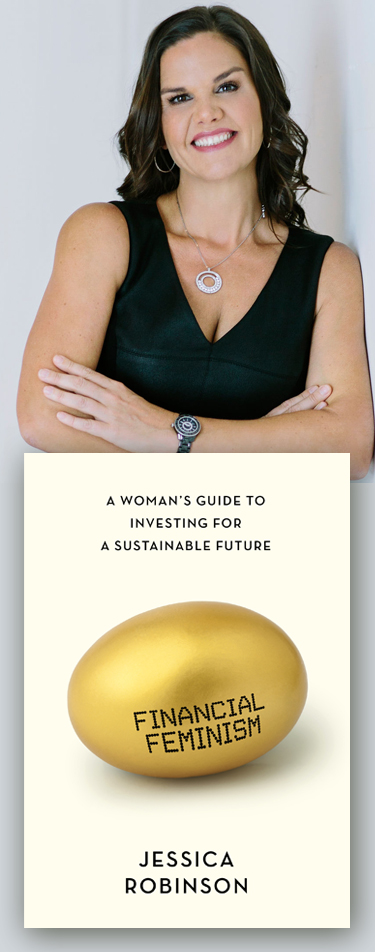 For those of us that have been in the sustainable investment space for some time, it is reassuring to finally be getting airtime. The mainstreaming of sustainable investing is what we have been aiming for and so I embrace the progress we are making with open arms. That said, we still have many miles to travel – particularly when it comes to fully activating retail investors. This has always been my focus with
 Krystal Williams is an impassioned advocate on issues of energy, equity and social justice. Her work with public utilities and renewable energy developers as an energy attorney at Bernstein Shur and Pierce Atwood has deeply influenced her view of both the climate economy and systemic inequities. A member of the Maine Bar Association. Williams has launched the
 Finance has traditionally been a male-dominated industry. My prior professional experiences made this crystal clear, while simultaneously providing me invaluable opportunities to learn about the fundamental principles of investment management. Those experiences have led me to appreciate the myriad of intellectual and social benefits that can be derived from diversity of opinion and perspective. Seeking a more inclusive approach to investment management that incorporates inputs from a wide array of stakeholders, I made the decision in 2015 to alter my career trajectory by entering the realm of ESG investing as the CFO of Calvert Investments.
 Many of us have come to realize that racial equity requires much more than intentional conversations and thoughtful grants. These are important efforts and should not be discounted, but they are not panaceas. There is a moral imperative to address the disparities experienced by Black and Brown men and especially women in the US with action and systems change.