Tag: Impact Investing

Facing Our Relationship with Money Can Change Us
By Maggie Kulyk, Chicory Wealth

Chicory Wealth logoI have been working with people and their finances for almost twenty years now, and one thing I know for certain: Each person’s relationship with money is unique and powerful, whether they choose to recognize it or not. I have also noticed that those who are willing to accept and work with the realities of their relationship with money generally lead happier and more balanced lives.

My experience is no exception, and it was indeed my own (at first reluctant) willingness to look at my somewhat twisted relationship with money and its connection to the rest of my life that lead me on the path to helping others “integrate money and meaning.”

Angst around money was a pervasive part of my childhood and young adulthood, not because I didn’t have much, but because I did. I grew up in a one-stoplight town in rural Pennsylvania, where most people made their living by farming or manufacturing. But I was different because it was MY family’s manufacturing business that employed a lot of the residents. We lived in a large house, drove nice cars, were expected to go to a prestigious college, and took really nice vacations. Growing up, I learned quickly that this was not the norm for others in the area, and the differences could be stark.

I also learned that while money certainly bought options, it did not deliver happiness. I am grateful for the support I received from my family and recognize that it helped me get where I am today, but it was not a happy childhood. My family provided me with many resources and an element of love, but it also included dysfunction, regrets, secrets, and betrayal. Our affluence not only didn’t prevent such dysfunction, it exacerbated it.

When it came time for me to go to college, I chose to go to a state school (in defiance of expectations), but I was still dependent on my family’s money, which caused me a lot of conflict. Plus I knew almost nothing about managing money. I began to feel a terrible tension between having too much money and not having enough, at the same time recognizing that none of the money was really mine to begin with. I started to become politically active and eventually majored in political philosophy. Once again, I was surrounded by people barely making it while that was clearly not the case for me, and it made me uncomfortable.

It took me many years to pull away from the tendrils of my family’s money. At first, I did work in the family business, but after several years I severed ties. It was at this point that my life took an unusual turn. I grew up Roman Catholic, but left the faith when I went to college. But when I was 28 years old and feeling exceptionally untethered, it suddenly hit me that I would make a really good pastor or priest. This bolt of insight struck me as truly ludicrous, considering the fact that I am a woman and a lesbian. But I paid attention to that “call” and went on to get an MDiv from Emory University and finish all but my dissertation for a PhD in religious studies.

This was a time of great growth and positive change for me, though I didn’t end up being a pastor or even a professor as I once thought I would. In looking back, I see now that one sticking point for me was money. I wasn’t consciously thinking about it. I was just thinking about who I was supposed to be, how to connect to the divine, and – of course – how to make a living; in other words – how to have money.

At the age of 37, I found myself at a crossroads. I had a family by then, but in some ways my life was in shambles. I had done at least one thing right though; I had added meditation to my daily routine. One day as I sat meditating, I seemed to be wrestling more than usual with my unruly thoughts, most of which were worries about money. Then out of the blue, the waters of my mind calmed and a message emerged: “Get up and deal with your money.” At first, I resisted – this couldn’t be “right” – money and spiritual practice don’t mix. But soon I stopped resisting, and the message became clear: “Get up and deal with your money.”
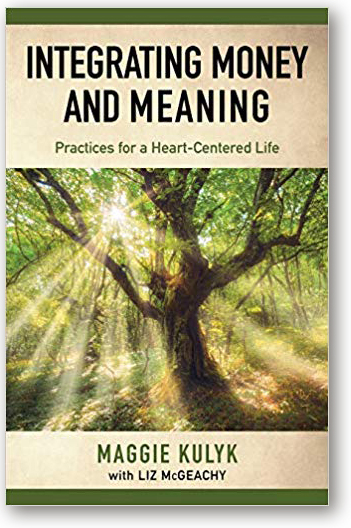
Integrating Money and Meaning - Practices for a Heart-Centered Life by Maggie KulykAfter the meditation session ended, I lingered over what had just happened. It seemed important, so I decided to listen. I began by looking realistically at my own financial situation and making changes. I also took a good look at my past experiences with money and how they had formed me. Later, I took the trainings necessary to become a financial advisor. Financial planning seemed to be a way to help others seek a deeper level of integration in their lives, and it aligned with my diverse background. I started a wealth management practice and wrote a book to help others understand their financial lives and connect them to their values and spirituality.

Like many people, I was taught growing up that religion/spirituality went in one pigeonhole and everything else (money for instance) had its own separate space. I no longer believe in those lines. When I started my financial profession, I saw there was much more to it than the usual figures and formulas. The conversations around money I was having with people intertwined with the larger tapestry of their lives, including their spiritual lives, yet there was no opportunity to address this. There was not even a framework on which to envision the connection.

Developing this framework has been the focus of my work and life ever since: helping people (including myself) live inside our society’s complex money system without being utterly consumed by it, instead working toward a level of integrity, peace, balance, and meaning.


Article by Maggie Kulyk, author of Integrating Money and Meaning: Practices for a Heart-Centered Life and CEO and Founder of Chicory Wealth, a private wealth advisory practice offering holistic Financial Life Planning services to individuals and nonprofit organizations across the country.


Featured Articles, Impact Investing, Sustainable Business

­­Making Money Count

By Rachel McDonough, Make Your Money Count

Make Your Money Count logoAll of the chapters in my money story could be summed up with three words: make it count. As a Financial Advisor, I’ve had a decades-long fascination with squeezing value and meaning out of every dollar and helping my clients do the same. I even named my business Make Your Money Count, LLC. But the essence of my money story focuses on faith more than finances.
My personal definition of success—what it means to make my money count—has never been reduced to asset growth or optimized risk-adjusted returns. True financial success comes when we thoughtfully combine money with meaning and (for those who are so inclined) faith. Wealth is best managed according to a purpose higher than self, a principle I saw lived out in my family.

My dad dreamed of owning a farm, and when I was 3, my parents bought a small hobby farm in rural Wisconsin. Every morning, Dad got up early to feed the animals and do chores. Then he left the house to work his full-time job. When he returned home, he worked in the shop for another few hours before bed. He worked a lot! But it was his boyhood dream and he loved the farm.

There were many money lessons that I could have learned from my parents’ decision to buy the farm. I could have learned to avoid debt by saving up for a big purchase. I could have learned how to start a small business. I could have learned the value of hard work. But the thing that caught my attention was how and why that dream ended.

My parents—especially my mom, had an unshakable sense that God was calling them to overseas mission work. As you know, farms don’t run themselves, so to say “yes” to God’s dream meant letting go of my dad’s dream.

Is it wise to make major financial decisions based on an unproven hunch that God wants us to do something? That was the challenge my dad had to wrestle through. And wrestle he did! Over time, he became increasingly convinced that it was the right thing to do. Despite this, it was incredibly difficult for him to let go of his dream. After dragging his feet for two years, Dad made a deal with God while mending some fences.

He was grumbling quietly to himself about his work. He had mended the fence a few months earlier, and here he was, at it again. Suddenly, an internal voice asked a poignant question:

So why don’t you store up for yourself treasure in heaven, where moths and rust cannot destroy?

The question pierced Dad’s heart as he thought back over the years, years he spent feeling unaligned with God’s plan for his life.

“OK, God,” he said. “If you want me to sell the farm and go into full-time ministry and even move to Kenya, you’ll have to send someone to buy the farm. And I’m not going to advertise that it’s for sale.”

It was the closest to full surrender that Dad could get.

A few weeks later, a man and woman drove up the driveway uninvited and asked if Dad would ever consider selling his farm. They didn’t make an offer, but Dad knew it wasn’t a bizarre coincidence. It was a confirmation that it was time to move on to the next season of his life. It was time for a new dream.

My takeaway from this experience is that a logical, efficient financial strategy isn’t enough to make our money count.

For my own finances and for those of my faith-driven clients, the best outcomes are the result of savvy strategy combined with a listening, prayerful heart. Growing up in Kenya as the daughter of missionaries who regularly moved back and forth between continents, I learned some heart-centered lessons about money. Some of my earliest money memories are of giving money at church and watching my parents trust God to provide for their needs and guide their financial decisions. I also went from being a poor kid in the U.S. (with a government subsidized school lunch program) to standing in Nairobi surrounded by Kenyan street kids begging me for a shilling.

Here’s what I learned about money:

Our core beliefs shape our values. Our values determine our priorities. Excellent financial decisions always align with those values and priorities. When we use money this way, we avoid regrets and create the impactful, meaningful life that we desire. Our financial decisions essentially carve out a pathway for our lives.

So what does all of this have to do with investing? It probably explains the origin of my strong conviction regarding intentional, values-aligned investing. For the Christian investor, God is the rightful owner of all wealth. So great financial management means adopting his values and priorities, like caring for the least of these and becoming careful stewards of the planet he entrusted to us.

A private equity fund I recently discovered offers the opportunity to invest (with expectation of a market rate return) in start-up companies in East Africa. The companies in the portfolio provide jobs and care for employees, giving hope and an escape from poverty for an area of the world that is dear to my heart. One company specifically hires deaf young people to package yogurt and other dairy products, while developing a community in which those who have been rejected by their own families experience a new kind of acceptance. Everyone at the facility speaks sign language, and all are treated with respect and love. My goal for 2021 is to become an investor in this fund. It’s the best way I can imagine to make my money count.

What are your priorities? How can you make your money count?

If you struggle to answer these questions, we can help. Schedule a 15-minute discovery phone call today to begin gaining clarity on your priorities and challenges and to learn how Make Your Money Count can help your money count.


Article by Rachel McDonough, an award-winning* Certified Financial Planner™ professional and a Certified Kingdom Advisor with over 18 years of experience, as well as a published author. As a recognized leader in Faith-Driven Investing, she is passionate about helping Christian families live with zero financial regrets by aligning their finances with their faith-driven values, including environmental stewardship. With her Values-Driven Wealth Management Process, clients can plan wisely for their future and make a positive impact for the next generation. Rachel founded Make Your Money Count, LLC in 2009 with the goal of making this highly personalized process accessible to clients across the country through technology. * Named a Five Star Wealth Manager for 2013, 2014, 2016, 2019, 2020, and 2021.

Featured Articles, Food & Farming, Impact Investing

My Relationship to Money

By Frank Coleman, BeingFrank Consulting

On December 31, 2019, I retired from a 33-year career in the investment business. I have a pension, own a home and a new business and have savings that will carry me thru my remaining years in comfort.

And yet, when I was asked to write about my relationship with money, I had to pause and think hard about that relationship. On the surface, it may appear that I received a great grounding in financial matters and that the journey was an easy one. Truth be told, the journey was chaotic and was one where I spent a good deal of time looking in the rearview mirror.

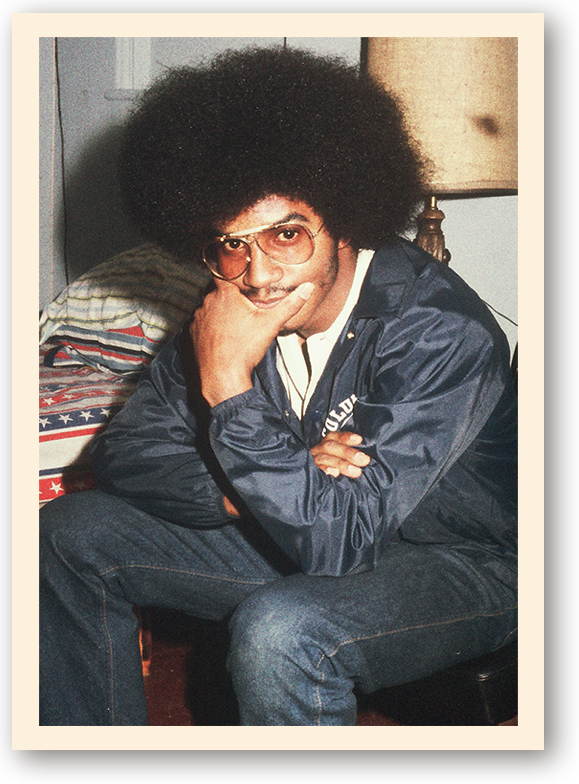
I am the product of single mother household, born and raised in a railroad apartment in Harlem. Throughout my formative years the family drifted between the poor, lower-income and lower middle-income categories. And yet as a youngster, I never heard about those categories nor felt as if I were any of those. We never went without food, always had a roof overhead, and never went without clothes (I lucked out being 10 years younger than my brother – which meant hand me downs were not part of the equation).

Frank Coleman-CollegeIn most respects, other than the occasional “I’m not made of money”, my mother tried to protect us from the financial struggles that she encountered during those years. We purchased our Christmas tree on Christmas Eve because it was cheaper then. On the day after Christmas, my grandmother would head downtown to the fancy department stores to buy gifts and things for next Christmas. That was the day of the deep discounts. On regular occasions we would pile into a neighbor’s car and head over to Two Guys in New Jersey, where we bought all of our clothing, appliances and anything else we could load in the car, at very discount prices. If it wasn’t at Two Guys or Woolworths, then we didn’t get it. So that meant no brand name underwear, jeans, sneakers. The only concession to that was for my Converse sneakers, which I was allowed to get if I could pay the amount above what the store brand cost.
These were all signs, but signs whose meaning I didn’t know. They would become a roadmap that would emerge in the rearview mirror.

Soon, I was to enter a world that had never been on my radar screen and where I would be confronted head-on with the reality of our financial circumstance and where the language of poor, lower income, etc. would be made clear to me. I received scholarships to attend a private military boarding high school and an Ivy League college.

High school was a full scholarship, with the family responsible for “residual” costs (uniforms, books, sports equipment), none of which we could afford. But my mother stepped up to help with some of the costs and I was expected to also contribute around 15-20% of those “residual” costs. Things got serious real fast and I spent my high school years working at various jobs to make sure I could contribute. I also spent those years riding the Long Island Railroad home on weekends, while my classmates were picked up by parents in Lincolns, Mercedes and other assorted luxury cars. I visited homes where the living room was larger than my entire apartment. While they went to Europe on winter and summer vacations, I trucked back to the city to work so that I could afford my part of the “residual” bill.

College was funded with a combination or scholarships, school loans and work. At the time school loans were securitized by the Federal government and the interest rates ranged from 2-3.25%. During Freshman Orientation, AMEX had tables outside of the main room, and with nothing more than a signature, I was on my way with my first credit card (well actually a charge card with NO limits).

In addition to quality educations, my experience in privileged settings triggered a consumption gene. The gene triggered was actualized with an endless pool of credit provided by American Express.

Needless to say, things did not go well. After racking up thousands of dollars in debt (because I mistakenly assumed that I could pay over time), the reality of the impact of uncontrolled debt became clear.

And here was my moment. The fear of failure caused me to take stock and figure out what my next steps would be. I would either have to go to my mother, confess my failures and ask for her help, or figure it out on my own.

The thought of being face-to-face with the person who sacrificed everything to permit me this access was unthinkable. It represented a turning point in my rather tenuous relationship with money. That led me to think hard about the role I wanted money to play in my life and it took me back to some of the things that I experienced when I was younger.

All of this led me to think about money and finance. Well, it led to thinking about financial independence as a theme. How could I achieve some level of financial independence, so I was not dependent on someone else for my long-term success?

In my search for that independence, somehow I drifted back to those times when I was a kid – my rear view moment. I tried to figure out what my experiences meant and whether there were some life lessons to be learned. That led to adding an econ minor to my Political Science/Urban Studies major.

It led me to understand that thrift and value were key building blocks to financial independence, as was a “debt is bad” mentality (which has evolved to “some debt is bad”). Home ownership and robust savings were also part of the plan. My debts were slowly paid off (thanks to the low student loan interest rates). My first investment was a Lord Abbott mutual fund; my second was Atari, based on my nephews’ obsession with it. The mutual fund investment was very profitable, the Atari one, a bust. Another lesson learned.

All of this led to a decision that a finance career was the next logistical step in understanding and mastering this concept of financial independence. And thus began my legitimate relationship with money.

And as they say, the rest is history…


Article by Francis G. Coleman, Founder and CEO, BeingFrank Consulting

With more than 32 years of experience in the SRI/ESG industry, with a focus on serving Catholic institutional investors at Christian Brothers Investment Services (CBIS), Francis (“Frank”) G. Coleman, has developed a comprehensive knowledge of the needs of the industry and is a nationally recognized expert in the integration of ESG principles and Catholic Social Teaching to the investment process.

During his tenure at CBIS, Mr. Coleman has had a number of leadership positions within the firm, covering most of the main business lines of the firm.  As part of this role, he was the primary CBIS contact in its work with a wide array of industry and Catholic organizations. He was also responsible for expanding CBIS’ corporate engagement program and connecting it with the broader national and international community.

In addition, he has had a long and varied history of serving as an advisor or Board member to a number of organizations, domestic and international.

Frank has written and spoken extensively on matters related to ESG/SRI. His most frequent topics are centered on the intersection of faith and finance and on racial justice in the financial services industry. He has been an advocate of the importance of a faith/moral/ethical framework as being an integral ingredient to promoting impact, sustainability and corporate change.

Among honors received is the SRI Service Award-(FAFN), and the ICCR Legacy Award 2019.

He retired from CBIS Dec 2019 and is now the Founder and CEO of BeingFrank Consulting, a consulting firm serving the ESG industry. Contact him at- Frank@BeingFrankConsulting.com


NOTE to Reader – Frank also wrote some insightful articles for GreenMoney on Facebook, foreseeing many of their current company-wide problems and increased public scrutiny. Here are two:

Facebook – Another Moral Dilemma (2019)

and

What’s Next on a Random Walk Down Facebook Lane (2017)

Featured Articles, Impact Investing

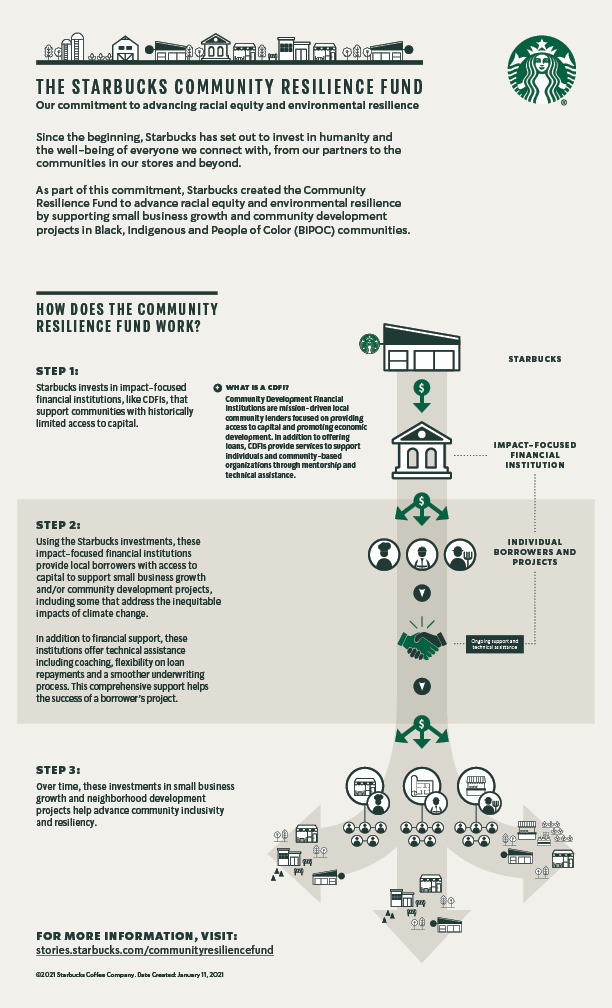
Starbucks Announces $100 Million Investment in CDFIs and Other Impact-focused Financial Institutions

In January 2021, Starbucks announced new initiatives as part of its long-standing commitment to use its scale and platform to positively impact the communities it serves.

By 2025, the Starbucks Community Resilience Fund will invest $100 million to advance racial equity and environmental resilience by supporting small business growth and community development projects in neighborhoods with historically limited access to capital. The investments will initially focus on 12 U.S. metropolitan areas and their surrounding regions: Atlanta, Detroit, Houston, Los Angeles, Miami, Minneapolis, New Orleans, New York City, Philadelphia, San Francisco Bay Area, Seattle, and Washington, D.C.

In partnership with community leaders, CDFIs, and other impact-focused financial institutions, the Fund will help provide access to capital intended to support small businesses and neighborhood projects, including those addressing the inequitable impacts of climate change.

“Starbucks is investing in the survival of small business by working with CDFIs in key cities across America. CDFIs deliver affordable credit as well as training on disaster recovery and rebuilding – and that is exactly what small businesses need right now to withstand ongoing economic and climate changes,” said OFN President and CEO Lisa Mensah. “With partners like Starbucks and CDFIs, these small businesses will have a fighting chance to recover, rebuild, hire workers, and serve their local economy.”

Read the full announcement.


SBX010821-Starbucks-Community-Resilience-Fund

Source: OFN

Additional Articles, Food & Farming, Impact Investing, Sustainable Business

YourStake.org and First Affirmative Financial Network Announce a New Partnership

YourStake.org and the First Affirmative Financial Network (FAFN) recently announced a new partnership to equip the sustainable, responsible, and impact (SRI) investing pioneer and their large US network of SRI/environmental, social, and governance (ESG)-specialist advisors with the field-tested YourStake impact reporting solution. Active First Affirmative Network Members will be able to access the YourStake.org suite of services at a substantial discount.

When advisors talk with clients about social and environmental impact, abstract ESG scores don’t suffice. Clients don’t resonate with a simple number score in the same way that they resonate with tangible metrics and stories. And as advisors offer more personalized ESG portfolios, the greater the challenge to convey that sophistication to a layperson client, in intuitive terms they can quickly grasp. Launched at the 2019 SRI Conference, YourStake.org’s suite of tools help financial advisors walk a client through their sustainable investing journey.

Patrick Reed, Chief Executive Officer of YourStake.org, said, “First Affirmative already provides their members with extensively customizable ESG portfolios, and we are excited to provide FAFN advisors with enhanced reporting on how their portfolios create tangible impact aligned with client values.”

Advisors can leverage the expertly crafted YourStake.org questionnaires to reveal true client preferences. Those preferences then serve as the basis for a wide range of impact reports, including side-by-side comparisons and relatable narratives, such as “how many fewer asthma attacks” or “how many more meetings led by women” are tied to a certain amount of investment in a sustainable portfolio. All of YourStake.org’s data is fully transparent and communicable – for example, advisors can click to ‘look-through’ the number of asthma attacks to see what companies are held by funds in a portfolio that are linked to air pollution, what amounts of pollution and chemicals come from each of their factories, and what peer reviewed scientific articles relate air pollution to public health outcomes.

Theresa Gusman, Chief Investment Officer of First Affirmative, says, “The number of ESG investors is growing rapidly, and First Affirmative has been at the forefront assisting sustainable wealth managers since 1988. With this partnership, we are delighted to be advancing the forefront of the SRI ecosystem by enabling advisors to communicate to clients the impact their investments are making.”

The YourStake impact reporting features complement First Affirmative’s recently introduced AffirmativESG advisor workstation and its sophisticated portfolio selection process. AffirmativESG allows advisors to work with their clients to build custom portfolios reflecting the client’s financial objectives and unique environmental, social, and ethical values and beliefs. YourStake is particularly well-suited to enable advisors to demonstrate their clients that First Affirmative’s Custom Sustainable Investment Solutions are achieving the desired impact outcomes. Like AffirmativESG, the YourStake platform is intuitive and easy for advisors to use.

Released in 2020, AffirmtivESG employs a sophisticated portfolio construction engine, incorporating eight easily navigable categories of impact preference curated by First Affirmative, with more than 50 sub-categories for further client customization. Companies are placed in these categories following careful vetting using the long-standing research and analysis that sets First Affirmative apart in ESG and SRI, including a proprietary sustainability screen that eliminates poor ESG performers from each industry group. The combination of the First Affirmative and YourStake.org services will enable advisors to deliver standout sustainable investing practices, in a year which has seen immense growth and interest in ESG, with fund inflows exceeding $30 billion this year as of September according to Institutional Investor, an increase of more than four times over 2019.


YourStake logoAbout YourStake.org
YourStake.org was founded to catalyze sustainable investing, by revolutionizing the quality and processing of impact datasets beyond traditional ESG data providers, enabling more people to realize the importance of sustainable investing. Solutions are available for individual RIAs and for enterprises. Contact CEO Patrick Reed at –  patrick@yourstake.org

First Affirmative-LogoAbout the First Affirmative Financial Network
Since 1988, First Affirmative has had one mission – to improve investment performance, reduce risk and create a better world by integrating SRI investing with ESG principles. Through their Member Network, First Affirmative helps advisors achieve their clients’ financial and impact objectives, while building a strong community amount its national membership base. Contact Chief Operating Officer Amy Thacker at – amythacker@firstaffirmative.com

Additional Article, Impact Investing, Sustainable Business

10 Trends That Will Shape Sustainability in 2021 and Beyond

By Research Team, Center for Sustainability & Excellence

The COVID-19 pandemic came in 2020 to reinforce the climate crisis and increase business challenges and risks for investors and C-Suite Executives in several sectors.

Let’s take a look at important trends, based on CSE recent research, which cannot be ignored by organizations. Climate risks, ESG factors for investors, non-economic disclosures, social inequality, ’Circular Economy’ and ‘Carbon Net Zero’ strategies are some of the issues that will be on the top of C-Suite Executives to-do-list of in order to introduce more resilient and sustainable strategies to their organizations for 2021 and beyond.

Here are the Top 10 Trends in sustainable business in 2021:

• Comprehensive consideration of ESG factors and access to capital
In order to mitigate the financial losses of this year, special emphasis will be given on regulating both access to funding and corporate ESG behavior. The trend towards increasing ESG coverage will lead to more disclosures, check and data points. It should be noted that ESG issues are increasingly the focus of investors and regulators in North America.

• Use of ESG ratings and Standards is becoming the norm
Looking at CSE’s latest ESG research in over 600 companies in North America, ESG rating and SASB Standards are increasingly popular to provide information in a manner that is most relevant to their financial stakeholders and investors. Moreover, the TCFD recommendations are gaining traction, as 38% of the top 10 companies are identifying and reporting their climate-related financial risks and opportunities. The number is expected to rise through 2021.

• Climate change risks and transparency
Five years ago, investors committed to align with the Paris Agreement, leading companies into a series of radical changes. Those who still do not disclose environmental data will feel the consequences more than any other year. The organizations that use the Task Force on Climate-related Financial Disclosures (TCFD), for the disclosure of the climate-related financial risk, have doubled compared to 2019.

• Changing Policies in financial institutions
The pressure is now transferred to the Financial Sector, calling on them to adopt strategies to reduce the carbon footprint, with restrictions and the phase out of fossil fuel financing. According to the Institute for Economic Energy and Financial Analysis (IEEFA), 150 major global financial institutions have implemented policies to exit coal, with 65 Financial Institutions committing to stricter lending guidelines.

• Reorganization of the supply chain and production
Many companies have recently faced severe supply shortages due to the pandemic. The closure of production sites, the inability to transport goods and much more led not only to the review of suppliers, but also the production process itself. ESG criteria will be further integrated into the supply chain process.

• Circular economy integration
Perhaps the above could be a prelude to change, as the concept of the Circular Economy is going to be consolidated next year and remodeling the production is what many entrepreneurs should be concerned about. Companies need to move fast towards the new commitments to make all packaging recyclable or reusable by 2025. More than 400 companies have adopted the New Plastic Economy Global Commitment, while companies representing 20% of all plastic packaging produced worldwide have already committed to replacing their packages by 2025.

• Zero Waste
Efforts to eliminate the increased waste problem will continue. This will be achieved through the application of state-of-the-art technology and through an unprecedented level of collaboration and coordination between recyclers, designers, packers, manufacturers, companies and governments. According to the National Zero Waste Conference, there are plans to develop policy recommendations for 2021 based on the new goals of the Biden Administration, while the priority is on the market of recycled products.

• Sustainable materials
In light of the zero waste and the circular economy, the transition from plastic to paper has become an increasingly popular option. The use of aluminum cans is expected to increase just as significantly due to its distinctive features – its durability and the fact that it is light weight.

• Social equality as a source of sustainable business
The crisis of Covid-19 came to rekindle something that had been overlooked throughout the last years- the huge levels of inequality in global wealth. In 2021, it is predicted that investors will engage in approaches with innovative practices that will promote equality and could be a source of sustainable business advantage.

• Biodiversity crisis
The pandemic has reminded us that nature is important not only for human preservation, but also for maintaining the world economy. There will be a transformation in the way investors deal with the loss of biodiversity.


Article by the Research Team at CSE – Center for Sustainability and Excellence

CSE is a leading boutique firm operating globally that specializes in maximizing your business impact in Sustainability and Corporate Responsibility. For more than a decade, we have been helping professionals advance their careers through our certified on-site, online and group training services globally and supporting companies and organizations to grow and excel through Sustainability consulting and coaching.

Additional Articles, Energy & Climate, Food & Farming, Impact Investing, Sustainable Business

Saving Biodiversity: Investing in Climate Change is Not Enough

By Vicki Benjamin, Karner Blue Capital

Vicki Benjamin-Karner Blue Capital-GreenMoneyThe two urgent environmental problems that will define this millennium and our lifetimes are climate change and biodiversity loss. Although both are the result of the actions of mankind, they are distinct issues and their consequences are, inextricably linked. The detrimental effects of biodiversity loss contribute to the magnitude of the climate change crisis, while climate change exacerbates biodiversity loss. Examining the nexus of these challenges is valuable to academics, scientists, and investors alike with a shared interest in finding solutions that simultaneously mitigate both challenges while ensuring the future sustainability of the planet.

Why is Biodiversity Important?

Biodiversity sustains ecosystems, supplies oxygen for clean air, protects water and soil, and breaks down pollution and waste. Protecting biodiversity contributes to climate stability through terrestrial and aquatic carbon absorption. Economically, biodiversity is a vital source of raw materials for products in industries such as food, pharmaceuticals, textiles, wood, and energy.1  In essence, biodiversity ensures the sustainability of life on earth.

How Does Climate Change Affect Biodiversity?

Climate change, or global warming, is primarily the result of human activity related to the burning of fossil fuels for electricity, transportation, and household cooking. These gases (composed of carbon dioxide, methane, and nitrous oxide) remain in the atmosphere for years, even decades, radiating heat back into the Earth’s atmosphere. This entrapment of radiation results in the warming of the planet’s atmosphere, affecting climate and weather patterns.

Climate change threatens biodiversity by disrupting ecosystems as well as the plants and animals that dwell in them. Changes in weather and seasonality alter food availability and feeding patterns; reproductive cycles and fertility; habitability of location due to temperature, water, and landscape adaptability; and migratory patterns. These migratory patterns result in the introduction of non-native “invasive” species to environments, as rising land and sea temperatures increasingly force species to relocate to cooler climates. In and of itself, this migration can exacerbate climate change.

Other Threats to Biodiversity

As harmful as climate change is to biodiversity, there would be a crisis of species loss even without greenhouse gas emissions and global warming due to resource depletion of wetlands and forests, exploitation of fish and endangered animals for food, and the introduction of invasive species into non-native environments through human movement, such as by boats and ships, and even automobiles.

The causes of biodiversity loss can be summarized into five primary driving factors, easily remembered by the acronym HIPPO (a species currently vulnerable to extinction): habitat loss, invasive species, pollution, human population, and overharvesting.2  Due to the cumulative impact of these factors, approximately 25 percent of all species (estimated to be between 8 and 10 million) are currently endangered, and 1 million creatures are at risk of extinction within this decade.

Potential Solutions

A multitude of remedies that are beneficial in addressing both the biodiversity loss and climate change crises do exist, including nature-based solutions, such as regenerative agriculture or natural infrastructure; emission-capture technologies that reduce the need for disruptive ground extraction; and circular economy strategies that recycle and avoid the need to source new raw materials. Through these solutions and others, farmers can maximize crop yields, communities can protect against natural disasters, upstream energy producers may receive favorable tax breaks, and manufacturers are able to eliminate or reduce the cost of buying new raw materials. These solution sets not only mitigate the biodiversity loss and climate change, but also, offer financial opportunities for cost savings and liability prevention.

Karner Blue Capital Proprietary Research Methodology

Karner Blue Capital (KBC) biodiversity research analysts benchmark companies operating in specific industries considered to have material dependencies and/or impacts on biodiversity and climate change using KBC’s proprietary industry-specific frameworks. Only companies that have met an overall ESG threshold are eligible for consideration. The KBC frameworks, or models are comprised of key performance indicators that represent significant environmental, social and governmental risks specific to each industry. These risks are wide ranging and those attributed to “E” include climate change, resource dependency, pollution and invasive species mitigation. Risks specific to “S” include threats to human health, including pandemics, social license to operate, and changing societal and consumer preferences. Risks specific to “G” include legislative (local and national) regulatory changes and liabilities related to the changes in those rules.

KBC analysts also evaluate industry and company-specific innovations and opportunities, focusing on those that develop technologies to mitigate their impacts, invent alternative products and services that disrupt traditional status quo operating protocols, and seek solutions to the complex problems of biodiversity loss and climate change. Only those companies leading their industry in biodiversity performance are further evaluated for financial opportunity by our investment team. We apply Quality at a Reasonable Price fundamental financial analysis to assess companies in the investable universe on growth, profitability, valuation, and balance sheet metrics to create a portfolio of public equities characterized by both robust sustainability practices and financial prospects. This is the work of Karner Blue Capital. We invite you to learn more here.


Article by Vicki Benjamin, CEO of Karner Blue Capital. Vicki is a co-founder of the Adviser and has been its Chief Executive Officer since it commenced operations as an investment adviser in 2018. Vicki maintains a 57% ownership stake in KBC. Ms. Benjamin was a partner at KPMG from September 2005 until February 2015, when she joined Calvert Investments, Inc. as its Chief Financial Officer. She served as the President of Calvert Investments, Inc. from January 2017 through June 2020. She received a B.A. from the University of New Hampshire and an M.B.A. from Bentley University McCallum Graduate School of Business.

Additional Articles, Energy & Climate, Food & Farming, Impact Investing, Sustainable Business

My Journey on the Road Less Traveled

By Elizabeth di Bonaventura, Domini Impact Investments

Domini logoThe road less traveled has always been the path I’ve found myself on in life, whether intentionally or not. As a young girl, I did not grow up believing that I would have a career in finance. I was beguiled by misconceptions that the field was too difficult and the bar for entry too insurmountably high. Even more daunting was the lack of representation of women within the financial sector.

Prior to the onset of my professional career, I chose to attend the University of St. Andrews, a Scottish university located in a small town nestled on the North Sea. I found myself in a new culture, surrounded by people from different backgrounds with fresh points of view. While the rigorous academics and people I met at St. Andrews greatly shaped both my personal and professional trajectory, I did not pursue a ‘classically finance-oriented’ degree, majoring instead in International Relations. Through this area of study, I followed my interests in political theories, governing bodies, and matters of foreign policy. In my senior dissertation, I dug deeper into the structural inequities that result from these systems and the implications for marginalized populations in Latin America. From this vantage point, I began my career in finance. Somewhat accidently, I stumbled into the realm of impact investing, but was ultimately compelled by the principles of this investment thesis.

I was fortunate enough to find my way to Domini Impact Investments, an SEC-registered investment advisor with an exclusive focus on impact investing. Domini is a women-led and founded firm, often seen as a rarity in the mutual fund world. In fact, as of the close of 2020, the firm was made up of over 60 percent women. This representation includes four of the top six executives, with our CEO and Chair also listed as the named co-portfolio managers on a number of our products. While a women-led environment has shaped my personal experience in the sector, it’s far from the norm.

At the end of 2019 as well 2000 14% fund managers were women-courtesy of Morningstar
photo courtesy of Morningstar

In a 2020 article, Morningstar reported that the representation of women among fund managers globally has stayed largely stagnant over the course of the last twenty years, stating:

“At the end of 2000, 14 percent of fund managers were women. At the end of 2019, 14 percent of fund managers were women”.

Statistics such as Morningstar’s serve as cogent reminder that financial firms like Domini remain rare enclaves of change within an industry with much progress still to make. With that said, there are signals of coming growth and evolution. With investors calling for greater diversity and inclusion, I believe that we will soon see a systemic shift of women in leadership positions at financial institutions. As a young woman in finance, I am energized to be a part of a financial firm that positions women within roles of executive leadership.

In my capacity leading the firm’s Institutional Client Relationships team, I’ve had the opportunity to serve and interact across our institutional client and intermediary channels. In working closely with such financial professionals and sharing the advantages that impact investing can have on our portfolios, planet and society, I find great purpose in my role and hope my efforts contribute to pushing the field forward. The entities we work with range across a wide spectrum – many at the initial precipice of their search, just beginning to integrate ESG & impact strategies into their client offerings. Others have dedicated long-term efforts to building renowned in-house impact institutions. But across this spectrum of impact integration is the resounding client encouragement to align their portfolios with their own personal values and contemporary issues of interest.

With the allocation of capital increasingly deployed into the purview of millennials, this sentiment will continue to expand. Morgan Stanley’s Institute for Sustainable Investing reported in 2019 that of the millennials polled, 95 percent were interested in sustainable investing.1  Millennial investors are clearly interested in the impact of their investments, both positive and negative. This may be due to a myriad of contributing factors, but I would be remiss not to broach the current state of our world.

As a millennial myself, I find my generation faced with the challenge of tackling humankind’s greatest existential crisis: climate change. Growing up under the specter of a rapidly warming planet, our generation has decided that the cost of chasing unlimited profit may not be worth the payoff and the corresponding destructive social or environmental consequences. But this does not need to be a zero-sum game, and the lens of investing has broadened so that positive social and environmental outcomes can be coupled with lucrative returns. 2020 has resolutely cracked any assumptions that our hyper globalized, interdependent world was too big or too complex to break. As a generation that came of age during the 2008 financial crisis, millennial adults learned young the lesson that unfettered markets and limitless growth are not poised for lasting success. We as investors in an interconnected global society need to consider the long-term ramifications of our investment decisions, not just the short-term payoff.

In asking for greater disclosure, reporting and transparency from their investments, millennials are congruently considering these same metrics and integration from their investment managers to ensure more intentional impact. With rising interest in diversity and inclusion both concerning their investments and the individuals managing their portfolios, younger generations will have the ability to shape the faces of the financial sector. With this generational shift well on its way, maybe one day young women aspiring to be fund managers will not be viewed as taking the road less traveled.


Article by Elizabeth di Bonaventura, Senior Institutional Relationship Associate, Domini Impact Investments. She leads the firm’s institutional client relationships team and serves as its primary point of contact for all financial professionals. In 2019, Elizabeth was named to the inaugural SRI Conference “30 Under 30” list. She holds a Scottish Master of Arts (Honours) in International Relations from The University of St. Andrews.

Footnote:
[1]  2019. Morgan Stanley, Institute for Sustainable Investing. “Sustainable Signals: Individual Investor Interest Driven by Impact, Conviction and Choice”.
DSIL Investment Services 02/21

Featured Articles, Impact Investing, Sustainable Business

Tech Savvy Millennial Investors Positioned to Thrive in the “Roaring 2020s”

By David Weinstein, Dana Investment Advisors

(Originally published February 2021)

Dana-Investment-Advisors-LogoWhat a time to be a millennial investor. A chaotic 2020 offered both investment pitfalls and rich opportunities. 2021 should trend toward a more “normal” environment, but disruptive companies, elevated volatility and information everywhere will continue to define the investment landscape. These three themes have millennials positioned to thrive.
Disruption

I define disruption as technology-enabled change with profound effects on legacy business models. 2020 brought us disruptive upstarts like Zoom Video and Peloton. Both burst onto the investment scene and became household names. Combined, these two stocks added $120 billion of value through the year. Stalwarts like Amazon.com, Netflix and PayPal grew by leaps and bounds as consumers spent more time online. All three are big and getting bigger. Speaking of big, Tesla claimed the undisputed throne of a white-hot electric vehicle industry.

Why should disrupters continue to win?

Consider the global advertising industry twenty years ago. The highest impact event was the Super Bowl. It brought a little more than 100 million viewers. Today, an advertiser can reach 2.5 billion global users across Facebook’s platform of apps (which includes Instagram).

Oh, and Facebook can offer this reach every single day, not just one Sunday in early February. Oh, and Facebook is just one of a host of digital advertising behemoths that includes Google, YouTube, Amazon, Snapchat, Pinterest and TikTok. Oh, and these digital advertisers seem to know us better than we know ourselves. Oh, and… you get the point.  These companies are profoundly changing the advertising industry. This change is enabled by disruptive technologies like the internet, smartphones and super-fast connectivity.

The pay-TV industry is another example. Comcast, AT&T and Charter are the largest pay-TV providers in the US with a collective 55 million video subscribers. These companies spent billions on cable and fiber infrastructure to “own” the video feed into the home, building successful monopolies.

Then Netflix came along, enabled by the internet, smartphones and widespread connectivity. Netflix will end 2020 with 200 million global subscribers. Amazon Prime Video and Disney Plus will together exceed 200 million subscribers. More than 400 million subscribers will pay for the top three streaming services! 55 million pales by comparison. Meanwhile, the streaming services grow double digits as they add content and expand internationally.

Millennials are a tech savvy generation. We are often the prime customers of these disruptive companies. We “get” them. This lends an almost instinctual understanding of their strengths and weaknesses. Familiarity is an underrated first step toward making good investment decisions.

Embracing Volatility

Millennials are an open-minded bunch tolerant of change and well-equipped to handle volatility. We grew up with MTV and The Matrix, embraced Call of Duty and iPhones, and graduated to Amazon Prime and Instagram. In 2020, flexible investors did exceptionally well as stock prices fluctuated wildly. This will be a persistent theme of the next several years. Disruption creates winners and losers. The sociopolitical environment is strained. Monetary and fiscal policy sails uncharted waters. Successful investors will balance high conviction with a willingness to admit mistakes and move on.

I see signs of millennials’ adaptability as investors. Bitcoin’s popularity as a digital store of value is one example. Why buy gold when bitcoin is available with the swipe of a fingertip, 24 hours a day, with easy storage (it’s just bits), transferability and security? Why invest in an index fund when thematic ETFs and active ESG strategies are available? If we can customize our investments to our areas of interest, personal preferences and values, why wouldn’t we?

While index funds are the right choice for many people – including some millennials – they are aircraft carriers with limited ability to quickly change course. Passive investing is the rage today, but I expect that to change as millennials embrace the rich opportunity set of the current market.

Information Everywhere

Millennials naturally assume that most questions will have readily available answers (the “Google effect”). This information democratization extends to the investment industry. Companies aren’t just the sum of their financial statements. They are people, products, culture, strategies and execution, shaped and informed by leadership, industry trends, oversight and historical arcs. As investors, we can know more about products, services, companies and CEOs than ever before – more than earnings reports, SEC filings and third-party research have historically offered.

At Dana Investment Advisors, we spend considerable time examining new information sources. Social media is a powerful information tool. Curated Twitter feeds access the daily thoughts of industry experts. In January, J.P. Morgan hosts the industry’s premier healthcare conference with hundreds of companies. Clinical trial data comes fast and furious for a variety of highly specialized therapies. I follow a list of biopharma experts on Twitter for their unique insights. CEOs increasingly utilize Twitter and other forms of social media (Elon Musk is famous in this regard), providing a window into their character, competence and credibility. Podcasts with industry executives are more popular than ever.

For company culture, glassdoor.com is a great tool. Studies have shown that the highest rated companies on glassdoor.com outperform the lowest rated companies. While my experience is anecdotal, I have found that it especially pays to avoid companies with a particularly negative string of recent reviews. Similarly, LinkedIn offers employee turnover data and job posting trends.

The proliferation of product and service reviews and tutorials is also helpful. Understanding the what, how, and why of a software application, for example, has become much more accessible over the last decade. Expert blogs, online forums like reddit.com and YouTube can be valuable sources of information. Curious about Datadog and the fast growing “observability and monitoring” space? Fire up a few YouTube videos and you’re quick to grasp a conceptual framework.

Millennials are more comfortable than older generations engaging with these formats. This can provide an investment edge.

The “Roaring 2020s”

Moving into the “roaring 2020s,” millennials are well positioned to succeed. They are tech savvy, open-minded and naturally curious. It will be important that they develop a sense of comfort and trust with whatever investment strategy they pursue. They should seek out transparency, credibility and a personal connection. This applies whether they decide to invest in individual companies or use a money manager, and it is especially important as investment choices proliferate.

My best advice? Trust your gut, stay flexible and maintain a sense of optimism about the future. These are exciting times full of opportunity.


Article by David Weinstein, JD, Senior Vice President, and Portfolio Manager. David joined Dana Investment Advisors in May 2013. He is the Lead Portfolio Manager for Dana’s Unconstrained Strategy and co-Portfolio Manager of Dana’s Social ESG, Catholic ESG and Large Cap Equity Strategies.

He graduated from the University of Notre Dame with an Honors Program degree in Political Science in 2005. David graduated cum laude from the University of Pittsburgh School of Law in 2008 and served as Managing Editor of the Law Review. He returned to Notre Dame and received his MBA in Investments in 2012, graduating magna cum laude.

Featured Articles, Impact Investing, Sustainable Business

When it Comes to Divergent Generational Perspectives, Can Compromise Drive Profits?

By Tami Kesselman, LOHAS Advisors

(above) Tami speaking at the UN Capital Markets Leadership Roundtable 2019

Lohas Advisors-logoMany families face an ongoing tension between the decision-maker “Patriarch” perspective and the younger “NextGen” perspective on how to approach investing and whether alpha should have primacy in investment decisions — with social, educational, justice, environmental, and other impact goals being served predominantly philanthropically — or if the two should always be approached as an integrated whole, regardless of asset class.
Whether you are a family member in endless contentious investment committee meetings or a wealth manager attempting to align disparate client priorities, differing intergenerational perspectives frequently create challenges. Oftentimes the gap between prioritizing achieving better financial returns versus prioritizing greater social or environmental impact seems insurmountable. I’m here to tell you: integrating the two perspectives is easier than you realized and probably a better strategy for both alpha and impact than either generation is creating with their tunnel-vision approach.

Though the success model of previous generations reflected a clear separation between generating financial profit and supporting philanthropic endeavors, (an approach that one of my favorite people in the impact space, Ross Baird, describes as “two-pocket” thinking is his book The Innovation Blind Spot), that strategy doesn’t work in this decade. When allocators begin moving money en masse away from oil and gas companies that don’t have a plan to migrate toward renewables over the next decade, as has already begun to happen, investors who are backwards-thinking in their approach to “what has always worked” are likely to get caught flat-footed with stranded assets on their balance sheets. And those who don’t pay attention to lack of diversity in the leadership or boards of the companies they invest in are also going to be penalized as more forward-thinking capital continues to accelerate its exodus post-George Floyd.

On the other hand, the next generation saw An Inconvenient Truth in middle school and climate negotiations on the world stage since high school. They innately recognize the realities of climate change and its threat to survival. They see the wealth disparity that has grown every year of their lifetime and nearby inner cities that never benefitted from ‘trickle down’ economics. They’ve had the internet for their entire adult lives and see constant news feeds on human and planet suffering in a way that no prior generation has. Investing in fossil fuels while also investing in solar energy just does not make sense to this generation because the harm of one would cancel out the benefit of the other. Instead, they lead fossil fuel divestment campaigns and champion progressive agendas, with impact often having urgency and primacy.

But each perspective is shortsighted. On the one hand, the actions of BlackRock’s Larry Fink — and other money managers — highlighting the importance of climate change on company performance are going to lead to further repricing of assets with large carbon footprints, regardless of whether family patriarchs support (or even believe in) the underlying causes or not. On the other hand, if everyone were to jump on the divestment bandwagon tomorrow, all planes would be grounded immediately, most houses wouldn’t have access to electricity, and the world would essentially stop. That is clearly not a sustainable plan.

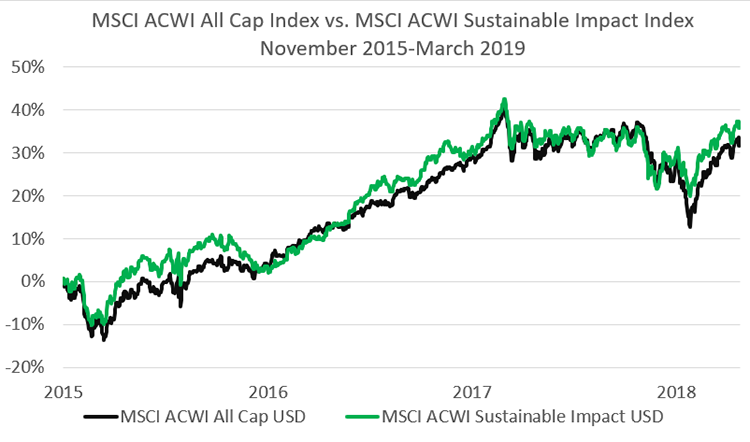
But when you marry the two, something magical happens. Paying attention to both profit and purpose — as data for ESG & sustainability indices have each proven out — leads to results that actually slightly outperform the market.

MSCI ACWI All Cap Index VS. MSCI ACWI Sustainable Impact Indext Nov.2015-March-2019-LOHAS Advisors

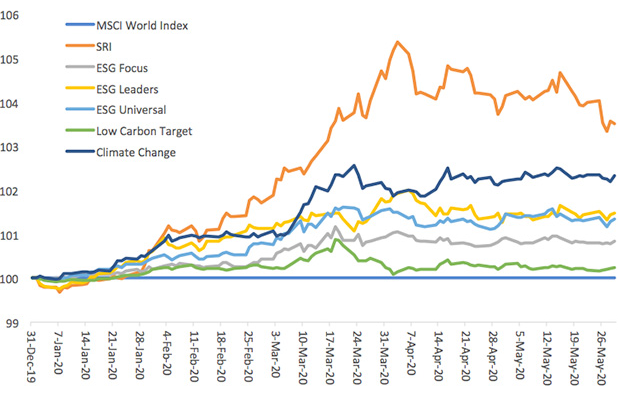
This trend of greater returns for socially responsible investments has only accelerated during the COVID pandemic.

Greater returns for socially responsible investments has accelerated during the COVID pandemic-MSCI World Index-LOHAS Advisors

Notably, the financial performance of impact investments has been even more pronounced in the private markets where real impact (and often more attractive returns) is delivered through private sector investments (in companies, funds, and projects).

The good news is that attractive social enterprise investment opportunities are abundant across health-tech, education, fin-tech and renewables, delivering market-rate or better returns while concurrently generating substantial social or environmental benefits.

More in line with the demands of the next generation, racial equity considerations — of the production and use of the product/service as well as hiring and compensation within the company staff and leadership team — have also become important considerations for investment evaluations. And, on the direct side, much like I wrote about last year, in GreenMoney, regarding untapped investment opportunities for women-founded or led companies and funds, investing in minority-led enterprises is also proving to offer above-market-rate returns as evidenced by the tremendous work of groups like FVLCRUM Funds, which is creating generational wealth in minority communities while creating substantial value for investors.

I can’t end this article without sharing three of the most innovative trends we are seeing at LOHAS Advisors for 2021 for forward-thinking investment committees and investment advisors focused on engaging parties across generations with new approaches to integrate alpha and impact. The first trend that’s begun to generate significant interest is Social Impact Entertainment. As a means to build bridges, families (often through their family foundations) have coalesced around a specific cause (e.g., animal welfare, human trafficking, environmental conservation, etc.) but in the past have disagreed on how to address it (i.e., investment versus philanthropy). Innovatively, more and more often families are recognizing the power of film and television to generate greater awareness (and resulting action) for their causes while also capturing attractive financial returns.

The second trend we see continuing to grow in 2021 is on the philanthropic side, where many traditional nonprofits come back to donors year after year with the same size (or larger!) grant request without permanently fixing anything. The alpha on that investment is 100 percent loss of capital annually, and the impact may be less than optimal as well, often focusing solely on patches for symptoms while neglecting underlying issues. In 2021, one of the hottest innovative intergenerational trends that’s continuing to grow is investing in for-profit social enterprises via donor-advised funds (“DAF”) as part of the family’s philanthropic strategy – funding solutions for causes the family cares about while believing that revenue-returning ventures are better positioned to tackle some of society’s most endemic problems. As a bonus, when those social enterprises do return a profit, that just keeps growing the investment capital in the DAF that continue in a virtuous cycle to be reinvested. At LOHAS, we are helping parties use their donor-advised funds to invest in for-profit social and environmental impact companies, funds, projects, and productions more than we ever have in the past.

Lastly, even beyond DAFs, we are seeing a variety of up-and-coming nonprofit leaders recognizing that they need sustainable business models and must stop relying on donation-dependent models that put undue stress on organization management annually. We have crafted new approaches to help grow nonprofit revenue through the strategic structuring of hybrid, customized “partner” for-profit ventures which directly support the nonprofit’s mission and funding needs while also engaging in related profitable endeavors.

After the chaos and divisions of 2020, I look forward to celebrating your successes as you seek out and find common ground across generations and hope that you, like us, maintain a continued commitment to innovation that bridges the divides and builds a better future through investment strategies that support the family’s and individual members’ values while equally generating attractive financial returns and prosperity for all.


Article by Tami Kesselman, partner, LOHAS Advisors

Tami Kesselman is a creative and analytical family office strategy advisor, global expansion expert, and leader at expanding financial and impact success within complex systems. A Harvard-educated strategist and former Bain consultant, she is a pioneer and thought leader in impact investing who has spent the past two decades working at the intersection of the highest levels of corporate, intergovernmental, entrepreneurial, and investor communities globally.

As a Partner at LOHAS Advisors, along with helping drive the firm-wide growth strategy, Tami also works directly with ultra-high net worth clients seeking to migrate portfolios to impact alignment without sacrificing financial returns. With an innate ability to help clients shape portfolios in ways that resonate across generations, she has become highly sought after as increasingly more wealth is transitioning.

Tami annually lectures at Harvard Business School on the complex intersection of capitalism, sustainability, public policy, business management, and geopolitics, and keynotes at investor conferences globally on the shifting fiduciary demands as global standards evolve. She has facilitated board-level strategy sessions for clients on six continents, annually chairs Opal’s Private Wealth Impact Investing Forum, and serves on the Steering Committee for the NEXUS Impact Investing Working Group and the UN-NEXUS Small Island Resiliency Braintrust. In 2019, Tami also became the worldwide president of Harvard Alumni in IMPACT (Investment – Measurement – Policy – Advocacy – Climate action – Tech4good), a global alumni organization with nearly 1,000 members from 60+ countries, coming from Harvard College and every Harvard graduate school.

Tami’s passion is working 1:1 with individual investors and single-family offices, helping them identify and accelerate the positive ripple effects of allocating capital more effectively to improve the world while protecting their portfolio returns over the next decade and beyond.

Featured Articles, Impact Investing, Sustainable Business

X