Tag: Impact Investing

Faith-based Investing: Economics for the Greater Good
By Duane Roberts, Dana Investment Advisors

Duane Roberts Dana Investment AdvisorsSister Generose Gervais, a Franciscan sister and administrator of Saint Mary’s Hospital (now part of Mayo Clinic), recognizing the need for financial resources to pursue the hospital’s work, once stated: “No money, no mission.” This quote is often used to justify a myopic focus on investment returns. But her complete statement finished thusly: “No mission, no need for money.” She was reminding us that our resources are only meaningful if put in service of a greater good.

Faith-based investing is not a recent trend, for religion has influenced economies and finance throughout recorded history. In ancient Greece, capital accumulated with the temples and sacred administrators acted as bankers, leading historian Gustave Glotz to state “finance was born in the shade of sanctity.” The Talmud gives advice on diversification (one third in land, one third in commerce, and one third at hand). Views on usury go back millennia and span all the Abrahamic religions. Faith-based investors recognize they have an opportunity, indeed an obligation, to exert influence on businesses to maximize the human welfare (beyond simple monetary gain) of shareholders, broader stakeholders, and society at large. Such investors may align investments with their belief system, such as the Quakers eschewing any business dealings with companies involved in the slave trade, or early Methodists avoiding investments in or partnerships with companies profiting from alcohol, tobacco, gambling or weapons.

Faith-based investors have also been at the forefront of shareholder advocacy. In 1971, the Episcopal Church filed the first shareholder proposal to appear on a corporate proxy that went beyond internal governance or financial issues, asking General Motors to withdraw from South Africa for as long as apartheid continued. A Baptist minister, Leon Sullivan, was a General Motors board member at the time and authored the Sullivan Principles, a code of conduct for corporations designed to pressure the South African apartheid system. Religious entities and individuals have collaborated ever since to nudge economic actors toward more just and sustainable businesses.

Dana’s own faith-based investment management is comparatively young, but spans more than two decades. Our experience grew out of a client request in 1999, when a women’s religious order in Chicago asked us to tailor an equity portfolio to their Catholic values. In dialogue with the nuns, we established a group of companies to avoid (exclusions), but also identified characteristics of companies that, all else equal, would be preferred investments (positive screening). We have since worked with religious entities of various faiths to align portfolios with their values and goals. Fortunately, we find that people of good will, whether they identify as religious or not, share many common areas of agreement relating to the use of their capital. At Dana we concentrate our investment activities where there appears to be a broad consensus, while customizing portfolios as appropriate to client-specific values and concerns.

Faith-based investment has been flourishing over the past decade along with the growth of ESG investing. While documents of the Catholic Church have addressed the connection between economies and human welfare for centuries (e.g., Rerum novarum, an encyclical of Pope Leo XIII issued in 1891), several documents in the last 10 years have inspired conversation among Catholics and non-Catholics regarding the purpose and responsibilities of economies and financial systems. Evangelii gaudium (2013) exhorts the faithful to return “economics and finance to an ethical approach which favors human beings.” Oeconomicae et pecuniariae quaestiones (2018) urges “new forms of economy and of finance … directed towards the enlargement of the common good and respect for human dignity.” Fratelli tutti (2020) reminds us that “business abilities, which are a gift from God, should always be clearly directed to the development of others and to eliminating poverty.” In 2021, the U. S. Conference of Catholic Bishops (USCCB) updated its Socially Responsible Investment Guidelines for the first time since the initial guidelines were issued in 2003.

Perhaps the most influential of these recent documents are Laudato si (2015) (“there is urgent need for politics and economics to enter into a frank dialogue in the service of life”) and the follow-on document commemorating the fifth anniversary of the encyclical, Journeying Towards Care for Our Common Home (2020). Laudato si’ generated a global interfaith response, supporting existing activities such as the ecumenical Care for/of Creation movement, while inspiring faith-based and secular institutions and leading to the formation of dozens of organizations to pursue the ideas (e.g., integral ecology, limits to technocratic economics) set out in the document.

Adam Smith was a moral philosopher, best known for his invisible hand argument that individual pursuit of self-interest in a free market would promote the public interest, perhaps unintentionally.

But he presupposes that businesses operate in a well-regulated environment under conditions of justice, and warns of public harm without reasonable regulation. Smith understood that an economy is meant to serve individuals and collective society. The field of economics has become overly focused on optimizing quantitative measures such as income, financial wealth, or GDP, all of which are flawed measures that fail to capture qualitative aspects of individual or social progress and benefit. Several contemporary economists (e.g., Kate Raworth, Tomáš Sedlá?ek) attempt to return to a study of economics in service of a broader concept of human/social welfare. Jon Lukomnik and James Hawley, in their book Moving Beyond Modern Portfolio Theory, suggest that investors will benefit even in financial terms by addressing systemic risks. Pope Francis is trying to steer the conversation in a similar direction. There is substantial common ground between faith-based investors and secular individuals and organizations.

The strategies that Dana manages on behalf of faith-based investors are all implemented consistent with Dana’s fundamental investment philosophy and processes. We do not believe it is necessary to compromise investment discipline to achieve values-aligned portfolios. On the contrary, our history suggests that non-pecuniary considerations may improve our security selection, perhaps by counteracting short-termism that accompanies quarterly financial reporting for U.S. public companies. In addition, we find that ongoing dialogue with our faith-based clients is challenging, stimulating, educational and rewarding. Client conversations are often crucial components to our evaluations of companies, and help to set direction and priorities for Dana’s corporate engagement activities.

Sr. Generose also said: “We must not be content only to see things as they are. We must have the vision, faith and hope to see what things can and must become.” As financial stewards, our investment choices and portfolio-related actions can have effects that extend beyond monetary returns. Faith-based investors have long seen opportunities to promote the greater good through investment activities. Many investors, regardless of religiosity, are recognizing shared desires to use investment capital to achieve a more comprehensive optimization of human welfare. As investors, we can play a small part by thinking holistically and not obsessing on purely financial metrics. At Dana, our faith-based clients awakened us to this possibility over 20 years ago and continue to enhance the perspective we employ as asset managers.


Article by Duane R. Roberts, CFA, is Director of Equities and Portfolio Manager at Dana Investment Advisors, having joined the Wisconsin-based asset management firm in 1999 to launch Dana’s institutional equity strategies. Duane graduated from Rice University with a BS in Electrical Engineering and Mathematics. He earned an MS in Statistics from Stanford University and an MBA from Southern Methodist University. Duane is a CFA® charterholder and a member of the CFA Institute and the CFA Society of Dallas-Fort Worth. He is a partner with Social Venture Partners Dallas and member of the SWAN Impact Network. Duane serves on the investment committees for the Roman Catholic Diocese of Dallas and Cistercian Abbey and Preparatory School.

Featured Articles, Impact Investing, Sustainable Business

Heeding the Call: Investing in Justice and a Livable Future

By Amanda Joseph, Calvert Impact

(Top image) Calvert Impact portfolio partner AHC Inc. is a nonprofit developer of affordable housing in the mid-Atlantic region that provides quality homes, often alongside supportive services, for low- and moderate-income families, primarily in the Baltimore-Washington metropolitan area and Northern Virginia. Here with leaders of the Episcopal Church of the Resurrection and the City of Alexandria, AHC Inc. broke ground on The Spire, 113 new affordable apartments for low- and moderate-income families in Alexandria’s West Beauregard neighborhood. Image courtesy of Calvert Impact

At the start of each New Year, it is the Jewish tradition to sound the shofar. The ancient cry of the ram’s horn calls upon us to awaken, to take stock of our actions (and inaction), and to move forward into the new year with conviction and commitment to do better as individuals and as communities, pursuing acts of justice, compassion, and righteousness.

Amanda Joseph - Calvert ImpactThe clarion call of the past two years—throughout a pandemic, climate crisis, war in Ukraine, and racial justice reckonings—has never been louder, but how have we heeded this prophetic cry for justice?



Fortunately, we have seen a reawakening among faith investors to address these challenges through the power of mobilizing assets in alignment with their values. Over the decades, faith leaders charted a course that has engaged both values-aligned investors and financial professionals. Today, we are witnessing some of the first “impact investing” pioneers coming together with a new generation of faith-based asset owners and an expanding set of networks that support them, to learn from one another, share knowledge and expertise, and invest their resources for a better world.

Through an increasingly interconnected and collaborative network within and across faith communities, we are witnessing an ecosystem emerge that is committed to moving their trillions of dollars of collective capital into true global solutions. A movement is underway. Momentum is building. And the urgency is real.

Through this, two things have become apparent.

First, faith institutions, which together represent roughly one-tenth of global investable assets1, often serve as catalysts that attract other investors. That means their decisions to invest for impact will continue to have an outsized positive influence on what tomorrow looks like.

Second, faith-based asset owners are increasingly expecting more — more from their investments, their policies, their investment committees, their financial advisors and investment consultants. These faith leaders, sometimes prompted by their grassroots, know they can no longer make decisions at a glacial pace when the glaciers are quite literally melting. Consequently, they will demand more from their institutions and from their portfolios, more urgently. And they are doing so through myriad initiatives.

The responsible stewardship of community assets is paramount for faith investors—from bank accounts and endowment funds, to houses of worship and other real estate. Using a values-based framework to evaluate their portfolios, faith institutions may discover that investments in their portfolios may undermine their vision for a better world, profiting by extracting from communities they care about, rather than contributing to their flourishing. For example, the cry for divestment from fossil fuels and for investment in a “just transition” is increasing, such as the Laudato Si’ Movement in the global Catholic world, Operation Noah among churches in England, Dayenu (“enough”) in the US Jewish community.

ECLOF International microfinance supports small businesses
ECLOF International, a faith-based organization with a mission to promote social justice and human dignity through microfinance, has supported small businesses through the pandemic, like these clients in rural Kenya. ECLOF International is a Calvert Impact portfolio partner. Image courtesy of Calvert Impact

Today, faith investors affiliated with the Interfaith Center on Corporate Responsibility (ICCR)—which first held corporations accountable for actions in apartheid South Africa through screening, divestment and engagement—are leaders in employing these powerful investment strategies to drive corporate accountability on behalf of all stakeholders, not just shareholders. These pioneers, like the Sisters of Mercy and the Unitarian Universalist Association, were also among the first to invest directly in communities in the US and globally, long before we called it “impact investing.” Today, ICCR members are revisiting this legacy through an impact investing working group, offering peer support to more fully activate their assets for justice.

Since 2020, the GIIN (Global Impact Investing Initiative) has hosted the Faith-Based Investor Hub to drive a greater mobilization of faith-based assets into impact investing and support the evolving ecosystem of networks and organizations pursuing these goals. Dozens of faith-based asset owners and the networks that support them meet regularly as peers to share challenges and barriers, identify opportunities for collaboration, including the faith-based repository, a library of resources and publications curated for faith investors.

Grounded in Pope Francis’s Laudato Si’ encyclical on “care for our common home,” the Catholic Impact Investing Collaborative (CIIC) is a membership organization of Catholic asset owners and partners committed to helping grow the broader community Catholic impact investors, through trainings, resources, and deal sharing. CIIC members seek a world where capital is a transformative force for good, stewards the environment, and enhances both equality and human dignity.

Sunwealth a Calvert Impact partner and Father Pishoy
Sunwealth, a Calvert Impact portfolio partner, is a clean energy investment firm working to create a more resilient, secure, and equitable energy future by financing and managing a diverse array of community-based solar projects across the US. Sunwealth has brought solar energy to houses of worship throughout New England, including to the rooftop of St. Mary & St. George Coptic Orthodox Church in Scituate, MA. “A principle of our religion is to be a guardian of the earth and the environment. We have to take care of the planet and the people on it,” said Father Pishoy. Image courtesy of Calvert Impact

Similarly, the Francesco Collaborative has created opportunities for peer learning through its Livable Futures workshop, based on Catholic Social Teachings (CST). Together, investors are challenged to explore new investing- strategies that support an economy that safeguards humanity and the planet, and build a movement at scale.

FaithInvest is an international, network of religious groups and faith-based institutional investors, committed to growing the scale and impact of faith-consistent, values-driven investing worldwide. They support a broad constituency of global faith communities to proactively act as faith-consistent investors to make our world a better place, through trainings, convenings, and resources, including the Living Laudato Si’ resource hub.

The American Jewish community is also supporting impact investing initiatives, such as the San Francisco Jewish Community Federation & Endowment Fund’s Impact Lending program, offering impact opportunities in the US and Israel through donor-advised funds; a guide to impact investing published by the Jewish Funder’s Network; and a Jewish values investment framework developed by the JLens Network.

Christine Rowsey - Volunteers of America client
Calvert Impact portfolio partner Volunteers of America is a faith-based nonprofit organization that provides hundreds of services to disadvantaged communities, including housing assistance, healthcare, and housing. After being laid off, this VOA client in Detroit, MI purchased a car and completed a nursing training through VOA’s lending and grant programs. Says Christine Rowsey, “They helped me rewrite my life, the way I wanted it to be written.” Image courtesy of Calvert Impact

Importantly, a number of faith-based fund managers have committed at least 1% to impact investing. Everence’s Praxis Mutual Funds, a long-time leader in community development investing, has continued to grow its impact investing and reporting across its funds. Eventide Funds has also made a commitment to invest 1% of its assets to serving vulnerable populations with dignity. And the Guidestone Global Impact Fund also seeks to invest 1% in community investments.

Faith Driven Investor, a growing community of Christian investors, has created the Marketplace, an online platform connecting investors with like-minded entrepreneurs and fund managers

Notably faith institutions, including churches in BIPOC communities, serving as anchors in the neighborhoods they serve, now focus on transforming their real estate into assets for economic renewal and community transformation, working with groups like The Oikos Institute, Enterprise Community Partner’s Faith-Based Development Initiative, New Way Homes, and others. Similarly, as members of Catholic religious orders age and their communities shrink, they are considering new, more inclusive strategies for the land they hold, to benefit communities for generations to come with affordable housing, open space, and more.

It is inspiring to see this growing movement among diverse faith investors fulfilling the mandates of their specific tradition and together transforming how investing is done—in service of a more livable future for all. Small and large churches, congregations, synagogues, temples, wealthy and under-resourced. Mainline denominations. Islamic investors inspiring new products that can comply with Shariah law. As well as those outside the Abrahamic traditions—our colleagues at FaithInvest have brought together investors across the Dharmic religions, including Buddhists, Hindus, Sikhs, Jains, to explore what “faith consistent investing” looks like.

Powerfully, these faith-based asset owners are leading the way, not only for their peers, but also for secular values-based investors; they are also demanding that their financial decision-makers and professionals follow suit with investment products and services to address these urgent and universal challenges.

Whether a secular or faith-inspired investor, may we all hear the cry of the earth and the cry of the poor, and heed the sound of the shofar for racial and economic justice. May we be inspired for action, to work in community, collaboratively, across faiths, by deploying our abundance aligned with our faith values to make a world that is just, equitable and sustainable. Now is the time to mobilize our collective assets and energies, for our common home, for people, planet, all of creation and for generations to come. A movement is underway. Heed the call. Join us.


Article by Amanda Joseph, Director of Faith-Based Initiatives at Calvert Impact, a leading impact investment firm that through its products and services has mobilized over $4 billion in investments to create a more equitable and sustainable world. She serves as a resource for faith-based investors on their impact investing journeys and partners with faith leaders and networks to build the capacity and community of practicing faith-based impact investors, which includes a series of resources to guide faith investors and their financial professionals.

Previously, Amanda worked at Opportunity Finance Network, the nation’s leading association of community development financial institutions (CDFIs) committed to providing affordable, responsible capital and financial services to communities not served by mainstream finance. She has held senior management roles at a technology company assisting Americans to sustainably move out of poverty and for a decade-plus at Jewish Funds for Justice/The Shefa Fund where she managed the first and only national initiative to organize the American Jewish community to invest in low-wealth communities across the county.

Amanda has prior experience as a commercial loan officer for the Self-Help Credit Union, and has worked with a range of mission-driven organizations. She holds an MBA from the Yale School of Management, and an AB from Bryn Mawr College.

Footnotes:
[1] FaithInvest, Zug Guidelines, 2017

Featured Articles, Impact Investing, Sustainable Business

Global Water Security–the single most significant impact and investment opportunity

By Thomas Schumann and Kübra Koldemir, Thomas Schumann Capital and SustainFinance

Thomas Schumann and Kubra KoldemirThat water is essential to planetary well-being is undeniable. It is indisputable that securing water for different uses provides countries with socio-economic development. However, investing in water resource development is still challenging for governments and corporations worldwide. Energy has alternatives (solar, wind, nuclear, etc.), but there is NO substitute for water.
Water demand is projected to grow by 55 percent by 2050 (including a 400% rise in manufacturing water demand). By 2050, 1 in 5 developing countries will face water shortages. Today, the challenge of water security is global and growing. The criticality of this challenge is reflected in the World Economic Forum’s 2015 Global Risks Report, in which water is ranked as the global risk with the single most significant potential impact on economies over the next ten years. Reduced freshwater availability and competition from other uses — such as energy and agriculture — could reduce water availability in cities by as much as two-thirds by 2050, compared to 2015. Together, global water use, storage, and distribution — and the lack of wastewater treatment — contribute 10% of global greenhouse gas (GHG) emissions, making it key to the net-zero transition. Reflecting the value of water in investment decisions and disclosing exposure and vulnerability to water-related risks in investment portfolios could further help align the financial sector with water security objectives.

According to Wood Mackenzie, Global GDP is projected to reach $170 trillion by 2050. A World Bank report on Climate Change and Water suggests that investing in global water security mitigates the potential loss of up to 6% or $10.2 trillion of global GDP per year.

There are two critical aspects of financing water security for the future. By far, the most considerable amount is what must be financed by governments and municipalities to support water extraction, delivery, and sanitation. The OECD estimates investment needed until 2030 to achieve SDG 6 is approximately $1.7 trillion (3 times the current spending). Moreover, this represents only a fraction of the water investment agenda: projections of global financing needs for water infrastructure range from $6.7 trillion by 2030 to $22.6 trillion by 2050, and these figures do not cover the development of water resources for irrigation or energy (they are wrapped into the clean energy investment estimates.

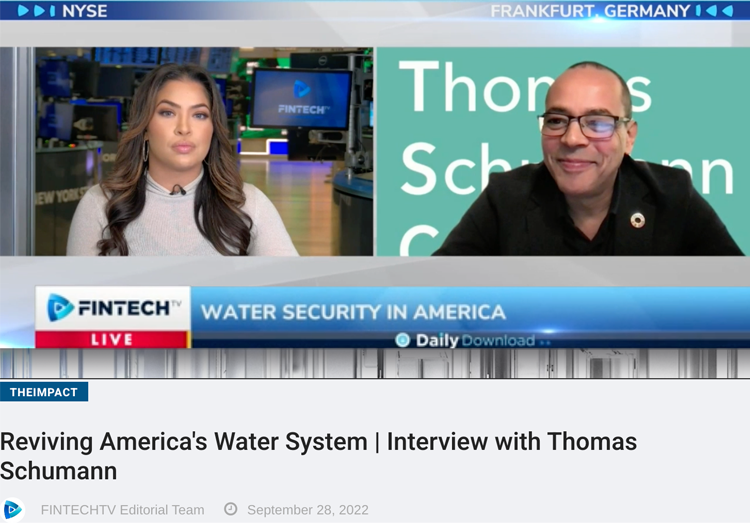
TheIMPACT Sept. 28, 2022 episode – Alicia Nieves talks with Thomas Schumann, founder of Thomas Schumann Capital, about reviving America’s Water System with traditional and alternative bundling. Thomas expounds on achieving the UN’s Sustainable Development Goal 6, the connection of the water crisis to the climate crisis.


Food and water use are inextricably linked, of course. Agriculture is rapidly draining aquifers and surface water reserves worldwide; in most countries, agricultural pollution is the leading cause of water degradation. According to a Ceres report, Feeding Ourselves Thirsty, it is noted that crop irrigation accounts for 75% of total consumptive use of water in the United States, with most of it, used to grow crops for livestock. As the single water user across the nation, irrigation for cattle feed crops is the leading cause of water depletion in a third of all western U.S. sub-watersheds.

“We must invest in companies innovating to shift the global food and water supply system away from industries that use disproportionate amounts of precious resources of land and water if we are to have enough resources to feed a growing global population of almost 10 billion by 2050,” says Elysabeth Alfano, CEO of VegTech™ Invest, Advisor to the world’s only Plant-based Innovation ETF, EATV.

From a corporate investment perspective, the numbers are smaller but still material in terms of impact on corporate earnings in the future. “There is a compelling economic case for investment in water. The benefits from strategic investment in water security could exceed hundreds of billions of dollars annually.” The recent analysis provides a partial estimate of global economic losses related to water insecurity, which are nearly $500 billion per year. Taking action on water risks is essential for climate action and makes business sense. That is the business and investment case for Global Water Security. This issue has yet to include establishing a fair price for Water that the Global Commission on Economics on Water is working on. A price for water and creating a water credit similar to the carbon credit ensures additional upside for investing in global water security.

Thomas Schumann Capital creates and sponsors public and private equity investment products for Global Water Security. TSC also supports Project Greenland, which offers large-scale freshwater, industrial- and agricultural water export from the world’s Water-richest region Greenland to the water-stressed areas such as Texas, California, Europe, and MENA.

Additionally, Thomas Schumann is a global founding signatory of Ceres’ Valuing Water Finance Initiative, which represents $9.8 trillion in assets under management that seeks to qualify/quantify Water Risk in equities. Thomas Schumann also partners with UN-Water, World Economic Forum, Council for Inclusive Capitalism, and the Global Islamic Impact Investment Forum to accelerate Global Water Security and UN SDG6 in capital markets for 7.8 billion stakeholders. Find further information here.


Article by Kübra Koldemir and Thomas Schumann

Thomas Schumann, a sustainability pioneer, innovator and steward at the Council for Inclusive Capitalism. He is the founder of Thomas Schumann Capital and globally recognized advocate of global water security.

Kübra Koldemir is a founding partner at SustainFinance. She has written numerous sustainability articles that have been published in various global publications. She holds an additional position as a sustainability researcher at Argüden Governance Academy. 

Koldemir started her financial career in 2006, working as an investment analyst in New York City, first at a long-only fund and later at a hedge fund with $1 billion in assets under management (AUM) that specialized in financial service companies. Focusing on international investments, she assessed the strategy and results of numerous multinational corporations across several sectors. 

Koldemir holds a BA in international relations from Mount Holyoke College and an executive MBA degree from the University of Texas at Austin.

Additional Articles, Energy & Climate, Food & Farming, Impact Investing, Sustainable Business

Investing in Coastal Enterprises’ Child Care Business Lab

By Gabrielle Grunkemeyer, Coastal Enterprises, Inc. (CEI)

Creating a Replicable Model for Increasing Child Care Access 

Gabrielle Grunkemeyer CEI

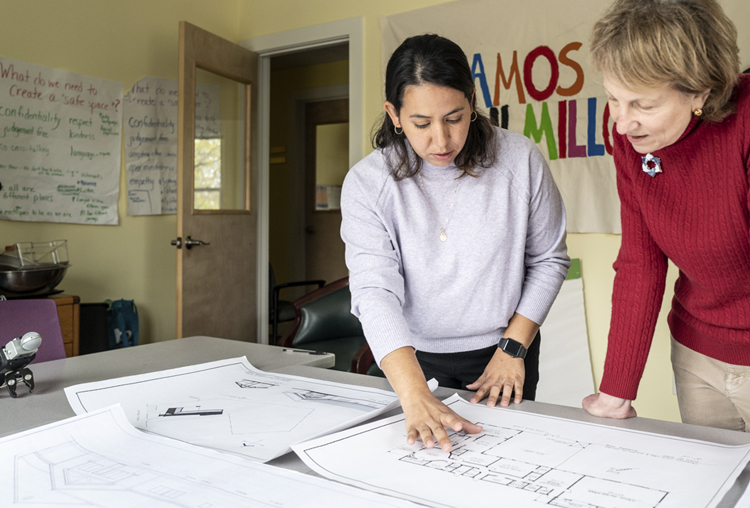
(Above) Rayitos de Sol, bilingual child care facility in Milbridge, Maine; photographer Sean Alonzo Harris

Juana Rodriguez-Vazquez has deep ties throughout the Spanish-speaking community in Milbridge, Maine.

She first became a familiar face as teen serving food to field workers from her parents’ food truck, then as a young worker in the wreath factory and blueberry fields. As an adult and mother of two, Juana continued supporting her parents’ expanded food business, while working at Mano en Mano (Hand in Hand), a local nonprofit that works with farmworkers statewide and immigrants in Downeast Maine.

As she rose from assistant teacher to Washington County Regional Coordinator, to Education Program Director, to Executive Director Mano en Mano, Juana became acutely aware of the lack of Spanish-language resources in the area, which particularly impacted children. Her first child has spent his infant and toddler years in a Spanish-speaking environment, but when she had to place her second child in an English-speaking, white-led child care she saw her daughter struggling with unfamiliar foods and Spanish songs and language. Juana could feel the culture that was so important to her family slipping away.

One would be hard-pressed to find someone who knows the needs of her community more, and what they needed was culturally specific child care.

“I had been talking to parents about the opportunities that were [in Milbridge] for childcare,” Juana recalled, “and the lack of opportunities for kids to really practice their language and culture and be in a space where that was really valued and celebrated. And that was always a need, a gap that we always saw as parents missing here.”

When Juana learned about a new program being offered by Coastal Enterprises, Inc. (CEI) to help start new child care services in Maine, she saw the opportunity for Mano en Mano to host the kind of care the community had been asking for.

Though Juana holds a bachelor’s degree in education from the University of Maine at Machias and a General Elementary (K-8) Teacher Certification from the Maine Department of Education, she didn’t have direct experience running a child care program. CEI’s Child Care Business Lab was designed for people like Juana – experienced and enthusiastic about early childhood education, but less familiar with the in-and-out running a business and managing the complexities of child care licensing, reimbursements and financials.

CEI’s Child Care Business Lab team walked Juana (and the 7 other members of that first cohort) step-by-step through the licensing process and partnered Juana with a CEI business advisor, who helped her develop business plans, financial projections, marketing and communications. A key part of the program was connecting the cohort participants with others in the field:

“Talking to people that have been doing it for years or have already been doing it is really good when you are designing and thinking about what you’re going to put in your space, and where you should put things,” Juana said, “or even just thinking about, well, you should have a door going to the playground, that’s really helpful. You wouldn’t think about that, but that’s something that you learn from being in the field.”

After completing the program, Juana was able to open Rayitos de Sol, a bilingual child care for 12 children in a former conference room at Mano en Mano, which quickly led to plans to expand to a new dedicated building across the street.

Rayitos de Sol building expansion - by Sean Alonzo Harris - courtesy CEI
Rayitos de Sol, bilingual child care facility in Milbridge, Maine; photo by Sean Alonzo Harris

“Now, especially as we are putting out the new plans for the new building, I’ve had people call me, “I want my child to go there,” and I’m putting them on the list. It’s had a positive impact on the children and families here, having a bilingual space where children can practice their home language if it’s Spanish, and also learn a new language, and bring it back into their home and their families. I really hope that Rayitos de Sol is a model for other communities and other places. I know, especially here in Maine, we do have diverse communities in other areas.”

Bringing the Child Care Business Lab to More Child Care Entrepreneurs

CEI knew exactly where those communities in need of child care were. CEI is a community development financial institution or CDFI that helps create an economy that lifts all people through business advising, financing and policy advocacy. CEI saw that many businesses were having a difficult time finding or retaining workers and reached out to their community connections to find out why. CEI’s Child Care Business Lab emerged from a listening tour of Maine, where residents reported that the lack of quality child care was affecting their ability to work full time, secure a decent livelihood and support their families. Child care was a sector that CEI was familiar with, having financed both nonprofit and for-profit child care enterprises that were purchasing equipment or building child care facilities over the years.

Juana’s cohort of the Child Care Business Lab was funded by a federal grant that focused on residents of Maine’s “rim counties,” those rural areas of the state that border Canada and where there is a great need for child care. CEI has worked for decades with Maine’s immigrant populations, which, like Milbridge have a need for culturally attuned child care, but they were largely clustered outside of the geography covered by the initial funding.

With the successes from that initial cohort, CEI was able to attract support from in-state philanthropic funders to open the Child Care Business Lab to additional rural counties, as well as funding new cohorts of Portuguese, Somali and French speakers in Lewiston, a city home to a large portion of Maine’s immigrant population. A partnership with the United Way of Southern Maine, the Greater Portland Workforce Initiative and Portland Starting Strong recently opened another cohort for immigrants in Maine’s largest city.

These first cohorts provided a fertile ground for learning, not just for the participants, but for CEI’s staff as well. Business plan templates and financial forecasting tools have been created for each type of Maine child care license and the curriculum has been simplified, exclusively focusing on what it takes to open a financially sustainable child care business. Panels of experienced child care providers throughout the program provide a “been there, done that” wisdom, enabling the new entrepreneurs to make better decisions. Despite having taken place during the pandemic, those initial cohorts have already started demonstrating impact, establishing 174 slots for new children, creating 33 new jobs for child care workers, and providing opportunities for 90 parents to get jobs or to go back to school due to having access to quality and affordable child care for their kids.

Rayitos de Sol, bilingual child care facility in Milbridge, Maine - photo by Sean Alonzo Harris
Rayitos de Sol, bilingual child care facility in Milbridge, Maine; photo by Sean Alonzo Harris

As the program gained momentum and the ongoing pandemic continued to put pressure on an already strained child care system nationwide, national foundations and peer organizations began to take notice and have reached out to CEI to explore ways the Child Care Business Lab model could be replicated in other communities.

Built Locally, Adapted Nationally

CEI’s Child Care Business Lab is an example of the kind of solution that CDFIs excel at. Through their lending and business advising in economically sidelined communities, CDFIs learn directly from the individuals in the communities that they serve what the key barriers to success are, allowing them to develop tailored solutions. Based on existing relationships within the community, these solutions can be tested and refined to maximize impact and ease of implementation.

Once an effective program is developed locally, resource limitations become the primary impediment to greater impact – a hurdle that can be overcome through strategic philanthropic partnerships that understand the importance of local efforts to national solutions. Philanthropic funders and impact investors can align themselves with CDFIs and help these mission-driven investors share their solutions so more people can share in the prosperity that everyone deserves.


Article by Gabrielle Grunkemeyer. As the Resource Development Manager at Coastal Enterprises, Inc. (CEI), Gabrielle is a contributing member of the CEI Corporate Development Team, which supports CEI’s fundraising activities. Gabrielle works closely with the Chief Executive Officer, President and Operations Leadership Team to identify philanthropic resource opportunities, develop and write funding proposals, and cultivate and steward relationships with private foundations, donor-advised funds, corporation foundations, and individual donors. She also is responsible for developing, improving, and implementing institutional processes and systems to facilitate strategic development activities. 

In addition to 25 years of project and grant management and fundraising experience, Gabrielle holds a BS from Texas A&M University and an MS for Texas A&M University-Corpus Christi. In 2017, she earned a Nonprofit Management Certification from Duke University.

Additional Articles, Impact Investing, Sustainable Business

Impact Investing for Social Justice: Looking Back and Moving Forward

By Adam Connaker, Surdna Foundation

Adam Connaker Surdna Found - GreenMoneyLike so many impact investors, we’ve hit an inflection point. For several years, our Foundation has taken steps to explore the terrain of impact investing, steadily learning how to complement and enhance our work to move toward positive value in this world. Now, we must take stock of where we are and chart a course for the future.
Let’s Start at the Beginning

In 1917, John Emory Andrus — a businessman, investor, and public servant — established the Surdna Foundation with 45 percent of his fortune. At first, the Foundation focused on direct services for orphaned children and the elderly. (pictured above) Over a century later, Surdna is governed mainly by Andrus’ descendants and has a long tradition of supporting innovative solutions to meet the core issues of the day. Since 2008, in response to the dramatic social and racial inequities across the United States, Surdna has worked to foster sustainable communities guided by principles of social justice and distinguished by healthy environments, inclusive economies, and thriving cultures. These pillars — environment, economic opportunity, and culture — form the backbone of a more fair and just society for all. They also pose new and distinct challenges in their scale.

Our Learning Journey to Mission-Aligned Investing

We believe all our capital — intellectual, social, and financial — has a shared purpose. As such, in 2014, at nearly 100 years old, Surdna set out to learn how our endowment, and the broader global financial system, could complement and augment our service to communities in need. For Surdna, impact investing answers the question of ‘how do we scale our impact and instill replicability to bring about lasting improvements in people’s lives.’ Against the enormous challenges of today, scale and replicability are a must. While having a greater than $1 billion endowment seems like a lot of capital, it’s small compared with the broader financial system’s hundreds of trillions of dollars. But it does represent a gateway to beginning to invest in solutions to today’s biggest pressing issues.

Surdna President Don Chen & former Impact Investing Director Shuaib Siddiqui discuss Surdna’s investment and risk-taking strategies to create wealth for BIPOC communities.

Six years ago, we made an initial allocation of $100 million to impact investing from our endowment—roughly 10 percent. The strategy was simple: widen the aperture of acceptable risk through two new dedicated pools of higher risk-seeking capital with the goal to “graduate” new impact funds through these pools into the endowment over time. This was a major step in our learning journey. We sought to design a financially accretive and highly impactful portfolio that would guide us toward our endowment of the future. We used $20 million to invest in more nascent strategies and managers while committing the remaining $80 million to test larger sourcing, execution, and performance of the impact space.

Investments That Go Above and Beyond

Today, the portfolio is fully committed—over-committed, actually. Performance is among the best of our entire endowment, albeit still early. We are excited about the impact our investments are having on areas like climate change (mainly through climate tech) and economic opportunity for gender and racially diverse communities (through investment in diverse-owned small businesses). And we are thrilled to see these impactful managers gaining traction with other institutional investors.

Take, for example, our early investments in Impact America Fund managed by Kesha Kash. In her first funding round, she brought in $10 million. In round two, Kesha raised $55 million, which may be the largest fund ever raised by a sole Black female general partner. Kesha and her team have a knack for investing in exciting companies, including Mayvenn, a platform that increases the bookings and incomes of hair stylists, and Care Academy, which provides home-care agencies with the training and tools they need to support home health aides. Often overlooked and undervalued, investments like these help businesses grow and scale, while increasing ownership and opportunity for entrepreneurs and communities of color.

Beyond growing assets under management, many managers we support are also challenging the field of finance to reckon with issues like racial bias. Illumen Capital, through a fund of funds, works with its portfolio of managers to institute racial bias training backed by empirical evidence. We also invested in Founders First Capital Partners, a small- and medium-sized business lending platform that leverages revenue-based finance to deploy value-add capital into underinvested communities in the U.S., especially Black communities. More importantly, they are redesigning a small business investment platform around the needs of Black entrepreneurs to upend the historic — and staggering — disparities in access to capital. A 2010 study from the US Department of Commerce highlighted that minority-owned firms are less likely to receive loans, on average receive lower loan amounts, are more likely to not apply for fear of rejection, and pay higher interest rates than non-minority-owned businesses. A just and supportive financial system must address issues like racial bias and disparities in access to capital at scale.

Surdna’s $100 million commitment was the first step on a journey toward an endowment of the future, built on the principle of innovative solutions to core issues faced by society. It is quickly proving capable of generating impact directly to communities in need and supporting managers with a new vision for the future of finance. It is also highlighting challenges and lessons learned that are critical to overcome to strive toward a long-term vision of authentic 100 percent mission alignment.

Reflecting on What the Future Holds

While the risk pools and graduation strategy have given us the flexibility to form relationships with high-impact managers and test larger endowment strategies, success still hinges on graduation, which has proven difficult. It takes years to fully prove performance and scale new managers and investment strategies. We also need to ensure there is room in our allocations for larger graduated commitments. The risk we face is to end up with a carve-out portfolio that traps managers long term. We are working on this, rethinking what graduation means and how to do it. For example, our climate tech portfolio has hit a critical mass and has met several key performance indicators, leading us to consider where it belongs long term and how to move it there.

On the back of a 10 percent carve-out, we’ve also created challenges in our asset allocation strategy. The impact portfolio has sought the best high-impact opportunities it can find, most of which have been illiquid ventures or early-stage investments. Its outperformance has led to the portfolio overshooting the full endowment’s asset allocation targets. As our impact commitments grow, we will have to layer in more of the disciplines of the full endowment, including sourcing investments across an array of asset classes and geographies. This presents its own challenge of finding equally high-impact opportunities across the other asset classes.

Lastly, to be authentic in our vision of addressing social and racial inequities, we have to keep going deeper. Similar to the movement around gender lens investing, racial justice investing will not be contained to ring-fenced strategies, but rather, needs to permeate all investments.

While there are great strategies that address specific racial disparities, and we will continue to invest in those, we need to carry the practices of analyzing and addressing racial impact to all our investments.

Working with Founders First and Illumen is a great step in this direction, but we need to continue investing in managers that can help build new norms for the field.

Six years into our strategy, our primary goal remains intact: continue to learn and strive toward greater mission alignment in our endowment. The reason still holds that we need to leverage our entire set of resources and that of the broader financial markets to meaningfully address today’s seismic challenges. Jumping in feet first with the initial pilot portfolio has laid the groundwork. As we move from testing to scaling, we are now grappling with new questions. How do we move beyond carve-out and avoid the pitfalls it can bring? How do we deepen our authenticity to racial justice? How can we leverage this opportunity so others can learn from our experience?


Article by Adam Connaker, who serves as the Director of Impact Investing at the Surdna Foundation. He oversees the Foundation’s $100 million impact investing portfolio and leads an ongoing effort to align the Foundation’s investment policies and practices with its social justice mission. 

For over 15 years, Adam has harnessed innovative finance to mobilize private capital for social and environmental outcomes. Before joining Surdna in 2022, Adam was Director of Innovative Finance at the Rockefeller Foundation, where he and his team supported research, strategic direction, and implementation of the Foundation’s program-related investments. In this role, he also spearheaded Rockefeller’s climate finance and racial justice investments and managed relationships with grantees throughout the investment process. 

Prior to Rockefeller, Adam worked as a private equity analyst for Wayzata Investment Partners, covering a range of industries, especially energy investments. Adam received his bachelor’s degree in finance from the University of Minnesota and his master’s degree in global affairs, with a focus on international development and humanitarian assistance, from New York University.

Energy & Climate, Featured Articles, Impact Investing, Sustainable Business

Optimizing Assets for Mission

By Dana Bezerra, Heron Foundation

Dana Bezerra Heron Foundation“Should a private foundation be more than a private investment company that uses some of its excess cash flow for charitable purposes?”
This was a central question pondered by the Heron Foundation’s Board of Directors nearly 30 years ago as they considered how best to use the Foundation’s assets to promote its mission of helping people and communities help themselves.

At the time, their question was a provocative one. It challenged a then-prevailing orthodoxy of organized philanthropy–the belief that mission is best served by keeping program and investment management separate, with the latter seeking to maximize financial return (without consideration of mission) and the former dispensing grants for mission. Our Board envisioned a different paradigm, where the endowment could be leveraged for more than just financial returns and could, in fact, work in service to our mission.

In our earliest days, this meant expanding our philanthropic toolbox; growing it from grants alone to tools across asset classes and return characteristics, as reflected in the much-cited “Heron spectrum.” (pictured above) Over time and with much, sometimes painful, lived experience, we began to realize that not only should program and investment not exist separately but sometimes there were important learnings to be achieved when they were contemplated together. We learned that multiple tools could be deployed with a single partner. For example, with vertically integrated nonprofit affordable housing developers, we could utilize grants (operating support, pre-purchase counseling, and down payment assistance), program-related investment (acquisition and predevelopment capital), and market-rate capital (to purchase mortgage-backed securities or AAA-rated taxable municipal bonds that provided “soft second mortgages” for low-income, first-time homebuyers).

However, when seeking to incorporate mission into our investments, what we found was not always what we expected. For instance, when we set a narrow focus on job creation, a job-laden real estate investment trust turned out to be the biggest private prison operator in the United States. In another case, we became aware of the potential social costs of a green investment in our portfolio. At first, it appeared as an attractive investment because of both the energy efficiency outcomes it provided to homeowners and the low-risk financial returns it produced for investors. However, despite all the positive aspects of this generally compelling investment, we learned that homeowners often bore a disproportionate degree of risk, with the green investment sometimes cascading them into foreclosure.

Now, nearly 10 years after declaring our intention to invest 100 percent of our assets for our mission, this moment offers an opportunity not only to reflect, but to provoke, explore, and inspire what may come next.

As we optimize our portfolio for mission, we are often stymied by a handful of perplexing challenges.

(In the interest of space, we will highlight only one such scenario here.) Given our way of working (no division between investment and program), we had a tightly held desire to reflect the voice and priorities of our community-based partners in our fixed income portfolio. We released a fixed income letter of intent and met with more than a dozen potential managers to discuss our intentions, including the desire to invest outside of high-credit quality communities and instead in those communities similar to the ones where we often worked. This was motivated not because we wanted to add uncompensated risk to our portfolio. Rather, we believed that from the vantage point of a forward-looking perspective, the risk may be mispriced. Furthermore, we viewed financial repayment as one type of risk among many others; we also planned to consider who is involved in the deal, the consequences to the community, and ultimately who bears the burden at the end of the day. No surprise, we immediately saw a pattern. Managers repeatedly explained the same obstacles to implementing the expectations in the LOI — it would force them to break from convention — primarily decoupling from benchmarks, and this was no-go territory for them. In the end, we decided to manage $45 million of our fixed income portfolio in-house so that it can better reflect the wisdom of our community partners and be completely untethered from indices.

In doing so and reflecting on our past work in communities since our inception, we point to the performance of the mission-driven investments during the 2008 financial crisis and during COVID as evidence of the importance of implementing feedback loops from our community and capital markets partners. As we continue to deepen our work in communities, ensuring and nurturing these feedback loops will remain important.

Recently, for example, our team was in conversation with some of our community-based partners and discussed two bonds from their region that we were considering for our portfolio, having identified them as likely to be impactful through our data-driven, top-down lens. People in the room responded passionately as they informed our team that one of the bonds was creating a positive impact, while the other one was heightening sprawl in the region.

As we came to better understand experiences like these over time, we often find ourselves working to reweave communities and capital markets, as the two have seemingly become disconnected.

Our efforts are increasingly more focused on reminding our community-based partners of the presence and magnitude of capital markets, like municipal debt, in their everyday lives. We also find that we are working more with development finance authorities and other issuers to encourage them to stay attuned to community priorities and to leverage our role as an institutional investor to signal demand within the market more broadly.

In today’s cultural context, building muscles like these — getting things done by working across relationships, each contributing unique knowledge and context, and operating in trust — guide much of our work. As we continue to contemplate with it means to truly deliver on our mission of helping people and communities help themselves, we typically arrive at the same conclusion — we must shift decision-making authority to those we seek to serve. As Heron continues to find our path forward, walking into, growing with, and exploring the emergent — namely, what it is exactly to shift power and transfer decision making–we will no doubt suffer additional humbling failures. Still, we believe that thriving is only possible by nurturing strong bonds with, and among, our partners. As our colleague, Farhad Ibrahimi of Chorus Foundation so aptly stated, we must be on the journey from “stewarding power accountably to sharing power equitably, so that we may cede power permanently.”

Whatever its eventual form, Heron recognizes that this is generational work; that an essential way to lay the foundation for a just, sustainable, and equitable future is to strengthen and support the growth of community members’ capacity to self-organize in a sustained way for positive change. This is to ensure that, even as new generations of leaders come forward and conditions within the community, the markets, and the larger society evolve, change efforts will continue to be rooted in the needs and aspirations of people with lived experience. We recognize that interlocking networks of individuals, investors, and enterprises will be needed for this type of organizing for change and that building and strengthening relationships characterized by trust within and across groups is essential; as Robin Wall Kimmerer teaches, the economy we seek “nurtures the community bonds which enhance mutual wellbeing; the economic unit is ‘we’ rather than ‘I,’ as all flourishing is mutual.”


Article by Dana K. Bezerra, president of Heron Foundation. Bezerra began her career in agriculture in California. Her family owned a dairy farm in the San Joaquin Valley, where she bore witness to the bankruptcy of a local creamery, the formation of an independent milk producers’ cooperative, and the provision of a local tax abatement package to a multinational food company. Those experiences left Bezerra with a lasting impression about the importance of social cohesion within a community — and the complicated relationship between communities and capital markets.

Bezerra proceeded to work at Merrill Lynch in the Private Banking & Investment Group, where she specialized in Philanthropy and Nonprofit Management. For the next decade, Bezerra managed client money, where she earned an appreciation for the nuances of intergenerational wealth and learned to navigate complex financial transactions and markets.

In 2006, Bezerra joined Heron. As a program officer, Bezerra engaged with nonprofit and community leaders who were operationalizing Heron’s mission on the ground in communities that had been waylaid by globalization, mechanization, and disintermediation. It became clear in that role that Heron’s responsibility was to feed the agency of local leaders by supporting them and their enterprises.

Over the next 10 years, Bezerra played a key role in rotating Heron’s entire portfolio (including debt, equity, and grants) to better reflect Heron’s mission. Bezerra became responsible for sourcing deals, identifying and developing relationships across a spectrum of investors, syndicating capital when possible, and cultivating opportunities to deploy the full range of Heron’s philanthropic and market-rate toolkit. As president, Bezerra hopes to build on Heron’s history and leverage the lessons it has learned over the past 25 years — both on the ground in communities and within the capital markets.

In addition to her role at Heron, Dana has been active in the leadership of several national and local philanthropic organizations over the last two decades, including the Board of Capital Impact Partners, the Steering Committee for Mission Investors’ Exchange, the Innovation and Selection Committee for the Nature Conservancy, and as a reviewer for the Bill & Melinda Gates Foundation as part of its Grand Challenge Exploration Program. Bezerra also participates actively in the Weantinoge Land Trust.

Bezerra has a Bachelor of Science in Agricultural Business and Public Policy from Cal Poly, San Luis Obispo.

Energy & Climate, Featured Articles, Food & Farming, Impact Investing, Sustainable Business

Tapping the Catalytic Capital Potential of Donor Advised Funds

By Timothy Freundlich, ImpactAssets

Above: Brilliant Planet is a portfolio company of AiiM Partners, an ImpactAssets Donor Advised Fund investee. Brilliant Planet is a carbon capture and storage company that is unlocking the power of algae as an affordable method of permanently and quantifiably sequestering carbon at the gigaton scale.

Tim Freundlich - Impact Assets - GreenMoneyDonor advised funds (DAFs) numbered roughly one million accounts hosted across 1,000 community foundation and nonprofit sponsors, with $160 billion in assets at the end of 2020.1 With a compound annual growth rate of 17% over the last five years, DAFs are growing much faster than private foundations as a storehouse of philanthropic assets. And, historically they grant more than 20% of assets each year. But what about the remaining philanthropic capital? Where does it sleep at night?
Impact investing has found a foothold in donor advised funds. From affluent individuals and families to community and corporate foundations, donors are looking closely at the investment side of their philanthropic capital and investing charitable assets in ways that provide immediate benefit to those who need it most.

The $160 billion in DAF assets represents a pool of patient capital and an ideal source of catalytic capital—a concept gaining steam in the impact investing world that denotes ‘deep end of the pool’ investing.

As the Catalytic Capital Consortium says, this is an investment that is: “…patient, risk-tolerant, concessionary, and flexible… to support impact-driven enterprises and organizations that lack access to capital on suitable terms through the conventional marketplace… strengthening communities, expanding opportunity and economic growth, and fueling innovation…”

Seth Goldman - Eath the Change

Using DAFs to Fund Entrepreneurs and Innovation

Philanthropic capital can be a critical source of risk-tolerant catalytic capital to early-stage innovators. This has been the motivation behind entrepreneur and Chief Change Agent at Eat the Change, Seth Goldman’s investments through his ImpactAssets Donor Advised Fund. His goal of investing through the DAF was to support other entrepreneurs and their vision. To him, taking more of a risk with the DAF made sense, because whether it succeeds or not, he will not get any money back personally. But if it is successful, that money will keep being passed on to others doing the same thing. Big wins so far include an investment in Happy Baby, an organic baby food company. Happy Baby was sold to Danone in 2013. Also, the DAF invested in Beyond Meat, a plant-based-protein maker, and Sweetgreen, an organic-greens restaurant. Both companies went on to Initial Public Offerings. These are in addition to numerous other early-stage companies, and community development investments to support low-income communities and small business owners.

Catalytic capital seeks to attract additional investors that otherwise wouldn’t join in, and to spawn innovation in structures that need early support. Examples include funding first time, diverse managers of venture funds to reach underrepresented entrepreneurs; funding early-stage, impact-driven enterprises that need risk-tolerant capital to grow; and funding first loss capital for community development financial institutions (CDFIs) that channel loans to small business, affordable housing and microfinance in distressed communities that are often left out of the banking system.

Readers may recognize a familiar narrative here, as catalytic capital sounds somewhat like “community investing.” And it is in that vein of investing. But it is also centered on effecting system-level impact in addition to filling funding gaps.

So what does Impact Investing generally, and Catalytic Capital specifically, have to do with DAFs?

ImpactAssets (the impact investing firm I co-founded in 2010, that was spun out of Calvert Impact Capital) started with what we thought was an obvious idea—offer a donor advised fund that was built of, by and for impact investors. We believed that impact investing and catalytic capital would find a natural home within these philanthropic endowment assets. The hypothesis was this:

  • DAFs are comprised of donated, tax deducted assets. The funds have moved to a charitably intentioned “pocket,” they exist for the common good, and somewhat separately from Milton Friedman’s whispers of “profit maximization.”
  • Donors are passionate about causes. Their impact interests often correlate to investible segments that can be amplifiers of their philanthropy. Conversely, their philanthropy can act as a bridge to their thematic impact investing.
  • DAFs leverage capacity and expertise across a much larger footprint than an individual account would have by itself. Yet they don’t have cumbersome boards or decision-making processes; they are also less expensive to open and operate compared to private foundations; and they provide access to tools and information that enable informed and effective giving decisions.
  • Donor advised funds are well suited to fixed income as donors plan for liquidity time horizons and grant making, and community investment has a lot of offerings that fit that profile.
  • DAF donors, we surmised, would be willing to shoulder the more indefinite time horizons and risk of illiquid venture or catalytic capital investments since they are driven by impact interests. And they would be open to impact with a range of returns, in addition to only risk adjusted returns.
  • Therefore, with the above considered, DAFs offered donors a financial vehicle that is personal and passionate, and that enables them to act early, quickly and somewhat fearlessly. They need not be as constrained as conventional personal or institutional assets, or even charitable foundation assets.

All in for Impact

“Where better to go all in for impact than DAFs?” we reasoned. And what better place to weave in catalytic capital and community investing? That hypothesis has turned to thesis, as ImpactAssets in 2021 reached $2.2 billion in assets while completing its 1,000th DAF private debt and equity impact investing commitment. We have seen individuals and institutions reach for deeper impact in their donor advised fund than they will outside of it — filling funding gaps and making innovative, early and more fearless investments to complement their abundant grant making.

That deep impact investing has become more accessible and more impactful as more investors, advisors, family offices and corporate foundations have come to leverage their philanthropic capital for catalytic impact investing.

At ImpactAssets, our 12-year track record has enabled us to expand advisory and support services and open new avenues of opportunity. It has led to the development of one of the deepest impact investment platforms in financial services, with proprietary blended strategies and a wide selection of fully vetted impact investment options across public and private markets, debt and equity, liquid and illiquid. It has taught us that it’s possible to address the world’s greatest challenges, from climate solutions and racial equity to gender equality and poverty alleviation, and that you can serve every kind of investment style — from market-rate to concessionary.

It’s Not a Moment… it’s a Movement. Impact investing in DAFs is Accelerating

That combination of experience, innovation and impact is driving philanthropic capital to greater impact. But it’s not just happening at ImpactAssets. Impact investing is expanding at other independent DAFs like Tides Foundation and RSF Social Finance. Community foundations from San Francisco and Marin to Boston, Vermont, Chicago and Seattle, have vibrant initiatives bringing place-based and other impact investing into their programs. Even some of the national financial services affiliated DAFs are experimenting too, as are some within the Jewish Federations.

This is a call to push deeper. It is time for all donor advised funds—and all foundations and endowments and their ~$1 trillion in assets, for that matter — to become sources of catalytic capital for deep, meaningful change. Organizations must lean in to building easy pathways for their DAFs to move toward catalytic impact. And every DAF account holder should demand that their DAF sponsoring organization offer flexible options for impact investing that are far beyond social and environmentally screened publicly traded stock and bond funds (though they should do that also).

The catalytic power of more than one million DAFs is a formidable funding source for social enterprises, CDFIs and organizations tackling the global systemic risks that are growing daily. It’s time to leverage the intrinsic nature of donor advised funds to enable the $160 billion in assets to be unleashed as catalytic capital even before being granted to nonprofits…to build the world we want to see beyond the limited one Milton Friedman handed us.


Article by Tim Freundlich, Founder & Executive Director, Strategic Development of ImpactAssets, where he develops complex partnerships and new client relationships, as well as supports field building and innovation. While previously at Calvert Impact Capital for 12 years, he conceived of and launched ImpactAssets, as well as was instrumental in building the now $500M Community Investment Note with more than $2 billion deployed into community development loans globally.

Energy & Climate, Featured Articles, Food & Farming, Impact Investing, Sustainable Business

Why Impact Investing Needs Philanthropy and Catalytic Capital

By Debra Schwartz, MacArthur Foundation

Above photo from Nextracker (an SJF Ventures III portfolio company); Courtesy of MacArthur Foundation

Debra Schwartz - MacArthur FoundOver the past several years, the global impact investing field has expanded like never before. Looking ahead, it is worth considering what impact investing’s further growth and mainstreaming could mean for philanthropy and foundations and the dynamic role they have long played.

Informed by almost 40 years and more than $700 million of impact investing, the John D. and Catherine T. MacArthur Foundation sees three main ways that philanthropy should continue to engage.

First, grant funding is needed to support further development of sound, widely accepted standards and policies for impact measurement and verification. Second, foundations provide critical support to the networks, experts, and thought leaders who help investors, investment advisors and asset managers connect, learn, and innovate. Third, philanthropy can practice impact investing directly.

By example and through partnership, foundations help advance growing engagement in values-aligned and sustainable investing. And, by leveraging our rich legacy of catalytic capital leadership, foundations help the impact investing field expand and accelerate its progress toward a more just, resilient, and inclusive world. Pioneered by the Ford Foundation and followed by the Packard and MacArthur foundations in the early 1980s, catalytic capital is patient, risk-tolerant, and flexible investment that seeds, scales, and sustains impact-generating organizations, usually with the goal of mobilizing capital from other sources, often in large multiples. This can happen by shifting risk and return through a guarantee or blended finance structure, or by making an early bet that helps an unproven but promising enterprise build its scale and track record to attract more investors over time.

Our experience as an early investor in the U.S. field of Community Development Financial Institutions (CDFIs) demonstrates the important role of catalytic capital and its lasting, outsize impact. In the early 1970s, pioneering, community-focused development banks and loan funds arose in Chicago and elsewhere, often in direct response to the devastating policy and practice of redlining, which denied Black and under resourced communities access to mortgages, insurance, and other essential forms of capital for decades. The early impact investments made by the Ford and MacArthur foundations throughout the 1980s and 1990s helped seed and scale dozens of promising new loan funds, banks, and credit unions. By 1998, CDFI leaders made the case for a new U.S. Treasury program which accelerated the industry’s spread and development nationwide.

When the COVID-19 pandemic reached the U.S., roughly 1,300 certified CDFIs were at work nationwide, managing more than $222 billion in assets. Through fast action and collaboration, backed by foundations and mission-driven family offices, they provided critical financial support to hard-hit small businesses—during the pandemic’s early days and as mainstream lenders implementing the federal government’s massive Paycheck Protection Program left out thousands of eligible nonprofits and small businesses, many led or owned by women and people of color.

Next, when the murder of George Floyd, nationwide protests, and a widespread racial reckoning motivated corporations, foundations, and individuals to finance Black and Brown communities and entrepreneurs, CDFIs met the moment again, with established capacity and ready opportunities.

Ultimately, these recent events and other developments helped to draw billions of dollars in new public and private capital to CDFIs over the past few years, including major donations from philanthropist MacKenzie Scott and both grants and investment from Google and other firms.

As an early and longtime CDFI investor, we found this surge of engagement and new resources incredibly exciting. It showed us that $300+ million in catalytic capital, provided to the earliest CDFI pioneers and to other promising groups over time, had ultimately helped build a durable infrastructure for impact at a scale we never imagined originally—with strong potential to continue multiplying the results of our original catalytic capital investments in the decades ahead.

The trajectory of a pioneering “triple-bottom-line” impact capital manager, now known as SJF Ventures, illustrates the lasting and outsize impact of catalytic capital invested in a for-profit, growth equity fund. In 1999, MacArthur made a $1 million investment to help this unproven, mission-driven fund manager seeking to find companies that could generate quality jobs and a greener economy as well as outstanding financial returns. If SJF could successfully demonstrate its innovative approach, its later funds should prove compelling to endowments, pension funds, and other institutions with relatively conventional risk-return objectives and capacity for sizable investments.

Today, SJF has raised and managed five funds, launching its most recent one in 2021 with $175 million in capital from dozens of leading endowments, pension funds, and accredited individual investors seeking risk-adjusted, market-rate returns and authentic social and environmental impact.

Along the way, it has invested in 81 companies which have created more than 12,000 quality jobs across 25 states and that mitigate more than 3 million metric tons of CO2 annually. The positive ripple effects of MacArthur’s $1 million investment in SJF have continued well beyond anything we could have predicted all those years ago.

MacArthur’s 20 year affordable rental housing initiative also shows how catalytic capital can fuel social innovation, strong organizations, and infrastructure for ongoing impact. Abt Associates, in a 2020 evaluation, found that direct enterprise loans MacArthur made to support leading, nonprofit housing developers from 1999-2011 helped these organizations accelerate their growth, strengthen their finances, and generate substantial impact. The affordable rental properties they preserved and improved while our loans were active, plus remarkable results they have continued to achieve, benefit tens of thousands of lower-income seniors, families, and individuals with special needs in communities across the country. Likewise, the New York Housing Acquisition Fund and other, multi-investor funds that MacArthur helped establish have demonstrated how catalytic capital can drive innovation, mobilize other investment through a blended finance structure, and yield lasting impact. Since launching 17 years ago, the fund has deployed $533 million help preserve or create more than 14,000 units of affordable rental housing.

Looking ahead, we anticipate similar long-tail impacts from other elements of our current $500-million portfolio, including a growing set of climate-related investments, over $100 million dedicated to Chicago, and ten funds and NGOs chosen for investment through our Catalytic Capital Consortium initiative.

To help the global impact investing field expand its reach and deepen its impact in the years to come, philanthropy must help catalytic capital secure a strong and enduring role: fueling innovation, cultivating both promising and proven institutions, and supporting enterprises with exceptional impact but moderate returns and/or outsize risk. By working with today’s dynamic, fast-growing community of catalytic capital practitioners, and with other investors across the capital spectrum, we can use catalytic capital to help unleash additional resources and powerful impact to meet our world’s current and future challenges.


Article by Debra Schwartz, managing director for impact investments at the John D. and Catherine T. MacArthur Foundation and serves on the Executive Leadership Team of the John D. and Catherine T. MacArthur Foundation – a private, global philanthropy with approximately $6 billion in assets and annual grantmaking of roughly $250 million. A pioneer in impact investing, MacArthur has dedicated $500 million of its assets to this purpose. Debra’s group serves as a Foundation-wide resource and engages deeply with selected program teams to devise impact investments that advance key goals. Her group also makes investments and grants that advance innovation, knowledge and connection throughout the impact investment ecosystem, with a focus on fostering the use of catalytic capital.

Debra joined MacArthur in 1995, having previously worked as an investment banker at John Nuveen & Co., and as CFO for a nonprofit child welfare agency. A frequent speaker and guest lecturer, Debra was a presidential appointee to the United States Treasury Department Community Development Advisory Board and a founder of the Mission Investors Exchange.

She holds a master’s degree from the Kellogg School of Management at Northwestern University and a bachelor’s degree from Yale College, summa cum laude.

Featured Articles, Impact Investing, Sustainable Business

Envisioning Transformational Change in Who Builds Wealth and How

By Kelly O’Donnell, Homewise

Kelly ODonnell Homewise(Above: Interior of the live/work units in El Camino Crossing, a mixed-use development in Santa Fe, New Mexico; Courtesy of Homewise)
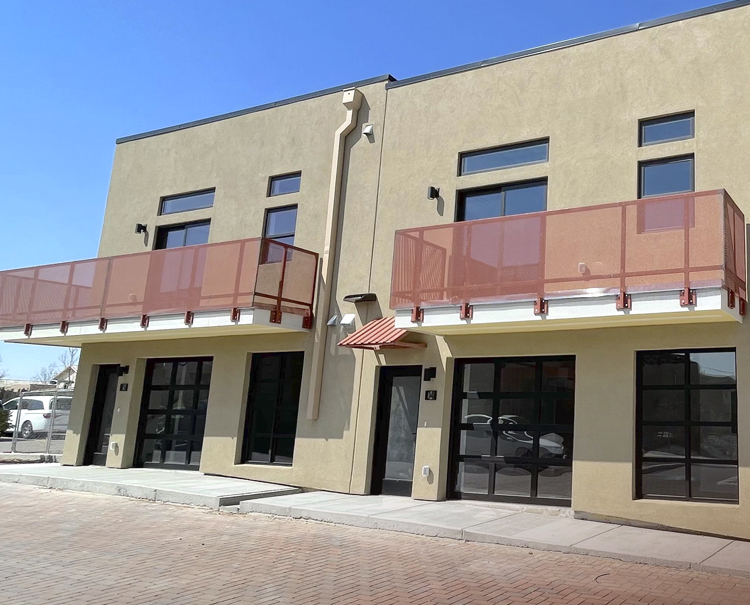

What could the next 30 years bring? At Homewise we are working towards a future in which a growing and increasingly diverse spectrum of Americans have the opportunity to build intergenerational wealth and foster strong communities through homeownership. We believe that this work, if taken to scale and adequately resourced, could transform the distribution of wealth and opportunity in America within 30 years.

Homeownership is widely recognized as the primary mechanism by which Americans build wealth. It is also a powerful tool of neighborhood stabilization and community development; but homeownership is a tool to which only some Americans have access and from which some Americans benefit far more than others. Homeowners have higher net worth than renters, regardless of race; but White Americans are 50 percent more likely than Black or Hispanic Americans to own their homes.

White households also generate higher average returns from their housing investments than do African American and Hispanic households. This is due to differences in income and education as well as more insidious but equally pervasive factors such as racial segregation, predatory mortgage lending practices, devaluation of property in minority communities, and the heightened likelihood that families with few liquid assets have of experiencing foreclosure or other forms of distressed sale. White households are significantly less likely than households of color to be preyed upon by subprime lenders and/or lose their homes to foreclosure.

During the housing crisis of the previous decade, almost 8 percent of African American and Hispanic families lost their homes to foreclosure, compared to under 5 percent of White families, and while the ‘typical’ White family lost 16 percent of its assets during this time, the typical African American family lost over half its assets and the typical Hispanic family saw its wealth decline by two-thirds.

The uneven access and disproportionate risk non-White Americans confront in their efforts to become homeowners must be remedied if we are to fully harness the power of homeownership to reduce disparities and drive beneficial social change. Critical to these efforts are policies and programs that prepare people for homeownership and, once ready, provide them with resources, like down payment assistance, that enable them to purchase homes they can afford in neighborhoods of their choice. Cultivating successful homeowners also requires standing with them through financial setbacks and helping them to avoid foreclosure. Homewise does this work every day on behalf of ordinary New Mexicans, but delivering these comprehensive services at the scale needed to chart measurable progress at the national level requires a strong and well-resourced commitment in every state and at every level of government.

Peering 30 years down the road at a future in which the potential benefits of homeownership are fully realized for all Americans, we at Homewise see a country in which:

  • Americans embrace affordable homeownership as a commodity beneficial to all and, rather than organizing to prevent affordable housing from going up in their neighborhoods, coalesce around more inclusive community goals that preserve everyone’s property values such as walkable streets and safe schools.
  • Competition from responsible lenders for market share in communities of color deprives subprime mortgage lenders of access to their target demographic thereby decreasing the disproportionate financial risk many non-White households take on when becoming homeowners.
Live-Work El Camino Crossing-Homewise
Live/work building in El Camino Crossing, a mixed-use development in Santa Fe, New Mexico.
  • Sufficient capital to support the growth of homeownership, especially among low-income households and households of color, flows from diverse funding sources. Recognizing the sweeping economic and social benefits of affordable homeownership, new individual and institutional investors and funders join longstanding supporters in making long-term, low-cost capital available to community lenders and developers of affordable homes. This vision stands in stark contrast to the current reality in which raising adequate capital remains an ongoing struggle for developers of affordable housing. Homewise obtains capital from numerous sources, some traditional and others, like the Homewise Community Investment Fund, both innovative and homegrown. The Community Investment Fund provides a diversified source of capital to support mortgage lending and successful homeownership in New Mexico as well as an opportunity for individual investors to generate quantifiable community benefits with their investment portfolio. Investments in the fund are pooled and used to finance fixed-rate mortgages for low- and moderate-income households, energy and water conserving home improvement loans and the development of affordable homes.
  • Systematic under-investment in communities of color is displaced by well-resourced community development efforts that are driven by the needs and priorities of community members and increase the community’s capacity for sustainable economic growth. Here again, Homewise has undertaken, on a modest scale, the sort of efforts needed nationwide. The Community Development team at Homewise learns all it can about the communities in which Homewise works through surveys and direct outreach to residents and local businesses. This information drives the development of strategies that strengthen neighborhoods in ways that are responsive to specific community priorities, strengths and challenges. For example in Santa Fe, an extremely tight housing market with a dearth of workforce housing, Homewise builds new mixed-use developments to increase homeownership while simultaneously fostering proximity, walkability and neighborhood vibrancy. In Albuquerque, where the need for starter homes is less acute, but decades of sprawl development has decimated portions of the urban core, Homewise buys and restores empty residential and commercial buildings and then helps community members and local businesses back into them, so that locals are not displaced by rising property values. These redevelopment efforts preserve neighborhoods while also catalyzing new investment in communities that have experienced decades of disinvestment.
  • The role of affordable homeownership in addressing broader social issues such as climate change, community health, and education is recognized and leveraged. Homeownership practitioners play a central role in the development of housing policy, but also in crafting policy solutions to broader issues that intersect with affordable housing, such as urban sprawl, chronic disease, and equitable access to high-quality public education. Through these intersections, strong partnerships and collaborations are forged between homeownership advocates and environmental advocates, neighborhood associations, community groups, employers, educators, economic developers, and numerous other traditional and non-traditional allies.
Residential Home in El Camino Crossing-Homewise
Residence in El Camino Crossing, a mixed-use development in Santa Fe, New Mexico.
  • Homeownership initiatives are adequately resourced and regarded as viable alternatives to subsidized rental housing rather than overly complex niche programs from which relatively few are permitted to benefit. Homeownership with a conventional 30-year fixed mortgage is more stable and often costs less than renting and is the only truly sustainable form of affordable housing. One-time down payment assistance paired with financial education and coaching can provide a permanent solution to a family’s housing problems without any additional costs to the public sector. As an investment, this compares quite favorably to the cost of paying the same family’s rent every month for years. It is our hope that 30 years from now, US housing policy reflects this fact.
  • US anti-poverty policy recognizes and rewards the willingness and ability of low-income households to invest wisely in their financial futures and, in so doing, embraces truly sustainable, affordable homeownership solutions.

The next 30 years could see the emergence of a more equitable and prosperous America – one in which our housing and lending systems are purged of systemic inequities and the cycle of poverty is broken. Making this vision a reality will require hard work, thoughtful policy, and sustained public investments in the programs and processes that make homeownership more accessible and beneficial to the broadest possible spectrum of Americans.


Article by Kelly O’Donnell, who joined Homewise in 2021 as the Director of Homewisdom. Prior to Homewise, O’Donnell was a research faculty member at the University of New Mexico and a private economic and public finance consultant for governments and nonprofits in New Mexico and nationwide. Prior to that, she held a series of senior leadership roles in New Mexico state government including Director of Tax Policy, Deputy Cabinet Secretary for Economic Development and Superintendent of the New Mexico Regulation and Licensing Department and served as research director for New Mexico Voices for Children. She holds a PhD in Economics from the University of New Mexico.

Featured Articles, Impact Investing, Sustainable Business

Market Infrastructure Built Over the Past Three Decades Will Help Fuel the Next 30 Years

By John Streur, Calvert Research and Management

John Streur Calvert(Above: Getty Images, Courtesy of Calvert)

As we look forward to the next 30 years, we believe that capital markets are on the precipice of an increase in the impact of corporate environmental, social and governance (ESG) performance on security prices. We expect a corresponding acceleration of capital deployed to solve the environmental challenges we face today, such as excessive greenhouse gas (GHG) emissions and plastic pollution. We also expect substantial improvement in corporate diversity, equity and inclusion performance. At this moment, with war in Ukraine, the pandemic still raging globally and inflation hurting the poor the hardest, it may seem hard to accept an optimistic outlook for the future. However, with independent innovators like GreenMoney and Calvert laying the groundwork for the past few decades, we are now seeing the infrastructure that responsible investors like us have built having a real impact on transparency and capital flows.

GreenMoney has been and is a critical part of that market infrastructure, providing information about responsible investing, advocating for positive change, connecting investors and working to drive real-world improvement for all people. Over the entire 30 years of innovation and leadership by GreenMoney, Calvert has been there too, proudly.

Congratulations on the impact GreenMoney has had, and thank you for letting Calvert be part of it as we acknowledge our own anniversary of Calvert’s first socially responsible strategy 40 years ago this year.

Let’s take a look at the market infrastructure that has been built during this period to better understand our view of the future. As long-term responsible investors, we are interested in understanding the externalities a company creates in the course of its business. However, because externalities are generally negative impacts that a company has on the environment or on people directly, and that the company often hopes to avoid having to pay for or be penalized for, they are not eager to disclose information about the specific details of these externalities. Carbon emissions, human rights violations, pollution, weak performance on diversity and unsafe products are among the innumerable other adverse impacts companies have and for which they would prefer not to be held responsible. The market infrastructure necessary to create transparency into these issues, with sufficient detail to be able to use the information in investment decisions by every single investor, is what has been built or is in the final stages of development.

Markets are in the final stage of development of a regulatory framework across markets in the U.S., EU and U.K. that will increase the amount and quality of information about externalities related to carbon and methane emissions. This is on top of various requirements already in force in many major Asian nations, including China, mandating listed company disclosure of GHG emissions. In many markets, new or proposed regulations will require companies to provide additional human capital management and diversity information. Government regulations that require companies to disclose their performance on material environmental factors related to climate change will allow investors to better quantify and price these externalities, which is the market mechanism that sends signals to innovators and entrepreneurs about opportunities to develop new products and strategies that solve the problems caused by the corporate externality.

It is the transparency that these regulations call for that will help to accelerate the changes we need to solve the environmental and social challenges of today. Governments are also attempting to create market signals to speed capital deployment to solve climate and environmental problems. For instance, the United States is in the process of passing its very first climate legislation, which uses incentives to spur investment into renewable energy. California recently passed legislation that requires plastics to be recyclable and that also charges companies that use large amounts of plastic packaging a fee, which will be used to offset costs the state incurs in cleaning up plastic waste.

After decades of work, we now see a coordinated effort to strengthen market function through greater transparency, investors are increasingly using this information in the security price discovery process and government action to incentivize investment into solutions. We have already seen the development of new industries (renewable energy, electric vehicles) and companies, prior to this infrastructure and government action. We now expect to see an increase in capital formation and a real acceleration in real-world solutions.

Calvert Research & Mgmt
Image courtesy of Calvert Research and Management

For different reasons, but through similar mechanisms of information flow and transparency, we also expect acceleration in the improvements in diversity, equity and inclusion at corporations. The percentage of the highly skilled labor force made up of women and minorities is increasing worldwide. Companies are lagging in their ability to attract and retain women and minorities in their own employee ranks, and this is a material missed opportunity that companies are attempting to address. As we gain greater transparency into the demographics of individual companies, we find that virtually all companies know and want to improve, but struggle to do so. As more investors understand the opportunities that come along with better performance for all employees, shareholders are taking action to encourage companies to improve board and C-suite diversity. Companies are responding, and positive change is happening.

One question we often get about the future of ESG investing is, “If everyone uses ESG information, will there be any difference between mainstream and socially responsible investing?’’ The differences are very likely to be the same differences we see between mainstream investors and responsible investors today. There have always been independent thinkers and actors, innovators and change agents, and there has always been a mainstream herd following. Yes, almost all investors will consider ESG information in investment decisions, and this will make a difference to real-world outcomes. However, clients have always understood intentionality. There are those driving for positive change versus those clinging to status quo and protecting entrenched interests and power. That won’t change, and that is why we need another 30 years from GreenMoney and Calvert!

We also believe that there will be a wave of new, independent, innovative investment firms and financial technology firms focused on ESG investing and positive change that will compete successfully with the mainstream investment industry. The changes we discuss above regarding transparency, information flow and government action and significant forces will signal innovators to start companies to solve climate and social challenges in the “real’’ world, and also spur new company formation in our own industry.

We are already seeing this happen, and many new entrants are doing excellent work and pushing the mainstream in the process. Institutional investors and retail investors indicate that they plan to invest more heavily into responsible and ESG strategies. There are new firms being created today that are doing what GreenMoney and Calvert set about to do 30 or 40 years ago. As this market expands, we are seeing waves of product innovation in our industry already, and we are really just getting started.

Along with new firms, new products, much greater transparency and positive government initiative will come increasing competition and professionalization of the responsible investing approach. One area we are confident will become central to the approach is the identification, quantification, analysis and, ultimately, market pricing of externalities. Expertise in this specific area is likely to be a critical differentiator between the firms that come to be the leaders of the next 30 years and the pack.

We have a very positive view of the future because the groundwork and infrastructure built will cause existing positive trends to accelerate. Yes, this is an uncertain time due to war, inflation, and a pandemic on top of climate change and inequality. However, for long-term, multi-decade players, the trends emerging today in responsible investing and better real-world outcomes are impossible to ignore. It seems like it took far too long to get to this point. But we are there, and the next 30 years will be very different.


Article by John Streur, president and chief executive officer for Calvert Research and Management. John is also president and a trustee of the Calvert Funds as well as a board director of Calvert Impact Capital and chair of its Audit and Finance Committee. He guided the creation of the Calvert Principles for Responsible Investment, the Calvert Research System and the Calvert Indices, and has placed focus on investment research and emphasis on environmental, social and governance (ESG) factors integrated with investment decisions. He joined Calvert Research and Management in 2016.

John began his career in the investment management industry in 1987. Before joining Calvert Research and Management, he was president and chief executive officer with Calvert Investments. He has managed socially responsible investments at the request of institutional clients, including public funds, religious institutions, and college and university endowments since 1991. Previously, he was president, director and principal of Portfolio 21, a boutique firm specializing in global environmental investing, and spent 20 years at AMG Funds (and its predecessors), a firm he co-founded and where he served as president, CEO and chair of the Investment Committee.

John is a founding member of the Investor Advisory Group for the Sustainable Accounting Standards Board (SASB), a group of leading asset owners and asset managers committed to improving the quality and comparability of sustainability-related disclosure by corporations for use by investors.

Disclosures

Risk Considerations Investing involves risk including the risk of loss. There is no guarantee that any investment strategy, including those with an ESG focus, will work under all market conditions. Investors should evaluate their ability to invest for the long-term, especially during periods of downturn in the market.

The views and opinions are those of the author as of the date of publication and are subject to change at any time due to market or economic conditions and may not necessarily come to pass. The views expressed do not reflect the opinions of all investment personnel at Morgan Stanley Investment Management (MSIM) and its subsidiaries and affiliates (collectively the Firm”), and may not be reflected in all the strategies and products that the Firm offers.

This material is a general communication, which is not impartial, is for informational and educational purposes only, not a recommendation to purchase or sell specific securities, or to adopt any particular investment strategy. Information does not address financial objectives, situation or specific needs of individual investors.

Calvert Research and Management is part of Morgan Stanley Investment Management, the asset management division of Morgan Stanley.

Energy & Climate, Featured Articles, Impact Investing, Sustainable Business

Signup to receive GreenMoney's monthly eJournal

Privacy Policy
Copyright © GreenMoney Journal 2025

Website design & development by BrandNature

Global Events Calendar

View All Events

april

21aprAll Day232026 Sustainable Packaging Coalition: SPC Impact – Nashville

27aprAll Day30Women Deliver 2026 Conference (WD2026) – Melbourne

X