Tag: Impact Investing

How Sustainable Ocean Funds Are Navigating Impact Measurement

By Ted Janulis, Helena Janulis and Aly Rose, Investable Oceans and CREO Syndicate

Interviews and surveys from leading fund managers shed light on current approaches, common challenges and thoughts on the future.  
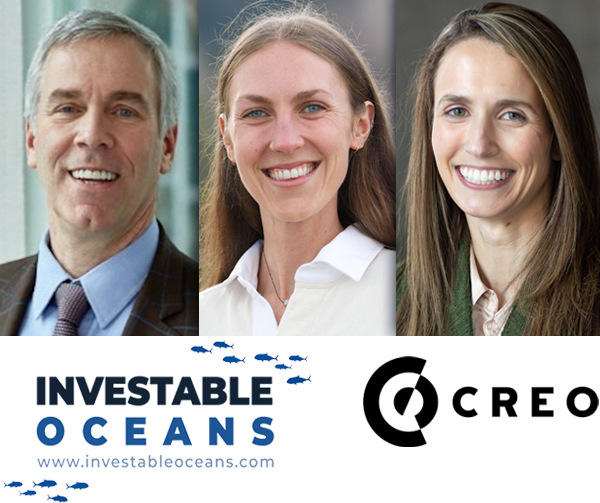
Ted Janulis - Helena Janulis - Aly RoseBlue economy funds have experienced dramatic growth in the past half decade, with nearly thirty new entrants – ten or so of them in 2022 alone. This is good news, as it signals both growing investor interest in the sector and an increasing pipeline of investable opportunities. As this ocean investment ecosystem evolves, the question of how to measure impact in investments has become a frequent topic of discussion. 

To explore this impact question further, Investable Oceans and CREO conducted interviews and surveyed over a dozen leading sustainable ocean funds from 10 countries. We supplemented these interactions with reviews of available online resources, including websites and impact reports. We selected funds that already had significant capital under management and are currently investing. The funds collectively captured a diversity of ocean verticals, though notably, 13 out of 14 address Pollution & Waste Management (Figure I). 
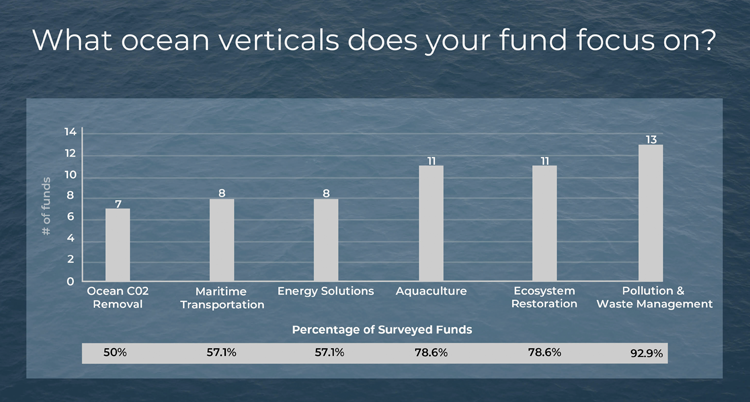
Figure 1 - What ocean verticals does your fund focus on
Figure I.

The discussions were candid and fascinating, and the surveys allowed for additional quantitative analysis. One clear takeaway: all of the funds we spoke with are actively developing strategies – often mapped to SDG 14 – in order to measure and understand impact in ocean investing. Still, there is a strong consensus that much work lays ahead. In this piece, we present our key learnings as well as insights directly from some of the fund managers. 

Common Trends 

Fund managers agree that impact measurement for sustainable ocean funds is in the early stages of development. Interestingly, half of the survey respondents rate its current state of development at a 6 or 7 out of 10, while the other half rate it at a 3, 4 or 5 out of 10 (Figure II). While impact measurement – and the blue fund/economy space itself – is relatively new, there is great energy, interest and momentum pushing this work forward. 

“It took a while for the impact measurement in the blue fund space to get started because of limited investors and track record of investments, limited ocean data and a broad array of investable areas. But in the past few years, with much more investor activity in this space and a focus on carbon reduction it seems to really be taking off. Now we just need more tools to measure biodiversity.” Amy Novogratz, Co-Founder & Managing Partner, Aqua-Spark 
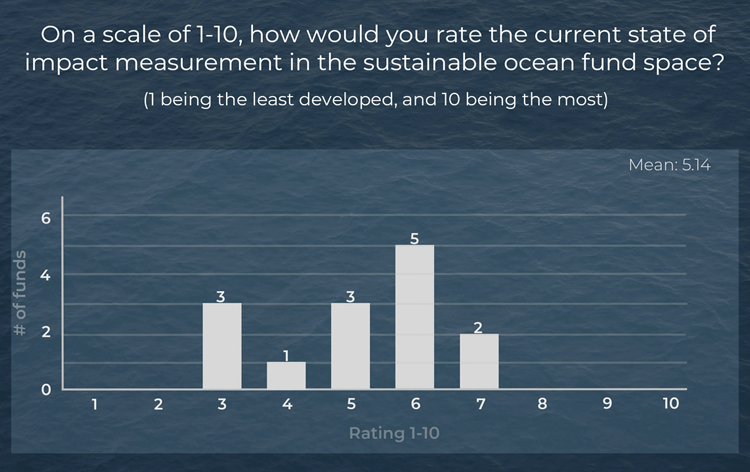
Fig-2 How would you rate the current state of impact measurement in the sustainable ocean fund space
Figure II.

We learned there is a diversity in approaches to developing impact measurement strategies, but many combine and build upon existing frameworks and standards to create a proprietary impact measurement strategy. Despite high variability among the frameworks used, survey responses indicate a majority of the funds are using the Ocean Impact Navigator (OIN) and UNEP FI as core tools (Figure III). Several also supplement their strategies with tools including IRIS+, GRI and SDG Compass. 
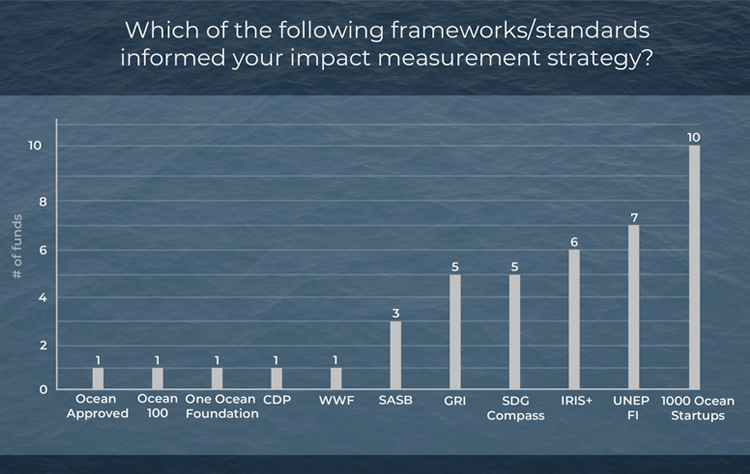
Fig-3 Which of the following frameworks informed your impact measure strategy
Figure III.

The OIN serves as a foundation for numerous funds, given its flexible design and specific focus on blue economy challenges. While some managers believe improvements can be made, such as adding biodiversity metrics, they also acknowledge that this is the first time we are seeing a truly collaborative effort. 

“SWEN Blue Ocean is an Article 9 fund according to the European SFDR regulation, which means 100% of our investments should have impact indicators. We welcome the Ocean Impact Navigator, a set of science-based indicators developed by 1000 Ocean Startups. It provides a shared framework that the ocean innovation community can leverage to accelerate collective impact.” – Christian Lim, Co-Managing Director, SWEN Blue Ocean 

A majority of managers also work closely with their portfolio companies to identify impact reporting metrics. Several emphasize the importance of constructive conversations with these companies around metric selection in order to gain a clear understanding of the impact that can be achieved. However, there are differing perspectives among fund managers on the appropriate number of impact metrics; some define 1-5 Key Performance Indicators (KPIs) for each portfolio company, while others reach up to 20 or even 40 KPIs. 

“To get the right metrics you’ve got to go deep into the company’s specific operational pathways. You need to identify the things that generate convergent returns – economic and environmental. It doesn’t work from the top down – it has to be inside out.” – George Duffield, Founding Partner, Ocean 14 Capital 

vibrant red orange sea fan coral and school of fish

As fund managers are working through this process, some are embracing an iterative approach… 

“We see every investment as an opportunity to learn about what works – and what doesn’t – when it comes to pursuing near- and long-term outcomes. Toward this end, we work with our partners to articulate the intended impact of their products or services, identify the indicators they use to measure progress toward that impact, and the methods and sources they use to collect indicator data. By asking partners to select impact indicators that will bring the most value to them, we aim to reinforce the link between impact measurement and management and strategy, wherein data is used as an input to critical business decisions.” – Joanna Cohen, Head of Impact Measurement & Management, Builders Vision 

sea tortoise under a wave

To supplement this internal work, some funds engage third-party organizations and impact agencies to help develop frameworks and identify reporting metrics. Among these are consulting firms and NGOs with a deep knowledge of the ocean, such as The Nature Conservancy and the Aquaculture Stewardship Council. A few funds have even created formal advisory groups of internal and external experts across diverse disciplines. 

“One of the things that has really been a great help to us from the very beginning is joining The Circulate Initiative’s Impact Metrics Working Group. This group was formed to bring together researchers, experts, advocates and practitioners with different content knowledge relevant to our work – it’s an incredible group. Circulate Capital was able to use the working group as a sounding board for our impact framework – testing our metrics, methodologies, baselines – to really guide how we measure the impact of our investments. Their feedback and guidance has given us the confidence that we’re on the right track.” – Ellen Martin, Chief Impact Officer, Circulate Capital 

dolphin school under the surface

We also found that the motivations behind developing strategies vary among funds, especially when considering factors such as regulatory compliance, demand from LPs and ties between carry and impact performance. Even though some funds are mandated by regulations and compliance rules, our conversations indicate that personal belief is what primarily drives efforts to create and maintain strategies. This underscores the unique dedication of fund managers to look for investments where sustainable outcomes generate competitive financial returns.

Shared Challenges 

The complexity of the ocean biosphere makes measuring impact difficult; desired data may be unavailable or costly to collect. According to our survey, half of the fund managers struggle with developing impact measurement metrics due to the lack of measurable data. With few exceptions, portfolio companies oversee their own data collection. Several funds have expressed the challenge of selecting the appropriate quantitative metrics for each company to effectively showcase progress toward fund-level goals. This issue has led to a gap between the individuals who require data, such as GPs and LPs, and those who are responsible for collecting it. 

While efforts like the OIN are attempting to standardize metrics for sustainable ocean funds, each individual fund still maintains its own unique set of metrics. This can create confusion for startups receiving investments from multiple ocean funds and raises the question: How would implementing a standardized menu of metrics and conversion rate affect the sector’s ability to assess the dollar value of these investments? Measuring a startup’s output indicators or return on investment is easy but translating the data into a quantifiable “return on impact” is much more challenging. Establishing a standard for determining the actual cost of factors, such as a kilogram of plastic in the ocean or fertilizer leakage, could include the expenses of cleaning up or savings generated by preventing such occurrences. 

“It is imperative that startups and funders align on a standard framework to measure and report positive ocean impact outcomes. Standardized ocean impact metrics will allow us all to address these ocean challenges more efficiently. While it may be challenging to create a standard impact framework, it’s achievable if we start by first working with startups to understand the type of raw impact data they can collect, and then build a framework grounded in science that prominent funders can use to align reporting requirements for their portfolios.” – Craig Dudenhoeffer, Chief Impact Officer & Investments Officer, Sustainable Ocean Alliance 

skiff at sunset above coral bed

Although funds recognize the value of standardizing frameworks, impact measurement poses different challenges depending on the specific verticals within the blue economy. Funds have found it easier to measure impact in investments related to ocean-related energy solutions, while it is more difficult in aquaculture, fisheries, and ocean intelligence/data solutions. Ocean CDR and ecosystem restoration fall somewhere in-between. Some frameworks suggest using qualitative metrics in the more challenging sectors, but there is concern about the credibility of such metrics. 

“Faber’s fund strategically covers blue biotech, food & feed, decarbonization of shipping, ocean intelligence, desalination, and ocean-related energy. From an impact management perspective, some areas are more straightforward than others. In general, enabling technologies with a direct positive impact on CO2 emissions, such as clean energy, have metrics easier to measure and monitor. Others, like blue biotech, with an impact on complex industrial value chains, or ocean intelligence, with an indirect impact on biodiversity, can be more challenging. Access to data is key.” – Rita Sousa, Partner at Faber Ocean/Climate Tech Fund

While funds are clearly investing time and effort to develop proprietary strategies, numerous managers expressed a genuine interest in harmonizing approaches. The alignment of funds on impact measurement has the potential to facilitate the flow of much needed capital to accelerate the transition to a sustainable blue economy.


Still shoreline with clouds


Article by Ted Janulis and Helena Janulis of Investable Oceans and Aly Rose of CREO Syndicate

Ted Janulis is Founder & Principal at Investable Oceans, an ocean investment hub that accelerates market-based sustainable ocean investing across all asset classes and sectors of the Blue Economy. Over a 35+ year business career, Ted has served in various executive positions, including CEO, at financial institutions involved in Capital Markets, Banking and Asset Management. He is President Emeritus of The Explorers Club in New York City and serves on numerous for-profit and not-for-profit boards, including Gannett Co Inc, Ocean Risk and Resilience Action Alliance (ORRAA), One Ocean Foundation and Duke University’s Nicholas School of the Environment Board of Visitors.

Aly Rose is Sector Manager of Oceans & Aquaculture at CREO Syndicate, a 501(c)3 think-and-do tank working with a network of ultra-high-net-worth family offices leveraging private capital to invest in climate solutions providing a more sustainable future. Prior to her role at CREO, Aly worked at SeaAhead, where she helped manage the Blue Angels Investment Group, served on the working group for 1000 Ocean Coalition’s Ocean Impact Navigator, and helped incorporate IMM strategies for startups into SeaAhead’s BlueSwell Incubator curriculum. Aly holds a bachelor’s degree in Comparative Policy, Environmental Studies, and Spanish from Bowdoin College, a Master’s Degree in Spanish Linguistics from Middlebury College, and a Master’s Degree in Climate Change and Sustainability Policy from Northeastern University. 

Helena Janulis is the Business Development & Special Projects lead at Investable Oceans, and the COP28 Ocean Pavilion Associate Project Manager at Woods Hole Oceanographic Institution. She holds an Environmental Master’s Degree from the University of Colorado Boulder, a bachelor’s degree in marine science from the University of Hawai’i Hilo, and a Project Management Certificate from Cornell University. Prior to her work in ocean finance, Helena was a consultant for Outside Magazine, a B Corp Certification consultant for a tempeh company in Boulder, and a Divemaster in Hawai’i. She is a long-term member of The Explorers Club in New York City and the Committee Chair for the Club’s Rising Explorers Grant. 

Energy & Climate, Featured Articles, Food & Farming, Impact Investing, Sustainable Business

Proof of Peak Natural Gas but Climate Innovation Funding is Still Challenging

By Danny Kennedy, New Energy Nexus

Natural Gas is on the move — edging down year-on-year — while renewable energy takes center stage around the world once and for all.

Politicians blowing the winds of trade wars are not the only impediment to climate solutions. Times are tough out there for entrepreneurs not selling something that pays back in two years or less. 

Whether inflation is still going to go up or not, the price of debt has already led to an increase in the levelized cost of wind and solar in 2022. This was the first time in a long time that financial and investment company Lazard has recorded this increase in renewable energy cost against the macro trend of declining electricity prices.

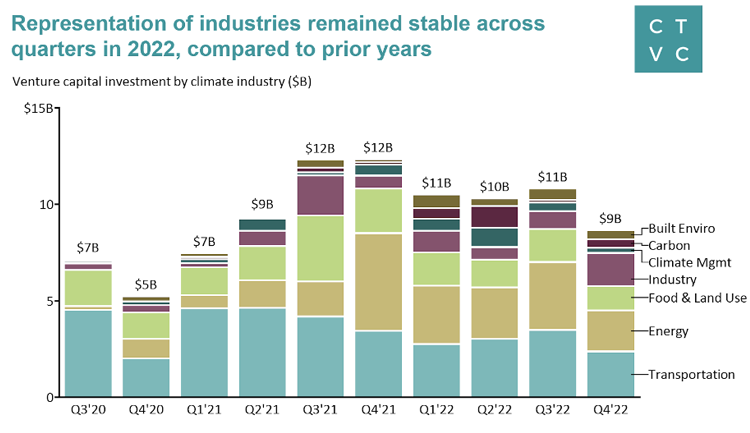
And for early stage startups who are yet to ship a product or build a project, the prospects of venture capital are a long way from their highs in 2021. While the “climate tech VC” scene dipped less — just -3%, compared to the broader venture capital market, which plummeted a shocking -53% in 2022 — it is still hard to get funded.

Industries that remained stable in 2022--Nexus New Energy

That is why it’s good to remind ourselves of the game changing project we’re undertaking and that it won’t be smooth sailing displacing something as big as the fossil fool industrial complex! We’re making history by shifting electricity to clean sources and then electrifying everything. Historically speaking, such profound change is hard won.

Ember in the ashes of 2022

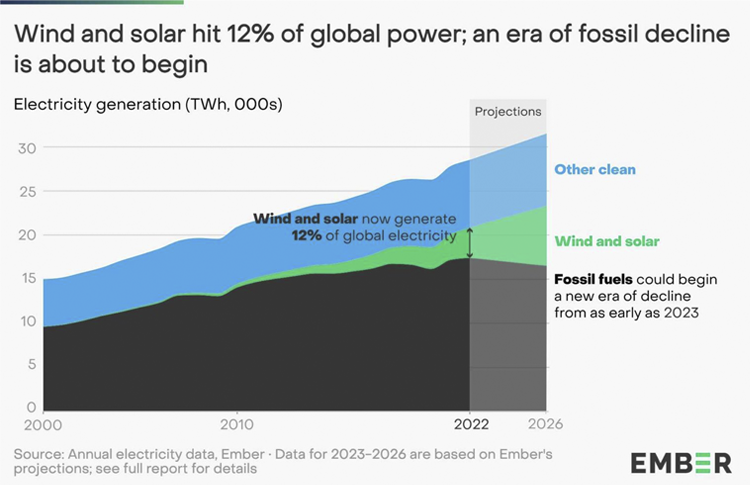
The apparently Sisyphean task of meeting new electricity demand with clean generation may actually happen this year or next. According to energy thinktank Ember‘s excellent electricity review of 2022, an incredible 80% of all new demand growth for electricity (694TWh) was met by new wind and solar generation (557TWh). 

The juice we use now has the lowest carbon emissions ever

We’re using a record amount of electricity here on Earth but while emissions are up, the energy mix is changing significantly. Indeed, wind and solar were up 19% year-on-year from 2021, whereas coal was up just 1.1% and natural gas use actually plateaued (thanks, Putin). As a result, the juice we use now has the lowest carbon emissions ever — 436 gCO2 per kilowatt-hour. In other words, we are up in volume but a whole lot cleaner per unit. 

Right now, we are pushing the energy transition boulder to the very top and soon will let it roll on down the other side! If renewables deployment continues at the rates of recent years, clean power growth will exceed electricity demand growth in 2023. This is a big turning point that we should celebrate.

Ember - wind and solar hit 12% of global power and the era of fossil decline is about to begin

Goodbye Natural Gas?

But our work is far from done. And relying on gravity to do the work on the downslope may not be fast enough especially with the countervailing forces from vested interest. You may have noticed me writing that “gas plateaued” in 2022 by which I mean to say it fell so marginally as to make it look flat (-0.2% in 2022).

That is a global view — and in some markets gas generation actually hit highs. So far this century in the U.S. during Republican and Democratic administrations, we’ve been boosting gas exploration and production. This bipartisan boondoggle even had the support of misguided environmentalists thinking gas is a bridge to somewhere. And world number one LNG exporter Australia has seen similar gas increases, largely for export, despite promises at election time to voters demanding climate action.

U.S. President Biden recently approved the Alaska LNG project, which relies on growing gas markets in Asia and exporting even more of this climate-changing product. The carbon footprint of this project, according to the DOE, is equal to one-quarter of the carbon pollution savings from the EPA’s new tailpipe emission standards. Not surprisingly, Papa Joe’s EPA told us their good news the evening before he dropped the bad news on Alaska. 

Similarly, Australia has just seen the approval of a highly controversial $3.8 billion gas fracking project in the Northern Territory, the Beetaloo Basin, that could see as much as 500 trillion cubic feet of gas extracted. Key developer Santos and American investors are overjoyed; climate activists, traditional owners and farmers are not. 

Subsidizing Fossil Foolery

Such support for new projects means that gas will hang around in the global power mix longer than it should. Certainly, in America, gas is a growing dependency we cannot afford. There are some valiant efforts to kick the habit, with companies like PlusPower adding serious storage to the grid. But we cannot sustain our gas addiction, neither economically, as prices continue to go up, nor for the climate. Now that it has hit the “no growth” zone globally, we must continue to pressure gas supply — and demand — to decline.

Yet even though the U.S. has committed to subsidize this one last binge of fossil foolery, since fracking became its innovation darling, the fate of gas is still clear. It’s a dead man walking. I wrote in Medium that 2017 was the “beginning of the end for gas” due to changes at institutions like GE and the California PUC. With the data in from Ember, we can see that end is nigh at the aggregate level. There will be skirmishes and setbacks, like the ruling from a Federal Court overturning Berkeley’s gas ban in new buildings. So, it’s not yet “bye bye” but if we stay the course we’ll be able to say that soon. With New York passing a ban on natural gas in new buildings in May, the momentum to bid gas farewell is well and truly underway. I’ll take Manhattan, you can have Berkeley.

Startups of the Month 

Entrepreneurs all over the world are expending remarkable ingenuity and grit into gas replacement efforts. The work of European companies to replace gas boilers and heating systems with heat pumps since Russia’s invasion of Ukraine is now well known. But did you know about the induction stoves, industrial heat and coffee roasting solutions startups are pioneering too!? Here are just a few goodies to check out:

The clever Channing Street Copper is putting batteries under home ovens for energy storage equipped cooking. It makes the product more useful for demand response and more responsive for wok cooking. And inventiveness like this, mainly for high-end customers, may make such solutions more accessible and ubiquitous in years to come. 

Similarly, Antora, a groundbreaking company that I mentioned last year when Bill Gates backed it, is changing the way heat is brought into factories. Check out our Antora video (I am proud to say that New Energy Nexus backed this company early on). Finally, I love this startup —  Bellweather Coffee — displacing propane often used to roast the beans for your cafe latte and innovating the entire supply chain and independent cafe store owners’ business.

Shine on!


Article by Danny Kennedy, the CEO (Chief Energy Officer) of New Energy Nexus, a clean energy startup incubator with chapters in the U.S., China, Southeast Asia, India and Uganda. He is also Managing Director of the California Clean Energy Fund overseeing the $25m CalSEED.fund for early-stage innovation companies and the $12m CalTestBed initiative. Kennedy co-founded Sungevity in 2007, the company that created remote solar design, and incubator fund Powerhouse in Oakland, CA. He is the author of Rooftop Revolution: How Solar Power Can Save Our Economy – and Our Planet – from Dirty Energy in 2012. Prior to being an entrepreneur and investor, he worked at Greenpeace on climate & energy.

Climate and Capital Media Featured News

Article reprinted with Permission as part of GreenMoney’s ongoing collaboration with Climate and Capital Media


Additional Articles, Energy & Climate, Impact Investing, Sustainable Business
Sunwealth 2023 ESG Fixed Income Fund of the Year

Sunwealth 2023 ESG Fixed-income Fund of the YearRecently, Environmental Finance named Sunwealth’s Solar Impact Fund their 2023 ESG Fixed-Income Fund of the Year. This recognition is part of Environmental Finance’s 2023 Sustainable Investment Awards – a global initiative that seeks to recognize fund and asset managers focused on ESG and sustainability. 

“These awards help recognize your leadership in this complex, quickly-changing area,” said Michael Hurley, deputy editor of Environmental Finance.

This recognition comes on the heels of Sunwealth’s Solar Impact Fund’s second consecutive year being awarded Environmental Finance’s Bond Award for Innovation and being named their 2022 Environmental Fund of the Year. 

“Sunwealth is proud to be named Environmental Finance’s ESG Fixed-Income Fund of the Year. As investors increasingly prioritize ESG strategies, Sunwealth continues to deliver measurable environmental, social, and economic benefits to diverse communities without sacrificing financial returns to investors,” said Omar Blayton, Chief Financial Officer at Sunwealth. “We look forward to scaling our impact in the years to come.”

For over eight years, Sunwealth has delivered strong, stable fixed-income returns with no defaults to investors seeking to align their dollars and portfolios to drive positive environmental, economic, and social outcomes. Our community-based approach to deploying capital enables us to go beyond ESG, creating long-term access to affordable clean energy and bolstering local resilience. 

More from Environment Finance on the award: 

ESG fixed income fund of the year, America: Sunwealth Solar Impact Fund

Sunwealth says its Solar Impact Fund has deployed more than $135 million in ‘community-scale’, or smaller, solar projects to tackle climate change and inequality through the provision of more jobs in underserved communities in the US.

The fund bundles a variety of solar projects into a single investment vehicle, which enables non-profits, municipalities, affordable housing, houses of worship, small businesses and low-income households to access solar energy and savings “at no cost, while providing job creation and revenues for small businesses”, including local solar developers and installers.

Each pool contains projects of various sizes, ranging from 25kW to 5MW.

Investors can gain exposure to these bundled projects through bond issues, over three-year or seven-year terms, or tax equity products.

Massachusetts-based Sunwealth says that, by minimizing transaction costs and bundling a variety of solar projects into a single investment vehicle, its fund enables investors to achieve an attractive return on their investment with greater social impact.

One such project it financed was a 76kW rooftop solar project for the Lumbee Regional Development Association (LRDA) – a private nonprofit in Pembroke, North Carolina, founded by Native American tribal leaders to bring social, educational, and economic services to members of the Lumbee tribe. Sunwealth developed the project with North Carolina-based Eagle Solar and Light.

Sunwealth estimated the project would provide about $115,000 in lifetime energy savings to LRDA to reinvest in their community.

Additional Articles, Energy & Climate, Impact Investing, Sustainable Business
Ceres Releases Annual Climate Risk Scorecard

Assessing U.S. Financial Regulators Action on Climate Financial Risk

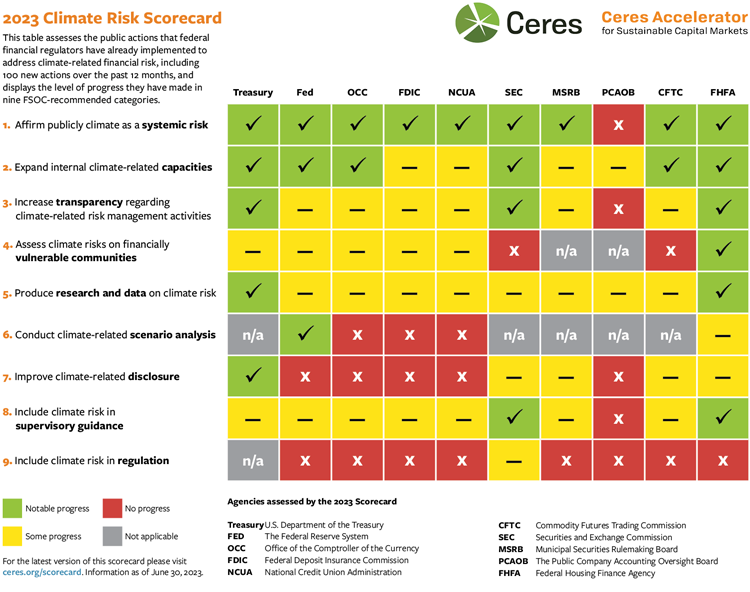
A new scorecard released in July 2023 by the Ceres Accelerator for Sustainable Capital Markets shows how 10 federal financial regulators have implemented key actions to address the financial risks of climate change, growing the total number of actions to more than 100 since July 2022. However, U.S. regulators have much more work to do to address these risks with the same level of ambition and urgency as their global counterparts.

The 2023 Climate Risk Scorecard: Assessing U.S. Financial Regulator Action on Climate Financial Risk found most of the assessed regulators have made meaningful strides in producing research and data on climate risk and incorporating climate risk into their supervision of regulated entities, however urgent action is required to improve climate-related disclosures, increase transparency in climate-related risk management practices, including climate risks within regulatory frameworks, implement climate-related scenario analysis, and assess climate risks on financially vulnerable communities.

Among those assessed include the Federal Reserve Bank (the Fed), the Federal Deposit Insurance Corporation (FDIC), the Office of the Comptroller of the Currency (OCC), the National Credit Union Administration (NCUA), the U.S. Securities and Exchange Commission (SEC), the Municipal Securities Rulemaking Board (MSRB), the Public Company Accounting Oversight Board (PCAOB), the Commodity Futures Trading Commission (CFTC), the Federal Housing Finance Agency (FHFA), and the U.S. Department of the Treasury.

“Climate-related financial risks have placed capital markets and financial institutions in an unparalleled state of vulnerability,” said Steven M. Rothstein, Managing Director of the Ceres Accelerator for Sustainable Capital Markets at Ceres. “The interconnectedness of the U.S. financial system means risk and climate events can trigger cascading crises that undermine the integrity of the entire economy. The sector needs to better integrate climate risk into its supervision of financial entities and put stronger practices in place to assess the consequences of the climate-related scenarios that will arise unless we make systemic changes.”

Ceres Sustainable Capital Markets Accelerator--2023 Climate Risk Scorecard

The analysis uncovered several key findings including:

  • More than 100 regulatory actions since July 2022 to address climate-related financial risks, representing a notable shift beyond foundational actions toward implementing climate-related risk management practices in step with global counterparts.
  • Nine regulators have publicly affirmed climate as a systemic risk to the financial system, sending a strong signal to the market and public that federal regulators understand that climate risk may adversely impact their regulated entities as well as the broader economy. The Public Company Accounting Oversight Board stands alone in not making this affirmation yet.
  • Six of 10 regulators have robust internal climate-related capacities, but this year has seen additional progress from those still developing their staffing and technical expertise.
  • All but two regulators improved transparency regarding their actions to measure and manage climate-related financial risks at their regulated entities.
  • Minimal public progress was made among regulators with authority that encompasses consideration of financially vulnerable communities.

To better document progress and reflect ongoing regulator commitments and areas of need, Ceres expanded the assessment categories from six to nine, drawing from the 35 recommendations within the Financial Stability Oversight Council’s Report on Climate-Related Financial Risk. The full methodology can be found here.  

Regulators were assessed on progress achieved from July 2022 through June 2023 across key categories, using previous years as a baseline, measuring whether each regulator has: 

  • Publicly affirmed climate as a systemic risk 
  • Expanded internal climate-related capacities 
  • Increased transparency regarding climate-related risk management activities 
  • Assessed climate risks on financially vulnerable communities 
  • Produced research and data on climate change 
  • Conducted climate-related scenario analysis 
  • Improved climate-related disclosure 
  • Included climate risk in supervisory guidance 
  • Included climate risk in regulation 

The 2023 scorecard is the third of its kind. The 2022 iteration, Assessing U.S. Financial Regulator Action on Climate Financial Risk, assessed nine federal regulators on 6 criteria and identified 230 actions since April 2021 to address climate financial risk.  

About Ceres

Ceres is a nonprofit organization working with the most influential capital market leaders to solve the world’s greatest sustainability challenges. The Ceres Accelerator for Sustainable Capital Markets is a center of excellence within Ceres that aims to transform the practices and policies that govern capital markets to reduce the worst financial impacts of the climate crisis. It spurs action on climate change as a systemic financial risk—driving the large-scale behavior and systems change needed to achieve a net-zero emissions economy through key financial actors including investors, banks, and insurers. The Ceres Accelerator also works with corporate boards of directors on improving governance of climate change and other sustainability issues. For more information, visit www.ceres.org and www.ceres.org/accelerator and follow @CeresNews.

Additional Articles, Energy & Climate, Impact Investing, Sustainable Business

The Climate Pricing Gap

By Zach Stein, Carbon Collective Investing

Above illustration by artist, Nicole Kelner

Why the popularity of passive investing is making it harder for the market to price in climate risk/opportunity.

In the year 2000, 12 percent of the assets in US equity funds were passively managed. By 2021, over 50 percent of US equity fund assets were held in passively managed ETFs and mutual funds.

That is a massive jump in a short period of time. And it’s not the short-term investors who are the major adopters of passive investing, it’s the long-term investors.

This phenomenon of long-term investors shifting from active market participants to passive public market followers has created a pricing gap.

Historically, the stock market had both long- and short-term investors sending pricing signals, as more of those long-term investors have adopted passive investing strategies, movements in the market are increasingly being dictated by short-term investors. The near term noise is winning the day.

The deep currents are being ignored.

So, if you are a long-term investor like us, you are increasingly finding yourself with a “when?” problem when it comes to passive investing. Our clients’ time horizons are long, but the stock market’s pricing mechanisms increasingly can only account for near term trends.

And if you are a sustainable investor like us (and odds are that’s the case if you’re reading this), it might be time to start explaining this phenomenon to your clients more clearly. With so many long-term investors electing to follow, rather than lead, the stock market is not able to accurately price in the long-term risks and/or opportunities of climate change.

Electric cars present a pretty clear example:

  • 50 percent of global oil today is used in cars and trucks on our roadways.
  • In 2020, 1 of 20 cars sold in the world were electric
  • In 2023, the IEA projects it will be one of 5 cars sold will be electric.

So, oil companies are having their single most important market (road transportation) being disrupted by a superior technology (electric cars) that is growing exponentially (33% CAGR).

Sounds like a reason for their stock to decline, right?

In 2021 and 2022, the opposite happened. Thanks to the short-term oil price increases driven by inflation and Putin’s invasion of Ukraine, oil stocks have had their best couple years in the past decade (although in 2023, we’ve seen a reversal).

From January 1st, 2020 – June 30th, 2023, The Morningstar US Energy Index is up 61 percent.

From March 20th, 2020, the bottom of the pandemic drop, this index is up a whopping 286 percent.

I won’t be retiring for decades. Does it make sense to not just hold oil stocks in my retirement account (given the rise of electric cars), but hold 61% more of them in my portfolio than I did on Jan 1, 2020?

No. It doesn’t.

Are we seeing the market en masse short REITs with major positions in Florida or parts of California given the exponential explosion in real estate insurance premiums? Nope. At least, not yet.

At some point, this game of musical chairs will end, and the market will correct itself. It always does. The question is, (you guessed it), when?

But until that, the abdication of pricing leadership from long term investors driven by the massive switch to passive strategies, has created a Climate Pricing Gap.

A “Green” Big Short moment is coming.

Fossil fuels have largely been underperforming over the last decade, as shown in this report, but most of the commentary has been that it was because of CEO incentives tied to oil production. This led to expensive fracking that wasn’t financially sound. But what will the performance drag be when investors open their eyes to the climate pricing gap and see that oil majors are being radically outcompeted?

It might not happen for a few years. It might not happen in a sudden collapse, but in a slow deflating. But it will come. And it’s not being accurately priced in today.

The economic tailwinds are behind the clean energy transition. Demand destruction is already happening. Climate change is a glaring risk on the horizon that should be impossible to ignore. But like so much of the rest of society, the stock market is stuck in Don’t Look Up mode.

As an asset manager one of the greatest impacts, you can have is by changing the narrative around sustainable and climate-focused investing. By convincing others, those ready to “Look Up” but not quite there to get on the side of sustainable investing in the 2020’s is simply the best way we can fulfill our fiduciary duty to clients.

Be clear-eyed. This data is right in front of you. Let this embolden you to see beyond passive investing’s false promises. And let’s reset the narrative that sustainable investing is something only for bleeding hearts. It is just another example of American Innovation, and it’s just getting started.


Article by Zach Stein, cofounder and chief investment officer of Carbon Collective Investing, a climate focused investment advisor which inspired the Carbon Collective Climate Solutions US Equity ETF. He is the author of the Ultimate Guide to Sustainable Investing. He lives in Albany, CA with his wife and son.

Additional Articles, Energy & Climate, Impact Investing, Sustainable Business

Public Equity Investing in Renewable Energy and Energy Efficiency

By Paul Hilton, Trillium Asset Management

Trillium’s Sustainable Opportunities thematic public equity strategy aims to address global sustainability challenges in three core areas: climate solutions, economic inclusion, and healthy living. While many of Trillium’s equity strategies have exposure to renewable energy, the Sustainable Opportunities strategy has a more specific, thematic focus, and generally a greater level of exposure to companies benefiting from the shift to a more sustainable economy. Within climate solutions, a primary focus is renewable energy and energy conservation, particularly exposure to companies involved in:

• Electrification and Grid Modernization, including storage
• Energy Efficiency
• Geothermal
• Renewable Energy Financing
• Solar Energy
• Wind Energy

In our view, climate change is the top existential issue facing the planet. Long-term impacts from climate change are well documented by the IPCC, and include more extreme weather events including heatwaves, droughts, and floods. These impacts will lead to food and water insecurity as well as public health and biodiversity threats. According to the World Health Organization between 2030 and 2050 climate change is expected to cause approximately 250,000 additional deaths per year, including from malnutrition, malaria, diarrhea, and heat stress.1

But we believe climate change also represents an investment opportunity, given the level of investment required to meet global goals such as the 1.5 degree C global warming target of the Paris Agreement in 2015. For example, the International Renewable Energy Agency estimates that meeting global energy transformation goals will require an additional $47 trillion in cumulative investment from 2023-2050, plus roughly $1 trillion in annual investment in fossil fuel technologies redirected towards energy transition solutions. This would result in annual investments in energy transition technologies more than quadrupling from current levels to meet the 1.5 degree C pathway.2

In addition, we are seeing greater public policy support for energy alternatives, including the Inflation Reduction Act in the U.S. which will provide $370 billion for climate technologies and clean energy through a mix of tax credits, grants, loans, and rebates. Further support from the U.S. CHIPS Act of 2022 and Infrastructure Investment and Jobs Act of 2021 will also provide incentives for the transition, in areas such as EV chips and EV charging infrastructure respectively. Similar policy initiatives in China, the EU, the UK, and Australia, among other parts of the world, are also helping to support the transition to a clean energy future. The response to the Russia invasion of Ukraine, for example, has accelerated the shift to fossil fuel alternatives in Europe through immediate and robust policy efforts.

Despite this investment and policy backdrop, the last two years have been problematic for the performance of many renewable energy stocks. Concerns about rising interest rates globally have put pressure on smaller cap, growth-oriented stocks, particularly those that are pre-profit. Some clean-tech focused companies had a boost in share price with the announcement of the Inflation Reduction Act, but most are significantly lower than just a few years ago. While many of these companies may have strong long-term prospects, there is no doubt that the short-term may be volatile. Our belief is that the recent pull-back is an excellent buying opportunity, and that investors with a longer-term time horizon will be rewarded. That said, we look to identify companies with well-developed business strategies, proven management, strong balance sheets, and enough scale to compete and ultimately take share.

This article does not attempt to touch on the incredible work on climate change in other asset classes beyond public equities. For a helpful discussion of total portfolio activation as it relates to community-oriented climate solutions, see the following paper from Croatan Institute: Climate-Related Investment for Resilient Communities – Croatan Institute

Advocacy

Some public equity strategies will also engage companies through shareholder advocacy to push them on a variety of issues related to climate change and renewable energy. Trillium has long sought to invest in companies proactively addressing climate change, and also to advocate with companies through dialogue and shareholder proposals to encourage them to reduce their climate impact. Mitigating the devastating potential effects of climate change on people and planet depends on companies setting and meeting robust, independently verified, science-aligned greenhouse gas emissions reduction targets – and a crucial component of reduction goals for many companies is the purchase of renewable energy.

Trillium has asked companies to consider purchasing renewable energy since as early as 2003, and since then has secured commitments to set renewable energy goals from companies including Home Depot, Akamai, and 3M, among others. In recent years, we have focused on overall emissions reduction goals that include scope 2 emissions, withdrawing proposals at a variety of companies, including Darling Ingredients and SBA Communications, following their commitments to set targets via the Science-Based Targets Initiative (SBTi), a non-profit which verifies company goals to ensure alignment with 1.5 C degrees of warming, in-line with our own Net Zero commitment. A proposal asking UPS to do the same received 20.4% of the shareholder vote this year.

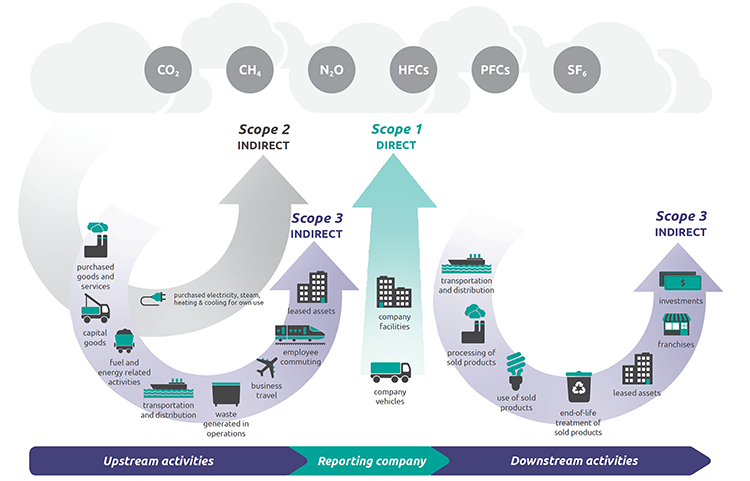
Overview of GHG Protocol scopes and emissions across the value chain-EPA
Infographic of the Greenhouse Gas Protocol (GHG) scopes and emissions across the value chain – from the Corporate Value Chain (Scope 3) Accounting and Reporting Standard 

Renewable Energy Company Examples:

(not all companies are held in the Sustainable Opportunities strategy) 

Chargepoint – Founded in 2007, ChargePoint is one of the largest independently owned EV charging networks in the world, serving commercial, residential, and fleet clients. ChargePoint uses an asset light model that allows it to scale quickly through sales to partners, including schools, companies, municipalities, and building owners.  

EDPR – The renewable subsidiary of utility company Energias de Portugal, the company is a global leader in renewable energy development and production, with a portfolio including onshore and offshore wind, solar, energy storage and hydrogen production, operating in North and South America, Europe, and Asia. 

First Solar – First Solar is the leading domestic U.S. solar photovoltaic panel manufacturer. The company’s thin film technology provides cost and thermal benefits to utility-scale solar projects. First Solar is expanding production in the U.S. to take advantage of IRA program tax incentives.

HASI – Formerly known as Hannon Armstrong, renewable energy financing company HASI provides financing to enable projects that deliver positive environmental impacts through providing clean energy, developing sustainable infrastructure, and increasing energy efficiency. 

Ormat – Ormat is a global leader in building and operating large scale geothermal energy plants, with proprietary binary technology that is more efficient and sustainable, reinjecting 100% of the geothermal fluid.

Ultimately, many companies providing the solutions to the climate crises will be beneficiaries of the shift away from fossil fuels and towards renewable energy, electrification, and efficiency focused technologies 


Article by Paul Hilton, CFA, Portfolio Manager and Research Analyst at Trillium Asset Management, covering the Consumer Discretionary sector and is the lead Manager for the Sustainable Opportunities strategy. He is also a member of the portfolio management team for the Green Century Balanced Fund, for which Trillium serves as a sub-advisor. Prior to joining Trillium in 2011, he was Vice President of Sustainable Investment Business Strategy at Calvert Investments and also previously held senior positions within Calvert’s Equities and Marketing Departments.

Paul also served as Portfolio Manager for Socially Responsible Investing at The Dreyfus Corporation, then a division of Mellon Bank, and as a Research Analyst in the Social Awareness Investment (SAI) program at Smith Barney Asset Management, then a division of Citigroup. Paul started his career as an Analyst with the Council on Economic Priorities, a non-profit known for an influential consumer guidebook called “Shopping for a Better World.” 

Paul is former Board Chair of US SIF, former Treasurer of the United Nations Environment Programme Finance Initiative (UNEP-FI), and founder of the Social Investment Research Analysts Network (SIRAN), the first U.S. network of sustainability analysts. He is a member of CFA Society Boston and a Chartered Financial Analyst, and holds Master’s degrees in Anthropology from New York University and Education from Roberts Wesleyan College. Paul is a frequent speaker on topics related to approaches to SRI/ESG investing and the growing market for products in this space.

Important Disclosure Information

This is not a recommendation to buy or sell any of the securities mentioned. It should not be assumed that investments in such securities have been or will be profitable. The specific securities were selected on an objective basis and do not represent all the securities purchased, sold, or recommended for advisory clients. Information and opinions expressed are those of the author and may not reflect the opinions of other investment teams within Trillium Asset Management. Information is current as of the date appearing in this material only and subject to change without notice. This material may include estimates, outlooks, projections, and other forward-looking statements. There is no assurance that impact or investment objectives will be achieved. Due to a variety of factors, actual events may differ significantly from those presented.

Footnotes:

  1. IPCC_AR6_WGII_SummaryForPolicymakers.pdf
  2. World Energy Transitions Outlook 2023: 1.5°C Pathway; Preview (azureedge.net)

Energy & Climate, Featured Articles, Impact Investing, Sustainable Business

Navigating the Investment Impact from the EPA’s Evolving Carbon Rules

By Dr. Pooja Khosla and Thomas H. Stoner Jr., Entelligent

Hamburg, Germany photo by Kevin Kandlbinder, Unsplash

Unraveling the implications for energy assets in shaping investment portfolios is vital.

vFor investors concerned about climate change risk, the issue of which stocks to buy, hold and sell can be quite complicated. The power sector representing the largest consumer of carbon fuels is highly regulated. When plants are decommissioned, rates are typically raised to cover the cost of investment in replacement plants and equipment. Investors must understand the risks to a company that might end up with a stranded asset. When there is adequate cost recovery, it represents a cost to users, but it’s often a benefit to shareholders. The tension for regulators is striking the right balance.
More deeply, data that measures climate risk – and penetrates sector-level analysis to security-level analysis – can be vital for investors who want exposure to the power sector while minimizing transition risk to a lower-carbon future.

Before we review what this data reveals about sectors and stocks, consider the consequences of regulation. Regulation, after all, is crucial for addressing climate change. U.S. Environmental Protection Agency rules can accelerate the transition to cleaner energy sources and encourage the adoption of technologies that reduce greenhouse gas emissions and make net zero goals real.

On the other hand, there’s concern that excessive regulation creates an unnecessary bureaucratic burden, diverting resources from innovation, infrastructure development and energy security. That last factor is the most important for a nation’s economic stability, as well as its defense, geopolitical influence, environmental sustainability and resilience.

It is also argued that stringent EPA regulations can impose excessive financial burdens on power plants, leading to higher costs for electricity generation. This may impact the affordability of energy and harm certain sectors of the economy. In addition are the concerns that strict regulations place U.S. companies at a disadvantage.

Companies will need to reevaluate their priorities to align with proposed government standards. They may need to emphasize investments in control technologies, such as carbon capture and storage, or low-GHG hydrogen co-firing, to meet emissions reduction requirements. This could result in a shift away from fossil-fuel-based infrastructure toward more sustainable technologies.

Compliance would require companies to make investments in retrofitting power plants or constructing facilities with the necessary control technologies, or ones that provide a variable power source, which could cause financial strain. The proposed standards introduce regulatory and policy risks and may accelerate the renewable transition. Regulations may promote and even incentivize companies in certain regions to invest in renewable projects, energy storage and low-carbon technologies. Such regulations can dramatically alter the power sector’s business model, exposing it to new risks.

These scenarios suggest asset managers should consider several factors when building portfolios. The bar of caution is high and the need for adequate actionable data to validate investment decisions is greater than ever. Monitoring technology adoption and innovation, staying current on the regulatory landscape and assessing companies’ renewable energy transitions are essential. By considering these factors, investors can best navigate the impact of proposed EPA standards and make informed choices.

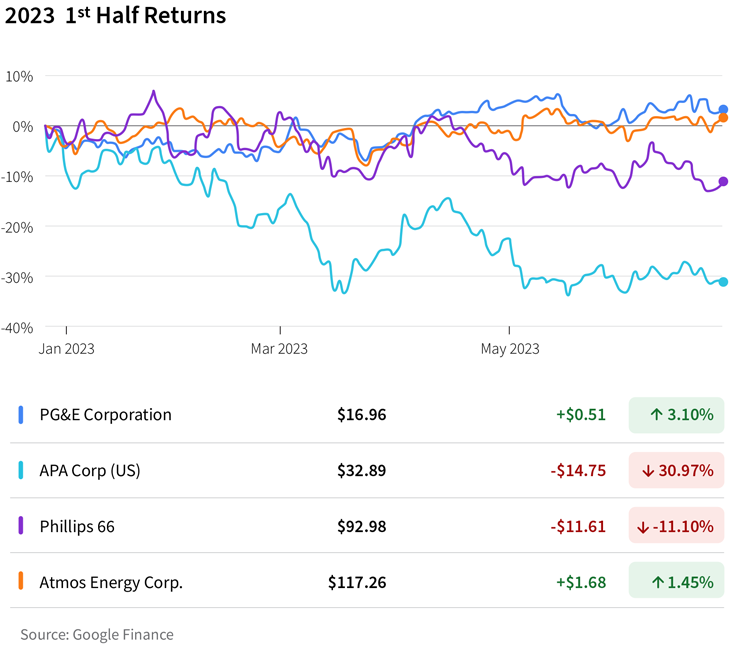
EPA regulations and company-level case studies. The regulations aim to reduce emissions, meaning companies operating in the power generation and fossil-fuel sectors face greater scrutiny and potential challenges in meeting standards. According to forward-looking Entelligent E-Scores, including T-Risk, that consider such policy responses, we find energy companies such as EQT Corp. more pressured by regulation relative to APA Corp. and Phillips 66, per Q2 ’23 estimates. (EQT is focused on natural gas production, APA on energy infrastructure and Phillips on refining and marketing.)

APA and Phillips are more diversified compared to EQT, which could provide a cushion. Consider the relative riskiness: Natural gas companies may be riskier than oil companies in the transition to a fossil-fuel-free energy mix. The shift toward renewables and decarbonization are expected to decrease the demand for natural gas, a fossil fuel. On the other hand, oil companies are facing similar challenges, but the extensive demand due to market pressures will likely decline more gradually. This means the short-term risk for natural gas companies may be higher, but both types of companies will likely face long-term challenges as the world moves toward a more sustainable energy mix.

The Entelligent E-Score model uses security price return forecasts and information coefficient from correlations with energy sources including coal, oil, gas, renewables, etc. The investment return forecasts for multiple scenarios are updated quarterly for three scenarios: Minimum, Maximum and Business as Usual. The updates account for 10 socioeconomic conditions. With situations such as the war in Ukraine, the model captures upward (favorable) energy profitability (return) shocks and estimates the future forecast by evaluating how a carbon tax or subsidies for renewables could impact the profitability or returns of companies up to two years out. In situations like these due to market conditions, diversification and relatively less short-term risk, it is very possible that E-Score rankings are favorable for the energy sector, particularly energy companies like APA and Phillips.

Entelligent’s T-Risk scores, integrating scenario analysis and carbon adjustment, helps to identify risks and opportunities in companies most ready for diversifying energy sources.

Consider these findings:

PG&E Corp. (Screened In): Considered more carbon intensive due to its historical reliance on natural gas and coal. However, PG&E has been actively incorporating renewable energy and reducing emissions to meet the tight regulatory environment in California. According to T-Risk, this company is relatively better prepared.

Atmos Energy Corp. (Screened In): Natural gas companies like Atmos are cleaner than coal and oil, but still reliant on fossil fuels. They have advantages in climate transitions, such as being a “bridge fuel” firm and by investing in carbon capture.

APA Corp. (Screened Out): As an oil-and-gas exploration-and-production company, APA faces significant transition risk. Its reliance on fossil-fuel reserves makes it vulnerable to potential asset devaluation in a carbon-constrained future. Carbon-intensive operations expose it to regulatory and market risks. Due to nonbinding regulations and high fossil-fuel dependency, APA is screened out from the portfolio for the current quarter.

Phillips 66 (Screened Out): Engaged in refining, marketing and distribution, with significant operations in Texas, California and Oklahoma. Texas and Oklahoma are far behind in formalizing climate-related regulatory frameworks. This company is also screened out of the portfolio to hedge climate transition risk.

Thus far in 2023, coal and oil prices have tumbled. T-Risk carbon-adjusted screening helps to hedge against energy demand and price disruptions. It is likely that the companies less exposed to these two fossil fuels – due to the nature of their business (Atmos) or regulations and green incentives from states (PG&E) – are outperforming, as shown in the graphic below.

2023 1st Half Returns - PG&E - APA - Phillips 66 - Atmos Energy - Google Finance

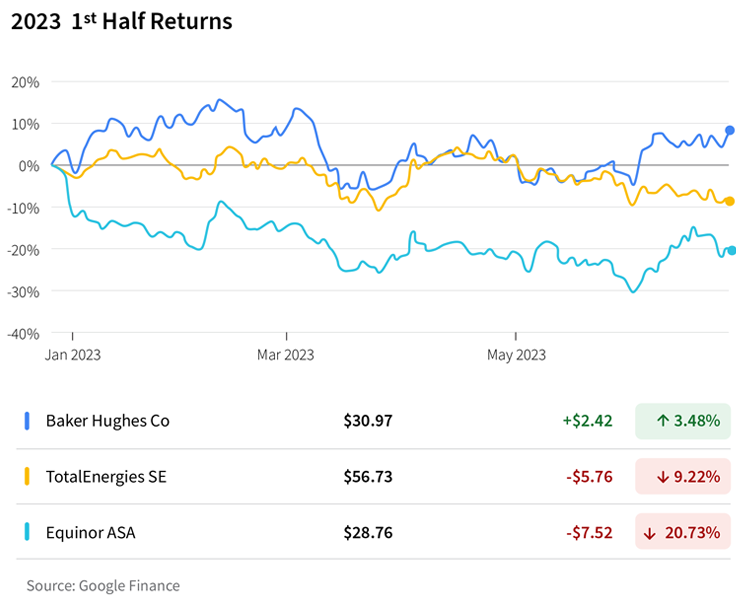
Consider T-Risk screening of prominent energy companies Baker Hughes Co. (screened in), TotalEnergies SE (screened out) and Equinor ASA (screened out). Baker Hughes is regarded as potentially less risky than TotalEnergies and Equinor in terms of energy transition and security issues in global markets, including the EU, amid several factors.

Baker Hughes is less risky due to diversification, reduced fossil-fuel exposure and adaptability to renewable energy. It can serve both traditional and renewable sectors, reducing reliance on declining fossil fuels. By not being as involved in oil-and-gas exploration and production compared to TotalEnergies and Equinor, Baker Hughes is less exposed to energy-related geopolitical disruptions and energy security issues.

While TotalEnergies and Equinor are actively diversifying into renewables, which could position them favorably in the EU’s transition to a low-carbon economy, in the T-Risk two-year forecast Baker Hughes’ focus on oilfield services may provide a degree of insulation from energy security and transition issues. Six-month return projections show the T-Risk Carbon Adjusted metric benefited with hedging by screening in Baker Hughes to the benchmark portfolio and screening out riskier companies such as TotalEnergies and Equinor.

2023 1st Half Returns - Baker Hughes - TotalEnergies SE - Equinor ASA - Google Finance

In conclusion, when new emission reporting standards were introduced, it created expectations that reporting would greatly improve, leading to the creation of more comparable and measurable information for the markets. If you are a believer in efficient market hypothesis, as we are, then when investment information gets better, decisions on building portfolios get better. In this case, that likely means better performance for two vital metrics: sustainability and investment returns.


Article by Dr. Pooja Khosla, CIO and Thomas H. Stoner Jr., CEO, Entelligent 

Pooja Khosla, Ph.D., is Chief Innovation Officer at Entelligent. She is an economist, econometrician, mathematician, and thought leader in the sustainability and climate finance space and has deep knowledge of building sustainable investing solutions. Dr. Khosla earned a Ph.D. in economics and has master’s degrees in four disciplines. 

Thomas H. Stoner Jr. is CEO of Entelligent and one of the company’s co-founders. Mr. Stoner has co-founded three cleantech and renewable energy companies and served as CEO of two publicly traded companies. He received a master’s degree in finance and accounting from the London School of Economics.

Energy & Climate, Featured Articles, Impact Investing, Sustainable Business

Clean Energy Investment and Innovation Trends: Navigating the Road Ahead

By Ron Pernick, Clean Edge, Inc

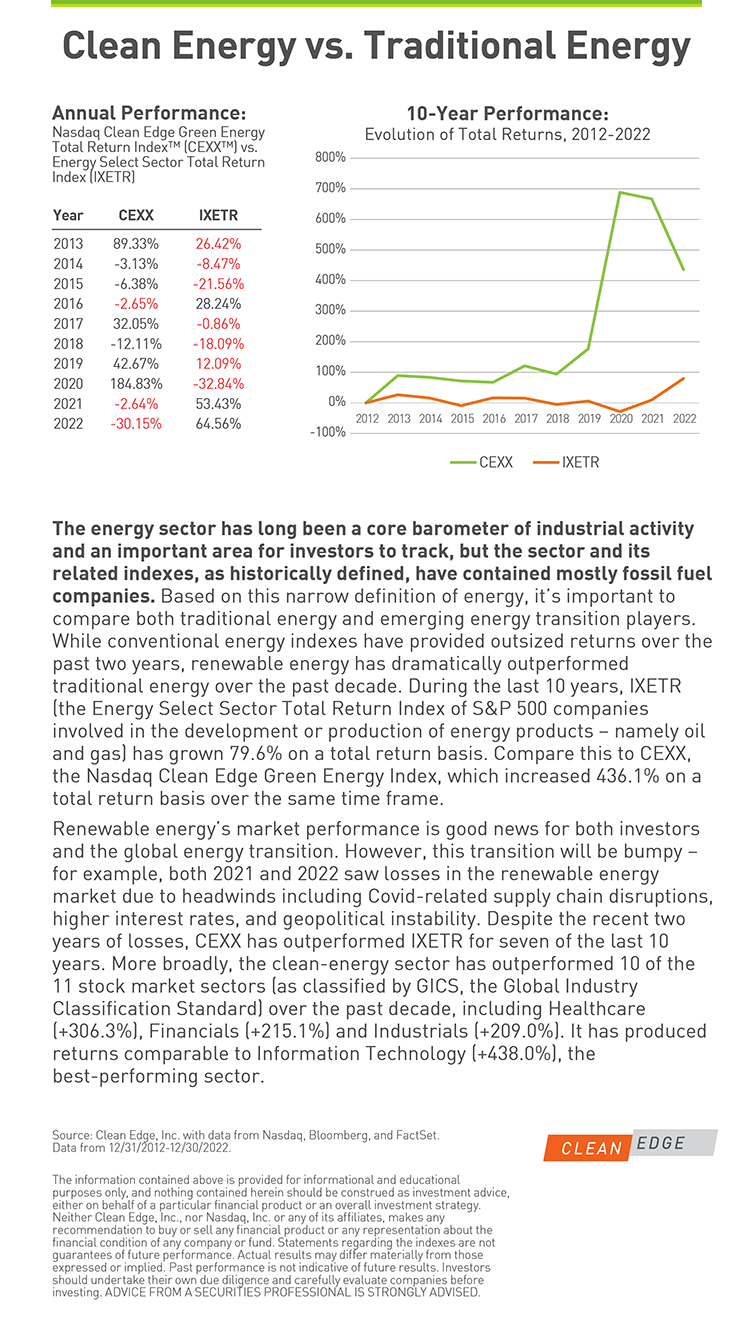
(See more information about the above 10-year performance chart below)


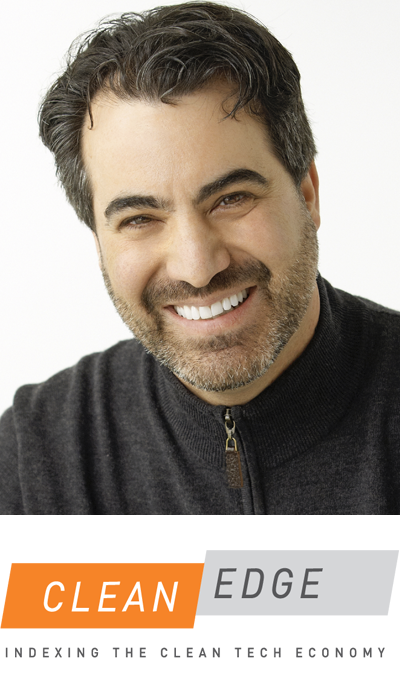
Ron Pernick of Clean Edge IncAs someone who has been researching clean-tech sectors for more than two decades and conducting stock index research since 2006, I find it exciting to be tracking the mass adoption and scale-up progress of a range of clean technologies, from solar power and energy storage to electric vehicles and transmission infrastructure.

Numerous factors are driving the shift from fossil fuels to clean energy, but two stand out: low-cost renewables (utility-scale solar and onshore wind are now the most price-competitive forms of new electricity capacity additions in most regions) and supportive energy and climate policies (with China’s Five-Year Plans, the U.S.’s Inflation Reduction Act, and Europe’s REPowerEU initiative leading the way). Clean energy has been scaling significantly for the past decade, but recent developments are driving a new wave of investments and deployment.

Some Key Facts and Figures:

  • Energy transition investments globally hit $1.1 trillion in 2022, breaking the $1 trillion mark for the first time, according to BloombergNEF. And a projected $1.7 trillion will be investing globally in clean energy in 2023, significantly more than the approximately $1 trillion expected to flow into fossil fuels, according to International Energy Agency.
  • Onshore wind and solar are not only the cheapest forms of new power capacity additions globally, but the fastest to deploy. New nuclear, on the other hand, is currently both the most expensive and slowest to deploy.
  • Power markets are reaching a tipping point, with most new additions globally coming from solar and wind. A record 83 percent of all new electricity capacity additions came from renewables last year, according to the International Renewable Energy Agency (IRENA).
  • All these new installations are having a significant impact. By 2025, more than a third of all global electricity production will come from renewables, according to the International Energy Agency (IEA), surpassing all generation from coal. Globally, solar and wind already outpace generation from nuclear power.
  • Eleven states now garner at least 30 percent of their in-state generation from solar and wind. Iowa and South Dakota, the two leaders, generated more than half their electricity from renewables, mainly wind power, in 2022. Iowa surpassed 60 percent for the first time, a new record in the U.S. In California, solar (utility-scale and distributed) contributed 27.3 percent of the state’s total in-state generation; solar now competes with wind as a major generation source in an increasing number of regions.
  • As governments and consumers look to wean themselves off Russian natural gas in the wake of Russia’s attack on Ukraine, sales of heat pumps have skyrocketed in Europe, with nearly 3 million units sold in 2022, up around 40 percent from sales in 2021.
  • Electric vehicle sales worldwide are projected to increase 35 percent this year, up from approximately 10 million sold in 2022 to 14 million in 2023, according to the IEA. If these projections hold, EV sales will equal approximately 18 percent of total car sales this year, up from just 4 percent three years ago.

There are many other examples of the shift to clean tech – all shining a light on the massive transition that is underway.

7-Point Energy Transition Action Plan

We estimate that the world is approximately halfway through the modern energy transition (2000—2050). Targeted technology, policy, and capital innovations must be deployed at scale and overcome a host of challenges to meet this monumental shift. Indeed, the transition will be bumpy and face several not-so-insignificant headwinds. These include inflationary pressures, material supply constraints and shortages, and incumbent industry misinformation campaigns and pushback. The following, is Clean Edge’s 7-Point Energy Transition Action Plan, which highlights some of the key steps and actions we believe are needed to ensure orderly and sustained progress: 

1) Focus on Efficiency – Pursue energy efficiency’s low-hanging fruit for the most bang-for-your-buck, including LEDs, insulation materials, building controls, and energy management systems. 

2) Scale Up Wind & Solar Massively – Support aggressive global deployment of solar and wind power, utility-scale and distributed, to reach 100 percent zero-carbon emission electric grids. 

3) Pair Renewables with Storage at Scale – Deploy storage at scale to enable 100 percent, 24/7 renewable power. Focus on both utility-scale and distributed storage, using electrochemical batteries (lithium-ion, solid-state, flow, etc.) and mechanical energy storage (pumped hydro, compressed air, etc.). 

4) Electrify Heating & Vehicles ASAP – Although we often hear the demand to “electrify everything,” we recommend focusing on two high-impact areas: passenger vehicles (two-, three-, and four-wheelers) and heating and cooling systems for homes and buildings (via adoption of electric heat pumps.) 

5) Modernize Transmission & Distribution Grids – Build out a range of electricity grid modernization efforts including digitization, smart meters and devices, bi-directional meters and charging, smart substations, and high-voltage, direct-current transmission lines. A modern 21st century grid is critical to enable the clean-energy transition. 

6) Develop Green Hydrogen, Ammonia, and Fuels for Agriculture, Heavy Industry, and Long-Haul Transport – Decarbonizing heavy industry will not be easy and will require green fuels above and beyond electrification. We recommend the adoption of green hydrogen and fuels to support the production of steel, fertilizer, and other energy-intensive industries, as well as for long-haul transport such as trucking, marine shipping, and air travel. 

7) Secure Sustainably Mined and Recycled Materials – Ensure the availability of mined and recycled materials for EV, solar, wind, and other clean-energy technology production. The future of energy depends on secure and reliable supplies of sustainably mined or recycled materials (lithium, cobalt, rare earths, silicon, nickel, etc.) rather than the extraction of fossil fuels (coal, oil, gas).

For renewable energy analysts and market participants, the promise of technology-driven renewable energy sources over fossil fuels has become increasingly clear. Extractive energy sources, by their very nature as commodities, exhibit price volatility when pitted against maturing tech-centric clean energy sectors – with their inherent cost-reducing learning curves. But while solar and wind are now among the most cost-effective sources of new electricity capacity additions, we’ll need to see similar cost reductions for EVs, energy storage, alternative conductive materials, electrolyzers, and other electrification technologies over the coming decade. We’ll also need to see cost declines for the grid integration of these technologies (connecting an offshore wind farm to the grid, for example, and getting the electricity to nearby and/or distant customers) – and for deployment obstacles to be removed or streamlined. Achieving the energy transition won’t be easy, but over time it promises lower costs, limited or zero emissions, and if done right, greatly diminished geopolitical volatility.  

Clean Energy VS Traditional Energy 10-year Performance from CleanEdge

Article by Ron Pernick, cofounder and managing director of Clean Edge, Inc., where he oversees the development and production of the firm’s thematic research tracking clean energy, transportation, water, and the grid. The company is a joint developer of and contributor to the Nasdaq Clean Edge Green Energy™ Index (CELS™), launched in partnership with Nasdaq in 2006. Other indexes include the Nasdaq OMX Clean Edge Smart Grid Infrastructure™ Index (QGRD™), ISE Clean Edge Water™ Index (HHO™), and the ISE Clean Edge Global Wind Energy™ Index (GWE™). All tracking financial products of Nasdaq Clean Edge indexes exceeded $4 billion in assets under management as of June 23, 2023. 

Under his leadership, Clean Edge has been at the forefront of researching technology, capital, and policy innovations driving the energy transition and sustainable infrastructure markets for more than two decades. He is the co-author of two books on clean-tech business and innovation, Clean Tech Nation (HarperCollins, 2012) and The Clean Tech Revolution (HarperCollins, 2007), which was translated into six languages and sold more than 30,000 copies worldwide. He has taught MBA-level courses at Portland State University and New College and is a regular speaker at industry events.

Energy & Climate, Featured Articles, Impact Investing, Sustainable Business

Parnassus Removes Investment Screen for Nuclear Power

Parnassus Investments LogoIn support of the transition to a low-carbon economy, Parnassus Investments, a pioneer in responsible investing, is removing its long-held exclusion on companies that make more than 10% of their revenue from nuclear power generation and/or related activities.

This change was approved by the Funds’ board of trustees and will be reflected in the Prospectus dated May 1, 2023.

Parnassus initially established the nuclear power screen in 1984 because of the safety and cost issues involved with building and running nuclear plants. Today, we believe nuclear energy offers a critical source of fuel, with benefits that include low to no emissions, safety and stability.

Tighter regulations governing nuclear plants have also led to improved designs and equipment as well as training and emergency response requirements. We are also pleased with the potential that the new generation of nuclear technology offers for higher safety and lower costs.

“We believe this is the right thing to do at this time because nuclear energy will be an essential source of fuel in the transition to the renewable sources required to support a low-carbon economy, and because we view nuclear power generation, in a highly regulated environment, as a reasonable choice,” said Marian Macindoe, head of ESG stewardship at Parnassus.

The change will have no immediate impact on Parnassus Funds, but it will enable nuclear power companies to be part of the universe of securities considered for investment.

Any potential investment in a company with revenue exposure to nuclear power generation would not only be subject to extensive risk review but would also require deep examination of its traditional investment characteristics.

Parnassus research analysts will evaluate companies involved in nuclear generation and engineering for robust governance, oversight and safety processes, including risk assessments and preparedness for climate, geologic and geopolitical events; a commitment to science-based emissions-reduction targets; and strong policies for nuclear-waste storage and disposal.

In addition to acting in support of a low-carbon economy, Parnassus is removing the nuclear screen in response to investor preferences shifting from exclusionary screens and toward investments in companies with positive social and environmental attributes.

The changes also reflect the firm’s Climate Action Plan, adopted in December 2022, to establish a goal of net-zero emissions in all our funds by 2050, in alignment with the Paris Agreement.


Shareholders in Parnassus Funds can obtain more information by calling (800) 999-3505 or emailing- shareholder@parnassus.com

Additional Articles, Energy & Climate, Impact Investing, Sustainable Business

Soil Wealth Areas Unlock Investing in Conservation and Regenerative Ag

Soil Wealth Areas Report from Croatan InstituteThe Croatan Institute recently released a report, Soil Wealth Areas: Place-based Financing for Conservation, Rural Communities, and Regenerative Agriculture, summarizing a USDA-funded, feasibility assessment regarding development of place-based financing districts in four regions: North Carolina, Northern California, Oregon, and Wisconsin. The project engaged with numerous place-based partners, 40 farms across 25,000 acres, and diverse groups of investors and stakeholders. The project addressed key issues related to regenerative agricultural investment, conservation finance, and access to capital and land, particularly for small and midscale farmers and farmers of color.

Soil Wealth Areas build upon the success of other agricultural districts, such as conservation districts and farmland protection districts. They are inherently place-based and locally governed by diverse groups of regional practitioners and stakeholders, including farmers, agricultural cooperatives, conservation and community-led organizations, value-chain businesses, food hubs, food and farming advocacy groups, food policy councils, and researchers. By being based in place, Soil Wealth Areas can better respond to local producers and entrepreneurs and help ensure that capital providers are aligned with the imperatives of ecologically resilient and socially inclusive food and agricultural systems.

As part of the North Carolina Soil Wealth Areas, for example, the project team facilitated a capital collaboration with Rural Beacon Initiative and Foodshed Capital, a community development financial institution (CDFI), which financed the conservation acquisition of heirs’ property in an historic Free Black community in Martin County. The farm is now implementing a regenerative transition focused on diversified agroforestry and regional food systems.

“As we assess the systems-scale change that is needed to begin addressing historic BIPOC land loss across the Southeast, flexible capital and creative technical assistance will be crucial to achieving real results. Our partnership with Soil Wealth Areas allowed the co-creation of a vision and strategic plan to secure appropriate, patient capital to finance the future of Free Union Farms,” says William J. Barber, III, Founder and CEO of Rural Beacon Initiative and Free Union Farms. “This step will allow us to accelerate the regenerative transition of our farm and serve as a case study on how a place-based model of collaborative capital coordination can help to address the on-the-ground realities to make communities more resilient. Self-determination for communities is the goal. Flexible capital is the first step.”

“We work on a daily basis with farmers and food businesses who need more access to funding and financing so they can make investments in their operations,” said Dr. Carla Norwood, Co-Founder and Executive Director at Working Landscapes, one of the project’s many place-based partners. “Croatan Institute’s Soil Wealth Areas are helping to create more diverse funding and financing options that can better meet these needs by aligning capital providers and producers in our network to drive catalytic impact in regenerative agriculture.”

“At Croatan Institute, we envision an equitable world where finance supports flourishing communities, vibrant places, and resilient regional economies,” said Dr. Joshua Humphreys, Croatan Institute President and Principal Investigator for this report. “Soil Wealth Areas provide a new way for us to help make that vision a reality in place. Based on over two years of collaboration with farmers, place-based partners, and aligned investors, this report outlines specific recommendations for unlocking new sources of capital to finance more regenerative land stewardship and more resilient rural places.”

Additional examples of how this initiative catalyzed change include:

  • Pilot transactions in North Carolina unlocked more than $725,000 in flexible loan capital and crowdfunding donations for farmers involved in the project. The NC team also piloted a Financial Health Investment Project (“FinHealth”) with two cohorts of farmers of color to provide the kind of financial technical assistance that Soil Wealth Areas will integrate into their operations. This includes financial health coaching, farm business planning, and capital access strategies.
  • In Wisconsin, the project team helped advance policy changes to the state’s Property Assessed Clean Energy program that now extends flexible, land-secured financing to farms making conservation improvements such as managed grazing and agroforestry.
  • On the West Coast, approaches to Soil Wealth Areas differed in California and Oregon. In CA, local leadership will need to drive efforts to coordinate place-based financing at the local level in collaboration with Resource Conservation Districts and aligned capital providers like CDFIs, impact investors, donor-advised funds, and other philanthropic investors.
  • In OR, a more cohesive, statewide dialogue about a Soil Wealth Area model emerged among a growing group of organic farming advocates, land trusts, capital providers, and BIPOC farming groups. The model would ideally be rooted in the state’s diverse agricultural regions.

Following this first phase, Croatan Institute is establishing a national Soil Wealth Community to share learnings about the development of Soil Wealth Areas and place-based financing opportunities. In North Carolina, a new implementation phase of Soil Wealth Areas has begun in coordination with place-based partners, such as Rural Beacon Initiative and Working Landscapes, which is leading a parallel USDA Climate-Smart Commodities project focused on regenerative agriculture and soil health among farmers working with regional food hubs across the state.

This initial $2.5 million feasibility phase of Soil Wealth Areas during 2020-2022 was funded by a $700,000 Conservation Innovation Grant from the USDA’s Natural Resources Conservation Service, and $1.8 million in private-sector contributions from a wide array of project partners, investors, foundations, and aligned initiatives.

Download a copy of the report here. 


About the Croatan Institute

Croatan Institute is an independent, nonprofit research and action institute whose mission is to build social equity and ecological resilience by leveraging finance to create pathways to a just economy.

Additional Articles, Food & Farming, Impact Investing, Sustainable Business

Signup to receive GreenMoney's monthly eJournal

Privacy Policy
Copyright © GreenMoney Journal 2025

Website design & development by BrandNature

Global Events Calendar

View All Events

april

21aprAll Day232026 Sustainable Packaging Coalition: SPC Impact – Nashville

27aprAll Day30Women Deliver 2026 Conference (WD2026) – Melbourne

X