Tag: Impact Investing

Celebrating Women and Investing

By Stella Tai and Lori Scott, Praxis Mutual Funds & Lafayette Square

Stella Tai interviews Lori Scott - Womens History MonthIn honor of Women’s History Month, Stella Tai, Stewardship Investing Impact and Analysis Manager at Praxis Mutual Funds, interviews Lori Scott to reflect on the contributions and achievements of women in the field of investing.

Lori Scott joined Praxis Mutual Funds as a Trustee in 2023, and is the Managing Director, Impact Credit at Lafayette Square. Lori previously worked at the John D. and Catherine T. MacArthur Foundation, Anthos Asset Management, Armature Consulting, and Calvert Impact. She brings over 25 years of experience in community development finance and has paved her own way in the impact investment field. 


Stella: Tell us about your background and how you got into investment management 

Lori: I came to impact investing indirectly. I grew up in a steel mill town in Indiana that became increasingly economically distressed, and going to college was my way out. My first job was at a City of Chicago program that funded artists to bring their work to disinvested neighborhoods. Over and over, I saw the power of arts to engage people, create community, preserve culture and enrich lives, but against the backdrop of deep economic inequalities. This sparked my interest in community development, and I went back to get my MBA with the vague notion that business skills could be used for good purposes.

After business school, I became a real estate lender at Illinois Facilities Fund, a community development finance institution, making loans to nonprofit social service facilities like child-care centers. For decades now, CDFIs have shown how to build healthy portfolios seeking to generate a consistent yield while making capital available where mainstream financing was not available.

Stella: Why was a focus on underserved women, people and places important to you? 

Lori: Reimagining how capital can be used to solve problems is what drew me to this work. Impact investing can be used as a tool to realize human potential by re-channeling capital to support quality basic goods and services like quality health care, affordable housing and quality jobs. It is a tool for making systemic changes increasing the support of underserved women, diverse entrepreneurs and fund managers, further shifting capital to underserved people and places and making strides to bridge the wealth gap. 

Stella: What are your current views on the state of gender-lens investing? 

Lori: When I first joined Calvert Impact, a leading impact investing institution, our investment strategy was centered on community development and affordable housing in the U.S. and microfinance internationally. Microfinance was where I first learned about gender-lens investing, as many of the early microfinance models focused on women, and it became a wide-scale demonstration that very poor women around the world were a good credit risk. 

There is so much inspiring work going on right now in gender-lens investing, with a global blossoming of talent pioneering innovative investment strategies and contributing to thought leadership, research, and data. There has been an uptick in diverse voices in the gender conversation – an overdue improvement. 

Stella: What would you say to those who are still concerned about the perceived risk of this kind of investing?

Lori: When we talk about risk, it’s important to unpack the assumptions that are underpinning the assessment and be aware of perceived risks. What data, if any, is informing the risk aversion? This is a fertile time for experimentation with investment to create change and, in parallel, there are rapid advancements in impact data collection and interpretation. 

There is a broad range of impact investment products available for people all along the risk-return spectrum, in different asset classes, geographies, sectors, and impacts. Some strategies require capital that has more modest return expectations, or objectively have higher risk to achieve a certain outcome. This variation in risk tolerance among investors is one of the reasons we created the Catalytic Capital Consortium at MacArthur Foundation, in partnership with Rockefeller Foundation and Omidyar Network. 

Stella: What are some of the advances that you have seen in making the investment management field more diverse by attracting more women, including women of color?

Lori: Bringing diversity to all levels of decision making is critical to addressing the systemic barriers that result in unequal access to resources for women. Women were hired into only 37% leadership roles in 2022 and women hold just 29% of board seats. Something is amiss since a higher proportion of women on boards is correlated with higher credit ratings, according to Moody’s Investors Service.

Additionally, in 2022, women founded start-ups raised 1.9% of all venture capital funds, only about 12% of decision makers at venture capital firms are women, and 65% of firms do not have a single female partner. When you layer in race, the numbers plummet further. For example, less than 1% of US venture firms are led by Black women and only 0.3% of U.S. venture capital goes to Black-women-owned businesses. 

These appalling numbers show the urgent need to increase women’s inclusion. When this is combined with the data that shows increasing participation of women improves performance, until we fix this, everyone loses. 

While many of the general statics of women in leadership are grim, the CDI and impact investing space has made significant progress toward gender equity. I’ve been privileged to work for and learn from several amazing women leaders in this field: Trinita Logue, founder of IFF; Shari Berenbach, Lori Chatman and Lisa Hall at Calvert Impact; and again with Lisa at Anthos, a family office in the Netherlands; and with Debra Schwartz, at MacArthur Foundation. The firm where I work now, Lafayette Square, has about half women and half people of color on staff and it feels like I’ve landed in the bright future of equal opportunity.

Stella: Why should we continue to focus on the issue of women in investing even as progress is being made?

Lori: According to the World Economic Forum’s Global Gender Gap report 2022, it will take another 132 years to close the global gender gap at the current rate. The pandemic further increased pressures on women globally, due in part to increased caregiving responsibilities. I don’t think we fully understand these effects on slowing the progress to reach gender parity. Adding the lens of race, ethnicity, and/or location makes these statistics even more stark and the need for tailored strategies more urgent. So, much work remains to be done. 

Stella: What wisdom or challenge can you leave us with?

Lori: Be curious and listen more, especially to the people that you are intending to help!


(Top image: the VisionFund International, a CDI investment Praxis has through Calvert Impact)

Interview by Stella Tai, Stewardship Investing Impact and Analysis Manager. Stella provides primary leadership for the promotion, integration and development of impact investing and reporting. Stella guides the development of financial products that meet the needs of low-to-moderate income communities, helps promote the integration of faith and finances through Everence products and services, and works to grow opportunities for impact investments. Connect with Stella on LinkedIn.

Praxis Mutual Funds pursues diversity and inclusion not just at its own board table, but also throughout its investing and shareholder advocacy activities. Addressing inequality in corporations is one of Praxis’ two primary shareholder advocacy objectives for the next several years. This effort is supported by an active proxy voting strategy that emphasizes diversity and inclusion on the boards of the companies in which Praxis invests. We believe that the inclusion of diverse voices at the board table leads to better outcomes. 

Praxis Mutual Funds is privileged to work with many talented women including Praxis Trustees Lori Scott, Aimee Minnich and Laura Berry.

Praxis Mutual Funds is a leading faith-based, socially responsible family of mutual funds designed to help investors integrate their finances with their values. Praxis is the mutual fund family of Everence Financial®, a comprehensive faith-based financial services organization helping individuals, organizations and congregations. To learn more, visit https://praxismutualfunds.com and https://everence.com 

Consider the fund’s investment objectives, risks, charges and expenses carefully before you invest. The fund’s prospectus and summary prospectus contain this and other information. Call 800-977-2947 or visit https://praxismutualfunds.com for a prospectus, which you should read carefully before you invest. 

Praxis Mutual Funds are advised by Everence Capital Management and distributed through Foreside Financial Services, LLC, member FINRA. Investment products offered are not FDIC insured, may lose value, and have no bank guarantee.

Mutual fund investing involves risk. Principal loss is possible.

ESG: environmental, social, governance. The Fund’s investment strategy could cause the fund to sell or avoid securities that may subsequently perform well, and the application of ESG and/or faith-based screens may cause the fund to lag the performance of its index.

Praxis Mutual Funds

1110 N. Main St., P.O. Box 483, Goshen, IN 46527

Featured Articles, Impact Investing, Sustainable Business

The Benefits of Putting our Feminism into our Finances

By Kristin Hull, Nia Impact Capital

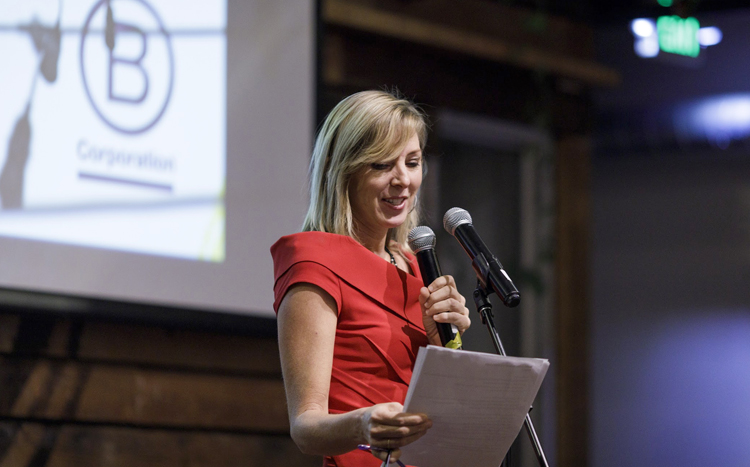
(Above photo – Kristin speaking with Nia strategic advisors)
Photo by: Brandi Rollins Photography

From the April 2023 Archive. Investing with a Gender Lens is not new. Many of us have been at this for a while now. And yet 2023 is the year we stand to make significant progress in bringing more balance to both our finances and to corporate America and beyond. As a woman, I value efficiency, and as a female portfolio manager, I love the win-win that using a gender lens brings to our investment process.

What Do We Mean by Gender Lens?

Gender lens investing is an approach to investment due diligence that seeks to incorporate gender considerations into investment decision-making. This process can involve investing in companies that include products or services beneficial to women or girls, that prioritize gender equality and women’s empowerment, and/or that have women in leadership positions. Looking for gender balance can literally entail counting the women in the C-suite, or on a board of directors. 

Investing with an eye for equality, as a way to enhance portfolio decisions, means incorporating women as important factors for running a company–both because these are important societal goals, and because diversity and inclusion can be de-risking factors.

Investing with a gender lens can be a source of alpha, bringing financial benefits to investors including:

Higher returns: Studies have shown that companies with greater gender diversity tend to outperform those with less. From higher stock prices, to return on equity, diversity can be an alpha driver. MSCI, for example, found that companies with strong female leadership had a return on equity (ROE) of 10.1% per year, compared to 7.4% for those without.

Lower risk: Companies with diversity in leadership are also found to be better at managing risks, such as reputational damage or legal issues related to workplace discrimination or harassment, working to protect investors from potential losses.

Greater innovation: In this age where many sectors and systems require disruption, gender diverse teams are more likely to foster innovation and creativity, which can lead to new products, services, and processes that can boost a company’s ROI and overall financial performance.

Improved corporate governance: Companies with more women on their boards tend to have stronger corporate governance practices, including more effective oversight of management and better risk management.

Increasing demand: The growing demand for investment products that consider gender equality and women’s empowerment, particularly among younger investors and women themselves sends a market signal which can actually help drive up the value of companies that prioritize diversity and equality.

The purpose of gender lens investing is not only to achieve financial returns. Investors can also create positive social impact by supporting gender equality and addressing gender-based disparities, serving to raise awareness of the importance of women’s voices being included and heard. 

From the myriad celebrations of Women’s History Month to the growing body of research highlighting the business case for diverse leadership, those of us looking to change the face of finance have some strong winds in our sails. Let us continue to put our feminism into our finances to ensure that our money is having the impact we are hoping to see in the world. Now is the time to invest with a gender lens.

What Does it Mean to Invest with Feminist Values?

From our consumer activity to our investment portfolio, it is time to align our assets with our goals for gender equity. Each one of our dollars has an impact in the world, from our banking decisions to our bond and public equity holdings. For those just getting started, here are a few ways to ensure we are leveraging and aligning our portfolios with a gender lens:

  • Do all of the companies in your portfolio include women in leadership? Research tells us there is a need for greater diversity at the board and executive leadership in all sizes of companies. Up until recently the onus has been on women to prove that inclusion is a good business proposition. Nowadays, instead of seeing women as a risk factor, the tide is turning toward viewing inclusion as a competitive advantage. Moving forward in this age of inclusion, I believe the burden will move toward men to justify an all-male leadership team. In the meantime, we can send a strong message by voting with our dollars. At Nia, we select only those companies that include women in leadership. We also use our platform and our investor voice to share the accumulating research on women in corporate leadership, encouraging some of our companies to increase their gender diversity numbers.
  • Are your investments providing women access to capital? Financial inclusion is a significant part of how we will achieve gender equity. Currently, women receive only 4 percent of venture capital funding. As investors, we all need to check our biases to ensure we are directing capital to women, and not missing opportunities by inadvertently excluding this half of our population of startup businesses. Is your bank providing loans to women entrepreneurs? Are the lending companies in your portfolio on board to lend to women and women-owned businesses? Have you checked out Investibule? This innovative investment platform highlights crowdfunding investment opportunities for women entrepreneurs.
  • Are the companies in your portfolio producing products and services beneficial to women and girls? It is said that companies with women in charge hire more women. This is a good thing. While leadership opportunities are essential for both a company’s financial bottom line as well as broader inclusion goals, as investors and advisors, it is also important to select companies that have women in mind. To transition to the next just, sustainable, and inclusive economy, those companies that are actively innovating on behalf of women and girls need our investment. From avoiding harmful companies to investing in solutions-focused companies such as those addressing renewable energy, affordable housing and health care solutions, we can use our investment portfolio to invest in a world that works for everyone.
  • When evaluating companies in which to invest, company employment policies matter. Are you investing in companies with generous family leave, making it easier for women to excel at their career while also raising a family? Do the companies in your portfolio have diversity goals, as well as policies and practices in place to help them achieve their plans?
  • When selecting wealth management services and investment funds, are you choosing female investment advisors and portfolio managers? To change the face of finance for future generations, we’ll need to bring a gender lens to all levels of our investment decisions. The good news: female managers have been shown to outperform their male counterparts.
  • Are you using your investor voice for shareholder engagement? At Nia, we view proxy voting as both a shareholder right and a responsibility. Corporate engagement is part of our due diligence process. From diversity in board leadership, to CEO pay, to ending forced arbitration in employee contracts, to workplace equity we can all use our investor voice by voting proxy statements in alignment with fair and equitable corporate policies and procedures. 

By bringing a gender lens to the investment process, women and men alike can use their assets to bring about more balance and work toward equality while also reaping the potential benefits of financial returns associated with inclusion. 

Kristin Hull speaking at 2017 Nia Impact Capital Launch
Kristin Hull speaking at the Nia Impact Capital 2017 launch party


Article by Kristin Hull, PhD, Founder and CEO of Nia Impact Capital (www.niaimpactcapital.com), a women-led Registered Investment Advisor investing at the intersection of environmental sustainability and social justice. Nia is leading the charge to change the face of finance by hiring and training women and people of color in sustainable and transformative investing. Kristin founded Nia to make it easier to invest at the intersection of environmental sustainability and social justice and has subsequently launched Nia’s Growth and Dividend portfolio and is currently building a US strategy to address racial equity.

Additional Articles, Energy & Climate, Featured Articles, Impact Investing, Sustainable Business

Innovative Use of Farmed Oysters Boosts Businesses and the Environment

By Aaron Kornbluth, Joseph Gordon & Zach Greenberg, Pew Charitable Trusts

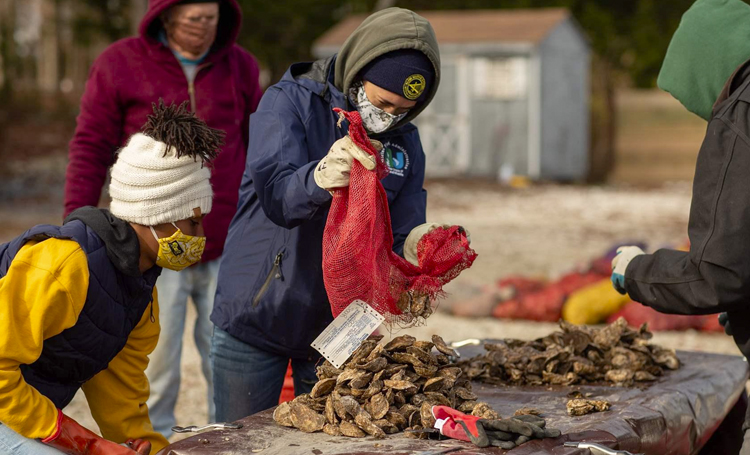
Above: A Billion Oyster Project boat in New York Harbor steered by staffer Marc Melendez prepares to plant some 5,000 oysters that will help restore the harbor’s ecosystem. Rebecca Resner (left), hatchery manager, and Danielle Bissett, director of restoration, will unload the oversized bivalves provided by Lucky 13 Oysters, a Long Island aquaculture farm and Supporting Oyster Aquaculture and Restoration beneficiary. Lexey Swall for The Pew Charitable Trusts

Oyster aquaculture and restoration program celebrates successes, looks to the future


When the COVID-19 outbreak shuttered restaurants throughout the country, commercial oyster growers saw their sales plummet. At the same time, the pandemic forced many organizations that were restoring native oyster reefs to suspend their work. During this challenging period, The Pew Charitable Trusts’ conserving marine life in the U.S. project and The Nature Conservancy (TNC) recognized an opportunity to connect the two groups through an effort that we named Supporting Oyster Aquaculture and Restoration (SOAR).

This collaboration between Pew and TNC has repurposed millions of farmed oysters—that might have otherwise been discarded because they were too large for consumers—for reef restoration, securing substantial economic and conservation wins. SOAR’s oyster purchase program, which buys oversized oysters that are less commercially viable for sale to restaurants and plants them in restoration sites in seven states, began in early 2020. To date, SOAR has purchased more than 3.5 million oysters from 125 shellfish farms, supporting more than 450 jobs.

“It is remarkable just how mutually beneficial oyster aquaculture can be for coastal economies and ecosystems—which is where the idea for SOAR originates,” said Robert Jones, TNC’s global aquaculture lead. “By implementing farmed oysters in restoration projects, we’re able to not only ensure the longevity of independent businesses and sustain good jobs but also recover one of the world’s most imperiled marine habitats. It really is a win-win for communities and the environment.”

One of those businesses belongs to oyster grower Sue Wicks, who opened Violet Cove Oyster Company on Long Island, New York, after a storied career as a player in the Women’s National Basketball Association and as a college coach.

“With all the uncertainty of COVID, I feared not being able to pay my crew and losing a ton of oysters as restaurants, our sole buyers, were shut down,” Wicks said. “SOAR was there for the oyster farmers with immediate and direct help that got us though a dark moment. The infusion of cash was desperately needed for our payroll, but just as important was the infusion of hope, community, and support when we needed it most. We are forever grateful to SOAR.”

SOAR also advanced interest in establishing a market throughout the country that’s built on the direct sale of shellfish for ecosystem restoration, creating new opportunities for oyster growers like Wicks to tap into. When surveyed, nearly 90% of SOAR participants said they are very interested in future restoration projects, and 94% said the program was “somewhat” or “very” beneficial to their businesses. In addition, SOAR’s Shellfish Growers Resiliency Fund—which launched after the purchase program and funded 36 projects in 16 coastal U.S. states—provided opportunities to further build connections among shellfish growers, scientists, resource managers, and the public.

Volunteers count oysters in Port Republic, NJ for SOARs reef restoration
Volunteers count oysters in Port Republic, New Jersey, for SOAR’s reef restoration efforts, working with The Nature Conservancy and staff from the New Jersey Department of Environmental Protection. Sean Graesser SOAR

Healthy native oyster populations play important roles in the environment, in addition to their economic benefits to many coastal communities. Productive oyster reefs create habitat for marine life, filter pollutants from water, and in some circumstances can stabilize shorelines and absorb wave energy from increasingly damaging storms. However, decades of overharvesting, disease, and habitat modification have led to steep declines of wild oysters in the U.S. as well as throughout the globe.

SOAR’s work has tested little-used reef restoration practices on a larger scale than ever before. Rather than the traditional method of adding larval and young oysters to restoration sites, the program added larger and older oysters that can filter more water, are more resistant to predators, and produce more larvae—meaning they’re more productive. Oysters purchased through SOAR have subsequently helped rebuild nearly 40 acres of reef throughout the Northeast, mid-Atlantic, and Washington state, and initial monitoring data from several New England sites demonstrates that this method has been quite successful.

In Great Bay, New Hampshire, where SOAR added over 300,000 mature oysters to a restoration site, scientists measured the largest surge in young oysters in nearly two decades. Biological monitoring at other restored areas along the southern shores of Martha’s Vineyard, Massachusetts, shows similar progress. And in a few places like Ocean County, New Jersey, new programs are being funded to likewise engage the aquaculture industry in reef restoration. Other states are also looking to adopt SOAR’s model and have approached Pew and TNC for advice on replicating it.

A second phase of the SOAR program, again led by Pew and TNC, will launch in the near future. Its goal: to leverage SOAR’s momentum to advance a national conversation about how the benefits of partnering with ocean farmers extend far beyond the restoration of coastal habitat.


Writers: Aaron Kornbluth is a senior officer, Joseph Gordon is a project director, and Zack Greenberg is an officer with The Pew Charitable Trusts’ conserving marine life in the U.S. project. 

Additional Articles, Energy & Climate, Food & Farming, Impact Investing, Sustainable Business

Brands Grapple with Sustainable Growth in Crowded, Stalling, Alternative-Protein Market

By Tom Idle, Sustainable Brands

Industry players must keep making their products even more attractive, appeal to older generations and bring down costs. Only then can we address the significant environmental impacts of animal agriculture while satisfying the meat-loving masses.


The environmental benefits of having a hefty proportion of the global population moving to a meat-free diet are well documented. Animal farming uses around 77 percent of the world’s agricultural land; yet, it only supplies 17 percent of our food. It is this inefficiency that continues to drive the expansion of farms, and ongoing deforestation and loss of ecosystems. Meat production contributes more to the climate crisis than the whole of the world’s transport sector, including aviation. And almost a third of all water used on Earth is channeled into supporting animal agriculture.

So, arguments in favor of plant-based meat, lab-grown meats and other alternative proteins have been deafening in recent years. The accompanying growth in the market, particularly for plant-based meat substitutes, has gotten environmentalists very excited.

It has also encouraged brands to scramble to make a move. Swedish furniture maker IKEA successfully reimagined its best-selling meatball with a plant-based version said to have the “same taste and juicy bite” of the original, despite being made from pea protein, potatoes, oats and onion. Food giant Kellogg improved its line of MorningStar Farms vegetarian patties; and spun out Incogmeato — a plant-based line of sausages, burgers and chicken priced to compete with forerunners such as Beyond Meat and Impossible Foods. Meanwhile, McDonald’s and Yum! jumped into bed with new incumbents to double down on plant-based meat, “demonstrating the long-term potential they see in the category,” according to Bruce Friedrich, executive director of the Good Food Institute.

Back in 2019, conventional meat farmers began to worry. Barclays predicted the alternative meat market could jump by more than 1,000 percent in the next decade to $140 billion. Then, Forbes reported on the potentially “game-changing” impact of plant-based trends on animal farming — particularly in the US, where even a 5-10 percent market share shift might send “ripples throughout production agriculture.”

Fast-forward to today, and the industry appears to have stalled. Three years ago, Beyond Meat went public, to great accolade. At one stage, the company was valued at more than $10 billion as its products were adopted by high-profile restaurants and grocery stores. But in the last 12 months, shares in the business have plummeted by more than 80 percent and sales have stalled, according to the New York Times. Beyond has laid off hundreds of employees, and staff disgruntlement points to wider problems for the business.

It’s not just Beyond Meat that is having problems. Impossible Foods also cut jobs late last year as part of a “restructuring exercise” led by its new CEO, Peter McGuiness. And Brazilian meatpacker JBS recently announced plans to close its plant-based arm of the business, Planterra Foods.

So, what gives? Well, for a start, all food-based businesses are finding it hard amid rising inflation and the cost-of-living crisis. Plant-based meat is rarely cheaper than real meat; so, consumers are acting in the interests of their wallets, as opposed to the environment. GlobeScan’s latest Healthy & Sustainable Living Global Consumer Insights study shows that, although the majority of consumers say they are willing to pay a premium for sustainable products — such as meat-free protein — their willingness to pay more has declined. Across 23 markets, just 55 percent of survey respondents tracked between 2019 and 2022 now say they at least “somewhat agree” they would be willing to pay more for sustainable goods — down from 58 percent in both 2020 and 2021. Three-quarters of people also tend to agree that sustainable products have become more expensive in the past 12 months.

Another argument against meat-free substitutes is that, while they may be better for the environment, they might not always be healthier.

So, what does the future hold for the meat-free market? According to Deloitte, the market might be more limited than many previously thought: “Dramatically improved taste in recent years (vouched for by seven in 10 consumers) unlocked new interest in plant-based alternative (PBA) meat,” it says in a report on the subject.“ [But] the number of consumers who sometimes buy PBA meat for themselves or a household member did not grow in 2022. The half (53 percent) who aren’t buying it may not be easily reachable, partly due to cultural resistance to a product some view as ‘woke.’ Others, many of whom say they want to reduce their red meat consumption, still aren’t interested in PBA meat.”

Despite the numerous setbacks experienced by the meat-free movement this year, the market continues to evolve. The US Food and Drug Administration approved the first cultivated meat in the US — Upside Foods’ cell-based chicken — opening up an entirely new alternative to conventional meat production that could boast the environmental benefits of plant-based protein while still being, well, meat. Meanwhile, Israel is becoming a hub for lab-grown meat startups. Already home to major players including Aleph Farms and Steakholder Foods, the country is second only to the US in terms of attracting investment for alternative-protein companies. Since 2020, nearly $1 billion has been channeled into Israel — a nation that has had to be inventive when it comes to food production given the lack of accessible water nationwide.

Whichever way the wind blows, industry players will need to shift, refocus and reformulate their products to make their proposition even more attractive, appeal to older generations and bring down costs. Only then can we create the sustainable alternatives the world needs to address the significant environmental impacts of animal agriculture while satisfying the meat-loving masses.


Article by Tom Idle, founder Narrative Matters, for Sustainable Brands

Former editor-in-chief at 2degrees, the world’s leading online community for sustainable business professionals, and editor of Sustainable Business magazine. Tom develops, creates and publishes content that truly engages audiences around issues of global social, environmental and economic importance. He also provides strategic editorial insight and support to help organizations – from large corporates, to NGOs – build content strategies that focus on editorial that is accessible, shareable, intelligent and conversation-driving.

Additional Articles, Food & Farming, Impact Investing, Sustainable Business

Mad Capital Closes $4m Seed Round to Finance Regenerative Agriculture

Above: The Mad team speaking with farmers

Investment led by Trailhead Capital to ramp up Mad Capital’s operations, expand their farmer ecosystem, and transition more acres into regenerative organic farmland.


Mad Capital, an impact-focused lender that offers equitable, flexible funding for organic and transitioning farmers, announced today that they’ve raised a $4M Seed round, led by Trailhead Capital.

“Regenerative agriculture aspires to work with nature, rather than against it,” said Phil Taylor, co-founder of Mad Capital. “Mad Capital is a bold reimagination of financing in nature’s image, empowering farmers to create farm ecosystems that are good for the Earth and good for humanity.”

“Our goal is to finance 10 million acres of farmland by 2032. We are thrilled to have expanded our investor community and now have the resources to continue backing farmers who are transitioning more land to regenerative organic production”, added co-founder Brandon Welch.

Conventional and industrial agriculture are responsible for the ongoing degradation of our soil, massive greenhouse gas emissions, biodiversity loss, and chemical laden foods. Regenerative organic farming is a rising movement that addresses these challenges by working with nature to maximize the health of soil, people, and animals. However, many farmers struggle to convert to regenerative organic because traditional banks are largely unwilling to supply transition financing.

“In the coming year, we’ll turn our focus to building out our network of mission-aligned capital partners and launching our second Perennial Fund, with a goal of financing an additional 100,000 acres of farmland in 2023,” commented Brandon Welch.

Mad Capital manages innovative pools of capital that offer farmers flexible and customized financing to help them thrive during the organic transition period. Their inaugural fund, the Perennial Fund, blends debt funds with traditional financing to create one-of-a-kind capital stacks for their farmers to accelerate their transition. Without this custom working capital, farmers often take a financial hit during the standard three-year period it takes for farms to regenerate their ability to produce a consistent crop yield.

Mad Capital’s funds are supported by a global cadre of investors that believe this model can scale worldwide, such as Patagonia’s venture capital fund Tin Shed Ventures, Silverstrand Capital, Homecoming Capital, and 38 others.

“This is an amazing team with an amazing opportunity in front of it,” said Mark Lewis, Managing Partner at Trailhead Capital, an investment firm focused on regenerative agriculture. “Mad Capital is working to determine how do we optimally reward the stewards that are doing the most noble and regenerative work? That is the question we aim to address and innovate on.”

Other participating investors in the Seed round include Bonaventure Capital, Homecoming Capital, Impact Assets, One Small Planet, Pelican Ag, Lacebark Investments, and 17 others.

Mad Capital is working to prove the viability of regenerative organic agriculture as an asset class that can provide consistent yield in the face of an uncertain macroeconomic environment. Over time, Mad Capital plans to securitize their regenerative organic farm loans to scale the growing industry while helping capital partners meet their climate and sustainability goals.

About Mad Capital

Mad Capital is a specialty finance company that provides customized, one-stop credit to regenerative organic and transitioning farmers. Mad Capital offers farmers operating, equipment, and infrastructure loans, as well as mortgages, working capital, and transitional loans.

Additional Articles, Energy & Climate, Food & Farming, Impact Investing, Sustainable Business

REI will ban ‘forever chemicals’ from clothes and cookware in 2024

By Joseph Winters, Grist

Above photo: Spencer Platt/Getty Images

The announcement is “yet another nail in the coffin for PFAS.”


After more than a year of pressure from environmental groups, the major outdoor retailer REI announced on Tuesday that it will ban hazardous “forever chemicals” from its clothing and cookware by fall 2024.

REI’s new product standards will require its suppliers to eliminate all per- and polyfluoroalkyl substances, or PFAS, from the pots, pans, apparel, shoes, bags, packs, and similar gear sold by the retail chain. Suppliers of heavy-duty apparel like professional-grade raincoats will have until 2026 to make those products PFAS-free.

Mike Schade, a program director for the nonprofit Toxic-Free Future, told Grist the decision would “drive yet another nail in the coffin for PFAS.”

PFAS are a class of over 9,000 human-made chemicals whose nonstick and water-repellent properties have made them useful in an array of consumer products, from outdoor clothing to pans to firefighting foam. These substances don’t break down naturally in the environment — hence the name “forever chemicals” — and have been detected in the bloodstream of 97 percent of Americans and hundreds of wild animal species worldwide. While regulators are still looking into the full health implications of PFAS, the chemicals have already been linked to serious human health problems including cancer and liver damage.

Over the past several years, retailers and manufacturers around the world — including, most recently, the Fortune 500 company 3M — have pledged to stop producing PFAS and phase them out of the products they sell. But other companies, like REI, have been perceived as slow to respond. Since September 2021, REI has been the target of a national campaign urging it to set a concrete timeline for eliminating forever chemicals, not only from its private-label products but from other brands’ clothing that it sells in its stores.

Schade said not doing so was inconsistent with REI’s branding as an environmental champion. “PFAS leaves behind a toxic trail of pollution,” he told Grist. He cited widespread drinking water contamination from PFAS production facilities across the United States, as well as problems further downstream, when PFAS shear off waterproof clothing. PFAS can also muck up indoor air quality in homes and stores, wafting into the air from treated products like clothing.

Prior to this week’s total ban, REI stated that it aimed to “expand” the use of PFAS alternatives and that it didn’t use two of the most common forever chemicals — called PFOA and PFOS. It was, however, using newer, so-called “short-chain” PFAS where “viable alternatives” did not yet exist. (Some of REI’s competitors, including Jack Wolfskin and Fjallraven, say they’ve already completed the transition to these alternative technologies, which could include options like polyurethane, a kind of plastic material, or brand-name chemical treatments like Empel that market themselves as environmentally friendly.) Critics were quick to point out that these short-chain versions are not necessarily any safer than longer-chain forms of PFAS. And a recent independent test of REI apparel found both short- and (the allegedly banned) long-chain forms of PFAS.

Meanwhile, REI and other clothing companies are being driven to act by legal pressure — particularly in New York, where a recently enacted law bans PFAS from most apparel by the end of this year. The law is expected to create a national standard, since companies are unlikely to create separate, PFAS-free product lines just for the Empire State. California also has a ban on PFAS in most apparel, but its law doesn’t go into effect until 2025.

Schade applauded REI for its new PFAS elimination timeline, but he urged the retailer to avoid “regrettable substitutions” by taking steps to ensure that any replacement chemicals used to waterproof its products are also safe for consumers.


Article by Joseph Winters, Newsletter Reporter, Grist

Additional Articles, Energy & Climate, Impact Investing, Sustainable Business

The 2023 Community Power Scorecard

By Maria McCoy, Institute for Local Self-Reliance

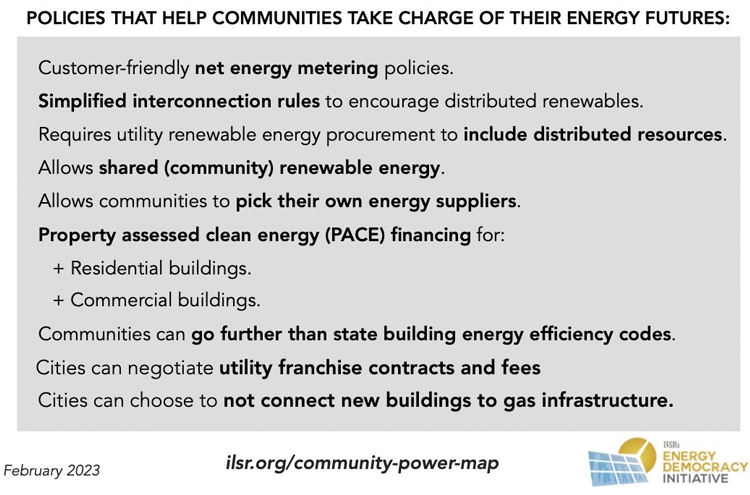
Each year, the Institute for Local Self-Reliance tracks and scores states based on how their policies help or hinder local clean energy action. The states that score the highest let individuals and communities take charge and build the energy future that best suits local needs — whether it’s increased access to solar, efficient and affordable buildings, or choosing an electricity supplier who will create local jobs.

In the 2023 Community Power Scorecard, 4 states excelled, 14 states and the District of Columbia saw above average scores, 6 were average, 14 were mediocre, and 13 states received failing grades.

Read about Why ILSR’s Community Power Scorecard Matters.

States are awarded an A, B, C, D, or F letter grade. The 2023 scores are evaluated out of a total of 41 points. The scoring methodology and a breakdown of this year’s scores are available in this document.

Our scoring compiles data from the American Council for an Energy-Efficient EconomyDSIRE, the National Renewable Energy LaboratoryPACENationSolarReviews, and Vote Solar, as well as the data we regularly track on community solar, community choice aggregation, and state legislative changes in general. Last year’s scores are available in our 2022 Scorecard.

How Can Your State Get an “A” Community Power Score?

ILSR’s community power scorecard evaluates state policies as they are written, not their implementation. The work of advancing energy democracy requires continued advocacy, vigilance, and effort. An “A” grade does not mean that the work is done. Even in high-scoring states, like Massachusetts or California, advocates are still fighting for community power.

ILSR - Policies that help communities take charge of their energy futures

Policy and Regulatory Trends in 2022

States passed eight policies last year that impacted their 2023 community power scores.

California, Illinois, Maryland, and New Mexico each changed their interconnection rules for distributed energy resources. All four states added specific considerations for battery storage, which is something the Interstate Renewable Energy Council advocates for with its BATRIES interconnection reform package. Out of those states, only Maryland had a less-than-perfect interconnection grade, so Maryland’s community power score has increased by one point.

To compare state interconnection environments, among other policies, see our interactive Community Power Map.

The Washington and New Hampshire legislatures each demonstrated their desires to increase solar access with community solar policies that make specific accommodations for low-income subscribers (see Wash. HB1814 and N.H. SB270). California, by our grading criteria, did not receive any additional points for its new community solar policy — even though the policy is worthier than the state’s existing Enhanced Community Renewables program. Several other states explored, but did not implement community solar in 2022, including Arizona (see ILSR’s commentary), Ohio, and West Virginia.

Colorado’s General Assembly passed a law on building energy codes in 2022. The law sets the 2021 International Energy Conservation Code as the minimum requirement, while still allowing communities to set more stringent codes.

Lastly, several states lost points in 2022 for changing their net metering policies. Iowa and New York both added fees to self-generating customers. The Indiana Utility Regulatory Commission allowed the state’s utilities to switch to “instantaneous netting,” which dramatically reduces the value of customer-owned solar generation. California, which has been embroiled in the net metering debate for years, has finalized its latest net metering policy — a policy that slashes the solar compensation rate by up to 75 percent.

Click here for shareable images related to this year’s scorecard: states that excelled, states that did the worst, and regional comparisons.


Article by Maria McCoy, author, Institute for Local Self-Reliance

Additional Articles, Energy & Climate, Impact Investing, Sustainable Business

Ann Arbor’s big decarbonization bet

By Avery Schuyler Nunn, Grist

Above illustration by Melanie Lambrick

The Michigan city has ambitions to go carbon neutral, and they begin in one of its most frontline neighborhoods.

This story is part of the Cities + Solutions series, which chronicles surprising and inspiring climate initiatives in communities across the U.S. through stories of cities leading the way. For more solutions stories like these, subscribe to the Looking Forward newsletter.


The neighborhood of Bryant sits in Ann Arbor, between the hills and valleys that surround this city in eastern Michigan. Its 262 homes are perched across from the city’s largest landfill and stand on a floodplain, so residents grapple with mold, mildew, and water damage. Outdated infrastructure subjects them to high utility costs, and Interstate 94 long ago isolated the community, one of the city’s most densely populated, prompting decades of neglect.

More than half of the people in this frontline community identify as people of color. About the same number are renters. Three in four families, many of whom have been in the neighborhood for three generations, live in poverty. The help that does come from the government is too often offered by bureaucrats with good intentions but little idea what residents want — or need.

“A lot of programs, specifically ones that are focused on energy conservation, just get designed and brought into these communities,” says Hank Love, director of municipal and community programs at the energy equity organization Elevate, which works in cities nationwide including Ann Arbor. “People would say, ‘Look at what we made for you and are going to implement,’ without getting adequate input on the front end.”

That dynamic began to change when Ann Arbor vowed to achieve carbon neutrality by 2030. The city is beginning in Bryant, where it has enlisted residents and nonprofits to help decarbonize the entire community. Renovations to the first homes began in May 2022, funded through a state grant to repair and electrify homes, plant trees, and install solar panels.

“It’s resident-designed and resident-centered,” says Missy Stults, the city’s sustainability director and a 2022 Grist 50 honoree. “We are trying to correct for market failures by working directly with a frontline community to determine how best to collaboratively create the nation’s first fully decarbonized low-income neighborhood. There’s a layering of so many elements, and it is literally changing lives.”

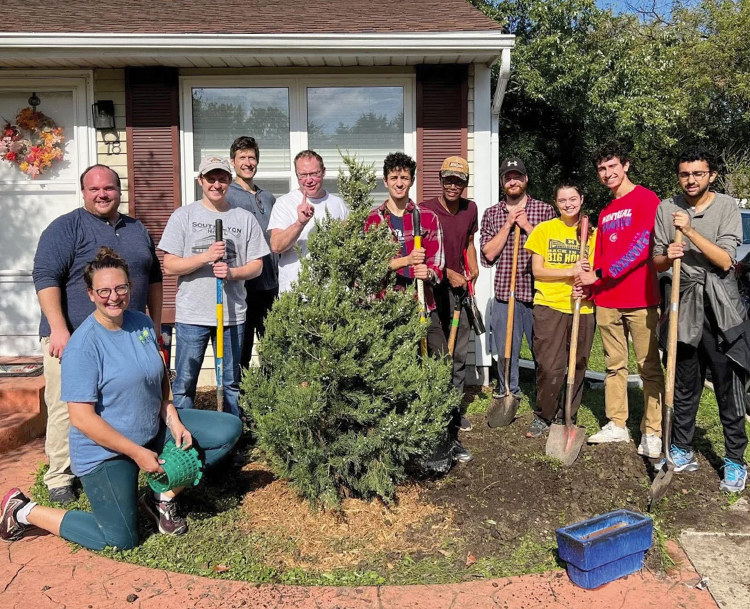
Missy Stults, Bryant residents and Community Action Network members plant trees - Grist
Missy Stults (bottom left), Bryant residents, and members of Community Action Network plant trees outside of residents’ homes as part of efforts to decarbonize the community. Courtesy of Missy Stults

“We made a really strategic decision to focus on those who have been hurt first and worst by climate change and systemic racism.”

Missy Stults | Ann Arbor Sustainability Director


In 2020, Ann Arbor announced the A²Zero initiative, an audacious plan to achieve carbon neutrality citywide within a decade. City officials formed a broad coalition of nonprofits, for-profits, and community organizations to answer the question, “How do we make it happen in just 10 years?” 

Stults saw an opportunity to engage the community in an effort to address the complex and intertwined issues of gentrification, disinvestment, and environmental racism.  She and her team had been mapping socioeconomic vulnerability within the city, and “Bryant popped up for us as an area of opportunity,” she says. “We made a really strategic decision to focus on those who have been hurt first and worst by climate change and systemic racism. We thought, ‘Well, why don’t we try? Let’s go talk to the residents and see if this is of interest.’”

Although she found plenty of interest, she also found apprehension — many of Bryant’s residents had lived for generations under a legacy of institutional disregard and neglect. To earn their confidence, Stults and her colleagues knocked on doors to chat with residents about the program and gauge interest, and hosted community events like tree plantings.

“Our biggest obstacle was to gain that trust, to help people believe that we were actually trying to do something for them without taking from them,” says Krystal Steward, a Bryant resident and outreach specialist for Community Action Network. “And now, they’re seeing that things are actually happening. Because I’m their neighbor, there’s a greater sense of trust in the project. It’s an amazing feeling to be helping my community.”


In spring 2022, nearly two years of planning finally began to yield results. Through a $500,000 state grant to Community Action Network, decarbonization of the first 19 homes — selected through an energy assessment that considered the extent of needed repairs — began.

Every project begins with an energy assessment to determine how best to rehabilitate and retrofit each house. Most homes use gas to power furnaces and other appliances, making the transition to clean tech as much about increasing comfort as it is about reducing emissions, says Hank Love. There’s no point in, say, replacing a gas furnace if the roof has holes or the attic lacks insulation. “It’s going to feel cold no matter how much you heat it, and you’re going to spend a ton of money just trying to feel comfortable,” he says.

Once repairs are made, crews swap gas appliances for electric ones before installing solar panels. “What I’m most excited about is that we are already solarizing households in the neighborhood and essentially fixing affordability issues that some residents are having,” says Derrick Miller, executive director of Community Action Network.

Bryant resident Deborah Pulk, who lives on a fixed income and has been in Ann Arbor since 1986, was among the first to benefit from the program. She needed a new roof, and an inspection revealed that her stove was emitting dangerous amounts of carbon monoxide. The switch to electric appliances and renewable energy has saved her money, too.

“Krystal had told me that they were trying to start putting up solar panels,” she says. “I said, ‘Sure! I’d love to have solar panels on my house.’ My gas and [electricity] bill is already much lower. I used to pay $145 per month on a budget plan. Last month my bill was $39.”


Article by Avery Schuyler Nunn – Avery is a freelance writer and photographer based in Southern California. In 2021, Avery graduated with a Master of Science degree from Columbia University Graduate School of Journalism, where she specialized in investigative science reporting and climate-driven redistribution of marine species. You can find her work in Grist/Fix, Popular Science Magazine, The Inertia, Whalebone Magazine, and more.

Energy & Climate, Featured Articles, Impact Investing, Sustainable Business

What You Should Know About Soaring Egg Prices

By Jennifer McBride, Rootstock/Organic Valley

Above: The Glick farm in Pennsylvania, courtesy of Organic Valley

Egg prices are in the news and hitting budgets hard. Two main factors led to higher egg prices, but there may be a bit of relief coming for egg-lovers.

In the year through November, not adjusted for seasonal swings, egg prices jumped 49%, according to the Bureau of Labor Statistics. If you’ve checked the grocery store shelf, the price of a dozen eggs varies immensely but you may see prices closing in on $10 for a dozen conventional eggs. You can also find organic eggs at a lower price point than conventional eggs.

Why Is the Cost of Eggs So High?

Increases in the price of eggs are due to higher-priced chicken feed and other inflationary pressures compounded with a national bird flu outbreak.

The bird flu, otherwise known as avian influenza, is a rapidly spreading virus that has affected millions of chickens across the country and reduced poultry flocks. Avian (bird) influenza (flu) viruses naturally spread among wild birds and can infect domestic poultry and other birds and animals. Bird flu viruses do not normally infect humans.

About 13% of laying flocks were killed in 2022 because of the virus — that’s 43 million laying hens, making the egg supply chain even tighter and leading to higher egg prices.

Chicken farms across the country have been impacted. Organic Valley farmers have always taken care to keep their birds secure and have upped measures to keep this virus at bay.

While Organic Valley hens are Free to Forage™ outdoors, we take proactive steps to protect our flocks, including increasing biosecurity and keeping hens inside when the situation calls for it.

“We feel having birds outside makes them healthier, but they are not bulletproof,” said Dr. Guy Jodarski, Organic Valley staff veterinarian.

Organic Valley hens are never caged, and Organic Valley chickens have access to organic pastures where they spend time roaming, pecking at bugs, and taking dust baths. Keeping hens indoors 24/7 is the exception in the rare case where there is a high-risk situation where the health and safety of a flock are compromised by outside variables such as the bird flu or other outbreaks.

Egg Farmers Taking Preventive Measures

Organic Valley staff veterinarians are regularly checking in with egg producers and are often in touch with organic certifiers and state officials about the disease. We want farmers to have as much information as possible to drive decisions.

“Our egg farmers are really in tune, careful and taking precautions,” Jodarski said. We at Organic Valley love to show off our farms, but farm tours are on hold. Truck drivers who come to the farms to pick up eggs are instructed to move about the farm as little as possible. Farmers are limiting access to people visiting the farms, and every person who does come on a farm is expected to wear clean boots before entering any “chicken housing” areas.

Organic Valley farms are overflowing with biodiversity, and waterfowl regularly visit some farms that have ponds. Wild birds can be carriers of the bird flu, and farmers are being cautious. They do not feed chickens outdoors, to keep ducks and geese that flock to their ponds away from the hens. Chickens are not allowed to drink surface water that has been visited by waterfowl.

Since early 2022, nearly 58 million birds across the country have been infected by avian influenza, the CDC reports. Bird flu outbreaks have been identified in poultry, including commercial and backyard flocks. Millions of birds have died or were culled (killed) in an attempt to stop the virus from spreading.

The good news is that organic practices are restorative. Nature has its defenses beginning with the soil, plants and animals — the entire system works together.

“Nature itself can heal if we are not too heavy-handed. Organic systems heal faster; they detoxify quicker because it’s a more vibrant system. The hope is by nurturing things and letting them heal, this will pass.”

– Dr. Guy Jodarski | Organic Valley veterinarian

Chicken Feed Inflation

Another significant reason for skyrocketing egg prices is the cost of feeding chickens. While Organic Valley chickens love to spend time outdoors finding insects to munch on, a key piece of the wider agricultural sector’s chicken rations is the soybean meal for egg production.

Organic soybean prices increased steadily over the past 18 months. Two significant issues are pushing the increase in prices for soybean meal (chicken feed): shipping costs and global conflict, said Ben Witucki, Organic Valley feed program manager.

Most of the grain produced in the Black Sea region is shipped through ports in Ukraine, and the conflict between Russia and Ukraine has upended global grain trade.

Another factor is the U.S. Department of Agriculture’s increased enforcement of organic integrity and organic trade disputes with India on the importation of organic soybean and soybean meal. India is the largest exporter of organic soybean meal in the world. While many Organic Valley farmers purchase soybean meal locally or grow their own, other farmers are feeling the pinch.

Along with global shipping costs increasing, domestic trucking costs remain high.

There is positive news on the organic feed side. There has been a slight decrease in the cost of organic inputs and a $300 million multi-agency USDA effort is expected to bring beneficial outcomes, too. Among its goals, the Organic Transition Initiative will provide a support system for farmers transitioning to organic. This is expected to increase organic acres and, thus, the amount of organic feedstuff produced domestically.

Yost family members put eggs in crates on their Organic Valley Colorado farm
Yost family members put eggs in crates on their Organic Valley farm in Colorado

Will Egg Costs Come Down?

The USDA also reports positive news about egg prices and inventory. During the last week of 2022, egg inventory started to rise and egg prices fell. Going forward, wholesale prices are expected to decrease as the industry moves past the holiday season and continues rebuilding its egg-laying flocks, according to the USDA.

Why would a cooperative that sells eggs share a story about the rise in egg prices? We want to be transparent and keep you informed about topics that impact the organic industry and food you know and love.

The bird flu and costs of raising chickens do lead to price increases but in general, raising chickens in harmony with nature does cost farmers money. The cost of organic feed, infrastructure, chicken bedding, feeders and waterers all add up. The perfect storm of feed prices and uncontrollable factors such as bird flu is not making it easier.

Organic Valley farmers are not rejoicing about the egg prices. We believe in the power of organic and want families to have access to this nutritious, high-protein food.


Article by Jennifer McBride – Content marketing editor, Organic Valley

Featured Articles, Food & Farming, Impact Investing, Sustainable Business

EPA Launches $550 Million Program for Environmental Justice Grants

By Melissa Breyer, Treehugger

Above: halbergman/Getty Images

The new Environmental Justice Thriving Communities Grantmaking program aims to reduce pollution in disadvantaged communities.


In August of 2022, President Biden signed the Inflation Reduction Act into law, creating the largest investment in environmental and climate justice in U.S. history. As part of that, the U.S. Environmental Protection Agency (EPA) received $3 billion in appropriations to deliver grants and technical assistance for activities investing in environmental and climate justice.

Now, the Biden-Harris Administration has announced the availability of $550 million from the Inflation Reduction Act for the EPA’s new Environmental Justice Thriving Communities Grantmaking (EJ TCGM) program. The newly created program will fund up to 11 entities to serve as grantmakers to community-based projects that reduce pollution. “Selected grantmakers will develop an efficient, simplified process so that organizations that historically have faced barriers to receiving funding can more seamlessly apply for grants that address environmental harms and risks,” explains the EPA Press Office, adding: “The new program advances the Biden-Harris Administration’s whole-of-government commitment to achieving environmental justice by building early, meaningful, and sustained partnerships with communities.”

The EJ TCGM program will work to support the goals of Biden’s Justice40 Initiative, which aims to deliver 40% of certain Federal investments to disadvantaged communities that are underserved and overburdened by pollution. The EPA has pledged to honor the goals of the Justice40 Initiative by making sure that money gets to communities that have traditionally been unable to access resources.

RELATED: The History of Environmental Justice in the United States

“Over the last two years I’ve traveled to overburdened and underserved communities and their message to me has been clear—residents have suffered far too long without access to crucial federal funding and resources,” said EPA Administrator Michael S. Regan. “Thanks to President Biden’s historic investments in America, including the largest ever investment in environmental justice, we’re removing barriers and moving faster to deliver this unprecedented relief to the communities who need it most.”

Who is able to apply for the Request for Applications (RFA) and serve as an Environmental Justice Thriving Communities Grantmaker? They must fall into one of the following categories:

  • A community-based nonprofit organization;
  • A partnership of community-based nonprofit organizations;
  • A partnership between a Tribal Nation and a community-based nonprofit organization; or,
  • A partnership between an institution of higher education and a community-based nonprofit organization.

Each of the selected 11 entities will be granted approximately $50 million, which will be funded incrementally over a three-year period, starting no later than early 2024.


Article by Melissa Breyer With a background in eco-conscious living, food, nature, and design, Melissa Breyer is an expert and author who has been writing about sustainability since 2001. Her work has been featured in publications including The New York Times and National Geographic. She is the co-author of the best-selling, “Build Your Running Body” (The Experiment, 2014), and the award-winning “True Food: Eight Simple Steps to a Healthier You” (National Geographic, 2009)—both in which she focused on planet-friendly nutrition. 

In addition, she has developed hundreds of recipes for publication, is a widely published photographer, has run 10 marathons, and moonlights as a pastry chef. She is also an active advocate for migratory birds.

Melissa Breyer has written for Treehugger since 2012 and has been Treehugger’s editorial director since 2015. She began her digital career as the senior editor for Green Living at Care2 in 2007. Prior to that, she worked in print, writing for magazines and editing books, including Chelsea Green’s “Little Green Guides.”

Energy & Climate, Featured Articles, Impact Investing, Sustainable Business

Signup to receive GreenMoney's monthly eJournal

Privacy Policy
Copyright © GreenMoney Journal 2025

Website design & development by BrandNature

Global Events Calendar

View All Events

april

21aprAll Day232026 Sustainable Packaging Coalition: SPC Impact – Nashville

27aprAll Day30Women Deliver 2026 Conference (WD2026) – Melbourne

X