Tag: Impact Investing

3BL Announces the 100 Best Corporate Citizens of 2023

Hewlett Packard Enterprise, Accenture, HP Inc., Hasbro & Estee Lauder top annual U.S. ranking measuring environmental, social and governance (ESG) transparency and performance

Now more than ever, corporate leadership on environmental, social and governance (ESG) issues is imperative. And so is transparency. As companies decarbonize, align with the Sustainable Development Goals and rebuild an equitable economy post-pandemic, they must be open about their efforts. Each year, 3BL evaluates the largest public U.S. companies on ESG transparency and performance.

With that 3BL recently announced the annual 100 Best Corporate Citizens ranking for 2023, recognizing outstanding environmental, social and governance (ESG) transparency and performance among the 1,000 largest U.S. public companies.

Hewlett Packard Enterprise has achieved the top ranking in this year’s ranking, with Accenture, HP Inc., Hasbro, and Estee Lauder rounding out the top five.

The 100 Best Corporate Citizens ranking is based on 184 ESG factors in seven pillars: climate change, employee relations, environment, governance, human rights, stakeholders and society, and ESG performance.

Using a methodology developed by 3BL, all Russell 1000 Index companies are researched by ISS ESG, the responsible investment research arm of Institutional Shareholder Services. There is no fee for companies to be included in 100 Best Corporate Citizens.

View the 100 Best Corporate Citizens of 2023 ranking here.

To compile the ranking, corporate data and information is obtained from publicly available sources only, rather than questionnaires or company submissions. Companies have the option to verify data collected for the ranking at no cost. Data and information used in the 2023 edition of the 100 Best Corporate Citizens ranking was collected between July 2022 to July 2023.

Additionally, 3BL has partnered with InfluenceMap to assess the intensity and orientation of a company’s climate-related lobbying efforts. This screening is a vital step to ensure that all companies listed are, in fact, good corporate citizens, which in our view does not allow for companies to use their influence to lobby against Paris Climate Agreement-aligned policies. For this reason, a “red flag” penalty is assessed if a company is deemed to be lobbying negatively. Taking it a step further, a “green flag” bonus is awarded to recognize firms using their political influence and spending in support of Paris-aligned policies. In 2023, only Adobe, Inc. received the “green flag” bonus.

“U.S. companies play an important role in providing solutions to our greatest societal challenges, including climate and the unfolding humanitarian crises at home and abroad,” said Dave Armon, CEO of 3BL. “The 100 Best Corporate Citizens of 2023 are answering the call by demonstrating the value of leadership and transparency around ESG topics. They are setting ambitious goals, outlining robust strategies for achieving them, disclosing data to measure progress, and accounting for all stakeholders in business decisions.”

Click here to access the complete 100 Best Corporate Citizens of 2023 ranking and methodology.


About the 100 Best Corporate Citizens Ranking 

The 100 Best Corporate Citizens debuted in 1999 in Business Ethics Magazine and appeared annually in Corporate Responsibility Magazine for many years. 3BL has managed the ranking since 2018. To compile the ranking, each company in the Russell 1000 Index is ranked according to its transparency and performance on 184 environmental, social and governance factors.

About 3BL

3BL’s unrivaled distribution platforms and TriplePundit Brand Studio promote the environmental, social, governance (ESG) initiatives of leading companies, private equity firms, nonprofits and NGOs to a global audience. Learn more here.

Additional Articles, Energy & Climate, Food & Farming, Impact Investing, Sustainable Business

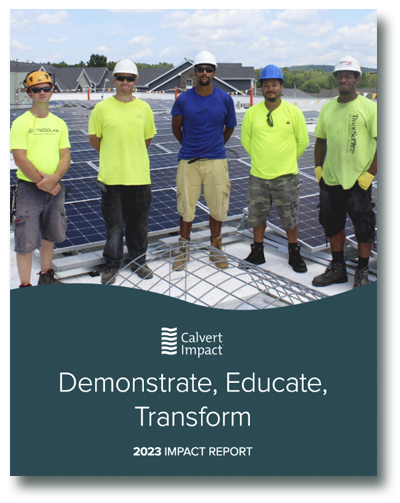
Calvert Impact releases 2023 Impact Report: Demonstrate, Educate, Transform

Calvert Impact 2023 Report - Demonstrate - Educate - TransformCalvert Impact recently published its 2023 Impact Report: Demonstrate, Educate, Transform. The report showcases Calvert Impact’s portfolio partners’ work in communities around the globe and the impact of its investors’ capital. 

It also highlights key internal trends, including particularly noteworthy increases in Calvert Impact’s climate and small business portfolios.

“The theme of this year’s report represents fundamental elements of our work at Calvert Impact: demonstrating that it is possible for everyday investors to use their investment portfolios to drive solutions to social and environmental challenges and educating the broader market on impact trends to ultimately transform the capital markets,” said Calvert Impact President and CEO Jennifer Pryce. 

“The report shows the power of partnering with organizations across the financial industry to invest in communities.”

In the last year, according to the report, Calvert Impact’s capital served nearly 150 million individuals across the U.S. and the world. It disbursed $141 million to portfolio partners that, on a combined basis, then disbursed $9 billion to end clients in 2022.

Calvert Impact’s continued dedication to financing climate solutions is apparent in the report, a commitment that began in 2014. Over the last year, 8.5 million solar products were financed and nearly 650,000 acres of land were managed sustainably thanks to capital from Calvert Impact and its partners. 

The initial portfolio impact of the recently launched Cut Carbon Note, a new product that finances sustainable building construction and upgrades, will provide $21.6 million in lifetime energy savings and over 82,000 metric tons of lifetime carbon savings.

The report also showcases Calvert Impact’s commitment to supporting small businesses. In 2022, the flagship Community Investment Note portfolio financed 3.3 million small businesses around the world, and Calvert Impact’s targeted Small Business Programs supported almost 6,000 businesses across its five funds in 19 states and D.C., work that is now being expanded through the State Small Business Credit Initiative. 

Throughout the report, there is a focus on Calvert Impact’s work to advance gender and racial equity, finance quality, affordable housing, and support community and economic development, microfinance, education, and health.

Calvert Impact’s Director of Impact Management, Caitlin Rosser, who led the development of the report, said, “The growth of our products and impact we’re having on behalf of our investors is exciting, and it is critically important to support this work at a time when inequality and the threats of climate change continue to grow.”

Additional information about the report can be found here.

Additional Articles, Impact Investing, Sustainable Business

Can Economists Design Hurricane Stress Tests?

By Ingrid Walker, Climate and Capital Media

Sarah Bloom Raskin calls for credible public data on climate risk

Climate and Capital Media Featured News
Above photo: Sarah Bloom Raskin; credit: NCRC / Flickr

Claims that the booming private-sector climate data services industry is hyping its accuracy and failing to deliver equitable, reliable or transparent datasets were addressed by experts in a panel discussion in October.

Hosted by Climate & Capital Media, the event brought together global industry experts, including former US Treasury deputy secretary Sarah Bloom Raskin, to discuss the accelerating private-sector “climate intelligence arms race”. 

Madison Condon, of the Boston University School of Law, opened the panel by presenting her paper, Climate Services: The Business of Physical Risk. Condon’s research has revealed that private climate data analytics firms may be over-claiming the utility of “downscaling” techniques.

Downscaling is the bottom-up process of using location specific information to flesh out aggregate geographical data from publicly available global climate models. Downscaling aims to provide greater granularity and decision-useful information on physical climate risks.

However, Condon argued that downscaling often results in claims that “aren’t particularly scientifically rigorous”. To improve the quality of data, she said more investment is needed in resource intensive catastrophe modelling techniques. 

The panel – which included Climate & Capital Media’s climate editor Blair Palese and moderator Kate Mackenzie – considered how to reform the industry to make it fit for purpose.

The climate intelligence arms race is currently dominated by a small number of corporate players that acquired many early entrants in the space. Palese highlighted the importance of moving away from a corporate black box structure towards transparent, useful and accessible analytics.

Raskin expressed concern over findings that climate analytics are often not validated, authenticated or complete, and stated that she “shudders to think what policy looks like when models being used are not incorporating full climate data”.

In her paper, Condon proposes creating publicly owned and open-source national climate data services. Such services would require federal, state and international agencies to invest in and help build datasets that can be used to integrate climate modelling into financial risk analysis. 

Raskin endorsed Condon’s concept of a public-sector “climate hub”. To enable regulators to price climate risk, Raskin emphasized that the hub should include credible and usable information regarding the exposures and vulnerabilities of assets, communities or municipalities.

The underrepresentation of climate scientists in building climate-finance models was another issue highlighted in the discussion. The panelists stressed the need for interdisciplinary approaches to produce robust data on physical risks.

Referencing the Federal Reserve’s hurricane stress test released early this year, Condon noted that the Fed failed to include climate scientists, resulting in an “expertise breakdown.”

“How did a bunch of economists think that they could design hurricane stress tests?” she asked.

According to Palese, we are “very early in the stages” of climate analytics development, even though climate-induced extreme weather is increasing globally. As a result, data advancements must be secured internationally as well as nationally. 

This requires planning for “what that risk looks like in places where the impacts are most intense”, such in the Pacific Islands region. Planning must, she added, include ensuring affected regions have equal access to risk data, because “they are getting hit hardest and have done the least to create this problem”.


Article by Ingrid Walker, who is currently an in-house writer for Green Central Banking, a news outlet which provides the latest news and research at the interface of central banking and climate change. Based in the Netherlands, Ingrid has worked for ten years as a freelance research writer, specializing in transformative justice, green finance, legal analysis and systems reform. They previously worked as a legal researcher at the University of Cambridge, as well as an outcomes analyst for various NGOs focused on criminal justice reform and human rights. Ingrid was also the recipient of Utrecht University’s Bright Minds fellowship for global excellence in 2017.

Article reprinted with Permission as part of GreenMoney’s ongoing collaboration with Climate and Capital Media.

Additional Articles, Energy & Climate, Impact Investing, Sustainable Business

The Investor’s Role in Easing the Affordable Housing Crisis

By Faina Rozental, Eventide Asset Management

America’s housing affordability has severely deteriorated over the last two years. Mortgage rates reached a 23-year high this October, and the limited supply of homes for sale has kept a floor under home prices. Home sales in September dropped to their lowest levels since the foreclosure crisis.

Roughly 85% of American homeowners are locked into lower interest rates from past years, and many have experienced rising home equity values, with the median home price up 2.8% over last year. This is a contributing factor to why the overall U.S. consumer is still fairly healthy, but also why the housing market is all but frozen.

For first-time homebuyers, persistent inflation and soaring home insurance rates are creating additional barriers to homeownership. Lower income families in particular are left bearing the brunt of the adverse effects in this current economic environment. These families are often left to rent, unable to front the costly barrier to entry into the housing market. For those that have locked in a 3% mortgage rate, however, they reap the benefit of steadily growing equity that will increase over time.

So, while some may say that only the rich are getting richer, investors seeking to advance human flourishing have a critical role to play in improving housing affordability so that more people can experience the potential benefits of homeownership.

First, investors can consider homebuilders and real estate investment trusts (REITs) whose core business is to address the affordable housing crisis. Some manufactured housing REITs are making homeownership more affordable for retirees and lower-income families. And the way that homes are built today can also help reduce their environmental footprint. Many new construction homes are more energy efficient with features like improved insulation and more innovative heating and cooling technology. Whether it’s a smaller design or more energy-efficient construction, affordable housing coming out of this era has the potential to benefit both the buyer and the community at large. 

Allocating investments towards companies that are committed to improving housing affordability could show that it takes many – companies, governments, nonprofits – working together to solve market-entry challenges for today’s American families. 

There are many potential factors contributing to the shortage of affordable housing in this country. One of the contributing factors has been decades-old zoning laws, which have restricted the size and type of construction that can be built in certain neighborhoods. For example, some municipalities have made minimum residential lot sizes bigger and added height requirements. In many cases, the outcome of zoning restrictions has limited affordable housing options in highly sought-after neighborhoods, including those with high quality schools. 

Today’s regulatory barriers don’t have to deter investors from contributing to affordable housing initiatives. Some states and municipalities are tackling the hard work right now of reforming single-family zoning laws, and investors have the opportunity to work in tandem with those working toward reducing barriers to new supply. 

Second, investors can help address the affordable housing crisis by considering municipal bonds in their active fixed-income portfolios. In August, San Francisco announced that it is borrowing $60 million in the municipal bond market. The city with the highest rent in the nation intends to deliver 500 affordable housing units in an underutilized commercial district. 

While San Francisco has among the worst housing shortages in the country, such action in more cities and states could help rebalance the market in the coming years and reintroduce the opportunity for low-income families to build generational wealth through ownership. 

According to a report by the National Association of Realtors, institutional investors purchased 13.2 percent of properties sold in 2021. As of 2022, they owned approximately 700,000 single-family homes and some analysts believe they are on track to own 40% of U.S. single family rental homes – around 7.6 million homes – by 2030. 

This may be one of the factors making the U.S. into what some are calling more of a “nation of renters.” Renters, on average, spend more than 30 percent of their income on their housing. And for 26% of renters, the burden is even higher; 11.6 million renters spend over half of their income on housing expenses – a weight that falls most heavily on low-income families. 

It is no wonder that a recent Australian-UK study found that renting can have negative impacts on individuals’ biological and sociological health, like increased stress and a heightened risk of falling into poverty, along with worsened biological aging. While renting could provide families opportunities to save more in the short term, it could also stall their efforts to build long-term financial security and stability through homeownership. 

Even in an uncertain housing market, values-based investing can play a role in helping to solve housing affordability needs and contribute to a healthier, more stable US consumer – which is good for the economy and business over the long term.

No one holds the crystal ball for when a more stable housing market will emerge, or when the new affordability challenges of these last two years will ease. But it is unlikely that we will return to a world of 3% mortgage rates soon. While homeownership isn’t the only path toward financial stability, it is certainly an important one. Working toward a more affordable housing market and making homeownership obtainable from one generation to the next is in the interest of our collective prosperity and worthy of the effort. 

Investors who intentionally contribute to solving some of society’s most significant challenges can make a positive impact by unlocking human flourishing. 


Article by Faina Rozental, who serves as a Research Analyst for Eventide Asset Management. She is primarily responsible for evaluating and monitoring new and existing investment opportunities in the portfolios.

Ms. Rozental has an MBA with certificates in finance and sustainability from the MIT Sloan School of Management. During her time at MIT, she worked at Goldman Sachs and the MIT Office of Sustainability. Prior to MIT, she managed social due diligence at Root Capital, an agricultural impact investor, and earlier was responsible for OECD research sales in North America. Ms. Rozental holds a B.A./M.A. in Economics from Boston University.

This article is provided for informational purposes only and expresses the views of Eventide Asset Management, LLC (“Eventide”), an investment adviser, and is not intended for further distribution. This does not constitute investment advice nor is it a recommendation or offer to purchase or sell or a solicitation to deal in any security or financial product.  Eventide does not provide tax, accounting, or legal advice. Eventide’s values-based approach to investing may not produce desired results and could result in underperformance compared with other investments. There is no guarantee that any investment strategy will achieve its objectives, generate profits, or avoid losses.

The above expresses the views of the Adviser, and there is no guarantee that such views are accurate.

Third-party sources referenced herein have not been independently verified, nor is Eventide affiliated with any third-parties referenced, unless otherwise noted. Eventide has not independently verified the accuracy or completeness of third-party information. There can be no assurances that the information is accurate or complete. The information is subject to change without notice.

Featured Articles, Impact Investing, Sustainable Business

A Female Perspective on Sustainable Investing

By Claire Smith, Beyond Investing and Beyond Impact

Claire Smith Beyond Investing and Beyond ImpactWithout wanting to dismiss men and their interest in sustainable investing, it seems to me that women have an inherently greater attention to the topic, given their physical role in bringing into existence the next generation of humans. This was something that I deeply felt as I prepared to give birth to my daughter. One becomes acutely conscious of environmental pollution, which as it enters your bloodstream, necessarily reaches the body of your as yet unborn child. One becomes more careful about the food that you eat, realising that you are not only sustaining your own body, but that you are literally building another human’s body from within. You begin to realise that your child’s ability to live, thrive and survive in the world to come depends on the myriad of decisions that other human beings are making on a daily basis, as consumers, citizens or providers and users of capital, which have an impact on the natural world and its ability to sustain us in the future. 

After my daughter was born, I felt an even greater empathy towards the females of other species, and in particular mammals, since we shared the same instincts to nurture our newborns. Having been a vegetarian for many years, I had always been anxious that my food should not be the cause of any animal suffering. But as a nursing mother I could no longer ignore or tolerate the harm that dairy and egg production does to hens, cows, sheep or goats, whose reproductive processes are exploited for the essential food they provide to their babies, deviated to nourish humans, with their young seen as unnecessary byproducts.

Sustainability also means sustainable for humans, not just for the environment. While pregnant, I also got involved in a local environmental group that was protesting the roll-out of genetically modified crops in the UK. Besides the unleashing of potentially hazardous, untested materials, it became evident that a primary motivation for the genetic modification of crops was to allow even more poisons to be sprayed onto crops. Leaving aside the damage to human health of higher concentrations of chemicals in food, this was also affecting soil health, thus creating a more reliable stream of cash to agrochemicals companies. Furthermore, as well as the greater quantities of chemicals sold, the GM crops did not produce viable seeds, leaving the farmers reliant on purchasing seeds year after year. Similar situations of dependence exist in the business of breeding and rearing of animals, where farmers are under contract to large meat producers and beholden to them for their supply and repurchase of the animals, at often disadvantageous terms. 

It is against this backdrop that I realised that to make an impact and bring about a truly sustainable approach to investing, I had to find some way to incorporate my convictions and concern for animals and the environment into my professional life. Whereas I had adopted sustainable practices in my personal life, like my own consumption, recycling, generating hot water and electricity from solar panels to fuel our heating system and electric car, I was still spending my time, and using my financial expertise, to generate returns for investor clients, and facing daily dilemmas when confronted with the decisions of other investment managers, who for example were providing rescue financing for coal companies, providing them with short-term financial returns, but enabling hundreds of thousands of tons of CO2 to be emitted.

It became a compulsion to develop a way of investing that was contributing to a kinder, cleaner, healthier world, for the benefit of and with adherence to the principles of humanity. This has become our mantra, at Beyond Investing, and sister companies Beyond Impact and Beyond Animal, as we attempt to provide the means for investors, both private and institutional, to embed in their investment programs genuine concern for animals and the environment, by stripping funding from unsustainable activities and proactively financing and providing fundraising support for companies with sustainable solutions. 

As a supplier of investment products in the listed markets, we found the existing range of ESG products to be a relatively lukewarm attempt at bringing about positive change and are constantly identifying among competitor portfolios many stocks which conflict with our own screening policies, which seek to avoid exposure to animal harm and exploitation, as well as fossil fuels, environmental damage, and human rights abuses.

In 2024, we see our approach gaining traction as investors become tired with the feeble attempts of companies in the most damaging industries to shift away from their broken business models. Usually, their focus is on “greenwashing” i.e., adopting so-called “green” initiatives to create a patina of responsibility, all the while pursuing the same destructive and harmful core business activities. In investing it is necessary to use the carrot and the stick, as we have done in instances where we have engaged with companies to inform them of our concerns. For example, Apple was excluded in 2021, due to its sales of wearables becoming a larger proportion of its business. Our discussion with their head of investor relations revealed that they had no intention at that time to stop using leather in products, despite having a commitment to sustainability. We provided them with significant evidence to emphasize the unsustainability of leather production and are pleased to see that the company has recently made the decision to no longer include leather in its products. 

We expect more companies to make similar decisions as reporting on their impacts on climate and biodiversity become more widespread and obligatory. It will become harder to “greenwash” when the environmental cost of your business is starkly demonstrated in hard numbers. And for investment firms it will become harder to justify the “least worse” approaches to stock selection that are used to rationalise continuing to hold exposures to obviously damaging sectors such as fossil fuel and industrial farming. Much like with tobacco, we believe that with increasingly available evidence and education, investor distaste for these sectors will force a change, or otherwise a contraction in these industries. 

Within the larger cap listed space, a more “hardcore” ESG approach, in line with the principles already adopted by Beyond Investing, is anticipated. Investors in smaller cap companies and private equity arguably have an even greater opportunity to influence company operations and behavior. Access to capital can be made conditional on improvements in sustainability, as indeed investment funds themselves, dependent on their designation, are required to show evidence constantly improving sustainability metrics across their portfolios. Managers will therefore become reluctant to add capital to companies whose sustainability credentials are poor, since it will drag down their own metrics. 

Women have much to offer as advisers, researchers, portfolio managers and influencers within sustainable investing. Notwithstanding changes in the workplace, women still undertake most of the caring activities in society and are heavily involved in community projects. Their first-hand understanding of how pollution and an unhealthy and unsustainable food system impacts their family’s health means that they are already attuned to the issues and unlikely to be “box checkers”. As such women have the potential to be natural leaders in this sphere of investing thanks to their authentic and natural concern for the future of the humanity, given their own investment in bringing children into the world. 


Article by Claire Smith, the founder and CEO of humane investment platform Beyond Investing, is a vegan and environmentalist with 33 years’ experience in finance and investment at top-tier banks and investment houses. 

Beyond Investing creates investment programs designed for animal advocates and climate conscious investors in both public listed equity markets and venture capital. 

Beyond Advisors is the architect of the US Vegan Climate Index, Europe Vegan Climate Index and Global Vegan Climate Index, a range of stock indexes which screen out all animal exploitation and fossil fuel from major market benchmarks, and the Vegan World Index, which provides a targeted portfolio of small to midcap companies relevant to the vegan trend. Beyond Advisors US subsidiary Beyond Investing is sponsor of the US Vegan Climate ETF, listed on the New York Stock Exchange. 

Beyond Impact focuses on investment in early stage and growth companies providing vegan, plant-based and cruelty-free products and services. 

Beyond Animal is a networking and funding platform for the animal-free products industry to connect, share information and collaborate, which incorporates Funding by Beyond Animal a tool for qualified investors to access direct investments in animal alternatives. 

Claire is the founder of Beyond Cruelty Foundation, formed to campaign for zero animal exploitation and to fund safe havens for animals, which will also receive a portion of profits of companies under the Beyond Investing umbrella.

Previously, she was a research analyst, partner and shareholder at alternatives advisory firm Albourne Partners, covering managers globally across systematic quantitative equity, convertible and volatility and hedging strategies. Claire also led a project to expand Albourne’s proprietary database on alternatives managers and digitize the research process.

Prior to joining Albourne in 2004, Claire provided bespoke hedge fund research to London funds of funds and published well over 100 articles in the financial press. From 1986 to 1998 Claire was employed at various UBS group companies as a derivatives broker, marketer and structurer. Claire started her career in 1985 as a credit analyst at Chase Manhattan Bank after completing a master’s program in Chemical Engineering and Management at Imperial College, London. 

Claire founded 100 Women in Finance in Geneva in 2007 and oversaw its growth in Switzerland through till 2014, as a member of the London Board, organizing over 100 events, including seven Galas which raised well over $1 million for charity. From 2013 to 2018 Claire served on the Board of AVVEC, a Geneva-based charity that provides support to victims of domestic violence.

Featured Articles, Food & Farming, Impact Investing

Trillium’s Advocacy Approach to Gender, Racial and Ethnic Diversity

By Shareholder Advocacy Team, Trillium Asset Management

Trillium Asset Management believes that diversity, inclusive of gender and race, is an essential component of sound governance and essential to a well-functioning organization. As a firm, we seek to achieve diversity at all levels and seek to invest in companies that are doing the same.

There should be no doubt that diverse Boards, C-Suites and workforces supported by an inclusive work environment lead to better business outcomes. Studies by McKinsey & Company, The Wall Street Journal, ISS Analytics, and others confirm consistent correlation between diversity on boards and in senior leadership ranks and improved shareholder value, higher levels of innovation or positive financial measures.1,2

We also know environments that foster a culture that welcomes diverse perspectives is critical to a healthy economy and democracy. The #MeToo movement, the Women’s March, the removal of confederate monuments, kneeling NFL players and other efforts both large and small have helped amplify questions and deeper discussion about how we treat women, and racial and ethnic minorities in our communities, workplaces, and schools. These events show us that no industry is immune to the consequences of workplace inequality and underlined the need for companies to measure and report useful investor information on their progress to build inclusive workplaces. 

Trillium’s Advocacy Approach: Engaging Portfolio Companies on their Workforce, Executive Leadership and Board Diversity

  • Building a Diverse Pipeline 

Companies can best serve a diverse marketplace if their employee ranks reflect that diversity. In order to understand if companies are building diverse and equitable workplaces, investors need meaningful data. That is why Trillium and investor partners began decades ago advocating for disclosure of a company’s EEO-1 report. This report, which companies with more than 100 employees must complete, shows workforce composition data by gender, race, ethnicity, and job category. In 2017, our EEO-1 proposal at Palo Alto Networks received a majority vote of 50.9 percent. This was the first majority vote recorded for a proposal of this kind and resulted in Palo Alto publishing its EEO-1 report and continuing to do so annually, as well as expand disclosures of its diversity practices. When a majority of shareholders voted in favor of our EEO-1 proposal at Travelers in 2020, the multi-line insurer began publishing its annual Equal Employment Opportunity (EEO-1) report for the first time. 

Trillium Asset Mgmt Timeline

Since 2020, more investors and pension funds have campaigned for increased EEO-1 disclosure. As a result, nearly two-thirds of S&P 500 companies are now disclosing annual EEO-1 employment reports.3 EEO-1 data does not capture all aspects of diversity, but the EEO-1 report provides important diversity data that other reports may not include. A company’s decision to disclose its EEO-1 report demonstrates a corporate culture of transparency and can build accountability into diversity and inclusion efforts. When companies provide EEO-1 data as well as hiring, promotion and retention rates, investors and other stakeholders have a more complete understanding of a company’s workforce and whether it reflects the communities it serves. 

  • Building Diversity in Leadership Ranks 

Research continues to point to the lack of diversity in corporate pipelines as a primary reason why too few women are being promoted to senior leadership roles. In 2021, for every 100 men promoted from entry-level roles to manager positions, only 87 women were promoted and only 82 women of color were promoted.4 Women comprise 47% of the U.S. workforce yet represent only 14% of named executive roles of Russell 3000 companies.5

Over the past several years, Trillium has been raising the importance of diversity across multiple dimensions in leadership ranks with companies across all our strategies. In 2018-19, Trillium began engaging eight companies on this issue. We filed shareholder proposals asking each to assess the current state of diversity within their leadership teams and identify how they might make improvements. This led to successful withdrawals at five companies and strong shareholder votes at the remaining three companies. Our proposal at IPG Photonics garnered 45% support. In addition, a majority of shareholders at Newell Brands and PayCom supported the proposals. Soon afterward, Newell strengthened diversity in its C-suite by appointing a person of color to the CEO role. PayCom promoted a woman to its C-Suite, and the year following our engagement appointed a person of color to its board of directors.

In 2021, we sharpened our request and began engaging companies on setting public, company-wide, quantitative, and time-bound goals. Trillium filed a novel diversity target proposal at Intercontinental Exchange (ICE). We were concerned that while the company states publicly that its workforce should reflect the broader communities where it operates, diversity in ICE’s workforce did not meet this goal. After a series of dialogues, the company publicly committed to diversity targets. ICE will double the representation of under-represented minorities in the US officer population from 6% to 12% in 5 years, increase the representation of female officers globally from 23% to 30% in 5 years, and include a minimum of two diverse candidates when interviewing for any open officer position in which third-party search firms are used. As a result, we were able to successfully withdraw the shareholder proposal.

In 2022, concerned about the lack of progress in IPG Photonics’ leadership ranks, we filed a similar proposal. After a series of dialogues, management improved transparency and accountability and we were able to successfully withdraw the proposal. IPG committed to increase representation of women in its global workforce to 40% from 36%, women in manager and above positions to 28% from 24%, and representation of minorities in management and above positions to 18% from 14% by 2030.

Trillium has a long history of successfully engaging companies on the issue of board diversity. For example, of 28 companies with which we have had substantive engagements, 75% appointed a woman director within 13 months after proposals went to a vote or were successfully withdrawn. One example of this kind of engagement is First Solar. Recognizing a lack of diversity on its board, we filed a proposal asking for a report on steps the Board was taking to enhance board diversity beyond then-current levels, with a focus on racial and ethnic diversity. The Board advised shareholders to vote against the proposal, yet an overwhelming majority (91%) of votes cast supported the call for greater diversity. Soon afterward, First Solar appointed a woman of color with extensive senior executive experience to its board. Women, and particularly women of color, are underrepresented on boards, but we believe investors have an important role to play to move boards closer to gender and racial parity. 

Conclusion

In our view, diversity and inclusion, from entry-level to the C-suite and the Boardroom, is a bottom-line issue affecting competitiveness and financial performance. It is also a vitally important social issue. How companies instantiate their commitments to diversity have real world impacts on how women, girls, and under-represented minorities are treated in society. Trillium Asset Management believes diversity at every level should be a top priority of every company’s efforts to deliver long-term value to its shareholders and all stakeholders.


Foot Notes:

1 – https://sloanreview.mit.edu/article/gender-diversity-at-the-board-level-can-mean-innovation-success/
2 – https://www.wsj.com/articles/the-business-case-for-more-diversity-11572091200
3 – https://diversiq.com/300-eeo1-reports
4 – https://www.mckinsey.com/featured-insights/diversity-and-inclusion/women-in-the-workplace#/
5 –  https://read.nxtbook.com/equilar/c_suite/issue_39_summer_2022/boards_making_incremental_pro.html

Important Disclosure 

This is not a recommendation to buy or sell any of the securities mentioned. It should not be assumed that investments in such securities have been or will be profitable. The specific securities were selected on an objective basis and do not represent all of the securities purchased, sold or recommended for advisory clients. Information and opinions expressed are those of the author and may not reflect the opinions of other investment teams within Trillium Asset Management, LLC. Information is current as of the date appearing in this material only and subject to change without notice. This material may include estimates, outlooks, projections and other forward-looking statements. Due to a variety of factors, actual events may differ significantly from those presented. 

Energy & Climate, Featured Articles, Impact Investing, Sustainable Business

Investing in Gender Equity is Smart Investing

By Joe Keefe, Impax Asset Management

Joe Keefe Impax Asset MgmtGender lens investing in the United States was really an invention of the late, great Linda Pei and her business partner, Leslie Christian. These two pioneers founded FEMMX Financial Co., which launched the Women’s Equity Fund in 1993. At the time, there was scant research backing their investment thesis – the first studies linking gender diverse corporate leadership with financial results were published by Catalyst in 2004 and 2007 – but Linda and Leslie believed that women’s contribution to the bottom line would be measurable and accretive over time. 

I had a hunch that they were right. When I became President of Impax (then Pax World) in 2005, one of the first things I did was reach out to see whether they might be interested in partnering, or even selling their business. I had just finished reading The Wealth and Poverty of Nations by historian David E. Landes, in which he wrote: “The best clue to a nation’s growth and development potential is the status and role of women.” I recall thinking that if gender equality contributes at the macro-economic level, it likely contributes at the micro-economic level as well. If it is good for countries, then it must be good for companies. 

Prior to joining Impax, I had already been involved in co-authoring, along with Julie Gorte and Nikki Daruwala, the Calvert Women’s Principles – the first global code of conduct on how companies should treat, advance and empower women.

The United Nations, which had embraced David E. Landes’ thesis that gender equality can help lift countries out of poverty, was so enamored that they adopted them as the UN Women’s Empowerment Principles. I was later honored to co-chair the Leadership Group of the Women’s Empowerment Principles for several years.

Impax purchased FEMMX in 2006 and began offering what is today called the Impax Ellevate Global Women’s Leadership Fund. So far as we know, this was the very first strategy to apply a gender lens and today is one of the largest investment vehicles in the gender lens space.

In 2014, in partnership with Sallie Krawcheck and Ellevate, we adopted a more systematic investment approach that we believed would better isolate the contribution that what we call the ‘gender factor’ can make to company performance. We hoped to make an apples-to-apples comparison between gender diverse companies and the broader market, and to prove that companies with greater gender equity outperform less enlightened competitors and the overall market over time. I believe we have met that burden of proof. 

In the meantime, those early, lonesome Catalyst studies are now bolstered by decades of research demonstrating that gender diversity and equity are correlated with stronger financial performance. In my view, the research at this point is beyond compelling; it is overwhelming.

My colleague, Julie Gorte, publishes an annual review of the research linking gender equity, and diversity, equity and inclusion more broadly, with financial performance. Her most recent paper, “The Financial Impact of Diversity and Culture” was published in August 2023. In it, Julie not only reviews the literature on board diversity and management diversity, but on diversity and innovation, measured by such things as the number of patents, patent citations, research and development spending, and profits derived from new products. She also reviews the research linking diversity with sustainability, with better HR policies and increased productivity, and with stronger corporate cultures. 

Suffice it to say that the literature supports a positive correlation between diversity – particularly gender diversity in executive teams – and better corporate financial performance. A strong relationship between corporate culture and human resources policies, and their correlation with financial performance, is another emerging theme. Finally, Julie finds that diversity supports both environmental and social aspects of the transition to a more sustainable economy, as it is positively correlated with more robust financial accounting and better sustainability outcomes, including environmental reporting and climate disclosures.

What’s more, Impax’s own proprietary research aligns with trends Julie captures in her paper. In 2014, we created a proprietary tool, the Impax Gender Score, from a custom data set regarding both gender-diverse leadership and other measures of gender equity, that we add to as more company information becomes available. We use this to rank each company in the MSCI World Index, from which we construct the Impax Ellevate Global Women’s Leadership Fund’s investment universe. 

The Gender Score has Two Aspects: 

  • Leadership factors: Women in executive management; women on boards; female CEO, CFO or board chair.
  • Workplace equity factors: pay equity initiatives; disclosure of demographic data; diversity targets; diverse talent pipeline initiatives; signatory to UN Women’s Empowerment Principles (yes, the Women’s Empowerment Principles remain relevant to this day!). 

An Impax team, led by portfolio manager Christine Cappabianca, recently conducted a quantitative study of each element of the Gender Score to determine whether the companies we consider leaders in promoting gender equity – both in leadership and in workplace practices – have better prospects for delivering alpha, or excess investment returns.  
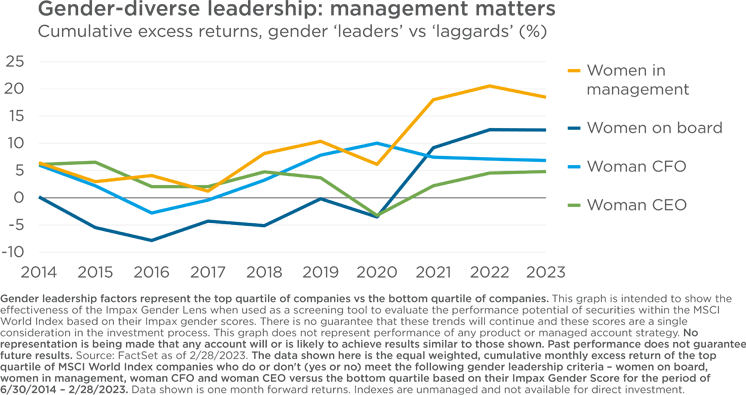
Gender-diverse leadership - management matters 2014 to 2023 IMPAX

As you can see in the chart above, one leadership factor — women in management — has been a particularly significant contributor to alpha and indicator of company outperformance. 

Our analysis reveals that corporate culture matters, too.

Based on newer datasets that only go back to 2020, we found that workplace equity factors — specifically pay equity and diverse talent pipeline initiatives — emerged as significant gender-related factors correlating with company performance over this three-year period. Moreover, companies with three or more of these indicators tend to outperform those with two or fewer. In other words, specific practices advancing gender equity provide a window into culture, and stronger cultures contribute to better performance. 
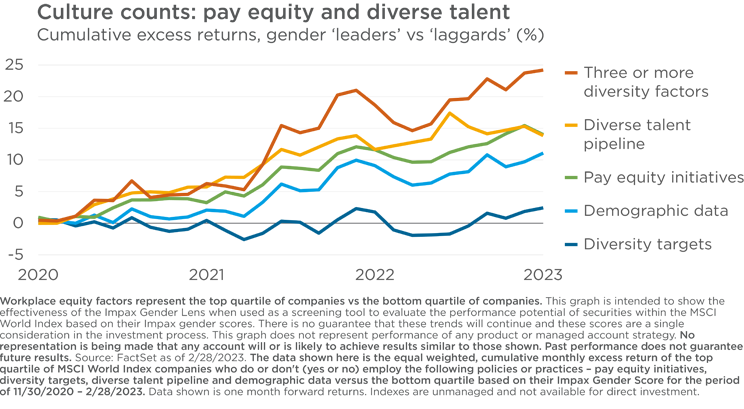
Culture counts - pay equity and diverse talent - Impax

Our research reinforces that inclusive cultures and purpose-driven business practices can be contributors to outperformance. Although the Impax Ellevate Global Women’s Leadership Fund has faced some performance headwinds over the past few years – particularly being fossil-fuel-free at a time when the energy sector outperformed and not owning certain technology stocks – our approach of investing in gender leaders and avoiding gender laggards has consistently added value over time, certainly since 2014. Inclusive companies tend to attract and retain talented employees from diverse backgrounds who can then drive innovation, productivity, customer loyalty and resilience. 

Linda Pei and Leslie Christian were right. The United Nations was right. Impax is right. 

Investing in gender equity, and in diversity, equity and inclusion more broadly, is simply smart investing. It’s about investing in leaders rather than laggards, the future rather than the past, which is what investing is all about.

Finally, while the Impax Ellevate Women’s Leadership Fund may focus on gender diversity, we fully understand that diversity is a broader concept and category, and that gender is a broader concept and category as well. We anticipate and look forward to more research over time underscoring that it is people, in all their diversity and variety, who make the difference, and that organizations with people-focused cultures will make the strongest contributions over time as we transition to a more sustainable and inclusive economy. 


Article by Joe Keefe, President of Impax Asset Management. Based in the Portsmouth, NH office, he is responsible for distribution of Impax’s full capabilities across North America. 

Prior to joining the firm in May 2005, Joe was President of NewCircle Communications, a strategic consulting and communications firm specializing in corporate social responsibility and public policy communications. He served as Senior Advisor for Strategic Social Policy at Calvert Group from 2003-2005 and as Executive Vice President and General Counsel of Citizens Advisers from 1997-2000. He is a former member of the Board of Directors (2000-2006) of US SIF, the trade association representing asset managers and investors engaged in sustainable investing throughout the United States. Before entering the investment management industry, Joe worked in private law practice for 16 years. 

Joe holds a Juris Doctor from the University of Virginia School of Law and a Bachelor of Arts in philosophy from the College of the Holy Cross. 

Important Disclosures

You should consider a fund’s investment objectives, risks, and charges and expenses carefully before investing. For this and other information, call 800.767.1729 or visit www.impaxam.com  for a fund prospectus and read it carefully before investing.

RISK: Equity investments are subject to market fluctuations, the fund’s share price can fall because of weakness in the broad market, a particular industry, or specific holdings. Emerging market and international investments involve risk of capital loss from unfavorable fluctuations in currency values, differences in generally accepted accounting principles, economic or political instability in other nations or increased volatility and lower trading volume. The Fund does not take defensive positions in declining markets. The Fund’s performance would likely be adversely affected by a decline in the Index. There is no guarantee that the objective will be met and diversification does not eliminate risk. The investment techniques and decisions of the investment adviser and the Fund’s portfolio manager(s), including the investment adviser’s assessment of a company’s ESG (Environmental, Social and Governance) profile when selecting investments for the Fund, may not produce the desired results and may adversely impact the Fund’s performance, including relative to other Funds that do not consider ESG factors or come to different conclusions regarding such factors. Environmental, social, and governance (ESG) criteria are a set of standards for a company’s operations that socially conscious investors use to screen potential investments. Environmental criteria consider how a company performs as a steward of nature. Social criteria examine how it manages relationships with employees, suppliers, customers, and the communities where it operates. Governance deals with a company’s leadership, executive pay, audits, internal controls, and shareholder rights. Companies that fail to meet certain ESG or sustainability thresholds, including companies involved in the manufacture or sale of weapons, the manufacture of tobacco products and companies significantly involved in the extraction and/or refining of fossil fuels are excluded from the Fund.

The views, opinions, and forecasts included or expressed herein are as of the date indicated and are subject to change without notice. There can be no assurance that the strategies described will achieve their objectives and goals. The information presented herein is provided for general informational purposes only and is not intended to provide legal, tax, investment, or financial planning advice. It does not constitute an offer, invitation, solicitation, recommendation, or advice to buy or sell any securities, financial instruments, investments; to follow a particular investment strategy; to engage in any other transaction; or to engage Impax to provide investment advisory or other services.

Certain content (including data) contained within may include, or be based on, data obtained from statistical services, company reports or communications, or other third-party sources, that Impax believes are reliable. However, Impax has generally not verified this information where Impax believes the third-party source is reliable and, therefore, there is a risk that information from such third-party sources are inaccurate or incomplete. You should not rely on the information presented here as a basis for investment decisions.

The MSCI World Index is a free float-adjusted market capitalization weighted index that is designed to measure the equity market performance of developed markets. The MSCI World Index consists of the following 23 developed market country indices: Australia, Austria, Belgium, Canada, Denmark, Finland, France, Germany, Hong Kong, Ireland, Israel, Italy, Japan, Netherlands, New Zealand, Norway, Portugal, Singapore, Spain, Sweden, Switzerland, the United Kingdom, and the United States.

Indexes are unmanaged and not available for direct investment.

The Impax Gender Score broadly seeks to measure a company’s performance on issues related to gender diversity and equality. The Impax Gender Analytics team conducts in-house gender research and assigns the Impax Gender Score, a rating for each company in the MSCI World Index universe, that is based on the following gender leadership criteria: representation of women on boards of directors and in executive management, the hiring, promotion and retention of women, gender pay equity, a company’s ability to proactively issue and/or meet gender goals, or be a signatory to the Women’s Empowerment Principles (a joint initiative of the UN Global Compact and UN Women), as well as a company’s transparency about gender diversity data. These criteria are given different weights, with representation by women on boards and in management receiving the highest weightings. The final gender ranking is calculated by blending the scores over time to capture consistency of gender leadership. Companies are scored from 1-100, and a lower score indicates a higher ranking, with 1 being the highest score and 100 being the lowest score. 

The Ellevate name is used under license and with the permission of Ellevate Asset Management, LLC. Impax Asset Management LLC is investment adviser to Impax Funds. Impax Funds are distributed by Foreside Financial Services, LLC. Foreside Financial Services, Sallie Krawcheck, Ellevate & Impax Asset Management LLC are unaffiliated. Branch Office: 30 Penhallow Street, Suite 400, Portsmouth, NH 03801 603 431 8022.

Impax is a trademark of Impax Asset Management Group Plc. Impax is a registered trademark in the EU, US, Hong Kong and Australia. © Impax Asset Management LLC, Impax Asset Management Limited and/or Impax Asset Management (Ireland) Limited. All rights reserved.

Featured Articles, Impact Investing, Sustainable Business

Tobacco Free Portfolios Celebrate 5th Anniv. of the Tobacco-Free Finance Pledge

Tobacco Free Portfolios_logoTobacco Free Portfolios recently celebrated the 5-year anniversary of the Tobacco-Free Finance Pledge at a high-level side event at UN Headquarters in September 2023, on the sidelines of the 2023 UN General Assembly. The event was proudly co-sponsored by the governments of France, The Netherlands and Jamaica, and supported by the United Nations’ Environment Program Finance Initiative, the UN supported Principles for Responsible Investment and the UN Principles for Responsible Banking.

The theme for the side event is ‘There’s No Room for Tobacco in a Net Zero World’ on account of Big Tobacco’s outsized negative impact on both people and the planet. Global health, finance and diplomatic leaders will celebrate the progress of the Tobacco-Free Finance Pledge. There are now 200+ leading financial institutions, from more than 20 countries, with >US$16 trillion combined assets under management that are Signatories to the Pledge. Recent notable Pledge Signatories include France’s Société Générale; Australia’s Commonwealth Bank of Australia and ANZ; and AIMCo, one of Canada’s largest pension plans.

Given worldwide focus on Net Zero ambitions combined with tobacco’s alarming environmental impacts, Tobacco Free Portfolios encourages investors to embed ‘tobacco-free’ into Net Zero strategies. To illustrate the rationale, cigarette filters, made from cellulose acetate, are the most littered item on the planet and a top contributor to ocean plastic waste. It’s also estimated that the production of tobacco leads to ~5% of global deforestation and results in vast carbon emissions.

Quotes: 

Prof Bronwyn King, CEO, Tobacco Free Portfolios

“The past five years has seen the rapid mainstreaming and acceleration of sustainability efforts, along with a rise in greenwashing allegations. The Tobacco-Free Finance Pledge speaks to authentic sustainability commitments, that recognize the crucial role of finance in the global transition to a Net Zero future.”

Dr. Tedros Ghebreyesus, Director-General, World Health Organization

“Every dollar invested in a tobacco company is an investment in death and disease. We must fight tobacco on every front – in kiosks, on billboards, in the courts – and on the financial markets.”

Minister Aurélien Rousseau, Minister of Health and Prevention, France

“It is my conviction that the environmental dimension constitutes one of the key pillars in the fight against smoking. This is clearly the case with disposable electronic cigarettes, which we plan to ban from sale in France. Highly popular with young people, they are a rapid route to nicotine addiction. Besides, their components, particularly the lithium batteries, are totally at odds with our objectives in the fight against pollution.”

Mrs. Marjolijn Sonnema, Director General for Public Health, The Netherlands

“The mission of the Tobacco-Free Finance Pledge is more critical than ever, especially in light of the rising vaping epidemic among youth. The Netherlands stands ready as an important partner, to work towards a sustainable healthy future.”

Dr. The Hon Minister Christopher Tufton MP, Minister of Health and Wellness, Jamaica

“Jamaica remains committed to investing in tobacco control, for the protection of human health as well as the health of the environment. The 15-year period return on investment for tobacco interventions show that for every dollar invested in tobacco control in Jamaica, one can expect to see 5.37 Jamaican dollars return. We are keen to solidify those gains. Jamaica also encourages the continued engagement and partnership of players from the finance sector in supporting the transition to a net zero world in which tobacco has no place.”

Mr. Jean-Yves Fillion, Vice-Chair BNP Paribas, USA

“BNP Paribas is proud to be a Founding Signatory of the Tobacco-Free Finance Pledge, which is now successfully celebrating its fifth year. Beyond the health implications, a tobacco-free world is instrumental to abate healthcare costs and global environmental harm.”

Mr. Stéphane About, CEO Société Générale, USA

“The concepts of responsibility and sustainability are at the core of our strategy. Being a signatory of the Tobacco-Free Finance Pledge and supporting this event are symbolic of our commitment to improving the health of the people on this planet, as well as the health of the planet itself.”

Mr. Shayne Elliot, CEO ANZ

“ANZ acknowledges the important role that financial institutions can play in addressing global health priorities, including the harmful impacts of tobacco products. For this reason, ANZ is proud to sign the Tobacco-Free Finance Pledge and pleased to offer our continued support to this important initiative.”

Attorney General Rob Bonta, Attorney General of the State of California

“The dangers of smoking to both people and our environment are undeniable. Thanks to initiatives like the Tobacco-Free Finance Pledge, we’re helping to mitigate those dangers around the world by better deploying the power of investments. There’s still progress we need to make, and as Attorney General of the state with the fifth largest economy in the world, I look forward to continuing to help in any way that I can.”

Mr. David Atkin, CEO, Principles for Responsible Investment

“At PRI we’re proud to support the Tobacco-Free Finance Pledge and to see the strong progress the initiative has made over the past five years, with more than 200 financial institutions becoming signatories. As an issue that spans both the social and environmental spectrum, the role investors can play is clear as is the realization that a net-zero future must also be one that is tobacco-free.”

Ms. Yolonda C. Richardson, President and CEO, Campaign for Tobacco-Free Kids

“The tobacco industry has caused immeasurable damage to the health and well-being of millions of people around the world, as well as the environment. The Campaign for Tobacco-Free Kids is proud to work with Tobacco Free Portfolios and other partners to hold the industry accountable and end the enormous harm it causes.”

Rev. Horace L. Sheffield III, Executive Director of the Detroit Association of Black Organizations & Pastor at New Destiny Christian Fellowship Church

“With 8 million tobacco-related deaths per year, we cannot turn a blind eye to the fact that tobacco companies have been causing devastating harm to people and the environment for far too long. It is time for the community to recognize the grave consequences of tobacco and take action toward divesting from this industry. We need to unequivocally say that there is no room for tobacco in this vision of a net-zero world.”


About Tobacco Free Portfolios

Tobacco Free Portfolios is a not-for-profit organization that encourages financial institutions to reflect on and reconsider commercial relationships with the tobacco industry in light of the alarming impact of tobacco on people and the planet. The organization’s flagship initiative, the Tobacco-Free Finance Pledge, launched in 2018 at United Nations’ Headquarters and currently has 200+ signatories, representing >US$16 Trillion in AUM committed to tobacco-free finance. Our aim is to create a tobacco-free future.

Tobacco Free Portfolios Foundation

EIN: 84-3103450

99 Wall Street #604, New York NY 10005

Additional Articles, Energy & Climate, Impact Investing, Sustainable Business

2023 GreenBiz 30 Under 30 List of Sustainability Leaders


Recently, GreenBiz announced their annual GreenBiz 30 Under 30, which recognizes young professionals for their commitment to mitigating the climate crisis. The stakes are high, and the needs are great for these emerging leaders.

This year, the GreenBiz 30 Under 30 are tackling climate change at some of the world’s largest corporations, NGOs and government agencies. They work at companies as sprawling and varied as Bank of America, Disney, Hilton, Liberty Mutual, Nike and Wayfair. Or they have launched their own bold ventures. Whether based in Asia, Europe, the Middle East or North America — from Milwaukee to Manila and from Dubai to Dublin — these individuals are making an impact around the globe. 

Take, for example, Madison Barnes, who is mapping Disney’s Scope 3 inventory, from its theme parks to its toys. Colorado atmospheric scientist Emily Sambuco is helping Liberty Mutual assess climate risk. DaWan Smith II is engineering mobile energy backup systems for disaster zones at Sesame Solar in Michigan. 

They’re engineers and analysts, founders and funders, innovators and investors. They’re building trust in carbon markets, decarbonizing global supply chains and electrifying transportation. They’re encouraging Big Ag to adopt regenerative practices and popularizing crops that support biodiversity. They’re getting the fossil fuels out of disaster relief and industrial chemicals. They’re furthering innovations for low-carbon buildings and infrastructure.

In the process, many are also toiling to empower groups — including women, Indigenous populations and Black people — historically excluded from the centers of power and profit.

This year’s cohort was selected by the GreenBiz editorial team from more than 300 applicants and nominees from around the world. A broad range of criteria was considered for the final cut, including each candidate’s demonstrable past accomplishments in advancing corporate sustainability and their potential to influence and accelerate decarbonization efforts into the future. The 2023 honorees join the ranks of an accomplished group of 240 young climate innovators GreenBiz has honored since 2016, who have ambitiously furthered their climate goals and careers ever since. 

There’s Morgan Collins (2021), impact investments director at Microsoft’s $1 billion Climate Innovation Fund, who was Starbucks’ head of sustainable finance when he was honored. Chris Castro (2016), now a chief of staff at the U.S. Department of Energy, was community energy manager for Orlando when we honored him. The company co-founded by 2021 honoree Brock Battochio, Planetary, just signed a contract with Frontier, the $1 billion (funding) carbon buyers initiative created by Alphabet, Meta, Stripe and more.

You can read about this year’s 30 here. And continue to follow their stories as we chronicle their inspiring efforts, and shared mission, to make a difference in the business of sustainability going forward. 

The 2023 30 Under 30 Honorees List: 

John Altomonte, CEO and Founder, Verne Energy Solutions

Dustin Andre, Product and Packaging Sustainability Specialist; MilliporeSigma 

Amjad Azmeer, Doctoral Student, King Abdullah University of Science and Technology

Madison Barnes, Senior Analyst, Environmental Sustainability, The Walt Disney Company

Cedric Char, Vice President, Fifth Wall

Khiana Deas, Responsible Sourcing Manager, Bank of America

Anna Epstein, Sustainability Manager, Nike

Jamaica Gayle, Director, Sustainability & Environmental Affairs, Plant Based Products Council and Corn Refiners Association

Franck Gbaguidi, Director, Sustainability, Eurasia Group

Sophia Gluck, ESG and Sustainability Lead, Okta

Zikri Jaafar, Head of Enterprise Learning, Terra.do 

Lauren Morrell Kotze, Sustainability Manager, The Cheesecake Factory

Danii Mcletchie, Sustainability Program Manager, North America, Watts Water Technologies; CEO, Carnicycle

Syreel Mishra, Manager, Climate Change Advisory & Sustainability Services, EY

Mackenzie Neal, Program Manager, Division of Workforce and Youth Development, Office of Trust Services, U.S. Bureau of Indian Affairs

Sarah Nesbit, Co-Founder, BlackOak Collective; Principal Associate, External Affairs, Capital One 

Thomas Newbigging, Senior Sustainability Manager, GSK

Shauheen Noorani, Associate Director, Product, Solugen

Aghnia Dima Rochmawati, ESG Specialist, East Ventures

Haleemah Sadiah, Designer, Catapult Design

Emily Sambuco, Lead Catastrophe Analyst, Research & Development Team, Corporate Enterprise Risk Management, Liberty Mutual

Shrinal Sheth, ESG Advisory, Deutsche Bank

Alex Shockley, Director, Responsible Sourcing and Sustainability, Hilton

DaWan Smith II, Green Hydrogen Product Manager, Sesame Solar

Raymond Song, Carbon Markets and Policy Lead, CTrees 

Visvesh Sridharan, ESG Integration Lead, ERM 

Savannah Tarpey, Shop Sustainably Global Program Lead, Wayfair 

Namitha Thomas, Environment and Sustainability Consultant, AECOM 

Alex Trecha, Program Manager, ICF 

Berklee Welsh, Associate Manager, Sustainability & Mission, Simple Mills


You can read more about each of these innovators here.

Source: GreenBiz


Additional Articles, Energy & Climate, Food & Farming, Impact Investing, Sustainable Business

Catalytic Capital Success in Indian Country Shows Just and Sustainable Economic Growth through Self-Determination

Native Entrepreneurs, Enterprises and Intermediaries Overcome Systemic Barriers to Expand Capital Access through Creative Finance

Wolakota Buffalo Range—World’s Largest Indigenous-Managed Buffalo Herd of 1,000 in South Dakota

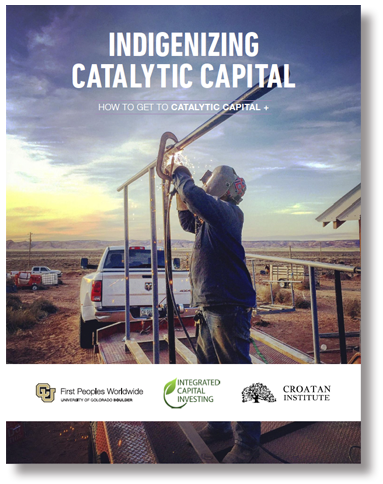
Indigenizing Catalytic Capital ReportWhile entrepreneurship and economic creativity are abundant in Native economies, Indian Country has been chronically underfunded by both investors and philanthropy due to economic invisibilizing and other systemic factors. Increasingly, Native entrepreneurs, enterprises, and intermediaries are finding investment success through catalytic capital, bridging major gaps in capital access through singular strategies.

Drawing from interviews with 22 practitioners comprising philanthropic investors, private investors, Native intermediaries, and Native entrepreneurs, as well as desk research and participation in Indigenous-led finance convenings, Indigenizing Catalytic Capital: How to Get to Catalytic Capital + presents new research that demonstrates how catalytic capital in Indian Country enables long-term, culturally-aligned success. This occurs when investments shift power through Native leadership, provide ample flexibility and opportunity for renegotiation, and operate at the pace of relationship. 

The paper, written by Kate R. FinnMelanie MattelianoJennifer Astone and David LeZaks, also conceptualizes “Catalytic Capital +” as the additional factors and approaches to creative finance in Indian Country which makes capital truly catalytic for Native entrepreneurs. This includes commitment to consistent and long-term capital delivery, integrated technical assistance, right relationship in investment, and coupling grant capital with investment capital as part of an integrated capital stack.

According to the paper: “A major finding of this research is that activating integrated capital mechanisms and catalytic capital in Indian Country has the most power to ignite creative, long-term enterprise visions. And, if done well, activating catalytic capital will spur new approaches to capital delivery in Indian Country that center Indigenous solutions. Capital then becomes an input to activate Native founders’ visions, rather than driving their decision-making.”

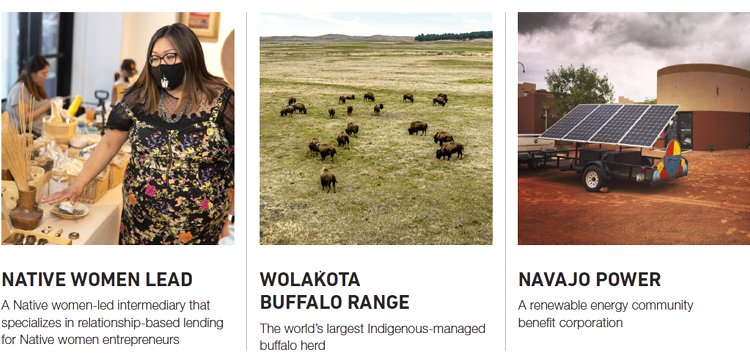
Research also provided case studies which highlight emerging best practices in catalytic investments and exemplify successful field growth: Native Women Lead, a Native women-led intermediary that specializes in relationship-based lending for Native women entrepreneurs; Wolakota Buffalo Range, the world’s largest Indigenous-managed buffalo herd; and Navajo Power, a renewable energy community benefit corporation. 

Native economic sector growth--Indigenizing Catalytic Capital

The report’s methodology and data collection focused on questions about the role of catalytic capital in forwarding self-determination and non-extractive investing for Indigenous Peoples in the United States and how Native entrepreneurs and Native communities experience and define catalytic capital. 

Detailing eleven themes that emerged about the current capital landscape in Indian Country, the paper concludes with five recommendations “which center on redistributing power in investing and finance to address structural racism, forward Native self-determination, and support flourishing Indigenous economies which create both wealth and social wellbeing.” They suggest 1) enact data justice, 2) center Indigenous-led intermediaries, 3) increase investor literacy in foundational understanding of Native nations, 4) promote integrated capital strategies, and 5) invest in right relationship. 

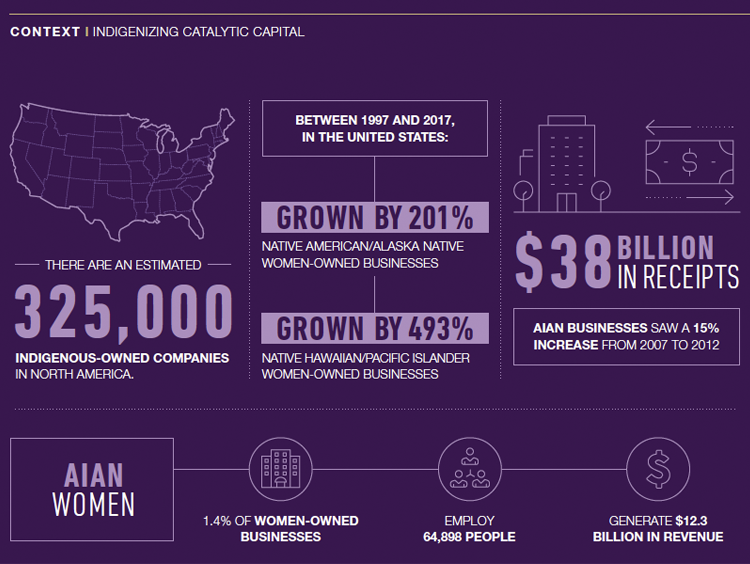
Indigenous-owned companies infographic-Indigenizing Catalytic Capital

“For many Indigenous Peoples, wealth means more than financial success. It can encompass community health and wellbeing, continuity of cultural practices, environmental stewardship, respect for ancestors, prosperity for future generations, and other cultural values,” said Kate R. Finn, Executive Director of First Peoples Worldwide, which co-published the paper with Integrated Capital Investing and Croatan Institute.

“The north star for this research was to collate prime examples of creative finance in Indian Country and demonstrate the role self-determination and non-extractive investment has to provide capital that is truly catalytic.” 


About the Authors

Kate R. Finn is Executive Director of First Peoples Worldwide. Her areas of focus and research expertise include Indigenous Peoples law and policy, federal Indian law, preventing violence against women, sustainable finance, and business and human rights. 

Melanie Matteliano is a Sustainable Development Fellow at First Peoples Worldwide and has a background in research and applied cultural anthropology. She is co-author of Supply Chains & Sovereignty: Native-Led Food Systems Solutions with Finn.

Jennifer Astone, Ph.D., has 20 years of foundation leadership experience in human rights, Indigenous Peoples, gender justice, and agroecology. She founded Integrated Capital Investing to catalyze finance for a just economy, is a Just Economy Institute Fellow and established the Transformative 25 List of funds.

David LeZaks, Ph.D., is an expert of innovative finance and has held positions at the University of Wisconsin-Madison, Delta Institute and Croatan Institute. He is also a fellow of the Just Economy Institute.

Indigenizing Catalytic Capital: How to Get to Catalytic Capital+ was produced with grant funding from the MacArthur Foundation, the Omidyar Network, and the Rockefeller Foundation through their support of the Catalytic Capital Consortium Grantmaking, a project of New Venture Fund. 

Download the Full Report here

Additional Articles, Energy & Climate, Food & Farming, Impact Investing, Sustainable Business

Signup to receive GreenMoney's monthly eJournal

Privacy Policy
Copyright © GreenMoney Journal 2025

Website design & development by BrandNature

Global Events Calendar

View All Events

april

21aprAll Day232026 Sustainable Packaging Coalition: SPC Impact – Nashville

27aprAll Day30Women Deliver 2026 Conference (WD2026) – Melbourne

X