Tag: Impact Investing

The Intersection of Buildings, Energy, and Emissions Reduction

By Sarah Adams, Vert Asset Management

Above: Japan Real Estate CorporationOtemachi Park Building received a 5-star DBJ Green Building Certification to acknowledge that it is best in class for environmental & social awareness.

Buildings use energy. Lots of energy. Buildings account for 30-50% of building energy use globally; in the US it’s 39%, more than industry and transportation. 
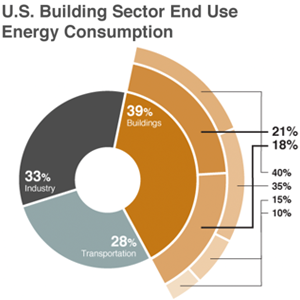
UA Building Sector End Use Energy Consumption infographic
Figure 1 shows the US building sector energy consumption, courtesy of Sunproject. Source: World Economic Forum. (October 2022). Here’s How We Can Heat, Ventilate, and Cool Buildings More Efficiently. WEF. https://www.weforum.org/agenda/2022/10/here-s-how-heat-ventilate-cool-buildings-energy-consumption/

Building owners have traditionally focused on improving energy efficiency first because energy bills hit the building’s bottom line. The savings are tangible. In other words, energy use is financially material to both the building owners’ operating expenses and their capital investments. As the cost of solar dropped from $378 MWh (megawatt per hour) in 2000 to $68 MWh in 2019, building owners started to explore onsite energy production. Their focus was still primarily on reducing energy costs. The economics of solar are feasible for some projects, but not all, in particular buildings without much roof space relative to their energy consumption.

LEED (Leadership in Energy and Environmental Design) is a green building certification founded in 1998. It originally rewarded building performance and energy efficiency. Fast forward 25 years, there are now LEED Zero certifications for projects which address net-zero carbon, energy, water and waste. LEEDv4 incorporated added credits for renewable energy and the first time the certification incorporated greenhouse gas emissions. In 2023, LEEDv5 now asks building owners about their carbon reduction plans.

In 2000, the CDP (formerly known as the Carbon Disclosure Project) started asking companies to report their greenhouse gas emissions also known as their carbon footprint. Today, over 18,700 companies globally voluntarily report corporate emissions to CDP. Once firms started reporting their emissions, they started looking for ways to reduce them. As more solar and other renewable energy was built to scale into the existing grid, building owners started to seek ways to procure that green energy.

Since the Paris Agreement was signed in 2015, building owners, tenants, and investors have expanded their focus from pure cost reduction to emission reduction. The Agreement has 198 signatories to date and was ratified by both the US and China, together the largest contributors to pollution globally. The Agreement was the impetus for the public and private sector to put capital investment to work to limit global warming to 1.5 degrees Celsius above pre-industrial levels to mitigate the worst effects of climate change.1
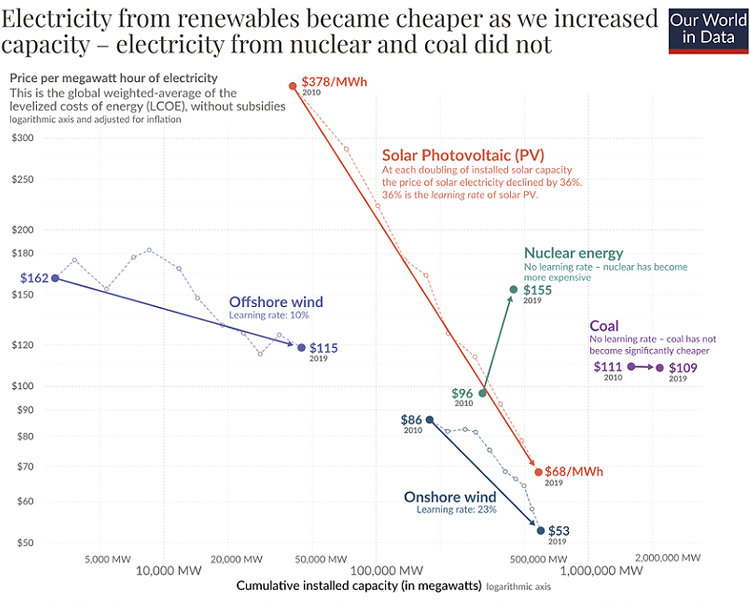

Chart-2-Electricity from Renewables
Source: Roser, M. IRENA 2020. (December 2020). “Why did renewables become so cheap so fast?” OurWorldinData.org. Licensed under CC-BY. https://ourworldindata.org/cheap-renewables-growth Note: The relative price decline associated with each doubling of cumulative experience is the learning rate of a technology.

Decarbonization Strategies for REITs

As buildings are responsible for 40% of CO2 emissions as the by-product of their energy use and energy source, they are a critical component of the efforts to reduce climate change.2And, roughly 80% of the buildings you see today will still be standing in 2050. Building owners need to take action on energy efficiency and renewable energy procurement to reduce their overall emissions.

One way that REITs can translate their decarbonization aspirations into action is through science-based targets. Science-based targets are emissions reductions targets that companies are setting to reduce greenhouse gas emissions in their corporate operations and supply chain. There can be a lot of variance in the way companies set climate targets. To create more consistency, the Science-Based Targets Initiative (SBTi) reviews and validates public and private sector targets. SBTi validates targets using models based on the Intergovernmental Panel on Climate Change (IPCC) scenarios and the International Energy Agency. The SBTi is a collaboration between the CDP, the UN Global Compact, World Resources Institute and the World Wide Fund for Nature (WWF – formerly the World Wildlife Fund).3

The guidance aims to establish a global pathway for buildings’ in-use emissions and embodied emissions aligned with 1.5°C. A company first indicates their commitment SBTi to set either a near-term or long-term target. Near-term targets are 5 to 10 years. Long-term targets that are 10 years or more require the company to set a net-zero target.4

Companies then have 24 months to develop their targets using the tools provided by SBTi and submits targets to the SBTi for validation. SBTi is the third-party that reviews a company’s proposed strategy to approve their action plan.

What does the SBTi look like in practice? There are few common strategies that REITs pursue when they set emissions reduction targets, including:

1)  Conduct an energy audit of the property to assess building specific challenges and opportunities. 

2)  Make improvements to the energy efficiency of building systems such as lighting, insulation, heating and cooling. 

3)  Electrify buildings. One example is to replace gas powered boilers with heat pumps.

4)  Procure renewable energy either on-site and/or off-site for a building’s electricity needs. 

5)  Include design specifications to reduce energy-intensive materials in retrofits or new construction.

Here are how three REITs from the office real estate sector across the globe are tackling their science-based targets:

Gecina – France, Diversified Office |  96/104 Neuilly uses a wood structure to reduce its emissions by 37% compared to a similar size concrete structure. Additionally, thermal solar panels produce 40% of the hot water needs of the tenants.

In 2017, Gecina5,6 validated its 1.5°C aligned Emissions and Reduction Targets with SBTi. The company is targeting 42% emissions reduction in the entire commercial portfolio by 2030. The company’s strategy for reducing carbon across its portfolio includes: 

  • Setting a carbon intensity reduction goal of 25%
  • Identifying decarbonization solutions (i.e. thermo-regulating paint, electric water heating, etc.)
  • Adding emissions reduction targets to renovation projects
  • Tenant engagement – reduction of operational emissions through building energy efficiency work.

In 2022, Empire State Realty7,8 validated its 1.5°C aligned Emissions and Reduction Targets with SBTi. The company is targeting 80% emissions reduction in the entire commercial portfolio by 2035. To date, ESRT has reduced emissions by 43% portfolio wide. The company’s strategy for reducing carbon across its portfolio includes: 

  • Whole-building energy use and life cycle analysis to assess upgrades
  • Reduce operational emissions through building energy efficiency work
  • Green leases – addressing split incentives for investment in energy upgrades
  • Tenant engagement – detailed and actionable sustainability guidelines for tenants
  • Purchase of wind renewable energy credits (RECs) for 100% of the commercial portfolio’s electrical usage.
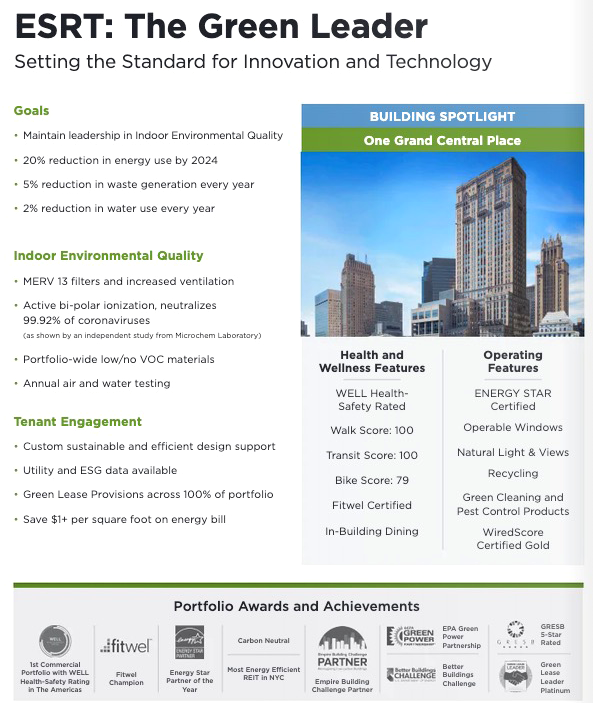
ESRT - The Green Leader
Empire State Realty Trust – US, Office | One Grand Central Place tour book summarizes the building’s green credentials to prospective tenants.

In 2022, Japan Real Estate Investment Corporation9,10 validated its 1.5°C aligned Emissions and Reduction Targets with SBTi. The firm is targeting 80% emissions reduction in the entire commercial portfolio by 2030. The company’s strategy for reducing carbon across its portfolio includes: 

  • Joined RE100 to procure renewable energy at 90% of properties by 2030
  • Analyzing the portfolio to reduce energy intensity at existing and new properties
  • Added sustainability considerations of green building certifications and emissions performance to its acquisition evaluations.11

The Intersection of Buildings, Energy, and Emissions Reduction
Japan Real Estate Corporation | Otemachi Park Building received a 5-star DBJ Green Building Certification to acknowledge that it is best in class for environmental & social awareness.


Sarah Adams of Vert Asset Mgmt.Article by Sarah Adams, Chief Sustainability Officer and co-founder at Vert Asset Management. Vert was founded to bridge the gap between financial services, capital markets, and environmental advocacy. Sarah leads on engagement at Vert which is three things – dialogue with the companies we invest in, advocacy with regulators and government, and being a model sustainable business. 

Sarah has a multidisciplinary experience across the finance sector and environmental policy. Before Vert, Sarah started a consultancy educating financial advisors on sustainable and impact investing in the UK and US. Previously, Sarah worked on social finance initiatives for advocacy NGOs in the UK at the WWF and Forum for the Future. She started her career in institutional finance at Dimensional Fund Advisors and Grantham Mayo Van Otterloo (GMO).

Sarah is passionate about sustainability education for financial services. She is a teacher for the Chartered SRI Counselor (CSRIC) and she sits on the USSIF Education Committee. She earned the CFA UK Certificate in ESG Investing and the Sustainability Accounting Standards Board’s FSA Credential. She has a BA in History from UCLA (US), a MSc in Environment and Sustainable Development from University College London (UK), and a MA in Environmental Law from SOAS (UK). 


Footnotes and Sources:
[1]  United Nations Framework Convention on Climate Change. (2015). The Paris Agreement. UNFCC. https://unfccc.int/sites/default/files/english_paris_agreement.pdf 

[2]  ASHRAE. (nd). “What is Building Decarbonization?” ASHRAE. https://www.ashrae.org/about/tfbd-what-is-building-decarbonization 

[3]  Science Based Targets Initiative. (nd). “Buildings Sector Science Based Targets Setting Guidance.” SBTi. https://sciencebasedtargets.org/resources/files/DRAFT_SBTI_Buildings_Guidance.pdf 

[4]   Science Based Targets Initiative. (nd). “Companies Taking Action.” SBTi. https://sciencebasedtargets.org/companies-taking-action 

[5]   Gecina is 0.63% of the Vert Global Sustainable Real Estate Fund (VGSRX) as of June 30, 2023. 

[6]   Gecina. (2023). 2022 Universal Registration Document. Gecina. https://www.gecina.fr/sites/default/files/2023-02/gecina_-_universal_registration_document_urd_2022.pdf 

[7]   Empire State Realty Trust is 0.14% of the Vert Global Sustainable Real Estate Fund (VGSRX) as of June 30, 2023. 

[8]   Empire State Realty Trust. (2023). 2022 Sustainability Report. ESRT. https://online.flippingbook.com/link/859359/9/ 

[9]   Japan Real Estate Investment Corp is 0.63% of the Vert Global Sustainable Real Estate Fund (VGSRX) as of June 30, 2023. 

[10]   Japan Real Estate Investment Corp. (2023). Sustainability Report 2022. JRE. https://jre-esg.com/en/pdf/sustainability_report2022.pdf 

[11]  DBJ Green Building Certification Program was launched by Development Bank of Japan Inc. (DBJ) for the purpose of supporting the properties which give proper care to environment and society (Green Building). The program evaluates, certifies and supports properties which are required by society and economy. It makes comprehensive assessment of properties, while evaluating various factors which range from properties’ environmental features to their communication with stakeholders, such as disaster prevention and proper care for surrounding communities.

The Vert Global Sustainable Real Estate Fund holds publicly traded REITs. 

Fund holdings and sectors are subject to change at any time and should not be considered a recommendation to buy or sell any security.

Mutual fund investments involve risk. Principal loss is possible. Investors should be aware of the risks involved with investing in a fund concentrating in REITs and real estate securities, such as declines in the value of real estate and increased susceptibility to adverse economic or regulatory developments. Investments in foreign securities involve political, economic and currency risks, greater volatility and differences in accounting methods. A REIT’s share price may decline because of adverse developments affecting the real estate industry. REITs may be subject to special tax rules and may not qualify for favorable federal tax treatment which could have adverse tax consequences. The Fund’s focus on sustainability may limit the number of investment opportunities available to the fund and at times the fund may perform differently to funds that are not subject to similar investment considerations.

The Vert Global Sustainable Real Estate Fund’s investment objectives, risks, charges, and expenses must be considered carefully before investing. The statutory and summary prospectuses contain this and other important information about the investment company, and may be obtained by calling 1-844-740-VERT or visiting www.vertfunds.com . Read carefully before investing.

The Vert Global Sustainable Real Estate Fund is distributed by Quasar Distributors, LLC 

Energy & Climate, Featured Articles, Impact Investing, Sustainable Business

The Key to a Net-Zero Future is Lower Carbon Buildings Today

By Beau Engman and Lucas Pappas, PACE Equity and Calvert Impact

Above: Euclid Office Building, Euclid, OH

Beau Engman PACE Equity + Lucas Pappas Calvert ImpactYou might be surprised to learn that the buildings where we live, work, and play are some of the biggest sources of carbon emissions. Worldwide, the built environment generates roughly 42 percent of annual C02 emissions, with building operations accounting for 27 percent of the total and embodied carbon from four main building materials – cement, iron, steel and aluminum – accounting for the other 15 percent.1 

Rapid growth in the building sector is expected to continue. According to the International Energy Agency, the global building stock is expected to grow by the “equivalent of adding an entire New York City to the world, every month, for 40 years.”2

While these statistics might seem overwhelming, there’s good news as well. The technology to create greener buildings doesn’t need to be invented; lower-carbon solutions for buildings already exist. Now, we just need to put them to work, and quickly.

Coliseum Building, Minneapolis, MN
Coliseum Building, Minneapolis, NM

By greening buildings now, we could drastically cut the cost of transitioning to a clean energy future and make it happen much faster. A recent report from the Department of Energy’s Lawrence Berkeley National Laboratory and energy consulting firm Brattle Group3, shows that increasing building efficiency could reduce the total cost of decarbonizing the country’s power supply as much as $107 billion per year, or one-third of the total energy transition cost. Building decarbonization is needed for carbon reduction today, for the grid to be able to handle the increase in renewable electrification of tomorrow, and to bring a clean energy future years earlier.

It is clear that addressing our climate challenge will require the real estate sector to be significantly engaged, an imperative recognized by lawmakers in more than 30 U.S. states that have implemented commercial property assessed clean energy (C-PACE) programs. C-PACE programs provide incentivized financing for green upgrades to existing buildings and new construction that meet environmental standards. C-PACE is a financing structure enabled by state legislation in which building owners borrow low-cost, long-term funding for energy efficiency and renewable energy projects and make repayments via an assessment on their property tax bill. 


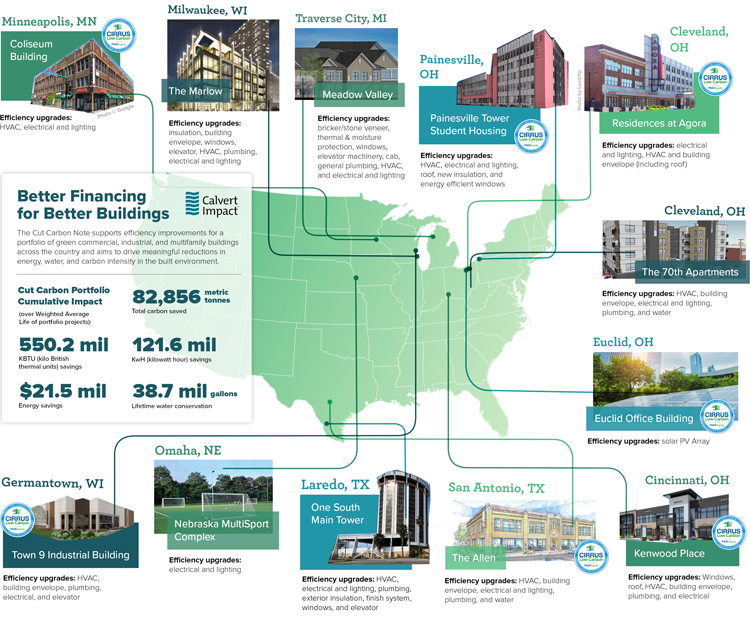
Calvert Impact ‘Cut Carbon’ Portfolio Map

C-PACE is a powerful tool, albeit one that few outside of the real estate sector have heard of. PACE Equity and Calvert Impact are trying to change that. Earlier this year we launched the Cut Carbon Note, which allows individual and institutional investors the opportunity to directly invest in C-PACE projects that are decarbonizing buildings. The Cut Carbon Note is an investment grade retail-accessible fixed-income product that aims to transform the way we build and reduce carbon emissions. The Note finances energy efficiency and renewable upgrades in commercial, industrial, and multi-family buildings and aims to drive meaningful reductions in energy, water, and carbon intensity. This funding supports the installation of efficient lighting, roofing, windows, HVAC, water heating, and insulation, on-site solar power generation and storage, and low-flow plumbing and other water conservation measures.

Cirrus Low Carbon logo

Moreover, we’re trying to go beyond standard C-PACE requirements and conform to the rigorous CIRRUS™ Low Carbon Standard developed by PACE Equity and verified by the New Buildings Institute, which raises the bar for commercial energy efficiency. It is used as the basis for specialty financing that rewards projects for pursuing a lower carbon design in their energy and water-consuming products and systems. After its launch in 2021, the CIRRUS program continues to be refined and expanded with newer options developing for net zero and passive building standards.

To encourage adoption of the CIRRUS Low Carbon standard, building owners receive a free comprehensive business analysis, which summarizes (i) the utility savings from adopting more efficient systems, (ii) the financial benefits of using Cut Carbon financing, (iii) the marginal cost of making the upgrades, and (iv) the impact to property value from the expected lower net operating income of the building.

The purpose of the program is to incentivize building owners to implement more efficient designs and understand where they can get the most “carbon bang for their buck.” With motivation for developers who are only focused on the financial bottom line, and for those who are passionate about building green, the program outlines practical ways to heighten efficiency and pay for them with C-PACE financing. The Cut Carbon program aims to be a one-stop shop for all types of building owners to go green.

Lower Rate Pace Equity + Green Bld Designation = Cirrus Low Carbon

Without financing from the Cut Carbon Note program, these efficiency and clean energy upgrades would not be made. As such, the program provides investors a high level of additionality, something not always found in green bonds. As all buildings will be enrolled in ongoing utility monitoring, this will allow impact reporting twice a year on the buildings’ actual reduction in carbon emissions and utility consumption, compared to engineering expectations.

While creating new renewable energy is important and has grabbed investors’ attention, we must also reduce our carbon and energy demands in order to meet our climate goals. Decarbonizing the buildings where we live, work and play is a critical piece. We hope that this and aligned programs can motivate building owners, investors, and policy makers to help transform the way we build and speed our transition to a clean energy future.


Article by Beau Engman of PACE Equity and Lucas Pappas of Calvert Impact

Beau Engman is Founder and President of PACE Equity and a leader in the drive for sustainability in the built environment. Through top level executive roles with the nation’s largest energy service company, non-profits, and prominent private equity firms, Beau has consistently led efforts to break down barriers to energy efficiency in the private sector. Beau serves on the board of PACENow, a non-profit focused on promoting and implementing Property Assessed Clean Energy (PACE) around the country.  

Lucas Pappas is Director of Strategy at Calvert Impact, and has led the organization’s C-PACE financing and the development of the Cut Carbon Note program. He has been with Calvert Impact since 2010 and managed a diverse portfolio of investments in affordable housing, community real estate developers, and small and micro business lenders.

Energy & Climate, Featured, Impact Investing, Sustainable Business
Connecting Impact Bonds and the Green Building Movement

By Benjamin Bailey, Praxis Mutual Funds

Benjamin Bailey Praxis Mutual FundsWhen thinking about ways to help the planet and its people, investments in fixed income rarely come to mind — but they should! No longer are bonds just the sleepy, safe, under-attended corner of one’s portfolio. Today impact-targeted fixed income (or “impact bonds”) offer a rapidly expanding opportunity to directly support the type of change you are seeking in the world. At Praxis Mutual Funds®, we’ve grown our use of these bonds from 12 percent to 36 percent over the past 10 years, while still maintaining a broadly diversified fixed income portfolio. This mirrors the explosive growth and innovation we’ve seen in the green, social, and sustainable bond space as a whole during this period — including product that supports the green building movement. 

The Evolution of Impact in Fixed Income Investing

I began thinking about the possibilities for positive impact bonds back in 2006 when the International Finance Facility for Immunisation (IFFIm) issued a bond that served to dramatically increase the rate of immunization against critical diseases in the developing world. The direct connection between the bond investment and the impact on lives was incredibly clear. Through the Praxis Impact Bond Fund, we have been involved in many different “firsts” in the U.S. dollar impact bond market. We were involved in the first U.S. dollar green bond in 2009, the first green asset backed security, the first social bond and many more.

Each of these bonds have differing levels of impact, and each has helped us understand what might be possible through targeted, impact bonds in varying ways. At Praxis, we don’t want “perfect to be the enemy of the good” and recognize that progress comes in many forms. Rather, we believe that through product innovation, proper due diligence, increasingly high standards and robust reporting, the money and, most importantly, the impact will keep flowing.

The need for impact investments crosses many different sectors and industries, but green buildings are among the most important for several reasons. Green buildings can be developed in commercial, industrial, and residential areas and they are integral to lowering our collective energy use. According to the International Energy Agency (IEA), the “operation of buildings account for 30 percent of global final energy consumption and 26 percent of global energy related emissions.”1 Buildings are central to our lives because they encompass our homes, our workplaces, and the places where we eat and shop. Reducing the use of fossil fuels to heat and cool these buildings makes a critical contribution to our climate-challenged planet.

Understanding Bonds for Green Building

There are four main categories where the impact — and specifically “green” — bond market intersects with green buildings. Green bonds are securities issued with a clear environmental impact focus. In some cases, the money has already been spent for the intended green purpose or the issuer has detailed specific areas where the money will be used. Three of those four green bond categories are related to residential green buildings including: multi-family housing, single-family housing, and green home improvement loans. The final green bond category is non-Agency CMBS (Commercial Mortgage-Backed Security) that have green attributes.

When it comes to the green building movement, the Praxis Impact Bond Fund purchased its first building-related green bond in late 2012. It was a $120 million bond issued by Fannie Mae on a single multifamily housing project that was LEED certified. But while supporting small individual green projects is important, institutional investors like Praxis, desire the liquidity that comes when these small projects (sometimes as small as $5 million) are pooled together into larger and more liquid deals that can reach over $1 billion. Finally, Fannie Mae issued a deal like this in 2017. It brought together 69 green loans into one pooled deal that exceeded $1 billion at issuance. This brought liquidity and — as important — attention to the green bond market. Since its inception, Fannie Mae has issued 4,700 multi-family green bonds totaling $112 billion. Today, they are one of the largest issuers of green bonds globally.

Fannie Mae issued their first single-family green MBS (Mortgage Backed-Security) in April 2020. This market took a longer time to develop because while both Fannie Mae and Freddie Mac offer green mortgage products that finance energy improvements, these didn’t really take off with lenders. Impact investors can work with issuers to bring deals quickly and in size, but we also must ensure the deals meet appropriate and meaningful environmental standards worthy of being called “green”. This is necessary to combat potential criticism of “greenwashing” or whether a particular green bond lives up to the hype. What’s most important, of course, is that these bonds contribute in a meaningful way to addressing the environmental challenges local communities — and the planet — are facing.

Connecting Impact Bonds and the Green Building Movement by Benjamin Bailey Praxis

To address such concerns, Fannie Mae requires Energy Star® certification for new homes as a baseline for loans included in its single-family green MBS. Energy Star® certification is a global standard and Fannie Mae’s independent verifications are done by certified Home Energy Rating Companies, which helps to ensure the validity of their environmental claims. So far, there have been just $2.8 billion in single-family green bonds issued by Fannie Mae. This is a small portion of the bond market, but we are hopeful that the structural work that Fannie Mae has done will lead to a robust and growing market in the future.

Finally, I believe that the green home improvement bonds have solid market potential as well. According to the Joint Center for Housing Studies of Harvard University there was $111 billion of energy-related improvement spending in 2021 and the overall remodeling market is $567 billion2. So far, the green bond home improvement market is still relatively small in comparison to those home improvement spending levels. The largest green bond issuance in this space comes from PACE (Property Assessed Clean Energy) securities. Praxis was involved in a deal in 2016 with Spruce ABS Trust as the issuer. It was a $84 million ABS (Asset Backed-Security) that received a single A credit rating from Kroll which is a good rating. All the loans were for home improvement projects designed to improve energy efficiency such as HVAC upgrades, electric and water improvements, and solar installations. Spruce didn’t issue another deal, but other home improvement securitizations have come to the market following this model. This seems like a ripe opportunity as the ABS market is great at securitizing small loans into larger pools which attract larger investors and drives down costs for both the issuer and the borrower. 

What Can We Do?

Each segment of the green bond market presents exciting opportunities for real-world impact, with a lot of potential for future growth. It is important for us, as individual and institutional fixed income investors, to ask “what we can do to make a difference in the world through this part of my portfolio?” And while personal decisions like buying an electric or hybrid car, installing solar on your house, buying solar or wind generated power from your electric utility (if that is available) are great ways to make an impact, using your investment assets to make a difference is imperative too. These send their own signals to the marketplace and support the growing demand for solutions that care for the planet and vulnerable populations on it.

So don’t overlook the opportunity to invest with money managers that want to make a positive impact while also delivering solid, market-like returns to your portfolio. The problems facing our climate and vulnerable communities demand a range of responses.  Investing in impact bonds and the work of the green building movement they support can be one important step most of us can take 


Article by Benjamin Bailey, CFA®, Vice President of Investments

 Benjamin joined Everence in 2000 and was named Co-Portfolio Manager of the Praxis Impact Bond Fund in March 2005, and Co-Manager of the Praxis Genesis Portfolios in June 2013. In 2015, he was named Senior Fixed Income Investment Manager, providing leadership to the fixed income team and oversight to external sub-advisory relationships. Benjamin is a 2000 graduate of Huntington College in business-economics. Connect with Benjamin on LinkedIn.

About Praxis

Praxis Mutual Funds is a leading faith-based, socially responsible family of mutual funds designed to help investors integrate their finances with their values. Praxis is the mutual fund family of Everence Financial®, a comprehensive faith-based financial services organization helping individuals, organizations and congregations. To learn more, visit praxismutualfunds.com and everence.com

Consider the fund’s investment objectives, risks, charges and expenses carefully before you invest. The fund’s prospectus and summary prospectus contain this and other information. Call 800-977-2947 or visit praxismutualfunds.com for a prospectus, which you should read carefully before you invest.

Praxis Mutual Funds are advised by Everence Capital Management and distributed through Foreside Financial Services, LLC, member FINRA. Investment products offered are not FDIC insured, may lose value, and have no bank guarantee. Bond funds will tend to experience smaller fluctuations in value than stock funds. However, investors in any bond fund should anticipate fluctuations in price, especially for longer-term issues and in environments of rising interest rates. The Fund’s investment strategy could cause the fund to sell or avoid securities that may subsequently perform well.

 Praxis Mutual Funds

1110 N. Main St., P.O. Box 483, Goshen, IN 46527

Energy & Climate, Featured Articles, Impact Investing, Sustainable Business

Veris Wealth Publishes New Report on Investing in DEIB

2023 Veris Wealth Report - Investing in Diversity Equity Inclusion and BelongingVeris Wealth Partners, an impact-investing wealth management firm, recently released its report on multi-asset-class investing in support of diversity, equity, inclusion and belonging (DEIB): “Investing in Diversity, Equity, Inclusion & Belonging: 2023 Report from Veris Wealth Partners.” Veris also detailed an original DEIB framework the firm has developed and implemented for use in its selection of third-party asset managers—and has committed that newly selected managers will rank in one of the tool’s top tiers. 

CEO Stephanie Cohn Rupp said, “Investors have a powerful opportunity to help close the wealth gaps in the United States and create a more equitable economy and society by investing in communities that have historically faced exclusion. Wealth management firms, meanwhile, can use DEIB factors in selecting asset-manager partner firms—thereby aligning their clients’ values not only with underlying investments but with the management firms themselves.” 

The report is broken into two parts: 

Part 1 – highlights specific investment themes—across a wide range of asset classes—that Veris has identified as DEIB aligned and investable. These are enabling capital to flow to solutions that Veris believes are addressing inequality and wealth creation in under-resourced communities. The report includes several case studies highlighting funds that are focused on communities of color in both the public and private markets. 

For example, the report highlights wealth disparities between Black and White Americans and points to specific policies that inhibited equitable access to credit and home ownership. It then highlights three investable opportunities that are helping extend access to home ownership and affordable housing to minority borrowers.

Part 2 – shares Veris’ own multifaceted, intersectional approach to investing for diversity, equity, inclusion, and belonging (DEIB)—including its tool for third-party manager selection.

The lead author of the report, Veris Partner and Managing Director of Research Roraj Pradhananga, said, “Our research shows that the financial services industry has played a significant role in perpetuating inequality and that diversifying who sits at the decision-making table will be critical to closing the wealth gaps and building a more equitable economy and society.”

 The report details Veris’ Equity, Diversity, and Inclusion (EDI) Manager Identification Framework, which includes the categories “EDI Watchlist,” “EDI Aspirational,” “EDI Firm,” “EDI Investment Process,” and “EDI Manager.” The full report includes a graphical display showing how Veris sees these categories progressing and interrelating.

 “As managers have worked through this process, we’re hearing from them ‘thank you for helping us improve,’” said Cohn Rupp. “Our investment approach takes into account diversity at all levels of an organization, implementation of EDI commitment as well as integration of equity, diversity, and inclusion in the investment process to help us identify investment strategies that are advancing systems level change. This is designed to prevent our EDI due diligence process from becoming a ‘check the box’ exercise.”         

 To read the full report, visit the Veris Wealth Partners website.


About Veris Wealth Partners

Founded in 2007, Veris Wealth Partners is an independent, majority woman-led firm that serves as investment consultants for endowments and foundations and as wealth managers for high-net-worth individuals and families. Veris aims to help their clients achieve their financial goals while aligning their portfolios with their values and mission.

 With deep knowledge of the sustainable investing landscape and relevant financial, environmental, social, and governance (ESG) issues, Veris structures diversified portfolios that aim to drive positive change while bringing rigor and discipline to the investment process. The firm operates on the belief that investing in companies committed to sustainability and ESG principles can deliver competitive market performance while mitigating risk and that investors can have positive social and environmental impact across asset classes and strategies through ESG integrated investing, shareholder advocacy, and thematic impact investing.

Additional Articles, Impact Investing, Sustainable Business
Community Foundations and Place-based Impact Investing

Community Foundations and Place-Based Impact Invsting Report from CCMCommunity Capital Management, LLC (CCM), a leading impact and environmental, social, and governance (ESG) investing manager, recently released a new report, “Community Foundations and Place-Based Impact Investing,” which takes a look at how place-based impact investments can be a great way to leverage the endowments of community foundations and donor-advised fund (DAF) portfolios to align with their missions.

The 17-page report covers: 

  • Options for driving impact for community foundations
  • Benefits offered to community foundations when they complement traditional grantmaking with place-based impact investing
  • The lifecycle of place-based impact investments
  • Case studies of community foundations making place-based impact investments. 

“Place-based impact investing refers to the local deployment of impact capital to address the needs of targeted communities. Unlike grants, impact investments look to generate positive environmental and societal benefits and a financial return,” said David Sand, CCM’s chief impact strategist. “In the past, most foundations and community foundations invested their capital for financial gain and would then spend or grant a portion that advances their mission. Over the last five to 10 years, foundations and community foundations gained new options for driving impact to further their financial and mission-related goals.”

Jamie Horwitz, CCM’s chief marketing officer, added: “Community foundations have been particularly interested in making place-based impact investments given their mission of improving the lives of people in a defined local geographic area. We are so appreciative of The Adirondack Foundation, California Community Foundation, and Battle Creek Community Foundation for sharing details on their impact investing experience in the report and how they are making positive impacts to their local areas through place-based impact investments.”

The report is available for download here.


About Community Capital Management, LLC

Community Capital Management, LLC (CCM) is an investment adviser registered with the Securities and Exchange Commission. CCM was founded in 1998 and manages $4 billion in assets. The firm’s mission seeks to deliver superior risk-adjusted returns through investment strategies that contribute to positive environmental and social outcomes. 

This material is not considered an endorsement or testimonial of the advisory services of CCM or the advisory experience with CCM or its supervised persons. 

Community Capital Management, LLC (CCM) is an investment adviser registered with the Securities and Exchange Commission under the Investment Advisers Act of 1940. Registration as an investment adviser does not imply a certain level of skill or training. The verbal and written communications of an investment adviser provide you with information you need to determine whether to hire or retain the adviser. Past performance is not indicative of future results. CCM has distinct investment processes and procedures relating to the management of investment portfolios for institutional clients. The firm’s strategies are customized, rather than model-based, and utilize an innovative approach to fixed income and equity by combining the positive societal outcomes of impact and environmental, social, and governance (ESG) investing with rigorous financial analysis, an inherent focus on risk management, and transparent research. Bonds are subject to interest rate risk and will decline in value as interest rates rise. Stocks will fluctuate in response to factors that may affect a single company, industry, sector, or the market as a whole and may perform worse than the market. Different types of investments involve varying degrees or risk, and there can be no assurance that any specific investment will either be suitable or profitable for a client’s investment portfolio. A sustainable investment strategy that incorporates ESG criteria may result in lower or higher returns than an investment strategy that does not include such criteria. Impact figures mentioned are approximate values. Opinions, estimates, forecasts, and statements of market trends are based on current market conditions and are subject to change without notice. Third party links, trademarks, service marks, logos and trade names included in this content are the property of their respective owners. The inclusion of a third party link is provided for reference and does not imply an endorsement or, association with, or adoption of the site or party by us. Acceptance of this material constitutes your acknowledgement and agreement that the Advisor does not make any express or implied representation or warranty as to the accuracy or completeness of the information contained herein and shall have no liability to the recipient or its representatives relating to or arising from the use of the information contained herein or any omissions there from. For a full list of relevant disclosures, please visit https://www.ccminvests.com/regulatory-disclosures/ 

Additional Articles, Impact Investing, Sustainable Business

Ten Nature-Inspired Startups Solving Environmental and Social Problems

Biomimicry Institute announces new cohort of bioinspired startups participating in the Ray of Hope Prize® program. 

From inventing healable composites to reduce waste, to supporting agricultural yields from the soil to the pollinators, to the creation of sustainable and safe pigments that color our world, the 2023 Ray of Hope Prize® finalists offer inspiring solutions through their use of biomimicry (also referred to as nature-inspired or bioinspired design). Selected from hundreds of impressive submissions from companies around the world, the Biomimicry Institute is proud to announce the top 10 finalists selected to participate in this transformational program designed to help startups cross a critical threshold in scaling their sustainable solutions. The 10-week virtual accelerator program culminates in the chance to receive the $100,000 grand prize and additional equity-free funding. 

“Every year I am blown away by the diversity of sectors, individuals and countries represented in the top 10 finalists of the Ray of Hope Prize,” said Dr. Sarah McInerney, Program Manager at the Institute. “This year’s cohort represents 7 different countries, has an even split of female to male representation on their founding teams and are all working in different sectors. It is this type of diversity of action and thought that we need to tackle our current climate challenges to realize a more sustainable and biodiverse future.”

The 10 Participating Companies Include:

ACatechol, Inc. United States

ACatechol develops surface-coating technologies inspired by marine sessile organisms, such as mussels, for biomedical applications and to prevent hospital-acquired infections.

Anodyne Chemistries Canada

Anodyne Chemistries uses nature’s catalysts, enzymes, to solve the chemical industry’s addiction to fossil fuels, replacing high temperature petrochemistry with a sustainable bioelectric process.

BloomX Israel

BloomX’s technology couples predictive algorithms with advanced, crop-specific robotic tools replicating the way pollination is done in nature to sustainably increase crop yield and quality, while lowering the environmental footprint.

Cellugy Denmark

Cellugy is unleashing the potential of bio-fabricated cellulose to create consumer goods that enable a healthy planet, challenging the need for petrochemicals in our everyday products.

CompPair Technologies Switzerland

CompPair builds healable and sustainable composite materials to extend the lifetime of products while reducing waste.

 United States

Coral Vita grows climate change resilient coral up to 50x faster via a process known as micro-fragmentation, while deploying a commercial model to restore dying reefs at scale.

Ivu Biologics Inc United States

Ivu Biologics has developed a seed coating that reduces farmer reliance on fertilizer and pesticide. The coating uses technology inspired by the natural world to extend the life of delicate microbes that are beneficial for plants and soil.

Nyoka Design Corp Canada

Nyoka has developed a breakthrough in light – inspired by bioluminescence found in plants and animals such as jellyfish, their core technology generates stable, safe, sustainable light for over 48 hours and is positioned to replace millions of tons of single-use plastic and carcinogenic waste from the chemiluminescence industry.

Sparxell United Kingdom

Sparxell creates the next generation of colors and effects with vibrant, metal-like pigments, all from plant-based cellulose.

Vitiport Slovakia

Vitiport has developed a globally unique type of marking pheromones that prevent pests from laying eggs on crops, without using toxins, and bringing to life a new market category in crop protection.

The Ray of Hope Prize participants have begun their 10-week virtual program and will be delivering their pitches for the $100,000 top prize to an expert judging panel in November. During this program, the Institute will help these startups scale more quickly in order to compete in multi-billion dollar, extractive industries; avoid the common push to produce products cheaply, leading to further (unintentional) harm (such as the use of toxic chemicals); and help them to easily communicate their science and application of biomimicry. The program includes an immersive retreat in the awe inspiring Yosemite National Park for participants to reconnect with the natural world and form bonds with their fellow bioinspired innovators.

“We are thrilled to be supporting Biomimicry through the Ray of Hope Prize, and it is truly inspiring to see this latest cohort of innovators and changemakers. Their dedication to creating and scaling nature-inspired solutions aligns perfectly with our Foundation’s mission, and we are excited to see their impactful solutions contribute to addressing today’s most pressing environmental challenges.” Christoph Hohmann, Head of the Bentley Environmental Foundation.

“This year’s Ray of Hope Prize finalists give me hope for a more vibrant, sustainable, biodiverse world,” said Jared Yarnall-Shane, Director of Innovation at the Institute. “We look forward to supporting these brilliant entrepreneurs and scientists so that they will thrive long into the future.”

Previous Ray of Hope Prize finalists include breakthrough innovators such as GreenPod Labs, Spintex Engineering, ECOncrete, Biohm, Werewool, Spotless Materials, Impossible Materials and many more. These companies have gone on to raise millions more in seed funding and have made inspiring impacts to the industries they’ve designed solutions for.

For more information about the Ray of Hope Prize and how to support the Institute’s nature-inspired design innovation initiative, visit Biomimicry.org/rayofhopeprize. 

About the Biomimicry Institute

The Biomimicry Institute is a 501(c)(3) not-for-profit organization founded in 2006 that empowers people to seek nature-inspired solutions for a healthy planet. To advance the solution process, the Institute offers AskNature.org, a free online tool that contains strategies found in nature and examples of ways they are used in design. It also hosts a Youth Design Challenge to support project-based education; a Biomimicry Launchpad startup accelerator program; and the Ray of Hope Prize® for early-stage biomimetic companies to bring solutions to market. The Institute’s collaborative initiative, Design for Decomposition, pilots technologies that convert discarded clothes and textiles into biocompatible raw materials. 

Additional Articles, Energy & Climate, Food & Farming, Impact Investing, Sustainable Business
A Dream Team for Ocean Carbon Capture?

By Heather Clancy, GreenBiz Group

A group of former Google, SolarCity and Tesla executives in April snagged $20 million in what is being called the largest ocean-based carbon removal investment to date.

If there was any doubt the ocean is increasingly becoming a focus of carbon capture entrepreneurs, you may set it aside.

Three months after early-stage startup Captura — fronted by an experienced executive in the nascent carbon removal sector, former Carbon Engineering CEO Steve Oldham — raised $12 million in Series A funding, a group of former Google, SolarCity and Tesla executives in April snagged $20 million in what is being called the largest ocean-based carbon removal investment to date.

Like Captura, their company, Ebb Carbon, is betting electrochemistry can help speed up the ocean’s natural ability to sequester atmospheric carbon dioxide. It hopes to set up shop near desalination plants, seaside power plants, aquaculture operations, salt producers and other coastal industrial facilities, where its system can “intercept,” treat and capture salty water flowing through wastewater pipes. That water is treated using low-carbon electricity to produce hydrochloric acid and sodium hydroxide. The acid is diverted from the ocean, but the other solution is returned, where it enhances the ocean’s natural ability to capture sequester carbon dioxide.

Ebb Carbon’s new funding, led by Prelude Ventures and Evok Innovations, was closed in two rounds. The money will go toward building two of its first commercial systems: The first, which will capture a relatively tiny 100 metric tons of carbon annually, should be in place by late 2023; the second, with a sequestration capacity of 1,000 metric tons annually, will be in place “shortly thereafter,” according to the funding press release

“We are excited by the potential for Ebb to remove gigatonnes of CO2 annually,” said Gabriel Kra, managing director and co-founder of Prelude Ventures, in a statement. “The team has previously demonstrated their abilities to build and scale industrial machinery, and has invented a technology that is a least-cost solution for ocean carbon dioxide removal.”

A Modular Approach

Ebb Carbon CEO and co-founder Ben Tarbell, a mechanical engineer who was SolarCity’s vice president of products for seven years before leading climate tech research at Google X, cited many similarities between the current state of carbon removal tech and the solar sector two decades ago. “There is a clear recognition of the need, and we need to build the technologies to do this at scale in order to have any hope” of removing 10 gigatons of CO2 annually to keep temperature increases below 1.5 degrees Celsius, Tarbell told me.

The rest of Ebb Carbon’s executive team boasts equally noteworthy credentials. The chief technology officer, Matt Eisaman, is a Google X alumnus with more than a decade of research experience at Stony Brook University and Brookhaven National Laboratory; the vice president of engineering, Dave Hegeman, developed batteries for Tesla for years; and the chief engineer, Todd Pelman, has experience with electrodialysis systems and marine engineering. 

As explained earlier, the technology works by speeding up the natural process of ocean alkalinization. It captures water at existing facilities and uses electrochemistry to turn them into saltwater solutions. When that water is returned to the ocean, the chemical reaction creates a bicarbonate that is absorbed and stores CO2. Ebb Carbon’s pitch is that this is a long-lasting solution that can help store CO2 for at least 10,000 years. Meanwhile, the alkalinity helps reverse acidification in the local waters.

Ebb Carbon is designing its system to be modular and relatively simple to transport; depending on the sequestration potential of the installation sites, the company and its site partners will install multiple units. That said, the system isn’t all that diminutive in its current iteration: The 100-ton version fits roughly on a flatbed truck, although those units will be configured differently for sites with large sequestration potential.

When I asked Tarbell about partners (and about the sites of its initial installations), he declined to be specific. “It’s essentially anyone that has the infrastructure that is already pumping water in and out of the ocean. We are essentially borrowing their water,” he said.

One question that could pose a dilemma for Ebb Carbon: How much CO2 is safe to add back to the ocean? Tarbell believes it’s a non-issue, and by focusing on existing facilities for the advance guard of its deployments, Ebb Carbon should be able to get around potential permitting issues while keeping its own capital costs lower, Tarbell said. The company cites data suggesting that if all the 150 gigatonnes of CO2 that must be removed by 2050 were stored as oceanic bicarbonate using the Ebb Carbon process, it would. add only 0.11 percent to the ocean’s existing CO2 stores.

The funding deal is the latest validation for Ebb Carbon’s approach. In December 2021, the company inked a carbon removal purchase contract with Stripe Climate fund under which it will receive $500,000 for removing 256 metric tons of CO2 by Sept. 1, 2024.


Article by Heather Clancy, VP, Editor at Large at GreenBiz Group. Follow her at @GreenTechLady 

Article reprinted with permission. 


Additional Articles, Energy & Climate, Impact Investing, Sustainable Business

Oceans and Climate: Investable Solutions

By Millicent Pitts and Alex Akkaoui, Ocean Exchange

Above: 2022 Ocean Exchange Winners with Solutions for CO2 and Fisheries Protection: Ocean/Climate Nexus. L-to-R, André Mão de Ferro of C2C-NewCap, Diana Orembe of NovFeed and Jon Asin of BeePlanet Factory

Oceans have continuously regulated our climate in ways beyond our control, from absorbing and storing large amounts of heat that impact weather patterns and water circulation to mitigating dynamic aspects of climate change through various channels. This intersects and impacts our ocean’s ecosystem.

Millicent Pitts and Alex Akkaoui of Ocean ExchangeOcean Exchange, a non-profit organization that accelerates innovation for the blue economy, has continuously supported startups that have direct interests and impacts on our ocean’s ecosystem. Ocean Exchange provides support by re-distributing corporate and family philanthropy to vetted startups via a competitive process. Additionally, Ocean Exchange provides help with network introductions to partners and investors who can help advance the adoption of innovative ocean/climate solutions. Examples of startups that were part of the Ocean Exchange competition include Water Warriors, Ebb Carbon, Ocean Rescue Alliance International (ORAI), Element Resources, Twelve, Coral Vita, and 340 others over its 12-year history. The startups have dedicated themselves to mitigating the impacts of climate change in our oceans by harnessing their solutions directed toward unique focuses. CO2 sequestration, coastal resiliency, emissions reduction, and water management are four of these focuses that have been shown to have a strong connection to oceans and climate.

These approaches are essential in addressing ocean-related climate challenges because they collectively reduce carbon emissions, enhance coastal resilience against sea-level rise, and ensure access to clean freshwater resources. Not only are they imperative for mitigating the impacts of climate change in marine ecosystems and coastal communities, but they also help preserve the delicate equilibrium by addressing the associated challenges. When it comes to oceans and climate, some of the major challenges we are faced with include sea-level rise, extreme weather events, disruption of both human and marine ecosystems, ocean acidification, and more. We will now delve deeper into each of the ocean-climate intersections through the lens of innovative startup companies.

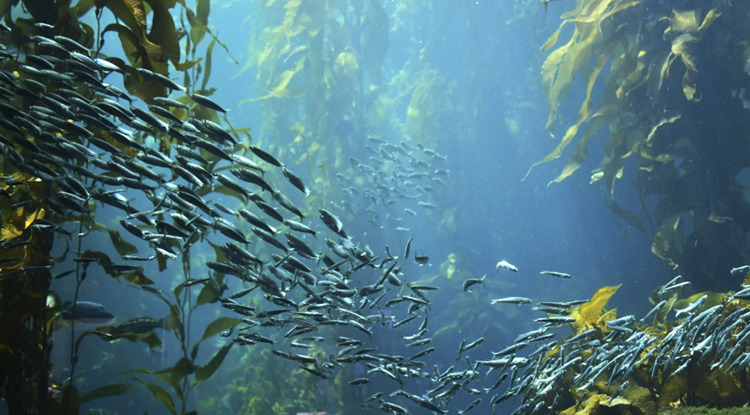
School of fish, Oceans Exchange

Each of these focuses contributes to the overall mitigation of climate change in our oceans. Organizations with a focus on CO2 sequestration emphasize the ocean’s pivotal role in reducing greenhouse gas emissions created via human activities by absorbing and storing CO2 from the atmosphere. The ocean’s efforts to reduce carbon dioxide emissions help balance global temperature rises, thus, reducing the risk of sea-level rise and unusual weather patterns around coastal regions and marine environments. Organizations like Ebb Carbon, a startup that has pioneered an ocean-based carbon dioxide removal strategy by exploiting the ocean’s natural ability to safely store CO2, is just one example of emerging solutions aimed at mitigating climate change. Ebb Carbon recently completed a Round A of venture capital of $20 million. Similarly, the carbon transformation company known as Twelve engineered a unique way to recycle captured carbon through its proprietary CO2Made® carbon transformation technology. Twelve raised $187 million in its A and B Rounds of venture capital, has significant industrial partnerships, and recently broke ground on its first commercial-scale production facility for aviation fuel. In Ocean Exchange’s eleven completed years, eleven finalists have pitched to our group of investors and subject matter experts about CO2 sequestration. Finalists have presented sequestration solutions based on various types of chemistry, including electrochemistry, and natural solutions like kelp and algae.

Coastal resiliency practices around the globe help reduce the impacts of a changing climate by encouraging the creation of protective coastal infrastructures, natural buffers, and other sustainable safeguarding measures along coastlines. ORAI’s focus on coastal resiliency is apparent from the startup’s 1000 Mermaids Artificial Reef Project initiative, an initiative that seeks to enhance marine resiliency and habitats while providing other benefits to the community. ORAI has installations in Broward County, Florida, and plans to expand its work across other coastal sites throughout Florida. Meanwhile, Coral Vita is developing solutions that encourage the growth of coral reefs up to 50 times faster while boosting their resilience against climate change. This Bahamian company was the inaugural winner of the Duke and Duchess of Cambridge Earthshot award of $1 million. Over a period greater than a decade, Ocean Exchange featured twenty finalist solutions related to coastal resiliency including Econcrete from Israel, the Mangrove Action Project from the U.S.A. (WA), CALTROPe from Hungary, and IntelliReefs from the U.S.A. (UT).

Investable solutions with a focus on emissions reduction help support sustainable practices, mitigate global temperature rises, reduce ocean acidification, and create innovative technological advancements with economic opportunities. Solutions like Element Resources have been promoting its solution to reduce emissions and mitigate climate change through its development of zero-carbon energy supply infrastructures. This energy storage solution facilitates the use of renewable energy by smoothing out energy availability due to the intermittency of renewable energy production, if from solar or wind for example. Various renewable energy paths are thought to be essential to reducing emissions such as CO2. This in turn reduces the impacts on marine ecosystems and can lead to climate stability. In the period exceeding a decade, Ocean Exchange featured over fifty startup solutions for emissions mitigation and reduction, many reducing emissions at the source or by use of renewable energy. Three winners applied to our process from incubators based in the U.S. Department of Energy National Labs.

Other solutions such as Water Warriors utilize a versatile approach to remove phosphate and other harmful nutrients from water, thereby reducing waste and ocean pollution. Solutions with a water management focus help address the consequences of a changing climate on freshwater resource protection. Effective and sustainable water management practices help safeguard water quality for coastal communities, as well as encourage the reduction of polluting weather runoff. There is a current movement to better integrate the activities of ocean stakeholders and those with land-based water management roles in the search for climate solutions; Ocean Exchange plays an important role in that integration through our solution recruitment process and our expert network.

In conclusion, ocean solutions, such as those in the focuses mentioned above, are imperative to addressing some of our most prominent global concerns. The complex relationship between our oceans and climate demands urgent action. During September 2023 Climate Week in NYC, there were multiple ocean-based climate groups convening to harness the power of different stakeholders for a common mission. The National Oceanographic and Atmospheric Administration (NOAA) recently announced U.S. federal funding to create and amplify existing accelerators for ocean-based climate solutions. As we strive to restore, protect, and maintain our oceans, it is crucial that we also emphasize the need for accessible capital, philanthropy, and other grants to support innovative solutions. The symbiotic ecosystem of financing, science, and sustainable practices is a preeminent requisite to unlocking a brighter, more resilient future. De-risking these investable solutions is not just an operational and financial strategy but more so a pathway towards safeguarding our planet’s most vital resources. The expansive network of those involved in fostering startups, knowledge sharing, and responsible stewardship can ensure that our oceans remain an important resource in the battle against climate change. The focuses and exemplified solutions mentioned above are a testament to our commitment to a sustainable future for generations to come.


Article by Millicent Pitts and Alex Akkaoui, Ocean Exchange

Millicent “Milly” Pitts is the executive director of the international non-profit, Ocean Exchange, that gives non-dilutive funding to innovative start-ups that support healthy oceans and a sustainable Blue Economy. She previously was an executive in the chemical/materials industry for 30 years, living in Houston, Philadelphia, Cleveland and Valencia (Spain). In addition to her role at Ocean Exchange, she is a mentor with Creative Destruction Labs (Oceans) in Halifax, is on the Leadership Team of OceansVisions.org, and has previously mentored or judged in collaboration with other partners such as Clean Tech Open and NREL. She leads the Ocean Exchange efforts to grow and communicate with the community of ocean and blue tech innovators. She holds an MBA from the Wharton School at the University of Pennsylvania.

Alex Akkaoui serves as Ocean Exchange’s Community Manager. Alex is an MBA graduate and current doctoral student at Nova Southeastern University specializing in organizational leadership. He has a strong passion for blue economy startups that seek to advance our learning of the ocean while providing solutions to maintain healthy and diverse marine habitats. Alex anticipates remaining involved in the influential network of organizations that support innovative and sustainable startups as they evolve into scalable solutions. 


Energy & Climate, Featured Articles, Food & Farming, Impact Investing, Sustainable Business
Aquaculture: Bringing Climate Resilience to Maine’s Blue Economy

By Hugh Cowperthwaite and Nick Branchina, CEI Maine

Adapting to and combating climate change through aquaculture investment

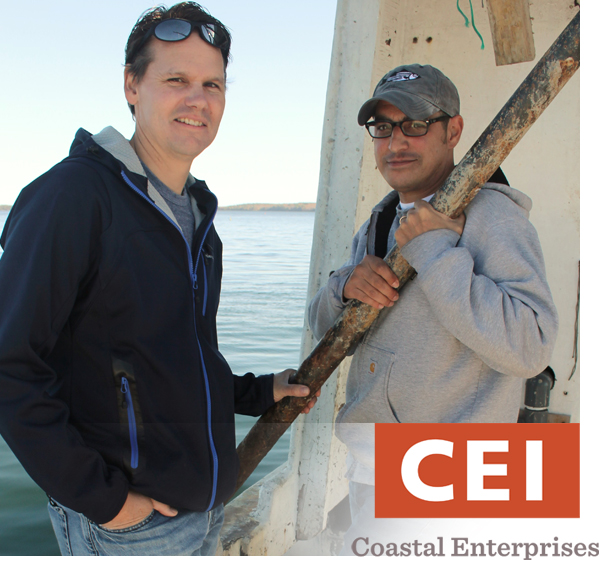
Hugh Cowperthwaite and Nick Branchina--CEI Maine--Aquaculture Blue EconomyMaine, with nearly 3,400 miles of coastline and over 2,000 coastal islands, is inextricably tied to the sea. The Gulf of Maine has long supplied Mainers with both livelihoods and food but is one of the fastest warming bodies of water on the globe, with the average temperature rising by four degrees Fahrenheit over last four decades1.   

At three and a half times faster than the global average, the change is enough to materially affect people’s dinner plates and paychecks. 

And it’s not just the changing climate: Maine’s working waterfront is seemingly being squeezed on all sides, with high costs for bait and fuel, loss of working waterfront access to development, ongoing uncertainty regarding regulatory demands for ropeless gear, and worries about the impact of offshore wind on already vulnerable fisheries. 

The overall annual impact of Maine’s fisheries (or Maine’s “Blue Economy”) is an estimated $3.2 billion and 33,300 jobs.2 That’s economic input and jobs Maine can’t afford to lose – particularly in Downeast Maine, where the sector accounts for 45% of all direct jobs.3 

For Coastal Enterprises, Inc. (CEI), a community development financial institution (CDFI) based in Brunswick, Maine, investing in aquaculture supports community economic development by diversifying income streams along the rural coastline. It builds climate resilience while helping to ensure that families that have worked Maine’s waters for generations can have opportunities to do so for generations to come, while also welcoming a new crop of sea farmers to the coast. 

This interview took place in July 2023. In this interview, Cameron Barner discusses his path to small business ownership, along with Love Point Oyster’s story and where CEI fits into the picture.

The Small Business: Love Point Oysters 

Try telling a banker that your first crop will take three years to harvest, that their collateral will literally be in or underwater, and sales profitability is several years away. That’s the challenge many oyster farmers face when trying to get startup capital. 

It was one faced by Cameron Barner of Love Point Oysters, when he realized that the company had outgrown their small skiff and would need to purchase an additional boat. “Aquaculture is a risky business, so traditional banks don’t always take you seriously; they have hard lines where they won’t lend.” Barner turned instead to CEI’s Sea Farm Loan. “We didn’t have the capital to go buy a new boat outright, so we reached out to CEI.” 

CEI has over 45 years of experience working with marine-based businesses, with full time fisheries and aquaculture experts providing technical assistance and business advisors who have developed accurate and detailed financial forecasting models for the industry. From experience they understood the risks and potential of these businesses and provide not only a loan, but one designed specifically to meet the needs of Maine’s working waterfront, with a low-interest rate and seasonal payment schedules that help marine businesses thrive and reduce the burden of carrying debt. This kind of tailored product is made possible through long-term, flexible low and no-cost philanthropic and government funding raised by CEI, which then passes along those reduced costs and flexibility to the borrower. 

Working with a community development financial institution has additional benefits beyond access to capital, as CEI was able to connect Barner with a business advisor and sector experts at no-cost. “That relationship was just so positive, we worked with our loan officer and after that we got connected with the Maine Small Business Development Center at CEI. It just really helped us kick start our business into the next phase and thinking about different opportunities.” 

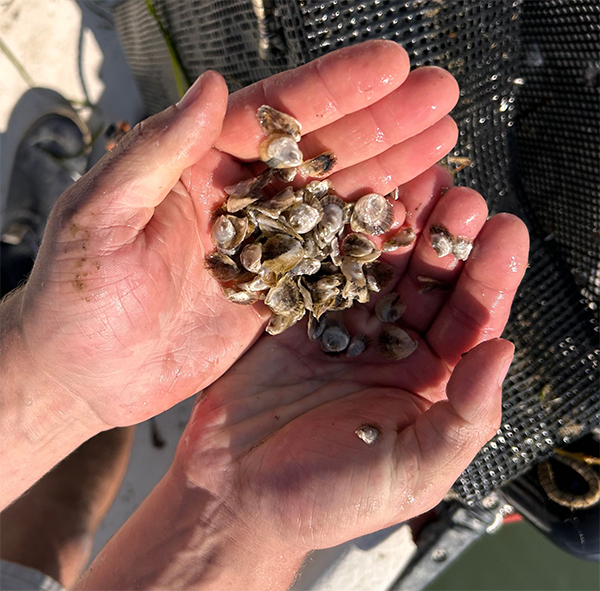
“Oyster is a virtuous protein.” says Barnes. “It’s a creature that gives so much and takes nothing in return. It really has little to no negative impact on the environment and it’s pretty much only positive in terms of water quality. Growing oysters is good.”

Thanks to the investment in equipment, plus advising, Love Point is growing, with goals to increase distribution beyond southern Maine, which is good for business and the environment.

Working Waterfront Access for the Industry: Sea Meadow Marine Foundation

Currently, only 20 miles of Maine’s coast remain as commercial working waterfronts, particularly as residential developments displace traditional uses. Many fishermen and aquaculturists have limited access to vital wharf infrastructure, including tidal access, commercial hoists, forklifts, and room to load and maneuver trucks4 – making it all the harder and more expensive to maintain a business. 

On a statewide basis, the Maine Working Waterfront Access Protection Program provides a channel for preserving working waterfront properties. Established by the Maine legislature in 2005, with significant advocacy from CEI, this bond-funded program allows the state to buy development rights on a piece of working waterfront to ensure future development will not limit commercial marine use. The program has preserved 34 properties to date, but ongoing funding is dependent on passing new bonds every 2-3 years, and the application process is competitive – meaning that while it’s an incredibly important tool, it doesn’t work in all situations. 

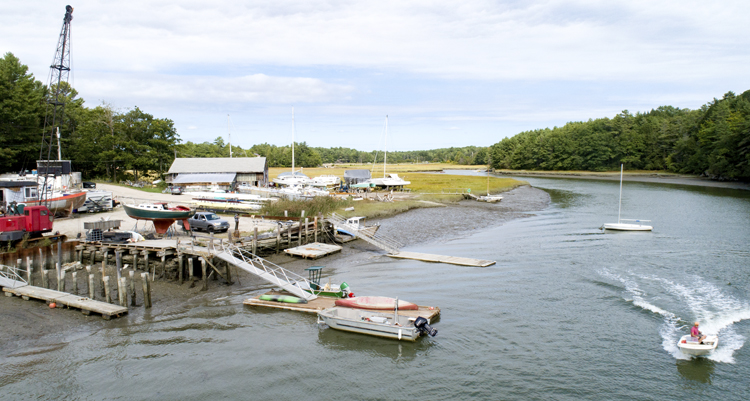
Sea Meadow Yarmouth, Jack Sullivan Island Institute, September 2021
The Even Keel Boatyard in Yarmouth, Maine – Jack Sullivan Island Institute, Sept. 2021

The Even Keel Boatyard and Marina in Yarmouth, Maine is a notable exception to the trend of lost access. In 2020, the 12-acre boatyard, with 7 acres of salt marsh and 4 acres of land, went up for sale for $1.26 million. The owners didn’t want to sell to developers, but none of the businesses currently using the boatyard had the funds to make the purchase. Led by local dock builder Chad Strater, a group of marine professionals banded together to form the nonprofit Sea Meadow Marine Foundation, with the goal of preserving the Even Keel boatyard and other working waterfront properties. 

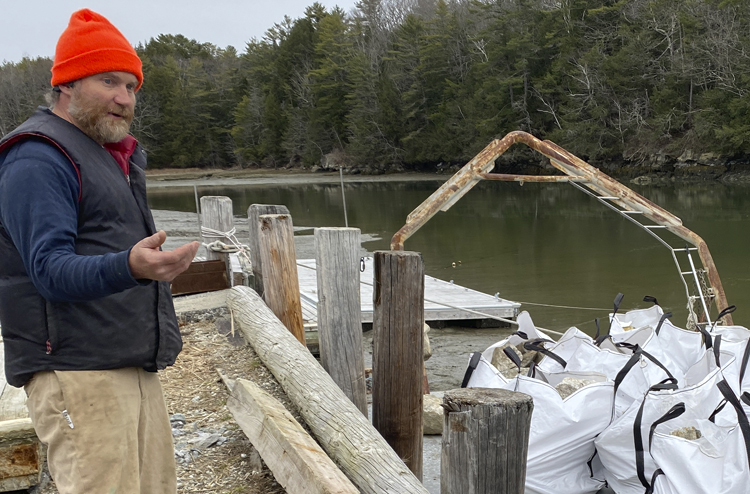
Chad Strater, dock builder and head of Sea Meadow Marine Foundation

“The working waterfront is a critical aspect of Maine’s economy and environmental health,” affirms Strater, “It’s part of our economy and part of our lifestyle. If the working waterfront goes away, it’s not coming back.”

Sea Meadow was able to purchase the Even Keel property in December 2021. Again, a combination of government and philanthropic dollars made the enterprise possible, including a U.S. Department of Agriculture Community Facilities loan from Coastal Enterprises Inc. and an operating grant from the Elmina B. Sewall Foundation in Maine. 

Now Sea Meadow Marine, as the property was renamed, host a variety of marine-based businesses including a business hub for early-stage fisheries and sustainable aquaculture businesses alongside marina services, heritage boat builders, and recreational marine organizations, including Love Point Oysters; the US Northeast division of Net Your Problem, a nonprofit that recycles used fishing gear; and the Boatyard, a boat equipment retailer/service provider co-owned by Statler and Sea Meadow’s Board Secretary Nick Planson, that has a goal to help to convert local aquaculture, harvesting and fishing operations to 100% electric power.

Financing a More Resilient Future

Oyster is a virtuous protein says BarnesThe financing packages for Love Point Oysters and Sea Meadow both required funding from impact investors, public, and philanthropic sources to make them workable. Even while motivated entrepreneurs like Barner and Strater look ways to build more resilient and climate-friendly businesses, new equipment, particularly more ocean-friendly equipment like electric engines are expensive and pressure from developers remains high. Fisheries, at their core, are a commodity-based industry, with fluctuating dock prices that make traditional debt at market rates hard to plan for and to bear. Grants combined with low-cost climate-motivated investments from individuals and foundations allow CEI, and other mission-based funders, the ability to make capital accessible and affordable to those entrepreneurs shifting the tide to a more resilient and sustainable working waterfront – a model that is working for Maine and can be replicated in communities along every coast. 


Article by Nick Branchina, Director of Fisheries and Aquaculture at CEI; and Hugh Cowperthwaite, Senior Program Director of Fisheries and Aquaculture at CEI


1 Ocean warming is ‘off the charts’ this summer. But not in the Gulf of Maine. Why? | WBUR News
2 FINAL-SEAMaine-Economic-Impact-Analysis-Report-2.pdf
3  ibid
4 WWF-Report_web.pdf (islandinstitute.org) 

Energy & Climate, Featured Articles, Food & Farming, Impact Investing, Sustainable Business

The Largest Climate Catastrophe That No One Knows About

By Philippe Cousteau Jr. and Ashlan Cousteau, SeaVoir Wellness

Above: Seal on iceberg photo courtesy of Philippe Cousteau Jr., SeaVoir Wellness

Ashlan and Philippe Cousteau Seavoir WellnessFor three generations, our family has pioneered the protection and restoration of our ocean. Usually, that meant working in education, producing documentaries, or writing books. But over the past decade, we have come to realize that unless society builds financial systems that incentivize positive social and environmental outcomes and the corresponding economic opportunities for people, we will never solve the mounting environmental crisis facing our planet. 

With that in mind, we have expanded our work into entrepreneurship by founding a company called SeaVoir Wellness that is designed to actively restore the ocean and help solve the biggest climate catastrophe that no one knows about.

But we’re getting ahead of ourselves, so let’s start at the beginning. Two years ago, on an unseasonably warm day in Antarctica we jumped into our zodiacs to head out and conduct water quality testing near a glacier. It was the first day of our expedition and though we were warned about the changes we would encounter but we were shocked to see the impacts of climate change all around us. Not only the obvious changes, like retreating glaciers, but also the less obvious ones, like reduced salinity and warm water temperatures. Changes that are wreaking havoc on the Antarctic ecosystem. 

Our trip was part of a multi-year campaign to establish three new marine protected areas (MPAs) in the Southern Ocean. As members of Antarctica 2020, a global group that is tasked with advocating for these MPA’s we were excited to witness the beauty of the white continent with our own eyes and gather media to support the campaign. Covering a total of 7 million square kilometers in the Weddell Sea, the East Antarctic and the Antarctic Peninsula, these three MPAs are some of the richest and most important ocean areas in the world and would result in the single largest act of conservation in human history. 

Specifically, these three areas would focus on protecting key habitats for krill. And while most people have no idea what krill are, from their impact on global climate systems to ocean biodiversity, it is no understatement to say that krill are the superheroes of the ocean.

Weddel Sea - penguins on a large iceberg by Philippe Cousteau Jr
Weddel Sea, penguins on a large iceberg courtesy of Philippe Cousteau Jr.

To put into context just how important they are, we must go back in time a few centuries. Most people believe that humanity’s large-scale disruption of the global carbon cycle started with our utilization of coal and then oil and gas as drivers of economic growth. That is not true. Our disruption of the global carbon cycle happened nearly 200 years earlier, during the late 17th century, when whaling really started to become a major industry in North America. The primary use of whales was for their oil to power lights, though baleen was also prized for being used to make corsets and hoop skirts. For hundreds of years, North American and, to a lesser extent, European and Scandinavian whalers crisscrossed the ocean killing millions of whales. But what does this have to do with the carbon cycle? Whales are an enormous carbon sink; in other words, they absorb and store carbon in their bodies. It is estimated that one whale stores carbon equivalent to 1500 trees in its tissue over its lifetime. When they die, they sink carrying that carbon with them to be sequestered in the deep ocean for millennia. But whales also have an even more important climate role, they are critical to an ecological system that is arguably the single largest carbon sink on Earth, a system that centers around a creature that measures less than two inches in length – krill.  

Krill are tiny crustaceans that live throughout the ocean, but which are most abundant in the Southern Ocean around Antarctica. They are the central characters in the world’s largest carbon cycle, and it all comes down to poop. You see, krill eat phytoplankton, tiny plant-like creatures that live at the surface of the open ocean. Phytoplankton create energy through photosynthesis, and part of that process is (like trees) absorbing carbon out of the atmosphere and emitting oxygen back into it. Side note: phytoplankton are responsible for generating 50 percent of the oxygen on Earth through photosynthesis, which means they absorb carbon and emit oxygen (much more than the rainforest). 

Phytoplankton hold that carbon in their tissue until they are eaten by their main predator, krill. When krill eat phytoplankton, their poop carries that carbon with it as it sinks to the ocean floor. Simple as that…krill inadvertently sequester 13 billion tons of carbon a year in the deep ocean by doing something as natural and fundamental as pooping.

In addition, krill are a key food source for whales, which then sequester the carbon they consume in their bodies for up to 100 years until they die. But it doesn’t stop there; whale poop (who would have thought it all came down to poop?) is rich in iron. That iron, in turn, is a critical compound needed by the phytoplankton to grow, and the process keeps going on and on. 

So, when whalers killed millions of whales, scientists initially assumed krill populations would explode. As our understanding of the systems became more sophisticated and our use of ice, coral, and sediment cores became more widespread, scientists discovered that the decline in whale populations also corresponded with a crash in krill and phytoplankton populations. Deprived of iron-rich feces to nurture them, phytoplankton populations crashed, reducing their function as carbon sequestering machines (remember, they sequester billions of tons of carbon a year). Then, without enough phytoplankton, krill populations crashed, which in turn hurt not just whale populations but all the other creatures like penguins, seals, and countless fish populations as well. Almost everything in the Southern Ocean either eats krill or eats something that eats krill. So, in addition to disrupting the global carbon cycle centuries before most people think, humanity started destroying the ocean food web on a large scale a lot sooner too. 

Ardley Island, Chinstrap and Gentoo walking by Philippe Cousteau Jr
Ardley Island, Chinstrap and Gentoo walking courtesy of Philippe Cousteau Jr.

That’s where the three MPA’s come in. They are being proposed in areas which are critically important habitats for not only krill but many other species, from adélie and chinstrap penguins that get almost all of their calories from krill; to crabeater seals, fur seals, gentoo penguins, and whales, like humpback and fin whales whose populations are recovering after centuries of exploitation. Large, protected areas that lack the stressors that come from industrial fishing are more resilient to the effects of climate change, which is critical in the face of rapid environmental changes in Antarctica.  

So, establishing three areas to protect a species central to the functioning of the world’s largest single carbon sink, the biodiversity of the ocean and oxygen production would seem like a no-brainer. However, progress towards establishing those protected areas has been stymied precisely BECAUSE of the presence of krill. Far from protecting them, over the last few decades a new threat has emerged: the krill fishery. Of the 26 countries that make up the governing body of Antarctica’s waters CAMLRR, 24 countries support the establishment of the MPA’s. Only Russia and China are blocking them, and they are doing it for the krill fishery. But why fish for krill? It doesn’t make sense. Why would humans target a creature that is so pivotal to the world’s single largest carbon sink (the equivalent of taking 23 internal combustion cars off the road each year), is critical to the generation of over 50 percent of the earth’s oxygen, and provides the basis for one of the ocean’s most important food webs? 

When we asked that question, the answer shocked us. 

70 percent of the market value of the krill fishery is for the Omega-3 supplement market in North America (with the leftover going to pet food and aquaculture feed). Another source of Omega-3’s – fish oil – is also terribly destructive to the ocean. 

SeaVoir Wellness--Pridcut

We realized that this was a classic case of the market incentivizing bad behavior. Thanks to the inertia of fish oil becoming shorthand for Omega-3s over decades, aggressive greenwashing by fish and krill oil companies, and a lack of efforts to raise consumer awareness about the issue, the fish and krill industry has become a multi-billion dollar market. And the kicker is that fish and krill don’t even make their own Omega-3s; they get them by eating algae! Over the past few years, technology to extract Omega-3’s from algae has matured and is at price parity with krill and fish oil. The problem is that consumers don’t know. What is even more interesting is that algae oil is a superior Omega-3. It’s more bioavailable to our bodies than fish or krill, it is free of the common toxins found in the ocean (heavy metals, PCBs, microplastics, and more), it is farmed on land creating clean, local jobs, and it won’t give you the dreaded fish burps! 

Governments around the world are investing billions to advance technologies to sequester carbon that up until now have returned very little success. Yet, at the same time we are ignoring and even degrading the systems which ALREADY sequester billions of tons of carbon. 

As storytellers for the ocean, we realized that we had to take action. So, we founded SeaVoir Wellness and our first product is algae-based Omega-3s designed to provide a better alternative to krill or fish oil. Too often the solution to environmental problems is to stop buying, stop consuming etc. But for people who want the benefits of Omega 3s that isn’t an option. SeaVoir is a way for us to advance a conservation agenda AND provide people with a better product. Going forward, our company is dedicated to building not a sustainable brand, but a restorative brand and driving market solutions to the dual crisis of climate change and biodiversity collapse while helping people improve their health and wellness. 

Just by switching your daily Omega-3 away from fish or krill, and to the primary source of algae, you can make a positive difference in the ocean. Every. Single. Day. 

SeaVoir is one example of how a company can build a restorative Blue Economy that benefits people and the planet and in the case of Omega 3s, safeguards Antarctica and the Southern Ocean. 

As Philippe’s grandfather Jacques once said about Antarctica, “may the last continent explored by man, be the first continent not plundered by man.” 


Article by Ashlan Cousteau and Philippe Cousteau Jr, Co-Founders of Seavoir Wellness

Follow us at https://www.instagram.com/seavoir.wellness

Energy & Climate, Featured Articles, Food & Farming, Impact Investing, Sustainable Business

Signup to receive GreenMoney's monthly eJournal

Privacy Policy
Copyright © GreenMoney Journal 2025

Website design & development by BrandNature

Global Events Calendar

View All Events

april

21aprAll Day232026 Sustainable Packaging Coalition: SPC Impact – Nashville

27aprAll Day30Women Deliver 2026 Conference (WD2026) – Melbourne

X