Tag: Impact Investing

Water + Indigenous Peoples Rights = Risk

By Rebecca Adamson, First Peoples Worldwide

Investors are facing four Hard Truths in today’s financial markets:

  • Massive global demographic shifts.
  • Unprecedented demands on natural resources.
  • Significantly larger trillion-dollar capital shifts taking place worldwide.
  • Accelerated spread of increased market volatility.
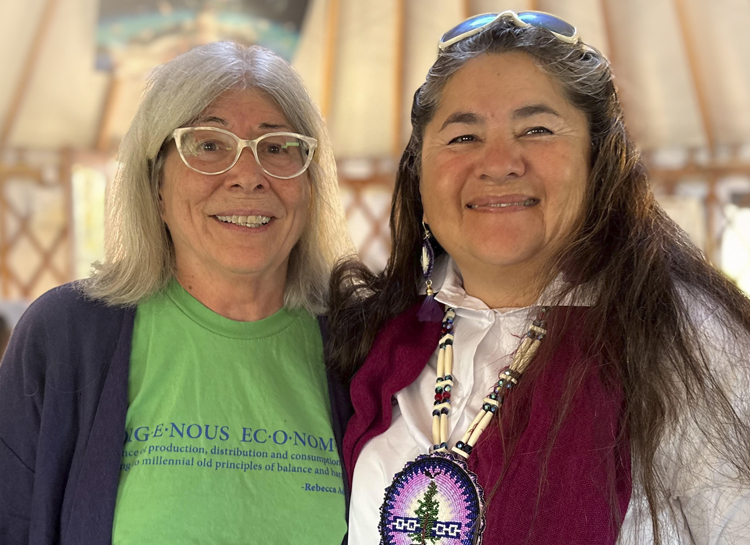
Rebecca Adamson and Clan Mother Louise Herne of the Haudenosaunee Nation
Rebecca Adamson (left) with Clan Mother Louise Herne of the Haudenosaunee Nation at the October 2023 Mother Law Gathering in St Regis, NY

These are all about RISK – risk identification, risk management, downside risk, risk pricing and risk mitigation are becoming important drivers in this market.

Investors are still looking at their portfolios as an aggregate of individual businesses or even sectors without acknowledging the collective risks to their underlying asset base driven by the actions of their individual holdings. For example, last year Montana did an assessment of the State’s financial system – Access to Finance in Montana. Although 62% of Montana land is used for agriculture, and water demands are increasing due to uncertain precipitation patterns, higher temperatures, and longer growing seasons not a single prediction of higher business risk or unanticipated market changes was mentioned. Yet these weather changes will increase the risk individual ranchers and the agriculture industry face.

The erratic weather patterns and uncertainty of our water supply coupled with an unprecedented growing demand for water raises the potential for new kinds of risk and higher volatility. There is frequent debate as to whether ESG ratings tell us anything meaningful but while there is significant qualitative data there is very little if any quantitative evidence. More empirical evidence and quantitative data should become part of the debate. Better risk-based analytics such as the database on climate patterns and risk matrices maintained by the insurance industry (especially in Europe) include empirical evidence on risks regarding water, the environment and now conflict and famine. The four hard truths in today’s financial landscape suggest correlated risk and expanded quantification of costs should be part of the risk framework.

ENOUGHNESS The Prequel: Indigenous Economies have “values added”. Today’s economy values hoarding, greed and consumption. Using Indigenous values of sharing, cooperation and fairness with the millennial old design principles of indigenous economies see how we can transform today’s finance system to meet the most needs of the most people and provide a sustainable path for our future.

Indigenous People rights and water have been historically under addressed by investors. Due diligence for Water investments is classified as an environmental risk. However, Water and community is just as much of a social risk especially when the rights of Indigenous People are considered.

For example, for years Montana’s water future was tied to over 10,000 outstanding tribal water rights claims. The intensity of mounting demands for water led to the largest tribal water settlement in history. Last year. $1.9 billion was awarded to the Confederated Salish and Kootenai Tribe. Throughout the Southwest and much of the Western region water use and access is subject to Tribal rights. Globally 50% of all inland waters are located on Indigenous Peoples’ territory which like US tribal rights, Indigenous waters are protected by legal frameworks that range from national to international such ILO Treaty 169, the Bio-Diversity Convention and UNDRIP. Indigenous People have the right to Free Prior Informed Consent for any operations taking place on their lands and territories.

In addition to 50% of the world’s inland waters Indigenous Peoples territories encompass at least 30% of the earth’s land surface and if Indigenous Customary Rights are recognized it totals 50% of the land. Currently conservationists have designated 15% of the remaining wilderness as Protected Areas of which over half are located within Indigenous lands. In fact, 80 % of the planet’s remaining biodiversity is within Indigenous territories along with 40% of the terrestrial areas, 33% of the Intact Forest Landscapes and 70% of Tropical Forests. Climate financing, which is 61% debt and 33% equity for a total $632 bn. faces potential high risk in ecoservice investing when you consider 56% of Above Ground Carbon Stock and 50% inland waters are represented. Indigenous Rights can materially impact investor risk, credit events and company operations.

A recent study by Wharton ESG Material Credit Events & Credit Risk, found that projects operating on Indigenous lands or within a 10km distance had as high as 500% higher material events than those operating farther away. Additionally, it was found that the individual projects of companies with poor or low capacity to manage Indigenous risk incurred 3 to 66 times higher risk. Yet research found no evidence for the 1,444 projects in the study factored this potentially 500% higher credit risk into credit ratings, risk mitigation, or the cost of capital.

As illustrated above, in contrast to the conventional idea that Indigenous conflict is primarily with the extractive sector, it now includes natural resources ecoservices, new transition minerals, and clean energy. In January 2024, the San Carlos Apache Tribe and the Tohono O’odham Nation filed a complaint against the Department of the Interior for failing to consult them about the Energy Pattern SunZia Southwest Transmission Project. Billed as our largest clean energy infrastructure project, construction began last September — only for the BLM to order an “immediate temporary suspension” after the tribes objected. Energy Pattern claims, “The delay would likely put SunZia’s commercial viability at risk.”

Vast amounts of the new transition minerals are being found on Indigenous lands: 50% of the Lithium Reserves which do not include the McDermitt Caldera deposits on Paiute and Shoshone lands in Nevada and up to 70% of the nickel, copper, and other transition minerals.

The first evidence based global research on foreign direct investments (FDI), the correlation to Indigenous Peoples (IP) conflict and material concerns for investors found that FDI increases armed conflict across all sectors [Source: Henisz, W.J, Jamison A.S., & Tadmor D (2023) Indigenous Land Claims and Foreign Direct Investment: Evidence of Conflict Impacts from Geo-Spatial Media Event Data]. Tracking over 3000 Indigenous conflicts the study found that where both IP lands and investments exist, there will be an additional 6-7 armed conflict events in the following year. The potential is for conflict to increase given in the current decoupling or de-risking of the US-China supply chain as low to middle income countries are brought into the supply chain.

From 2012 through 2016, I consulted on Social Performance with one of the largest corporations in the world achieving reputation accolades, mitigation of protests, resumption of project operations, and de-risking a potential joint venture’s exposure to human rights violations. Because the Company lacked an internal audit system to track and quantify its Social costs and benefits all the data remained qualitative. This same Company tracked the exact tire pressure for any vehicle in its fleet because Safety was a priority.

As far as life goes, priorities can’t get much bigger than Water. As far as the market, Water is such a huge fundamental risk that it could cause another recession or financial crisis when we reach a tipping point. Several Wharton studies found that companies with poor IP risk management also had low ESG social performance ratings and higher risk. Applying the ESG framework to capture the correlated risk and expanded quantification of Water can position investors to absorb the new risks and volatility of today’s finance landscape.


Article by Rebecca Adamson, Indigenous Economist, Cherokee and Founder of First Nations Development and First Peoples WorldwideA leader, activist and ground-breaking indigenous woman, Rebecca holds a distinct perspective about how indigenous people’s systems thinking and the value system behind indigenous economies can be used to catalyze change. Rebecca’s career spans her time spent in and out of jail working for the Coalition of Indian Controlled Schools to serving as Advisor to the Wharton Business School Initiative on ESG Investing (Environment, Social and Governance). A featured TEDMED speaker in 2014 and early Schwab Social Entrepreneur 2004-2009 with the World Economic Forum, Rebecca uses finance- and market-based strategies to take on global giants and win. Read more about her here in a 2018 interview.  

Rebecca has worked directly with grassroots indigenous communities, and internationally as an advocate of Indigenous self-determination since 1970. Her first five years at the Coalition of Indian Controlled Schools were spent in and out of jail until the Indian Self Determination and Education Act was passed in 1975 making Indian self-determination legal. At First Nations Development Institute, in 1983 Ms. Adamson, with the Ogalala Sioux on Pine Ridge South Dakota, created the first microenterprise loan fund, the Lakota Fund. She became one of the key leaders of the Community Development Financial Institutions (CDFI) movement. In 1994 as Trustee of Calvert Social Investment Mutual Funds Ms. Adamson created Community Notes the first market mechanism for individual investors to invest directly into low-income community development financial institutions (CDFI). Today over $4.2 bn is being invested in CDFIs. In 2000 at First Peoples Worldwide she launched the Indigenous Peoples Rights Investment Criteria used by all the premiere social investment research firms.

Ms. Adamson has won many awards: PBS Change Makers, National Women’s History Recipient, Council on Foundations Scrivner Award for Most Innovative Grant-Maker, John Gardner Civic Leadership Award. She is widely known for her asset-based development strategies and co-author the award-winning book “The Color of Wealth: the Story Behind the US Racial Wealth Divide”. Currently she serves as Advisor to the Wharton Business School ESG Initiative, Trustee Women’s Media Center and Trustee Bay Paul Foundations.

Additional Articles, Energy & Climate, Food & Farming, Impact Investing, Sustainable Business

How the Future of Water will Impact Businesses and Communities

By Doug Pushard, KuelWater and HarvestH2O

Above – A water mechanical room, fully monitored with online controls, in a Santa Fe, NM home which integrates city water, gray water and rainwater into a system that distributes water inside and outside of the house. The system was designed by Doug Pushard of HarvestH20 and installed by 1st Choice Plumbing. The Libert’s Home Project won the WERS Award in 2023 for the Lowest Residence Water Use in the country.
Doug Pushard Kuel WaterWater is the essence of life, and yet it is almost universally taken for granted. This is at a time when we are seeing unprecedented and dire water issues crop up around the world. Here is a quick sampling of some of the headlines from this just this year… and it is only April:

Mexico City may be months away from running out of water

In winter 2021, more than 150,000 people living in Jackson, Miss., were left without running water and it has gotten worse

Agriculture built these High Plains towns in Colorado, now it might run them dry

Today, water is readily available to most of us, but not all. Per the United Nations, five (5) billion people, or 2/3 of the world’s population, will face water shortages by 2050. This is not just somewhere else in the world; it is also coming to the USA.

Most surprising is that the technology has existed to solve our most pressuring water problems for years, but impediments abound to prevent solutions from being implemented.

Water is managed as a resource (i.e., drinking water) and a waste product (i.e., stormwater). Water is managed as both a business and as a common good. Water is segregated into different operating silos to optimize differing business models. Yet, at the same time, an abundance of water in one operating unit is not considered a resource for another. Population growth and new housing development are two major issues underlying the need to find more water, yet water is not linked to land use management.

Balancing all these issues while ensuring safe, readily available drinking water, attracting and managing employees in today’s complex work environment, keeping both the sewage smell away from population centers and flood waters at bay, is enough to overwhelm most water professionals.

Yet, cracks in the dam are beginning to appear that will dramatically change how we view water.

Business and the Importance of Water

  • General Mills has recognized the importance of water to its businesses and includes the risks to this critical business component as a strategic component. They have committed to advancing water stewardship plans for their most material and at-risk watersheds in their global value chain. They are also exploring, through research and farmer pilots, regenerative agriculture as a means to improve water quality and quantity impact.
  • The Google water stewardship strategy is centered around assessing and addressing water-related risks to their business and the opportunities we have to not just mitigate those risks, but also create solutions that can be scaled beyond our own corporate footprint and to partner with others to address this shared challenge. Their stated goal is to replenish 120% of the freshwater volume they consume, on average, across their offices and data centers, and help restore and improve the quality of water and health of ecosystems in the communities where they operate.
  • More and more businesses now have an executive in charge of Sustainability, and water is managed as critical to the core business.

New Views on Water

Efforts like One Water, National Blue Ribbon Commission, the International Association of Plumbing & Mechanical Officials’ (IAPMO) Water Demand Calculator, and water ratings are pushing new views on water:

  • The US Water Alliance’s “One Water” approach manages all water—whether from the tap, a stream, a storm, an aquifer, or a sewer—in a collaborative, integrated, inclusive, and holistic manner. One Water can change and regenerate how we live, our opportunities, our environment, and our society. This initiative pushes for a new way of viewing and managing water from a utility perspective.
  • The National Blue Ribbon Commission advances best management practices to support onsite, non-potable water systems within individual buildings or at the local scale. They assist code officials in updating building codes to enable new uses for existing and previously untapped water sources.
  • Pipe sizing curves for sizing the pipes installed in every US building have not been updated since the 1940s! Every new building using these antiquated curves is putting in tremendously oversized pipes and costing everyone money. IAPMO has released a Water Demand Calculatorthat accurately sizes the required pipes and is working with permitting agencies to ensure these new pipe calculations are accepted by permitting agencies.
  • A water rating is a performance-based methodology that qualifies and, in some cases, incentives, water efficiency. Applicable for single-family and multifamily residential properties, water ratings can project future water usage while preserving design and product choice freedom. Land use departments could use a water rating, such as the Water Efficiency Rating Score (WERS), to help communities enable sustainable growth while ensuring adequate water supplied for existing residents.
Doug Pushard Day - Doug receiving Santa Fe Mayor's 2023 Proclamation Award
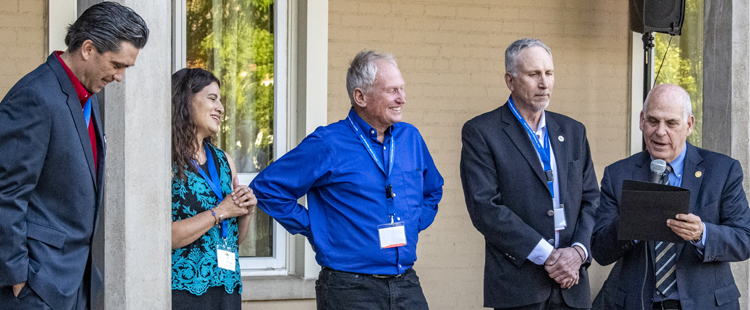
Doug Pushard receiving an award from the Mayor of Santa Fe – A Proclamation calling ‘June 23, 2023- Doug Pushard Day’ for all of his work on water for the City of Santa Fe. (From left to right – Mike Collignon, Green Builder Coalition and co-founder of NGWS; Christine Chavez, Water Conservation Dept. for the City of Santa Fe; Doug Pushard, KuelWater and HarvestH2O and co-founder of NGWS; Glenn Schiffbauer, Green Chamber of Commerce and co-founder of NGWS; and Alan Webber, Mayor of the City of Santa Fe.

New Water Technology Companies

New water technology companies are beginning to push into areas that will cause code officials to become very uncomfortable but will save water and eventually find a way into the market.

  • Orbital graywater recycling shower recycles shower water while taking a shower. This type of device will reduce potable shower water use by 70-80% and is not allowed by current plumbing codes in the United States. Products like these are being installed in Europe today and will eventually find a way into the US.
  • Tiny homes come equipped with graywater systems, which includes kitchen water in the waste stream. Graywater codes exclude kitchen waste from graywater discharge in almost all state and national plumbing codes, yet thousands of these new units are being sold and installed across the country.
  • Treating blackwater to drinking water quality is a known science. Other countries have been doing this for over a decade. Yet only California now has standards to enable water utilities to begin the years-long process of bringing this ‘new’ source of drinking water online.
  • Smart Water meters, both whole house and landscape meters, are becoming widely available. These meters increase homeowners’ awareness of water and directly attack the 10%+ water leakage reported in end-user water usage studies. This will give homeowners newer, more accurate meters than the utilities have installed. The data from products like these will drive increased awareness, because now awareness is down to the fixture level. That was impossible just 10 years ago.
  • Google is partnering with the state of New Mexico using satellite imagery to locate leaking water pipes. New Mexico loses between 40-70% of treated drinking water in some older systems due to breaks and leaks. This new partnership and technology will drive future water savings in New Mexico and hopefully in other states in the near future.

As the above illustrates, technology, policies, and perceptions are changing, water source uses are changing, and weather patterns are changing. All things water are beginning to change and will drive how we view and manage water.

Communities and Water Management

Communities will need to rethink how they manage water. No longer as a silo (i.e., a potable water company, a sewer company, a land use and planning department, etc.), but instead as one collective effort. Water conservation will no longer be a revenue-reducing effort, but a water-producing department. Stormwater and blackwater will be considered potable water sources, not waste streams. Onsite residential reuse (i.e., rainwater, graywater, and/or blackwater) will become commonplace and part of a community’s sustainable growth plan. Integrating management of all water resources and future water demand management through land use codes.

The Next Generation Water Summit (NGWS), held annually in Santa Fe, NM, brings together the building and development community, water reuse professionals and water policymakers in a collaborative setting to share and assist in pushing these efforts forward. Workshops, presentations, tours, and networking have been part of the NGWS since its inception almost ten years ago. The theme of the 2024 Next Generation Water Summit is: Solutions for a Changing World. Join us for this event on June 20th and 21st, live or virtually. Many of the topics in this article will be featured at this year’s NGWS. Join us in creating the water future we all need. 


Article by Doug Pushard, the founder of KuelWater. He also founded  HarvestH2o.com over 20 years ago as a personal expression of his interest in the subject of rainwater catchment, water reuse and water conservation. Doug has been published and featured in several magazines, including: ARCSA Newsletter, BUILDERnews, New York Times, High Country News, Back Home, EcoStructure, Green Fire Times, Home Power, Lowe’s Online, OnTap, Plenty, Santa Fe Real Estate Magazine, Santa Fean Magazine, Smart HomeOwner, SUN Monthly, Sustainable Santa Fe, Sustainable Taos, Timber Home Living, Taos News, Turf Magazine, Water Today, Fox News, Green Patriot Radio and others. Additionally, Doug has presented on rainwater, water reuse and water conservation at conferences around the United States.

Doug is an active participant on several code committees, works with communities to update the land use and water codes, teaches water courses at Santa Fe Community College and Red Rock Community College, is a technical advisor to the Water Efficiency Rate Score development team (WERS), a performance-based home and multi-family water efficiency measurement system, a WERS certified instructor, a Qualified Water Efficient Landscape (QWEL) irrigation and graywater certified instructor, a life-time member of American Rainwater Catchment System Association, and is a co-founder of the Next Generation Water Summit.

Energy & Climate, Featured Articles, Food & Farming, Impact Investing, Sustainable Business
Investing in the Future of Water and Sanitation

By Elan Emanuel, WaterEquity

Photo courtesy of WaterEquity/water.org

Elan Emanuel WaterEquityAccess to safe water and sanitation is a fundamental human right under binding international law. Yet today, a global water crisis still persists. 2.2 billion people—or 1 in 4—still lack access to safe water and 3.5 billion people—or 2 in 5—lack access to safely managed sanitation. While gains have been made over several decades, the effects of climate change have become a large and looming factor, halting progress made. Though the role of the public sector remains paramount in addressing the crisis, private impact investment has recently also emerged as a powerful tool.

Investing in Household Water and Sanitation Solutions

Impact investing focuses on generating positive social and environmental impact while seeking financial returns. In the realm of water and sanitation, investment plays a pivotal role in supporting innovative solutions, especially at the household level. Among low-income consumers, at least 600 million people could access water and sanitation products, services, and upgrades if financing was available, equating to what WaterEquity estimates as $35 billion of market demand over the next decade.

WaterEquity has approached this market opportunity through an investment strategy focused on providing debt capital to financial institutions in emerging markets to expand water and sanitation lending. These financial institutions use this capital to grow their water and sanitation microloan portfolios, as well as to on-lend to local enterprises delivering water and sanitation innovations, products, and services. Since our start in 2016, WaterEquity has deployed more than $360 million in capital to this strategy across four private investment funds, reaching more than 5 million people with increased access to safe water and sanitation.

Over 93 percent of the low-income end-clients taking out these microloans are women. This is no accident, as the funds have specifically targeted women beneficiaries by integrating gender into our investment and decision-making processes. And the microloans are repaid at the average rate of 97-99% within 12-24 months. Ensuring equitable access to safe water and sanitation cannot be accomplished without giving women the power and the capital to solve for their futures.

Investing in Climate-Resilient Infrastructure

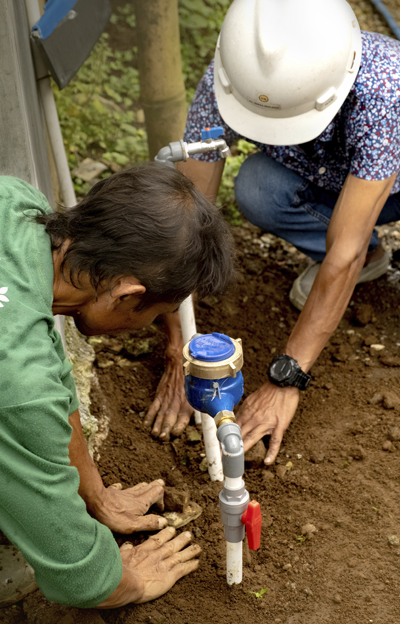
Installation of water pipes, courtesy water
Photo courtesy of WaterEquity/water.org

Financing the “last mile” of water and sanitation access at the household level will only take us so far in reaching the billions affected. There is also a tremendous need and market opportunity for sustained investment in potable and wastewater infrastructure seeking to increase access to water and sanitation services, improve water quality, and mitigate the impacts of water scarcity. Moreover, with traditional infrastructure often vulnerable to damage from extreme weather events, investment in resilient systems is essential for ensuring sustainable access to water and sanitation services.

By investing in climate-resilient infrastructure, WaterEquity’s Water & Climate Resilience Fund aims to reach 15 million people with water and sanitation access, and indirectly benefit millions more through improvements in water quality and scarcity. Investments include government tendered projects such as the construction of decentralized water treatment plants, the upgrading of existing infrastructure to withstand extreme weather events, and the implementation of smart water management systems. The Fund will also invest directly in growth companies that are developing and deploying innovative technology and services within the sector. These projects and companies enhance the reliability and efficiency of water and sanitation systems at scale, while also contributing to the overall climate resilience of underserved communities.

Conclusion

Impact investing has the potential to transform the landscape of water and sanitation, addressing the complex challenges posed by the water crisis, climate change, and gender disparities. By supporting innovative household solutions and investing in climate-resilient infrastructure, impact investors can contribute to the Sustainable Development Goals and improve the well-being of communities around the world, aligning values with the potential for financial returns. This holistic approach not only addresses immediate water and sanitation challenges but also builds resilient communities capable of withstanding the impacts of a changing climate. Through strategic and socially responsible investments, we can ensure a future where safe water and sanitation are accessible to all.

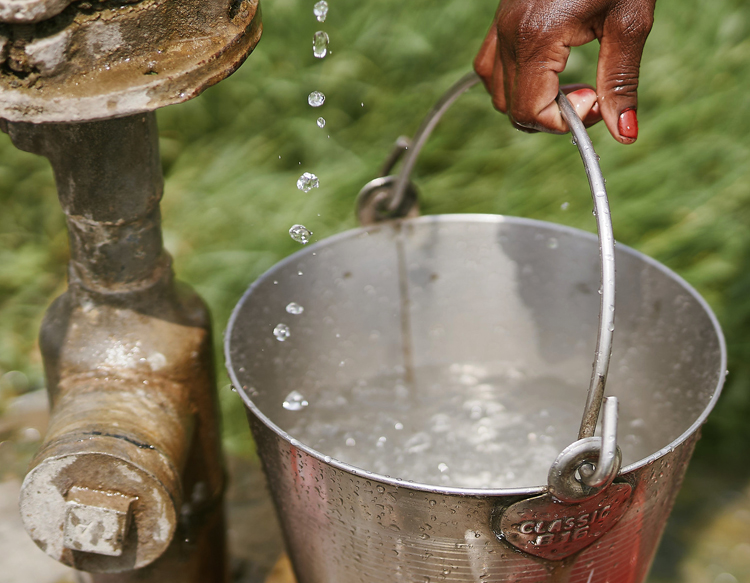
water.org photo of woman gathering safe drinking water from pump
Photo courtesy of WaterEquity/water.org


Article by Elan Emanuel, the Chief Investor Relations Officer at WaterEquity. Elan is responsible for mobilizing investments and partnerships with a broad portfolio of investors to accelerate WaterEquity’s impact addressing the global water and sanitation crisis. He brings 15+ years of experience in developing public-private partnerships to this role. WaterEquity emerged out of Water.org and was cofounded by actor Matt Damon and Gary White.

 Prior to WaterEquity, Elan led Fair Trade USA’s global cocoa program, where he established and directed strategic partnerships with large multi-national corporations, NGOs, and agricultural cooperatives. Additionally, Elan has extensive experience in the legal sector, domestically for Hanson Bridgett LLC, and internationally for the International Criminal Tribunal for Rwanda and the Sierra Leone Ministry of Foreign Affairs. Elan holds a Bachelor of Arts in History from the University of Michigan, Ann Arbor, and a Juris Doctor from the University of California, Berkeley School of Law.

Energy & Climate, Featured Articles, Food & Farming, Impact Investing, Sustainable Business
GreenMoney Interviews: Kirsten James on Ceres’ Valuing Water Finance Initiative

Above – Water Treatment plant photo by tuastockphoto courtesy of Ceres

Cliff Feigenbaum interviews Kirsten James

As the global water crisis worsens, so do financial risks facing companies and their investors. Kirsten James, senior program director of water at the sustainability nonprofit Ceres, answers questions from Cliff Feigenbaum, GreenMoney founder about the Valuing Water Finance Initiative, which is a global, investor-led effort driving companies to prioritize water risk and act as responsible water stewards in their operations and supply chains.

Cliff:  What work has Ceres done related to water?

Kirsten: Freshwater is essential for people, ecosystems, and business. Growing water scarcity and pollution is threatening these systems and slowing the pathway to a climate resilient future. Research shows we’ll be unable to meet even 56 percent of global water demand by 2030. No industry is immune from financial risks stemming from this crisis.

Seeing this writing on the wall, we’ve spent more than a decade establishing the business case for the private sector to act on water risk. We’ve worked closely with investors on integrating water risk into their investment decisions and developed resources to help them understand water risk in their portfolios. Our research and corporate benchmarking has shed light on industry practices threatening freshwater supplies and how companies are responding. This information has empowered investors with the guidance and the data they need to evaluate how companies are managing water risk.

Cliff:  How did this work pave the way for the Valuing Water Finance Initiative?

Kirsten: Through this pioneering work we did on water risk, we saw the need for ambitious action to match the scope of the water crisis and the systemic risks affecting communities, nature, and economies. We developed the Valuing Water Finance Initiative, aimed at driving companies to make water risk and water management a priority in their business strategies. Because water is key to their success as a business.

This work is hitting home with investors and the initiative has taken off. Just two years after we launched it, nearly 100 investors representing more than $17 trillion in assets have joined. These investors are committing to engage with 72 large companies from four water-intensive industries—food, beverage, apparel, and high-tech—on their water management practices.

Cliff:  How does Ceres see investors’ efforts through the Valuing Water Finance Initiative leading to action on the ground?

Kirsten: Companies aren’t just at risk from dwindling water supplies and polluted water, they’re making these risks worse by mismanaging and undervaluing water resources. Investors play a crucial role, as shareholders of companies, in compelling businesses to preserve and protect the water supplies they depend on.

Through the Valuing Water Finance Initiative, investors are encouraging companies to develop holistic water management strategies by focusing on six Corporate Expectations for Valuing Water. These expectations set ambitions around the full range of water issues that large companies should meet by 2030. This timeline is critical to slowing the pace of deteriorating water resources across the globe and meeting the United Nations 2030 Sustainable Development Goal for Water (SDG6).

Investors, through dialogues and, in some cases, shareholder resolutions and other strategies, are making progress working with companies on taking important steps, such as conducting water risk assessments in their supply chains and developing strategies to act on this critical information. Managing water risks in their supply chains is critical because they make up a significant portion of where companies depend on and have an impact on water.

Cliff:  How are you gauging companies’ progress?

Kirsten: Ceres’ recently released benchmark report assesses how the 72 focus companies are performing against the Corporate Expectations. It is an important resource for investors as they continue to engage with companies because it provides more context around companies’ water stewardship efforts—where they are excelling, where they are lacking, and how they can accelerate or expand their efforts.

The analysis, which we developed using publicly available company disclosures, offers a snapshot of where each company is on its water stewardship journey. No company is leading the way or close to meeting the Corporate Expectations lined out by investors, but we were encouraged to see 11 of the 72 companies making substantial progress. However, with only seven years until 2030, there is significant work ahead for most of the companies we assessed.

Irrigation pipe photo by Surachat, courtesy of Ceres

Cliff:  How can companies step up their actions in the face of worsening water scarcity and pollution and related financial risks?

Kirsten: Results vary by company and industry, but our research highlighted key areas for improvement. For example, many companies are using less water, but they need to make similar progress in addressing the impact their operations and their suppliers’ operations have on polluting water. This will help them bridge other gaps, such as protecting the ecosystems that are vital to freshwater supplies and ensuring that the communities where they operate and source commodities from have clean water.

Most companies can also do better ensuring that their public policy activities support sustainable water management. Advocating around water issues with governments, businesses, and civil societies can strengthen and broaden companies’ water stewardship efforts and impacts.

Many companies have made notable strides. They are demonstrating innovative and effective water solutions, including working with other stakeholders to address shared water challenges. Peers can learn from these examples in building their own water management strategies.

Cliff:  How can investors accelerate action?

Kirsten: In our discussions with investors, they have said they will look to companies to implement and advance leading practices, starting with risk assessments of their entire value chains and setting targets that home in on high-risk watersheds. Investors will also consider whether companies’ boards and senior leadership oversee water management strategies and integrate water risks and opportunities into strategic business planning for direct operations and supply chains.

Companies must take a leading role in tackling water risks impacting global water resources and economic security. Investors can fuel progress by taking an active ownership approach and using their power of influence to urge companies to understand their water vulnerabilities and take deliberate steps to avert financial fallout from the unfolding water crisis.


More About Kirsten:

Kirsten James directs Ceres’ strategy for mobilizing leading investors and companies to address the sustainability risks facing our freshwater and agriculture systems. Her work includes leading the Valuing Water Finance Initiative, an investor-led effort which seeks to drive corporate action on water-related financial risks. Previously, Kirsten served for five years as the director of California policy and partnerships at Ceres.

Prior to Ceres, Kirsten worked for nine years at a regional water resource-focused NGO, as their Science and Policy Director. She graduated with a bachelor’s degree from Northwestern University and a master’s degree in environmental science and management from the Bren School at University of California Santa Barbara.

Energy & Climate, Featured Articles, Food & Farming, Impact Investing, Sustainable Business

Praxis Mutual Funds Releases “Real Impact 2023” Report

Highlights how unique stewardship investing approach promotes real-world change through seven impact strategies

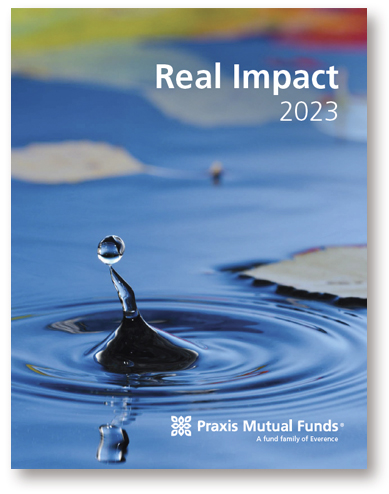
Real Impact 2023 from Praxis Mutual FundsPraxis Mutual Funds®, a leading faith-based, socially responsible family of mutual funds from Everence Financial®, recently released its annual impact report. 

The Real Impact 2023 Report shares specific real-world impacts arising from the Praxis team’s work to fulfill its stewardship investing mission.

“We are proud to celebrate 30 years of serving you, our investors, as you align your faith, values and investments in a way that makes a difference,” writes Praxis Mutual Funds President Chad Horning, CFA® in the report’s introduction. “In this report, our team shares the many ways your participation with Praxis creates ripples of positive impact in communities around the world.”

The report, like the team’s work, is organized around the seven distinct impact strategies that make up the Praxis ImpactX framework:

  • Values + ESG Screening. Praxis screens exclude 8-20% of companies in our stock indices.
  • Proxy Voting. Praxis voted on nearly 18,000 proposals on behalf of shareholders.
  • ESG Integration. Praxis doesn’t just screen out; we also invest in – or invest a higher weight into – companies with better ESG risk/opportunity profiles.
  • Positive Impact Bonds. 36% of holdings of the diversified Praxis Impact Bond Fund were invested in impact bonds as of Dec. 31, 2023.
  • Company Engagement. Topics include human rights, online child exploitation, the low carbon transition, antibiotic overuse and more.
  • Advocacy and Education. Praxis supported three initiatives addressing the SEC, U.S. Government and U.S. House of Representatives on issues of concern to values-driven investors.
  • Community Development Investing. Approximately 1% of Praxis Mutual Fund assets are dedicated to high-impact community development investments.

“The team at Praxis works hard to provide investment options that pursue market-level returns while also aligning investors’ faith and values with their investments,” said Mark RegierVice President of Stewardship Investing. ”This year’s report delves into many key themes for Praxis including encouraging the low carbon transition, addressing inequality and supporting low income and underserved communities and engaging companies on good corporate governance.”

Download the Real Impact 2023 Report


About Praxis Mutual Funds
Founded in 1994, Praxis Mutual Funds is a leading faith-based, socially responsible family of mutual funds designed to help investors integrate their finances with their values. Praxis is the mutual fund family of Everence Financial, a comprehensive faith-based financial services organization helping individuals, organizations and congregations. To learn more, visit praxismutualfunds.com and everence.com, or call 800-348-7468.

Consider the fund’s investment objectives, risks, charges and expenses carefully before you invest. The fund’s prospectus and summary prospectus contain this and other information. Call 800-977-2947 or visit praxismutualfunds.com for a prospectus, which you should read carefully before you invest.

Mutual fund investing involves risk. Principal loss is possible. The Fund’s investment strategy could cause the fund to sell or avoid securities that may subsequently perform well, and the application of ESG (environmental, social, governance) and/or faith-based screens may cause the fund to lag the performance of its index.

Praxis Mutual Funds are advised by Everence Capital Management and distributed through Foreside Financial Services, LLC, member FINRA. Investment products offered are not FDIC insured, may lose value, and have no bank guarantee.

Additional Articles, Energy & Climate, Impact Investing, Sustainable Business
Carbon Clean 200 Companies Outperform Dirty Energy

The 11th cohort of global Clean200 leaves dirty energy investments in the dust, outperforming them by 39%  

Carbon Clean 200 - 2024 Performance Update from Corporate Knights and As You SowAs You Sow and Corporate Knights recently released their 11th update of the Carbon Clean200™, a list of 200 publicly traded companies worldwide leading the way among global peers to a clean energy present and future. These companies generated almost double the returns of the main fossil fuel index from July 1, 2016, to January 15, 2024, despite geopolitical tensions that have favored fossil fuel stocks in the past two years. 

The top 10 companies on the list by revenue include Apple, Contemporary Amperex Technology, Tesla, TSMC, and HP. Thirty-five countries are represented in the Clean200, including the U.S. (39), China (23), Japan (18), France (13), and Brazil, Canada, and Germany (10 each). 

Key Findings Include: 

  • Clean200 companies earned over $2.24 trillion in sustainable revenue during 2022.
  • Clean200 companies generated a total return of 103.5%, underperforming the MSCI ACWI broad market index (114.4%) but beating the MSCI ACWI/Energy Index of fossil fuel companies (64.5%) on Total Return Gross — USD Basis from the Clean200 inception of July 1, 2016, to Jan. 15, 2024.
  • $10,000 invested in the Clean200 on July 1, 2016, would have grown to $20,346 by Jan. 15, 2024, versus $16,453 for the MSCI ACWI/Energy benchmark for fossil fuel companies.
  • The industrial sector accounts for 55 companies on the list, followed by the materials (30), consumer discretionary (29) and information technology (29) sectors.  IT companies had the highest total sustainable revenue, a cumulative total of over $643 billion, and the highest average sustainable revenue per company at $22.2 billion. 
  • The top 10 companies that contributed the most to the Clean200’s performance over the past year were from Germany (1), the Netherlands (1), and the U.S. (8). They include sustainably-certified tech hardware, high-efficiency HVAC systems, and water quality and wastewater treatment equipment.

“In 2016, we created the Clean200 in response to investors saying, ‘If we divest fossil fuels, there is nothing to invest in,’” said Andrew Behar, CEO of As You Sow and report co-author. “The Clean200 has consistently demonstrated that what we called the ‘clean energy’ future eight years ago is now the clean energy present. This year, the scale and global diversity of leading companies continue to expand and redefine the term ‘cleantech’ to be any company with products and services that will reduce demand for fossil fuels and water.” 

Top 10 Companies by Revenue on the Clean200 List: 

1) Apple Inc, Information Technology, United States  

2) Contemporary Amperex Technology Co Ltd, Industrials, China  

3) Tesla Inc, Consumer Discretionary, United States  

4) TSMC, Information Technology, Taiwan  

5) HP Inc, Information Technology, United States  

6) Microsoft Corp, Information Technology, United States  

7) Schneider Electric SE, Industrials, France  

8) Nucor Corp, Materials, United States  

9) Iberdrola SA, Utilities, Spain  

10) LG Energy Solution, Ltd, Industrials, South Korea 

“It is telling that even on the back of a banner year for fossil fuel stocks, the Clean200 continued its six-plus year track record of outperformance against both fossil fuel and blue-chip benchmarks,” said Toby Heaps, CEO of Corporate Knights and report co-author. “I think it will be surprising to many people that the Clean200 stocks are beating the main fossil fuel index by a factor of almost two to one. This is despite the geopolitical uncertainty that has boosted oil and gas stocks, the supply chain and permitting delays that have hampered the rollout of clean energy infrastructure, and the dominance of AI as an investment alpha theme.” 

The Clean200 utilizes the Corporate Knights Sustainable Revenue database, which tracks the percentage of revenue companies earn from sustainable economy themes ranging from green power to electric vehicles to plant protein and smart buildings.  

The list excludes companies that are flagged on Corporate Knights Red Flag Companies List and As You Sow’s Invest Your Values suite of mutual fund transparency tools that identify companies involved in fossil fuels, deforestation, the prison industrial complex, weapons, and tobacco, as well as Corporate Knights’ exclusionary screens which form part of its Global 100 methodology.

“We will continue to track and share the emergence of this economic powerhouse,” Behar continued. “There is clear financial evidence showing a broad spectrum of companies defining this economic transformation away from an extractive economy and into a regenerative economy based on justice and sustainability. The job growth and resilience demonstrated by these companies are our greatest hope in controlling climate change and achieving a safe, just, and sustainable world for all.” 


As You Sow is the nation’s leading shareholder representative, with a 30-year track record promoting environmental and social corporate responsibility and advancing values-aligned investing. Its issue areas include climate change, ocean plastics, pesticides, racial justice, workplace diversity, and executive compensation. Click here for As You Sow’s shareholder resolution tracker. 

Founded in 2002, Corporate Knights is an independent media and research company committed to advancing a sustainable economy. Corporate Knights maintains the Sustainable Economy Intelligence Database, which is the research engine behind its flagship ranking of The Global 100 Most Sustainable Corporations in the World as well as the annual Sustainable Banking League Tables for The Banker, and was recently selected by Climate Arc to provide green revenue and CapEx data for the approximately 600 companies being targeted by Climate Action 100+. 

As You Sow and Corporate Knights are not investment advisors, nor do we provide financial planning, legal, or tax advice. Nothing in the Carbon Clean200 Report shall constitute or be construed as an offering of financial instruments or as investment advice or investment recommendations.

Additional Articles, Energy & Climate, Impact Investing, Sustainable Business
High-Powered Women to Lead Global Central Bank Forum

By Ingrid Walker, Climate and Capital Media

Above photo – Fundi Tshazibana (left) and Sabine Mauderer (right)

Sabine Mauderer and Fundi Tshazibana join the Network for Greening the Financial System as chair and vice-chair

Climate and Capital Media Featured NewsSabine Mauderer has taken office as the new chair and Fundi Tshazibana as vice chair of the Network for Greening the Financial System (NGFS), a forum of central banks and supervisors working to improve the green credentials of the financial sector.

Mauderer, executive board member of the Deutsche Bundesbank and previous NGFS vice chair, has replaced Ravi Menon after his two-year stint as head. She was previously chair of the NGFS’s workstream on scaling up green finance.

Tshazibana, deputy governor of the South African Reserve Bank (Sarb) and chief executive officer of South Africa’s Prudential Authority, was appointed vice-chair.

The NGFS’ climate scenarios, now in their fourth iteration, are used as a global starting point for analyzing the risks associated with various greenhouse gas transition pathways.

Mauderer is an outspoken advocate for environmental issues in finance and has used her platforms to urge central banks to address nature-related financial risks and strengthen international efforts to foster price and financial stability.

Taking on the Climate Change Challenge

On stepping into the new role, Mauderer said that adapting to climate change is one of the “great tasks and challenges” that lies ahead of the global community. The NGFS, she said, plans to “intensify its work” to scale adaptation finance going forward.

Mauderer said she looks forward to working closely with Tshazibana to “push ahead with our ambitious agenda.”

Coalition of the Committed

The NGFS develops research on and policy for mobilizing sustainable finance and managing financial risks associated with climate change and nature loss.

Though their climate scenarios have been criticized by commentators for underestimating climate impacts, they are widely used and have created a common language for academics, politicians, and financial institutions when discussing the low carbon transition.

The NGFS Dubai Stocktake showcases its work and how the group has “evolved from a ‘coalition of the willing’ to a ‘coalition of the committed.’”

A key priority for Mauderer and Tshazibana as they step into the NGFS leadership is creating stronger partnerships in the global south. “We are all in the same boat,” Mauderer said. “We only have one planet… Let us collaborate as equal partners.”

As chief executive of the Sarb’s prudential authority, Tshazibana has advanced oversight of climate risks in South Africa. She previously served as an alternate executive director for the International Monetary Fund’s executive board, as well as an analyst for South Africa’s national energy regulator.

Wanted – More Central Banks From the Global South

“Ravi and Sabine have done an exceptional job in building the NGFS and strengthening its work program and membership,” Tshazibana said. “We [now] need more analytical work, more partnerships and new models to address these challenges […] I am especially excited about the broadening of emerging markets and developing countries within the network.”

“Sabine and Fundi, as the new NGFS chair and vice chair, will bring the NGFS to new heights and advance this important work of greening the financial system”, Menon said.

The global NGFS is expanding its network of central banks and supervisors working to make the financial sector more sustainable. Founded in 2017 with just eight members, the NGFS’ is committed to strengthening international efforts to achieve the Paris Climate Agreement goals.

It has grown to 134 members, including the U.S. Federal Reserve, Bank of Korean and European Central Bank, representing five continents and more than 88% of the world’s greenhouse gas emissions, as well as 80% of the internationally active insurance groups.

NGFS members also supervise all global, systemically important banks.

NGFS members collaborate and produce guidance on various critical topics including on supervisory practices for managing climate-related risks, design and analysis of climate scenarios and the implications of climate change for monetary policy. The collective also provides guidance for central banks on the transition to net zero and the emerging issue of nature-related financial risks.

Outgoing Chair Menon was recently awarded the Distinguished Leadership and Service Award from the Institute of International Finance. Previous recipients of the award include Christine Lagarde, President of the European Central Bank; Mark Carney, UN Special Envoy on Climate Action and Finance and former Governor of the Bank of England; and Sri Mulyani Indrawati, Minister of Finance of Indonesia and previous managing director of the World Bank.


Article by Ingrid Walker for Climate and Capital Media. Ingrid is currently an in-house writer for Green Central Banking, a news outlet which provides the latest news and research at the interface of central banking and climate change. Based in the Netherlands, Ingrid has worked for ten years as a freelance research writer, specializing in transformative justice, green finance, legal analysis and systems reform. They previously worked as a legal researcher at the University of Cambridge, as well as an outcomes analyst for various NGOs focused on criminal justice reform and human rights. Ingrid was also the recipient of Utrecht University’s Bright Minds fellowship for global excellence in 2017.

Article reprinted with Permission as part of GreenMoney’s ongoing collaboration with Climate and Capital Media.

Additional Articles, Energy & Climate, Impact Investing, Sustainable Business
New Way of Developing Affordable Housing Through Partnerships with Churches

Above: 801 River Street is a historic renovation/repurposing project for Housing Matters in Santa Cruz, CA – providing eight units of long-term housing for homeless residents. New Way Homes provided the pre-development funding.

New Way Homes logoAcross the nation, more churches than ever are looking at how to use their real estate assets to address the growing housing affordability crisis and their own need for financial sustainability. Thousands of congregations are having conversations, and millions of homes are possible.

In California, a new model has been growing for mission-driven housing development on church-owned land. Churches (and more broadly, all faith-based organizations) often are not a fit for for-profit, investor-funded housing nor for publicly funded affordable housing. New Way Homes, a non-profit that runs an impact investment fund for affordable housing development, and Workbench, a develop-design-build firm, have partnered to create a new development model that fits the unique interests of many more churches.

The Housing Crises

There are three separate housing crises in the US today. First, there is a massive supply shortage that has made housing unaffordable to people working in many cities. The major causes of this supply crisis include restrictive zoning that leaves most housing development near job centers illegal, soaring construction costs, and a backlog of under-development due to the 2008 financial crisis.

Second, our nation’s incomplete social safety net leaves many people unable to afford any safe housing even with a healthy overall market. And third, systemic discrimination created housing segregation, wealth gaps, and other effects that live on through systemic discrimination and a developed-world leading degree of class segregation.

Of course, these three crises affect and compound each other. Housing cost increases drive increases in construction labor, making development more expensive. Rent increases drive more people into poverty and homelessness. Rapid increases in rent increase economic displacement that disproportionately change neighborhoods of color.

There is no easy solution; in fact, some solutions to any one crisis can make the others worse. Some forms of large-scale market-rate development increase gentrification and displacement. Publicly funded affordable housing in lower-income neighborhoods can add to class segregation while often not providing much relief to current residents.

8930 MacArthur is a multi-family affordable plus commercial project in East Oakland - New Way Homes
8930 MacArthur is a multi-family affordable housing plus commercial project in East Oakland. New Way Homes purchased this long vacant lot and obtained approvals for environmental cleanup of the site.

Churches and New Way Homes

The Hartford Institute estimates that the US has 350,000 churches, and a majority of these organizations own property that has the capacity for housing development. Just as important as these numbers is the geographic distribution – churches are situated in neighborhoods, employment centers, and transit-rich areas. And best of all, faith-based organizations typically approach a project with a social mission of addressing need and a goal of long-term sustainability.

New Way Homes was formed in 2015 to initiate a new development model for creating affordable housing that is not reliant on the fixed amount of public funds available for development.

New Way Homes spoke with many churches about partnering, thereby avoiding the need for the earliest major cost of development – purchasing a site. While churches’ situations and goals vary widely, we found that most churches in urban areas with major housing shortages:

  • Do not want to sell or transfer title to their land
  • Do not want to risk losing any of their assets by borrowing or providing collateral
  • Want a long-term income stream for programming, retiring debt, or handling deferred maintenance on existing buildings
  • Do not want to turn over complete control of a development
  • Are passionate about the social value of affordable housing, sometimes with a certain population in mind
  • Do not have capital to pay for the project
  • Would like to have some path to potentially fully owning the project in the long run

In response to these commonalities, New Way Homes and Workbench developed a new model for development in partnership with churches.

The First Example and a Model

In East Oakland, New Way Homes partnered in 2017 with Genesis Worship Center. Genesis, a Black-led, independent church, had secured planning permits to convert vacant classrooms into four residential units. However, their small project couldn’t fit the many requirements that come with public funding, so they were stuck on how to get the project built.

“Our entitlements were expiring when we met Sibley & the New Way Homes Team. They worked with us to change the project to 12 units. New Way Homes lent the funding to get the project approved and found a construction lender so we could build with private money. Now we operate a re-entry transitional housing program for 20 adults that is funded by Alameda County,” explained Bishop George Matthews of Genesis.

While the Genesis project is now changing the lives of those re-entering society, the organizations’ work together paved the way for a more scalable model.

Now, New Way Homes has raised a $10M pre-development fund to provide the capital for early-stage project costs. Meanwhile, Workbench’s development and design teams have become specialists in how to design and get approval for projects that can be more affordable with less or no public funding. These projects often incorporate modular construction, sustainability features to lower operating costs, co-living, and a range of other more affordable unit types and designs.

The partnership structure includes:

1) A development agreement obligates the developer to use funding from NWH to pursue permit approval for the agreed upon project concept. In return, the church agrees that if the project is approved, it will sign a nearly free land lease for over 55 years to a new project LLC. The church then becomes a limited partner of the LLC with special rights, from first position cash flows to the ability to pre-empt property management to being the only partner with the right to unilaterally buy other parties out.

2) Other sources of funding are assembled by the developer for subsequent project stages, ranging from impact investors providing equity to non-profit lenders providing debt.

3) At each stage in development, the church is engaged for feedback and approval.

4) After a number of years of operations, the project can be refinanced to pay off 3rd party equity partners at below-market rates. This equity then accrues to the church, increasing its ownership percentage over time.

Peace Village will create new lower-income – affordable co-living housing on the Peace United Church campus – funded by New Way Homes
Peace village is a housing development for Peace United Church recently approved by the city of Santa Cruz, CA. This project will create lower-income affordable housing, affordable co-living and market-rate housing on their campus with funding from New Way Homes.

Scaling Impact: From Genesis Worship Center to a Statewide Solution

The success at Genesis Worship Center is just the beginning. NWH has building permits for affordable housing at the Center of Hope church in Oakland, just received planning permits for a Peace Village project at Peace United Church in Santa Cruz and is in design or conceptual discussions with several more congregations in the region. NWH has also received tremendous interest from churches and potential funding sources throughout California and in other high-cost metropolitan areas across the US.

To meet the challenge of this growth, NWH is now working with EquityVest, an online platform that pairs crowdfunding investment opportunities with faith-based investors. For a limited period of time, anyone can potentially invest in the New Way Homes model at https://equityvest.org/. Our belief is that while the housing need is huge, the capacity of churches and individuals interested in mission-aligned investments is large enough to meet that challenge.  Learn more

Additional Articles, Impact Investing, Sustainable Business

Climate-Smart Forestry: From Niche to Mainstream

By Bettina von Hagen, EFM

Above: Scotts River Headwaters, Siskiyou County, CA. Photo courtesy of EFM

Bettina Van Hagen EFMEFM, the forestland investment company I co-founded, is celebrating its 20-year anniversary next year. And yet, the premise upon which we started EFM – that commercial forests could and should be valued and managed for the full range of goods and services they produce – timber, carbon, biodiversity, water provision, recreation, scenic values, tribal and indigenous values and rural livelihoods – is as enduring and critical today as it was twenty years ago. In many ways, it is more so, because the world has caught up with the critical truth that healthy, intact and functioning ecosystems – particularly forests – are fundamental to the earth’s life support system at the very moment that these ecosystems are unraveling due to climate change and human pressure. 

Moreover, there is broad recognition that any hope we have on limiting global temperature rise to 2 degrees celsius is predicated on protecting and expanding the capacity of forests (and other natural systems) to store carbon and enhance resilience in the face of climatic change, such as increased fire incidence. As the world decarbonizes, expanding the capacity of forests, grasslands and oceans to sequester and store carbon is estimated to provide 37% of needed emission reductions in the next decade (Griscom et al 2017).  

Today EFM has over $250M of assets and 150,000 acres of forestland under management and advises clients globally on investments in natural climate solutions. We have established three co-mingled forest investment funds and are launching our fourth fund, along with expanding our advisory work on natural climate solutions. Our approach is to purchase forests in ecologically significant landscapes, restore them to greater productivity and health, and lock in the improvements through conservation easements, carbon contracts, habitat banks, and selective sales to tribal and community entities. These strategies provide cash flow while the forest continues to grow. As timber inventory builds, the forest can resume producing timber without significantly compromising biodiversity, water quality, and habitat by using harvesting techniques like thinning and variable retention harvests that retain large trees in the landscape and improve species diversity and structural complexity. Meanwhile, financial returns are diversified and strengthened by monetizing not just timber but emerging ecosystem service markets.  

Forest thinning on the Olympic Peninsula - courtesy EFM
A recently thinned EFM forest property on the Olympic Peninsula. Thinning removes trees that are not growing well or are too close to their neighbors, thus providing greater light and nutrients to the remaining trees. It also allows selection of desirable species and wildlife trees and shapes the future forest.

I came to my lifelong fascination with the natural world on a visit to the Galapagos when I was 14. In this iconic place of adaptation and speciation, which inspired Darwin and countless others, the world, and the forces that drive it, began to make sense to me as well. I went on to study Biology and then earned an MBA at the University of Chicago. While the latter taught me the language of finance, I have never seen anything in the business world that competes with the magnificence and sophistication of the survival, collaboration, and competitive strategies exhibited by natural systems on display in that first visit to the Galapagos. All that to say the obvious: that Nature, having tested strategies over millennia, is our best teacher on what works best in an ecosystem, and we ignore her lessons at our peril. EFM’s approach is rooted in understanding those natural forces and working with them to manage forests and other ecosystems for resilience and enduring economic and social value.

Following my MBA, I tried my hand at commercial banking but hungered for applying my energy and skills to things that mattered. Having grown up nourished by my mother’s textile design business in Peru and witnessing the chilling effect of a Marxist regime, I deeply valued private enterprise. I also appreciated the general theory of the invisible hand of the market and the drive to market efficiency, forces that also shape the natural world. However, it became evident that the invisible hand of the market fails to create social benefit in the face of pervasive negative externalities. The primary forests in the Pacific Northwest, where I was living in the early 90s, were being logged at an alarming rate. Natural capital, built over millennia, was crumbling, with a false conviction that logging “decadent” old-growth forests was good economics. It was instead a classic market failure, rife with imperfect information and negative externalities, with presumed “profits” driven by liquidating natural capital that had taken millennia to build. Following this conversion of primary to simplified forests, the wetter forests near the coast have continued to produce timber, albeit at a reduced rate, while the less productive forests in the interior have been left damaged, unproductive, and fire prone, with hundreds of sawmills permanently shuttered and a sharp decline in economic opportunity in rural communities.

To enhance salmon habitat EFM leaves riparian tree buffers - removes barriers and prohibits aerial spraying of herbicides
Pacific salmon, bring ocean nutrients to forest streams, and, in turn, forests provide habitat and food for spawning salmon and their young. Over 137 wildlife species, in addition to humans, rely on salmon for food. To enhance salmon habitat, EFM leaves wide riparian tree buffers, removes barriers to salmon passage and prohibits aerial spraying of herbicides, which is a common industrial practice.

Initially under the auspices of non-profit Ecotrust, I launched EFM with co-founder Spencer Beebe in 2005 to demonstrate a new approach to buying and managing forests that would create enduring value and provide investors with both a competitive return and the knowledge that their investment was rebuilding the health and vitality of forests at a landscape scale. Managing forests for carbon is particularly well-suited to the forests of the western U.S., where native species – Douglas-fir, hemlock, spruce, Ponderosa pine, and others – routinely grow to 200-300 years old. Transitioning forests from the industrial standard of clearcut harvest at 35-40 years to longer rotations with significant permanent retention of large trees can double the carbon stored in the forest.  

Reestablishing mature ponderosa pines - one of most fire-resistent - is central to EFM climate-smart forestry
EFM is working to restore large ponderosa pines in interior forests. Ponderosa pines are one of most fire-resistant trees in the west, and this resistance increases as the tree matures. Re-establishing ponderosa pine stands, which were decimated by past logging, is a critical element of EFM’s climate-smart forestry.

At the same time, these older, more complex forests are excellent for biodiversity, from spotted owls to marbled murrelets, from elk to bear, from lichen to fungi. Further, EFM concentrates large trees in riparian areas and actively restores rivers, improving habitat for iconic Pacific salmon, that move between ocean and mountain streams in their life cycle. These restoration strategies enhance the value of conservation easements, which pay landowners to maintain and restore forests, as well as the provision of cold, clean water and the recreational and scenic value of forests.

Finance tends to be a male-oriented profession, and forestry even more so. We have been outsiders from the start, not just as a woman-owned and woman-led forest investment management company, but also because of our departure from the conventional strategy of maximizing timber returns to instead consider the whole forest, focus on long-term value rather than short-term profits, and embed conservation and community at our core. EFM has taken full advantage of our outsider status: the ability to move easily among many communities – from impact investing to landscape scale restoration to carbon finance to tribal land repatriation – which has opened doors not available to entities focused on a timber-only strategy.

And now the edges that we occupy are slowly becoming the norm, as institutional investors are increasingly demanding investment strategies that generate positive impacts, and EFM’s strategy is becoming mainstream. With growing demand for well-managed forests, EFM has set a course to significantly increase its assets under management, with a strong pipeline of projects that deliver significant impact and the desired financial target. With this momentum, we feel more optimistic than ever that forests and other natural systems can finally get their due: to provide us – all of Earth’s residents – with the goods and services we need – timber, water, food, habitat, carbon storage, climate regulation, recreation – while continuing to build natural capital for generations to come. 


Article by Bettina von Hagen, CEO & Board Chair of EFM. Bettina helped launch EFM and joined the company as CEO in 2008. Bettina has spent the past 30 years working to promote economic viability, social equity, and environmental health in the Pacific Northwest with a particular focus on forestry. A former vice president of Ecotrust’s Natural Capital Fund and commercial banker, Bettina has over 30 years of experience in banking, impact investing, and fund management. She also has significant expertise in ecosystem service markets, particularly the forest carbon market, where she is involved in developing protocols for forest carbon projects at the state and federal levels. Previously, Bettina was Vice President at Ecotrust for forestry programs and for the Natural Capital Fund, a fund which invests in key businesses and initiatives in the conservation economy. Prior to joining Ecotrust in 1993, she was a vice president and commercial lender at First Interstate Bank of Oregon. Bettina has an MBA from the University of Chicago.

Energy & Climate, Featured Articles, Impact Investing, Sustainable Business

Unlocking Opportunity for Female Entrepreneurs Through Non-Traditional Financing

By Stella Tai & Kersy Azocar, Praxis Mutual Funds & Greenline Access Capital

Pictured above: Gladis Avila, owner of Venbisustore LLC (center) with Gleidys Arias, Program Manager (left) and Kersy Azocar, President and CEO (right) of Greenline Access Capital.

Stella Tai and Kersy AzocarFemale business owners face specific and unique challenges. Kersy Azocar, President and CEO of Greenline Access Capital shares her personal experience with applying for a business loan and the barriers that she encountered:

“When I applied for my first loan, prior to reviewing any of my information or asking any questions, the banking specialist immediately mentioned that I may need my husband to cosign the loan. When I told the specialist that I was in the financial industry and that I did not need my husband’s help to qualify for financing, he would not budge. I did not apply at that bank – they did not deserve my business. Implicit Bias and Barriers in financing such as this are a common reality for women all over the world.”

For many years, women have had a more difficult time accessing capital and typically have had a higher cost of capital. Because traditional services have failed to reach many of them, women business owners need alternative channels to access capital, offering more support and opportunities.

A recent, post-pandemic study by the U.S. Department of Commerce demonstrated what we already know: that female-led businesses play an important role in the economy as shown in the chart below. There are over 1.2 million women-owned business, a third of which hire five or more employees. 

Percentage of Women-Minority-Hispanic Owned Employer Firms by size-US Census
Source: US Dept of Commerce / US Census Bureau

Women-Owned Businesses Meet Community Needs

Even with widespread pandemic-induced layoffs, women started businesses at a higher rate than men. Increased flexibility in schedules especially for women with school-aged children motivated more women to start their own businesses. They often brought that flexibility to their employees through work-from-home opportunities and creative hybrid work schedules. 

A Gusto News study found that women were more likely to open businesses with a community focus and these were often in the personal services, healthcare, education and non-profit fields, proving that when they thrive, the whole community benefits.

Unique Challenges Faced by Female Entrepreneurs

In the U.S., research has shown that women face greater capital constraints than men. Compared to men, female entrepreneurs –especially those from low-to-moderate income communities – often do not have a long track record of business ownership, have little to no pre-existing wealth, lack home equity and collateral, and often have poor credit history. Due to these factors, female entrepreneurs are often disqualified from traditional financing. This means that for many, self-financing or costly forms of capital with higher interest rates are their only option.

Those are not the only barriers for female entrepreneurs. Despite significant growth potential, there is an underlying perception that it is difficult to get traditional financing, which leads to an unwillingness to go through seemingly tedious loan search and application processes that take up precious time and are costly. Additionally, female and minority-owned firms are disproportionately denied when they need and apply for additional credit, and depending on location, there may not be any other firms offering the type of capital these entrepreneurs need.

The United Nations identified the need to invest in women in two of its Sustainable Development Goals. Goal 5 (gender equality) and Goal 8 (decent work and economic growth) both pay particular attention to creating opportunity for female entrepreneurs. There is immense opportunity for sustainable investors and capital providers to meet the needs of women business owners who are in need of financing to support and grow their businesses.

How Capital Providers Can Help

There are a number of ways capital providers can meet the needs of female entrepreneurs when it comes to financing. 

First, capital providers need to be cognizant of the fact that there is a gender barrier that prevents many women business owners from accessing traditional financing. Providers can and should actively work to reduce and eliminate these barriers. 

A good place to start is to analyze the lender’s history of ‘who applies for’ versus ‘who receives’ financing and the reasons for denial. Additionally, capital providers can proactively create products that are a good fit for female entrepreneurs and allow for outside the box thinking when it comes to risk and return.

A recent partnership between Greenline Access Capital, a mission-driven nonprofit financial institution that works to address the continued and persistent gap in access to capital for financially underserved entrepreneurs in Philadelphia, PA, and Everence Financial®, a faith-based financial services company, seeks to bridge this gap.

Since 2021, Greenline has served more than 250 people and has helped 48 clients connect with $5.3 million in grants and loans, including 23 loans from Greenline’s own funds. Of these loans, 48% were made to women-owned businesses. By collaborating with Everence, Greenline is able to connect mission-driven funds with underserved businesses, many of which are women-owned. By combining the provision of capital, customized technical assistance and training focused on entrepreneurial and financial success, these types of organizations are helping bridge the gap in serving communities and individuals often excluded.

By creating long-term relationships with organizations like Greenline Access Capital, capital providers can support impact at scale by increasing efficiency and productivity for all parties. These partnerships can cross public, private and non-profit capital sources and can function locally, regionally or across the country. Though more work is required, especially at the beginning of the relationship, in the long run these partnerships will pay off for both capital providers, alternative lenders and underserved communities. 

Family Need Meets Business Opportunity

Venbisustore LLC is a mission-driven business owned by Gladis Avila that sells cultural, hand-made products to support entrepreneurs in Venezuela. The business was born out of the need to support her family in Venezuela during COVID-19. The business imports handmade arts and crafts from different cities and towns in Venezuela and is currently supporting four families that make the handmade products.

Gladis met Greenline Access through one of its partners, The Welcoming Center and became a client. Through their help she received a microloan and a matching grant from the City of Philadelphia which helped her purchase inventory and equipment so that she would be ready for the holiday season and increase her sales. Her plans for the future include opening a store in Philadelphia, PA. Greenline is excited to help Gladis connect with mission-aligned organizations such as Everence for additional funding when she needs it.

How Investors Can Help

It is no surprise that impact investors are particularly interested in supporting these women-owned small businesses that are important drivers of the economy. Through community development investing, investors can support mission-driven alternative lenders, like Greenline, that focus on connecting female entrepreneurs with capital. These institutions are nimble and innovative in reaching women business owners in a way traditional lenders often are not. 

A simple way for individuals or institutions to support women-owned businesses in underserved and underrepresented communities is to identify investment products that channel all or a portion of assets to community development investing. This can include mutual fundslike Praxis Mutual Funds, a fund family of Everencethat invest a portion of each fund in high-social impact community investments through qualified partners. 

Community lending specialists, like Calvert Impact or Capital Impact Partners, offer products for both institutional and retail investors. And many community development banks and credit unions offer ways to channel financing to benefit specific communities. To learn more, visit: praxismutualfunds.com, ussif.org/communityinvesting, or inclusiv.org

Community development investing can help move us closer to a more equitable and inclusive economy by closing the gender gap in business ownershipand we all have an important role to play.


Article by Stella Tai, Praxis Mutual Funds and Kersy Azocar, Greenline Access Capital.

Stella Tai, Stewardship Investing Impact and Analysis Manager, Praxis Mutual Funds. Stella provides primary leadership for the promotion, integration and development of impact investing and reporting. Stella guides the development of financial products that meet the needs of low-to-moderate income communities, helps promote the integration of faith and finances through Everence products and services, and works to grow opportunities for impact investments. Connect with Stella on LinkedIn.

Kersy Azocar is the President and CEO of Greenline Access Capital, a mission-driven nonprofit financial institution that works to address the continued and persistent gap in access to capital for financially underserved people by providing customized lending products and services. Greenline has served more than 250 people and has helped over 48 clients connect with $5.3 Million in Grants and Loans, including 23 Loans from Greenline’s funds.

Prior to joining Greenline, Kersy worked for 13 years at a Philadelphia-based Community Financial Development Institution (CDFI) where she managed a microlending department with a national scope leading the organization to become the #1 SBA microlender in the region and top 10 in the nation for over 7 years. In 2021, Kersy was the Project Manager of the Pennsylvania COVID-19 Hospitality Industry Recovery Program (CHIRP), a $17 million-dollar grant program created by the Commonwealth of Pennsylvania to support businesses in the hospitality industry. The program was managed by the Philadelphia Industrial Development Corporation (PIDC).

Originally from the Dominican Republic, Kersy prides herself on being able to address the needs of emerging and existing entrepreneurs providing a hands-on approach rarely encountered in the industry. She is nationally recognized, and able to leverage her expertise in the microlending and financial industries.

About Praxis

Praxis Mutual Funds is a leading faith-based, socially responsible family of mutual funds designed to help investors integrate their finances with their values. Praxis is the mutual fund family of Everence Financial®, a comprehensive faith-based financial services organization helping individuals, organizations, and congregations. To learn more, visit praxismutualfunds.com and everence.com.

Consider the fund’s investment objectives, risks, charges and expenses carefully before you invest. The fund’s prospectus and summary prospectus contain this and other information. Call 800-977-2947 or visit praxismutualfunds.com for a prospectus, which you should read carefully before you invest. 

There can be no guarantee that any strategy (risk management or otherwise) will be successful. All investing involves risk, including potential loss of principal. 

Praxis Mutual Funds are advised by Everence Capital Management and distributed through Foreside Financial Services, LLC. Investment products offered are not FDIC insured, may lose value, and have no bank guarantee. 

Praxis Mutual Funds

1110 N. Main St., P.O. Box 483, Goshen, IN 46527


Featured Articles, Impact Investing, Sustainable Business

Signup to receive GreenMoney's monthly eJournal

Privacy Policy
Copyright © GreenMoney Journal 2025

Website design & development by BrandNature

Global Events Calendar

View All Events

april

21aprAll Day232026 Sustainable Packaging Coalition: SPC Impact – Nashville

27aprAll Day30Women Deliver 2026 Conference (WD2026) – Melbourne

X