Tag: Impact Investing

My Millennial Friends Aren’t Investing- But They Should Be

By Leah Cantor, LongView Asset Management LLC

Additional Articles, Impact Investing, Sustainable Business

Microsoft’s Climate Innovation Fund invests in Farmland LP to Support Regenerative Ag

Farmland LP, the largest fund manager in the U.S. focused on organic regenerative farmland, recently announced an investment from Microsoft’s Climate Innovation Fund in Farmland LP’s third value-add fund, Vital Farmland III LLC.

Farmland LP will develop Soil Carbon Credits on its 18,500-acre farm portfolio and expand the market for regenerative soil carbon credits. This work will also include preparing the necessary protocols, a critical step towards increasing regenerative agriculture practices globally to sequester vast amounts of atmospheric CO2 as mineralized soil carbon.

“Farmland LP’s use of regenerative agriculture practices to ensure healthy soils, and therefore high-quality soil carbon credits, is a critical element of advancing nature-based carbon removal solutions,” said Erika Basham, director of Microsoft’s Climate Innovation Fund. “We’re excited to invest in their fund and work with them to create a more sustainable agriculture sector.”

“This investment from Microsoft is a significant milestone for Farmland LP and the broader regenerative agriculture sector,” said Craig Wichner, Founder and Managing Partner of Farmland LP. “Microsoft’s investment in our Fund III is a powerful validation of our approach to regenerative agriculture, and this capital will allow us to acquire additional properties and increase our fund’s economic and environmental returns.”

Microsoft’s investment aligns with its commitment to sustainability and innovation. Farmland LP will package carbon credits from diverse regenerative agriculture practices, which it expects to generate using Verra’s Verified Carbon Standard, the foremost carbon program in the world.

This work is instrumental in demonstrating that regenerative practices provide economic benefits to farmers and thus accelerating the sequestration of carbon in soils on agricultural lands worldwide, driving the necessary work to prioritize the carbon credit market’s focus on regenerative agriculture, establish and standardize carbon credit protocols, and promote sustainable farming practices.

Farmland LP is currently raising capital for its $250M Vital Farmland III, LLC. For more information about Farmland LP and Fund III, contact- irteam@farmlandlp.com.


About Farmland LP

Farmland LP is the largest fund manager in the U.S. focused on organic regenerative farmland. Founded in 2009, Farmland LP manages over 18,500 acres of high-quality farmland in Washington, Oregon, and California, with more than $300M AUM over three funds. Farmland LP Social Media channels:

https://www.youtube.com/@farmlandlp

https://www.instagram.com/farmland_lp/

https://www.linkedin.com/company/farmland-lp/

https://x.com/farmlandlp

Additional Articles, Energy & Climate, Food & Farming, Impact Investing, Sustainable Business

FLINTpro Launches Biodiversity Module on Regulatory and Financial Risk for Landowners and Investors

Additional Articles, Energy & Climate, Food & Farming, Impact Investing, Sustainable Business

New Pavilion at the COP16 Biodiversity Conference on Accelerating Global Action on Sustainable Finance

Additional Articles, Energy & Climate, Food & Farming, Impact Investing, Sustainable Business

As an Investor, Why Tackle Inequality?

By Joanne Bauer, et al and Sharmeen Contractor, Rights CoLab and Oxfam America

The private sector can be a force for lifting people out poverty. But recent analysis suggests that big multi-national corporations may be doing more harm than good in the fight to against inequality and poverty.  Companies can contribute to inequality in a host of ways: through recruitment, promotion, compensation, and how they treat people in their jobs. Companies can drive inequality in how they manage their supply chains, ensure product access, complement or displace local entrepreneurship, lobby and fund political activity, price gouging, avoid taxes, and create sacrifice zones, where the most vulnerable in society bear the brunt of environmental and health-related damage.

The private sector has long justified activities that produce negative externalities as beneficial to their bottom line. Short-term profit no doubt offers benefits to shareholders, but new data, regulations and evidence is slowly emerging that clearly demonstrates that inequality can hurt investment performance in the long term.

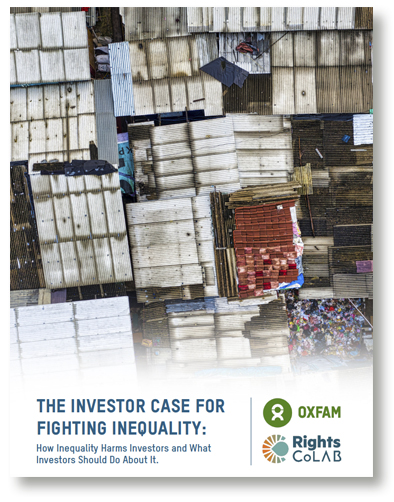
Oxfam and Rights CoLab Report - Investor Case for Fighting InequalityA discussion paper co-authored by Oxfam and Rights CoLab, The Investor Case for Fighting Inequality: How Inequality Harms Investors and What Investors Should Do About It, explores recent developments, data, and academic studies that demonstrates the risks inequality presents at both the firm and system levels.

Low bar company practices can have adverse effects on investment portfolios, with companies exposed to increased risks from reputational damage, exposure to litigation and regulatory sanction, reduced productivity, operational disruptions owing to strikes, protests, and other work stoppages, and broader systemic harms to the macroeconomy that companies and investors must absorb.

Slowly but surely, many investors are using their power as fiduciaries to address both the macroeconomic and broader market risks of inequality. Recent shareholder proposals calling for reducing inequality within corporations received substantial support and sometimes won majority votes. Investor coalitions have sprung up to address inequality-related topics such as living wage, CEO-worker pay gaps, racial justice, and worker organizing rights. There was even a boardroom battle to elect labor-friendly directors at Starbucks, led by a union-affiliated pension plan, resulting in a settlement to negotiate labor agreements.

But is that enough? The largest mainstream asset owners and managers have been slow to consider corporate impacts on inequality. An obstacle to more forceful mainstream investor engagement is a dearth of solid data on the financial risks that rising inequality presents — an oft-cited impediment to stronger stewardship on social issues generally.  In the United States, investors’ need for solid evidence of the financial materiality of inequality is magnified as fiduciary duty is more narrowly construed; fiduciaries can harness investment strategies to improve social and environmental outcomes, but only if their actions are consistent with their commitment to protect client and beneficiary financial risk-adjusted returns. They need to be equipped with decision-useful evidence to guide their actions.

Risks of Inequality

Until recently, investors have had to rely on cherry-picked, decontextualized data to justify their engagements with companies on socio-economic inequality topics. That has changed.

There is mounting evidence that inequality is a systemic risk that affects the financial system, the macroeconomy, and the total portfolios of large, diversified investors. Inequality generates systemic risks to the wider economy, contributing to financial crises and slowing economic growth, while also impacting and being impacted by other systemic risks such as climate change, pandemics and other health burdens, social unrest, corruption, and rising authoritarianism. These systemic risks in turn create systematic risks within investors’ portfolios.

Yet firm-level risk and return remain important considerations for investors with concentrated portfolios, such as those managed by private equity funds. Even mainstream diversified investors often regard their fiduciary duty as operating on a firm-specific level, although many are now shifting emphasis to a more balanced approach.

Any disturbances in the external operating environment, such as labor shortages and supply chain disruptions, can bring financial setbacks, while uncertainties related to labor strikes can lead to fluctuations in asset values. Furthermore, as instances of corporate misconduct accumulate and garner greater consumer attention, shifts in social expectations and the enactment of new legislation give rise to reputational and legal risks for organizations. Though, evidence of the material impacts of inequality on individual company performance is mixed, due in part to data, effects may manifest over a longer time frame than is typical in academic research, making them especially challenging to measure.

What Investors can do to Reduce Inequality

Researchers have found that diversified investors vote against the most egregious corporate pay discrepancies, and it appears that they may in part be responsible for the decline in CEO compensation by 9% in 2022. Diversified investors also seem to be driving progress in applying a systemic risk lens to their corporate engagements, counteracting concentrated investors’ meagre interest in unequal pay.

There are many ways investors can engage to address inequality – investors should adopt a long-term outlook when engaging with their portfolio firms on these issues and encouraging transparency including by supporting initiatives for greater disclosure. Moreover, they should be alert to corporate lobbying that works against corporate commitments to addressing inequality. Another way is to support the Taskforce on Inequality and Social-related Financial Disclosures (TISFD). It was launched last month, providing a disclosure and risk management framework that addresses the systemic and idiosyncratic risks of inequality. Lastly, but as importantly, investors must also recognize their own contribution to inequality and seek ways to stem that.


This article is based on The Investor Case for Fighting Inequality discussion paper which was written by Joanne Bauer, Paul Rissman and Silvana Zapata-Ramirez of Rights CoLab with substantial input from Irit Tamir and Sharmeen Contractor of Oxfam America.  

About Rights CoLab
Founded in 2018, Rights CoLab is an experimental platform for expert-level collaboration across the fields of civil society, business and finance. Rights CoLab develops and drives new approaches that leverage markets to advance human rights in the face of today’s urgent challenges.

About Oxfam
Oxfam is a global organization that fights inequality to end poverty and injustice. We offer lifesaving support in times of crisis and advocate for economic justice, gender equality, and climate action. We demand equal rights and equal treatment so that everyone can thrive, not just survive. The future is equal.

Additional Articles, Impact Investing, Sustainable Business

Sustainable Debt Market Passes $5 Trillion En Route to Record Year

By Sean Kidney, Climate Bonds Initiative

New report details how sustainable investment is thriving

Climate and Capital Media Featured NewsA cumulative volume of $5.1 trillion in green, social, sustainability, sustainability-linked bonds, and transition bonds (collectively GSS+) has been recorded by the Climate Bonds Initiative as of 30 June this year.

Aligned with CBI’s dataset methodologies and best practice, the findings are detailed in the Sustainable Debt Market Summary H1 2024 with a breakdown of labelled bond markets.

While global interest rates remained higher than had initially been expected going into 2024, global debt issuance climbed to $13.2 trillion during this period compared to $9.8 trillion in the first half (H1) 2023, an increase of 35%. Nevertheless, the GSS+ market is thriving, with new issuers progressively entering the market and volumes set to surpass the annual record of $1trillion set in 2021.

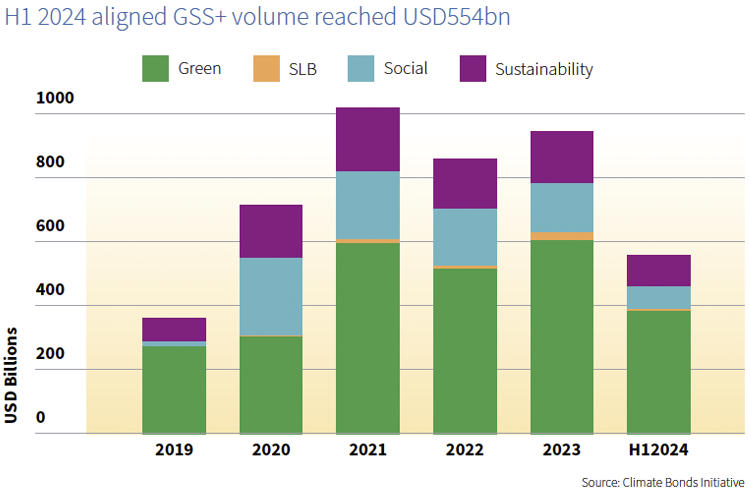
$554 billion of aligned GSS+ volume was captured in H1 2024 alone, a 7% year-on-year increase compared to H1 2023. Green bonds accounted for 70% of H1 aligned volume, reaching $385.1 billion. This was followed by sustainability and social volumes contributing $93.9 billion (17%) and 70.5 billion (13%), respectively.


H1 2024 aligned GSS+ Volume Reached USD554bn-chart 1


France Attains Sustainable Finance Podium Position in its Olympic Year.

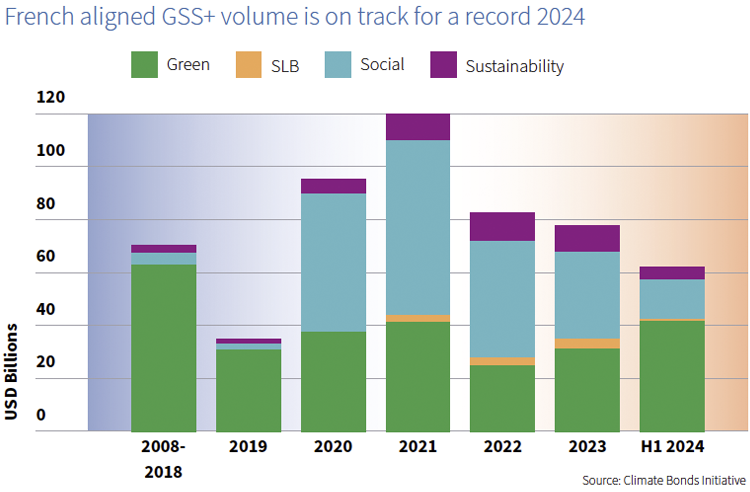
In its Olympic year, France stands on the sustainable finance podium as a clear winner. Since hosting the UN Climate Change Conference (COP21) in Paris on 12 December 2015, culminating in the ground-breaking Paris Agreement, France’s lead in sustainable finance policy has underpinned the immense growth of its GSS+ market. As at the end of H1 2024, the country was the third largest source of cumulative aligned GSS+ volume with $542.9 billion, following supranational issuance ($763.2 billion) and the USA ($714.6 billion).

France is also the largest source of aligned social deals with $216.2 billion by the end of H1. This has been championed by its social security agency Caisse d’amortissement de la Dette Sociale (CADES), which at the end of H1 had priced over $143.3 billion in aligned social bonds, making it the largest issuer in that category. France’s momentum in labelled bond markets is setting the nation for a record year for GSS+ volumes.


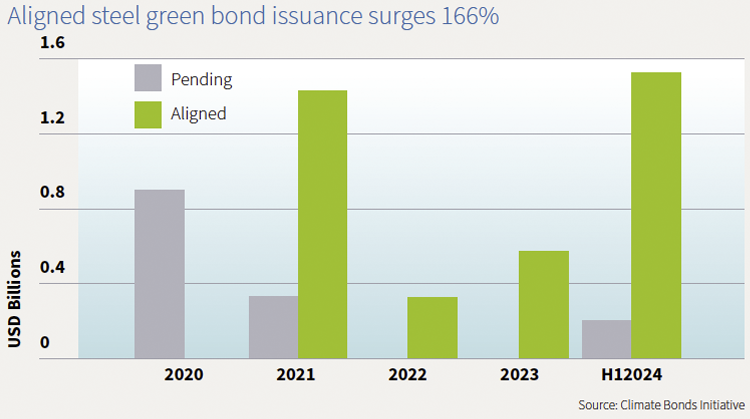
Spotlight: Aligned steel green bond issuance surges by 166%

CBI’s review of the steel and cement sectors has revealed two encouraging developments. Firstly, there has been an increase in aligned green bond volumes from steel and cement issuers and, secondly, most (57%) of the 21 companies assessed had credible transition plans in place.


Aligned steel green bond issuance surges 166%-chart 3


To support the flow of investment towards decarbonizing the hard-to-abate sectors, CBI has developed tools and guidance, including hard-to-abate sector criteria, transition plan guidance, and the inclusion of these activities as part of its Certification program, as well as GSS, and SLB dataset assessment methodologies.

A Transition Plan Monitor (TPM), which is an assessment of the quality of entity-level transition plans, is being built by CBI. Steel and cement were chosen as the first sectors to undergo analysis via the TPM.

The Climate Bonds Initiative is an international organization working to mobilize global capital for climate action by promoting investment in projects and assets necessary for a rapid transition to a low carbon and climate resilient economy. The strategy is to develop a large and liquid green and climate bonds market that will help drive down the cost of capital for climate projects in developed and emerging markets; to grow aggregation mechanisms for fragmented sectors; and to support governments seeking to tap debt capital markets. Partner organizations are empowered with the tools and knowledge needed to navigate, influence, and instigate change.

The Climate Bonds Initiative is an investor-focused not-for-profit. The work therefore is an open-source public good and falls into three workstreams: market intelligence, developing a trusted standard, and providing policy models and guidance.


Article by Sean Kidney is founder and CEO of Climate Bonds Initiative, an international investor-focused non-profit that is working to mobilize the $100 trillion bond market for climate change solutions.

Article reprinted with Permission as part of GreenMoney’s ongoing collaboration with Climate and Capital Media.

Additional Articles, Energy & Climate, Food & Farming, Impact Investing, Sustainable Business

Are Your Bonds Green, Social or Sustainable? And Climate Resilient Too?

By R. Paul Herman and Liana Lan, HIP Investor Ratings LLC

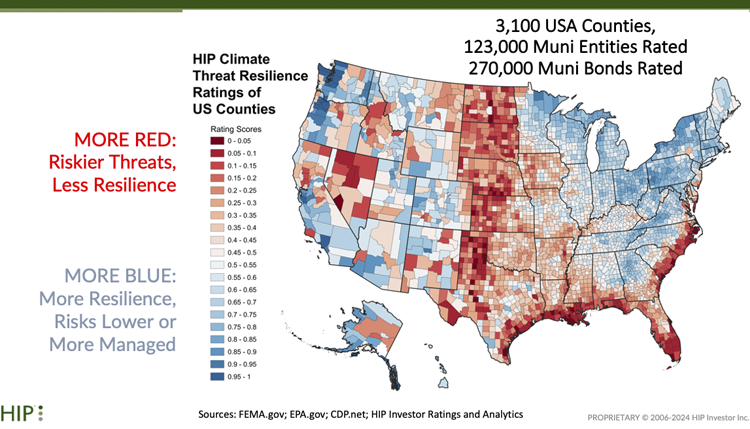
Paul Herman and Liana Lin - HIP Investor RatingsAbove Infographic excerpt, shown below – HIP Climate Threat Resilience Ratings of US Counties

When sailing your portfolio into the future, would you want a top-heavy boat? Or a boat that is stable through the waves of future risks? “Green bonds,” “social bonds” and “sustainability bonds” – these labels bring comfort to impact investors. Yet, are all green, social and sustainability bonds fully safe for the forthcoming 30 years?

Our HIP Investor Ratings of 270,000 bonds – whether issued by more than 100,000 municipalities, 14,000 corporates, or 200 sovereigns – evaluate the possible future risks and future opportunities of the underlying issuers and use of proceeds.

As of August 30, 2024, HIP has evaluated 11,487 bonds that are labeled “green,” “social” or “sustainability-linked,” which seek to bring solutions like reducing pollution, delivering cleaner water, spurring more affordable housing, or bringing climate action forward to society as well as to your portfolio.

These positive impacts can build a better world and could bring more stable income and a higher-confidence of principal repayments in the future. Yet they also need to be evaluated for climate risk and resilience.

What are Green, Social and Sustainable Bonds Funding?

What are the key uses of proceeds in green, social and sustainable labeled bonds?

Of the 6,058 green bonds we have evaluated, more than a third of bond proceeds mention a (37.5%) focus on water quality improvements, while a tenth of them (10.9%) target effective treatment of wastewater; overall, about half of Green Bonds are issued by Water and Wastewater Utilities.

Additionally, energy solutions (5.3%) and pollution reduction (5.8%) are the focus of green bonds. Top issuers of Green Bonds are: Transportation District of New York and New Jersey (415 bonds), and state water bonds from New York state (313), Indiana (259), Iowa (193) and Massachusetts (175); yet also include educational institutions, energy utilities, and healthcare entities.

Of the 3,512 social bonds HIP has evaluated, more than a third of bond proceeds (34.2%) target housing, including affordability (25.5%), single family properties (13.7%), moderate-income families (12.7%), and can be linked to Ginnie Mae (GNMA, 4.5%). Overall, 88% of Social Bonds are from Housing authorities, while Education issuers cover about 7% of issuances. Top state-housing authorities of social bonds include: Illinois (226 bonds), Ohio (184), Massachusetts (172), Pennsylvania (163) and Rhode Island (160).

Of the 1,917 sustainability-linked bonds, just as the 17 UN Sustainable Development Goals are wide-ranging, so are these issuances. One-fifth (20.7%) focus on multi-family housing solutions, and one-sixth mention “rehabilitation” (16.6%). Efficiency in energy or water is a tenth of these (9.9%), and LEED-standards are present in 7.8% of these bonds. Poverty reduction (3.9%) and tenant-occupied housing (3.1%) seek to cover renters not just home-owners. Top issuers of sustainable-linked bonds include: New York City housing (778), New York State housing (352), and Massachusetts housing (212).

The average impact of green, social, and sustainability bonds are generally “net positive” (over 50 on a 100-point scale of sustainable to extractive). Impact investors typically want to hold higher-impact bonds in their portfolios.

Climate Risks Persist, Possibly Offset with Resilience

In the USA’s 3,100 counties, more than 40 years of FEMA’s (Federal Emergency Management Administration) recovery funding from intense and extreme weather events illuminate the risks across geographic regions of the United States.


HIP - Climate Threat Resilience Ratings of US Counties - chart 1


Four main categories of weather – cold, heat, water, wind – summarize a range of events that can overwhelm buildings, roads, and infrastructure of energy and water.

In addition, facilities in each geography may add risks – nuclear power plants, toxic waste sites, waste dumps – which can negatively impact the ecosystem, from polluting drinking water from coal ash ponds that are flooded to a nuclear meltdown from a river overflowing.

These risks can be mitigated by resilience factors. For example, forests can absorb winds and rain more than farmland which can carry excess nitrogen fertilizer into waterways. Also, stronger community relationships can help regions recover when under stress. Of course, government policy and planning, including climate actions and defensive posturing, enhance the resilience of a region. Whether 3,100 counties, 84,000 census tracts, or 8 million census blocks, these future risks and resilience factors can be evaluated to specific GPS coordinates.

In the US map of 3,100 counties, the more red-colored areas are subject to more intense climate events and riskier physical sites that amplify the ripple effects of climate events, like hurricanes, tornadoes, ice storms, and heat waves.

Yet the bluer-colored areas are not immune to intense weather (e.g., El Nino storms in the Pacific, or the “perfect storms” of the Atlantic coast), the resilience in the Northern states and counties benefit from more forest areas, more community organizing, and more proactive government policy and climate-action plans.

Hence, for any corporate bond, municipal bond, or sovereign bond, a “climate threat resilience” rating as we call it at HIP Investor can be applied to your fixed-income portfolio holdings.

Credit Ratings Seem to Ignore Higher Climate Risk

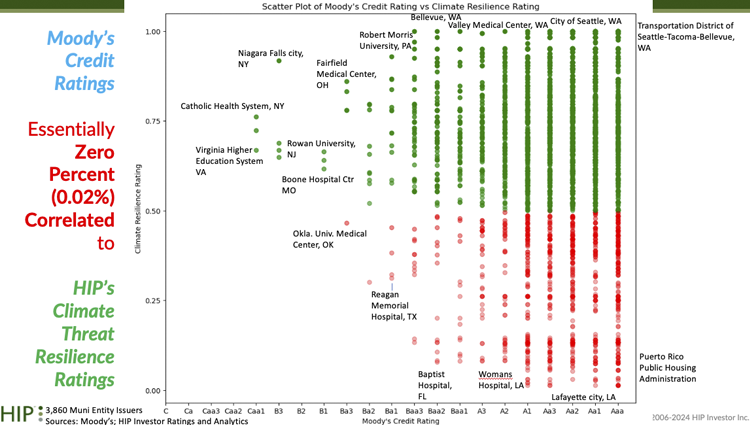
Our analysis of 270,000 bonds from 3,860 issuers shows that Credit Ratings (such as Moody’s) may not incorporate the full set of meaningful future risks over the duration of the bond.

The scatterplot below charts the actual near-zero correlation (0.02%) among Moody’s Credit Ratings and HIP’s Climate Threat Resilience Ratings. This means a AAA bond from Texas, Florida, or Puerto Rico may not fully factor in the next three decades of hurricanes, floods, or winds – nor the lack of resilience in those geographies.


HIP - Moodys Credit Rating VS Climate Resilience Rating - chart 2


In fact, there may be opportunities to arbitrage these future risks. For most investors, avoiding these risks could be a prudent strategy – just as muni-bond ETFs do, such as the VanEck HIP Sustainable Muni ETF (ticker: SMI). In the SMI ETF, as of August 30, 2024, there are no holdings in Florida or Texas, due to higher climate risk and lower climate resilience, despite an elevated bond rating from Moody’s.

Are Green, Social and Sustainability Bonds also Climate Resilient?

While the bond proceeds for those labeled Green, Social, and Sustainable typically fund positive-impact projects, programs, and infrastructure, investors need to be aware of the climate risks too.

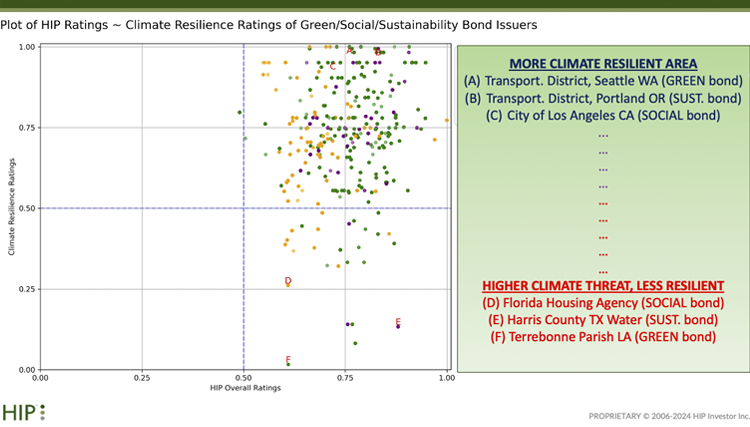
As you can see in the chart below, plotting 291 issuers of the 11,400 bonds, some of the issuers are in riskier geographies, such as Louisiana, the Florida Housing Agency and Harris County’s (including Houston) water utility.


HIP - Climate Resilience Ratings of Green-Social-Sustainability Bond Issuers - chart 3


The super-majority of green, social, and sustainable bonds evaluated by HIP have a “higher-impact” rating (above 50 on a 100-point scale) based on the data-driven performance, including schools, hospitals, energy and water utilities, and local governments.

Yet even the “green” or “sustainable” or “social” purposes of the bond may be at risk from future intense climate events, or lack of resilience defenses.

How to Optimize Risk and Return in Your Bond Portfolios

Bonds of corporates, munis and sovereigns are intended to be the ballast in your portfolio, just as a ship needs a strong hull and rudder. To evaluate these future risks requires analyzing the effectiveness of achieving the issuer’s mission, the actual benefits of the planned proceeds, and the potential surprises like climate in the coming years.

As we have shown above, the traditional credit ratings may not evaluate the full future risks of a 30-year bond. Our experience at HIP has shown that many lower-income communities can have highly effective hospitals saving patients, above-average school outcomes for kids, and cleaner water and energy for communities. This is not always consistent with the traditional belief that higher tax revenues collected in higher-income areas automatically generate better outcomes – it is a matter of competence to deliver its mission.

Evaluating future risk can be accomplished with data-driven factors: achieving its mission, specific results from use of proceeds, and optimizing risk and resilience from future climate intensities.

Impactful investors keep an open mind about the full spectrum of risks, and of opportunities. Your bond holdings can anchor a higher-impact portfolio that can both “do good” and “make money” in the coming decades.


Article by R. Paul Herman, founder and the managing member of HIP Investor Ratings LLC and Liana Lan, Climate and Impact Investing Analyst at HIP Investor Ratings LLC.

DISCLOSURES:

HIP Investor Inc. is a state-registered investment adviser in several jurisdictions (CA, IL, LA, NC, NY), and HIP Investor Ratings LLC is an impact-ratings firm evaluating impact and ESG on 410,000 investment ratings, including 126,000 municipal entities, 270,000 muni-bond issuances, and 14,000 corporates for equities and bonds. HIP Impact Ratings are for your information and education – and are not intended to be investment recommendations. Past performance is not indicative of future results. All investments are risky and could lose value. Please consult your investment professionals to evaluate if any investment is appropriate for you, your goals, and your risk-return-impact profile.  This is not an offering of securities.

HIP Investor, Inc. (“HIP”) is a provider to Van Eck Associates Corporation (“Van Eck”) of proprietary research products and services, including ESG ratings, Sustainable Development Goal ratings, Opportunity Zone mapping, Climate-Threat and Resilience ratings, and Human Impact + Profit ratings (collectively, the “HIP Ratings”). HIP is the exclusive provider to Van Eck of HIP ratings and similar data used in connection with any sustainable municipal-bond ETF provided by Van Eck, including the VanEck HIP Sustainable Muni ETF.

HIP Investor, Inc. (“HIP”) receives certain fees related to the assets under management (AUM) of the VanEck HIP Sustainable Muni ETF, which creates a conflict of interest with actual and prospective clients of HIP, and biases the objectivity of HIP when discussing, evaluating, and recommending the VanEck HIP Sustainable Muni ETF to actual or prospective clients of HIP. The determination to purchase or utilize the VanEck HIP Sustainable Muni ETF is an important decision and should not be based solely upon HIP’s recommendation, guidance, or services. HIP is an independent contractor of Van Eck Associates Corporation; however, HIP does not control or supervise the services or products of Van Eck Associates Corporation, and reference to the VanEck HIP Sustainable Muni ETF does not mean that HIP has performed any level of due diligence on the services or products of Van Eck Associates Corporation. Users of HIP’s website, as well as actual and prospective clients of HIP, are urged to perform their own due diligence on, or consult with a separate registered investment adviser with respect to, the VanEck HIP Sustainable Muni ETF. 

There is no obligation to purchase or utilize the VanEck HIP Sustainable Muni ETF.

Energy & Climate, Featured Articles, Food & Farming, Impact Investing, Sustainable Business

30 Years of Impact Bonds: Q&A with Benjamin Bailey of Praxis and Cliff Feigenbaum

An Interview with Benjamin Bailey of Praxis and Cliff Feigenbaum, GreenMoney 

This year marks the 30th anniversary of the Praxis Impact Bond Fund, which gives faith-based and other investors access to a broadly diversified core bond portfolio with a focus on green, social and other types of impact bonds.   

Over the years, the fund’s appeal has broadened from faith-based investors to include sustainability and social-impact focused investors. Its assets have grown from $11 million in 1994 at the fund’s inception to nearly $1 billion today. 

Over time, as more impact-oriented bonds have come to market, Praxis has increased their allocation to 36% in the Praxis Impact Bond Fund.

GreenMoney Journal founder Cliff Feigenbaum recently spoke with Benjamin Bailey, CFA, Vice President of Investments and Senior Fixed Income Investment Manager for Praxis Mutual Funds, on a variety of topics. Here’s the interview –

Cliff: What’s the History of the Fund? 

Benjamin: Originally called the Praxis Intermediate Income Fund, the Praxis Impact Bond Fund launched in 1994 to give Mennonite and Anabaptist investors a way to invest in bonds consistent with their values. Praxis brought retail investors an approach to fixed income investing that religious institutions in these faith traditions had utilized for decades.

I joined the fund’s portfolio management team in the early 2000s at the start of my investing career. In those years, we screened out issuers that didn’t meet our specific values criteria—so we were avoiding “the bad”—but we hadn’t yet envisioned a way in which we could really make a deep, positive impact in the world.

A watershed moment came in 2006 when we invested in the International Finance Facility for Immunization (IFFIm). Learning about this opportunity in vaccine bonds opened my eyes to the specific impact that investing in positive impact bonds can have in a fixed income portfolio.

The introduction of green bonds in the U.S. in 2009 and subsequent growth of the impact bond market have allowed Praxis to ramp up the percentage of the portfolio that is dedicated to positive impact bonds. By 2016, that percentage had grown to nearly a quarter. That’s when we changed the name to the Praxis Impact Bond Fund, wanting to make clear that our focus was on making a positive impact through this fund, to the degree the market made it possible. Today, the percentage of impact bonds is even higher – about 36%. And we look forward to growing this percentage even further.

Cliff: How Does Praxis Define “Positive Impact Bonds”?

Benjamin: Positive impact bonds are bonds that make a specific positive impact to the climate and/or communities. A specific part of this market is in bonds called green bonds, social bonds and sustainability bonds. These have generally accepted guidelines from the International Capital Market Association on what projects are acceptable in each of these categories and establish general expectations for future reporting and signoffs from management and auditors.

As investors, we want the bonds to have a level of rigor and depth to them in terms of impact, but we also don’t want to discourage potential issuers with too many firm regulations and rules.

As committed impact bond investors, we often engage the issuers, encouraging them to take this opportunity seriously and pursue the highest standards that are feasible.

Cliff: How Has the Positive Impact Bond Market Changed Over the Past Few Years?  

Benjamin: The market went through a large period of growth, with consistent issuance increases year after year for over a decade. According to Bloomberg, the broader impact bond market went from an issuance of about $600 billion in 2020 to nearly $1.2 trillion in 2021, with 2022 and 2023 remaining at similar levels. There is still strong growth this year. According to Bloomberg, there has been $700 billion of green, social, sustainability, and sustainability-linked corporate and government bond issuance this year as of Aug. 23, 2024, up 9.5% from the same period last year. But the vast majority of that growth is in international markets. There hasn’t been strong growth in the U.S. dollar domestic market. Specifically in 2023, U.S. dollar-denominated ESG bonds issuance was down 49% from 2022, and the 2024 issuance of these bonds has continued to be slow.

Many hands holding seedling - Praxis Impact Bond Fund

Cliff: How Do You Go About Ensuring Diversification and How Important Is It in a Fund Like Yours?

Benjamin: We want investors to be able to utilize this fund as part of their core fixed income allocation and not view this investment as a niche part of their portfolio or as a form of charity.

To achieve that, we aim to generate performance similar to the Bloomberg Aggregate Bond Index – a common benchmark for core bond funds – over market cycles, while maximizing our ability to have a positive impact in the world we share.

While it might be great to say in the short term that a fund has “100% positive impact bonds,” in the long term, I don’t feel that fund would be appropriately benchmarked to a broad fixed income index. This would fail our understanding of our fiduciary duty to our shareholders.

Most people don’t want to sacrifice returns that could impact their retirement in a large portion of their fixed income allocation. We believe people shouldn’t have to make that choice. Most faith-based and sustainable investors are looking for a mix of solid, long-term performance, proper diversification and an ability to make a real impact through their investments.

Cliff: How Has Investor Interest/Investor Makeup Changed Over the Years?

Benjamin: Over the years, we’ve increasingly attracted faith-based, SRI and sustainable investors, especially as the green, social and sustainability bond space has grown in visibility. In addition, the fund is included in many sustainable and values-based models for advisors, across different platforms, which has been important to asset growth. Just over a decade ago the fund had $350 million in assets under management and now we hold just under $1 billion.

In a social climate fraught with division, Praxis is grateful to attract investors with a wide range of convictions. Some of our investors may be motivated by traditional values that emphasize personal morality while others prefer more progressive engagement of systemic social and environmental challenges. However, all these investors want to be productive stewards of the resources entrusted to their care.

Cliff: How Can Investors Know That Their Investments Are Making a Difference? 

Benjamin: There are many ways to make a difference with your financial resources – through charity or purposeful purchasing, for instance – but investing with your values in mind allows you to use the power of your investment portfolio to promote a better world. It is important to consider the full range of impact opportunities available, including positive impact bonds. Our annual Praxis Real Impact Report and Real Impact Quarterlies document seven different impact strategies, available across a range of fund types, that can help investors understand the impact of their investment dollars.


About Praxis

Praxis Mutual Funds is a leading faith-based, socially responsible family of mutual funds designed to help investors integrate their finances with their values. Praxis is the mutual fund family of Everence Financial®, a comprehensive faith-based financial services organization helping individuals, organizations and congregations. To learn more, visit praxismutualfunds.com and https://everence.com .

More about Benjamin Bailey: 

Benjamin Bailey, CFA®, Vice President of Investments. Benjamin joined Everence in 2000 and was named Co-Portfolio Manager of the Praxis Impact Bond Fund in March 2005, and Co-Manager of the Praxis Genesis Portfolios in June 2013. In 2015, he was named Senior Fixed Income Investment Manager, providing leadership to the fixed income team and oversight to external sub-advisory relationships. Benjamin is a 2000 graduate of Huntington College in business-economics. Connect with Benjamin on LinkedIn.

Consider the fund’s investment objectives, risks, charges and expenses carefully before you invest. The fund’s prospectus and summary prospectus contain this and other information. Call 800-977-2947 or visit praxismutualfunds.com for a prospectus, which you should read carefully before you invest.

Praxis Mutual Funds are advised by Everence Capital Management and distributed through Foreside Financial Services, LLC, member FINRA. Investment products offered are not FDIC insured, may lose value, and have no bank guarantee. Bond funds will tend to experience smaller fluctuations in value than stock funds. However, investors in any bond fund should anticipate fluctuations in price, especially for longer-term issues and in environments of rising interest rates. The Fund’s investment strategy could cause the fund to sell or avoid securities that may subsequently perform well.

The Bloomberg U.S. Aggregate Index is an index of widely held fixed-income securities often used as a proxy for the bond market. It is comprised of the U.S. Treasury and U.S. agency bonds, mortgage-backed bonds, and higher-grade corporate bonds. Indexes are unmanaged, do not incur fees, and it is not possible to invest directly in an index.

Bloomberg Aggregate Bond Index: A broad-based benchmark that measure the investment grade, US dollar-denominated, fixed-rate taxable bond market. You cannot invest directly into an index.

Diversification neither assures a profit nor guarantees against loss in a declining market.

ESG: environmental, social, governance. The Fund’s investment strategy could cause the fund to sell or avoid securities that may subsequently perform well, and the application of ESG and/or faith-based screens may cause the fund to lag the performance of its index.

Bond funds will tend to experience smaller fluctuations in value than stock funds. However, investors in any bond fund should anticipate fluctuations in price, especially for longer-term issues and in environments of rising interest rates. The Fund’s investment strategy could cause the fund to sell or avoid securities that may subsequently perform well.

Praxis Mutual Funds, 1110 N. Main St., P.O. Box 483, Goshen, IN 46527

Energy & Climate, Featured Articles, Impact Investing, Sustainable Business

Climate+Community Development: Emerging Investment Frameworks Fuel Transformative Impact

By Anna Smukowski and Laura Mixter, Enterprise Community Partners and LISC

Above: HopeWorks Station in Everett, WA, a housing and jobs training development project. Enterprise provided a suite of support including a loan, LIHTC, NMTC, grant funding and technical assistance.

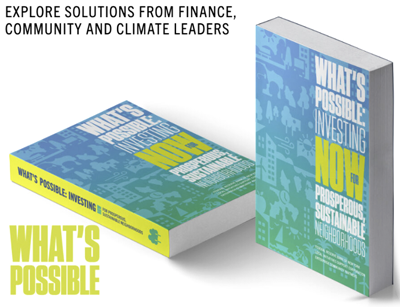
This article includes excerpts from What’s Possible: Investing Now for Prosperous, Sustainable Neighborhoods, a collaboration of Enterprise Community Partners, LISC and the New York Fed. What’s Possible offers practical solutions for clean energy, resilience and equity. It’s intended as a playbook for taking collective action to build a stronger, more inclusive future.

In the early 1950s, predominately white neighbors in Bedford, NY, worked to protect a 60-acre hemlock forest in the Mianus River Gorge, a “wild and free river running through a primeval forest,” that was at risk of being turned into a housing development.1 They formed a new conservation group, pledged their life insurance policies, and gained financing from The Nature Conservancy to preserve the land. In the following decade, Rachel Carson published Silent Spring, a book largely seen as launching the modern environmental movement that also became a rallying point for social activists in the 1960s.2

At the same time, in another Bedford not so far away, real estate agents and speculators employed “blockbusting” to stoke and profit from middle class white flight in the Bedford-Stuyvesant neighborhood of Brooklyn.3

What's Possible - Explore solutions from finance, community and climate leadersEconomic investment declined, with more than 50 percent of its housing stock being classified as dilapidated and insufficient.4 By 1967, recognizing something had to change, the first community development corporations (CDCs) were formed—including the Bedford-Stuyvesant Restoration Corporation—to design, implement, and secure financing to reduce poverty and spur economic growth. This was paired with other positive changes driven by the civil rights movement, righting some of the wrongs of decades of discrimination, redlining, and economic disinvestment.

Over the years, both the environmental and community development movements have grown and evolved, and both have had numerous successes. But until recently, they have rarely intersected.

We can no longer afford to work like this. Communities with a history of economic disinvestment bear the greatest costs of environmental disasters and face the greatest risks from climate change. If we are to comprehensively address the challenges facing people and the planet in the twenty-first century, leaders from both the environmental and community development movements need to integrate their approaches.

Climate issues are community development issues and vice versa. Those in community development finance must address the impacts of climate change in order to meet impact goals for economic opportunity and growth. Likewise, those in climate finance need to adopt an equity lens to focus investments in areas grappling with significant pollution and heat challenges, making sure that low-income communities and communities of color are not left behind. What do investors need to replicate and expand innovative funds and strategies that account for climate and community? How should they evaluate their existing portfolios for risks, and what frameworks do they need to effectively deploy capital in the future?

The tools already exist. Tools include data and reporting frameworks that can help investors analyze projects and investments and standardize impact measurement and discussion. From that vantage point, we can see the challenges in aligning climate and community development work, better understand the missteps of the past, and develop strategies that can help us work more equitably and holistically going forward.

Integrated Investment Solutions: Using Green, Social, Sustainability, and Sustainability-Linked Bonds

In 2007, research from the Intergovernmental Panel for Climate Change strongly linked human action to climate change5 It spurred a group of Swedish pension funds to think about how their role as fiduciaries could finance projects that would create climate benefits while reducing risk for their investors. Without a ready-made investment opportunity, they turned to the World Bank, which issued the world’s first green bond in 2008. That effort formed the basis for the Green Bond Principles coordinated by the International Capital Market Association (ICMA).6

The principles apply a framework for issuers to raise capital for projects with environmental and climate impacts. Green bonds are evaluated based on use of proceeds, process for project evaluation and selection, management of proceeds, and reporting. These four components create a clear disclosure process for issuers, which investors, banks, underwriters, arrangers, placement agents, and others can use to understand the characteristics of any given green bond.

Lakota Ridge – Senior Housing Project in New Castle, Colorado; Enterprise provided grant funding to the project. Photo by Scott Dressel Martin

Once the green bond market took off, issuers noticed that bonds could address persistent market gaps in ways that go beyond pure environmental projects. That recognition gave rise to the Social Bond Principles, sustainability-linked bonds, transition bonds, and the Sustainability Bond Guidelines—all of which incorporate a focus on both green and social projects or activities. Over time, the influence of these designations has grown. In 2017, LISC became the first CDFI issuer to align with the Sustainability Bond Guidelines in a rated bond offering. In 2019, the Low Income Investment Fund (LIIF) became the first CDFI issuer to receive a second-party opinion confirming that its bond was aligned with the Sustainability Bond Guidelines. With these precedents, CDFI issuers increasingly aligned their offerings with the ICMA Sustainability Bond Guidelines, with six out of ten rated bond offerings aligning with the guidelines and four receiving a second party opinion.7

While social and sustainability bonds that incorporate target populations have grown, the green bond subset of the market still holds the majority market share by dollar volume. There is great potential to integrate the target population definitions in the social bond designation further with green use of proceeds bonds to educate stakeholders on how climate finance impacts communities. In 2020, ICMA introduced its Climate Transition Handbook to help investors craft approaches to climate risk that mitigate both environmental and social externalities and contribute to progress on the UN Sustainable Development Goals.

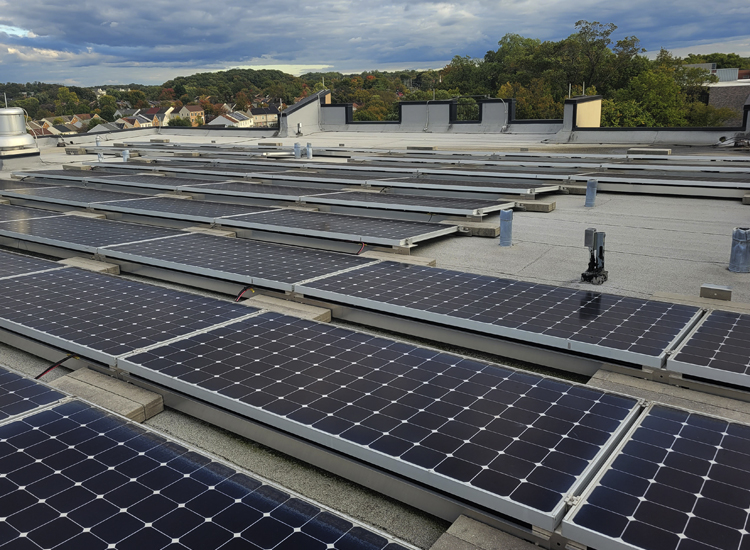
ECD Solar – Enterprise provided financing for Enterprise Community Development’s long-term goal to install solar panels across its entire portfolio in Washington DC.

Looking Ahead: Climate and Community First-Approaches to Capital Allocation

In order to equitably drive capital into communities and to support their climate resilience, it is imperative that community and climate investors coalesce around frameworks that send a clear market signal. Like green, social, sustainability and sustainability-linked bonds, these tools should be:

  • Standardized – The market needs to be able to measure and report the same types of metrics in order to easily compare one investment to another. An impact measurement tool can reflect the priorities and mission of an organization while also aligning to an industry-wide standard.
  • Accessible – Navigating the ecosystem for sustainable and impact investing data and reporting requires time, staff, and financial resources—making it inaccessible for smaller organizations, especially those serving low-income communities. For them to participate, and to promote widespread adoption, those organizations need access to free or, at the very least, tiered pricing.
  • Scalable – Investors need to work together to invest in and leverage technology platforms, as well as to build the requisite capacity to educate the market on what platforms exist. The resulting standardized data can be aggregated and reported to stakeholders, driving scalable solutions.

While we recognize there is not a one-size-fits-all approach, finding shared tools and a common language can help organizations be explicit about their climate and community impacts. In doing so, organizations can learn best practices from one another and create a community of practice.

Partnering with Enterprise and LISC puts climate and community frameworks into action and can help drive capital into projects and investments that build a resilient, just, and equitable future for all American communities. Visit Enterprise at www.enterprisecommunity.org and LISC at www.lisc.org to learn more.


Article by Anna Smukowski of Enterprise Community Partners and Laura Mixter of LISC.

Anna Smukowski is responsible for ECLF’s Impact Note program in addition to supporting capital raising, fund structuring and impact measurement and management efforts for on- and off-balance sheet lending. Prior to joining ECLF in 2022, she led LISC’s $200 million retail note offering, coordinated investor relations and positioned LISC’s capital raising within ESG, impact and social bond frameworks. She also managed $50 million in LISC’s Paycheck Protection Program (PPP) deployment and has structured and managed affordable housing and economic development funds, as well as pay for success work through a Social Innovation Fund grant award. Anna started her career as a strategy and operations consultant at Deloitte, where she was seconded to the UN Global Compact to examine corporate trends in carbon disclosure. She serves on the EPA’s Environmental Financial Advisory Board. She received her B.S. from NYU Stern and her M.B.A. from Columbia Business School.

As LISC’s first ESG & Impact Reporting lead, Laura Mixter oversees LISC’s impact measurement and management work, including the implementation of the LISC Impact Matrix, for all loans financed through LISC’s loan fund. Laura joined LISC in December 2021 after spending six years at our affiliate New Markets Support Company (NMSC). At NMSC, she held a number of different roles on the Asset Management, Advisory Services, and Impact teams. Laura has a BA in Public Policy from Duke University and an MBA from Duke’s Fuqua School of Business. While at Fuqua, Laura performed research on successful impact investing firms as a CASE i3 Associate.

Footnotes:

[1]  Mianus River Gorge, The Early Years, available at- https://mianus.org/the-early-years/

[2]  Katharine Rooney, “This is how climate science went mainstream,” International Institute for Sustainable Development, November 5, 2019. Available at- https://www.iisd.org/articles/insight/how-climate-science-went-mainstream

[3]  Blockbusting is an illegal practice used to convince homeowners to cheaply sell their property by appealing to fears of a new minority group moving in, then reselling at a higher price.

[4]  Jack Newfield, “Bedford-Stuyvesant: Giving a Damn About Hell.” In Robert Kennedy: a memoir, (New York: New American Library, 1988).

[5]  Rajendra K. Pachauri and Andy Reisinger, “Climate Change 2007: Synthesis Report. Contribution of Working Groups I, II and III to the Fourth Assessment Report of the Intergovernmental Panel on Climate Change.” (Geneva, Switzerland: Intergovernmental Panel on Climate Change, 2008). Available at- www.ipcc.ch/report/ar4/syr/

[6]  “10 Years of Green Bonds: Creating the Blueprint for Sustainability Across Capital Markets,” The World Bank, March 18, 2019. Available at- https://www.worldbank.org/en/news/immersive-story/2019/03/18/10-years-of-green-bonds-creating-the-blueprint-for-sustainability-across-capital-markets

[7]  Elise Balboni, Kathleen Keefe, and Anna Smukowski, “CDFIs and the Capital Markets: Trends in Investment & Impact Measurement.” (Enterprise and LISC, May 2023). Available at- www.enterprisecommunity.org/sites/default/files/2023-05/CDFIs-and-the-Capital-Markets-May2023.pdf

[8]  ICMA, Climate Transition Finance Handbook, available at-  https://www.icmagroup.org/sustainable-finance/the-principles-guidelines-and-handbooks/climate-transition-finance-handbook

Energy & Climate, Featured Articles, Impact Investing, Sustainable Business

Lifting the Lid on Impact Bonds: 5 Questions for Investors

By Ross Pamphilon and Mark Duffy, Impax Asset Management

Ross Pamphilon and Mark Duffy Q&A - Impax Asset MgmtIn this Q&A, Ross Pamphilon and Mark Duffy of Impax Asset Management explore the nuances of the asset class of Impact Bonds and how rigor and expertise can help investors navigate an expanding opportunity set. 

Executive Summary

  • We believe it is worth taking a nuanced view of impact bonds, considering both non-labelled and labelled green, social and sustainability bonds.
  • Thorough issuer-specific research helps us to understand the environmental and social merits of each bond, assess the impact of financed projects, and maintain flexibility in labelling sustainable securitizations.
  • Within a portfolio, impact bonds can offer stability, transparency, and diversification alongside attractive risk-adjusted returns.

Introduction

Over the last 25 years of investing in impact bonds, we have learned the value of looking beyond labeled green, social and sustainability (GSS) bonds.

By broadening the definition of impact bonds, investors can access a wider range of opportunities to generate positive environmental and social outcomes while pursuing attractive risk-adjusted returns. However, navigating this market requires a nuanced understanding of innovative security structures, evolving standards and project-level impact assessment.

Here, we look at how to define the asset class and explain why we look ‘off-label’, how the global impact bond market has grown, whether impact bonds involve higher credit risks, and the role these instruments can play in an investment portfolio.

1. How are Impact Bonds Defined?

The bond market generally defines impact bonds as labelled GSS bonds that finance projects with positive environmental or social outcomes (or both). These labelled bonds adhere to recognized principles like the Green Bond Principles and offer investors the extra assurances of use of proceeds reporting and third-party verification.1

We take a more nuanced view and define impact bonds as use-of-proceeds and general-purpose bonds that raise capital for projects or activities with positive impacts, either environmental, social or both. We consider a breadth of securities – including asset-backed securities (ABS) and mortgage-backed securities (MBS) – issued by companies, supranational bodies and government-backed entities like local municipalities and state-owned entities.

Some of these investments have obvious positive environmental and social outcomes; others require a deeper dive to understand the impact.2 Importantly, we consider both labeled and non-labelled bonds across fixed income sectors and activities. Our perspective is rooted in the search for additionality: unlike investments in equities, which are inherently tied to general corporate activities, bond proceeds can be directed towards a pre-defined use and so contribute to a targeted non-financial impact.

2. Why Should Investors Look ‘Off Label’?

We believe companies that take steps to adapt to and mitigate environmental and social risks have the potential to outperform over time, and we have developed our process to avoid overlooking this potential in non-labelled impact bonds.

Non-labelled corporate impact bonds often provide investors with the opportunity to invest in longer-dated maturities (more than 10 years) and larger deal sizes (more than US$750mn) compared to their labelled counterparts. Labelled bonds often have tenors of six to eight years as the maturity is intended to align with the project life. Longer duration allows investors to potentially realize greater returns if the credit thesis plays out as intended.

To effectively evaluate and select non-labelled impact bonds, we employ a multi-faceted approach:

  • Thorough issuer-specific research to understand the environmental and social merits of each bond
  • Assessing the impact of financed projects
  • Maintaining flexibility in labeling sustainable securitizations

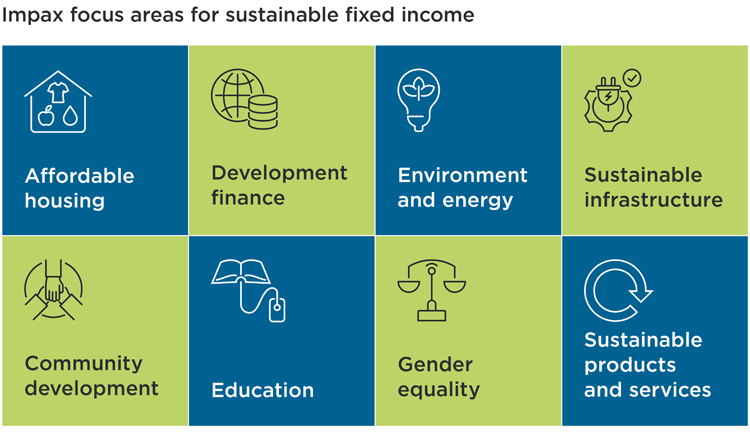
We have identified and categorized these bonds based on sustainability-related focus areas, illustrated below.


Impax sustainability focus areas


We include below three examples of non-labelled issuances that we believe deliver impact.

Corporate Debt: Xylem is a market leader in sustainable water management and net-zero goals, with a strong market position addressing global water challenges. The US company finances green projects that improve water accessibility, affordability, and resiliency through bonds like its US$1.9mn 2028 bond for improving water access, affordability, and resilience. We evaluate measurable impacts like water efficiency and conservation, quality and treatment, and climate resilience enabled by Xylem’s solutions. Xylem provides annual impact reporting aligned with Green Bond Principles, allowing investors to quantify its outcomes achieved. The company reports that its issuance of green bonds has resulted in 2.9mn megaliters of water saved or treated for reuse annually.3

Read about Impax’s approach to green bonds here.

First Help Financial provides securitization of auto loans made to Latin American immigrants in the US with limited financial history, promoting financial inclusion in underserved communities. To better verify customers’ ability to pay, the company accepts alternate forms of identity and income verification, and the entire underwriting and servicing team is bilingual. The company reported that it’s 2022 US$150mn issuance supported over 4,800 borrowers with limited English proficiency, almost 1,500 borrowers who were self-employed and financed over 1,600 work trucks or vans. Impax has invested in the 2024 round, sized at $US345.6mn.

Learn more about Impax’s approach to asset-backed securities (ABS)  here.

Supranational debt: Women’s Livelihood Bond – issued by Impact Investment Exchange, the Women’s Livelihood Bond (WLB) mobilizes private capital to invest in high-impact enterprises that aim to empower women. The WLB has raised US$228mn through six debt offerings, two of which are considered aligned with the Orange Bond Principles, focusing on gender-positive capital, gender-lens capacity and transparency. The WLB series reports that it has provided 180,472 female entrepreneurs in India, Cambodia, Indonesia, Kenya, and Vietnam with credit access.

Read more about Impax’s collaboration with supranational bodies in support of women and girls here.

3. Is Impact Bond Issuance on the Rise?

The impact bond investment universe has expanded significantly in recent years, creating a broader opportunity set for investors.

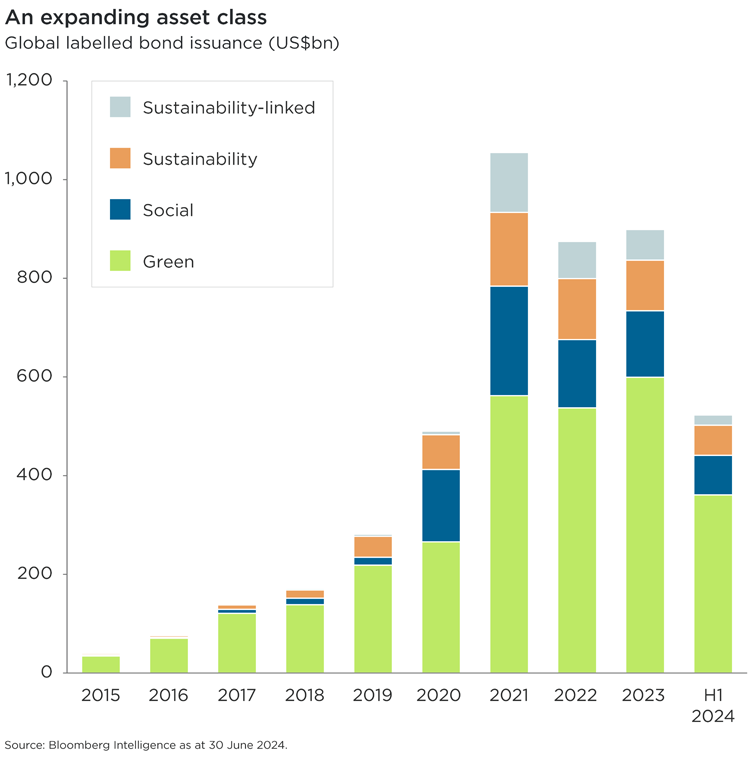
The chart below illustrates the increasing issuance of labelled impact bonds over the past decade. Total issuance topped US$1tn in 2021, though it dipped below this threshold in 2022 and 2023 as a result of factors like investor concerns around greenwashing.4 Issuance of non-labelled impact bonds has also grown over the past decade, but measuring that market is more nuanced.


Global labelled bond issuance - an expanding asset class chart - Bloomberg Intelligence


Looking ahead, we see several key trends pointing to renewed growth in the labelled impact bond market, including the emergence of transition bonds and securitized products, a gradual shift in issuance activities from Europe to the Asia-Pacific region in response to investor demand, and large-scale policy initiatives like the US Inflation Reduction Act (IRA).5

4. Do Impact Bonds Involve Higher Credit Risk?

A common misconception is that investors must pay significantly more for impact bonds compared to conventional securities or accept greater risks for equivalent returns. Our experience (and industry research and analysis) suggests that such views are misplaced.6

The credit risk for corporate impact bonds is typically the same as conventional bonds, as the coupon and principal are legally deemed general obligations of the issuing entity. This is why our due diligence process looks beyond single bond issuances to incorporate a holistic view of corporate issuers.

We have observed that disclosure, a crucial window into credit risk, varies widely among fixed income sectors. Public corporate issuers generally provide the most comprehensive disclosure and government and private corporate issuers provide the least. A thorough analysis of both material quantitative and qualitative factors, including sustainability factors, is necessary to assess fundamental credit risk.

5. What Role Can Impact Bonds Play in a Portfolio?

Impact bonds can primarily offer three diverse qualities within portfolio allocation.

First, stability: the buy-and-hold nature of many sustainability-focused investors can lead to lower price volatility as these bonds often trade less frequently than conventional securities. Investors that engage in relatively small transactions can remain nimble, however; our team leverages specialized sell-side relationships that allow us to break up larger trades into more digestible sizes and provide sufficient liquidity.

Second, transparency: regular impact and allocation reporting adds a layer of transparency and insight into issuances.

Third, diversification: investors with the resources and expertise to identify investments aligned with sustainability themes can go beyond standard business practices, employing a flexible, multi-pronged approach that identifies a broad range of opportunities.

A Growing and Impactful Opportunity Set

To navigate this expanding but complex market, we believe a nuanced understanding of innovative security structures, evolving standards and project-level impact assessment is key.

As the impact bond market continues to expand and evolve, we believe that investors who allocate resources and expertise to this area will be well-positioned to generate both carefully considered impact and risk-adjusted returns.


Article by Ross Pamphilon and Mark Duffy, CFA® of Impax Asset Management

Ross Pamphilon is based in London and leads the global fixed income team overseeing the fixed income investment process including credit research and idea generation together with portfolio management. He is also responsible for the strategic development of Impax’s fixed income platform to provide a range of global credit solutions that are fully aligned with the transition to a sustainable economy.

Prior to joining Impax, Ross spent over a decade at Wells Fargo Asset Management, where as Head of Fixed Income EMEA he led the Global Fixed Income and European Credit teams. Previously, he was a co-founder of European Credit Management (“ECM”), where he built a career as a portfolio manager and held the positions of Head of Portfolio Management, Head of Investments and Chief Investment Officer, with responsibility for portfolio management, credit research and investment strategy. Prior to ECM, Ross was an emerging markets debt trader at Merrill Lynch in London, and also based in New York. He is a Chartered Accountant, having qualified with PwC.

Mark Duffy, CFA® is a Fixed Income Analyst on the US Investment Grade Fixed Income team at Impax Asset Management. He is responsible for covering the consumer goods and diversified manufacturing sectors.

Mark has over seven years of experience in buy-side investment research across Investment Grade, High Yield and ESG. Prior to joining Impax in 2023, Mark was a Senior ESG Analyst at Invesco, a Corporate Credit Analyst at Longfellow Investment Management and a Senior Associate at State Street. Mark holds a bachelor’s degree in economics from the University of Connecticut and a master’s in finance from Bentley University. He is both a CFA® charter holder and an FSA credential holder, as well as an active member of CFA Society Boston.


Footnotes:

[1]  International Capital Markets Association, 2022: European Green Bond Principles

[2]  In our 2023 Impact Report, we reported that 39% of the issuers in one of our fixed income strategies reported GHG emissions avoidance data, and we were able to estimate GHG emissions avoidance data for about 25% of the portfolio. The remaining 36% of issuers in the portfolio either did not report data, or we were not able to make an estimate.

[3]  Xylem, 2023

[4]  Labelled impact bonds shown are those with third-party assurances as reported to Bloomberg. The assured impact bond data follows industry standard and is most widely cited across institutions. For our broader Impax universe, we also consider bonds that are not assured, preferring to judge each bond’s impact via our own framework. S&P Global, February 2024: US Muni Sustainable Bonds

[5]  The White House, January 2023: Building a Clean Energy Economy

[6]  Karoui, L., Lynam, A. et al, February 2022: ESG in credit: A costless benefit to portfolios (Puempel), Goldman Sachs

Energy & Climate, Featured Articles, Food & Farming, Impact Investing, Sustainable Business

Signup to receive GreenMoney's monthly eJournal

Privacy Policy
Copyright © GreenMoney Journal 2025

Website design & development by BrandNature

Global Events Calendar

View All Events

april

21aprAll Day232026 Sustainable Packaging Coalition: SPC Impact – Nashville

27aprAll Day30Women Deliver 2026 Conference (WD2026) – Melbourne

X