Tag: Sustainable Business

CapShift surpasses $1 billion through its platform, strengthening institutional impact investing

Firm doubles capital mobilized by clients through its platform in just over a year, accelerating private & philanthropic assets toward scalable impact solutions

CapShift, the backbone of impact investing solutions across many of the world’s largest financial, charitable, and corporate institutions, recently announced it has mobilized $1 billion to date into impact investments through its platform — doubling its cumulative total in just over a year. This milestone underscores both CapShift’s expanding role in scaling impact investing, as well as the growing demand from wealth and philanthropic institutions to leverage capital as a tool for social and environmental progress.

Since its launch in 2018, CapShift has built the infrastructure to help financial advisors, donor-advised fund (DAF) providers, foundations, and family offices deploy private market impact investments at scale. The firm now supports impact investing programs across more than 45 private wealth and charitable institutions, including ten of the top 15 DAF providers. Its clients include 1% for the Planet, Abacus Wealth Partners, The Chicago Community Trust, Cisco Foundation, Corient, Fidelity Charitable, Glenmede, Google, Heron Foundation, MS GIFT, Ren and Renaissance Charitable Foundation, Silicon Valley Community Foundation, Vanguard Charitable, and more.

“We started CapShift because we saw firsthand that there were hundreds of billions of dollars in pent up demand for impact investing — but not the necessary infrastructure to unlock it,” said Adam Rein, co-founder and CEO of CapShift. “From day one, our early partners like Fidelity Charitable helped us shape a solution that now makes it easy to access over 1,400 impact opportunities and build portfolios tailored to individual clients’ goals. Today’s milestone underlines that this demand is only growing — clients aren’t just asking for impact, they expect it, and they’re acting on it.”

Founded by MissionPoint Partners, Jacques Perold (former President of Fidelity Research & Management), and the Heron Foundation, CapShift launched with a clear vision: unlock private capital for impact at scale by offering streamlined access to impact investments. The firm began by serving the U.S. charitable sector — a market now projected to manage more than $2 trillion in DAF and foundation assets alone. Recognizing the same unmet need across the private wealth landscape, CapShift established CapShift Advisors LLC in 2021, an SEC-registered investment advisor providing advisory services to leading financial institutions.

“CapShift has been a critical partner in delivering a scalable, mission-aligned investment experience to our donors,” said Melanie Schnoll Begun, Head of Philanthropy Management and the Family Office Resources Field Engagement team at Morgan Stanley. “It’s platform and expertise make it significantly easier to offer authentic impact opportunities without compromising on rigor or operational efficiency.”

Reaching this milestone of $1 billion moved into impact funds and enterprises through CapShift’s platform was fueled in part by rapid growth of the firm’s Research Engine. The proprietary database, a cornerstone of CapShift’s impact investing platform, now features more than 1,400 impact opportunities. The offerings represent more than $200 billion in curated funds and enterprises, spanning all major private asset classes including private equity, venture capital, private credit, real assets, and recoverable grants.*** The breadth of the Research Engine’s opportunities offers advisors and institutions a uniquely powerful tool to build customized portfolios with confidence and efficiency.

CapShift’s growth also points to a broader shift in investor expectations: clients increasingly want their portfolios to reflect their values, and institutions that can meet that demand are gaining a competitive edge. The global impact investing market has more than doubled in the past three years, exceeding $1.5 trillion in 2024. And client interest continues to deepen: 45% of high-net-worth investors say they own or are interested in making impact investments. With trillions in wealth set to transfer to next-generation investors in the coming decades, CapShift’s platform is helping leading institutions turn demand into action — and impact into measurable outcomes.

“CapShift plays an essential role for us as we increasingly seek like-minded partners for co-investment in solutions to the climate and toxicity crises,” said Ramsay Ravenel, Chief Investment Officer of the Grantham Foundation for the Protection of the Environment, an early CapShift investor.

“With our investment in CapShift, we hope to strengthen the entire mission-driven investing ecosystem by making it easier for transformational ideas to find the capital needed to demonstrate their value and scale.”

CapShift is now investing in its next phase of growth, by expanding its team and enhancing its technology and tools. The firm recently introduced its first AI tool to clients earlier this year and continues to expand the depth and breadth of its Research Engine. As advisory firms, DAF providers, and other financial institutions look to make impact investing a standard offering, CapShift stands ready to support them — and power the future of finance.


About CapShift:
Designed to scale, CapShift is the backbone of impact investing solutions across many of the world’s largest financial, charitable, and corporate institutions. Our comprehensive platform supports our partners at every step — from client interest to allocation. Rely on our expertise and technology to find opportunities, engage clients, and invest easily.

Advisory services provided by CapShift Advisors, an SEC-registered investment adviser. Investments in securities are not FDIC insured, not bank guaranteed, and may lose value. Investing in securities involves risks, and there is always the potential of losing money when you invest in securities. Before investing, consider your investment objectives and CapShift Advisors’ charges and expenses. CapShift Advisors’ advisory services are designed to assist clients in achieving discrete financial goals.

 They are not intended to provide financial planning with respect to every aspect of a client’s financial situation, they do not incorporate investments that clients hold elsewhere, and they do not provide tax advice. For more details, see our Form ADV. Past performance does not guarantee future results, and the likelihood of investment outcomes are hypothetical in nature. Nothing in this email constitutes an offer, solicitation of an offer, or advice to buy or sell securities in jurisdictions where CapShift Advisors is not registered.

Additional Articles, Impact Investing, Sustainable Business

2025 Trellis 30 Under 30 rising stars fighting climate change at work

These 30 young business leaders are transforming climate action at companies like Expedia, Kohler, Patagonia and UPS.

Young professionals today are channeling climate concerns into unprecedented corporate leadership and innovation.

What sets apart our 10th annual list of Trellis 30 Under 30 rising stars in climate this year is their ability to turn sustainability efforts into financial returns. These aren’t just environmental advocates — they’re young innovators embedding themselves in the machinery of global commerce and systematically rewiring it for a sustainable future.

Business Leaders

Take Jaden Barney, 30, who developed an “eco-design” methodology for French industry company Legrand that will eliminate single-use packaging and improve repairability for more than 80 new products annually. Or Erica Pinto, 27, who launched Whirlpool’s comprehensive water strategy, setting the company up to add water efficiency features to its $5 billion washer and dryer category. Or Tyler Cobian, 28, who developed a software model at Amgen that automates the life-cycle assessment — and reduces its timeline from six months to on-demand — for thousands of products.

The 2025 Trellis 30 Under 30 work in every sector. Their efforts span supply chain decarbonization, data infrastructure for accountability, circular economy and financial services.

The Scale of Impact 

The collective influence of this year’s honorees is large. Together, they:

  • Oversee sustainability strategies for companies with hundreds of billions of dollars in revenue
  • Manage billions of dollars in sustainable investments and carbon removal portfolios
  • Quantify millions of metric tons of emissions across global supply chains
  • Deploy hundreds of millions of dollars in renewable energy contracts
  • Build digital tools and frameworks being adopted across entire industries

Selection Process

A team of Trellis climate journalists and experts evaluated 30 under 30 applicants based on their demonstrated sustainability leadership and the measurable, quantifiable impact of their work to address climate change. Honorees were required to have done the climate work while employed at a company or organization (not while a student) in the last two years.

The honorees are 30 or younger as of June 30, 2025.

They are listed below alphabetically by last name. Read through and click on all 30 profiles here to get insights into decarbonization at UPS, Kate Spade, Cisco and more.

The 2025 Trellis 30 Under 30 Rising Stars in Climate:

Jaden Barney, 30, Senior Sustainability Analyst at Legrand. She engineers ecodesign at Legrand

Jatin Batra, 30, Former CO2 Removal Asset Manager at Microsoft. He managed carbon removal for Microsoft

Mia Bouska, 26, Carbon Footprint Manager at Archer Daniels Midland. She turns low-carbon innovation into business advantage for ADM.

Toby Buth, 30, Environmental Performance Measurement Lead at Starbucks. He digitizes Starbucks’ ESG reporting.

Michael Chen, 29, Sustainability Program Manager at Okta. He champions building decarbonization at Okta Workplace.

Tyler Cobian, 28, Senior Engineer at Amgen. He automates environmental impact assessments for Amgen’s products.

Lucia Game, 28, Senior Specialist at Con Edison. She tests electric transportation for Con Edison.

Andrew Harwell, 27, Senior Sustainability Specialist at Vestas Wind Systems. He reduces materials emissions for wind leader Vestas.

Cedric Hille, 28, Senior ESG Data Analyst at James Hardie. He models sustainability projects at James Hardie

Miranda Jackson, 29, Environmental Sustainability Analyst at The Walt Disney Company. She keeps tabs on plastics for Disney.

Azam Khan, 27, Sustainability Manager at Aldi US. He traces supply chains for Aldi.

Cal Krause, 25, Operational Impacts Manager at Trane Technologies. He decarbonizes steel for HVACs at Trane.

Mathew Lee, 28, Vice President and Senior Energy Sector Researcher at MSCI. At MSCI, he helps large investors back sustainable firms.

Ava Medina, 26, Senior Program Manager for CSR Strategy and Sustainability at Blue Cross and Blue Shield of North Carolina. She leads CSR strategy for North Carolina health insurer.

Marlies Michielssen, 26, Water Stewardship Manager at Amazon. She guides water replenishment projects for Amazon.

Tomas Monti, 30, Senior Manager and ESG Lead at Expedia Group. He steers ESG initiatives for travel services firm Expedia

Elizabeth (Lizzy) Noble, 28, Decarbonization Specialist at Bechtel. She identifies Scope 3 emissions reduction opportunities at Bechtel

Eradajere Oleita, 29, Founder and Executive Director at Chip Bag Project. She repurposes non-recyclable plastics in Detroit

Kailey Peterson, 27, Senior Project Leader for Sustainable Procurement at Kohler. She builds supplier decarbonization initiatives at Kohler

Erica Pinto, 27, Global Sustainability Analyst at Whirlpool. She drives water stewardship and efficiency at Whirlpool.

Dominick Protomastro, 26, Program Manager for Partnerships at Greentown Labs. He connects climate tech startups with corporations.

Liz Reichart, 30, Deputy Director for Building Decarbonization and Policy at Massachusetts Department of Energy Resources. She supports big commercial building decarbonization in Massachusetts.

Mel Shank, 28, Program Manager for Decarbonization at Patagonia. She encourages Patagonia textile suppliers to cut emissions

Adriana Shu-Yin, 29, Project Manager at CSA Group. She writes packaging and plastics recycling standards.

Clausell Stokes, 28, Manager for Federal Policy at Ceres. He champions regenerative agriculture and conservation policy.

Natalie Stubb, 29, Net Zero Strategy Lead at Cisco. She coordinates internal support for Cisco’s net-zero agenda.

Artemis Tiburcio, 29, Vice President for Global Sustainable Finance at Morgan Stanley. She develops sustainable finance products for Morgan Stanley.

Andy Twilling, 30, Sustainability Manager at United Parcel Service. She procures EVs and renewable electricity for UPS.

Jessie Wasser, 27, Manager of Sustainability at Tapestry. She designs ESG strategy for fashion brands Coach and Kate Spade.

Jessica Weaver, 27, Deputy Director for Corporate Governance and Sustainable Investments at Connecticut Office of the State Treasurer. Scrutinizes Connecticut’s pension investments for climate risks.


In closing, here’s 10 tips for early-stage sustainability pros from rising stars who appeared on the Trellis 30 Under 30 list since it started in 2016.            

Additional Articles, Energy & Climate, Sustainable Business

Drive on Sunshine: why Cleantech investors turn to GoSun

Imagine skipping the gas station, the public charger, and the fossil fuel industry altogether. For years — maybe decades — people have dreamed of a world where we could drive on sunshine. Envision a vehicle that quietly and cleanly recharges from the Sun, delivering the ultimate in freedom, sustainability, and simplicity. That dream has long felt just out of reach — until now.

Electric vehicles (EVs) have helped us get part way there, replacing gas with electrons. But the next step — solar-powered transportation—has proven difficult to achieve. Startups like Aptera and Lightyear have chased this vision by embedding solar panels into the body of the car. Their promise is bold, but the execution has proven challenging. Development cycles drag on. Vehicles are costly. The real-world practicality remains questionable.

 That’s where GoSun comes in. Ever heard of or do you remember GoSun? They broke out as the inventors of the vacuum solar oven about a decade ago.

GoSun-solar-oven

Rather than waiting for an EV embedded with solar panels, GoSun designed a solution that works now. Combining the flexibility of a solar generator with the usefulness of EV charging they’ve created a system that’s modular, efficient, and practical. The GoSun EV Solar Charger is a 1,100-watt folding solar array that travels with your EV and unfolds when you park, turning any sunny spot into a solar charging station.

Let’s break down why this isn’t just cool — it’s revolutionary.

The Perfect Combo: Mobility + Solar Independence

Cars are parked about 95% of the time. That’s idle time that could be spent generating clean energy — if only there were a way to harness it… GoSun’s innovation transforms parked time into power time, allowing your vehicle to charge itself while you work, play, or relax.

The GoSun EV Solar Charger is modular and portable, meaning it can be deployed from your vehicle, mounted on a shed, or taken to a remote jobsite. With an integrated 1,500wh powerbank, it offers solar EV charging anywhere the sun shines — no need for a grid connection.

While public chargers are often expensive, crowded, or unavailable, GoSun offers a simple and self-sufficient alternative. It’s not a replacement for all other charging options — but it’s an important layer of freedom, especially for people who value autonomy and sustainability.

How Much Clean Power Are We Talking About?

Let’s take a moment to gloat on the environmental impact.

If you lived in Phoenix, drove a Tesla Model 3, and used GoSun’s EV Solar Charger every day, you’d be able to offset thousands of pounds of CO2 emissions per year and meet 90% of your average daily driving needs with solar. On a typical sunny day, the EV Solar Charger provides enough energy to cover 17 miles per day, which is the national average for daily EV driving.

This isn’t just “feel-good” tech — it’s functional. It covers a meaningful chunk of your transportation needs with nothing but sunlight. And it’s already here. It’s real. It works.

Multi-Use Power: Not Just for Your Car

Beyond charging your EV, the GoSun EV Solar Charger provides valuable energy wherever it’s needed. It outputs 110V AC and USB power — making it useful at job sites, campsites, tailgates, and during emergencies or grid outages.

Need to run a fridge, charge your phone, power tools, or even brew coffee? You’re covered. It’s not just a charger — it’s a mobile power station, bridging the gap between solar power and real-world utility.

Invest in a Solar Future with GoSun

Solar Shade = Cooler Cabin, Happier Battery

When deployed, GoSun’s EV Solar Charger also acts as a shade canopy, reducing the heat inside your vehicle. That translates to a cooler cabin, less need for A/C, and a more pleasant experience overall.

From a technical standpoint, slower solar charging is also better for battery health. EV batteries tend to degrade faster when using high-voltage DC fast chargers. GoSun’s slow, steady charge is gentler on your battery, extending its lifespan and improving long-term performance.

Financial Sense, Climate Sense

Let’s talk numbers. Solar is one of the few clean technologies that actually pays for itself over time. While the EV Solar Charger’s value proposition isn’t based solely on savings, it does offer long-term returns. Every watt generated is one less watt pulled from the grid — or one less trip to a public charger. That’s less stress, less expense, and less fossil fuel dependency.

Investing in GoSun products isn’t just a financial decision — it’s a statement. You’re choosing to fund solar innovation rather than subsidize oil.

From Product to Public Investment: Join the Mission

This is where things get exciting.

GoSun isn’t just building products — we’re building a movement. With over $26 million in lifetime revenue, thousands of customers around the world, and a growing portfolio of off-grid appliances (solar ovens, coolers, powerbanks, and water purification systems), GoSun has carved out a leadership role in the solar lifestyle space.

Now, we’re inviting cleantech believers to become part of the story. GoSun is raising capital on StartEngine, offering retail investors the opportunity to own a piece of the solar future.

You don’t have to be a venture capitalist to invest. Whether you’re a backyard solar tinkerer, a road trip junkie, or a climate-conscious entrepreneur — you can join GoSun on our mission to power lives with sunshine.

GoSun EV Solar Charger with integrated 1500wh powerbank

Freedom to Charge. Freedom to Live.

In Timothy Snyder’s book On Freedom, he defines “positive freedom” as not just the absence of constraint, but the freedom to act, to create, to participate in building a better world.

GoSun believes in that kind of freedom.

It’s the freedom to live off-grid.
The freedom to be resilient in the face of change and crisis.
The freedom to drive without dependence on Big Oil or Big Utilities.
The freedom to power your life with something as abundant and beautiful as sunlight.

As we reflect on America’s 249th celebration of Independence Day, it’s a perfect time to consider how freedom is evolving in the 21st century. The new revolution is solar. It’s quieter. It’s cleaner. And it’s just getting started.

Why Invest Now?

  • Proven Traction: Over $26 million in revenue and a loyal customer base.
  • Patented Innovation: The EV Solar Charger is uniquely GoSun’s and addresses a fast-growing market.
  • Rising Trends: EV adoption is accelerating, and charging infrastructure is lagging — creating demand for solar solutions.
  • Experienced Team: GoSun is led by seasoned Cleantech entrepreneurs and engineers.
  • Public Raise: Anyone can invest — no accreditation required.

The future of transportation is solar-powered. GoSun has built the bridge to that future, and it’s available now.

Don’t just watch the clean tech revolution — own a piece of it.

Invest in GoSun on StartEngine

Use more sun - GoSun product line

Additional Articles, Energy & Climate, Sustainable Business

The Sustainable Indigenous Finance Initiative

By Rebecca Adamson, First Peoples Worldwide

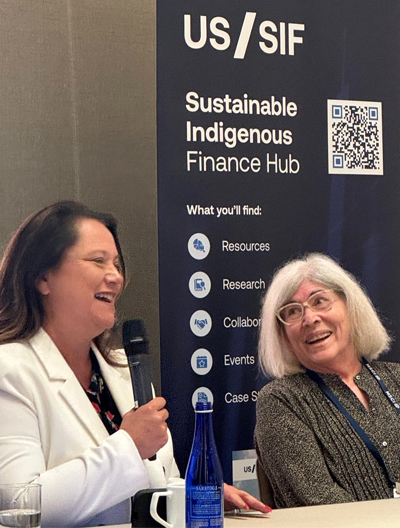
Rebecca Adamson and Fawn Sharp at US SIF Forum 2025
Rebecca Adamson of First Peoples Worldwide (right) with Fawn Sharp, the 23rd President at National Congress of American Indians in Washington, DC at speaking at the US SIF Forum 25 conference

A collaboration between First Peoples Worldwide and US SIF launched the Sustainable Indigenous Finance Initiative (SIFI) at the SIF FORUM 2025 held in June in Washington, DC to standing room only crowds for both Indigenous Peoples sessions. The SIFI inaugural panel was opened by former Secretary of Interior Deb Haaland followed with a powerful plenary moderated by Mark Trahant Founding Editor ICT, Wharton Professor Witold Henisz, First Nations Major Projects CEO Mark Podlasly, and Kyle Whyte Director of the Tishman Environmental Science Center.

The Breakfast Roundtable provided an advanced preview of the Sustainable Indigenous Finance: Investors Guidebook, Navigating the Energy Transition where it was proclaimed a “tour de force” for investors. Designed to be a working resource for investors The Guidebook includes tools, case studies and checklists to help investors accurately identify, assess and mitigate the risks related to Indigenous concerns particularly in the context of energy transition and land-based sectors.

The earliest collaboration between First Peoples Worldwide (FPW) and US SIF was in 1994 at a time when Indigenous Peoples were seen as part of the environment not as sovereign, culturally distinct, landowners and rights holders. FPW founder and Calvert Social Investment Funds Trustee Rebecca Adamson created the earliest standalone Indigenous Peoples Investment Screen. Collaborating with US SIF members, Indigenous Peoples Rights became one of the top 3 shareholder concerns for the next two decades. In 2004, the Onieda Nation, through the leadership of Susan White, collaborated with US SIF and incubated the Investors and Indigenous Peoples Working Group IIPWG. In 2017, FPW was Advisor to the Standing Rock Sioux Tribe on their DAPL investor engagement efforts joining again with US SIF in a worldwide campaign to reroute the Dakota Access Pipeline DAPL.

Today the SIFI collaboration combines the financial acumen, academic rigor and Indigenous thought leadership to flip the script on business models that presume you can do it faster and cheaper without sociopolitical-community risk mitigation. As the world transitions to a low-carbon economy, the material relevance of Indigenous voices has never been clearer. From mineral extraction to renewable infrastructure development, many projects intersect directly with Indigenous lands and communities. Indigenous inclusion is no longer a matter of ethics or compliance – it is fundamental for managing financial risks and opportunities.

5,097 mining projects geographic distribution for energy transition - overlap with Indigenous lands

Geographic distribution of 5,097 mining projects for energy transition minerals and metals, highlighting overlap with Indigenous Peoples’ land and other land-connected peoples.²

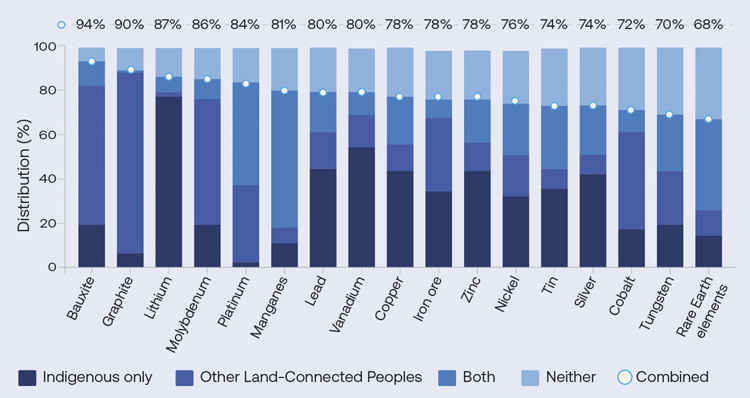
Globally, 72% of investors believe that energy transition investments are accelerating, despite geopolitical uncertainty and fluctuating interest rates. Yet companies often overlook or disregard the impact of their actions on Indigenous Peoples, leading to conflict and violence that, in turn, creates significant business risks – including supply chain disruptions and legal disputes – that can diminish future growth and undermine long term portfolio performance. Indigenous Peoples’ lands hold over half of the deposits for thirty of the essential minerals and metals that are necessary to the energy transition, including 85% of the lithium and 75% of the manganese. Fifty-four percent of the 5,097 global transition mineral and mining projects are located on Indigenous territories.

SIFI comes at a time when the global economy is undergoing a rapid and urgent transition to low carbon technologies and sustainable practices. This shift is driving a surge in capital flows to finance the investments required for this transformation. In 2024, annual investment in the energy transition passed $2 trillion.¹ However this transition is unfolding on complex terrain. Until recently investors lacked access to the data and tools that tied a company’s capacity to manage risk with its performance costs and revenue shortfalls.

Distribution reserves of 17 key minerals and metals account for highest number of extractive projects--First Peoples

Distribution of reserves and resources for 17 key minerals and metals, which account for the highest number of extractive projects globally. Percentages at the top of the graph reflect the combined total for Indigenous and peasant land overlap.²

A groundbreaking study by the Wharton School introduced the first quantitative processing approach to determine how foreign direct investments impacts Indigenous Peoples. Using artificial intelligence to track over 2,300 business and conflict themes the study found that projects located within 31 miles of Indigenous territories experience on average 10 more conflict events per year than otherwise similar projects. For projects within 10 km (6.2 miles) of an Indigenous land claim, the annual incidence of material events, such as costly disruptions, increases by as much as 500%.

According to the International Energy Agency, achieving net-zero globally by 2050 will require six times more mineral inputs in 2040 than we use today. The confluence of the new energy transition and the growing demand for natural resources is placing acute pressure on Indigenous Peoples. The purpose of SIFI is to elevate Indigenous decision-making and to offer meaningful engagement with Indigenous thought leadership, cutting-edge tools and datasets, practical resources and a dynamic SIFI Resource Hub. The SIFI Resource Hub when fully launched will provide a platform to share best practice, offer analytical tools and access to the latest evidence-based research that links a company’s negative impact on Indigenous Peoples to its financial performance. The Hub is an interactive collaborative platform for investors, academics, NGOs and Indigenous members to elevate indigenous innovation, host webinars, curated campaign dialogues, panels, conflict mapping, and latest research topics.

The Sustainable Indigenous Finance: Investor Guide, Navigating the Energy Transition will be released this Fall. The coauthors, First Peoples Worldwide and ImpactARC, an independent women-owned sustainable advisory firm, conducted over 25 interviews across the investment landscape with sustainable investment professionals, institutional asset managers, Indigenous leaders, rating agencies, academics, NGOs, data providers, and legal experts who all expressed the lack of a business case. They needed tools to translate Indigenous priorities and concerns into the investment language with an emphasis on risk management, financial materiality and long-term investment performance.

This new Investor Guide is designed primarily for investors, investment advisors and investment managers who make investment decisions for their clients including trustees who may oversee the management of assets. To inform this guide, we conducted extensive research – drawing on academic reports, case studies, existing frameworks and tools, legal cases, and corporate findings. The Guide outlines why and how investors should consider Indigenous Peoples in their investment decision-making including 18 case studies of what worked and what didn’t. It offers a three-tier de-risking framework. The institutional level and the importance of good policies, oversight and institutional capacity. The portfolio level where initial screening can identify companies in high-risk geographies or high-risk sectors that may require additional due diligence. And the project level where the system wide capacity of a company to manage risk undergoes due diligence to assess whether the company has the competence and managerial capacity to address its operational risks, legal risks, reputational risks, and or even broader systemic instability related to negatively impacting Indigenous Peoples.

Regardless of rapid permitting and deregulating efforts, the more effort a company puts upfront to get it right the more money the company is going to save in the long run. SIFI aims to turn risk into opportunity. Given Indigenous Peoples steward 50% of the world’s land, 54% of the remaining intact forests, and encompasses 40% of key biodiversity areas essential to the survival of unique species, critical water sheds and vast mineral reserves.

In closing, let me quote, Fawn Sharp, the 23rd President of the National Congress of American Indians, who spoke at the Breakfast roundtable on the SIFI and stated, “integrating indigenous knowledge and stewardship into your investments not only aligns with responsible investment standards but also unlocks long-term value creation.”

First Peoples Worldwide - Indigenous Innovations, Investments and Impact for Long Term Value since 2004


Article by Rebecca L. Adamson, President and Founder of First Peoples Worldwide. Rebecca is an internationally recognized Cherokee Economist, who started with the Coalition of Indian Controlled Schools (1972) which led to the 1975 Act for Indian Self-Determination and Education Assistance and today is eponymous Wharton School Rebecca Adamson Indigenous Peoples Risk Index. In 1980 Adamson established the First Nations Development Institute, created the first microloan fund, the Lakota Fund, on Pine Ridge Reservation SD 1984, created the First Nations’ Oweesta Fund a CDFI intermediary and Community Development Financial Institutions (CDFI) Act of 1994.

In 1989 Adamson joined the Calvert Social Investment Funds Board, led the creation of High Social Impact Investing HSII 1991 and established a public private partnership with Calvert Foundation that became Community Notes (1996). She created the first Indigenous Peoples Investment Screen 1993, led numerous Indigenous shareholder campaigns, and helped establish the Investors and Indigenous Peoples Working Group (IIPWG).

In 2004, Adamson founded First Peoples Worldwide, created the FPW Shareholder Advocacy Leadership Training (SALT) 2012, and first effort to quantify investment risk, The FPW Indigenous Peoples Rights Risk Report (IPR3) 2014. She was advisor to the Standing Rock Sioux Nation Council on the Energy Transfer Dakota Access Pipeline DAPL shareholder advocacy campaign 2017-2018. Adamson launched the 30X30 international Indigenous Peoples’ campaign 2019 that established general fiduciary and financial accountability standards “Core Human rights Principles for Private Conservation Organizations and Funders” 2025. She is Advisor to Calvert Impact Capital, Climate United Advisor, and Wharton  2022-2025 on cultural metrics and Wharton ESG WEIP Team teacher: WEIP Study: Long Term Thinking and Indigenous Peoples Financialization of Nature. May 2025.

Footnotes:

[1] https://about.bnef.com/insights/finance/global-investment-in-the-energy-transition-exceeded-2-trillion-for-the-first-time-in-2024-according-to-bloombergnef-report/

[2] https://assets.kpmg.com/content/dam/kpmgsites/xx/pdf/2024/10/energy-transition-investment-outlook-2025-and-beyond.pdf.coredownload.inline.pdf

Additional Articles, Impact Investing, Sustainable Business

Building big business from climate-fueled disasters

By John Howell, Climate & Capital Media

Why the damage from extreme weather is a profit center, and not a risk for insurers.

John Howell-Climate Capital & Media partnershipHere is a climate finance riddle. Why are insurance companies posting record profits even as climate-related losses from natural disasters reach historic highs?

Despite a $182 billion price tag for losses due to weather-related disasters in the US last year, property and casualty insurers reported a near-doubling of their earnings over 2023. After-tax profits of the industry totaled $171 billion last year, compared to $92 billion the previous year. Last year was also an especially good one for home insurers, who booked the first aggregate underwriting profit on home insurance since 2019.

The reinsurance industry is also doing more than just fine, reports Peter McKillop, founder and CEO of Climate & Capital Media. The world’s biggest reinsurers — Munich ReSwiss ReHannover Re, and SCOR — collectively reported a record $13 billion in earnings last year, according to Moody’s. “Climate disaster is good business for banks and insurers,” he concludes.

Wait! I Thought the Climate was Bad for Insurers

The answer to this apparent contradiction is simple, as millions of Americans are now discovering. Cash-flush insurers like State Farm are raising premiums faster than claims are rising, while reducing their exposure in high-risk areas.

In other words, your loss is their gain. In the industry, it is referred to as the “insurance cycle.” The insurance cycle is a phenomenon that has been understood since at least the 1920s. But now rising climate-related property damage is exacerbating the cycle. American premium holders are now experiencing the portion of the cycle when insurers tighten their underwriting standards and sharply raise premiums after a period of growing underwriting losses.


Insurance Cycle graph - Climate & Capital Media


The “Insurance Cycle”

During a hypothetical “soft” period in the cycle (see above), premiums are low, the capital base is high, and competition is high. Premiums continue to fall as insurers take greater risks to compete or risk losing business in the long term.

Then, catastrophe strikes, such as this year’s firestorms in Los Angeles. At this point, the market hardens, as premiums soar and underwriters either reduce risk or pull out altogether, as many insurers have done in high climate risk states like Florida, Louisiana, and California.

In California, companies are protecting their bottom lines by simply pulling coverage, as they assess the $40 billion cost of wildfires earlier this year. As competition shrinks, rates rise, and profitability returns. This occurred after Hurricane Katrina devastated a swath of the US Gulf Coast in 2005, when riskier, less well-capitalized insurers filled the void left by departing insurers. The Insurance cycle starts again.

Insurers have another huge advantage. They can sell their “risk” through the sale of their insurance positions to giant, mostly European-based “reinsurers.”

So far, at least, increased losses due to climate change have not busted the cycle.

Endless Damage

But how long can property and business owners bear a cycle of endlessly increasing premiums, or having policies cancelled? Worldwide, weather disasters in 2024 resulted in an estimated $320 billion in insured losses, about 30 percent more than the previous year. In evaluating overall economic losses due to weather events, estimates range from $500 billion to $2 trillion in such losses over the past decade.

Catastrophe Bonds

Given such enormous numbers, where can insurers and reinsurers look for future profits? Why, sell bonds focused on catastrophe, of course. Catastrophe bonds or “CAT bonds” are the hottest product in the industry because they allow the insurance company to transfer some of the risk to investors. In that way, they are a bit like corporate high-yield or “junk bonds.” Mostly, institutional investors accept greater risk for a greater yield, but with CAT bonds, the risk is catastrophic property loss, rather than a company going bankrupt. CAT bonds also have a unique feature in that they are more correlated to weather patterns than business cycles.

Kaching!

It is then no surprise that catastrophe bond issuance is on track to be the second-largest year ever for the products since their introduction in 1994. This year, in the first six months, more than $15 billion in new CAT bonds have been issued, with another $1.8 billion in the market pipeline. In all, $16.8 billion of CAT bonds will have been issued by the end of June, just shy of last year’s record of $17.6 billion.

When you combine the benefits of the insurance cycle and the boom in CAT bonds, escalating climate-related property damage is big business. In 2024, the US experienced $27 billion in weather and climate-related disasters of over $1 billion or more, including 17 severe storm events, five hurricanes, one wildfire, one drought, one flood, and two winter storms. The overall price tag, $183 billion, is the fourth highest on record. When considering the period since 1980, the US has endured 403 weather and climate disasters that individually have reached $1 billion or more. The cumulative cost: more than $2.9 trillion. That is a lot of new business.

Rosy Growth Prospects for Rising Property Damage

This year is also expected to be a very fine vintage. Insured losses from natural catastrophes are well on their way to record levels, and hurricane season is expected to be very fruitful. Longer term, the prospects are even greater. A report by Swiss Re Institute projects that a combination of growing population, unrelenting urban sprawl, and increased climate damage will supercharge risks, leading to higher premiums and greater issuance of CAT bonds. Like last year, says Swiss Re, severe thunderstorms, floods, and wildfires will be the main drivers behind surging property loss.

And the future looks bright (for insurers) who are modeling long-term disaster growth to grow 5%–7% annually.

Globally, it’s the same story. Over the last 30 years, the total cost of insured losses from natural catastrophes has grown at a faster pace than the global economy, more than doubling relative to global gross domestic product since 1994, according to a Zurich Insurance report.

Build More Now

And in a masterpiece of greenwashing, Swiss Re ignores the potential profit of being masters of disaster and instead “highlights the ‘urgent need for action from governments, insurers, and communities to collaboratively build climate resilience.” Which, of course, needs to be insured and funded with CAT bonds!

And that is just what insurers are doing as they advise clients on how to profit from a 3°C world, notes McKillop. “Today, it’s about managing risk for the wealthy and mining new revenue streams from the wreckage. If extreme weather is inevitable, why not make money off the fallout?”

Welcome to disaster capitalism.


Article reprinted with Permission as part of GreenMoney’s ongoing collaboration with Climate and Capital Media.

Article by John Howell, Finance Editor for Climate & Capital Media and a partner in his family agri-business firm in Missouri. John is a writer, editor, and broadcaster who advises on communications and media strategy. He was co-founder, editorial director, and chief of thought leadership for 3BL Media, for which he managed all original editorial content, wrote, and edited newsletters, and created the Brands Taking Stands initiative. He has worked as an editor and contributor for Elle, Artforum, and High Times magazines, developed new media for Hearst Magazines, and created communications for Calvin Klein, Polo/Ralph Lauren, and The Body Shop. He lives and works in New Hampshire and Maine.


Energy & Climate, Featured Articles, Sustainable Business

Rewriting the narrative of Climate Change: from sacrifice to opportunity

By Will Wiseman, Climatize

Aerial Photography of the 2019 Global Climate strike in Barcelona, Spain

Will Wiseman, cofounder ClimatizeWhen Alba Forns (Co-Founder and COO) and I, Will Wiseman (Co-Founder and CEO), started Climatize, we didn’t want to build another investing platform. After joining 100,000 people at the 2019 Global Climate strikes, we felt the power of being part of a movement. But in that moment, we realized we’d all go home, and the next day, nothing would change. If cardboard signs were our strongest tool, it showed just how much was missing.

How could we rethink our collective power and direct it toward the causes we care about? We envisioned an investment platform where each person in that movement could put their money to work building what we wanted: more renewable energy and fewer emissions. However, most options were narrow and lacked true transparency. Was it too much to ask to see exactly where my money was going?

As renewable energy engineers, Alba and I saw a gap in the U.S. renewables funding ecosystem that needed solving, as the IEA reflected on its 2023 report: “Small-scale renewable energy projects often face significant financing barriers, as traditional investors and banks prefer larger utility-scale projects that offer lower transaction costs per MW and higher returns¹.” Meanwhile, smaller, community-focused projects (the ones with local impact) kept getting left behind. Might we solve both problems in one move?

In just over two years, that vision has become real: more than $9 million has been invested via Climatize, helping fund 19 solar, battery storage, energy efficiency and EV charging projects across the U.S. This was all possible thanks to a small but rapidly growing community of over 2,300 investors (+202% YoY) who decided to Climatize their portfolio.

Powering Up Climate Action Through Renewable Energy Investing

Climatize has hosted a range of investment offerings, with many more on the way. Each project is vetted by our team, who bring deep experience in renewable energy engineering, finance, and law to evaluate the project’s potential to deliver returns and emissions impact. To date, all projects have been repaid in full and on time; however, past performance does not guarantee future results. This intersectional mission is why we are here: to make impact investing easy and trustworthy for everyone.

These projects are as real as it gets – from solar installations on farms in Tennessee to micro-grids in Georgia, from energy efficiency upgrades at low-income homes in New England to EV chargers at California community markets, just to name a few. And the list keeps growing.

These offerings aren’t just numbers on a progress bar. They’re projects that cut energy bills for families and businesses, provide backup power during outages for communities, and help remote and rural areas become more resilient to extreme weather and rising energy costs. The true value materializes after the funding goals are met and installations are complete – when you see your money in action, generating a positive impact on people’s lives. That’s what makes Climatize unique.

I think of Joshua Dowdy, owner of Liberty Hill Farms and an Army veteran. During a recent visit to the projects, he shared how his solar installation transformed his farm, boosting energy independence and turning him into a local clean energy pioneer. You can watch our Climate Conversation #1 with Joshua below. His story is just one example of the resilience and community impact made possible by all the investors who chose to back their renewable energy projects.

POWERED with Joshua Dowdy on Installing Solar in Rural America

For me and the team, Climatize keeps showing that the renewable energy ecosystem works and is ready to scale. One important reminder here: Over 95% of new energy generators waiting to be interconnected in 2024 are zero-carbon resources like solar, wind, and battery storage².

So, Why Should Anyone Care?

We want to reframe climate change from a narrative of sacrifice to one of opportunity.

At this point, we all know that climate change isn’t a threatening future problem, but a concerning reality that’s shaping our everyday lives right now. Just look at the recent floods in Texas, which took more than 120 lives.

The National Oceanic and Atmospheric Administration (NOAA), highlighted dramatic alterations in the way weather changes patterns behave from one extreme to another in shorter periods, how our food systems’ productions struggle to keep up and how this affects the quality of their final products³, and in the rising costs that are impacting our current lives. But if you’re reading GreenMoney, then we’re preaching to the choir.

Another success story is MB Reps, an auto shop in Nashville, Georgia. Their solar and battery system, funded through Climatize, became a lifeline during Hurricane Helene. When the town lost power for seven days, they kept cooling and cold storage running for food and medicine, turning their project into a community resilience hub.

Shifting Gears to Solar, a $143,000 solar and battery storage system on MB Reps’ roof – photo courtesy of Climatize

For many people, climate change feels urgent, yet it’s easy to feel powerless to make a real difference. Figuring out where to start can be overwhelming. But your choices do matter. Research shows that individual decisions can play a significant role in reducing emissions and shaping energy systems4. So, every action we take could help drive us closer to a cleaner, more resilient future. We can look at climate change as an opportunity to make our lives more efficient, connected, and sustainable.

Can Anyone Get Started in Impact Investing?

Investing in renewable energy projects is a way to empower the energy transition. As Jigar Shah, former Director of DOE Loan Programs Office, said: Accelerating climate wealth means more than just founding startups and raising venture capital. It means giving everyone the ability to build wealth by investing in the economy we all want to live in.”

For a long time, putting your money to work this way felt out of reach because of high minimums, accreditation rules, and complex terms. Not anymore. New tools like regulation crowdfunding and climate-focused options make it possible for more people to participate directly.

On Climatize, you can choose project offerings that align with your goals, starting at just a $10 minimum.

If you would like to try Climatize, it’s important to know that investing through our platform is a regulated process. As a potential investor, you’ll need to provide your Social Security Number and other basic information to verify your identity and your investment capacity, just like any other brokerage. Data security is important to us, and that’s why we take our gatekeeping role seriously. You can read our Privacy Policy to see how we safeguard your data. We are with you every step of the process.

Are You Ready to Climatize?

We know getting started can feel intimidating. That’s why we created a free guide that breaks down what impact investing means, how Climatize works, and what to expect. We are not asking for anything, just giving you value. This isn’t charity. You can download it from the specific landing page we set for the GreenMoney readers.

We are not done here. We will be back in the next issue with an infographic and a map showing all the funded projects, plus deeper dives into some of the most inspiring success stories from Climatize. We welcome anyone to be part of this journey towards the energy transition. Spread the word. Stay tuned.


Article by Will Wiseman, CEO & Co-Founder of Climatize. Will has over a decade of experience in renewable energy, particularly solar, having operated in every role, including finance, engineering, project management, and construction, where he personally built 15 solar farms. He holds a Double MSc in Renewable Energy Engineering from KTH, the Royal Institute of Technology.

After joining the 2019 Global Climate Strikes, Will quickly learned that while many people view climate change as an urgent problem, they often feel powerless to make a difference. From this observation he founded Climatize which makes it incredibly simple to invest in renewable energy projects across the US with as little as $10 while earning up to 10% in annual interest. As the CEO of Climatize, Will has built a community of over 2,300 investors who have invested over $9,400,000 in 19 solar, battery storage and energy efficiency projects in 9 states. 

In 2024 Climatize won the Keeling Curve Prize in the Finance category, in 2023 Will was selected among the Forbes 30 Under 30 honorees in the Social Impact category and in 2022 he was selected among the Young Global Changers by the World Policy Forum. His work at Climatize has been featured in the Wall Street Journal, Forbes and Fast Company’s World Changing Ideas list.

His goal is to fund $1 billion per year of renewable energy projects within 5 years. Together with the team at Climatize, he’s building the financial network for climate action that will enable anyone to invest in any renewable energy project from anywhere in the world.  


Article Footnotes:

1  https://www.iea.org/reports/renewables-2023

2  https://emp.lbl.gov/publications/queued-2024-edition-characteristics#:~:text=The%20amount%20of%20new%20electric,wind%2C%20and%20battery%20storage

3  https://www.climate.gov/news-features/blogs/beyond-data/2024-active-year-us-billion-dollar-weather-and-climate-disasters

4 https://www.sciencedirect.com/science/article/pii/S2590332223003548

Energy & Climate, Featured Articles, Impact Investing, Sustainable Business

Saving our Southern Ocean, one Algae-based Omega 3 supplement at a time

By Ashlan Cousteau, SeaVoir and Voyacy Regen

Above Illustration: Krill don’t produce their own omega-3s; instead, they obtain them by consuming algae, which synthesizes the essential fatty acids. Whales, seals, penguins and countless other species depend on these organisms for survival. 

To the far south, in the icy ancient waters around Antarctica, the largest climate catastrophe in the history of our planet is unfolding, potentially devastating our planet for generations to come, but you’ve probably never heard about it. Krill, the small but mighty lynchpin for the entire Antarctic marine ecosystem and the food that feeds the entire global marine food web, are being taken from their natural habitat at enormous rates primarily for one really stupid reason: the mass production of Omega-3 supplements. Ripped out of the water and away from the diets from keystone species like whales, dolphins, and penguins, these krill are mashed up in massive industrial processors, compressed down into tiny gel capsules destined for the health section of your local pharmacy.

Ashlan and Philippe Cousteau, founders of SeaVoir and Voyacy Regen
Ashlan and Philippe Cousteau – ocean restorationists, filmmakers, founders of SeaVoir and Voyacy Regen

The demand makes total sense: as our planet teeters on the brink of climate catastrophe, human health trends increasingly turn to nature in search of resilience. Omega-3 fatty acids, long hailed for their cardiovascular and cognitive benefits, have sparked massive global demand. Yet the irony could not be starker: in seeking to heal ourselves, we are wreaking havoc on the health of one of Earth’s most critical ecosystems.

But there is another way — an answer that does not come at the cost of abusing the Southern Ocean to trigger ecological collapse. SeaVoir, a pioneering venture in the rising tide of the blue economy co-founded by my husband, Philippe Cousteau, and I, offers a bold, necessary alternative: an algae-based Omega-3 supplement that honors both human wellness and oceanic integrity. In doing so, SeaVoir’s goal is not only to change the supplement industry — we hope to chart a course toward a future where the health of people and the ocean move forward together.

Omega-3 fatty acids — particularly EPA and DHA — have become a cornerstone of the modern health and wellness industry. Their association with heart health, brain development and inflammation reduction has turned them into a multibillion-dollar commodity. But behind each bottle of fish or krill oil lies a troubling reality: ecological devastation.

The production of traditional Omega-3 supplements is heavily dependent on the wholesale slaughter of small pelagic fish and krill. These animals form the foundation of marine food chains, particularly in the Southern Ocean. When we remove them in massive quantities, we don’t just reduce fish stocks — we unravel ecosystems.

Adelie Penguin Colony, photo Philippe Cousteau
Adelie Penguin Colony, Antarctica – photo courtesy of Philippe Cousteau

The consequences are dire. Whales, seals, penguins and countless other species depend on these organisms for survival. Starving krill populations mean starving megafauna. And these are not just cute animals — they are vital actors in the ocean’s carbon cycle. Whales, for example, help fertilize phytoplankton through their waste, encouraging carbon absorption on a planetary scale. Disrupting these relationships weakens one of the world’s most potent natural carbon sinks — the Southern Ocean, which sequesters more atmospheric CO? than any other region on Earth, including the Amazon rainforest.

This isn’t simply an ecological crisis — it’s a climate catastrophe. As ocean temperatures rise and acidity increases, we must preserve and strengthen the biological networks that keep the planet cool. Continuing to extract from these systems to meet wellness demands is both shortsighted and dangerous.

Enter SeaVoir. Born from a confluence of science, sustainability and visionary entrepreneurship, with a healthy dose of our family legacy, SeaVoir reimagines what health and healing can look like in the 21st century. At its core lies a simple but radical idea: the health of our ocean is inseparable from our own.

SeaVoir Wellness Omega 3+ Ultra 60 capsule jar
Photo courtesy of Philippe Cousteau

Drawing inspiration from the legacy of my husband’s grandfather Jacques Cousteau and generations of marine stewardship, SeaVoir was founded on the belief that innovation can and must be restorative. It is not enough to do less harm. In the face of planetary tipping points, our task is to actively heal — both ourselves and the ecosystems we are part of.

SeaVoir’s flagship product is an entirely algae-based Omega-3 supplement. No fish. No krill. Just pure, potent nutrition from the original source of marine Omega-3s — algae. By bypassing the middlemen of the ocean food chain, SeaVoir eliminates the need for extractive harvesting and opens a pathway to scalable, sustainable wellness.

In fact, studies have shown that algae-based Omegas are actually more absorbable and nutrient rich than their traditional fish-krill based counterparts. They don’t contain the nasty aftertaste or fish burps that plague those who take common traditional fish oil Omegas. In every way, SeaVoir’s supplements are the best choice for those who want the numerous benefits that come from Omega 3s.

But this is more than a product. It’s a mission: to create a regenerative relationship with the ocean through science, entrepreneurship, and public education. SeaVoir is not just reducing harm — it is planting the seeds of a blue future.

What makes algae so powerful, is its simplicity. Algae is where Omega-3s originate in the marine food chain. Fish and krill accumulate these fats by eating phytoplankton and microalgae, so SeaVoir decided to go straight to the source.

Cultivated in photobioreactors — controlled, land-based systems that require no ocean harvesting — SeaVoir’s microalgae are grown with minimal water and net-positive carbon outcomes. These closed-loop environments drastically reduce environmental impact compared to fish or krill farming, which are resource-intensive and devastating to surrounding ecosystems.

Moreover, algae cultivation offers significant climate benefits. Algae absorbs CO? as it grows, and its rapid reproduction rates make it a promising avenue for carbon capture.

The implications are vast. By decoupling Omega-3 production from wild ecosystems, SeaVoir offers a restorative alternative that can be scaled globally. This is not a niche substitution — it is a template for how technology and ecology can work in harmony to meet human needs without planetary cost. It also takes a firm step through the door to an exciting and promising future: the restorative blue economy.

The restorative blue economy is an emerging framework that recognizes the ocean as a source of sustainable economic growth. It goes beyond traditional green investments by focusing explicitly on the economic development of marine ecosystems, technologies, and economies in a way that builds ecological health, i.e. no offshore oil and gas.

SeaVoir is a textbook example of what the restorative blue economy aspires to be: profitable, scientifically sound, and regenerative. For impact investors, it ticks every box — delivering a premium consumer product while aligning with ESG (Environmental, Social, Governance) goals. It also represents a key area of growth within climate finance: ocean-based biotech and sustainable aquaculture.

As interest surges in plant-based innovation and marine conservation, SeaVoir stands at the crossroads of both. Investors are beginning to understand that the future of climate solutions doesn’t lie only in forests or solar panels — it lies in the vast, underexplored realm of our ocean. SeaVoir is a beacon for capital that seeks purpose alongside profit.

Today’s consumers are more informed — and more demanding — than ever. We see a growing movement toward clean-label, ethical and sustainable health products. Plant-based alternatives are not just trending — they are becoming standard.

SeaVoir speaks directly to this moment. It offers wellness without compromise. Its algae-based Omega-3s are vegan, non-GMO, mercury-free and sustainably grown. But more importantly, they tell a story — one that connects each capsule to the preservation of whales, krill and the delicate machinery of ocean life.

This storytelling is crucial. Brands that educate and inspire foster deeper consumer trust. SeaVoir’s transparency, ocean advocacy and scientific rigor position it not just as a supplement provider, but as a movement — a choice consumers can feel proud to make.

As awareness of the environmental cost of traditional Omega-3s spreads, SeaVoir’s market position will only strengthen. It is not merely riding the wave of plant-based wellness — it is helping to shape it.

Beyond Omega-3s, SeaVoir sees a future of restorative marine wellness: supplements, skincare, and nutraceuticals that are not only safe and effective but actively beneficial to the planet. It envisions partnerships with climate research institutions, conservation groups, and fellow innovators in the blue economy.

With ambition matched by integrity, SeaVoir seeks to be more than a company — it aims to be a lighthouse. A signal of what’s possible when commerce, science and care for the Earth work together.

At a time when our ocean cries out for stewardship and our climate hangs in delicate balance, SeaVoir offers more than a product — it offers a promise. That we can nourish ourselves without destructive extraction. That health need not come at the price of harm. That innovation, when rooted in ecological integrity, can restore what we’ve broken.

To investors, SeaVoir signals a new frontier — a place where climate solutions, biotechnology and consumer demand converge. To consumers, it offers a choice: to support wellness that is not blind to its origins but deeply connected to them.

As my grandfather-in-law Jacques Cousteau once said, “We forget that the water cycle and the life cycle are one.” SeaVoir remembers. And in remembering, it leads us toward a blue future — vibrant, resilient, and alive.


Philippe and Ashlan Cousteau scuba dive, photo courtesy of Philippe CousteauArticle by Ashland and Philippe Cousteau, impact entrepreneurs, ocean restorationists and filmmakers who dedicate their lives to our blue planet across multiple industries.

Ashland and Philippe are the co-founders of Voyacy Regen, a company bringing coastal restoration to commercial scale to regenerate our natural coastal barriers, along with Voyacy Places creating exciting destination-based experiences that engage guests to discover the wonders of the ocean and inspire them to protect and restore it.

The Cousteaus also have two impact wellness brands. SeaVoir offers an Omega 3 supplement made from algae, nature’s source of Omega-3’s (fish and krill get their Omega-3s by eating algae). SeaWeed Naturals combines the powerful benefits of restoratively farmed marine ingredients like seaweed and algae and regeneratively-farmed land ingredients to create a whole new category of Land X Sea Wellness. 

Ashlan and Philippe have produced and starred in multiple award-winning television documentaries for Discovery, Travel Channel, CNN and more. In 2004, Philippe founded EarthEcho International, an environmental education organization dedicated to building a global youth movement to protect and restore our ocean planet which has worked with over 2 million youth in 146 countries.

Energy & Climate, Featured Articles, Impact Investing, Sustainable Business

HOPE Credit Union Makes Landmark Investment in Talladega College in AL

Pictured above: Interim Talladega College President Dr. Walter Kimbrough, Talladega College Board of Trustees Chair Rica Lewis-Payton, and Hope Enterprise / Hope Credit Union CEO Bill Bynum at the “State of the College” update.

Impact finance leader has supported 26 HBCUs across the Deep South

HOPE (Hope Enterprise Corporation / Hope Credit Union) signaled its ongoing commitment to historically black colleges and universities (HBCUs) with a $15 million working capital loan to Talladega College in Talladega, Alabama to empower the college to restructure its balance sheet and bolster its long-term viability.

Talladega loan is the latest example of HOPE’s alliance with HBCUs to increase economic mobility in the Deep South. In 2019, HOPE published and disseminated the “HBCU-CDFI Economic Mobility Guide,” a seminal analysis that outlined key outcomes from collaboration between Jackson State University, Mississippi Valley State University and HOPE to improve conditions in under resourced rural and urban areas. HBCUs have long played a critical role in moving people along the economic continuum. Similarly, Community Development Financial Institutions, or CDFIs, invest in people and places that have been historically underbanked.

HOPE has generated over $60 million in investments to support HBCUs across the Deep South. Examples include Oakwood University’s Healthy Campus 2020 program, a strategic initiative established to address poor health outcomes and preventable diseases among students and to help address health, food and job insecurity faced by low-income residents of Northwest Alabama; and financing that enabled Fisk University to finance the renovation of four historic buildings to enhance student services and academic programs, and complete technological and security upgrades throughout the campus.

“HBCUs make an outsized contribution to the prosperity of people and communities in the Deep South. Our investment in Talladega, Oakwood and Fisk reflect the alignment of mission and values between HOPE, HBCUs, and the communities they serve,” said HOPE CEO Bill Bynum.

HOPE’s investment in Talladega College comes at a pivotal time for Alabama’s first private historically black liberal arts college, known for academic excellence for over 150 years. The infusion of working capital is expected to enhance the institution’s cash flow, support operational needs, and build a foundation for future growth. This initiative marks a key milestone in the college’s journey toward long-term sustainability following a series of strategic actions implemented since September 2024.

HOPE provides broad-based support for HBCUs. Beyond financing for campus facilities and the surrounding communities, HOPE places a priority on being a financial resource to HBCU faculty, staff, students, alumni and their families, which are often underserved by traditional banks. HOPE is also the primary financial institution for the HBCU Athletic Conference, the nation’s largest athletic conference for private HBCUs.

“Our support for HBCUs is about more than dollars, or even the institutions themselves — it is an investment in the economy of the entire nation. When HBCUs succeed, they equip our future workforce, future entrepreneurs and future leaders to drive an economy where everyone can prosper,” said Bynum.

HOPE invites HBCUs, community development partners, and philanthropic organizations to collaborate in shaping a more prosperous future. Visit our Community and Economic Development HBCU page to learn more.

Hope Credit Union 30 years

About HOPE

HOPE (Hope Enterprise Corporation, Hope Credit Union and Hope Policy Institute) provides financial services; leverages resources; and engages in advocacy that strengthens the financial health and wealth of people in under-resourced Deep South communities. Since 1994, these efforts have benefitted more than three million people in Alabama, Arkansas, Louisiana, Mississippi and Tennessee, and influenced billions in investments in persistent poverty communities nationwide. Learn more at www.hopecu.org

Additional Articles, Impact Investing, Sustainable Business

ImpactAssets 2025 Impact Investment Fund Managers List

More than one-quarter of IA 50 2025 applicants were first-time applicants, underscoring the rapid expansion of the impact investing industry globally.

ImpactAssets, the impact investing leader with a 15-year track record of mobilizing capital for good, recently released the ImpactAssets 50™ (IA 50) 2025, the definitive guide to impact investment fund managers globally. This year’s IA 50 features 165 experienced and emerging impact investment fund managers, the highest number to date. See the full list here.

Now in its 14th year, the IA 50 remains the most comprehensive resource for identifying best-in-class impact fund managers, offering investors a rigorously curated and publicly accessible database to explore the industry’s leaders across the full range of investment types.

This year’s IA 50 highlights unabated momentum in impact investing: Application volume has grown 250% since 2020, and 28% of 2025 applicants had never applied before – both signals of rapid market expansion. Total assets under management (AUM) of IA 50 firms surged to $130.6 billion, representing a 35% year-over-year increase – driven by the inclusion of new, large impact managers, as well as the steady growth of established firms. Notably, this year’s Emerging Impact Manager (EIM) category lists 21 managers who focus on climate as their primary impact theme, the largest number ever in this category and a category total that has nearly doubled since 2021. This year’s EIM category also witnesses a resurgence of infrastructure-focused managers with three such managers selected, signaling the highest-ever infrastructure focus on the EIM list.

“As impact investing continues its march into the financial mainstream, the IA 50 has become a powerful barometer of industry maturation and the most respected recognition in our sector,” said Margret Trilli, CEO and Chief Investment Officer of ImpactAssets and an IA 50 Review Committee member. “The scale, growth and credibility of this year’s IA 50 managers demonstrate that impact investing is not only thriving, it is becoming an undeniable force in the market.”

Market Signals: Key Trends from the IA 50 2025

All told, 50 impact investing fund managers were selected for this year’s core IA 50 list, 65 managers for the Emerging Impact Manager list, and 50 managers for the Emeritus list.

The composition of the IA 50 2025 reveals key trends shaping impact investing today:

  • Growing Manager AUM:A total of 24 IA 50 managers have reached institutional scale, with $1 billion or more in AUM, a 33% increase over the two previous years.
  • Financial Returns and Impact Work In Tandem: 46% of managers on the list target market-rate returns, while 28% pursue above-market returns. The core IA50 list is predominantly market-rate (36%) and above-market (28%) managers.
  • Climate and Social Impact Priorities:50% of listed managers primarily focus on social themes such as financial inclusion and community development, while 33% prioritize climate-related investments, including clean tech, alternative energy, and decarbonization.
  • Beneficiaries of Impact Capital:The majority of IA 50 managers focus on supporting small businesses, rural communities, low income, and disadvantaged communities.
  • Third-Party Impact Verification on the Rise: 28% of core IA 50 managers and 24% of Emeritus managers have impact reports verified by third-party assessors, marking a steady progression in impact transparency.

“This year’s IA 50 showcases how impact investing is quickly coming of age – not only in scale and financial sophistication, but also in accountability and rigor,” said Jed Emerson, IA 50 Review Committee Chair. “The increasing prevalence of third-party impact verification, larger institutional-scale fund sizes, and record-breaking newer entrants signal a maturing market that remains deeply committed to driving positive change.”

The IA 50 Selection Process: Unmatched Rigor and Expert Review

ImpactAssets employs a rigorous multi-stage process to select the IA 50, ensuring it remains the most credible and thoughtfully curated benchmark for impact investing excellence. Unlike lists based purely on AUM rankings or editorial selection, the IA 50 blends quantitative analysis with expert qualitative review to identify managers that are not only financially sound, but also deeply committed to measurable impact.

IA 50 selections are made by the distinguished IA 50 Review Committee, composed of 16 of the most globally-recognized impact investing leaders and practitioners, ensuring that the IA 50 remains the industry’s most credible, thoughtfully curated benchmark for impact investing excellence. The review process includes a quantitative analysis, led by ImpactAssets Capital Partners, based on application information, impact reports and public disclosures. The IA 50 Review Committee makes the final selection, ensuring the analysis adheres to a structured framework of fairness and rigor. All firms included in the IA 50 have met strict criteria, including a track record in impact investing, clear social and environmental impact goals, and U.S. investor accessibility.

“The IA 50 not only reflects where impact investing is today, but also provides a roadmap for its future,” said Rehana Nathoo, Founder and CEO at Spectrum Impact and an IA 50 Review Committee Member. “The rigorous selection process and expert review that define the IA 50 reinforce its position as the industry’s gold standard – giving investors confidence that the firms featured are at the forefront of driving meaningful impact.”


About the ImpactAssets 50 

ImpactAssets 50™ (IA 50) is the definitive guide to impact investing fund managers globally. The publicly available database is composed of experienced and emerging private debt and equity impact investment fund managers committed to generating positive impact. The IA 50 2025 reflects the innovation and exponential growth of impact investing that the IA 50 has helped to spotlight over 14 years.  The IA 50 is not an index or investable platform and does not constitute an offering or solicitation to buy or sell securities or a private placement, or recommend specific products. Nor is this an endorsement of any of the listed fund managers. It is not a replacement for due diligence. Additional details on the selection process are available here.

About ImpactAssets

ImpactAssets Inc. is an impact investing leader dedicated to changing the trajectory of the planet’s future and improving the lives of all people. As a leading impact investing firm, ImpactAssets offers deep strategic expertise to help its clients define and execute on their impact goals. Founded in 2010, ImpactAssets increases flows of money to impact investing in partnership with its clients through its impact investment platform, philanthropic solutions, and field-building initiatives, including the IA 50 database of private debt and equity impact fund managers. ImpactAssets has more than $3 billion in assets, working with purpose-driven individuals and their wealth managers, family offices, foundations, and corporations. ImpactAssets is an independent 501(c)(3) organization. is an independent 501(c)(3) organization.

About ImpactAssets Capital Partners 

ImpactAssets Capital Partners PB LLC is an investment adviser registered with the U.S. Securities and Exchange Commission. Registration does not imply a certain level of skill or training. ImpactAssets Capital Partners is a public-benefit LLC owned by ImpactAssets. ImpactAssets Capital Partners was created to bring the ImpactAssets platform and customized investment services to institutional investors such as family offices, foundations and corporations.

Additional Articles, Energy & Climate, Food & Farming, Impact Investing, Sustainable Business

Sustainable Indigenous Finance ‘Collaboration for Innovation’ to be launched at the US SIF Annual Forum

The world is changing and so are the markets. US SIF is exploring new initiatives that will strategically position members with better risk-based analytics to navigate the increasing volatility and offer innovative collaborations with the diverse perspectives, creativity and investment acumen needed to identify new risks and opportunities within the finance markets in this rapidly changing world.

The first US SIF Collaboration for Innovation will be launched at its Annual Forum in Washington DC on June 27. Led by US SIF Board Member and Founder of First Peoples Worldwide, Rebecca Adamson, the collaboration will establish an investors and Indigenous Peoples’ hub that combines investment acumen and academic rigor with a global Indigenous network for innovating Sustainable Indigenous Finance. The purpose of the Sustainable Indigenous Finance Collaboration is to provide practical analytics and evidence-based research (including quantitative and empirical evidence on Indigenous risks) and establish a safe creative space to translate Indigenous priorities (such as land rights, culture shelf determination, and FPIC), specifically through the lens of financial materiality.

Financial Materiality and Indigenous Peoples

A new report by US SIF, First Peoples, and ImpactARC, Sustainable Indigenous Finance: Investors and Indigenous Peoples, found that investors often overlook the potential adverse impacts on Indigenous peoples that can then result in significant business risks — from supply chain disruptions to land tenure disputes — and hence, affect financial performance. Indigenous Peoples’ land constitutes 23% to 30% of the earth’s surface and contains vast natural resources such as 80% of the biodiversity[1], 50% of the inland waters, 36% of the large intact forests and vast amounts of the new transition minerals (over 50% of the lithium 70% of the nickel, copper)[2]. This reinforces the fact that Indigenous conflict isn’t just about the extractive sector — it now spans new transition minerals, natural resources, ecoservices, and clean energy.

Recent research by the Wharton ESG Initiative supports this thinking.  Wharton found that Indigenous Peoples’ rights — coupled with their natural assets — have been historically under-addressed by investors and are now impacting financial performance across the majority of sectors. The first-of-its-kind global research, titled ‘ESG Material Credit Events and Credit Risks’[3], quantified material risk events for 1,444 projects operating on or near Indigenous lands and found that companies incur 500% higher risk events than those operating elsewhere. Moreover, individual projects had an increased risk from 3 to 66 times higher than other company projects. In a further study, Wharton tracked the correlation to Indigenous Peoples’ conflict and potential material risk factors Research found that foreign direct investment (FDI) increases armed conflict across all sectors[4]. The meta-study looked at over 3,000 Indigenous conflicts and concluded that where both Indigenous lands and investments co-exist, an additional 6.7-armed conflict events can be expected in the following year.

In both studies Wharton also found that companies with poor Indigenous Peoples risk management also had low environmental and social performance ratings as well as higher financial risk. Investors are often analyzing these risks separately and overlooking their interconnectedness. Factors such as erratic weather patterns, water insecurity and the exponential increase in demand of goods and services should not be viewed in isolation as they are frequently correlated. Investors still looking at their portfolios as an aggregate of individual businesses without acknowledging the underlying correlated risks to their asset base may be mis-valuing their portfolios.

Washington, DC: The Sustainable Indigenous Finance Panel

The Sustainable Indigenous Finance Collaboration, curated by Rebecca Adamson, eponymous of the Wharton Rebecca Adamson Indigenous Peoples Risk Index and Advisor to the Wharton School-wide ESG Initiative, will be announced tentatively by Deb Haaland, former Secretary of Interior and candidate for New Mexico Governor, at the US SIF Annual Conference this summer.

The announcement will be followed by a panel of the foremost experts and Indigenous leaders for a conversation on how investors can support Indigenous priorities and investment opportunities along with a deep dive into the newest Indigenous ESG research and how to reduce portfolios volatility. The panel on “Sustainable Indigenous Finance” and the new report, Investors and Indigenous Peoples will launch on Friday, June 27th.

Esteemed Panelists will Include:

Mark Podlasly – Member of the Nlaka’pamux Nation in British Columbia, serves as Chief Executive Officer at the First Nations Major Projects Coalition (FNMPC). FNMPC is dedicated to protecting the environment and advocating for better benefits and equity positions in the projects on its members’ traditional territories. FNMPC project portfolio now exceeds a combined total capital cost over $45 billion.

Witold (Vit) Jerzy Henisz – Vice Dean and Faculty Director, the ESG Initiative Deloitte & Touche Professor of Management in Honor of Russell E. Palmer, former Managing Partner the Wharton School at the University of Pennsylvania.

Mark Trahant – Winner of the 2025 I.F. Stone Medal for Journalistic Independence Nieman Foundation, Pulitzer Prize finalist for his reporting on Native Americans, PBS  Frontline reporter, Seattle Times columnist winner of the Society of Professional Journalists Award, former editorial page editor for the Seattle Post-Intelligencer, Chairman and CEO of the Maynard Institute for Journalism Education, Editor at Large of ICT and member the American Academy of Arts and Science.


Footnotes:

[1]  https://iwgia.org/en/news/3268-facts-indigenous-peoples

[2]  https://www.icmm.com/en-gb/stories/2024/we-cannot-ignore-the-tension

[3] Witold, J. Henisz, James McGlinch, ESG, Material Credit Events, and Credit Risk, Journal of Applied Corporate Finance, Vol 31 (2), 105-117 (2019). https://onlinelibrary.wiley.com/doi/10.1111/jacf.12352

[4]  Henisz, W.J, Jamison A.S., & Tadmor D.  Indigenous Land Claims and Foreign Direct Investment: Evidence of Conflict Impacts from Geo-Spatial Media Event Data .Wharton, (2023)

Additional Articles, Energy & Climate, Food & Farming, Impact Investing, Sustainable Business

Signup to receive GreenMoney's monthly eJournal

Privacy Policy
Copyright © GreenMoney Journal 2025

Website design & development by BrandNature

Global Events Calendar

View All Events

february

17febAll Day19GreenBiz Forum 26 – PHX

X