
Category: February 2017 – Millenials, Money & Investing

Young, Radical, and Candid: How Millennials will Remake Socially Responsible Investing
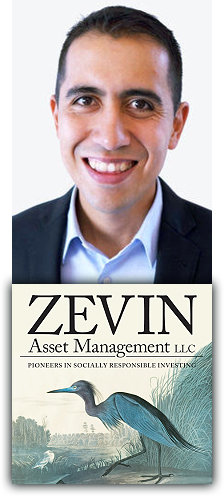
Pat+Zevin_Additionalby Pat Miguel Tomaino, Associate Director of Socially Responsible Investing, Zevin Asset Management


Marketers are obsessed with attracting Millennials, and their pitches can look downright desperate. Domino’s invites young customers to order a large cheese with a pizza emoji. According to Bloomberg, net sales at Banana Republic dropped 10 percent even after it partnered with the popular Instagram account “Hot Dudes Reading.”

The investment industry seems equally flummoxed. Confronted with low financial literacy among the generation now aged 18 to 35, wealth managers are turning to smartphone apps that “game-ify” the process of getting an investment account. And still, 80 percent of Millennials are avoiding the stock market.

“Cynical Do-gooders”

Why should they play along? Unlike Generation X, American millennials have known war nearly their entire lives. They felt the brunt of the financial crisis when their parents lost jobs and homes. Now millennials are told that the economy has recovered — despite massive student debt, increasing inequality, and extortionate housing costs in the cities where the jobs are.

Considering what they’ve gone through, one would forgive young Americans for being cynical. But that’s not the whole story.

After the storm, millennials want to live their convictions and improve the world they’ve inherited. As a (borderline) millennial myself, I’ll take the liberty to say that Harvard Business Review editor Walter Frick was probably right when he dubbed members of my generation “cynical do-gooders,” suspicious of institutions but still insistent that those institutions (like public companies) can and should do better.

Advocating for a Radical Generation

Socially responsible investing (SRI) is one area of financial management that makes sense for millennials. According to Morgan Stanley, 84 percent of Millennials considering investment are interested in socially responsible options. However, ethical wealth managers need to evolve to serve this generation.

A “do no harm” approach of screening bad companies out of an equity strategy probably won’t be enough. The millennial clients I meet in my work as an analyst and shareholder advocate at Zevin Asset Management want a healthy investment return. They also want to work with institutions that see the world as it is (in political, economic, and climatological turmoil) and partner with them to fight an unacceptable status quo.

Ethical investors can begin to meet that need by re-committing to shareholder advocacy — pushing the companies in our clients’ portfolios to address critical environmental and social issues.

Shareholder advocacy is a proven technique, but it too must change to reflect the millennials’ story — not as a marketing exercise, but as the only way to serve a generation radicalized by war, economic anxiety, and political betrayal.

Learning from Millennial Movements

In the coming years, I expect that socially responsible investing will be remade by millennials in two major ways. First, it will become more critical of our economic system and even more willing to confront the companies and tycoons that run it.

According to a 2016 Harvard study, 51 percent of young Americans do not “support capitalism.” Of course, investment advice won’t dismantle an unfair and destructive economic system. But the right adviser can help young investors challenge the public companies at the heart of the old order.

As one of our young clients told me recently: “I initially thought of socially responsible investing as a way to simply avoid funding (and profiting from) corporations that do work I find awful or immoral — things like war, pollution, [and] mass incarceration… But I’ve come to be inspired by the process of using shareholder proposals and other active ways that we can leverage investment to put pressure on corporations to make specific changes.”

Our firm uses constructive dialogue and shareholder proposals to push companies to respect people and planet. This comes out of a longstanding ethical commitment and our belief that, by addressing climate risks and listening to local communities, companies can possibly avoid big losses.

That’s a great start, but Millennials will want to push harder. According to a 2014 CNBC survey, fully 40 percent of Millennials report that the corporate sector is a “source of fear.” A generation that is so wary of capitalism wants to hold companies accountable for their role in social ills like low wages, environmental injustice, human rights violations, and political corruption.

Investment managers can answer by working on challenging issues at the intersection of investment risk and structural injustice. We can raise concerns that relate to both the investment case for a specific stock and the wider social impact of that company or sector.

That is why, among other priorities, Zevin Asset Management has engaged with firms about: hiring policies that contribute to mass incarceration by excluding people with criminal records, the corporate role in the policy fight over raising the minimum wage, and companies’ controversial support for the American Legislative Exchange Council (ALEC) and other lobbying groups that stifle climate action and voting rights at the state level.


Speaking Clearly About Wealth and Responsibility

The second way that millennials will influence socially responsible investing is by sharpening our words and our values.

Unlike their parents and grandparents, who clung to a polite taboo against “money talk,” millennials want to speak about money and everything that goes with it: debt, job loss, envy, reparations, inequality, wealth, who’s got it, who wants it, poverty, privilege, and the fundamental unfairness of the initial distribution.

In politics, we see this openness in the Fight for 15 and new discussion of a universal basic income, along with frank talk about student loan debt and the way in which institutional racism and redlining have excluded generations of Black Americans from economic opportunity.

There is a similar spirit among the more fortunate millennials considering socially responsible investing. Another young client told me that, in his generation, people with privilege “have started to see that inequality is their problem; they perpetuate it and benefit from it and they have a responsibility to deal with it.”

The SRI sector can show millennials that investing in the public markets need not merely reinforce their privilege. Shareholder advocacy, for example, is a way to highlight the privileges of stock ownership (among them, access to managers and corporate boards) and use that power toward genuine social change.

Wealth managers have to change to hold millennials’ attention, but the good news is they can forget about the apps, tweets, and gimmicks. While everyone else markets to millennials, millennials will re-make socially responsible investing for the next generation.


Article by Pat Miguel Tomaino, Associate Director of Socially Responsible Investing, Zevin Asset Management.

Pat leads Zevin’s corporate engagement program, analyzing portfolio companies and pushing them to address critical environmental, social, and governance risks. To that end, Pat dialogues with executives, builds coalitions with NGOs and peer firms, and files shareholder proposals on behalf of our clients. He also identifies emerging sustainability issues and oversees proxy voting. For several years, Pat was a Senior Analyst on the responsible investment team of F&C Asset Management, where he led the U.K. firm’s work in Latin America and Canada. He has held research roles for several progressive groups, including Senator Elizabeth Warren’s 2012 campaign and the Service Employees International Union (SEIU). Pat recently completed a fellowship as a public radio producer for WBUR’s Open Source with Christopher Lydon. A graduate of Harvard College, Pat is interested in racial justice, economic inequality, and labor rights in the U.S. and overseas.

Additional Articles, Impact Investing

Investing isn’t Enough: 6 Things You Need to do to Grow Your Wealth

By Gabriel Anderson, a Certified Financial Planner and founder of Crafted Wealth Management

Hello, GreenMoney Journal readers!

Let’s take a break from talking about investments. Yeah, yeah. This is a journal about Sustainable Investing, but what is it you’re really after? What’s the reason you’re investing in the first place? Have you thought about where you’d like to end up? How will you know that you accomplished what you’ve set out to accomplish if you haven’t defined your goal? Investments are an important tool but they become more powerful when you view them as a part of your larger financial life strategy.

What I’m talking about is the process of Financial Life Planning and that’s what I do. I help people use money as a tool to accomplish their goals and live their ideal life. It’s what I call becoming a Financial Badass and it all starts with just six basic steps.

These six steps give you a framework to define your values and goals, and then uses those as a basis for your financial decisions. These steps provide a process that you can follow without fail, and help you provide the WHY behind your financial decisions. The WHY is your motivation and knowing that is empowering. Becoming a financial badass is a process of enlightenment and it’s a process where a little knowledge can go a LONG way.

Step #1 – Define Your Vision, Values, and Goals

What do you want to accomplish with your time on this earth? Going through this process may be the start of something bigger. It will take you down the path of breaking down your life and defining what you need to do to get you where you want to go.

All you need to do is take the time to be present for yourself and answer these questions:

• What would you like to accomplish in life over the next three years? 10-15 years? Beyond that? Think about this from a personal, professional, and financial perspective.
• What does money mean to you? What do you want it to help you accomplish?
• If you have an unlimited source of money and the rest of your life to spend it, what would you do with your time?
• If you have unlimited money and 5-10 years left of life, what would you do with your time?
• If you only have 24 hours left to live, what would you do with the time you have left?

These questions are here to help you realize what’s important to you and reestablish your values.

Have you come to any realizations once you answered them? Is there some part of your current daily/weekly/monthly life doing what you would do if you only had 24 hours left to live? If not, should you take a step back to reevaluate?

Step #2 – Are You a Saver or a Spender?

It’s no secret but savers are going to have a gigantic leg up throughout life. They have the funds set aside to execute on opportunities as they present themselves. Or, have reserves available if they happen to lose their source of income. If that happens, the savers won’t need to rely on debt to support their lifestyle until they find another job.

Don’t worry! If you’re a spender, all hope is not lost! As long as you realize you are a “spender”, you can take the steps ahead of time to ‘trick’ yourself. To do this, you need to automate a percentage of your paycheck into savings and investments and “theoretically” forget about it. Then you have the other percentage of your paycheck to live your life in whatever way you choose. Just remember to pay yourself first! The percentage you set aside is there for Future You!

Saving vs. Spending is about behavior. Many believe that if they were earning more money their financial fears and problems would disappear. The problem is that most money problems aren’t financial in nature, they are behavioral. That’s why living paycheck to paycheck is a systemic issue and so difficult a habit to break.

Getting financially ahead is less about what your income is and more about how much of your income you aren’t spending. If you spend less than you make for long enough, you’ll achieve financial independence. This is the essence of being a saver versus a spender, so let’s learn how to become a saver.

Step #3 – The Details

So where do you stand right now? Most of us aren’t starting from Zero. Some of us may be starting this process with debt and some of us may be starting out with assets. Either way, we need to find out where you are now to see what you need to do to get you where you want to be. This statement of your personal financial position is called your Net Worth. What we are going to build to calculate this is called a Balance Sheet:

1. Grab statements for all of your accounts (including debt) and values for hard assets (house, car, possessions)
2. Draw a T-chart on a sheet of paper:

• Label the left side Assets and list out the value of all your accounts and assets
• Label the right side Liabilities and list out all of your debts

3. Math time!

• Add up both columns at the bottom of your sheet of paper
• Assets – Liabilities = Net Worth

Now that you know where you are, what can we do to grow your net worth?

Step #4 – Your Budget

What’s a budget? A budget is a tool you can use to tell your money where you want it to go instead of leaving yourself wondering where it went at the end of every month.

The first part of the budgeting process is about awareness. It’s about figuring out what you’re currently doing with your income. The next step is taking that awareness and making changes with that new knowledge. Setting spending goals for each category will start to free up income. Should you spend less so that you can save and invest more? Can you actually afford to increase your lifestyle? Let’s find out:

1. Grab a pen and paper or open a spreadsheet.
2. Answer the following questions:

• What is your net monthly income?
• What fixed expenses do you have every month? (For example – rent/mortgage, utilities, cell phone, groceries, car payment, insurance, etc.)
• What discretionary expenses do you have every month?

3. Subtract your expenses from your income. (Income-expenses=???)
4. Is this number Positive? Negative? How do you feel now that you see where your money is going?

To get a more accurate picture of your expenses it may help to look at the actual data:

• Gather 3 months of statements with your transactional data such as from your checking and/or credit card.
• Go through your statements and categorize your purchases and expenses on a separate sheet of paper or spreadsheet.

  • Add up the totals in each category for each month
  • Divide those totals by 3
  • This is your average monthly spending for each category and is a good starting place for a future monthly budget
  • Review each category
  • Does your spending line up with your goals and values?
  • Are there any categories you can reduce or eliminate?
  • Take some time and set spending limits for each category

See if you can stick to these for the next few months.

  • Note if you are overspending in any one category, is an adjustment necessary?

Now that you are aware of where your money is going, are there any changes you feel you should make? Are you happy about what you found going through this exercise? What percentage of your income are you saving? What percentage are you spending?

As an aside, I’ve had many people tell me that they are good with money because they pay off their credit cards in full every month. I think that’s a great thing to do, but you need to make sure that the things you are spending your money on are aligned with what you really need in the first place.

Step #5 – Emergency Fund/Cash Reserves. The what, why, and how

So what do you do if you lose your job, have an unexpected medical situation, or you have a friend or family member that needs a boost? Financial life planning is also about preparing yourself for the unexpected.There are two ways to look at this.

1. You want reserves set aside in case something happens in your life. You will be able to take cash out to pay for an emergency instead of taking on debt. Set aside $1,000 in a savings account (and forget it’s there!)

2. The next iteration of an emergency fund is to prepare yourself for what could happen if you lost your income. How long could you float yourself before finding another job? Or if you’re looking to start a business, how much time do you want to give yourself before you can pay yourself an income? This is as simple as taking a look at your monthly expenses from Step #4 (budgeting) and multiplying it by how many months you’d like as a cushion. For example, if your monthly budget was $2,500 and you want 12 months of expenses set aside, you’d need $30,000 set aside. Keep this in a safe, liquid vehicle, so it’s there if you ever need it.

Alright, that makes sense… What do we do if we have a lot of debt? Funny you should ask…

Step #6 – Paying Off Debts

Debt sucks. Straight up.

It’s an expense that you incurred in the past that you told your future self you’d deal with as you earn more income. Trouble is, you probably didn’t realize how suffocating that concept was until you got into it.

Fear not! You can get rid of it. Now that you know where your money is going from doing your budget in step #4, you have an idea of how much extra income you can put toward saving, investing, and paying off debts. Has this article inspired you to get your s4!t together and become super intense about paying off all your debts? Great! Get after it! Similar to the spending vs. saving debate, this can often be more emotional than financial and that’s ok.

For those that want a strategy surrounding your debt payoff, there are two strategies that work well.

The Debt Snowball:

Organize your debts by their balances, smallest to largest.

Find the minimum payments for all your debts. Determine the maximum amount of money you want to set aside for debt payments. Distribute that money toward the minimum balances, take the leftover excess and add it to the smallest balance, and so on. As the smaller debts are paid off, roll those additional payments to the next smallest balance. The debt snowball is effective because it’s emotionally satisfying to see the number of your debts disappear.

The second method is the Debt Avalanche.

For this method, organize your debts by highest interest rate to lowest interest rate. From there, follow the same process as the debt snowball. As balances get paid off, roll those payments into the debt with the next highest interest rate. This is the quicker way to get rid of your debts but may not be as emotionally satisfying. If you have high interest rate debts that have high balances they will take longer to pay off.

Either method you choose is a fantastic way to get rid of your debts. It’s far better than the alternative, letting them continue to accumulate and ignoring the effects.

Calculators here: http://www.calcxml.com/calculators/restructuring-debt?skn=38#calcoutput or here: www.whatsthecost.com/snowball.aspx

Putting it All Together

Work through these steps one-by-one, remember this is a process and in life things are constantly changing. These processes work whether you’re in debt or you already have a few million dollars of savings and investments under your belt. The contents of this article and the understanding of them will give you a HUGE leg up when it comes to your personal finances. Mastering them and using them to move forward in life is what being a Financial Badass is all about! Get to it!


Article by Gabriel Anderson, a Certified Financial Planner (CFP) and founder of Crafted Wealth Management (www.CraftedWealthManagement.com), a Venice, CA based virtual Wealth Management firm. Gabe takes his clients through a values based approach to help them use their money as a tool to accomplish their goals and live their ideal life. You can follow him on Twitter @GabrielCFP

Featured Articles, Impact Investing

  • 1
  • 2
Signup to receive GreenMoney's monthly eJournal

Privacy Policy
Copyright © GreenMoney Journal 2025

Website design & development by BrandNature

Global Events Calendar

View All Events

april

21aprAll Day232026 Sustainable Packaging Coalition: SPC Impact – Nashville

27aprAll Day30Women Deliver 2026 Conference (WD2026) – Melbourne

X